These 9 Native North Carolina Vines Grow Quickly And Attract Pollinators
Want to turn your North Carolina fence into a buzzing, high-traffic sanctuary for wildlife?
The secret isn’t a complex, high-maintenance landscape – it’s picking the right native vines that have been hosting local pollinators for thousands of years.
From the Blue Ridge Mountains to the Outer Banks, these fast-growing climbers are the ultimate “VIP entrance” for bees, butterflies, and hummingbirds.
Native vines are the unsung heroes of the Tar Heel garden, transforming a bare wall or porch into a lush, living masterpiece in just a season or two.
By choosing these local experts over aggressive, non-native invaders, you gain a space that looks spectacular while demanding much less of your time and effort.
It is the smartest way to balance a fast-growing, beautiful landscape with a genuine commitment to supporting the local ecosystem.
1. Coral Honeysuckle Brings Color And Hummingbirds
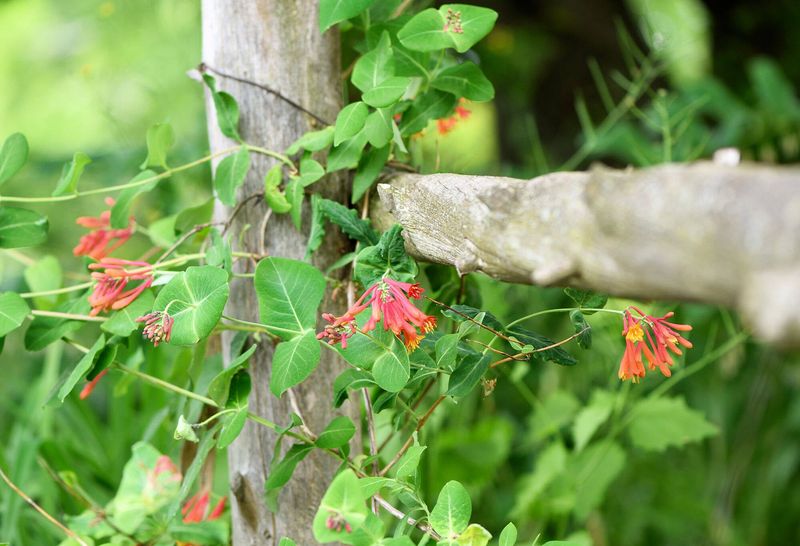
Few native vines in North Carolina earn as much admiration from gardeners and wildlife watchers alike as Coral Honeysuckle.
With its bold clusters of tubular red and orange blooms, this woody vine is practically irresistible to ruby-throated hummingbirds, who visit repeatedly throughout the long blooming season that stretches from March all the way into July.
Coral Honeysuckle grows 10 to 20 feet tall and works beautifully on trellises, fences, arbors, and mailbox posts across the state.
It handles full sun to partial shade and adapts well to a wide range of North Carolina soils, though it does appreciate decent drainage.
Once established, it shows solid drought tolerance, making it a reliable performer during dry summer stretches.
Unlike the invasive Japanese honeysuckle that has overtaken so many North Carolina roadsides, this native species grows at a manageable pace and stays where you plant it.
Bees and butterflies also visit the blooms regularly, and the red berries that follow in late summer attract songbirds like thrushes and warblers.
Pruning lightly after the main bloom flush helps keep the vine tidy and encourages a second round of flowering.
For North Carolina gardeners who want reliable color, pollinator value, and low-fuss care all in one plant, Coral Honeysuckle delivers season after season without overwhelming the space.
2. Crossvine Covers Fences With Early Color
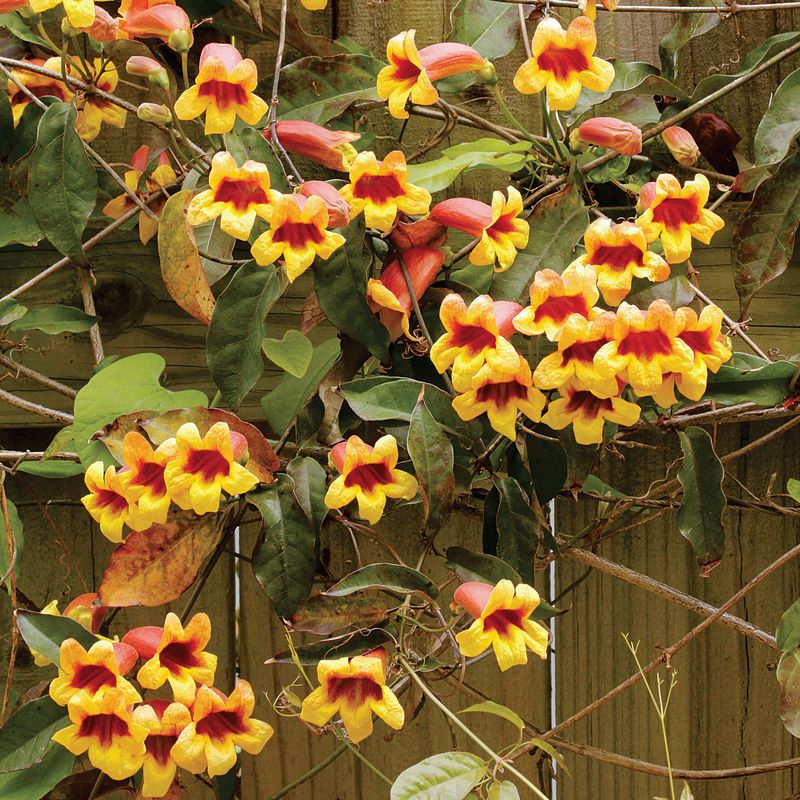
When early spring arrives in North Carolina and most plants are still waking up, Crossvine is already putting on a show.
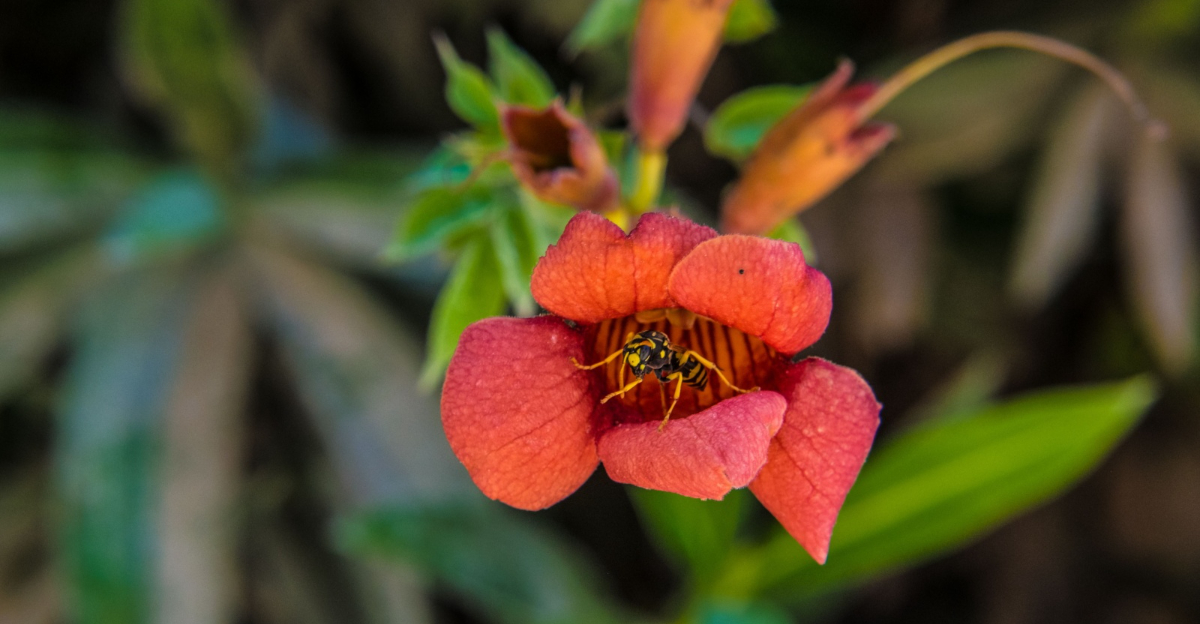
This semi-evergreen native vine bursts into bloom with striking trumpet-shaped flowers in shades of orange, red, and yellow, often as early as March or April, making it one of the first nectar sources available to returning hummingbirds and early-season bees.
Crossvine is a true climber, using tendrils tipped with adhesive discs to grip almost any surface, from wooden fences to brick walls to tree trunks.
It can grow anywhere from 5 to 50 feet depending on conditions, so pairing it with a sturdy structure is a smart move.
In North Carolina, it performs well across the Piedmont and Coastal Plain regions and tolerates both full sun and partial shade without complaint.
The foliage takes on attractive burgundy tones in cooler months, adding winter interest long after the blooms have faded.
Soil-wise, Crossvine is flexible and handles clay soils reasonably well, which is a real advantage for many North Carolina gardeners who deal with heavy red clay.
Hummingbirds are the primary pollinators, though bees also show interest in the blooms. Cutting back older stems after flowering encourages fresh growth and keeps the vine from becoming too dense.
Crossvine is a bold, reliable choice for covering large structures quickly while supporting early-season pollinators.
3. Trumpet Creeper Grows Fast And Feeds Hummingbirds
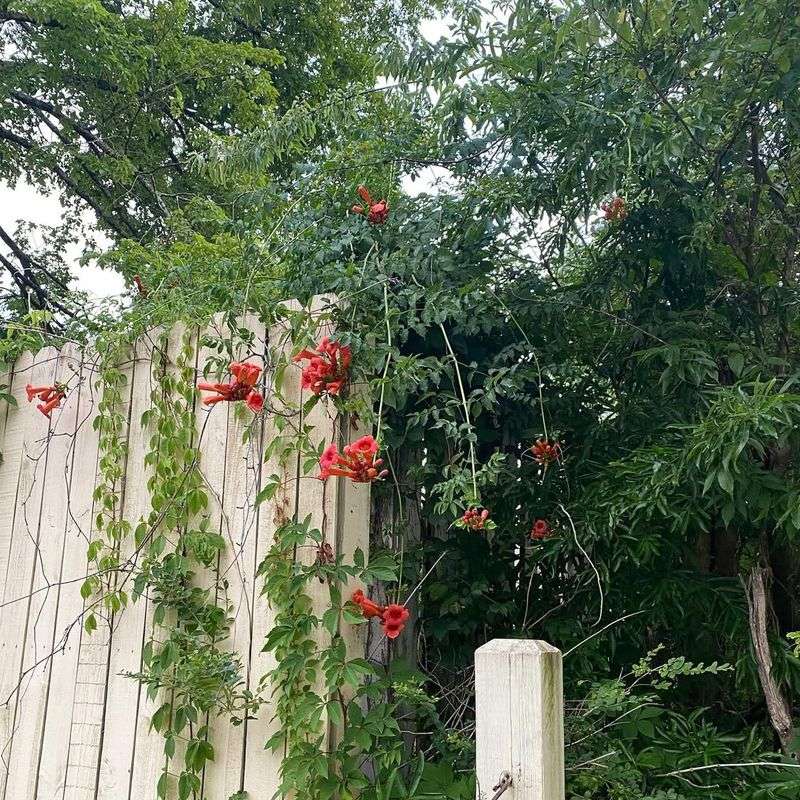
Trumpet Creeper is the showstopper of fast-growing North Carolina native vines, known for its exuberant summer display and undeniable appeal to hummingbirds.
Its large, flaring orange and red trumpet-shaped flowers appear from June through August, perfectly suited to ruby-throated hummingbirds whose long bills fit neatly into each bloom.
Butterflies and bees also visit regularly, while the seed pods that follow provide food for birds during fall and winter.
While often described as “fast-growing,” Trumpet Creeper typically reaches 30 to 40 feet over several seasons, putting on impressive vertical growth each year under ideal conditions.
It uses aerial rootlets to cling to surfaces, so a sturdy fence, arbor, or mature tree is essential to support its weight.
This vine tolerates full sun and a wide range of soils, including poor, dry, and compacted ground, which makes it ideal for challenging spots in North Carolina gardens.
Because Trumpet Creeper spreads by runners and self-seeds, gardeners should provide adequate space and monitor growth to prevent overcrowding nearby plants.
Pruning in late winter or early spring encourages more vigorous flowering and helps keep it contained.
When managed thoughtfully, this vine rewards North Carolina gardeners with a spectacular summer color show, abundant pollinator activity, and a strong ecological contribution to the landscape without the invasive tendencies associated with non-native trumpet vines.
4. Maypop Adds Wild Flowers And Quick Growth
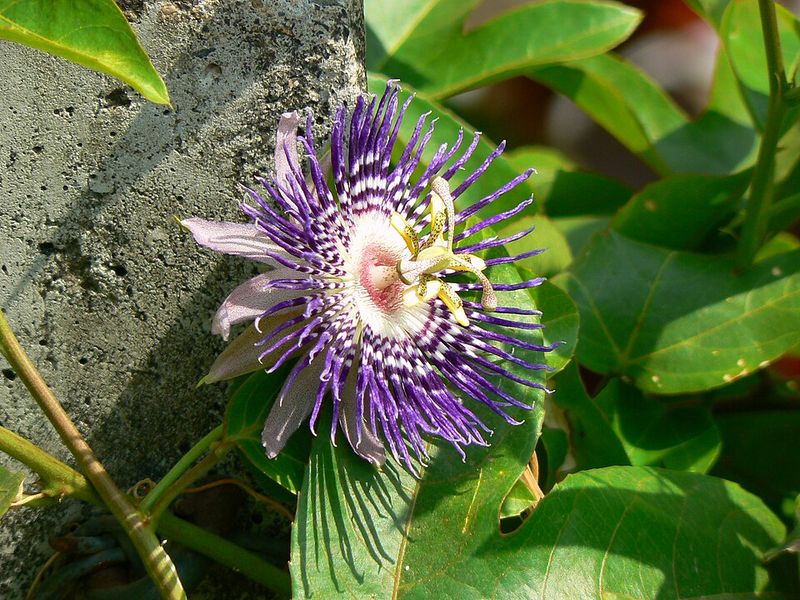
Walking past a Maypop in full bloom for the first time is genuinely surprising.
The flowers look almost tropical, with their intricate rings of purple and white fringe surrounding a central crown, yet this passionflower is completely native to North Carolina and has been growing wild across the state for centuries.
Blooming from June through early October, Maypop produces one of the most visually striking flowers of any native vine in the region.
Maypop grows vigorously, spreading by underground runners and reaching 25 feet or more in a single season. It works well on trellises, fences, and open areas where it has room to ramble.
Full sun brings out the best bloom production, though it tolerates light shade. North Carolina soils of almost any type suit this plant, and once established it handles drought conditions with ease.
The wildlife value is outstanding. Maypop serves as the primary larval host plant for Gulf fritillary and zebra longwing butterflies, meaning caterpillars feed directly on the foliage.
Bumblebees and other native bees are enthusiastic flower visitors, drawn in by the abundant nectar. The egg-shaped fruit that forms after flowering is edible, with a sweet, slightly tart flavor enjoyed by both wildlife and curious gardeners.
Because it spreads actively, placing Maypop where it has room to grow without crowding smaller plants is a good approach.
North Carolina gardeners who embrace its wild spirit are rewarded with a spectacular, pollinator-rich display all summer long.
5. Dwarf Passionflower Brings Small Blooms And Pollinators
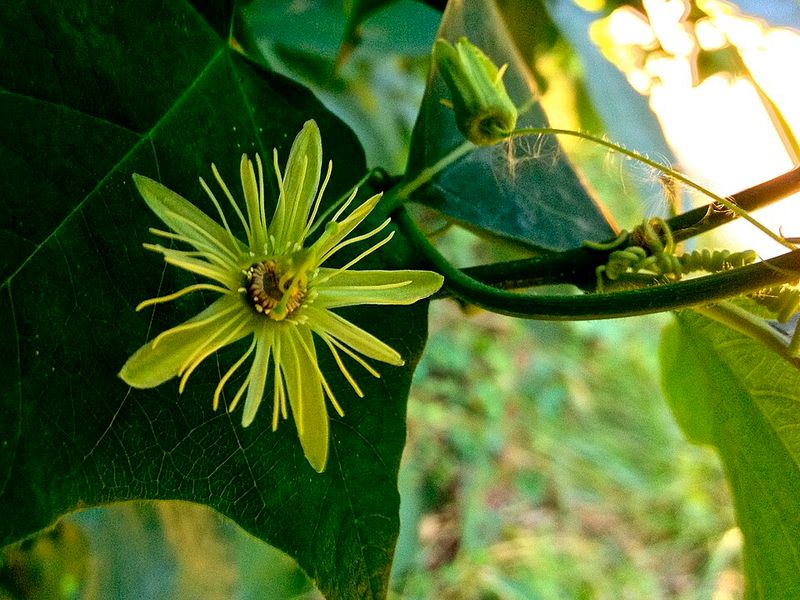
Not every garden has room for a vine that wants to take over the yard, and that is exactly where Dwarf Passionflower earns its place.
Smaller and more restrained than its cousin Maypop, this native vine produces delicate, pale yellow-green flowers that may be subtle in color but are surprisingly rich in pollinator value.
Bumblebees and smaller native bees seek out the blooms consistently from late spring through summer.
Dwarf Passionflower typically reaches 6 to 10 feet in length, making it a manageable choice for smaller trellises, garden fences, or naturalized woodland edges.
It actually prefers partial to full shade, which sets it apart from most flowering vines and makes it genuinely useful for those shady spots in North Carolina gardens where other vines struggle to bloom at all.
Like Maypop, this species serves as a larval host plant for Gulf fritillary and zebra longwing butterflies, so planting it means actively supporting the full butterfly life cycle, not just adult feeding.
The small dark berries that follow the flowers attract birds in late summer and fall.
Dwarf Passionflower adapts well to average garden soils and does not require heavy fertilization or intensive care once it gets established.
It can spread by runners over time, so light management keeps it tidy.
For North Carolina gardeners working with shaded spaces who still want meaningful pollinator habitat, this overlooked native vine is a genuinely rewarding option worth growing.
6. Virgin’s Bower Climbs Fast And Blooms Late
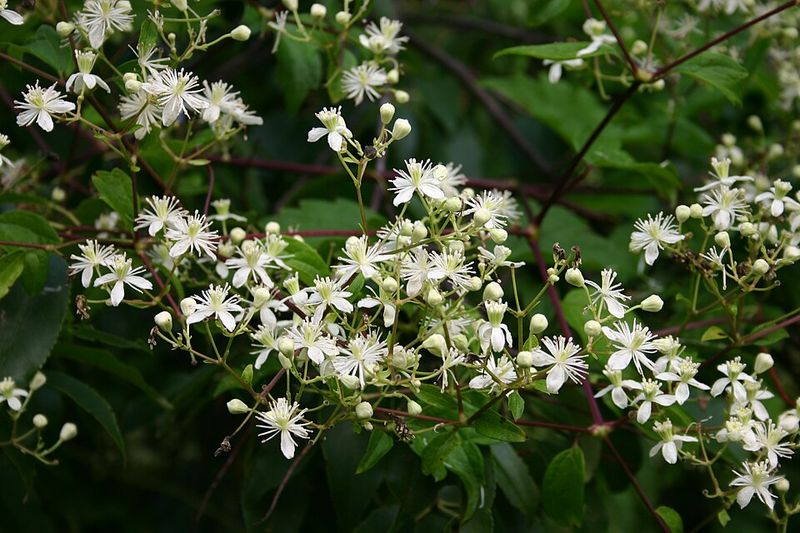
By late summer, when many flowering vines have already peaked and started winding down, Virgin’s Bower is just hitting its stride.
This native clematis smothers itself in clouds of small, creamy white flowers from August through September, filling a gap in the garden calendar that few other vines can cover.
The timing makes it especially valuable for pollinators preparing for fall, including bees, wasps, and small butterflies that rely on late-season nectar sources.
Virgin’s Bower climbs by wrapping its leaf stems around supports and can cover a fence or trellis quite quickly, reaching 15 to 20 feet under good conditions.
It grows well across most of North Carolina in full sun to partial shade and adapts to average soils without needing special amendments.
Moist, well-drained conditions bring out the best growth, though established plants handle occasional dry spells reasonably well.
After the flowers fade, the plant produces feathery, silvery seed heads that persist into winter and add a soft, textural quality to the garden even after the growing season ends. Birds sometimes use the fluffy seeds as nesting material.
This vine is far less aggressive than the invasive Sweet Autumn Clematis that has escaped into North Carolina roadsides, making it a responsible choice for gardeners who love the look but want to plant something that belongs here.
Pruning back in early spring encourages strong new growth and a full bloom display each season.
7. American Wisteria Gives A Softer Native Look
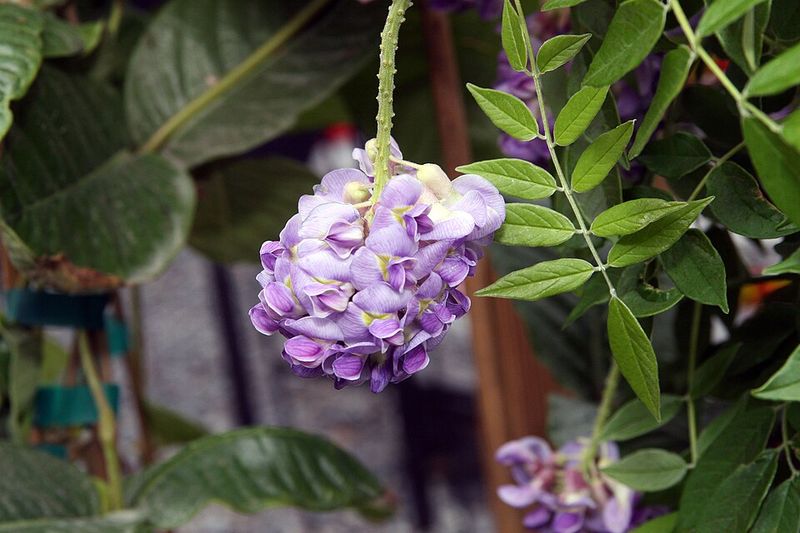
Anyone who has admired the cascading purple blooms of wisteria on an old Southern porch but worried about planting something invasive will be glad to know that American Wisteria offers almost all of the same visual drama without the aggressive takeover.
This native species produces beautiful, fragrant clusters of lavender to purple flowers in spring, and unlike its invasive Asian relatives, it grows at a pace that gardeners can actually manage.
American Wisteria reaches 25 to 30 feet at maturity and does best on sturdy structures like pergolas, large arbors, or strong fences.
It thrives in full sun across North Carolina and performs well in average, well-drained soils.
Consistent moisture during the first couple of growing seasons helps it establish a strong root system, after which it becomes more tolerant of drier conditions.
Bumblebees are particularly enthusiastic visitors to American Wisteria blooms, and various native bee species also work the flowers for nectar and pollen.
Some plants will produce a light second bloom flush in late summer, especially if they receive adequate moisture.
Pruning twice a year, once after the main spring bloom and again in late summer, keeps the vine shapely and encourages more flowering stems.
North Carolina gardeners who want the romantic, old-fashioned appeal of wisteria without sacrificing native habitat value will find American Wisteria to be a deeply satisfying choice that rewards patience with stunning seasonal displays year after year.
8. Virginia Creeper Supports Pollinators And Wildlife
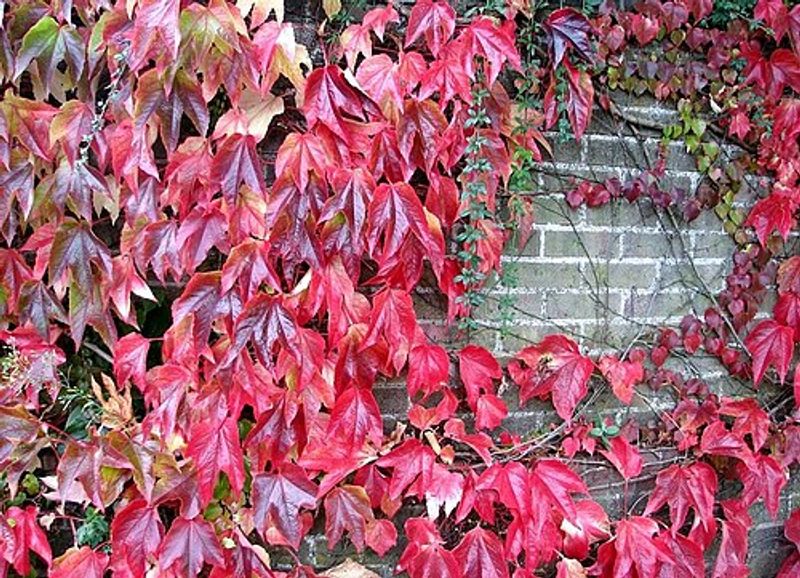
Virginia Creeper might not stop you in your tracks with showy flowers the way some other vines do, but spend a little time with this plant across the seasons and you will quickly understand why North Carolina wildlife depends on it so heavily.
The small greenish flowers that appear in late spring and early summer may be easy to overlook, yet they attract a surprising range of native bees, wasps, and flies that rely on accessible, open-faced blooms for quick nectar and pollen gathering.
This fast-growing vine reaches 30 to 50 feet and climbs using adhesive-tipped tendrils that grip brick, stone, wood, and bark with impressive tenacity.
It handles full sun to full shade, making it one of the most versatile native vines available to North Carolina gardeners regardless of their site conditions.
Soil adaptability is equally impressive, from sandy coastal soils to heavy Piedmont clay.
The real show comes in fall, when the five-lobed leaves turn brilliant scarlet red, rivaling any ornamental vine for seasonal color.
The dark blue-black berries that follow are a critical food source for migrating birds including warblers, vireos, and thrushes passing through North Carolina each autumn.
Woodpeckers and other year-round residents also feed on the fruit.
Virginia Creeper spreads vigorously, so using it on large fences, walls, or naturalized areas gives it the space it needs to truly shine without crowding smaller garden plants nearby.
9. Woolly Pipevine Adds Dense Growth And Butterfly Value
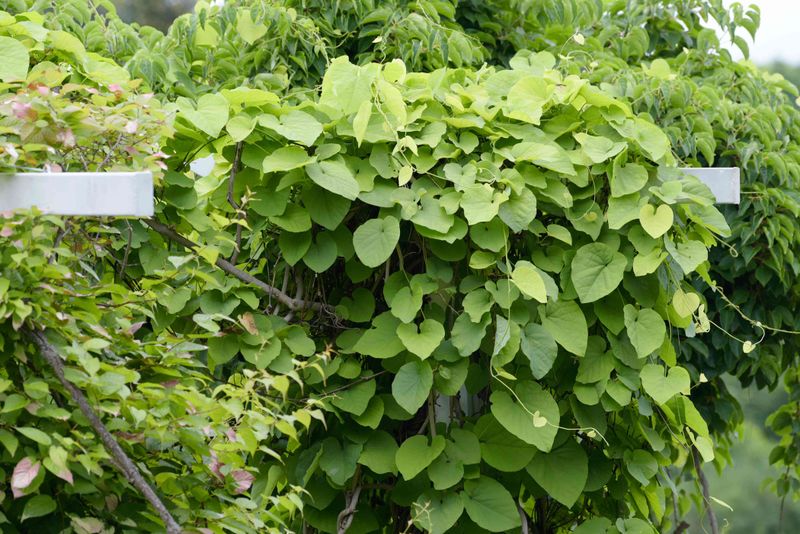
Gardeners who want to actively support one of North Carolina’s most spectacular native butterflies should get to know Woolly Pipevine right away.
This robust native vine is the sole larval host plant for the Pipevine Swallowtail, a stunning iridescent blue-black butterfly whose caterpillars feed exclusively on Aristolochia species.
Planting Woolly Pipevine is essentially rolling out a welcome mat for an entire butterfly population that depends on this plant to complete its life cycle.
Woolly Pipevine grows vigorously, reaching 20 to 30 feet with large, heart-shaped fuzzy leaves that create dense, attractive coverage on fences, arbors, and pergolas.
It prefers partial shade to full sun and performs well in average to moist, well-drained soils across much of North Carolina.
The unusual curved, pipe-shaped flowers that appear in late spring and early summer are pollinated by small flies that enter the bloom following a scent trail.
Beyond its butterfly value, the dense foliage provides excellent nesting cover for birds and creates useful shade on structures during North Carolina’s hot summers.
The vine climbs by twining and benefits from a sturdy support that can handle its weight as it matures.
Woolly Pipevine is less commonly found at mainstream garden centers but is increasingly available through native plant nurseries and North Carolina plant sales.
For gardeners who want their landscape to do real ecological work beyond just looking attractive, few native vines offer the specific, irreplaceable wildlife value that this remarkable plant provides every single growing season.