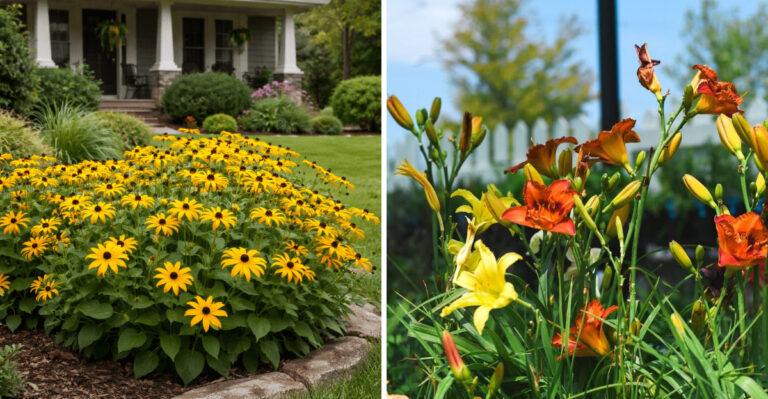
These Native Pennsylvania Perennials Settle In Without Taking Over The Yard
Some perennials have a frustrating habit of acting innocent at first, then spreading like they own the place by the second or third season. That is why it feels so satisfying to find plants that can settle into a Pennsylvania yard, come back reliably, and still know how to behave.
You get the beauty and ease of long-lasting plants without waking up one spring to find half the garden swallowed up by one overly enthusiastic grower.
That balance is a big deal, especially for gardeners who want a landscape that looks full and established without becoming a constant editing project.
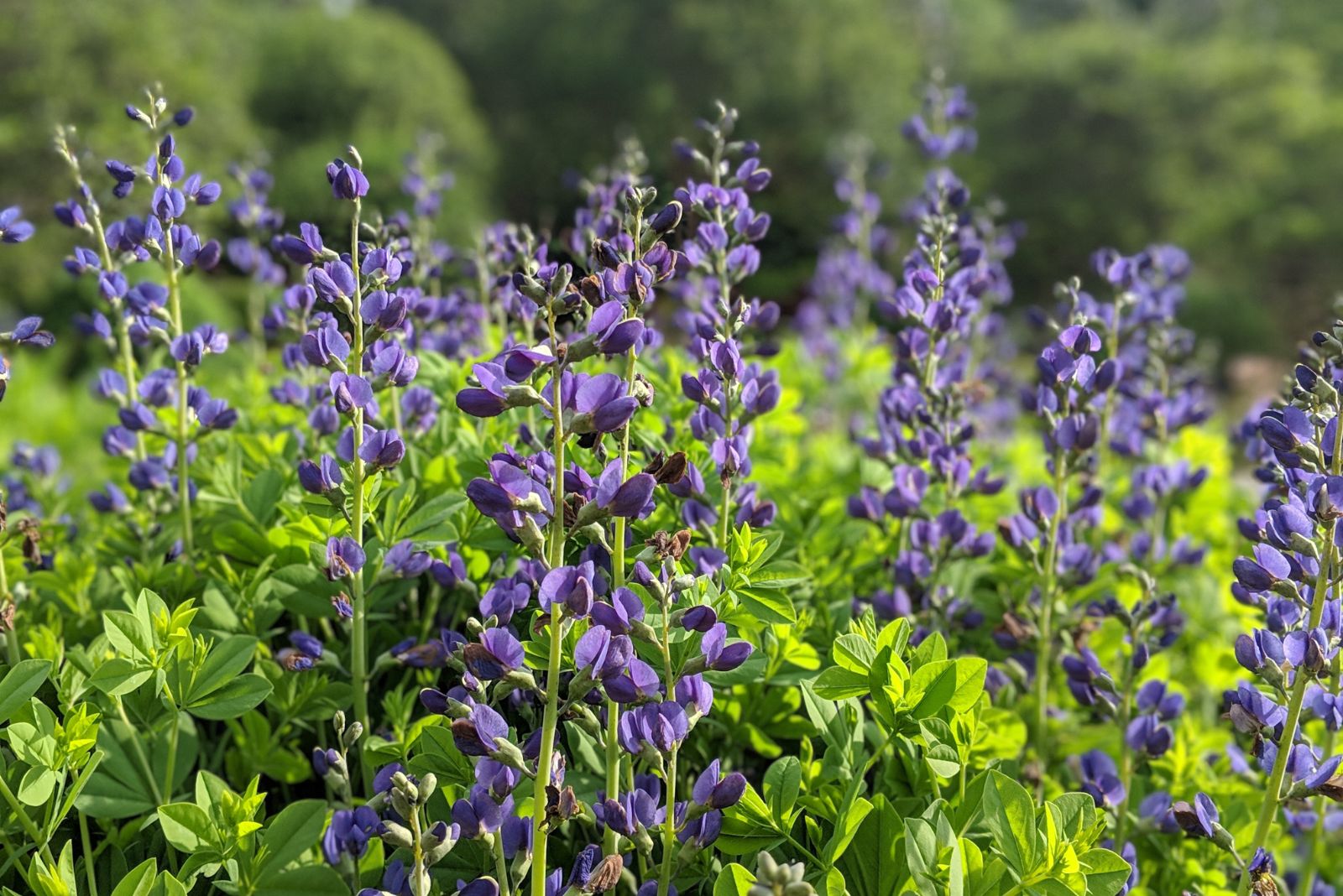
Native Pennsylvania perennials are often a great fit because they already understand the local weather, soil, and seasonal shifts.
They tend to be better adapted to real backyard conditions, which means less babying and a better chance of long-term success.
Even better, some of the best native choices spread in a calm, manageable way that adds texture, color, and life without pushing everything else aside.
For anyone trying to build a garden that feels natural, relaxed, and easy to live with, those kinds of plants are hard to beat.
1. Purple Coneflower (Echinacea Purpurea)
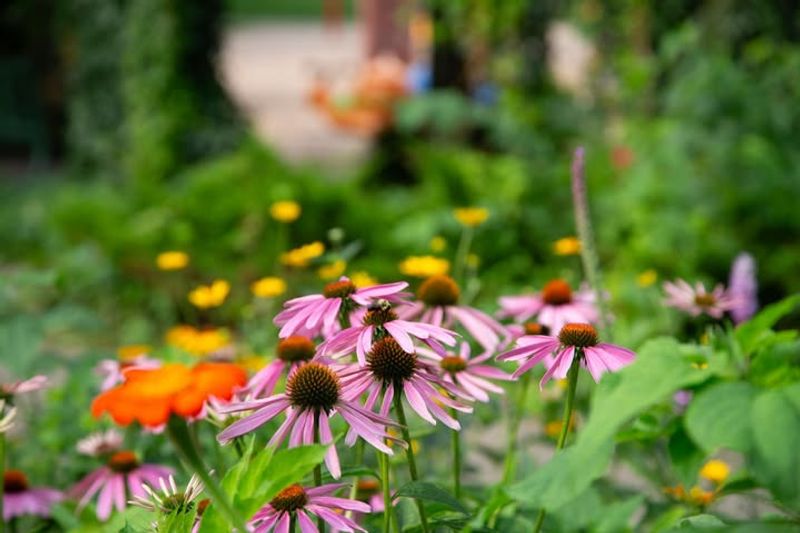
Few plants earn their place in a Pennsylvania garden quite like Purple Coneflower. With its bold pink-purple petals and spiky orange-brown center, it’s one of the most recognizable wildflowers in the region.
Gardeners love it because it blooms from midsummer all the way into early fall, giving you weeks of color when other plants start to fade.
Echinacea purpurea is what’s called a clump-forming perennial. That means it grows in a tidy bunch rather than sending out runners in every direction.
Over time, the clump will get a bit bigger, but it stays manageable. It may drop a few seeds and sprout new plants nearby, but these seedlings are easy to spot and simple to move or remove if they pop up somewhere you didn’t plan for.
This plant thrives in full sun and handles dry spells well once it’s settled in. Pennsylvania summers can get hot and dry, and Purple Coneflower takes that in stride without much fuss. It’s not picky about soil either, which makes it a solid choice for beginners.
Beyond its good looks, Purple Coneflower is a pollinator magnet. Bees, butterflies, and even goldfinches visit it regularly.
If you leave the seed heads standing through winter, birds will snack on them during colder months. It’s a plant that keeps on giving long after its blooms fade, making it one of the most rewarding natives you can grow in Pennsylvania.
2. Wild Columbine (Aquilegia Canadensis)
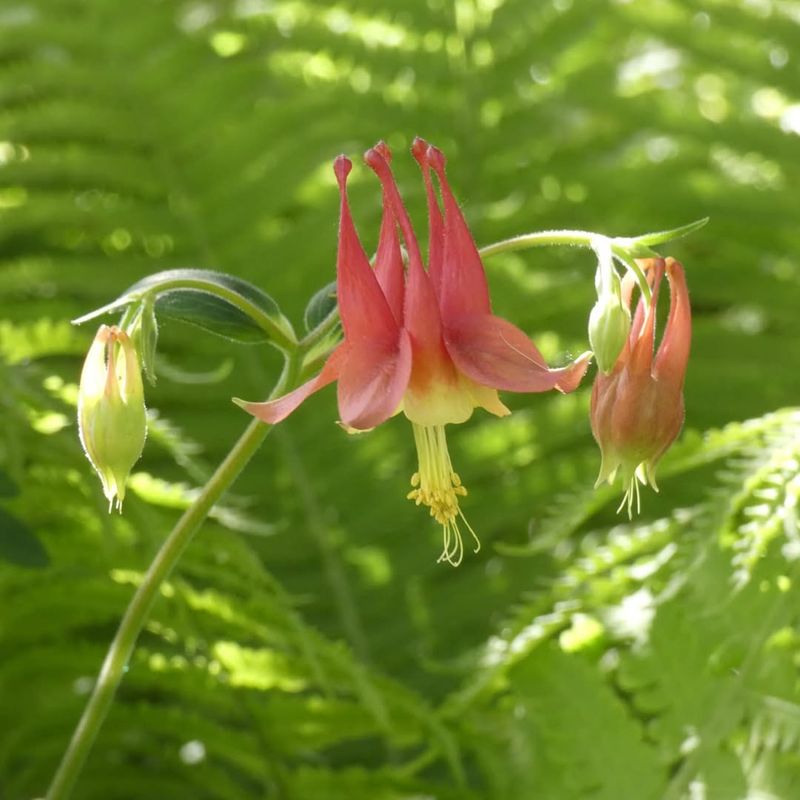
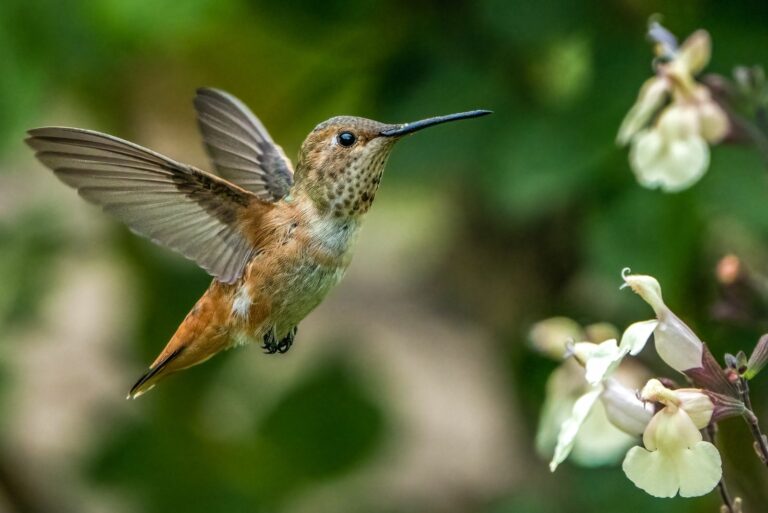
There’s something almost magical about Wild Columbine. Its nodding red and yellow flowers look like tiny lanterns hanging from slender stems, and when a hummingbird hovers in to take a sip, the whole scene feels straight out of a nature documentary.
This native perennial blooms in late spring, right when hummingbirds are returning to Pennsylvania, making it one of the best plants you can add to a wildlife-friendly yard.
Aquilegia canadensis is a self-seeder, but a polite one. It scatters a modest number of seeds and tends to pop up in nearby spots, especially along edges and in the cracks between stones.
Rather than taking over, it moves around the garden in a relaxed, wandering way that many gardeners actually enjoy. If a seedling shows up somewhere you don’t want it, it pulls out easily while it’s young.
This plant prefers partial shade and well-drained soil, which makes it well-suited for woodland gardens or spots under deciduous trees. Pennsylvania has plenty of those kinds of spaces, and Wild Columbine fits right in.
It’s a lighter, airier plant than many perennials, so it layers nicely with bolder foliage plants without competing for attention.
After blooming, the foliage stays attractive through summer before dying back naturally. It’s a low-effort plant that asks for very little and gives a lot in return.
For gardeners in Pennsylvania looking for something delicate and wild-looking, Wild Columbine is a fantastic pick.
3. Foamflower (Tiarella Cordifolia)
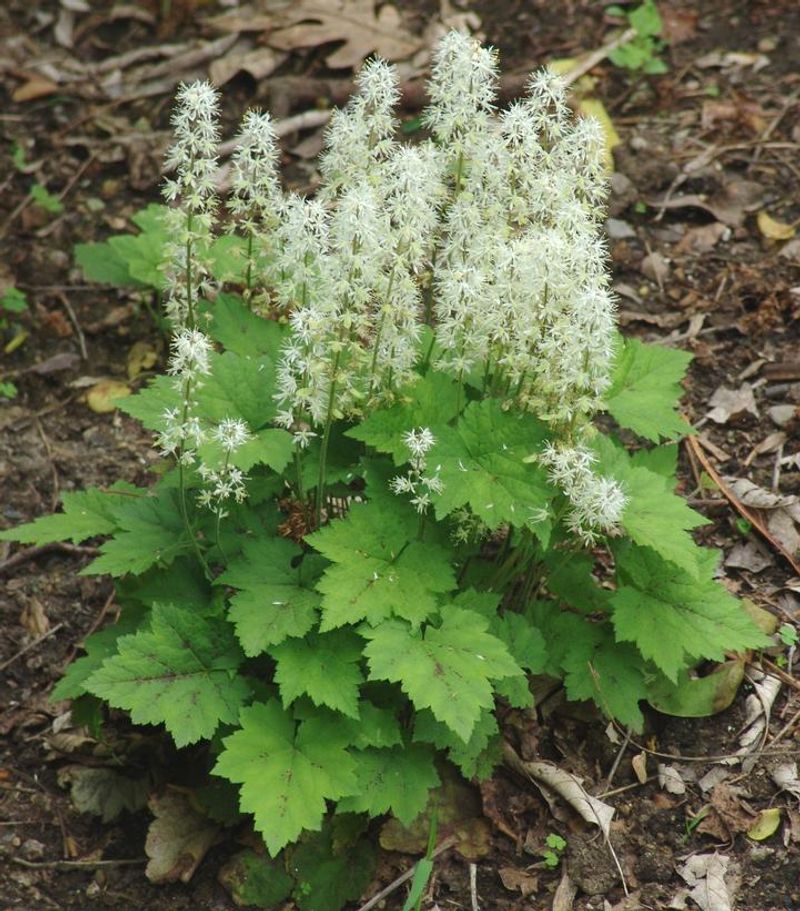
Walk through any shaded Pennsylvania woodland in spring and you might spot a low carpet of heart-shaped leaves topped with fluffy white flower spikes. That’s Foamflower, and it’s one of the most charming native groundcovers you can grow.
The name comes from those frothy-looking blooms that appear in mid-spring, and they’re every bit as pretty as they sound.
Tiarella cordifolia spreads slowly by sending out short runners, forming soft patches of coverage over time. It’s not aggressive at all.
In fact, it’s exactly the kind of spreader you want in a shaded bed because it fills in bare spots gradually and stays in check without much intervention. You can easily lift and divide it if it grows beyond its welcome.
This plant is built for shade. It thrives under trees and along the north-facing sides of buildings where other plants struggle to survive.
Pennsylvania’s mixed hardwood forests create ideal conditions for Foamflower, and it performs especially well in moist, organically rich soil. Pairing it with ferns or Hostas creates a layered look that feels completely natural.
One underrated bonus is the foliage itself. Even when Foamflower isn’t blooming, the leaves have attractive reddish veining and hold their color through the growing season.
Some varieties even take on reddish tones in fall. For anyone in Pennsylvania dealing with a shady corner that feels bare and uninspired, Foamflower is a reliable, beautiful answer that won’t cause headaches down the road.
4. Blue False Indigo (Baptisia Australis)
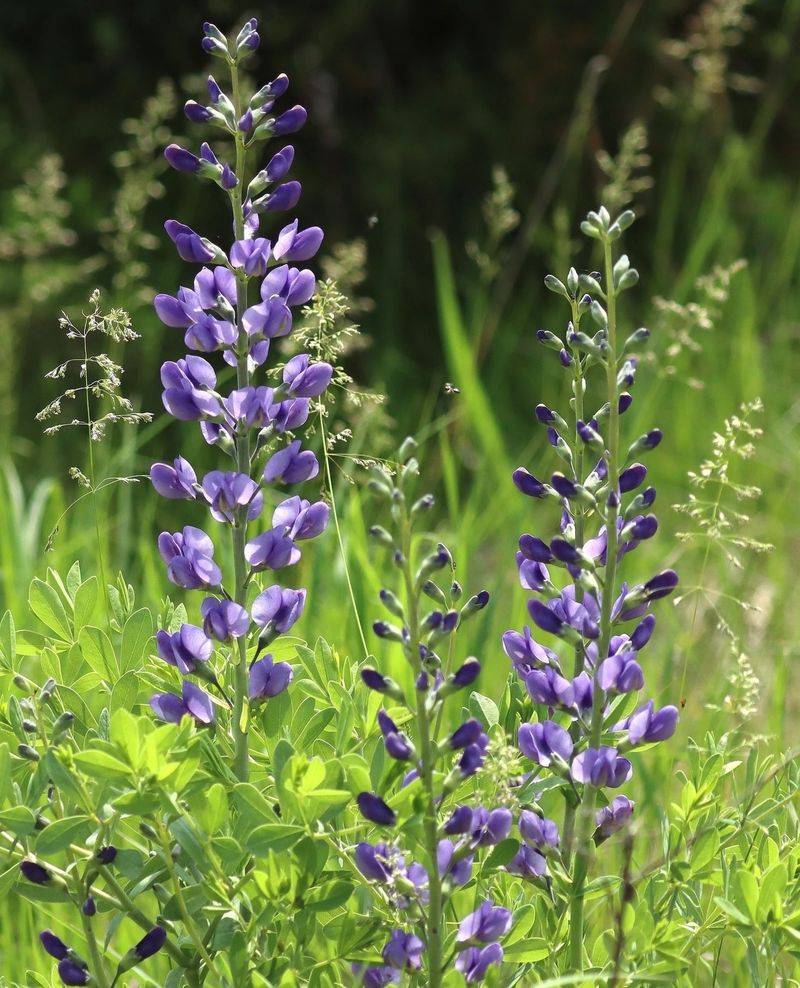
If you want a native perennial that looks like it belongs in a formal garden but requires almost no maintenance, Blue False Indigo is your answer.
It produces tall, dramatic spikes of deep blue-purple flowers in late spring, and the blue-green foliage looks clean and attractive for the rest of the growing season.
After the flowers fade, dark inflated seed pods take over and add their own visual interest well into fall.
Baptisia australis is one of the most well-behaved perennials you can grow in Pennsylvania. It doesn’t spread by runners or send seeds everywhere.
Instead, it slowly expands into a large, rounded clump over several years, staying neatly in place. Once established, it can live for decades in the same spot without needing to be divided or moved.
Getting it started does require some patience. Blue False Indigo puts most of its early energy into building a deep root system, so the first couple of years might look underwhelming.
But by year three or four, it becomes a real showstopper. That investment pays off because this plant is incredibly drought-tolerant and deer-resistant, two qualities that matter a great deal to Pennsylvania gardeners.
It does best in full sun and average, well-drained soil. Avoid overly rich or amended soil because that can cause the stems to flop.
Placing it toward the back of a border works well since it grows two to four feet tall. For structured beds across Pennsylvania, few natives offer this level of reliability and elegance.
5. Black-Eyed Susan (Rudbeckia Hirta)
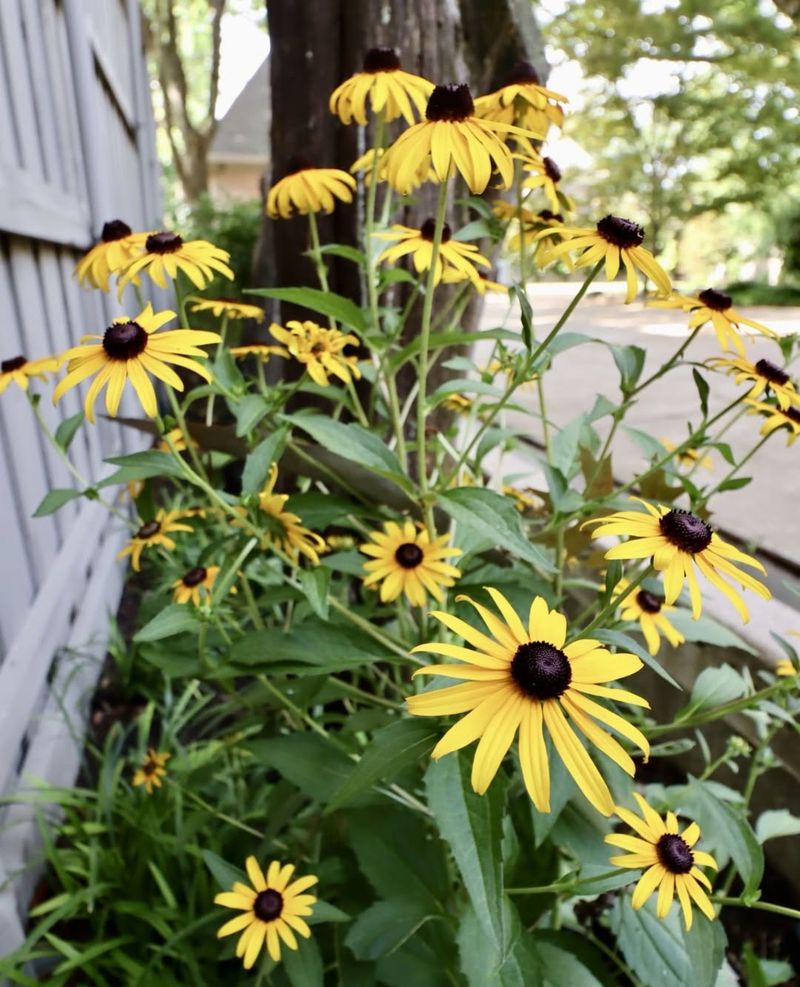
Bright, cheerful, and tough as nails, Black-Eyed Susan is one of the most beloved wildflowers in Pennsylvania. Those golden-yellow petals surrounding a dark brown center are instantly recognizable along roadsides, in meadows, and in backyard gardens across the state.
It blooms from midsummer into fall, filling in the gap when spring flowers have faded and fall color hasn’t quite arrived yet.
Rudbeckia hirta is a light self-seeder, which means it drops seeds and creates new plants nearby. Over time, this can create a natural-looking drift of flowers that feels effortless and wild.
The key thing to know is that it’s not pushy about it. The seedlings are easy to thin out or relocate, and the overall effect is more meadow-inspired than messy.
This plant handles tough conditions without complaint. Poor soil, dry spells, and full sun are no problem for Black-Eyed Susan.
That kind of resilience makes it especially useful for slopes, parking strips, or any area in Pennsylvania where irrigation isn’t practical. It’s one of those plants that actually performs better when you leave it alone.
Pollinators absolutely love it. Bees, butterflies, and beneficial insects flock to the blooms all season long.
Leaving the seed heads standing through winter provides food for birds like finches and chickadees.
For Pennsylvania gardeners who want a low-maintenance, wildlife-friendly yard with reliable summer color, Black-Eyed Susan is practically a must-have. It’s easy, effective, and genuinely beautiful.
6. Wild Geranium (Geranium Maculatum)
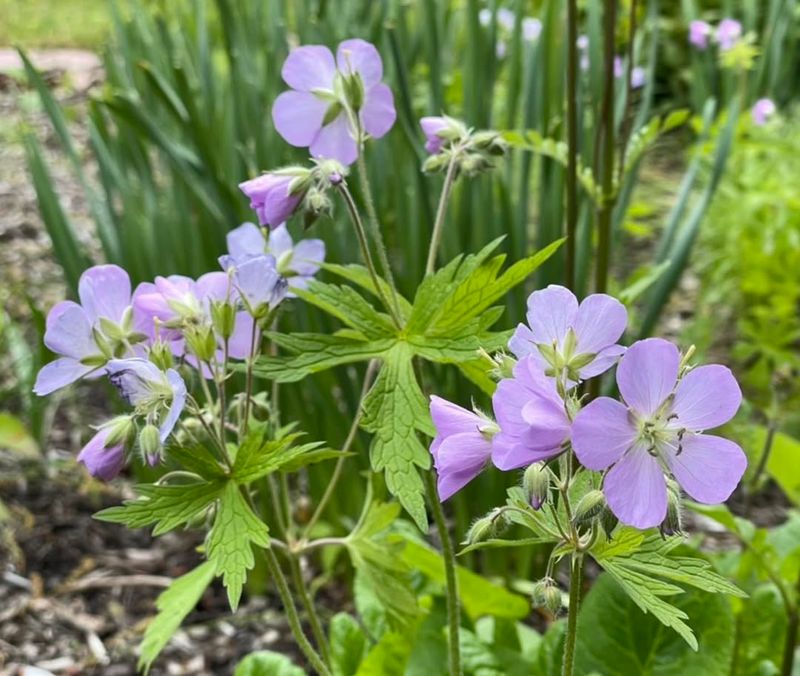
Wild Geranium has a reputation as one of the most easygoing native plants in Pennsylvania, and it’s a reputation well earned. In spring, it puts on a lovely show of pink to lavender five-petaled flowers that last for several weeks.
The deeply lobed leaves are attractive on their own, and in fall they often turn shades of red and orange before the plant goes dormant.
Geranium maculatum spreads at a relaxed pace, gradually filling in woodland edges and shaded borders without ever becoming a nuisance. It expands through both rhizomes and self-seeding, but neither process is aggressive.
You can easily pull or divide sections if the patch grows larger than you’d like. Most gardeners find it naturally stays within reasonable bounds on its own.
This plant fits beautifully into Pennsylvania’s woodland garden settings. It grows best in partial to full shade with moist, well-drained soil that’s rich in organic matter.
Pairing it with ferns, Wild Columbine, or Foamflower creates a layered planting that mimics the look of a natural forest floor. That kind of naturalistic combination is both visually appealing and beneficial for local wildlife.
One of Wild Geranium’s underappreciated qualities is its support for native bees. Early bumblebees and mining bees depend on it as a pollen source in spring.
For anyone in Pennsylvania trying to build a yard that supports biodiversity from the ground up, adding Wild Geranium to a shaded bed is a genuinely smart and satisfying move.
7. Beardtongue (Penstemon Digitalis)
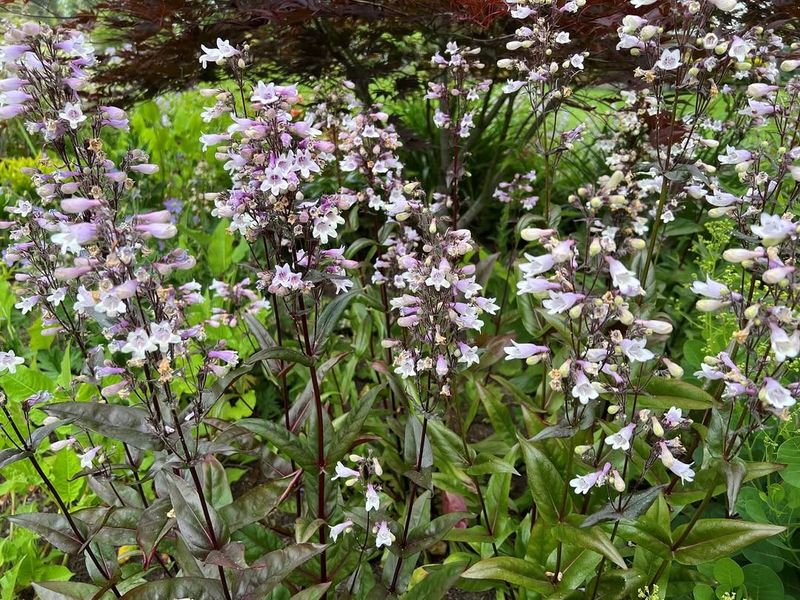
Penstemon digitalis, commonly called Beardtongue, is one of those native plants that looks like it should be fussier than it actually is.
The tall, upright stems carry clusters of tubular white flowers with purple-tinged throats, and the whole plant has a refined, architectural quality that works well in both formal and naturalistic garden styles.
It blooms in late spring to early summer, bridging the gap between spring and summer perennials.
What makes Beardtongue especially appealing for Pennsylvania gardeners is how balanced it stays. It may self-seed modestly, producing a few new plants in nearby spots, but it never swamps its neighbors or takes over a bed.
The seedlings are small and easy to manage, and many gardeners welcome them because they fill in bare spots without any extra effort or expense.
This plant is remarkably adaptable. It tolerates clay soil, poor drainage, and periods of drought once established.
Full sun to light shade both work well. Pennsylvania’s variable weather doesn’t seem to faze it much, which is exactly what you want in a perennial that you’re planning to enjoy for years.
Hummingbirds and bumblebees are drawn to the tubular flowers, making Beardtongue a solid choice for anyone building a pollinator-friendly yard. The glossy basal foliage also stays attractive through most of the growing season, even after the blooms are gone.
For a native perennial that brings structure, wildlife value, and a touch of elegance to Pennsylvania gardens, Beardtongue delivers on every front.