These 10 Native Plants Are Turning California Yards Into Hummingbird Magnets
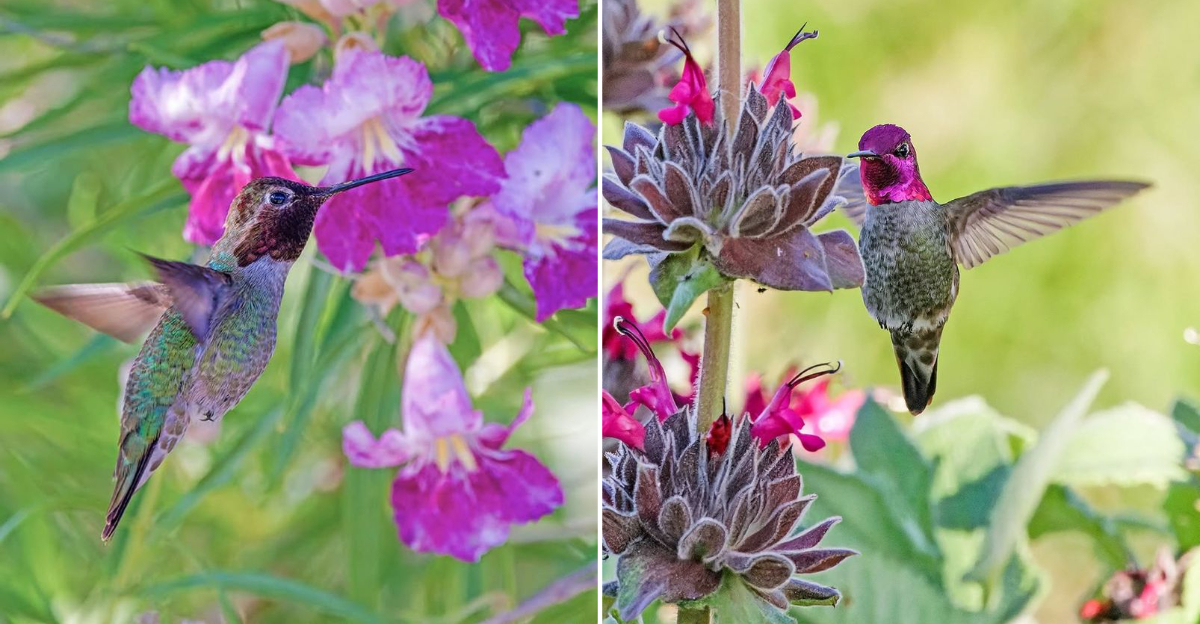
Hummingbirds are showing up in California yards for one simple reason. Smart gardeners are planting the right natives.
These tiny birds move fast, but they know exactly where to find the best nectar, shelter, and safe resting spots. Add the right plants and your yard can turn into a daily feeding station filled with color and motion.
Bright blooms, tubular flowers, and long flowering seasons keep hummingbirds coming back again and again. Many native plants also handle drought, heat, and poor soil with ease.
That means less work for you and more action in your garden. Even small spaces can attract big attention from these feathered visitors.
If you want more hovering, chirping, and wing-fluttering moments outside your window, it starts with planting smart. These native plants are changing ordinary California landscapes into nonstop hummingbird hotspots.
1. California Fuchsia (Epilobium canum)
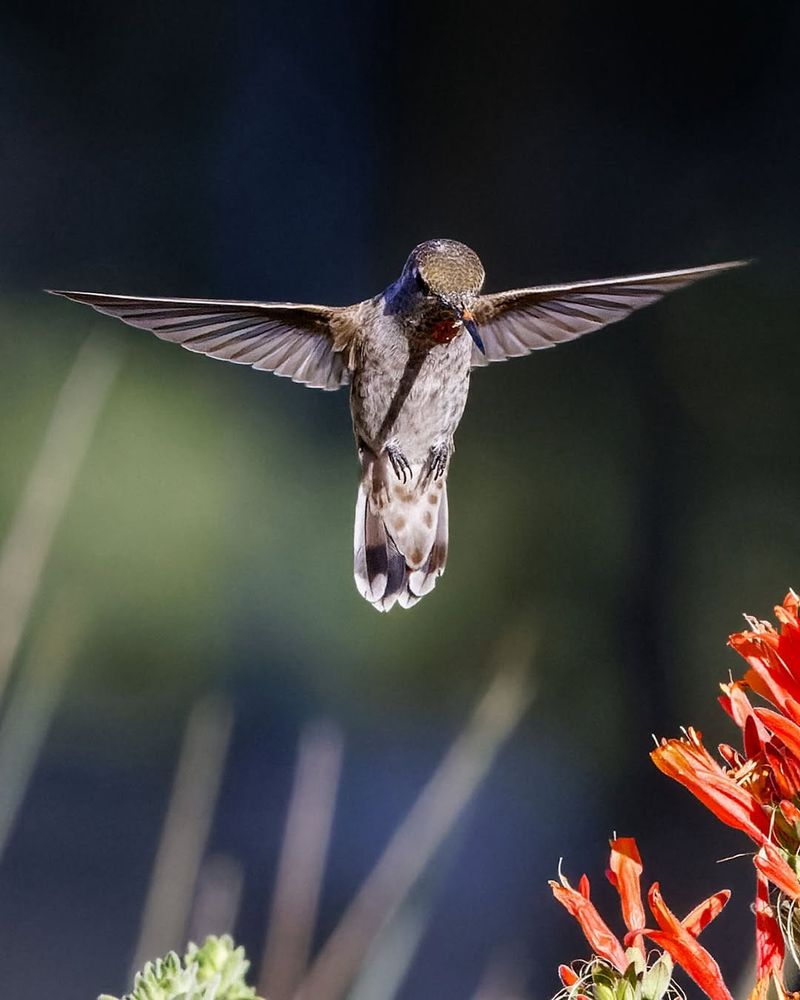
Late summer can be tough for hummingbirds when most spring bloomers have faded and migration energy needs surge. Right when nectar sources dwindle, one native plant steps up to fill this critical gap with explosive color that Anna’s and Rufous hummingbirds simply cannot resist.
California Fuchsia produces brilliant red-orange tubular flowers from August through November, exactly when hummingbirds need fuel most.
The inch-long blooms emerge in dense clusters along silvery-green foliage, creating a stunning contrast that catches both human and hummingbird attention.
This low-growing perennial spreads naturally through underground rhizomes, eventually forming attractive groundcover patches.
Full sun brings the best flowering performance, though it tolerates partial shade in hotter inland valleys. Once established, it thrives on minimal summer water—monthly deep soaking suffices in most regions.
Coastal gardeners find it particularly carefree, while desert edge communities should provide slightly more moisture.
Plant it along pathways, in rock gardens, or cascading over retaining walls where hummingbirds can easily spot the bright blooms. Pair it with spring and early summer bloomers to extend your nectar calendar.
Cut stems back to six inches in late winter to encourage bushy growth and abundant flowering the following season.
2. Cleveland Sage (Salvia clevelandii)
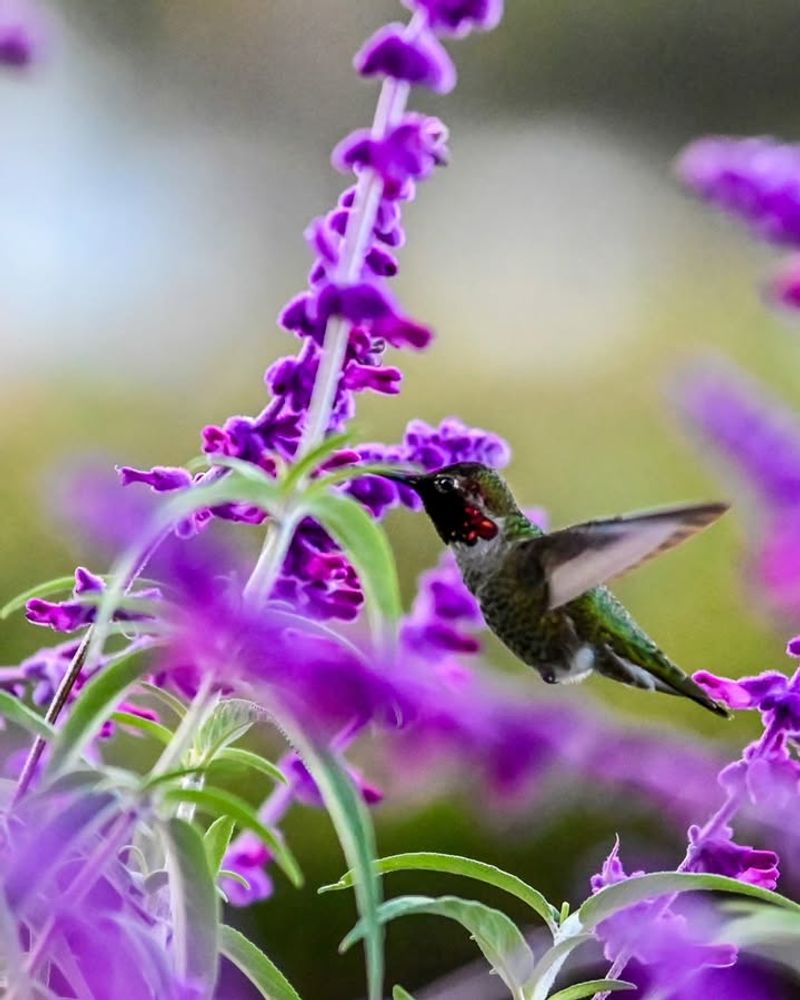
Fragrance matters more than most gardeners realize when creating wildlife habitat.
Aromatic foliage releases volatile compounds that help hummingbirds locate nectar sources from remarkable distances, essentially broadcasting a dinner invitation across your neighborhood.
Cleveland Sage combines powerfully scented gray-green leaves with stunning purple-blue flower spikes that emerge in late spring and often rebloom through summer.
The whorled blooms cluster densely along upright stems, providing abundant nectar that Anna’s Hummingbirds visit repeatedly throughout the day.
This rounded shrub typically reaches three to five feet in both height and width.
Southern California gardens see the best performance, particularly in San Diego County where this plant originates. It demands excellent drainage and full sun, making it perfect for slopes, berms, and raised planters.
Established plants need zero supplemental water in coastal zones and only occasional deep soaking inland during extended dry spells.
Position Cleveland Sage where you’ll brush against it regularly—near pathways or seating areas—to release that intoxicating fragrance. Space plants four feet apart for individual specimens or closer for informal hedging.
Prune lightly after flowering to maintain compact shape, but avoid cutting into old wood. This sage tolerates clay soil better than many natives if drainage stays adequate.
3. Scarlet Bugler (Penstemon centranthifolius)
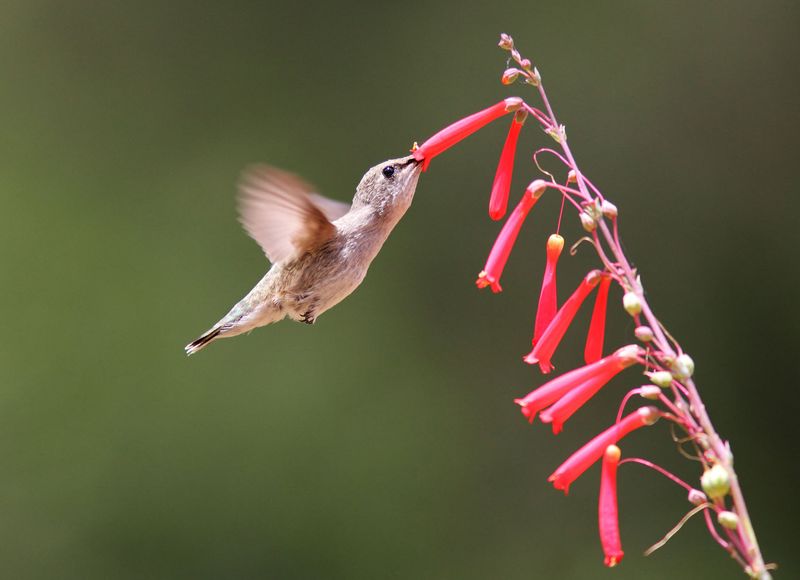
Vertical nectar sources allow hummingbirds to feed while maintaining vigilance against predators and competitors.
Tall flower spikes provide this elevated feeding advantage while creating dramatic garden focal points that draw the eye upward through landscape layers.
Scarlet Bugler sends up slender stems reaching three to four feet tall, lined with vivid red tubular flowers that seem purpose-built for hummingbird beaks.
Blooming from April through June, this penstemon bridges the gap between early spring wildflowers and summer bloomers.
The narrow gray-green leaves form low basal rosettes, keeping the plant compact when not flowering.
Inland valleys and foothill communities see spectacular performance, though coastal gardeners succeed with excellent drainage and protection from foggy conditions. Full sun produces the most flower stalks, but light afternoon shade works in hotter microclimates.
Water needs stay low after establishment—monthly deep watering during the growing season suffices.
Plant Scarlet Bugler in groups of three or five for maximum visual impact and hummingbird attraction. The airy flower spikes layer beautifully behind lower-growing groundcovers and in front of taller shrubs.
This short-lived perennial typically lasts three to four years, but readily self-seeds when conditions suit it. Allow some seed heads to mature for natural regeneration and goldfinch feeding.
4. Island Snapdragon (Gambelia speciosa)
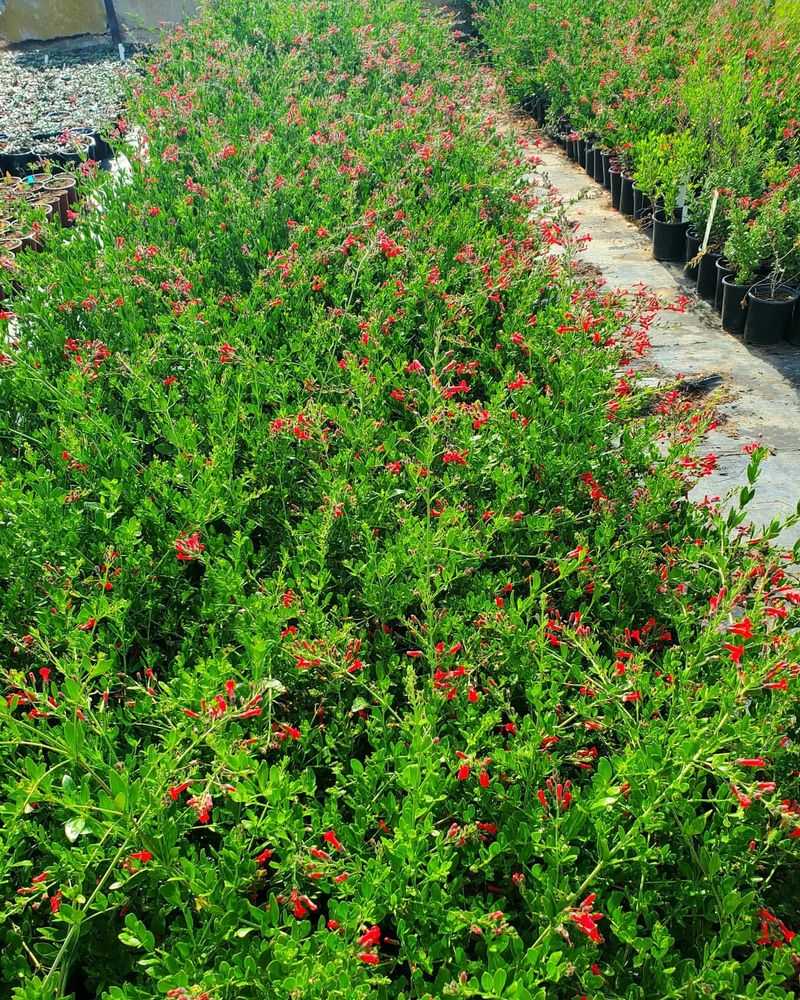
Sprawling growth habits create multi-level feeding opportunities that different hummingbird species prefer.
Some individuals favor low feeding positions while others dominate higher territories, so varied plant forms accommodate more birds simultaneously without triggering aggressive territorial displays.
Island Snapdragon produces massive two-inch tubular flowers in deep red shades that rank among the largest native blooms hummingbirds visit.
This vigorous grower spreads six to ten feet wide, scrambling over rocks, cascading down slopes, or climbing through supportive shrubs.
Flowering peaks in spring but continues sporadically through fall with adequate moisture.
Channel Islands genetics make this plant surprisingly adaptable across California’s coastal and inland regions. It performs beautifully in full sun or partial shade, though afternoon protection helps in desert-adjacent areas.
Water needs range from low to moderate—established plants tolerate dry conditions but bloom more prolifically with occasional summer irrigation.
Use Island Snapdragon as living groundcover on slopes too steep for mowing, or train it up fences and arbors for vertical interest. The sprawling stems root where they touch soil, gradually expanding coverage.
This growth habit can overwhelm smaller plants, so give it plenty of room or pair it with equally vigorous natives. Prune back by one-third after main flowering flush to encourage bushier growth and additional bloom cycles.
5. Chaparral Currant (Ribes malvaceum)
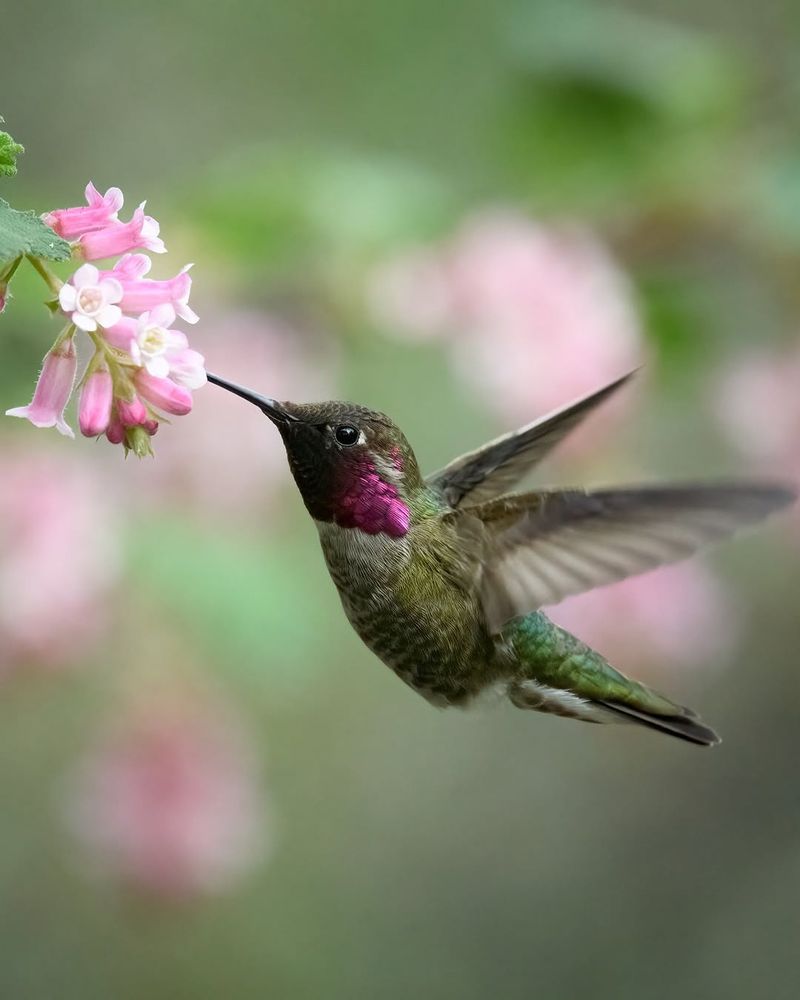
Winter nectar scarcity challenges resident Anna’s Hummingbirds when most plants remain dormant.
These year-round California residents need reliable food sources during cold months when insect availability drops and energy demands for thermoregulation increase substantially.
Chaparral Currant breaks dormancy surprisingly early, producing dangling clusters of pink tubular flowers from December through March. This deciduous shrub offers critical winter nectar exactly when hummingbirds need it most.
The fragrant blooms hang in groups of ten to twenty flowers, providing abundant feeding opportunities. Attractive lobed leaves emerge after flowering, followed by small berries that songbirds devour by early summer.
Partial shade to full sun works equally well, making this adaptable shrub perfect for woodland edges and mixed borders. It naturally occurs in coastal sage scrub and chaparral communities from San Francisco Bay south through Southern California.
Established plants thrive on rainfall alone in most regions, though occasional summer water extends the leafy period before natural summer dormancy.
Plant Chaparral Currant where you’ll enjoy the early blooms from windows or pathways during winter months. The six-foot rounded form works beautifully as informal hedging or specimen planting.
Prune only to remove dead wood or shape after flowering finishes. This currant tolerates clay soils better than many natives and actually benefits from the moisture retention heavy soils provide.
6. Sticky Monkeyflower (Diplacus aurantiacus)
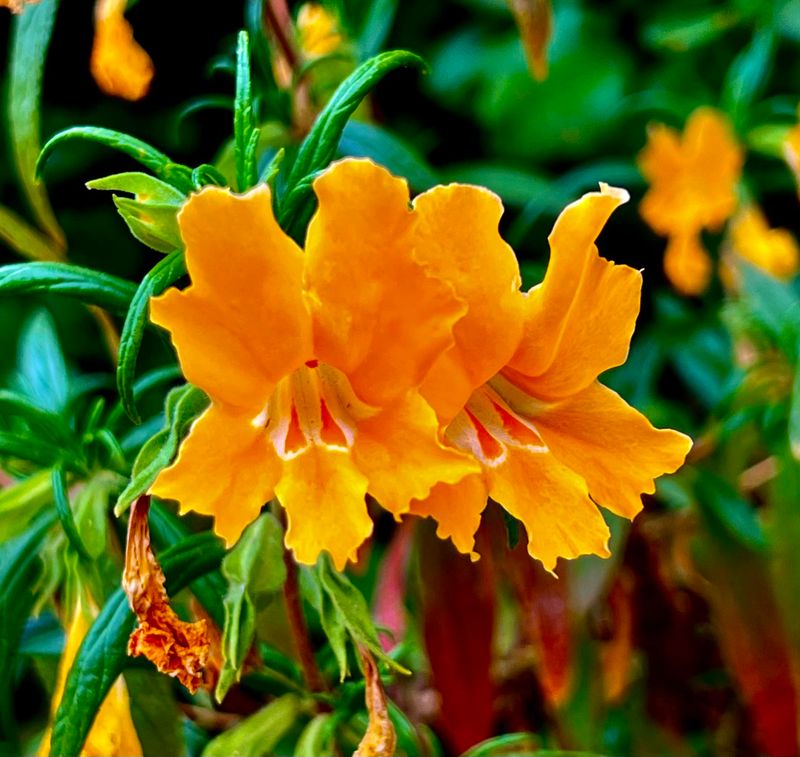
Reliable repeat bloomers keep hummingbirds returning to your yard throughout the growing season rather than simply passing through during brief flowering windows.
Plants that produce nectar over extended periods become reliable food sources that territorial hummingbirds defend vigorously, essentially claiming your garden as prime habitat.
Sticky Monkeyflower delivers nearly year-round flowering in mild coastal climates, with peak bloom from March through August and sporadic flowers during winter.
The inch-long tubular blooms come in shades ranging from pale yellow through salmon to deep orange-red.
Glossy evergreen leaves stay attractive even between flowering flushes. This adaptable shrub typically grows three to four feet tall and wide.
Full sun produces the most prolific flowering, though it tolerates partial shade especially in hotter inland valleys. Coastal gardeners enjoy the longest bloom period and lowest maintenance requirements.
Inland and foothill plantings benefit from occasional summer water to maintain flowering through heat waves. Established plants handle drought well but may drop some leaves during extreme dry periods.
Position Sticky Monkeyflower in mixed borders where its extended bloom season provides consistent nectar alongside plants with shorter flowering windows. The sticky foliage naturally resists deer browsing.
Deadheading spent blooms encourages additional flower production, though it’s not strictly necessary. Prune back by one-third every two to three years to rejuvenate older plants and maintain compact form.
7. Hummingbird Sage (Salvia spathacea)
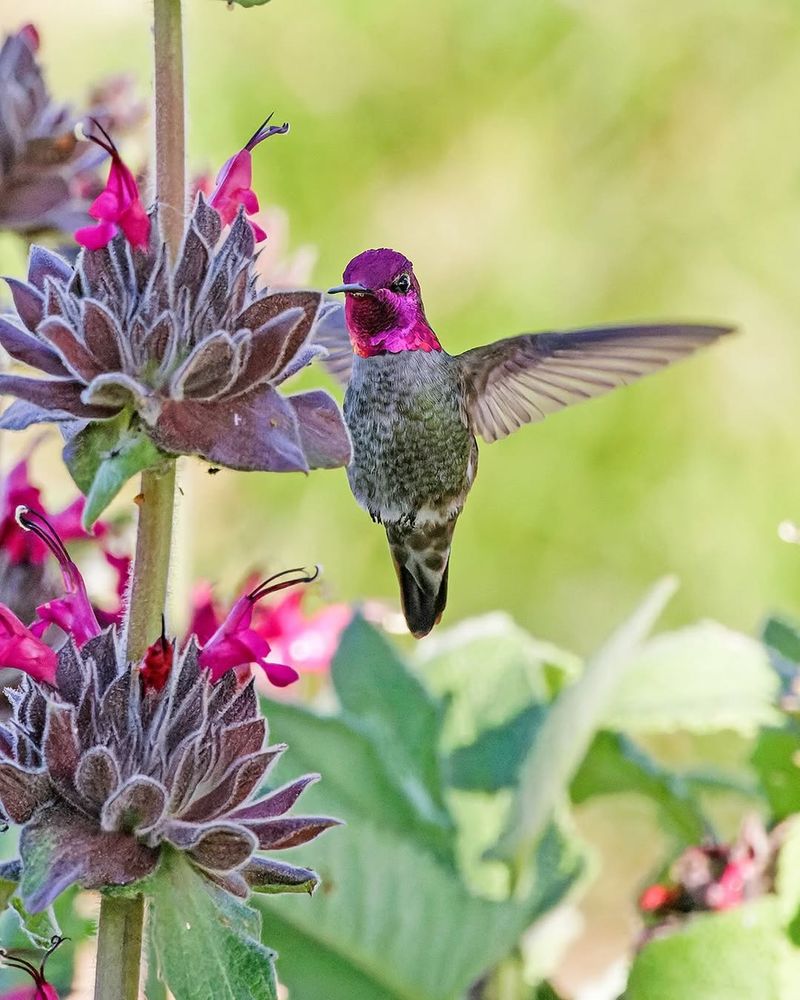
Shade gardening often feels limiting when trying to attract hummingbirds since most nectar-rich plants demand full sun.
Woodland understory natives evolved to bloom in dappled light beneath oak canopies, providing essential nectar sources in shadier garden areas where few other hummingbird plants perform well.
Hummingbird Sage produces spectacular magenta flower spikes rising above large aromatic leaves that spread as attractive groundcover in partial to full shade.
Blooming from March through May, the flowers emerge in whorled clusters along upright stems that reach two feet tall.
The fruity-scented foliage stays semi-evergreen in mild winters and spreads gradually through underground runners to form colonies.
This shade specialist thrives beneath oaks, along north-facing walls, and under high tree canopies where most sun-loving natives struggle. It naturally occurs in coastal sage scrub and oak woodland communities throughout Central and Southern California.
Moderate water keeps the foliage lush, though established plants tolerate summer dryness by going partially dormant.
Use Hummingbird Sage as groundcover beneath native trees or in woodland garden settings where its spreading habit fills space beautifully. The large leaves suppress weeds effectively once colonies establish.
Pair it with shade-tolerant ferns and woodland perennials for layered plantings. Cut back tattered foliage in late winter before new growth emerges to maintain tidy appearance throughout the growing season.
8. Manzanita (Arctostaphylos spp.)
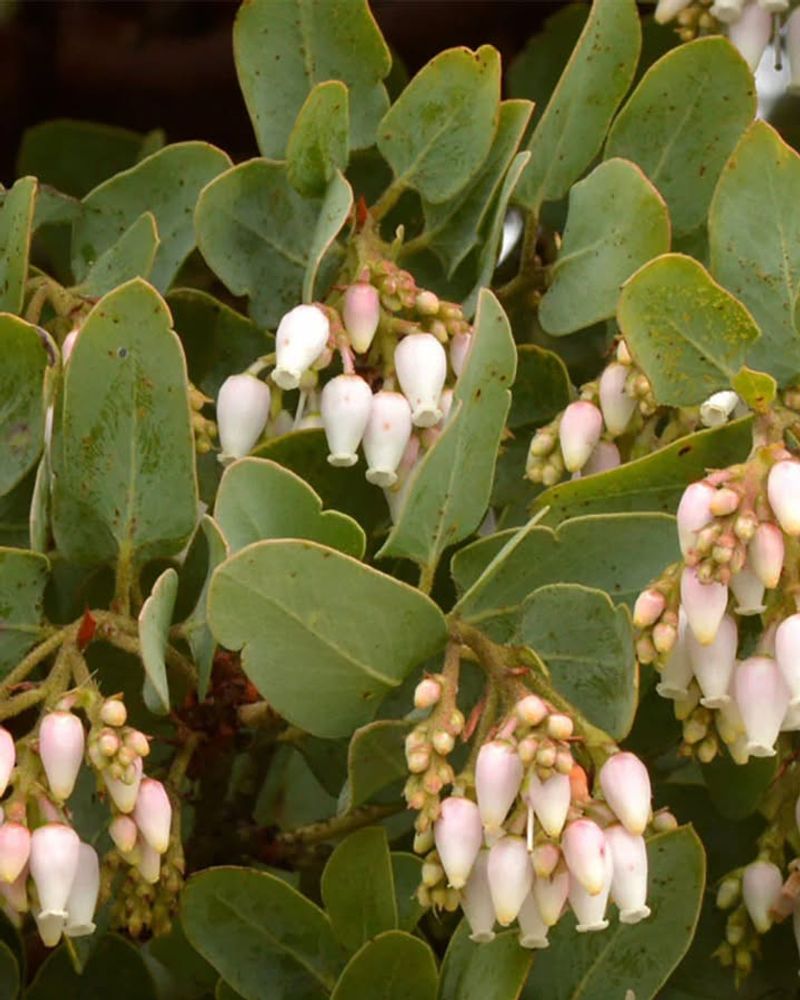
Early spring nectar availability determines whether migrating hummingbirds pause in your yard or continue searching for better food sources.
Plants that bloom from February through April provide critical refueling stations for northbound Rufous Hummingbirds while supporting resident Anna’s during nesting season when energy demands peak.
Manzanitas produce abundant clusters of small urn-shaped flowers in white or pink shades that hummingbirds visit constantly during late winter and early spring bloom periods.
These evergreen shrubs offer year-round structure with beautiful smooth red or mahogany bark that peels attractively.
Species range from low groundcovers to large shrubs, providing options for every landscape scale and situation.
Full sun and excellent drainage prove essential for manzanita success. These chaparral natives evolved on slopes and well-drained soils where water never puddles.
Once established, they need zero supplemental irrigation in most regions. Coastal, inland valley, and foothill gardeners all find suitable species for their conditions.
Choose manzanita varieties based on mature size and your available space—groundcover types like Emerald Carpet stay under one foot tall while shrub forms like Dr. Hurd reach fifteen feet. Plant them on berms, slopes, or in raised beds where drainage stays sharp.
Never amend soil or fertilize established plants. The architectural branching structure and colorful bark provide winter interest long after flowers fade and berries ripen for wildlife consumption.
9. Desert Willow (Chilopsis linearis)
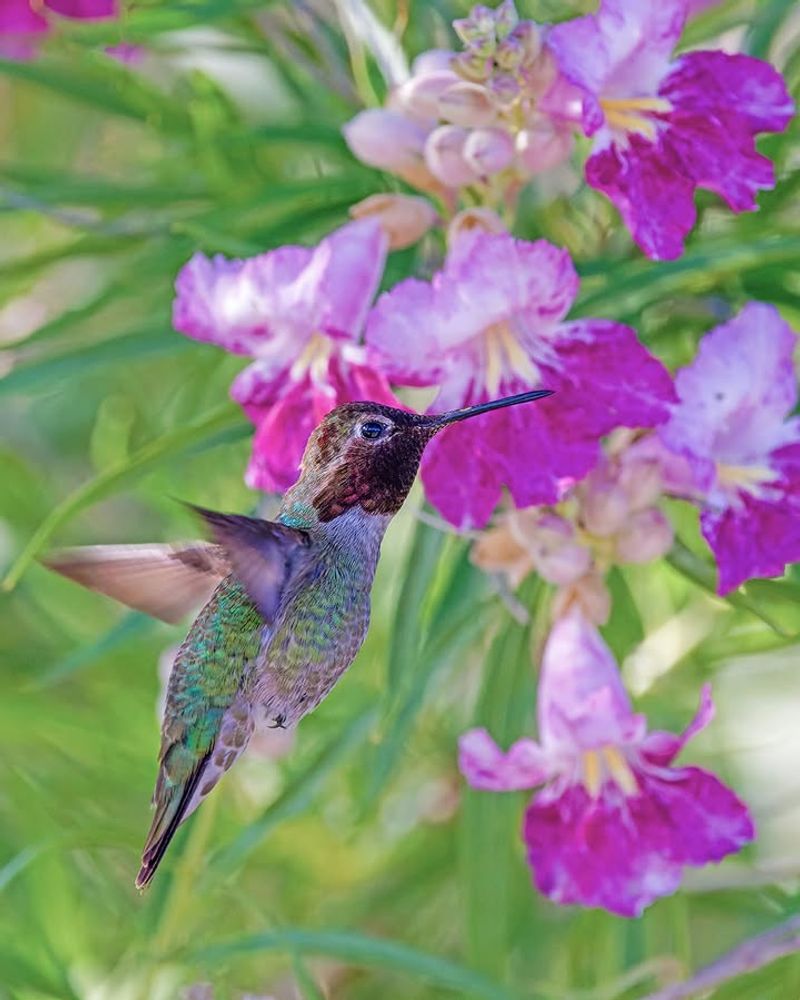
Desert and inland valley gardeners face unique challenges creating hummingbird habitat in extreme heat where many coastal natives struggle.
Heat-loving species that evolved in low-desert and transition zones provide reliable nectar during brutal summer months when temperatures soar and most other plants shut down flowering.
Desert Willow produces stunning orchid-like blooms in shades of pink, purple, or white from May through September, exactly when hot-region gardens need continuous flowering most. The two-inch tubular flowers cluster at branch tips above narrow willow-like leaves.
This deciduous small tree reaches fifteen to twenty-five feet tall with an airy, open canopy that casts light filtered shade.
Full sun and reflected heat from walls or paving never faze this desert native. It thrives in low-desert communities, inland valleys, and transitional foothill zones where summer temperatures regularly exceed one hundred degrees.
Established trees handle drought remarkably well but bloom more prolifically with deep monthly watering during the growing season. Fast-draining soil proves essential.
Use Desert Willow as a patio tree, accent specimen, or grouped for screening where its summer flowering spectacle attracts constant hummingbird activity. The long seed pods persist through winter, adding textural interest to the bare-branch silhouette.
Prune in late winter to remove crossing branches and maintain desired shape. This tree tolerates alkaline soils common in many inland California regions.
10. Blue Elderberry (Sambucus nigra ssp. caerulea)
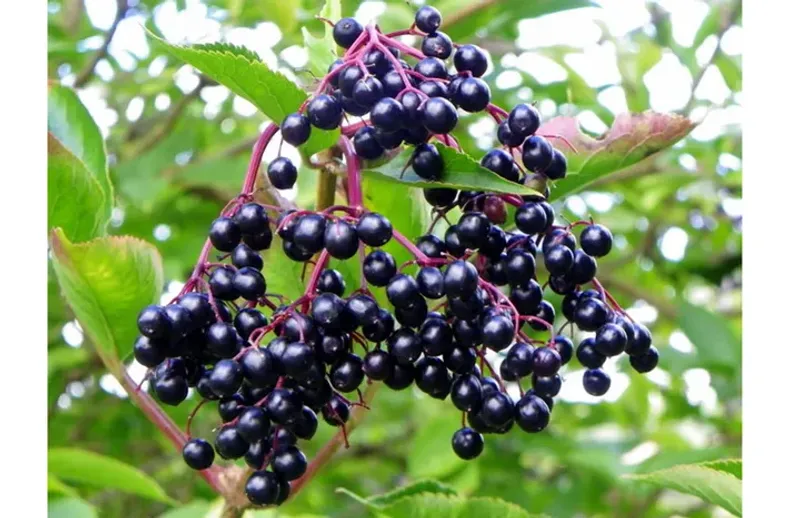
Multi-season wildlife value maximizes your garden’s ecological contribution beyond just nectar provision.
Plants that offer flowers, berries, nesting cover, and insect habitat support hummingbirds throughout their entire annual cycle while attracting dozens of additional bird species that create dynamic backyard wildlife communities.
Blue Elderberry produces large flat-topped clusters of creamy white flowers in late spring that hummingbirds visit regularly, though the real magic happens afterward when powder-blue berries ripen by midsummer.
These nutritious fruits attract over forty bird species while the flowers earlier provided nectar and pollen for countless insects that hummingbirds feed to their nestlings.
This large deciduous shrub reaches twelve to twenty feet tall with compound leaves and multi-stemmed growth.
Full sun to partial shade suits this adaptable native found naturally along streams, in valley grasslands, and on foothill slopes throughout California. It tolerates various soil types and handles periodic flooding or extended dryness once established.
Moderate water during the growing season promotes lush foliage and maximum berry production.
Plant Blue Elderberry as a large background shrub, informal hedge, or naturalized thicket where its size won’t overwhelm smaller plants. The berries ripen just as fledgling hummingbirds leave nests, providing protein-rich insects attracted to ripening fruit.
Prune older canes to ground level every few years to rejuvenate growth. This elderberry tolerates heavier soils than many natives and actually appreciates the moisture retention.