These Native Shrubs Thrive In Georgia Front Yards When Planted In March
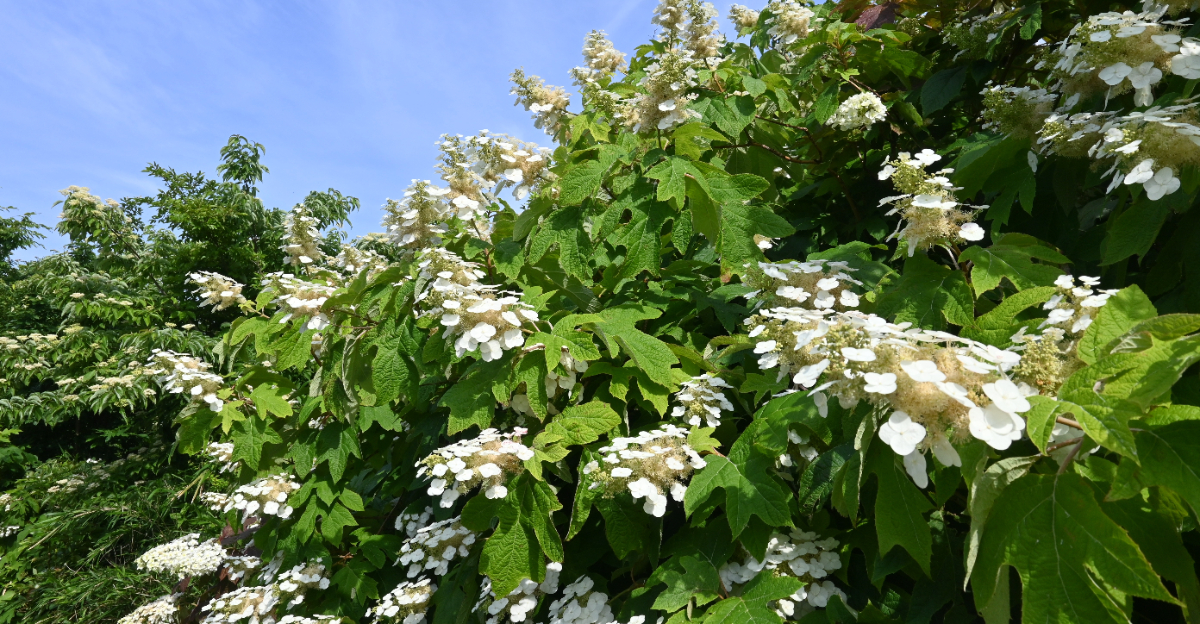
Front yards in Georgia can either feel like they belong to the landscape or like they’re constantly fighting it. The difference often comes down to what gets planted and when.
March is one of those moments where conditions start lining up, giving certain shrubs a better chance to settle in without stress.
When plants match the local climate, they grow with less effort and hold their shape without constant fixes.
That kind of steady growth is what makes a yard look put together over time instead of uneven or patchy. It also takes pressure off maintenance later in the season.
Not every shrub handles this timing the same way though. Some adjust quickly and stay consistent, while others struggle to keep up.
Knowing which ones respond well right now is what helps a front yard come together in a way that actually lasts.
1. Oakleaf Hydrangea Handles Shade And Heat With Ease
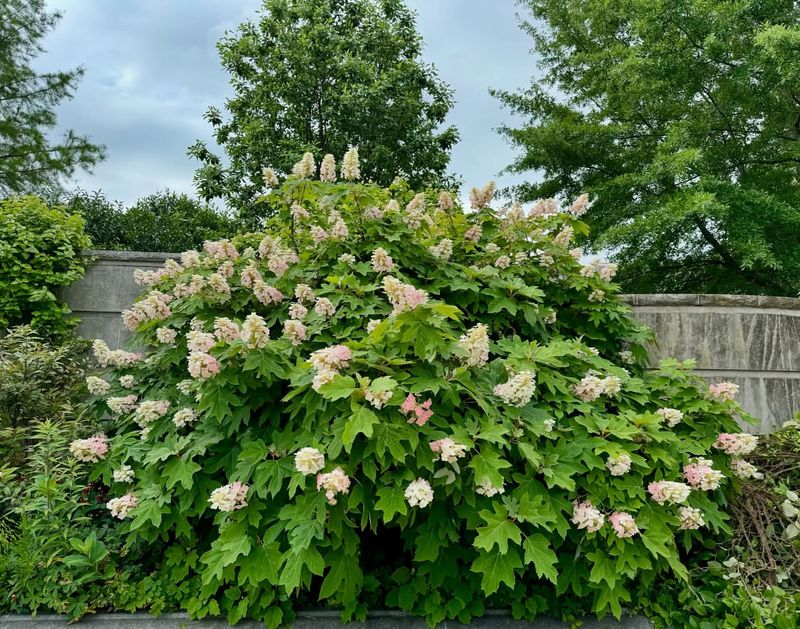
Not many shrubs can pull off dramatic flower clusters in a shady Georgia front yard without much fuss, but Oakleaf Hydrangea does exactly that.
Those big, cone-shaped white blooms show up in late spring and stay interesting well into summer as they slowly shift to pinkish-tan tones.
Planting in March lets the roots settle in before bloom time arrives.
Partial shade suits it well, especially under tall pines or near the north side of a house where Georgia afternoon sun can be brutal. Moist, well-drained soil is ideal, though it handles brief dry spells better than you might expect.
Avoid compacted clay without amending it first.
Fall is where Oakleaf Hydrangea really shows off. Leaves turn deep burgundy, orange, and red, giving the front yard serious color long after summer flowers have faded.
Even the dried flower heads stick around through winter, adding texture when everything else looks bare.
It typically grows six to eight feet tall with a similar spread, so give it room from the start. Pruning right after bloom keeps the shape tidy without cutting off next year’s buds.
Georgia gardeners who plant this one in March often see blooms in that very first season, which is a genuinely satisfying payoff for minimal effort.
It’s also a reliable native choice, which means fewer pest problems and better long-term performance in Georgia landscapes without constant attention.
2. Virginia Sweetspire Brings Reliable Spring Growth And Fall Color
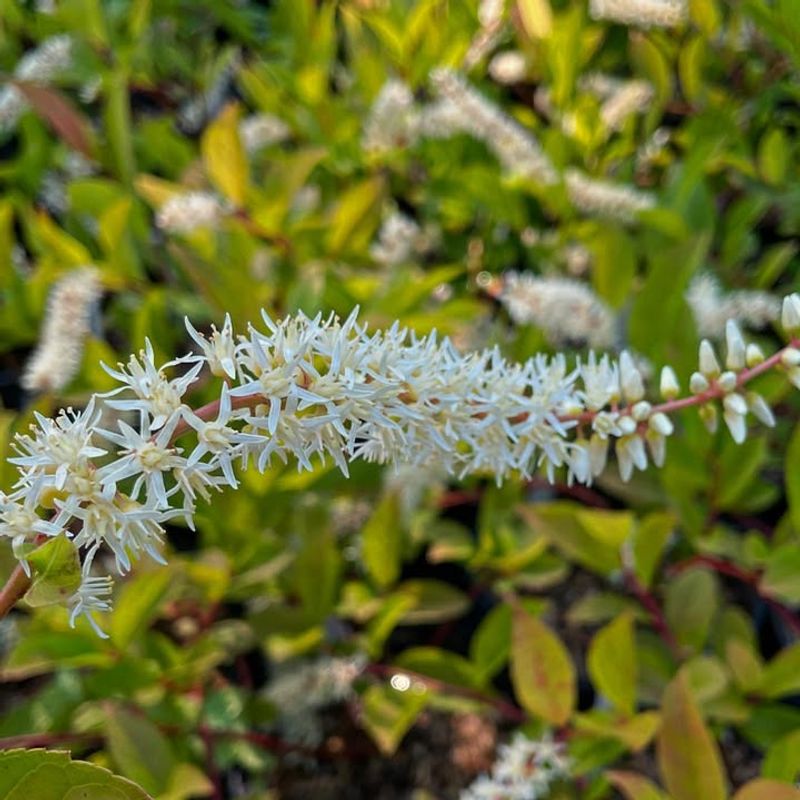
Virginia Sweetspire is the kind of shrub that earns its spot in a front yard without demanding constant attention.
White flower spikes arch out from the branches in late spring, and they carry a light, sweet fragrance that actually draws you in when you walk past.
Bees and butterflies are regulars once blooms open.
Wet soil? No problem.
Dry stretches? It handles those too.
Few native shrubs in Georgia adapt to such a wide range of moisture conditions without skipping a beat. That flexibility makes it a smart pick for front yards where drainage can be inconsistent or where a downspout empties nearby.
Come fall, the foliage shifts into shades of red, orange, and deep purple, often all at once on the same plant. It’s one of the better fall color performers among smaller native shrubs in the state.
Planted in March, it has enough time to root in well before the heat arrives.
Virginia Sweetspire usually tops out around three to five feet, spreading gradually into a relaxed, layered shape. It works well along walkways or grouped in clusters near a porch.
Part shade to full sun both work fine, which is helpful when you’re dealing with a front yard that gets mixed light throughout the day. Trimming back older stems every few years keeps growth fresh.
3. American Beautyberry Produces Bright Berries On New Growth
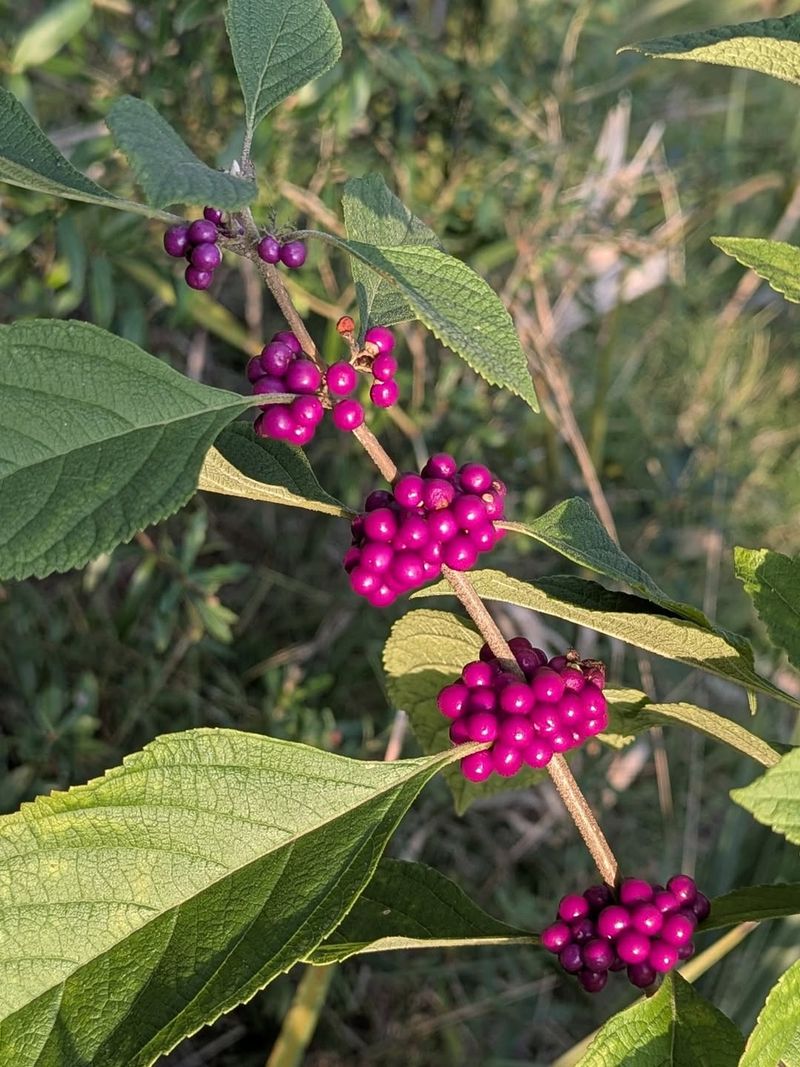
Purple berries packed tightly around arching stems in clusters so bright they almost look fake — that’s American Beautyberry in fall, and it stops people in their tracks.
Birds love the berries too, so planting this one near a front window gives you a built-in wildlife show from October onward.
March planting sets it up for strong first-year growth.
Here’s something worth knowing: berries form on new wood each year. Cutting stems back hard in late winter actually encourages more vigorous growth and heavier berry production the following fall.
It’s a counterintuitive move, but it works well across Georgia gardens.
Full sun to part shade both suit it fine. In shadier spots the plant stretches a bit more open, while full sun tends to produce a denser, more compact form.
Either way, the berry display in fall is reliably impressive without needing fertilizer or fuss.
Mature plants reach four to six feet tall with a loose, arching shape that looks natural rather than stiff. That relaxed form works well in informal front yard settings or mixed into a border with other native shrubs.
Soil quality matters less than drainage — standing water is the one thing to avoid. Across Georgia, this shrub has a reputation for being genuinely tough while still looking spectacular at its peak.
4. Buttonbush Thrives In Moist Soil And Attracts Pollinators
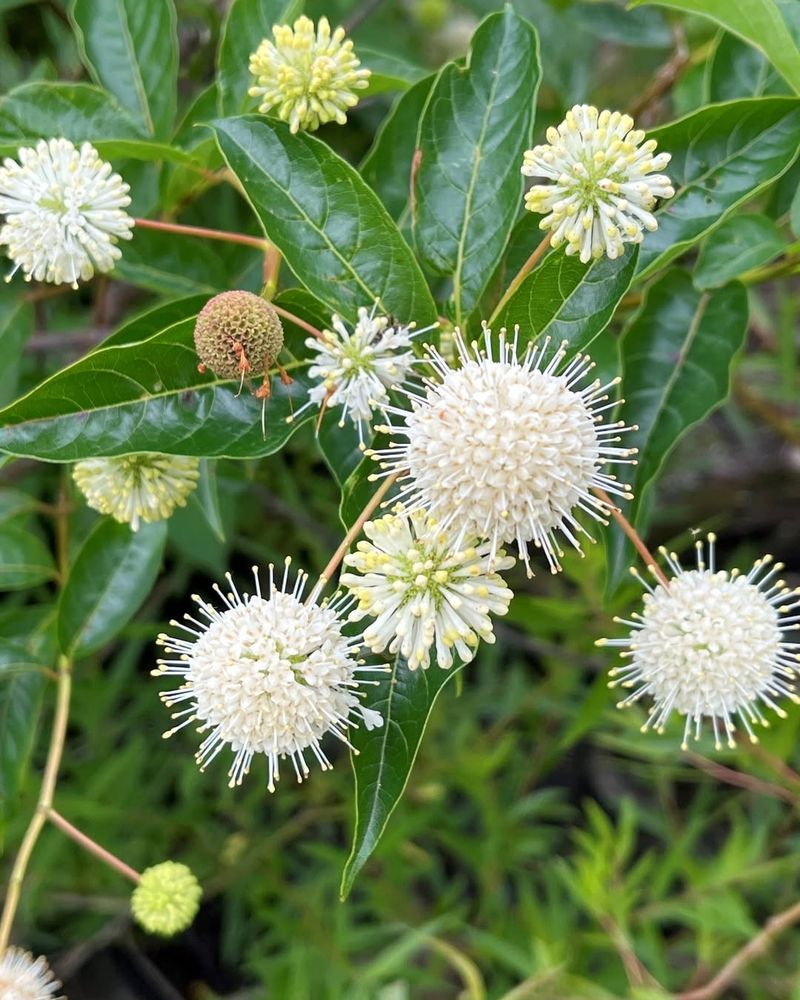
Buttonbush grows where a lot of other shrubs give up — low spots, rain garden edges, areas that stay soggy after a storm. If your Georgia front yard has a drainage problem, this native shrub turns that challenge into an asset.
Round white flower heads that look almost like golf balls covered in tiny petals show up in summer and draw in an impressive number of pollinators.
Bees, butterflies, and hummingbirds all visit regularly when it blooms. Waterfowl and songbirds eat the small round seed clusters that form afterward.
Planting it in March gives the roots a long stretch of mild weather to anchor in before summer heat and potential flooding test it.
Average height runs six to twelve feet depending on soil moisture and light. Full sun produces the most flowers, though it tolerates partial shade without much drop in performance.
Cutting it back in late winter helps control size and encourages fresh growth with better bloom coverage.
Across Georgia, front yards with low areas near the street or sidewalk often stay wet after rain and create headaches for homeowners trying to establish plants. Buttonbush sidesteps that problem entirely.
It’s not just surviving in those conditions — it actively thrives. Pair it with Virginia Sweetspire or Inkberry Holly for a cohesive native planting that handles wet soil beautifully without looking like a compromise.
5. Fothergilla Delivers Fragrant Spring Blooms And Strong Color
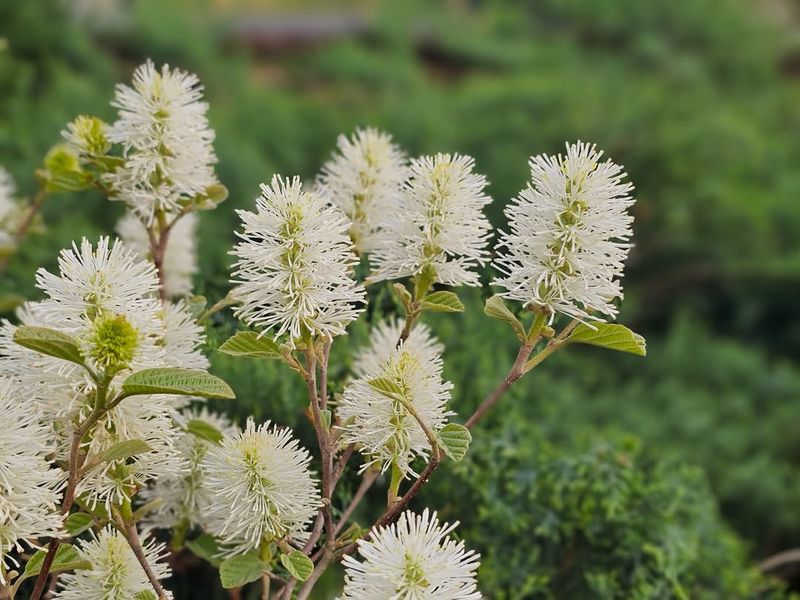
Before most shrubs even push out their first leaves, Fothergilla is already covered in white bottlebrush flowers that carry a honey-like fragrance. Early spring in Georgia can still have some cool nights, but that doesn’t slow this shrub down.
Planted in March, it may even bloom that same first season.
Fragrance is genuinely strong up close — walk past a blooming Fothergilla and you’ll notice it immediately. That makes it a smart choice near a front porch, entry path, or driveway edge where foot traffic is regular.
The blooms typically last two to three weeks, which is a solid run for a native shrub.
Fall foliage is where it pulls a second act. Leaves shift into combinations of yellow, orange, red, and purple, sometimes all on the same branch at once.
Few shrubs at this size — typically three to five feet — deliver that kind of color range. Full sun produces the best fall display, though part shade works well in Georgia’s warmer regions.
Dwarf Fothergilla, or Fothergilla gardenii, stays under three feet and suits smaller front yard spaces. Larger species like Fothergilla major fill out more naturally in open borders.
Both prefer acidic, well-drained soil, which suits most Georgia landscapes well given the region’s naturally low soil pH. Consistent moisture during the first growing season helps it settle in without stress.
6. Inkberry Holly Stays Evergreen And Adapts To Different Soils
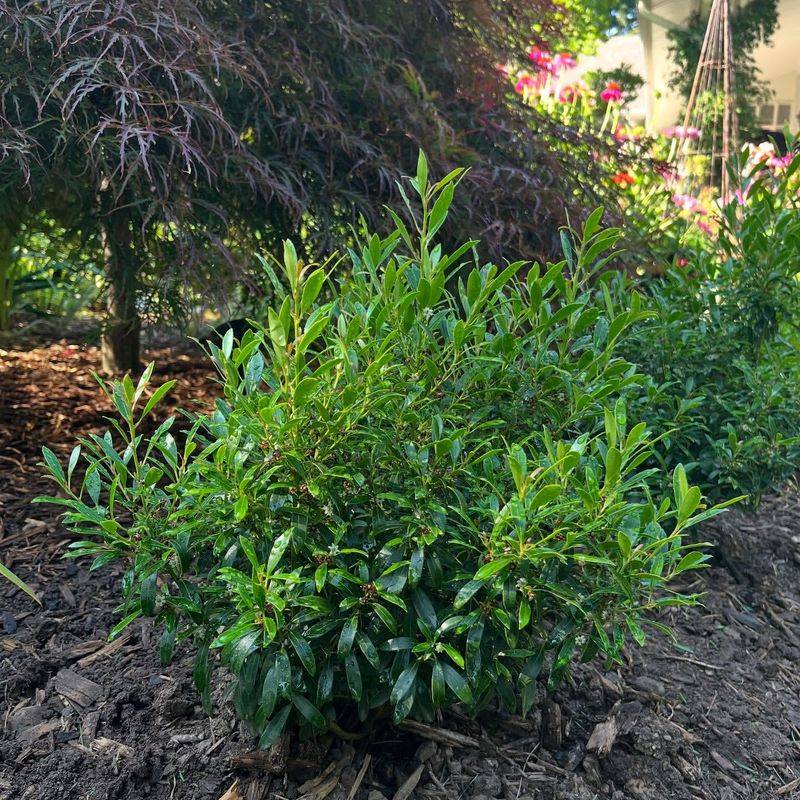
Year-round greenery in a front yard is something a lot of Georgia homeowners want, and Inkberry Holly delivers without the stiff, formal look of boxwood or traditional hollies.
Glossy dark green leaves stay on through winter, and small black berries appear in fall, providing food for birds well into the cold months.
It’s a steady, reliable presence in the landscape.
Wet soil, clay, sandy loam — Inkberry Holly tolerates a wider range of conditions than most native shrubs. That adaptability is genuinely useful across Georgia, where soil types shift dramatically from the mountains to the coast.
Planting in March gives roots time to establish across different soil profiles before summer stress sets in.
Compact varieties like Ilex glabra ‘Shamrock’ or ‘Gem Box’ stay three to four feet tall, which works well for foundation plantings or low borders along a front walkway. Standard forms can reach six to eight feet and work better as informal hedges or screen plantings along property edges.
Partial shade to full sun both suit it, though berry production is heavier with more light. Planting a male and female together improves berry set significantly.
Wildlife value is high — mockingbirds, robins, and cedar waxwings all rely on these berries during lean winter months across Georgia. Minimal pruning is needed once the plant settles into its natural form.
7. Dwarf Palmetto Handles Sun And Dry Conditions Once Established
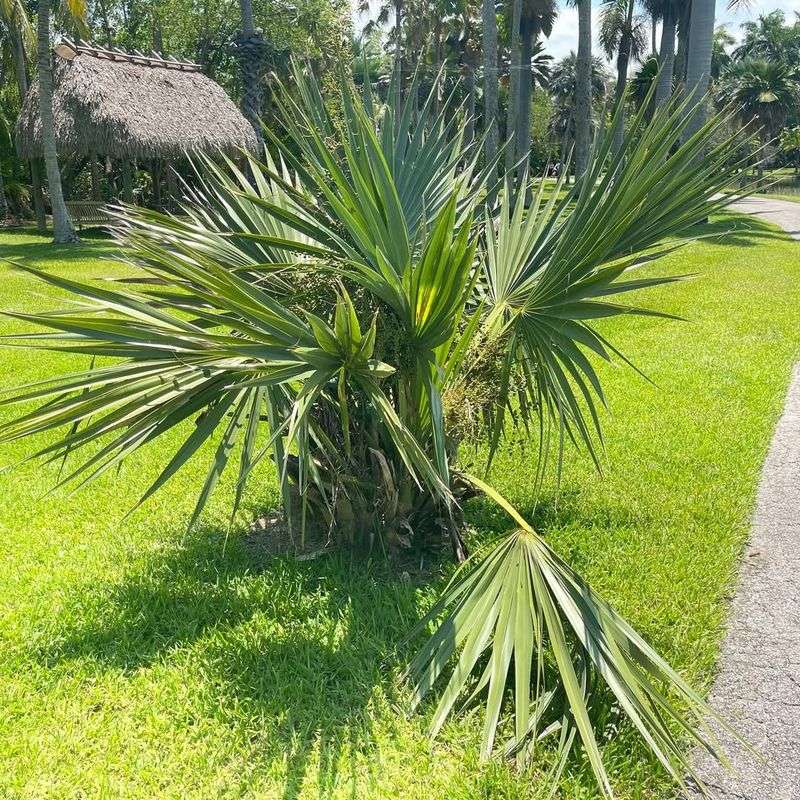
Bold, architectural, and completely at home in Georgia’s coastal regions — Dwarf Palmetto brings a texture to front yards that no other native shrub quite matches.
Fan-shaped fronds spread out low to the ground, rarely exceeding six feet in height, giving it a presence that reads as intentional and designed rather than wild.
Planted in March, it roots in during mild weather before summer sun intensifies.
Sandy, well-drained soil suits it best, which is one reason it performs so well along Georgia’s coast and in the lower Piedmont. Standing water is problematic, but once roots anchor in, dry spells through summer are handled without visible stress.
Full sun brings out the most vigorous growth and the deepest green color in the fronds.
Salt tolerance makes it especially practical for front yards near the Georgia coast, where ocean winds and salt spray challenge most plants. Inland, it still performs reliably in hot, exposed spots where other shrubs might struggle to look their best.
Pairing it with ornamental grasses or low native groundcovers enhances the bold, textured look.
Pruning is rarely necessary — older fronds brown naturally and can be removed at the base to keep things tidy. Wildlife value includes shelter for small birds and lizards that use the low, dense fronds for cover.
In Georgia’s warmer zones, this native palmetto is genuinely tough and visually striking year-round.
8. Carolina Allspice Offers Fragrant Blooms And Dense Growth
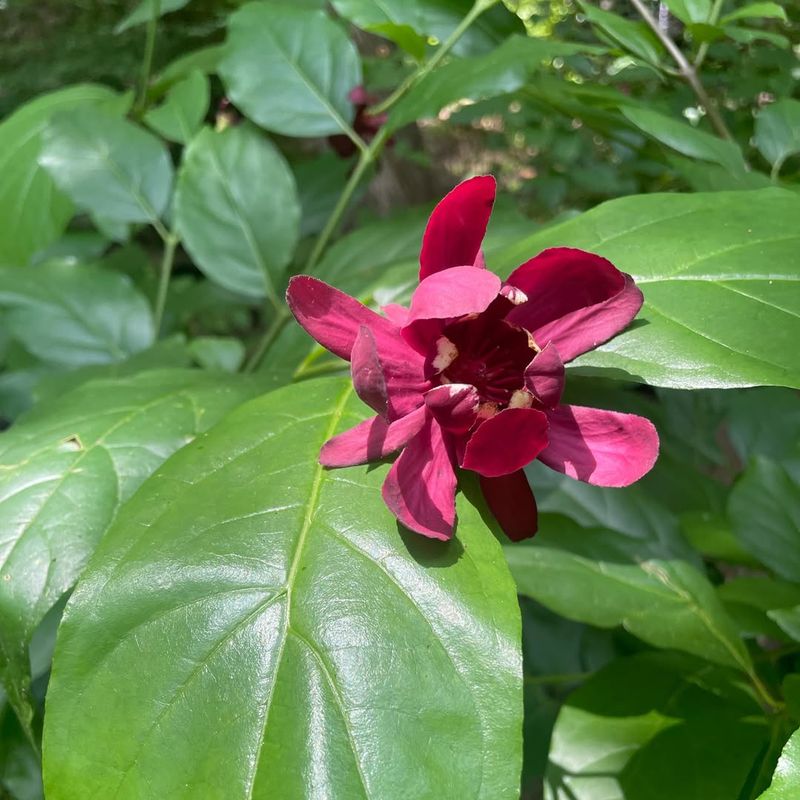
Crush a leaf from Carolina Allspice and you’ll immediately understand where the name comes from — the spicy, clove-like scent is unmistakable. Flowers carry their own deep fragrance too, with unusual burgundy-red petals that look almost tropical up close.
Bloom time runs through spring, right when Georgia front yards are waking up from winter.
Dense, rounded growth fills in space naturally without aggressive pruning. Mature plants reach six to nine feet tall with a similar spread, making them effective as informal screens or anchor plants in a mixed native border.
Planted in March, they have a full growing season ahead to push out substantial new growth.
Partial shade is where it performs best, though it tolerates more sun than many people expect as long as soil moisture stays consistent. Rich, slightly acidic soil — common across much of Georgia — suits it well.
Mulching around the base helps retain moisture and keeps roots cool through the summer months.
Wildlife benefit is real but understated. Small insects visit the unusual flowers, and dense foliage provides nesting cover for songbirds through the warmer months.
Carolina Allspice doesn’t show off with flashy berries or dramatic fall color, but its fragrance alone makes it worth planting near a front entry or porch. Across Georgia, it’s a shrub that rewards you most when you get close enough to notice it properly.