These Native Shrubs Work Best In Your Georgia Landscape
Native shrubs tend to settle into Georgia landscapes in a way that feels natural instead of forced. They don’t stand out because they’re flashy, but because they look like they belong there from the start.
So what makes certain native shrubs perform better than others in a Georgia yard? The answer usually comes down to how well they handle local soil, seasonal rain, and temperature swings without constant correction.
These shrubs grow at a steady pace, recover faster from stress, and keep their structure through changing conditions.
Choosing native shrubs isn’t just about lower maintenance. It’s about building a landscape that stays balanced as the seasons shift.
With the right selections in place, beds look fuller sooner, watering becomes more predictable, and the entire landscape feels easier to manage throughout the year.
1. Oakleaf Hydrangea
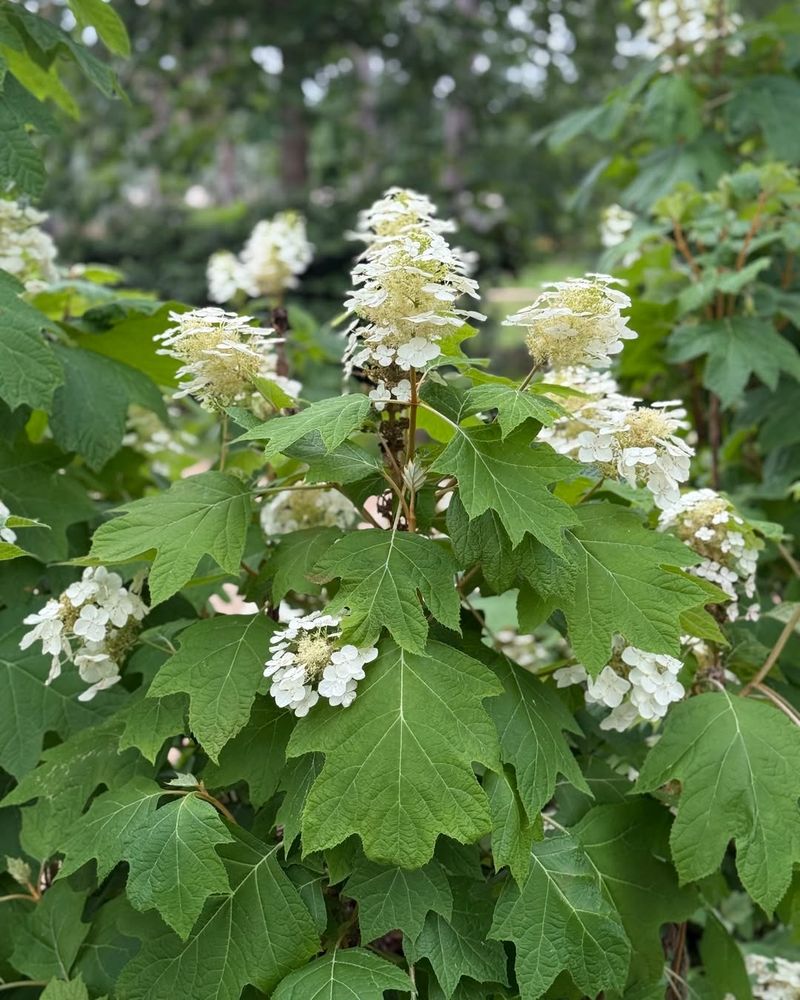
Garden centers across Georgia stock countless hydrangea varieties, but oakleaf hydrangea stands apart as the only species native to the southeastern United States.
This stunning shrub produces enormous cone-shaped flower clusters that emerge creamy white in late spring, gradually shifting to pink and finally russet brown as they age through summer and fall.
The flowers aren’t even the best part. Those distinctive oak-shaped leaves turn spectacular shades of burgundy, orange, and deep purple when autumn arrives in Georgia, creating a show that rivals any New England maple tree.
Oakleaf hydrangea handles Georgia’s summer heat far better than the popular bigleaf hydrangeas that often struggle and wilt during July and August.
It grows naturally in woodland settings throughout north and central Georgia, which tells you exactly what conditions it prefers in your landscape.
Plant this beauty in partial shade where it receives morning sun but afternoon protection from scorching rays. It tolerates full shade reasonably well but produces fewer flowers in deep shade.
The exfoliating bark provides winter interest after leaves drop, revealing cinnamon-colored strips that peel away in attractive patterns.
Mature specimens reach six to eight feet tall and equally wide, making them perfect foundation plantings or specimen shrubs.
Georgia wildlife appreciate oakleaf hydrangea too, as numerous bird species use the dense branching structure for nesting sites. Established plants need minimal supplemental watering once their roots spread deep into Georgia soil.
2. Virginia Sweetspire (Itea)
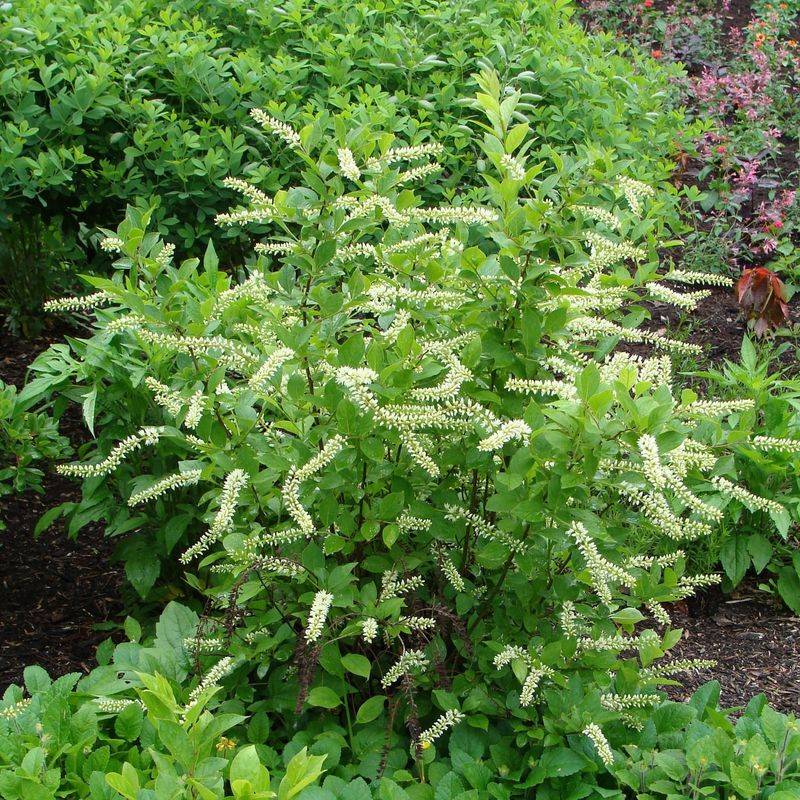
Few Georgia native shrubs pack as much seasonal punch into such a compact, easy-care package as Virginia sweetspire.
Fragrant white flower spikes dangle from arching branches in late spring, filling your Georgia garden with a sweet scent that attracts butterflies and native bees by the dozens.
Gardeners often overlook this gem because it doesn’t grab attention at nurseries during non-blooming seasons. That’s a mistake, because Virginia sweetspire delivers outstanding fall color that rivals any exotic import.
The leaves transform into brilliant shades of red, orange, and purple as temperatures cool across Georgia in October and November. Some years produce deeper reds, while other autumns lean toward orange and burgundy, but the display never disappoints.
Virginia sweetspire grows naturally along stream banks and in moist areas throughout Georgia, but it adapts remarkably well to average garden conditions once established.
It tolerates wet feet better than most shrubs, making it perfect for those problematic low spots where water collects after heavy rains.
This adaptable native also handles dry shade under mature trees, though flowering decreases somewhat in deep shade. Full sun to partial shade produces the best flowering and most intense fall color in Georgia landscapes.
The compact cultivar ‘Henry’s Garnet’ reaches only three to four feet tall, perfect for smaller Georgia yards, while straight species plants grow five to six feet.
Both spread slowly through underground runners, eventually forming attractive colonies without becoming invasive.
3. American Beautyberry
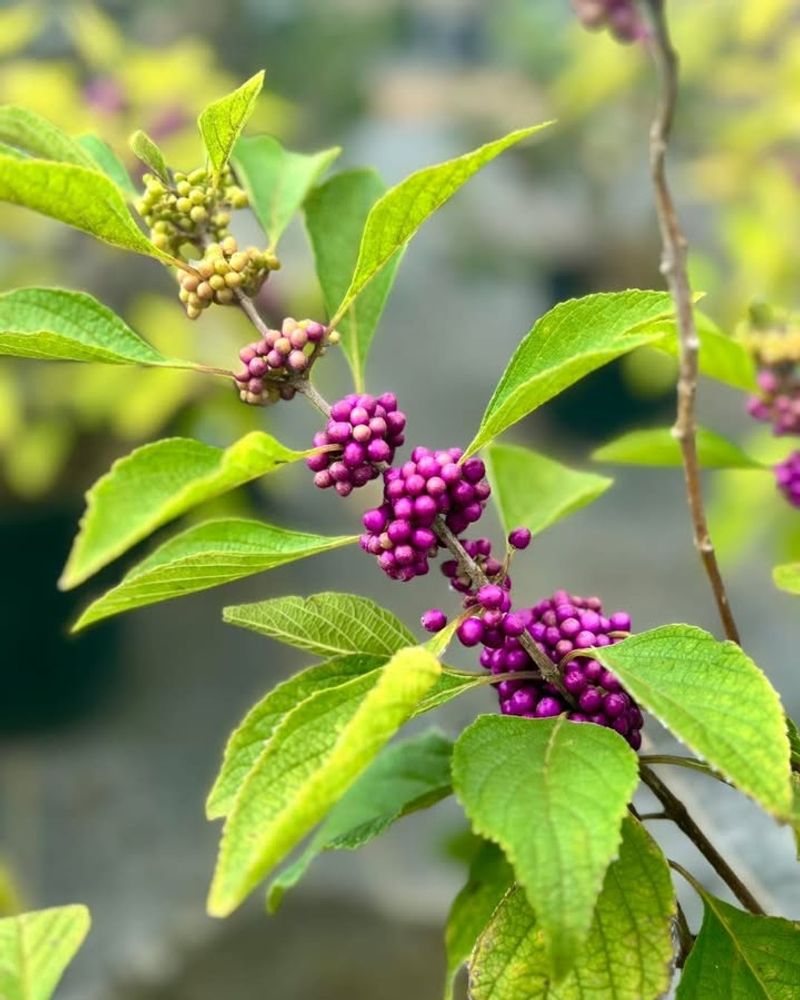
Nothing in the Georgia landscape compares to the electric purple berries that encircle American beautyberry stems each fall.
These metallic magenta fruits appear in dense clusters at every leaf node, creating rings of color that look almost artificial in their intensity.
Songbirds adore these berries, with species like mockingbirds, cardinals, and brown thrashers stripping branches clean by late winter.
Plant American beautyberry if you want to support Georgia’s native bird populations while adding unique visual interest to your yard.
The shrub itself grows four to six feet tall with an open, somewhat leggy habit that works beautifully in naturalistic landscapes. Some gardeners prune it hard in late winter to encourage bushier growth and more berry production, cutting stems back to twelve inches above ground.
American beautyberry thrives in partial shade throughout Georgia, making it valuable for brightening areas under tall pines or hardwoods where many flowering shrubs struggle. It tolerates full sun but appreciates afternoon shade in southern Georgia where summer heat peaks.
The small lavender-pink flowers that appear in summer attract bees but remain relatively inconspicuous compared to the spectacular berry display that follows. Those berries develop their full color intensity in September and October across Georgia.
This native spreads easily from seed, so you might find seedlings popping up around parent plants.
Georgia deer generally leave American beautyberry alone, though they’ll browse it occasionally during harsh winters when other food sources become scarce.
4. Inkberry Holly
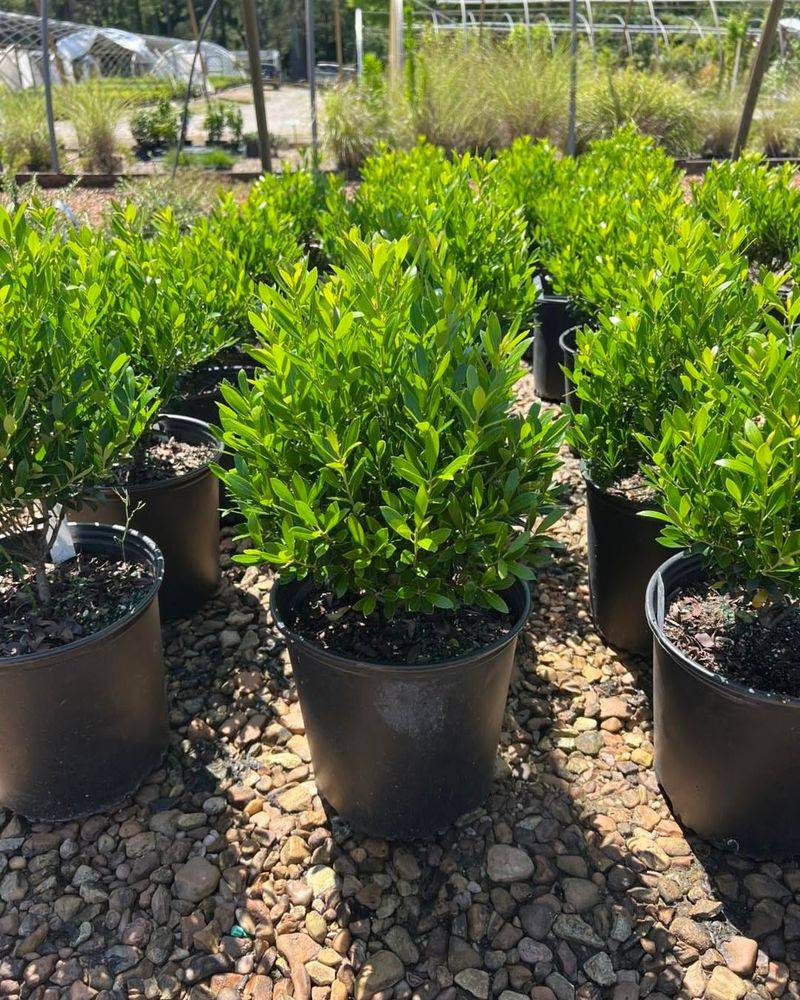
Evergreen shrubs that actually thrive in shade are rare treasures in Georgia landscapes, which makes inkberry holly incredibly valuable for year-round structure and privacy. This refined native maintains dense, dark green foliage throughout all seasons without the coarse texture of many other hollies.
The small, glossy leaves create a fine-textured appearance that looks equally at home in formal or naturalistic settings across Georgia.
Unlike the spiny leaves of American holly, inkberry foliage remains smooth and pleasant to brush against when you’re working in the garden.
Inkberry holly grows naturally in coastal areas and wetlands throughout Georgia, signaling its tolerance for challenging conditions including periodic flooding and poor drainage.
It also adapts well to average garden soils and handles drought once established, making it remarkably versatile.
Female plants produce small black berries that persist through winter, providing food for Georgia songbirds when other sources become scarce. You’ll need both male and female plants for berry production, though the males and females look identical otherwise.
This holly responds beautifully to shearing, making it excellent for low hedges or foundation plantings where you want a neat, controlled appearance. Cultivars like ‘Shamrock’ stay compact at three to four feet, while straight species plants reach six to eight feet if left unpruned.
Inkberry holly tolerates salt spray better than most plants, which helps in southern Georgia near coastal areas.
It grows well in full sun to fairly deep shade, though partial shade produces the most attractive, dense growth throughout Georgia.
5. Yaupon Holly
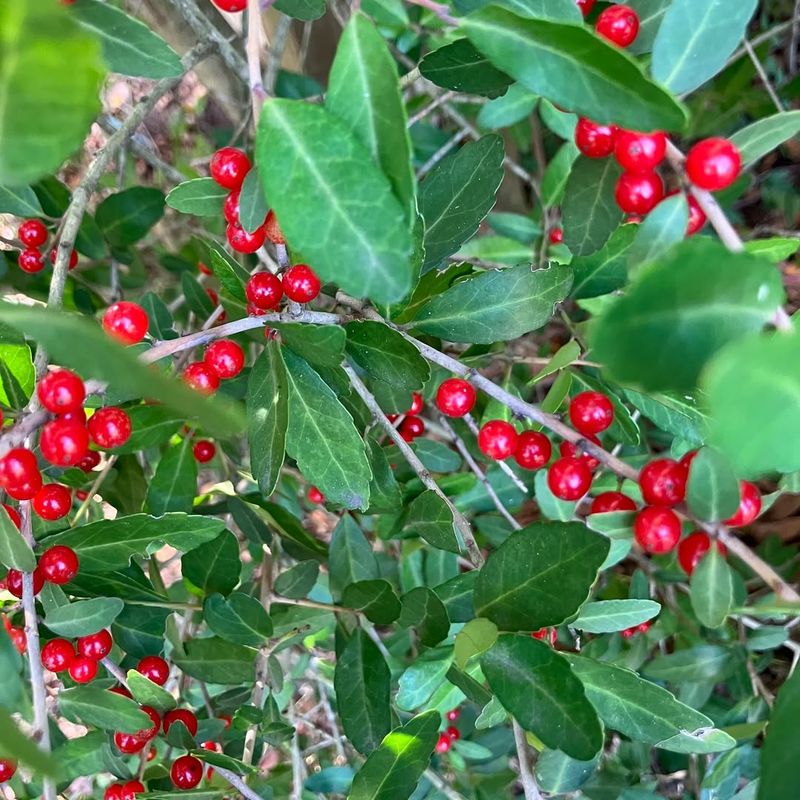
Yaupon holly ranks among the toughest, most adaptable evergreen shrubs native to Georgia, thriving in conditions that would stress or eliminate less resilient plants.
This southeastern native handles drought, salt spray, poor soils, and extreme heat without missing a beat once its roots establish.
Female yaupon hollies produce abundant translucent red berries that cover branches from fall through winter, creating spectacular displays when sunlight shines through the fruits.
Birds feast on these berries throughout the cold months, making yaupon an important food source for Georgia wildlife.
The small, fine-textured leaves create an elegant appearance quite different from the bold foliage of larger holly species. Yaupon naturally grows as a multi-stemmed shrub reaching fifteen to twenty feet, but it responds well to pruning and shaping.
Dwarf cultivars like ‘Nana’ stay under three feet tall, perfect for low hedges or foundation plantings in Georgia landscapes. Weeping forms create beautiful small specimen trees with cascading branches that add graceful movement to gardens.
Yaupon holly tolerates heavy clay soils common throughout Georgia better than most evergreens, and it actually prefers slightly acidic conditions that naturally occur in much of the state. It grows well in full sun to partial shade, though berry production increases with more sunlight.
Native Americans and early settlers made caffeinated tea from yaupon leaves, giving it the nickname ‘cassina.’
Modern Georgia gardeners appreciate it more for incredible drought tolerance and reliable performance in challenging landscape situations where other shrubs fail repeatedly.
6. Fothergilla
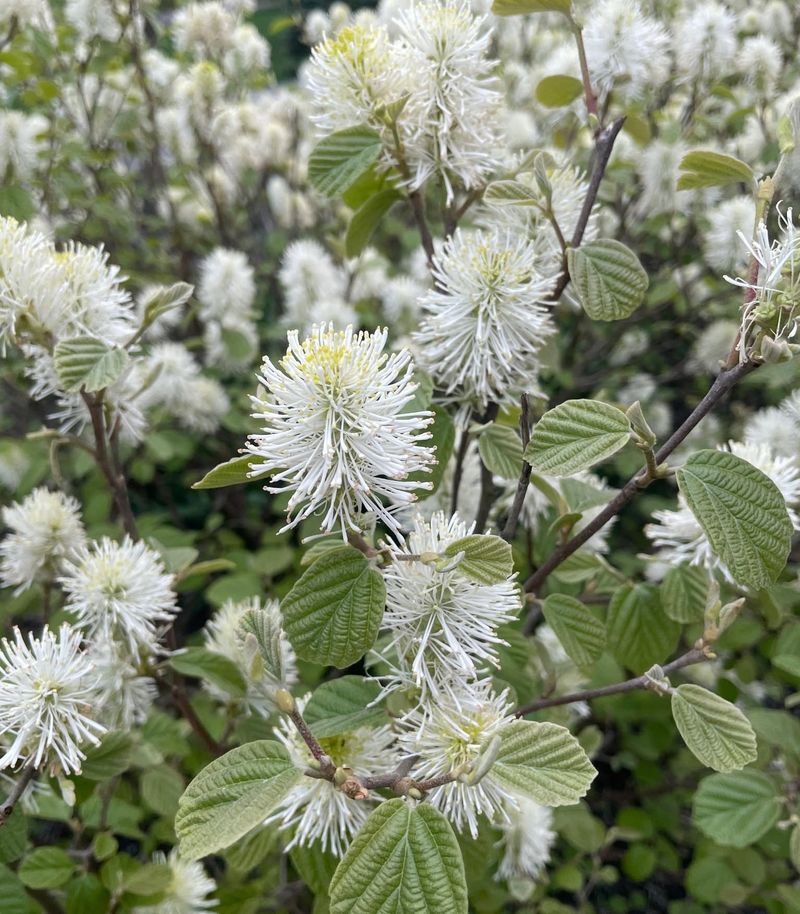
Spring arrives in Georgia gardens with spectacular fanfare when fothergilla bursts into bloom, covering itself with honey-scented white bottlebrush flowers before leaves fully emerge. The fragrance carries across yards, attracting early-season pollinators desperate for nectar after winter.
Gardeners who plant fothergilla get two distinct seasons of outstanding color from a single low-maintenance shrub.
Those spring flowers create the first show, but autumn foliage provides an encore performance that often surpasses the initial display.
The leaves transform into a kaleidoscope of yellow, orange, red, and purple as fall progresses across Georgia, with individual plants often showing all these colors simultaneously. Some years lean toward orange and yellow tones, while other autumns produce deeper reds and purples.
Fothergilla grows naturally in the Appalachian foothills of north Georgia, where it thrives in acidic soils under the dappled shade of tall hardwoods. It adapts well to landscape conditions throughout the state when given partial shade and consistent moisture during establishment.
Dwarf fothergilla varieties stay compact at two to three feet tall, making them perfect for smaller Georgia yards or foundation plantings under windows.
Larger species reach five to six feet, creating excellent mid-sized specimens or informal hedge material.
This native shrub requires minimal pruning to maintain attractive form, and it suffers from virtually no serious pest or disease problems in Georgia landscapes.
The dense, rounded growth habit looks good year-round, even after leaves drop and reveal the interesting branching structure underneath.
7. Buttonbush
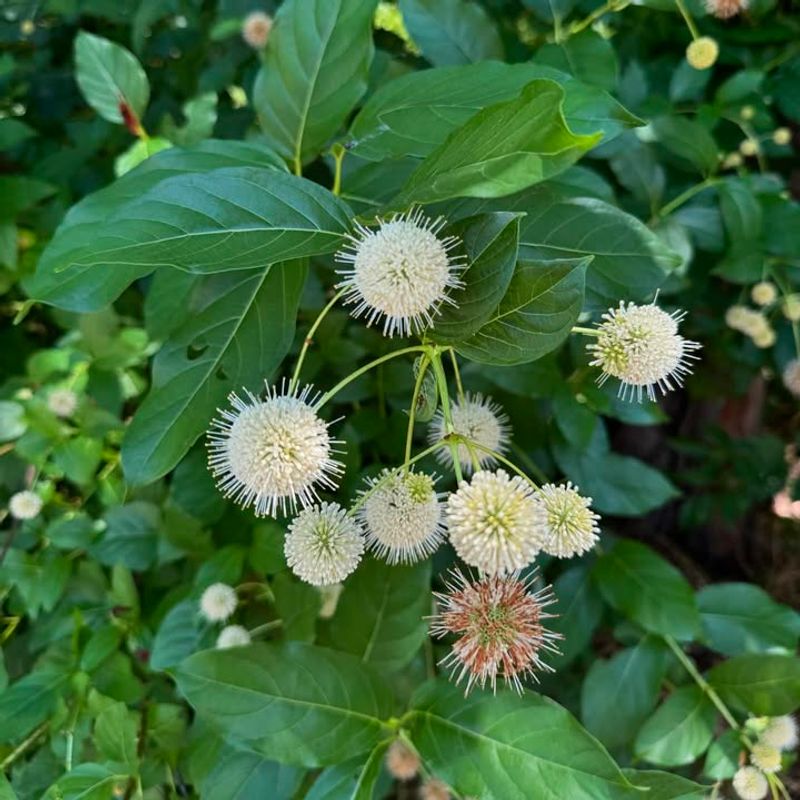
Perfectly round flower clusters resembling white pom-poms cover buttonbush throughout Georgia summers, creating one of the most distinctive blooms among native shrubs.
Each spherical flower head measures about an inch across and consists of dozens of tiny tubular flowers radiating from a central point.
Butterflies, bees, and hummingbirds mob these unusual flowers from June through August, making buttonbush a pollinator magnet in Georgia landscapes.
The long blooming period provides consistent nectar when many other plants have finished flowering during the hottest months.
Buttonbush grows naturally along Georgia streams, pond edges, and wetlands, often with its roots actually standing in shallow water during wet seasons. This wetland heritage makes it the perfect solution for those impossible-to-landscape soggy areas where most shrubs would struggle or perish.
It tolerates seasonal flooding that would eliminate other plants, yet it also adapts to average garden moisture once established. Buttonbush even handles periodic drought reasonably well, though growth slows and flowering decreases without adequate water.
The shrub reaches six to twelve feet tall in Georgia landscapes, forming a rounded multi-stemmed shape that works well as a specimen plant or massed along water features. Glossy green leaves stay attractive all summer, providing nice contrast to the white flowers.
Buttonbush produces interesting seed heads that persist into fall and winter, adding textural interest while providing food for waterfowl and other Georgia wildlife.
Plant it in full sun to light shade, though flowering peaks with at least six hours of direct sunlight daily.
8. Wax Myrtle
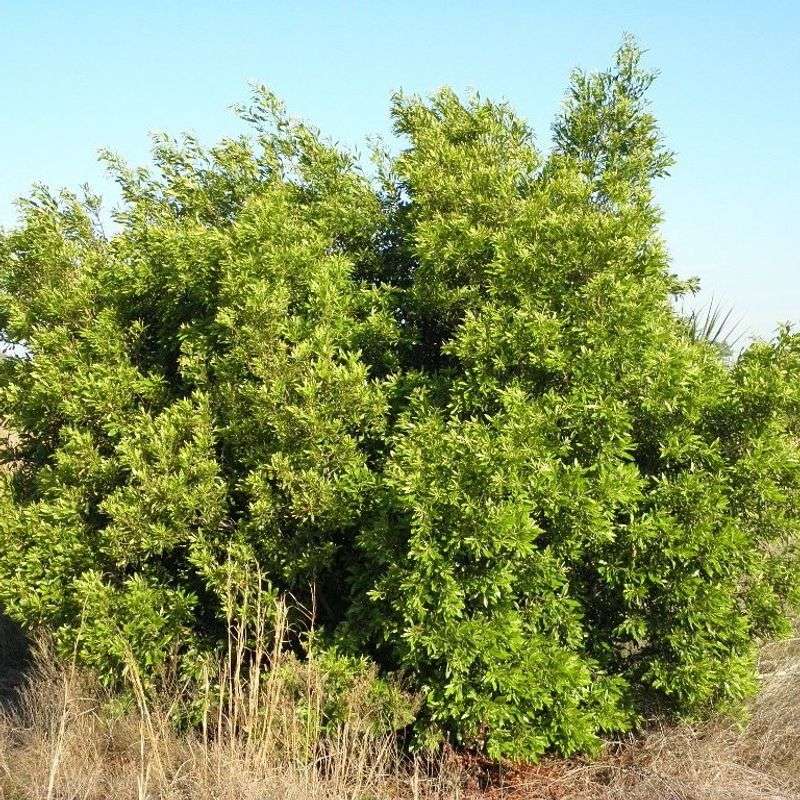
Aromatic evergreen foliage releases a pleasant bayberry scent when you brush against wax myrtle or crush its leaves, adding a sensory dimension beyond visual appeal to Georgia landscapes.
This fast-growing native quickly establishes privacy screens or informal hedges that remain attractive throughout all seasons.
Wax myrtle tolerates salt spray, sandy soils, and coastal conditions better than almost any other large shrub native to Georgia, making it invaluable for landscapes near the Atlantic coast. It also grows well inland throughout the state, adapting to various soil types and moisture levels.
Female plants produce small waxy gray berries that coat stems in fall and winter, providing crucial food for Georgia’s yellow-rumped warblers and dozens of other bird species.
Early colonists boiled these berries to extract fragrant wax for making candles, giving the plant its common name.
The shrub naturally reaches fifteen to twenty feet tall with an upright, somewhat irregular form that creates nice textural contrast in naturalistic landscapes. It spreads slowly through root suckers, eventually forming colonies that work well for erosion control on slopes or banks.
Wax myrtle grows rapidly compared to most native shrubs, often adding three feet or more annually when young and growing in favorable Georgia conditions.
This quick growth makes it perfect when you need fast results for screening or filling empty spaces.
The plant tolerates heavy pruning and shaping if you want a more formal appearance, or you can let it grow naturally for a relaxed, cottage-garden effect. It thrives in full sun to partial shade across Georgia, handling poor soils and drought once established.