These 7 Ohio Native Trees Work Better Than Common Non-Native Front Yard Picks
Your front yard makes a statement long before anyone sees your front door. In Ohio, that first impression can either support local wildlife or work against it.
Many popular yard trees promise fast growth, tidy shape, or bold color, yet they often fall short where it counts most. Some struggle with local pests.
Some offer little to birds and pollinators. Some simply do not belong in the landscape that Ohio nature built.
Native trees bring a stronger answer. They fit the climate, support the food web, and often ask for less once established.
They also deliver beauty that feels richer, more natural, and more connected to place than many familiar imports. Homeowners who want curb appeal do not need to settle for the usual non native choices at the garden center.
Ohio offers better options right in its own backyard. These native trees prove the smartest front yard upgrade may also be the most local.
1. Serviceberry Brings Four Seasons Of Front Yard Appeal
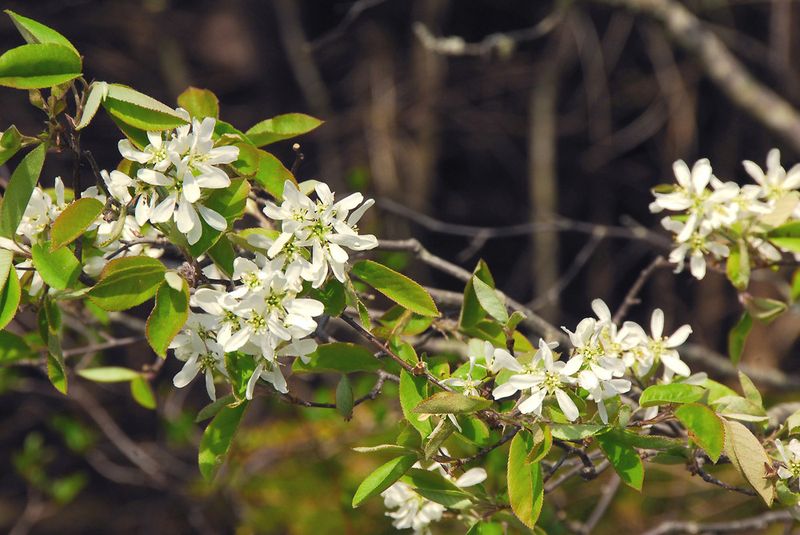
Walk past a serviceberry in late March or early April, and you will stop. The branches erupt in clusters of delicate white blossoms before most other trees have even thought about leafing out, giving your Ohio front yard a head start on spring that few non-native ornamentals can match.
Downy serviceberry, known botanically as Amelanchier arborea, typically matures between 15 and 25 feet tall, making it a comfortable fit for most residential front yards without the worry of it outgrowing the space.
Once the flowers fade, small reddish-purple berries ripen by early summer. Robins, cedar waxwings, and other songbirds treat these berries like a seasonal feast, which means planting a serviceberry is also an open invitation to some wonderful backyard birdwatching right from your front window.
The summer foliage is clean and tidy, holding its shape well through the warmer months.
Come fall, the leaves shift into warm shades of orange, red, and gold that rival any imported ornamental pear or cherry. Unlike the Bradford pear, which has become invasive in Ohio, serviceberry stays well-behaved and adds genuine ecological value.
Ohio State University Extension recognizes serviceberry as a strong native choice for residential landscapes across the state.
2. Eastern Redbud Adds Spring Color The Easy Way
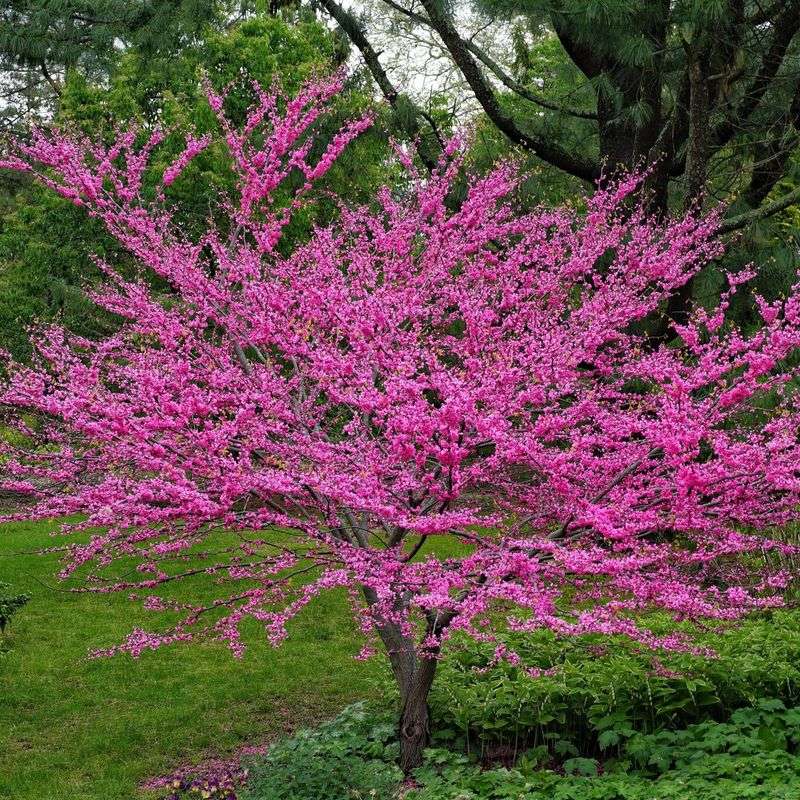
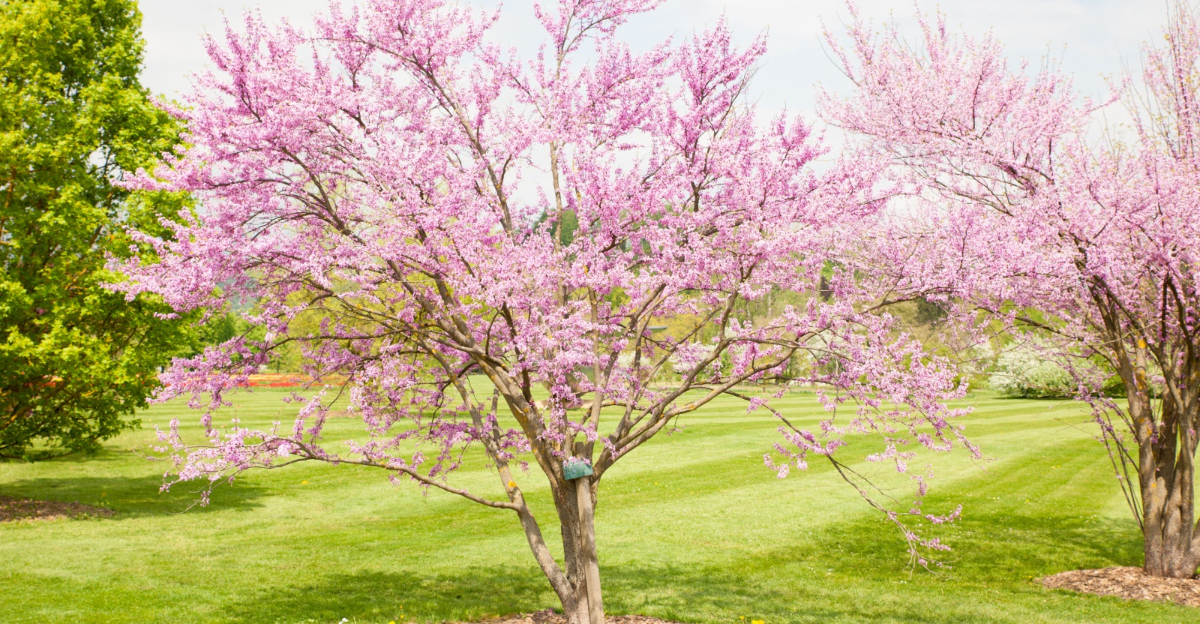
Few trees announce spring as boldly as the eastern redbud. Before a single leaf unfurls, the entire tree explodes in rosy-pink to magenta flowers that coat every branch and twig in color, creating one of the most eye-catching spring displays you can plant in an Ohio front yard.
Cercis canadensis is native to Ohio and grows naturally along woodland edges, which means it already knows how to handle Ohio winters and summers without a lot of extra help from you.
Mature trees typically reach 20 to 30 feet tall with a similar spread, giving them a rounded, spreading silhouette that looks polished and intentional near the front of a home. The heart-shaped leaves that follow the flowers are attractive through summer, and in fall they turn a warm golden-yellow before dropping cleanly.
That four-season presence is something many popular non-native flowering trees simply cannot offer.
Redbuds prefer well-drained soil and do well in full sun to partial shade, which suits a wide range of Ohio front-yard conditions. They also attract early-season pollinators, including native bees that use the flowers as an important food source in spring.
For a tree that delivers maximum visual impact with minimal fuss, eastern redbud is hard to beat.
3. Flowering Dogwood Gives Ohio Yards A Softer Look
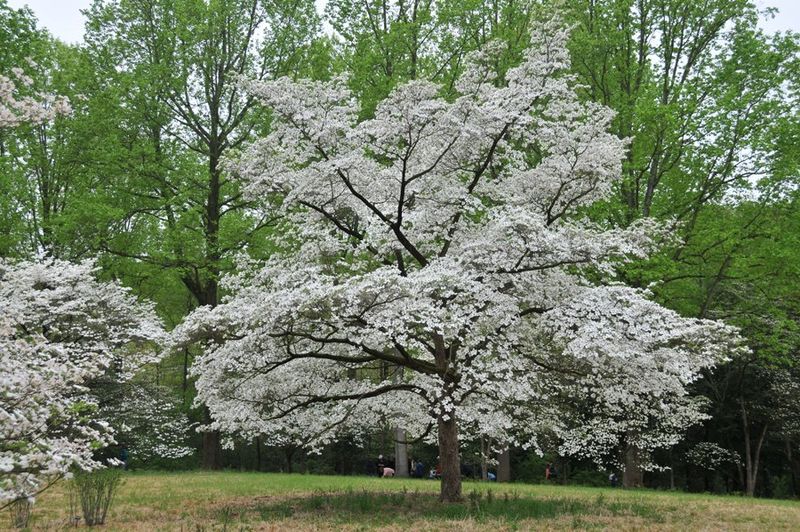
There is a quiet elegance to a flowering dogwood that almost nothing else in the landscape can replicate. The broad, horizontal branching pattern gives Cornus florida a layered, architectural look that stands out even when the tree is not in bloom.
In late spring, large white or soft pink bracts surround the tiny true flowers, creating a display that looks refined and carefully composed rather than loud or showy.
Flowering dogwood grows 15 to 25 feet tall and wide, which puts it squarely in the sweet spot for front-yard planting. It fits comfortably beneath utility lines and does not crowd a home’s facade the way larger shade trees sometimes do.
The tree prefers partial shade and well-drained, slightly acidic soil, conditions that are easy to find in many Ohio front yards, especially those with some tree canopy overhead or on the north or east side of a house.
Fall brings another round of interest, with foliage turning rich burgundy-red and clusters of bright red berries appearing along the branches. Those berries attract migrating birds, adding wildlife value at a time when most ornamental trees have gone quiet.
Homeowners who might otherwise reach for a non-native cherry or plum tree should take a serious look at what flowering dogwood can do for an Ohio front yard.
4. Blackgum Delivers Brilliant Fall Color Without The Usual Tradeoffs
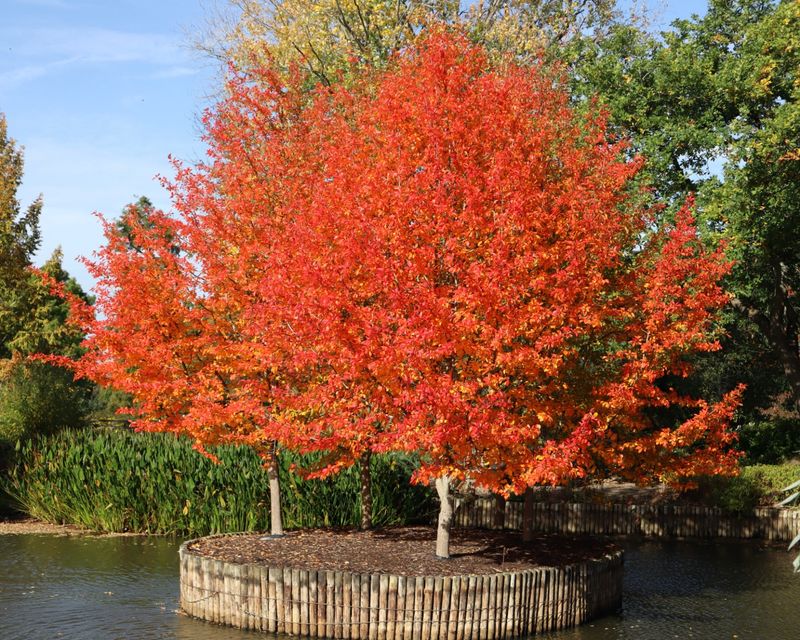
Spend one October afternoon driving through a neighborhood where a blackgum is planted, and you will understand why this tree deserves a much bigger spotlight. Nyssa sylvatica produces some of the most reliable and vivid fall color of any tree native to Ohio, with leaves shifting from glossy green to shades of scarlet, orange, burgundy, and sometimes deep purple, all on the same tree at the same time.
The effect is genuinely stunning.
Beyond the fall display, blackgum has a strong, upright form with slightly pendulous side branches that give it a distinctive and appealing silhouette year-round. It grows at a moderate pace and typically matures between 30 and 50 feet tall, making it a better fit for front yards with a bit more space.
Unlike some non-native trees chosen primarily for fall color, blackgum does not come with invasive tendencies or disease problems that shorten its useful life.
The small, dark blue fruits that ripen in late summer attract birds, and the tree supports a range of native insects throughout the growing season. Blackgum tolerates a variety of Ohio soil conditions, including sites that stay moist for parts of the year.
For homeowners who want a front-yard tree with genuine long-term presence and seasonal drama, blackgum is a choice worth making.
5. American Hornbeam Brings Structure To Smaller Front Yards
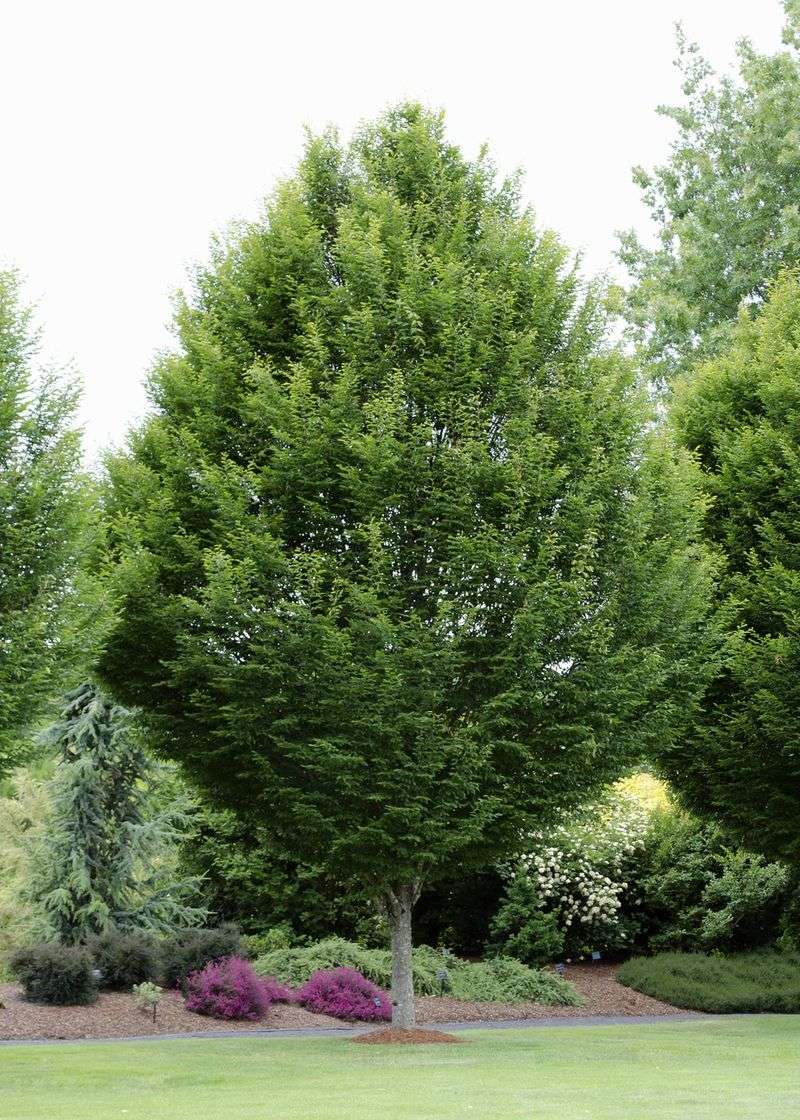
Not every front yard has room for a tree that wants to grow 40 feet tall, and that is exactly where American hornbeam earns its place. Carpinus caroliniana is a slow-growing native understory tree that matures at 20 to 35 feet, with a tidy, rounded canopy and some of the most visually interesting bark you will find on any tree in Ohio.
The smooth gray trunk has a distinctly rippled, muscle-like texture that makes the tree look sculptural even in winter when the leaves are gone.
Hornbeam thrives in partial shade and moist, well-drained soil, which makes it an excellent fit for front yards that sit under a larger tree canopy or face north or east. It is a native of Ohio’s woodland understory, so it has already spent thousands of years adapting to exactly the kind of shaded, somewhat challenging conditions that make other ornamental trees struggle.
That built-in resilience translates into a tree that establishes well and stays healthy without constant attention.
Fall color runs from orange to scarlet-red, adding a warm seasonal glow before leaf drop. The seeds attract small birds and mammals through fall and early winter.
For Ohio homeowners who want a polished, year-round native tree that fits a tighter space with understated style, American hornbeam is a genuinely smart pick.
6. Eastern Hophornbeam Handles Tough Spots With Quiet Style
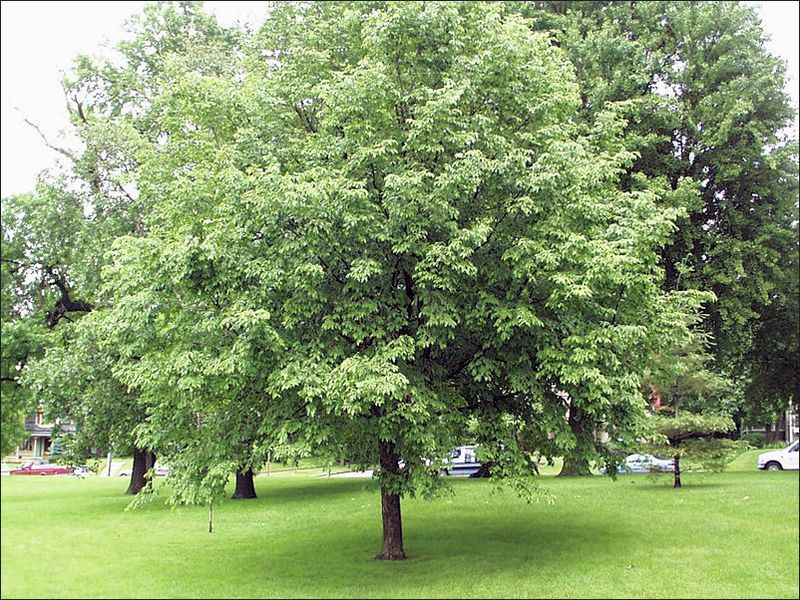
Some front yards just do not cooperate. Dry, compacted soil under partial shade, a spot that bakes in summer and freezes hard in winter, the kind of location that sends most ornamental trees into a slow, visible decline.
Eastern hophornbeam, Ostrya virginiana, was practically built for exactly those conditions. Native to Ohio’s woodlands and forest edges, this small to medium-sized tree shrugs off drought, poor soil, and shade in ways that make it a genuinely useful front-yard option where other trees fall short.
Mature hophornbeam trees typically grow 25 to 40 feet tall with a rounded, somewhat irregular crown that has a relaxed, natural character. The finely shredded bark adds winter texture, and the hop-like seed clusters that hang from the branches in late summer and fall give the tree a subtle ornamental quality that rewards a closer look.
The foliage turns soft yellow in fall, providing a gentle seasonal transition rather than a dramatic one.
Because hophornbeam grows slowly and stays relatively compact, it fits front yards where a faster-growing tree would quickly become too large. It supports a variety of native wildlife, including birds that feed on the seeds.
For Ohio homeowners dealing with a difficult planting spot, eastern hophornbeam offers a native solution with real staying power and a quietly attractive presence through every season.
7. Sassafras Makes A Front Yard Feel More Distinctly Ohio
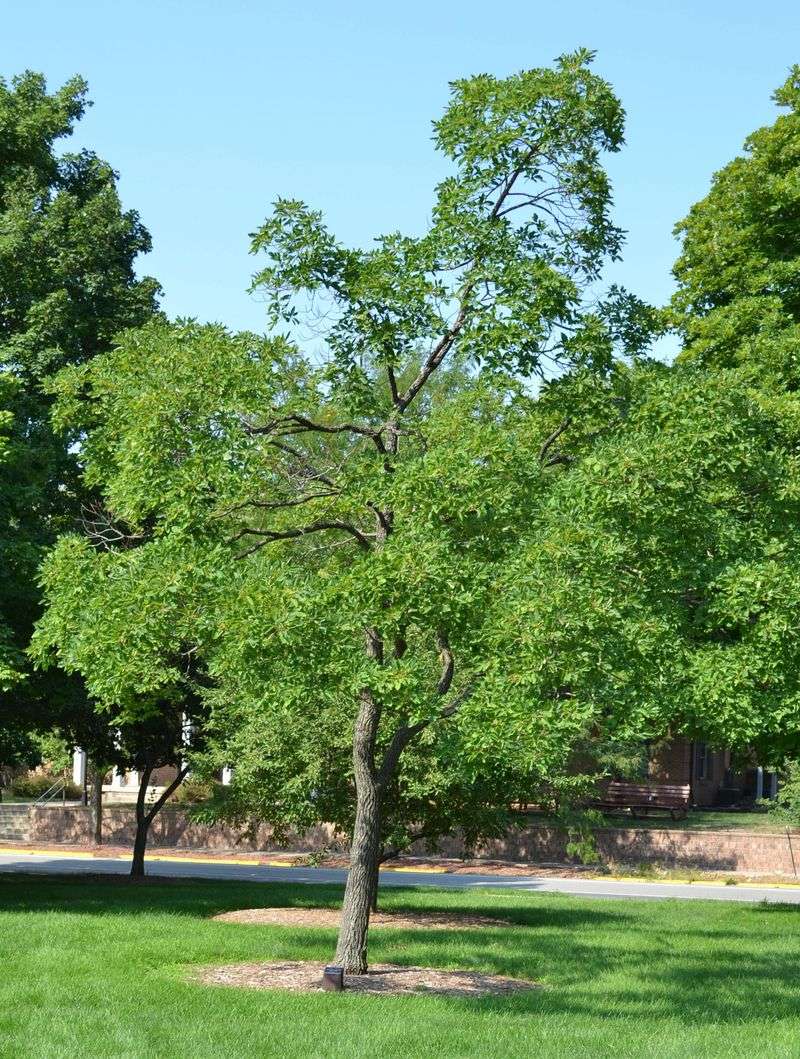
Sassafras is the kind of tree that makes people stop and ask questions. The leaves come in three different shapes on the same tree, some are oval, some look like mittens, and some have three distinct lobes, a quirky botanical trait that gives the tree an almost playful personality.
Sassafras albidum is native to Ohio and grows widely across the state, yet it rarely shows up in front yards, which is a real missed opportunity for homeowners who want something that feels genuinely local and distinctive.
In spring, small clusters of yellow-green flowers appear before the leaves, providing early nectar for native bees. Summer foliage is a clean, medium green that holds well through the season.
Then fall arrives, and sassafras puts on one of Ohio’s most colorful shows, with leaves turning shades of yellow, orange, red, and purple, sometimes all at once on the same branch. The effect is vibrant without being overdone.
Sassafras grows best in full sun with well-drained soil and can reach 30 to 60 feet at maturity, so it suits front yards with enough open space to let it spread naturally. It also supports native wildlife, including the spicebush swallowtail butterfly, which uses sassafras as a host plant.
Planting sassafras in an Ohio front yard is a way of connecting your property to the region’s natural landscape in a way that no imported ornamental can replicate.