These 8 Plants Bring Orioles To Ohio Gardens

A flash of blazing orange across the yard can make any Ohio homeowner stop and stare. Orioles are among the most stunning birds to visit a garden, yet many people rarely see them up close.
Surprisingly, the difference between an empty yard and one that draws these brilliant birds often comes down to what grows in the landscape.
Certain plants quietly act like magnets, offering the nectar, fruit, and insects orioles search for each season. Once those plants appear in a garden, the backyard can suddenly feel more alive.
Spotting one perched in the branches or darting between flowers turns an ordinary morning into a small moment of excitement. Across Ohio, some gardens seem to attract orioles again and again.
The secret usually begins with the plants.
1. Coral Honeysuckle Provides Nectar Orioles Love
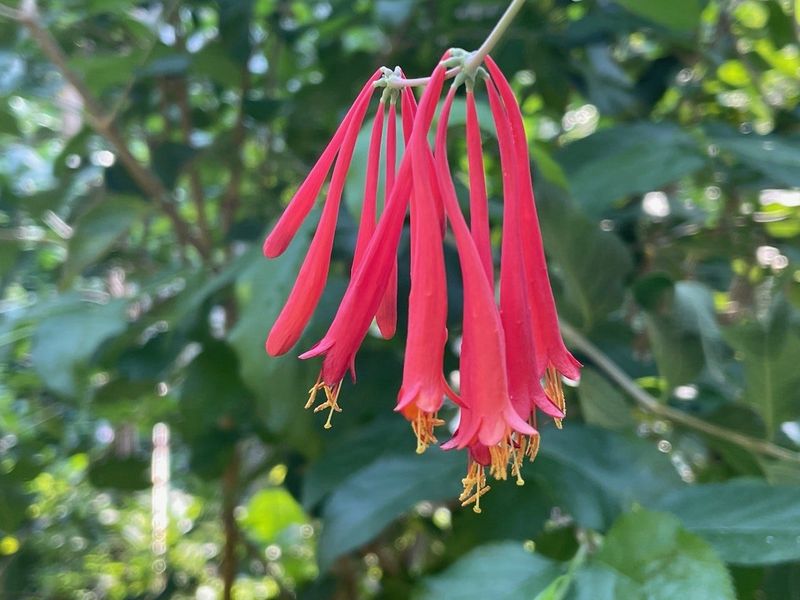
Walk past a fence draped in coral honeysuckle on a warm May morning, and you might spot a Baltimore oriole hovering right at the blooms. This native vine, known scientifically as Lonicera sempervirens, produces clusters of slender, tubular flowers in shades of red and orange that are practically designed for birds with long, curved bills.
Orioles reach deep into those tubes to sip the generous nectar inside.
Unlike Japanese honeysuckle, which has spread aggressively across Ohio and crowded out native plants, coral honeysuckle stays well-behaved in the garden. It climbs trellises, fences, and arbors without taking over neighboring plants.
Ohio gardeners can feel confident planting it knowing it supports wildlife without causing ecological problems.
Bloom time typically runs from late spring through summer, giving orioles a reliable food source during both their arrival and nesting periods. Hummingbirds visit these flowers too, so planting coral honeysuckle often rewards you with two spectacular bird species at once.
It grows best in full sun to partial shade and adapts to a range of Ohio soil types. A sturdy trellis and consistent watering during the first season will help this vine establish quickly and thrive for many years.
2. Eastern Red Columbine Offers Early Spring Nectar For Orioles
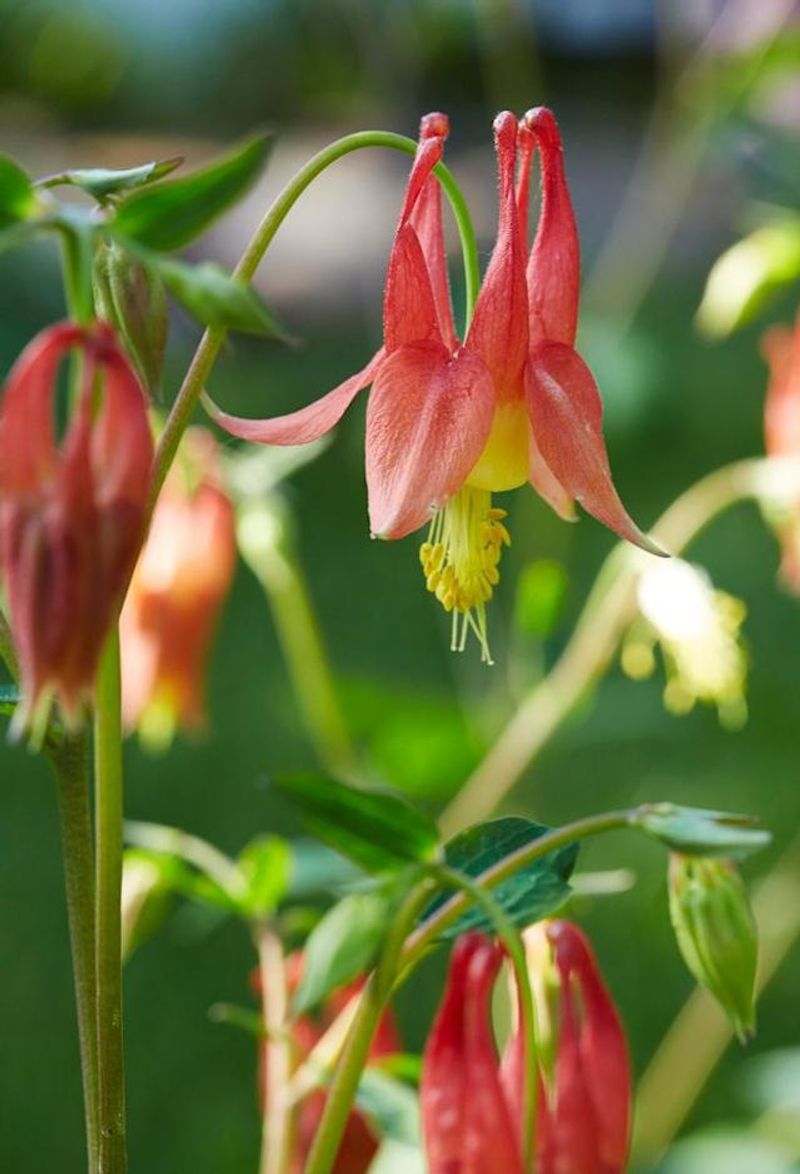
Before most garden plants even think about blooming, eastern red columbine is already putting on a show. This cheerful native wildflower, Aquilegia canadensis, pushes up its distinctive red and yellow nodding flowers as early as April in Ohio, arriving right when migrating orioles are passing through and desperately searching for food after their long journey north.
The spurred flowers hold nectar deep inside, making them a perfect match for the oriole’s probing bill. Orioles have been observed clinging to columbine stems and reaching into the blooms with impressive agility.
Beyond nectar, the plant also attracts small insects that recently arrived orioles eagerly snap up for protein.
Eastern red columbine thrives in partially shaded spots with well-drained soil, making it an excellent choice for woodland garden edges, shaded borders, or areas beneath deciduous trees. It self-seeds reliably, meaning a small planting can gradually spread into a lovely naturalized patch over several seasons.
Ohio gardeners who want to support spring migrants should consider grouping several columbine plants together to create a more visible and productive feeding station.
The combination of early bloom time, nectar richness, and insect support makes this humble wildflower one of the most valuable plants you can add to an oriole-friendly Ohio garden.
3. Bee Balm Produces Bright Flowers Orioles Visit For Nectar
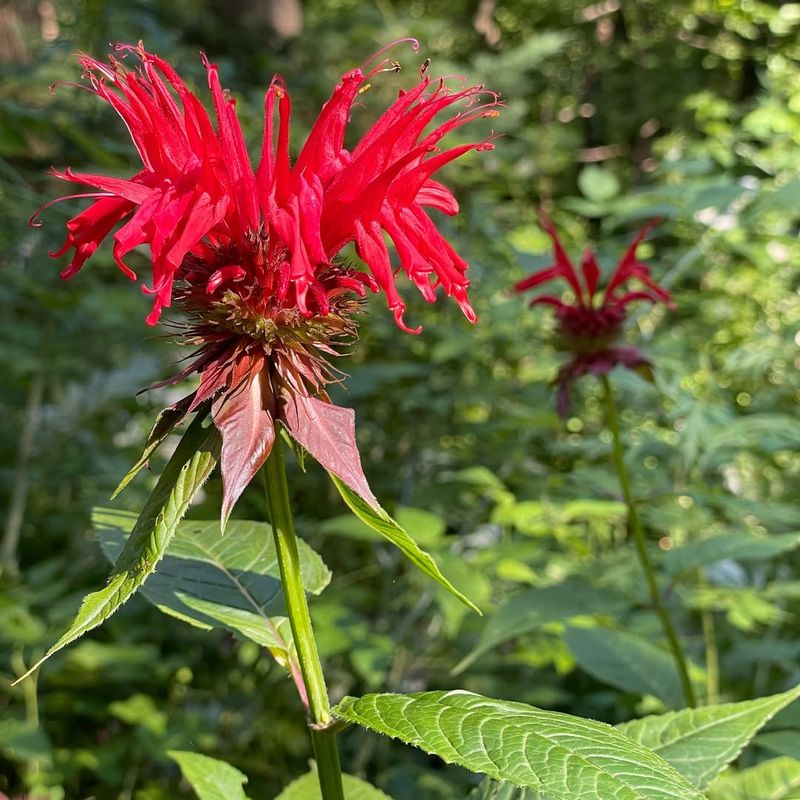
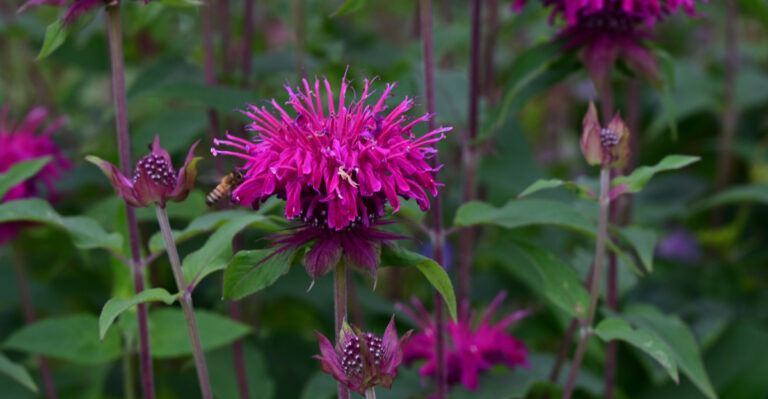
There is something almost electric about a patch of bee balm in full bloom during an Ohio summer. The shaggy, vivid flower heads in red, pink, and purple practically glow in the garden, and orioles, hummingbirds, and bumblebees all seem to agree that these blooms are worth visiting.
Monarda didyma, the species with the deepest red flowers, tends to draw the most bird attention because of its high nectar content and color visibility.
Orioles visit bee balm repeatedly throughout the day, sipping nectar and occasionally picking off small insects that gather on or near the blossoms.
Planting bee balm in a sunny border or near a bird feeder station gives you excellent viewing opportunities while providing birds with a valuable summer food source.
Growing bee balm in Ohio is straightforward. It prefers moist, well-drained soil and full sun, though it tolerates some afternoon shade.
Dividing clumps every few years keeps plants healthy and productive. Good air circulation around the plants helps reduce powdery mildew, which can affect foliage in humid Ohio summers.
Deadheading spent blooms encourages the plant to keep flowering longer into the season, extending the nectar window for visiting birds. A mass planting of at least five or six plants makes the most visual and ecological impact in your yard.
4. Serviceberry Trees Grow Sweet Berries Orioles Seek Out

Timing is everything in the bird garden, and serviceberry nails it perfectly. Amelanchier species produce their sweet, dark purple berries in late May and early June, right when Baltimore orioles are nesting and raising hungry chicks across Ohio.
That early summer fruit arrives before most other berry-producing plants have ripened, making serviceberry an incredibly important food source at a critical moment in the bird calendar.
Orioles, along with cedar waxwings, robins, and catbirds, flock to serviceberry trees when the fruit is ripe. The berries are soft, sweet, and easy for birds to swallow whole, which makes them especially attractive compared to tougher or more acidic fruits.
A single mature serviceberry tree can feed dozens of birds over the course of its two-to-three-week fruiting window.
Ohio gardeners can choose from several serviceberry species, including downy serviceberry and Allegheny serviceberry, both of which are native to the region. These small trees or large shrubs top out at fifteen to twenty-five feet, making them practical for most yard sizes.
They bloom with delicate white flowers in early spring before the leaves emerge, adding ornamental value through multiple seasons. Plant them in a spot with full sun to partial shade and moist, slightly acidic soil for the best fruit production and long-term tree health.
5. Red Mulberry Trees Provide Fruit Orioles Cannot Resist
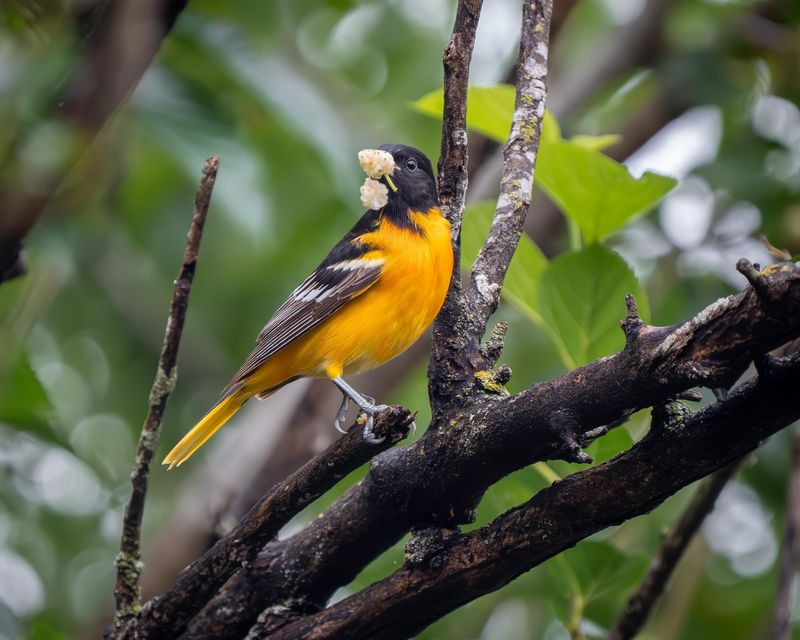
Ask any experienced Ohio birder which tree brings the most birds to a yard in June, and red mulberry will almost always come up. Morus rubra, the native red mulberry, produces enormous quantities of sweet, juicy fruit that ripens over several weeks in early summer.
Orioles go absolutely wild for mulberries, and a fruiting tree can attract more birds to one spot than almost any feeder setup could.
What makes red mulberry especially valuable is the sheer volume of fruit it produces. Even a moderately sized tree can drop hundreds of berries over the course of the season, keeping birds returning day after day.
Orioles, tanagers, woodpeckers, and bluebirds all compete for space in the branches during peak ripeness. The fruit is also soft enough that birds of all sizes can eat it comfortably.
Red mulberry is native to Ohio and grows vigorously in a range of soil conditions, from rich bottomlands to average garden soil. It can reach thirty to forty feet at maturity, so it works best in larger yards or as a back-of-property tree.
One thing to keep in mind is that ripe berries drop freely and can stain patios or walkways, so placement away from hardscaped areas is wise. The wildlife value this tree delivers makes it one of the most rewarding additions any Ohio garden can have.
6. American Elderberry Shrubs Produce Berries Orioles Depend On
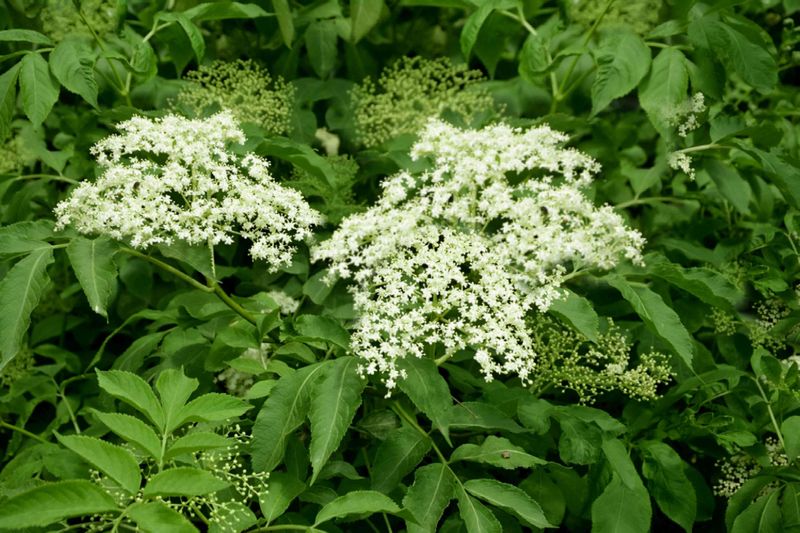
Late summer in an Ohio garden takes on a whole new energy when the elderberries ripen. Sambucus canadensis, the American elderberry, produces massive flat-topped clusters of small, dark purple-black berries that practically drip from the shrub’s arching branches.
For orioles preparing for their fall migration south, these calorie-rich berries are a critical fuel source that helps them build up the energy reserves they need for the journey ahead.
Beyond just orioles, American elderberry supports an impressive list of Ohio bird species, including thrushes, vireos, warblers, and woodpeckers. The shrub blooms in June with large, creamy white flower clusters that attract pollinators, and the berries follow in August and September.
That long seasonal window of usefulness makes elderberry one of the most productive wildlife plants you can grow.
Elderberry grows quickly and vigorously, often reaching eight to twelve feet tall within a few seasons. It thrives in moist soil and tolerates partial shade, making it a good fit for low spots in Ohio yards or areas near streams or ponds.
Planting two or more shrubs together improves pollination and increases berry production significantly. Elderberry also spreads through root suckers, so it can fill in a naturalized area over time.
For gardeners wanting a low-maintenance shrub that delivers exceptional wildlife value, American elderberry is hard to beat.
7. Wild Cherry Trees Supply Summer Fruit Orioles Enjoy
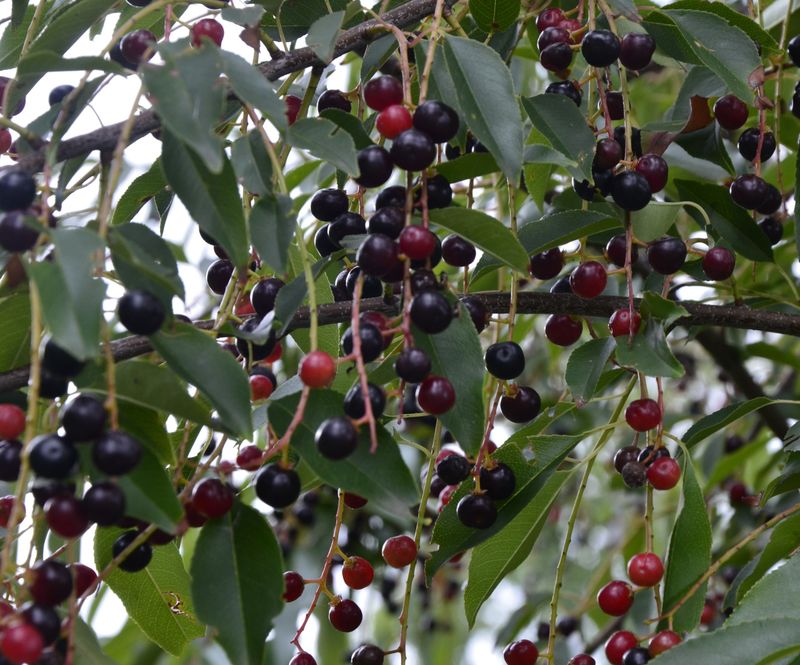
Few native trees in Ohio pull double duty for birds quite like wild black cherry. Prunus serotina earns its reputation as one of the most wildlife-friendly trees in the eastern United States, and Ohio gardeners who plant one quickly discover just how busy it stays from spring through fall.
The small, dark cherries ripen in mid to late summer and attract a remarkable variety of birds, with orioles among the most enthusiastic visitors.
Beyond the fruit itself, wild cherry trees support an extraordinary number of caterpillar and insect species on their leaves and bark. This matters enormously for orioles, which feed large quantities of insects to their nestlings during the breeding season.
A single wild cherry tree can support hundreds of caterpillar species, making it one of the most ecologically valuable trees a homeowner can plant anywhere in Ohio.
Wild black cherry grows quickly and can reach sixty feet or more at maturity, so it works best as a specimen tree in a larger yard or along a property edge.
It adapts to a wide range of Ohio soil types and grows in full sun to partial shade.
The white flower clusters that appear in spring add ornamental interest before the fruit develops. For gardeners serious about creating a thriving habitat garden, wild cherry is an investment that pays generous dividends in bird activity for decades.
8. Black Raspberry Bushes Produce Fruit Orioles Frequently Eat
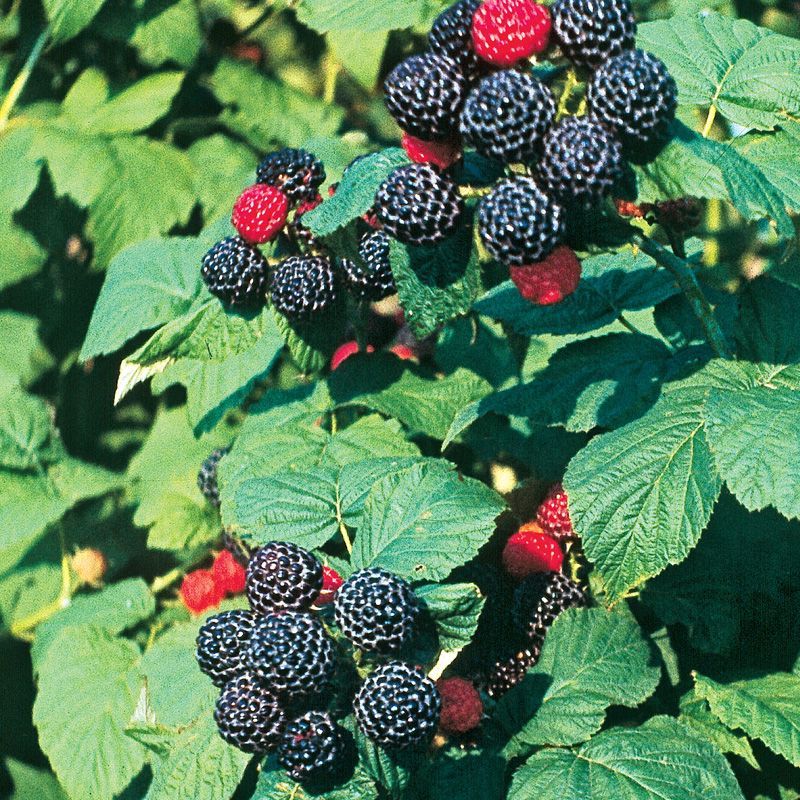
There is a particular joy in finding a thicket of black raspberries loaded with ripe fruit on a warm July morning, and orioles feel exactly the same way.
Rubus occidentalis, the native black raspberry, produces clusters of sweet, dark berries that ripen in early to midsummer across Ohio, perfectly timed to support nesting orioles and their growing chicks.
The fruit is soft, sweet, and packed with energy, making it a favorite among fruit-eating birds.
What sets black raspberry apart from other fruiting shrubs is its added value as shelter and nesting cover. The arching, thorny canes create dense thickets where birds can hide from predators, rest between feeding bouts, and occasionally nest.
Orioles may not nest directly in the canes, but they use the surrounding area freely and return to productive patches repeatedly throughout the season.
Black raspberry grows best in full sun with well-drained soil and establishes readily from bare-root plants or transplants. It spreads naturally through tip-rooting, where arching canes touch the ground and take root, gradually expanding the planting over time.
Ohio gardeners can manage this spread easily by redirecting or removing new canes as needed.
Planting a row of black raspberry along a fence line or garden edge creates a productive, wildlife-friendly border that looks attractive while feeding birds reliably every summer season.