These 10 Plants Can Hide Ugly Fences In Ohio Backyards
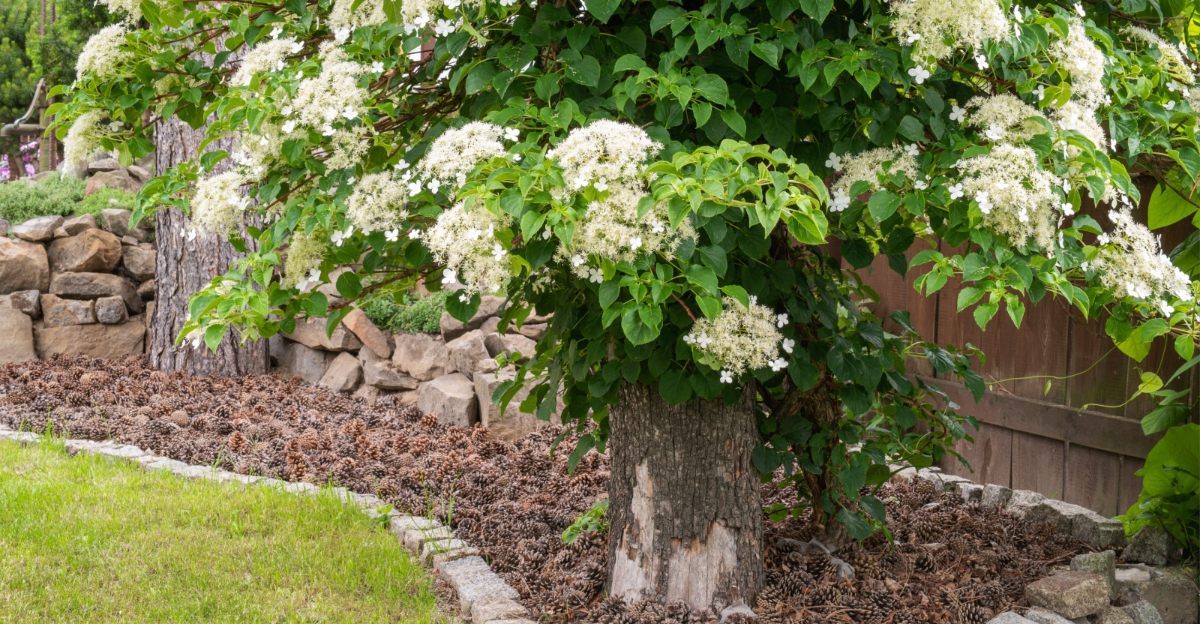
Most backyards have at least one thing homeowners wish they could hide. Sometimes it is a plain wooden fence that has seen better days.
Other times it is a chain-link barrier that does its job but adds very little charm to the landscape. Instead of replacing the fence, many Ohio gardeners take a simpler approach.
They plant around it. The right mix of shrubs, vines, and tall plants can soften hard lines, break up that long stretch of boards or metal, and turn a plain boundary into part of the garden itself.
Give those plants a season or two to fill in and the fence starts to fade into the background. What used to feel like a harsh edge becomes a green backdrop full of leaves, flowers, and movement.
Some plants climb, some spread, and some grow tall enough to block the view entirely. The ideas ahead show plants that can help an ordinary Ohio backyard fence quietly disappear.
1. Climbing Hydrangea Covers Fences With Elegant Blooms
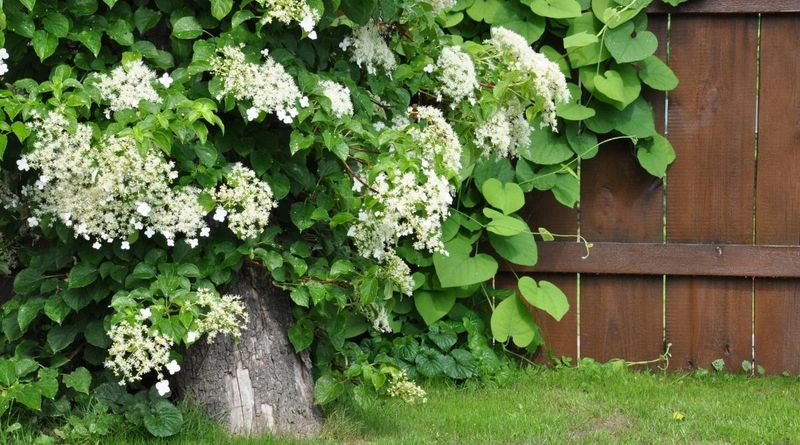
Few plants transform a dull fence into something genuinely breathtaking quite like climbing hydrangea. This woody vine, known botanically as Hydrangea petiolaris, attaches itself to surfaces using small rootlike holdfasts, slowly working its way across fence boards and posts without needing wire or a trellis for support.
The flowers arrive in early summer as large, flat clusters of creamy white blooms that carry a subtle fragrance.
Ohio State University Extension notes that climbing hydrangea is one of the most reliable flowering vines for Ohio landscapes, tolerating both full sun and partial shade with equal grace.
The foliage is glossy and rich green all season long, turning soft yellow in autumn before dropping to reveal attractive, peeling cinnamon-colored bark that adds winter interest.
Growth is slow during the first couple of years as the plant establishes its root system, but patience pays off generously once it hits its stride.
Space plants about five to six feet apart along the fence line and water consistently during the first growing season. Climbing hydrangea stays well-behaved and non-invasive, spreading only where you guide it.
For Ohio homeowners wanting elegance without effort, this vine is a standout choice.
2. American Wisteria Adds Cascading Spring Flowers
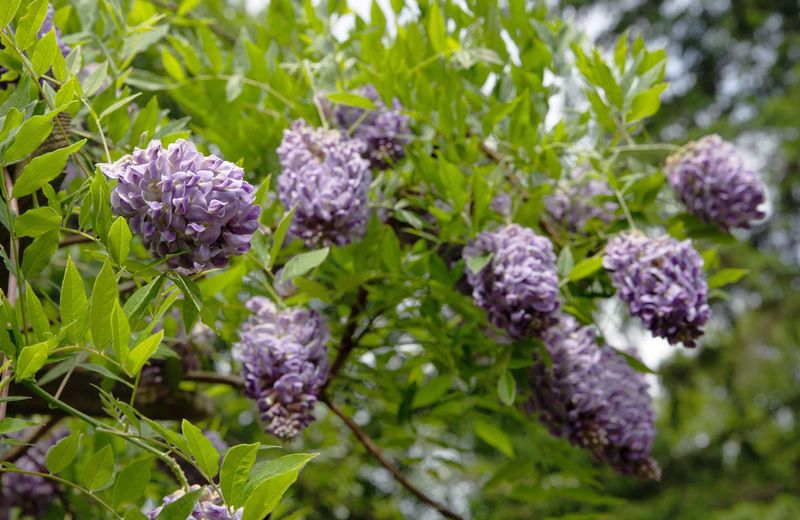
Spring in an Ohio backyard hits differently when a wisteria vine is in full bloom. Long, drooping clusters of lavender-purple flowers hang like natural curtains along the fence, filling the air with a sweet, unmistakable fragrance that stops people in their tracks.
American wisteria, Wisteria frutescens, is the smart choice for Ohio gardeners who love the look but have heard horror stories about the Asian varieties taking over entire yards.
Unlike its aggressive Asian cousins, the native American wisteria is a well-mannered vine that stays manageable with minimal pruning.
University horticulture programs consistently recommend it as a safe, beautiful alternative for fence coverage in Midwestern landscapes.
The vine climbs by twining its stems around fence rails, wires, or a simple trellis attached to the fence. Flower clusters appear in late spring and often repeat in smaller flushes through summer.
The foliage is fine-textured and bright green, giving the fence a soft, layered look even when the plant is not blooming.
Plant American wisteria in a spot that receives at least six hours of direct sun daily for the best flower production. Space plants eight to ten feet apart and train new growth along the fence as it develops.
This vine rewards Ohio homeowners with decades of stunning seasonal color.
3. Clematis Adds Colorful Flowers To Vertical Spaces
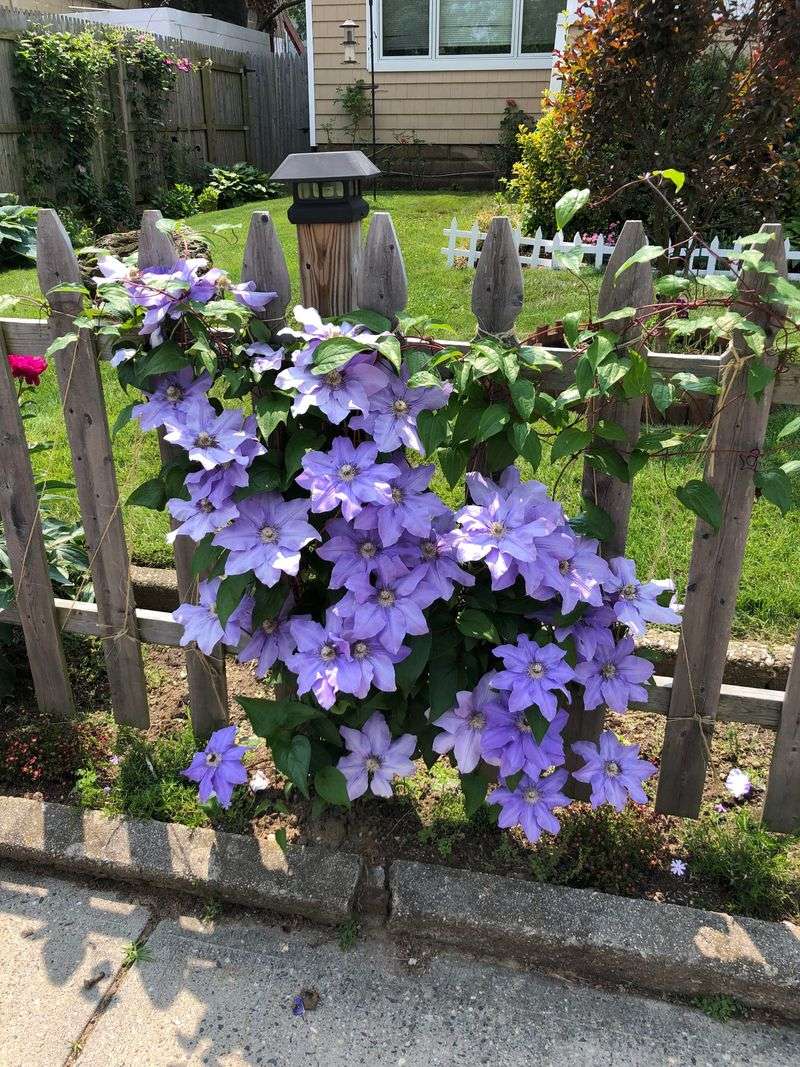
Walk through any well-loved Ohio garden neighborhood and you will almost certainly spot a clematis vine putting on a show somewhere along a fence. This climbing plant is beloved for good reason: it produces some of the most spectacular flowers of any vine available to home gardeners, ranging from deep violet and soft lavender to bright pink, white, and even bicolored varieties.
Clematis climbs by wrapping its leaf stalks around fence wires, thin rails, or a simple trellis. A popular tip from horticulture specialists is to remember the old saying about clematis preferring its feet in the shade and its head in the sun.
Planting a low-growing perennial or a layer of mulch at the base keeps roots cool while the upper vine soaks up sunlight and produces its iconic blooms.
Most clematis varieties bloom heavily in late spring or early summer, with some reblooming in early fall. The flower display along a fence can be absolutely dramatic, covering bare boards with color for weeks at a time.
Ohio’s climate suits clematis well, as the plant tolerates cold winters without trouble when properly mulched at the base.
Space plants two to three feet apart for a fuller fence display. With dozens of varieties available, Ohio gardeners can mix colors and bloom times for continuous seasonal interest along any fence line.
4. Coral Honeysuckle Brings Bright Blooms And Pollinators
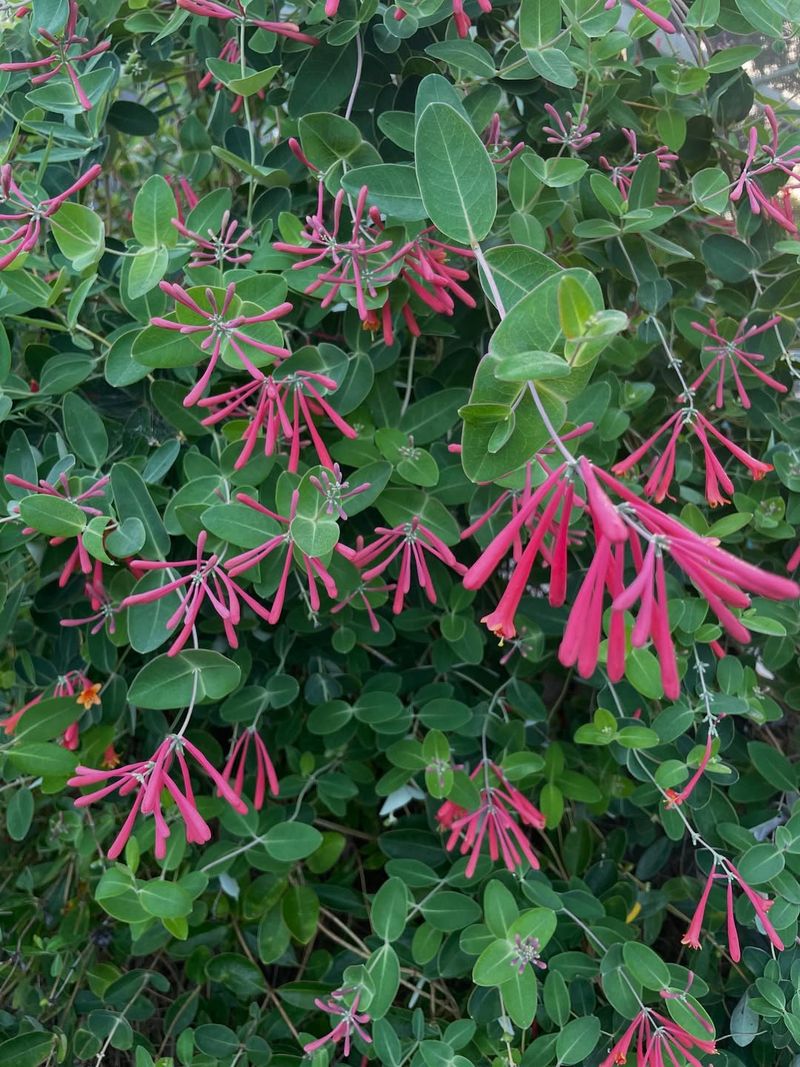
Imagine glancing out at your Ohio backyard fence and spotting a ruby-throated hummingbird hovering at a cluster of vivid red and orange tubular flowers. That is exactly the kind of daily magic that coral honeysuckle, Lonicera sempervirens, brings to a garden.
This native vine is one of the most wildlife-friendly fence plants available to Ohio homeowners.
Unlike the invasive Japanese honeysuckle that has become a serious problem in Ohio woodlands, coral honeysuckle stays right where you plant it. Ohio State University Extension recommends native honeysuckle as a responsible and beautiful choice for home landscapes.
The vine twines its way along fence rails and wires, producing clusters of slender, trumpet-shaped flowers from spring well into summer, sometimes continuing into fall.
After the flowers fade, small bright red berries appear and attract songbirds, adding another layer of wildlife interest to your fence line. The semi-evergreen foliage stays on the vine well into late fall, providing extended coverage on the fence even after most other plants have gone bare.
Plant coral honeysuckle in full sun to partial shade and give it a simple wire or trellis support along the fence. Space plants four to five feet apart and water regularly during establishment.
This cheerful, hardworking vine earns its place in any Ohio backyard garden.
5. Oakleaf Hydrangea Softens Fences With Lush Foliage
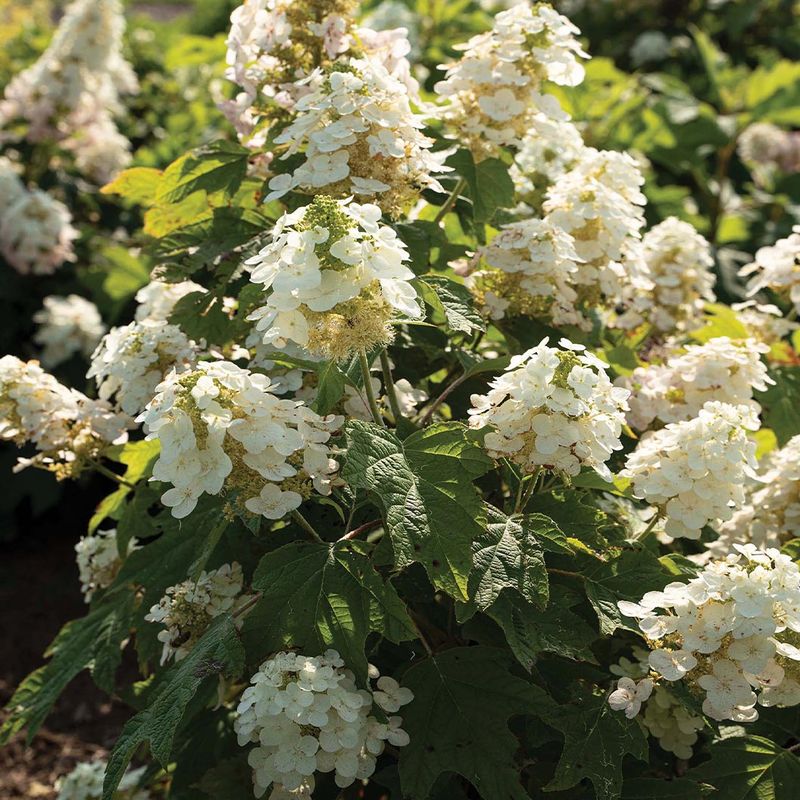
Some fences need a shrub rather than a vine, and oakleaf hydrangea delivers a level of drama that few other plants can match. Native to the southeastern United States and well-adapted to Ohio landscapes, this bold shrub grows four to six feet tall and equally wide, creating a natural curtain of foliage that hides fence lines beautifully without any climbing support needed.
The leaves are the real showstopper. Each one is deeply lobed like a giant oak leaf, growing up to a foot across in ideal conditions.
In early summer, large cone-shaped flower clusters called panicles emerge creamy white and gradually age to dusty rose and parchment tones as the season progresses. The visual interest never really stops with this plant.
Come autumn, the foliage shifts to rich burgundy, orange, and bronze, rivaling any fall-blooming perennial in the landscape. Even in winter, the peeling cinnamon-colored bark and persistent dried flower heads give the fence line a sculptural, interesting appearance.
Ohio State University Extension highlights oakleaf hydrangea as an excellent native-adjacent shrub for Midwestern home gardens.
Plant oakleaf hydrangea in partial shade for best results, spacing shrubs five to six feet apart along the fence. It handles Ohio winters reliably and requires very little maintenance once established, making it a sensible and stunning fence-softening choice.
6. Ninebark Adds Texture And Color Along Fence Lines
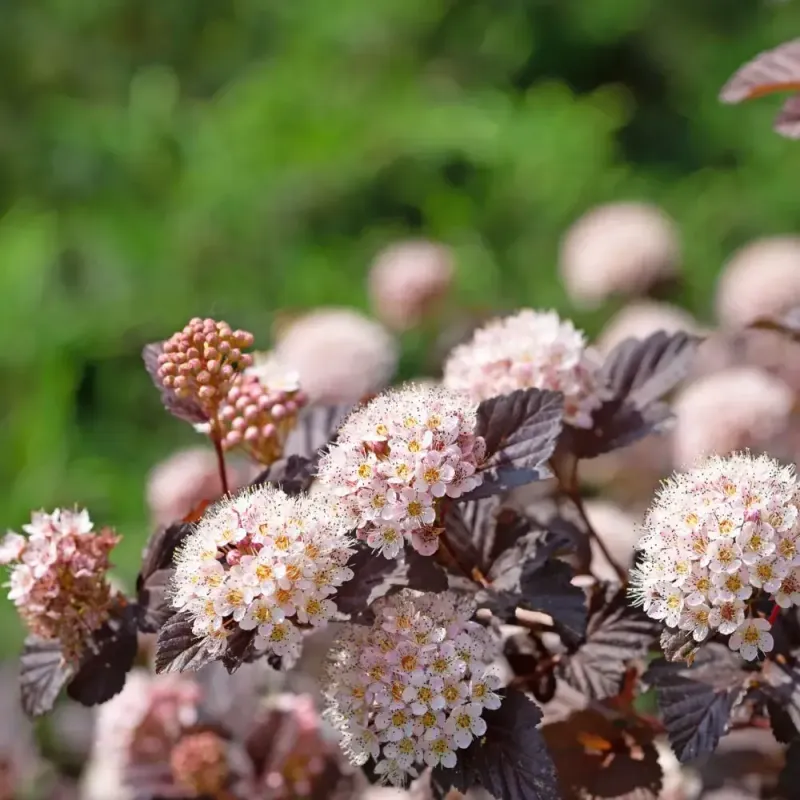
Bold foliage color, interesting bark, and a near-indestructible constitution make ninebark one of the most underrated fence-line shrubs in Ohio landscaping.
Physocarpus opulifolius is a native shrub that has been elevated by breeders into a stunning range of cultivars, with foliage colors ranging from deep burgundy and chocolate brown to bright chartreuse and golden yellow.
Planted along a fence, ninebark creates a thick, multi-stemmed wall of color that masks bare boards and chain-link completely within a few growing seasons. The shrub typically reaches five to eight feet tall and wide, depending on the variety chosen.
Compact cultivars like Tiny Wine or Little Devil stay smaller and suit tighter spaces without losing any of the visual punch.
In late spring, small clusters of white or pale pink flowers cover the plant, drawing in native bees and other beneficial pollinators. As summer progresses, the foliage holds its color reliably through heat and humidity, something that many colorful shrubs struggle to do in Ohio summers.
Fall brings a second wave of interest as the leaves deepen before dropping to reveal the shredding, layered bark that gives ninebark its memorable name.
Plant ninebark in full sun to partial shade, spacing shrubs four to six feet apart along the fence. It tolerates a wide range of Ohio soil conditions and requires minimal pruning to stay attractive season after season.
7. Arborvitae Forms A Dense Evergreen Privacy Screen
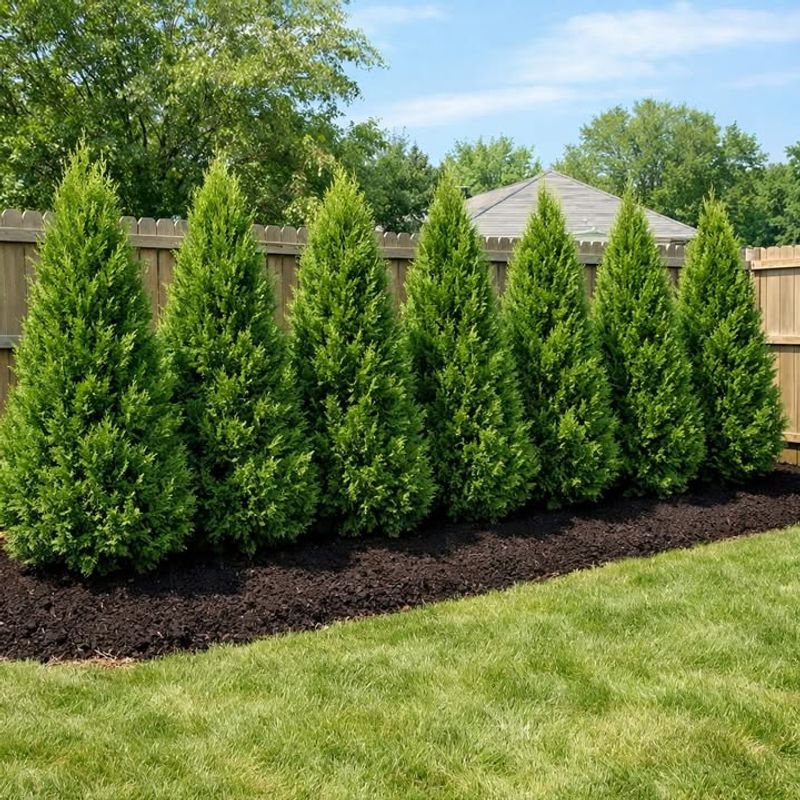
When Ohio homeowners want to block a fence from view every single month of the year, arborvitae is the plant that consistently rises to the top of the list. These evergreen conifers hold their dense, scale-like foliage through every Ohio winter, giving the fence line a full, lush appearance even when everything else in the garden has gone dormant and bare.
Thuja occidentalis, the native Eastern arborvitae, and its many cultivars are staples of Ohio nurseries for good reason. Varieties like Emerald Green, also sold as Smaragd, grow in tight, narrow columns that are perfect for fence lines where horizontal space is limited.
A mature Emerald Green arborvitae typically reaches ten to fifteen feet tall but stays only three to four feet wide, making it an efficient and manageable privacy screen.
The deep green color holds well through winter without the bronzing that affects some other evergreens in cold weather. Ohio State University Extension recommends arborvitae as a reliable screening plant for residential landscapes across the state.
Plant arborvitae in full sun to partial shade for the densest growth, and water consistently during the first two growing seasons.
Space Emerald Green cultivars three to four feet apart for a solid screen effect. Larger varieties like Green Giant can be spaced six feet apart.
Arborvitae requires no special pruning and remains non-invasive throughout its long lifespan in Ohio backyards.
8. Switchgrass Creates A Natural Prairie Style Border
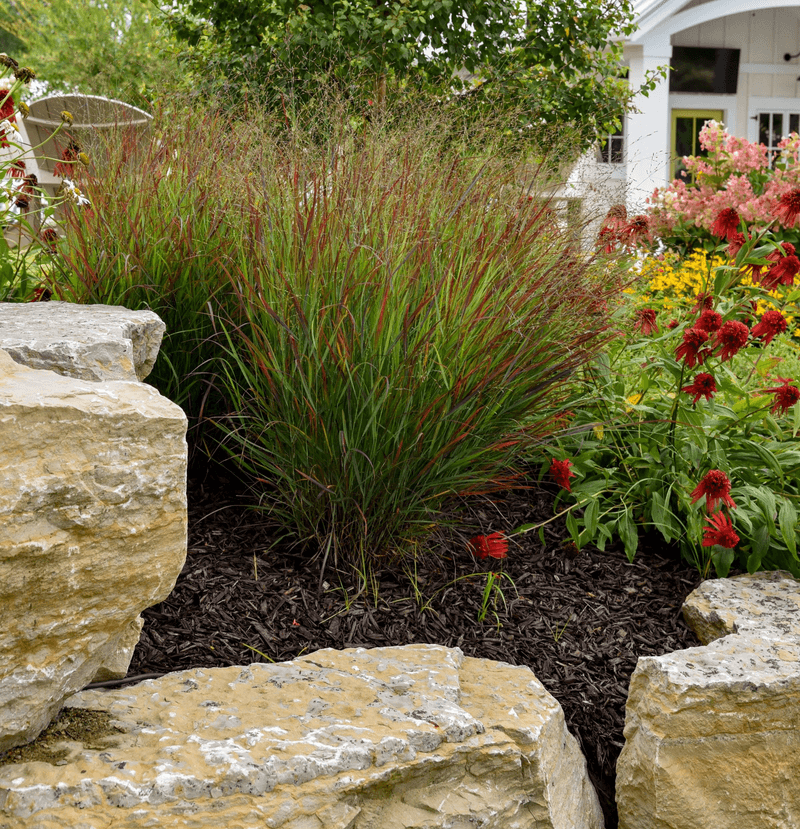
There is something undeniably alive about a stand of switchgrass swaying in a late summer breeze. Panicum virgatum is a native prairie grass that brings movement, height, and a relaxed naturalistic energy to Ohio backyards, and when planted along a fence line, it transforms a rigid, industrial structure into something that looks like it belongs in a meadow.
Switchgrass grows in upright clumps that reach three to six feet tall depending on the cultivar, making it tall enough to partially or fully obscure a standard privacy fence when planted in a layered row. In midsummer, airy clouds of tiny seed heads emerge above the foliage, catching the light in a way that feels almost luminous.
By fall, the entire plant shifts to warm shades of gold, orange, and russet that glow in the afternoon sun.
Popular cultivars like Shenandoah, Heavy Metal, and Northwind are well-suited to Ohio landscapes and stay in well-behaved clumps without spreading aggressively.
University horticulture programs across the Midwest consistently recommend switchgrass as a low-maintenance, ecologically beneficial choice for home gardens.
Plant switchgrass in full sun for the best upright form and brightest fall color. Space clumps two to three feet apart along the fence and divide plants every three to four years to keep them vigorous.
This prairie native asks for very little and gives back an enormous amount of seasonal beauty.
9. American Beautyberry Adds Colorful Berries And Texture
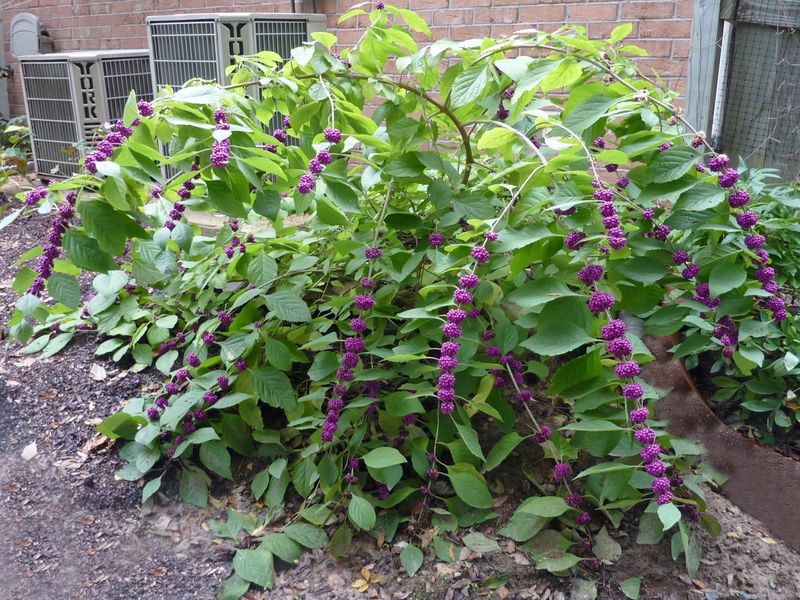
Late summer and fall are when American beautyberry earns every bit of the attention it receives. Callicarpa americana produces clusters of the most intensely purple berries imaginable, packed in tight rings directly along the length of each arching branch.
Planted along a fence line, this shrub becomes a genuine conversation piece that visitors will ask about every single time they visit your Ohio backyard.
The shrub grows in a graceful, fountain-like shape, reaching four to six feet tall and wide. Its large, textured leaves provide good fence coverage through spring and summer, and then in late August the berries appear and completely steal the show.
Birds absolutely love the berries, so planting beautyberry along a fence also turns that section of your yard into a lively feeding station through autumn and into early winter.
A related species, Callicarpa dichotoma, the purple beautyberry, is equally showy and slightly more compact, making it a practical option for smaller Ohio backyards.
Both species are non-invasive and well-suited to Ohio’s climate, thriving in partial shade to full sun.
Ohio gardeners often pair beautyberry with ornamental grasses or ninebark for a layered, textural fence border.
Plant beautyberry in well-drained soil and space shrubs four to five feet apart along the fence. Cut plants back hard in early spring to encourage vigorous new growth and the best berry display each season.
10. Buttonbush Thrives In Moist Backyards And Attracts Pollinators
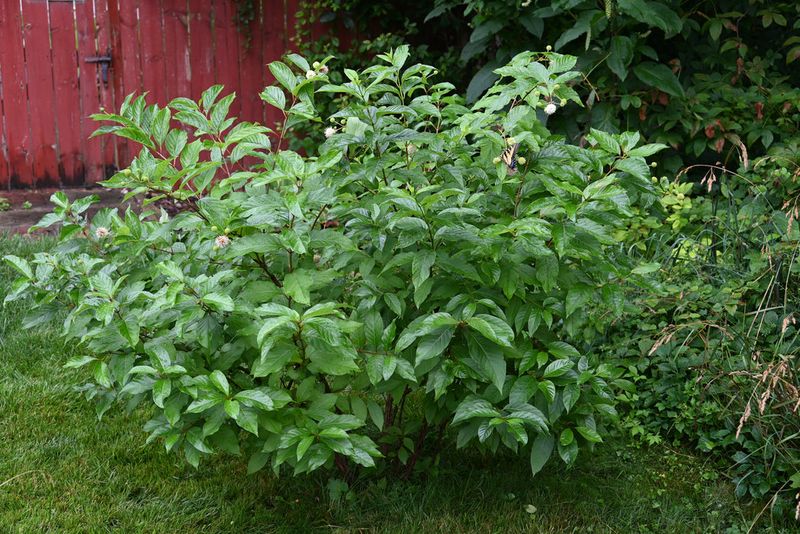
Not every Ohio backyard is perfectly drained, and low-lying areas near fences can stay soggy long after a rainstorm. Most shrubs struggle in those conditions, but buttonbush, Cephalanthus occidentalis, absolutely thrives there.
This native shrub is one of the best solutions for Ohio homeowners dealing with a wet, muddy fence line that seems impossible to plant.
Buttonbush earns its name from its uniquely shaped flowers, round, spiky white globes that look like something from a botanical curiosity cabinet.
These blooms appear in midsummer and are powerhouse pollinator magnets, drawing in bees, butterflies, and even hummingbirds in impressive numbers.
If supporting local wildlife is part of your gardening goals, few fence-line plants deliver as effectively as buttonbush.
The shrub grows six to ten feet tall and develops a dense, multi-branched form that provides solid visual coverage along a fence. The glossy, deep green leaves hold their color well through summer and add a clean, polished look to the fence line.
Ohio State University Extension recognizes buttonbush as a valuable native plant for wet or rain garden settings in Ohio landscapes.
Plant buttonbush in full sun to partial shade in areas with consistently moist or occasionally flooded soil. Space shrubs five to six feet apart along the fence.
Once established, this rugged native needs minimal care and continues rewarding Ohio gardeners with flowers, wildlife activity, and reliable coverage season after season.