These 8 Plants Can Replace Japanese Honeysuckle In Georgia Gardens
At first, Japanese honeysuckle can seem like the dream vine for a Georgia garden. It climbs quickly, covers fences in a hurry, and gives yards that lush, overgrown cottage-garden look people love.
Then one day you realize it has wandered far beyond the trellis and started treating the entire yard like its personal project. Classic vine behavior, honestly.
That is why more Georgia gardeners are swapping it out for plants that bring beauty without trying to take over every corner of the landscape.
Native vines and shrubs can still deliver colorful blooms, leafy coverage, pollinator activity, and that relaxed garden feel people want around fences and arbors.
The difference is that these plants tend to fit more naturally into the landscape instead of turning pruning into a weekly workout.
Plus, many of them attract birds and butterflies, which makes the garden feel even more alive once spring and summer settle in.
1. Carolina Jessamine Brings Evergreen Color To Fences
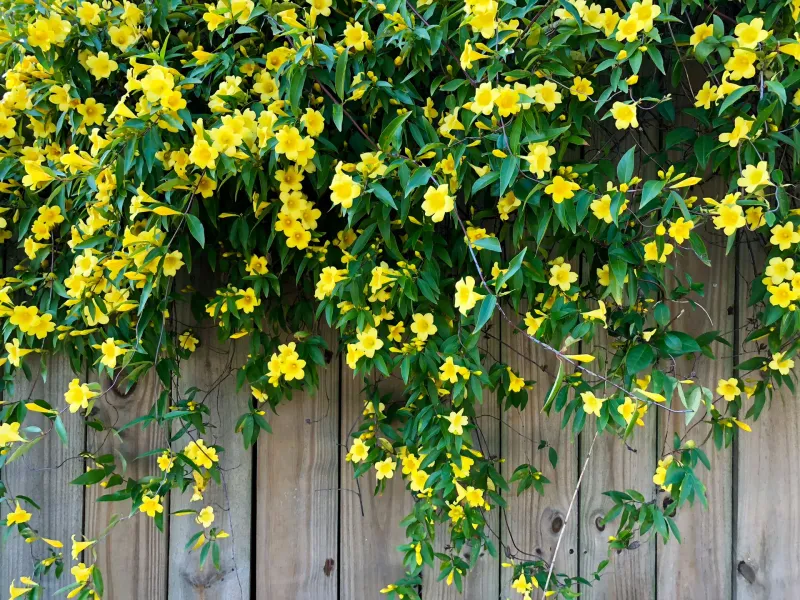
Fence lines across Georgia come alive in late winter and early spring when Carolina jessamine begins to bloom.
This native vine produces clusters of bright yellow, tubular flowers that are hard to miss, and the evergreen foliage keeps things looking full and tidy even through cooler months.
Gardeners who have struggled to keep Japanese honeysuckle contained often find Carolina jessamine a much more manageable option for fences and trellises.
Carolina jessamine, also known by its botanical name Gelsemium sempervirens, is the state flower of South Carolina and grows well throughout Georgia.
It tends to twine naturally around wire fences, wooden trellises, and chain-link structures without becoming overly aggressive.
The blooms appear as early as February in warmer parts of Georgia, making it one of the first flowering vines to signal the arrival of spring.
Hummingbirds and some native bees are drawn to the flowers, adding wildlife value to your garden. The vine does well in full sun to partial shade and tolerates a range of Georgia soil types once established.
Keep in mind that all parts of this plant are toxic if ingested, so placement matters in households with young children or pets. With modest pruning after bloom, Carolina jessamine stays tidy and rewarding season after season.
2. Trumpet Honeysuckle Adds Native Blooms For Pollinators
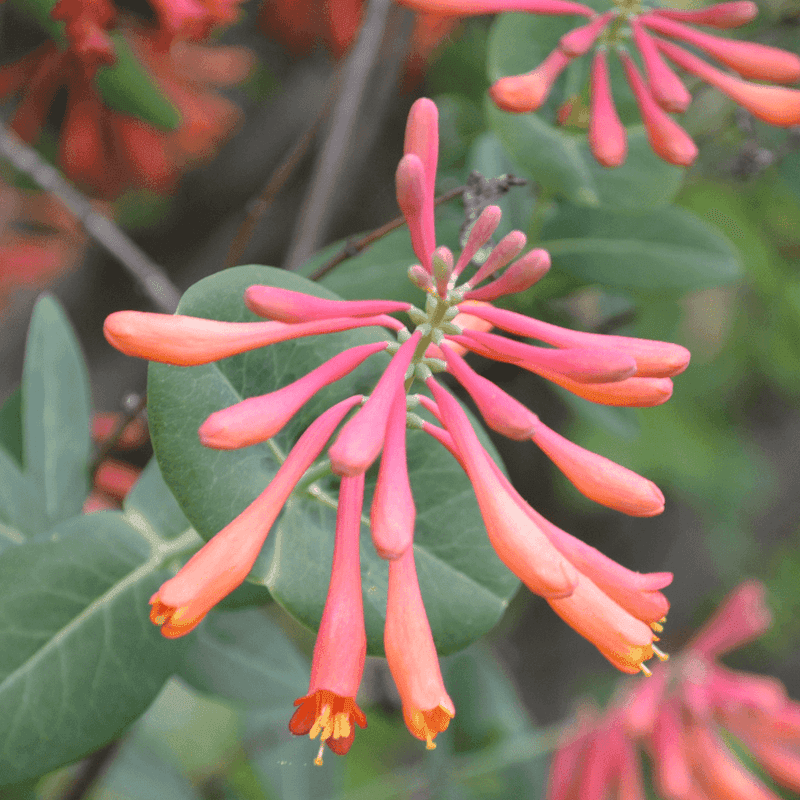
Not every honeysuckle causes problems in Georgia gardens.
Trumpet honeysuckle, or Lonicera sempervirens, is a native species that offers the climbing habit and showy blooms many gardeners love about Japanese honeysuckle, without the aggressive spreading that makes the invasive species such a challenge.
The tubular red-to-orange flowers are a standout feature from spring through summer and are especially appealing to hummingbirds and butterflies.
Growing trumpet honeysuckle on a trellis, arbor, or fence gives Georgia gardeners a native option that blends naturally into the landscape. The vine is semi-evergreen in warmer parts of Georgia, meaning it may hold onto its leaves through mild winters.
It tends to grow at a moderate pace, making it easier to manage than many other climbing vines.
One thing that makes trumpet honeysuckle a strong replacement choice is that it supports local wildlife in multiple ways. Hummingbirds visit the flowers regularly, and songbirds feed on the small red berries that follow the blooms in late summer and fall.
Your Georgia Garden Changes Every Week. Your Plan Should Too.
Gardening in Georgia changes quickly throughout the season. Every Friday you’ll receive a simple weekly plan showing exactly what to plant, prune, fertilize, harvest, and protect so you never miss the right timing.
The plant does well in full sun to partial shade and is fairly tolerant of Georgia heat once established. Pruning in late winter or early spring can help keep the vine tidy and encourage fresh growth.
For anyone replacing Japanese honeysuckle on a garden structure, this native vine is a natural starting point.
3. Crossvine Covers Arbors With Showy Spring Flowers
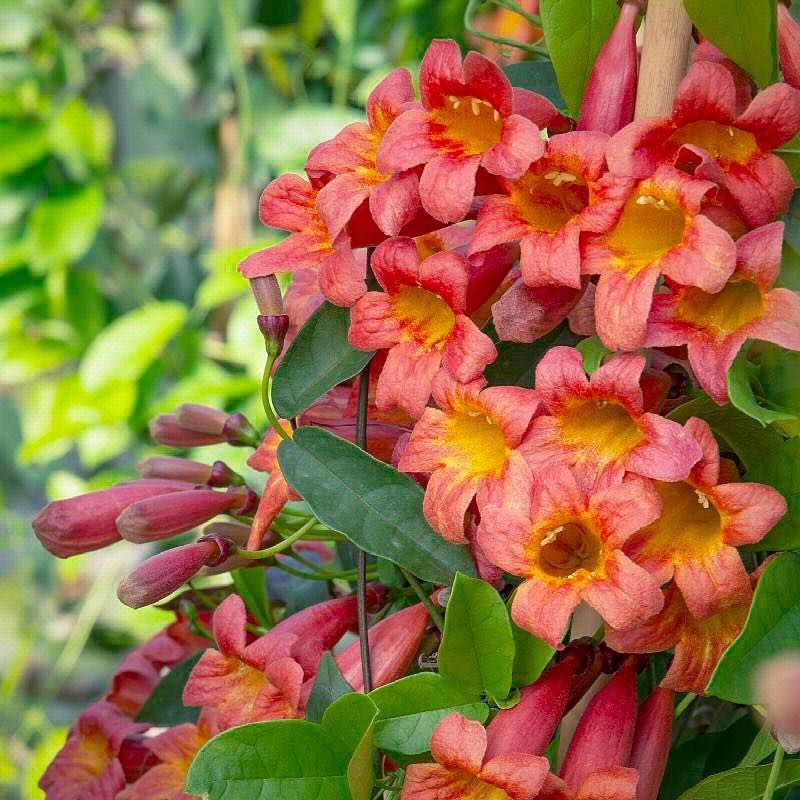
Arbors in Georgia gardens can look stunning when crossvine is given room to climb and bloom.
This semi-evergreen native vine, known botanically as Bignonia capreolata, produces clusters of trumpet-shaped flowers in shades of orange, red, and yellow each spring.
The display can be quite dramatic, especially when the vine has had a season or two to establish itself on a sturdy support.
Crossvine gets its name from the cross-shaped pattern visible when the stem is cut, a small detail that makes it easy to identify.
It climbs using tendrils with adhesive discs, which means it can grip arbors, trellises, fences, and even brick or stone surfaces without much additional help.
This cling-and-climb habit makes it especially useful for covering large garden structures in Georgia landscapes.
Hummingbirds are regular visitors to crossvine flowers, and the semi-evergreen foliage provides some cover for wildlife through winter.
The vine tolerates a range of conditions, from full sun to fairly deep shade, and handles Georgia heat and humidity reasonably well.
It can spread by underground runners over time, so gardeners should keep an eye on the edges of the planting. However, it is far less aggressive than Japanese honeysuckle and much easier to keep in check with occasional maintenance.
For large arbors or fence runs that need strong coverage, crossvine is a reliable and visually rewarding native choice.
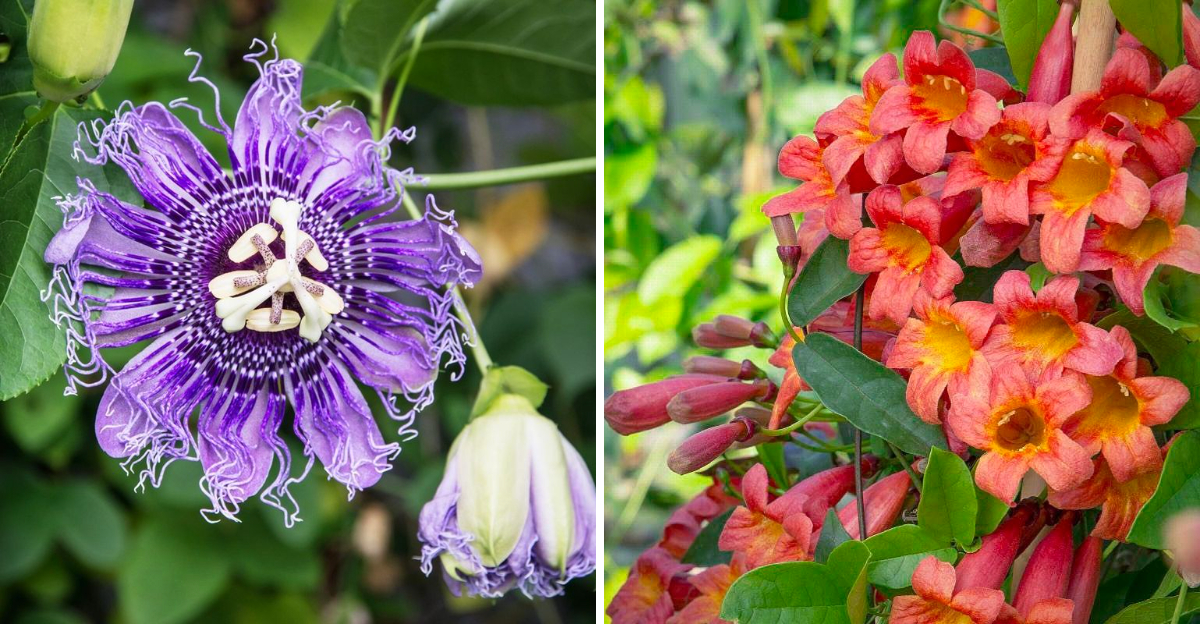
4. Purple Passionflower Adds Bold Blooms To Garden Edges
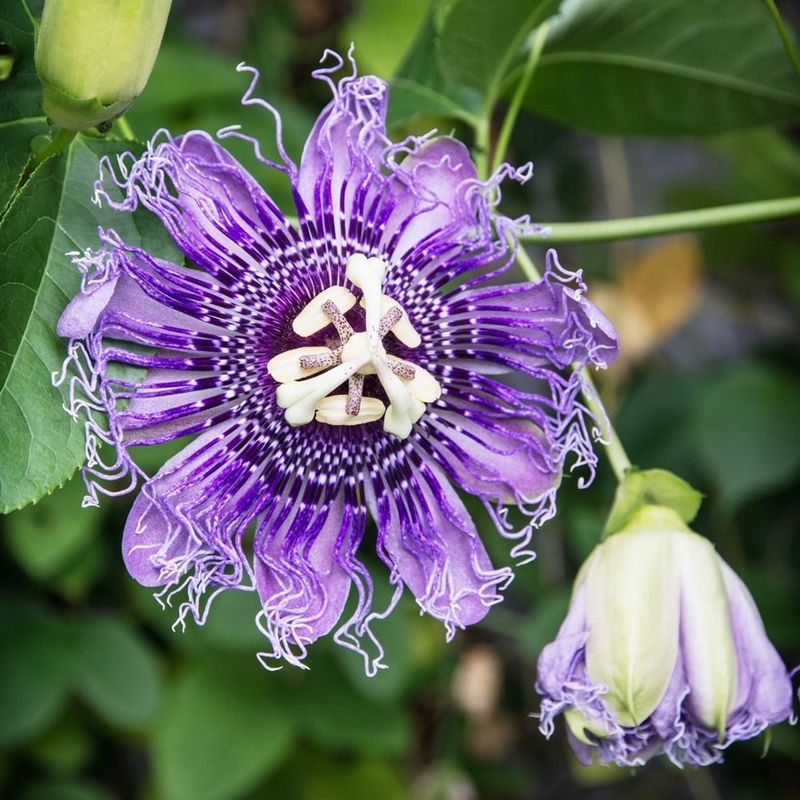
Few vines in the Georgia garden world can match the visual impact of purple passionflower when it is in full bloom.
The flowers of Passiflora incarnata are genuinely unlike anything else in the home landscape, featuring an intricate arrangement of lavender petals and a distinctive fringed corona that gives the bloom a sculptural, almost tropical appearance.
It is a native vine that grows wild in many parts of Georgia and brings a bold, artistic quality to garden edges and fence lines.
Purple passionflower climbs readily using tendrils and can cover a fence section or garden edge structure with reasonable speed during the warm growing season.
The foliage is attractive on its own, and the blooms appear from early summer into fall, providing a long window of visual interest.
After flowering, the vine produces egg-shaped fruit that ripens to yellow-orange and is edible, with a mild, sweet flavor.
From a wildlife perspective, purple passionflower is the host plant for Gulf fritillary and zebra longwing butterfly caterpillars, making it especially valuable in Georgia gardens focused on supporting pollinators and local ecosystems.
The vine spreads by underground stems and may pop up in nearby areas, so some monitoring is helpful.
It does well in sunny spots with well-drained soil and is quite tolerant of Georgia summers once established. For gardeners wanting to replace Japanese honeysuckle with something truly eye-catching, this native vine delivers on every level.
5. American Wisteria Brings Soft Flower Clusters To Strong Supports
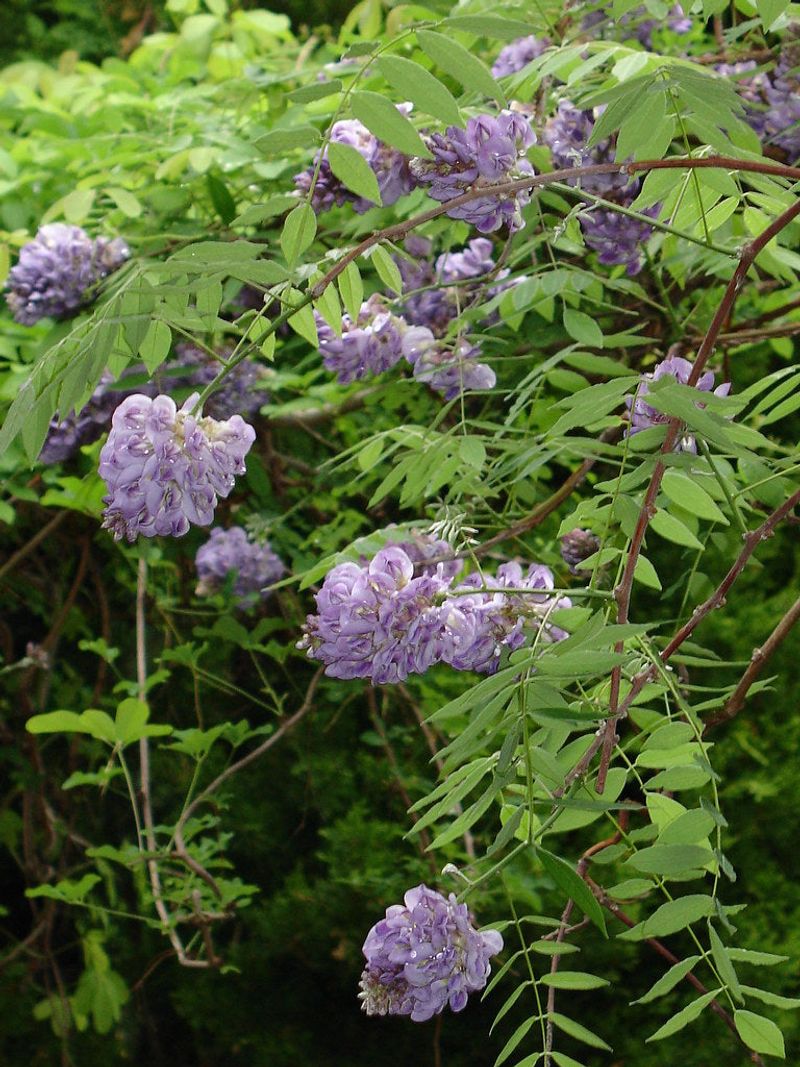
Wisteria is one of those plants that gardeners in Georgia either love or approach with caution, and for good reason.
The Asian species, including Japanese and Chinese wisteria, are known for aggressive growth that can overwhelm structures and surrounding vegetation.
American wisteria, or Wisteria frutescens, offers a different experience. It produces the same beautiful hanging clusters of lavender to purple flowers but with a much more restrained growth habit that suits home landscapes far better.
The blooms of American wisteria typically appear in late spring and may rebloom lightly through the season, attracting bees and other pollinators to the garden.
The flower clusters are somewhat shorter than those of the Asian species, but they are still fragrant and visually impressive when the vine is in full bloom on a pergola, arbor, or strong trellis.
Georgia gardeners who want that classic wisteria look without the structural risk tend to find this native species a much more sensible option.
American wisteria does need a sturdy support structure since the stems can become woody and heavy over time.
It grows best in full sun and moist, well-drained soil, and benefits from annual pruning to keep the shape tidy and encourage blooming.
Giving it enough space to spread without crowding nearby plants makes management easier. As a replacement for Japanese honeysuckle on a large arbor or fence run, American wisteria brings elegance and pollinator value to the Georgia garden.
6. Virgin’s Bower Creates A Light Natural Vine Look
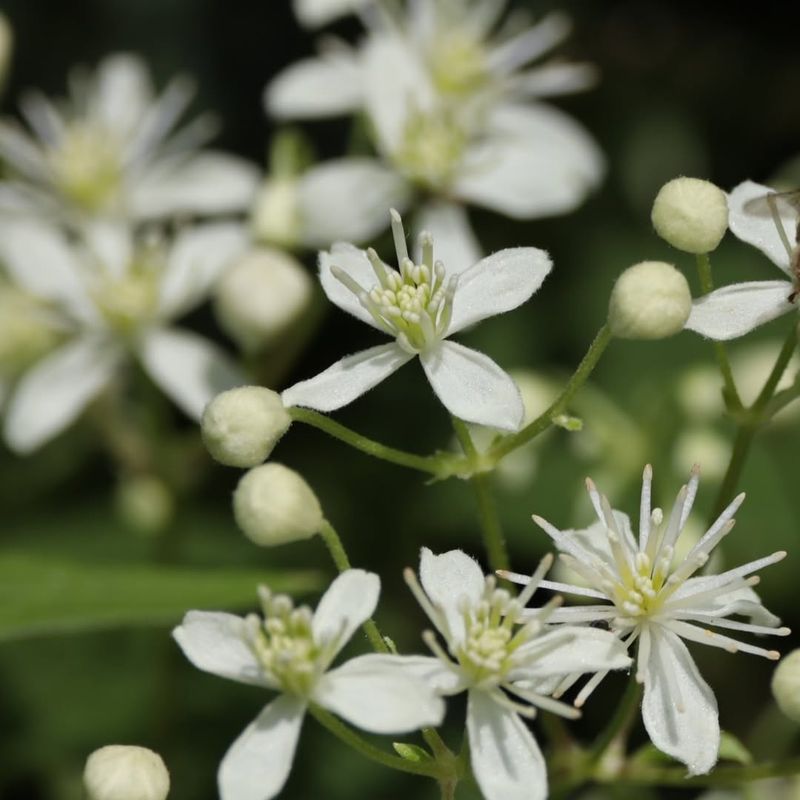
There is something refreshing about a vine that does not try to dominate every surface it touches, and Virgin’s bower fits that description well.
This native clematis, known botanically as Clematis virginiana, produces masses of small, creamy white flowers in late summer and early fall, creating a soft, airy look that feels right at home along fence lines and naturalized garden edges in Georgia.
The bloom timing is a bonus since most flowering vines have finished by late summer, leaving a gap that Virgin’s bower fills nicely.
After the flowers fade, the vine produces feathery, silvery seed heads that persist into fall and winter, adding texture and visual interest long after the blooms are gone.
Birds use the fluffy seed material for nesting, which gives the plant additional wildlife value beyond its flowering season.
The vine climbs by wrapping its leaf petioles around supports, making it well suited for wire fences, trellises, and shrubby structures.
Virgin’s bower can spread by seed, so gardeners should be aware that seedlings may appear in nearby areas over time. However, it is native to Georgia and does not carry the invasive risks associated with Japanese honeysuckle.
It grows well in partial shade to full sun and tolerates a range of soil moisture levels, including spots that stay a bit damp.
For gardeners wanting a lighter, more naturalistic vine that supports wildlife and fills the late-season gap, Virgin’s bower is a thoughtful and rewarding choice.
7. American Beautyberry Adds Berries Along Shrub Borders
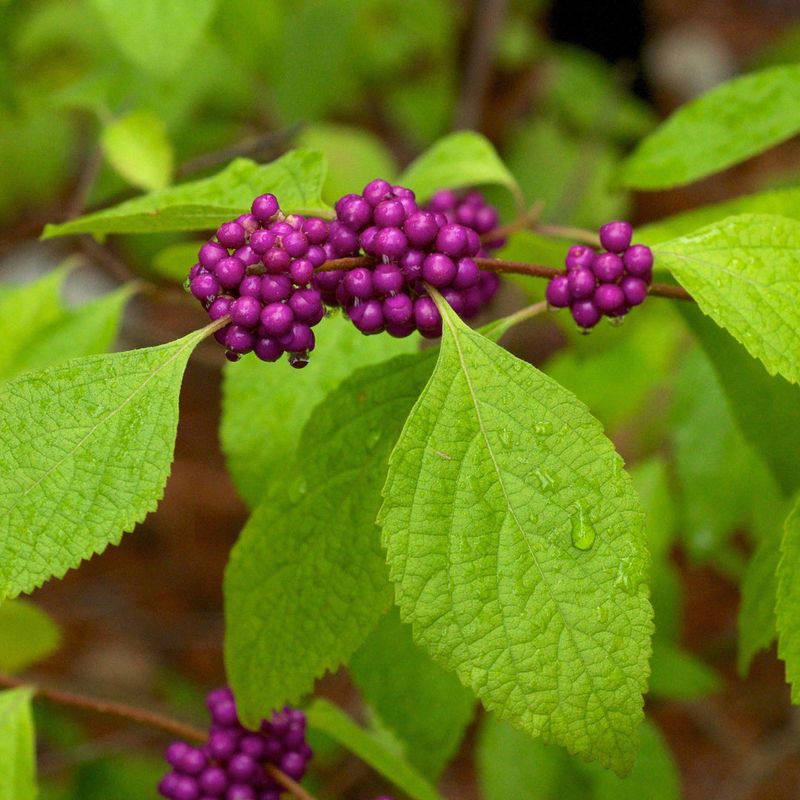
Bold, almost electric clusters of magenta-purple berries along arching stems make American beautyberry one of the most visually striking shrubs in the Georgia fall landscape.
Callicarpa americana is a native shrub that thrives across much of the Southeast, and it earns its place along shrub borders and naturalized edges by offering both seasonal beauty and strong wildlife value.
The berry clusters appear in late summer and persist well into fall, drawing in mockingbirds, robins, catbirds, and other songbirds that feed heavily on the fruit.
As a replacement for Japanese honeysuckle along shrub borders, American beautyberry brings a completely different form and function to the garden.
Rather than climbing, it grows as a rounded, arching shrub that can reach six to eight feet in height and spread, making it useful for filling gaps, softening edges, and creating informal hedges in Georgia landscapes.
The foliage is large and bright green through summer, and the small lilac-pink flowers that appear before the berries are also attractive to pollinators.
American beautyberry is low maintenance once established and tolerates partial shade well, which makes it a practical choice for spots under trees or along the edges of wooded areas.
It can be cut back hard in late winter to control size and encourage vigorous new growth.
Georgia gardeners who want a shrub that earns its keep in every season will find American beautyberry a reliable and genuinely beautiful addition to the landscape.
8. Virginia Sweetspire Fills Edges With Soft Seasonal Blooms
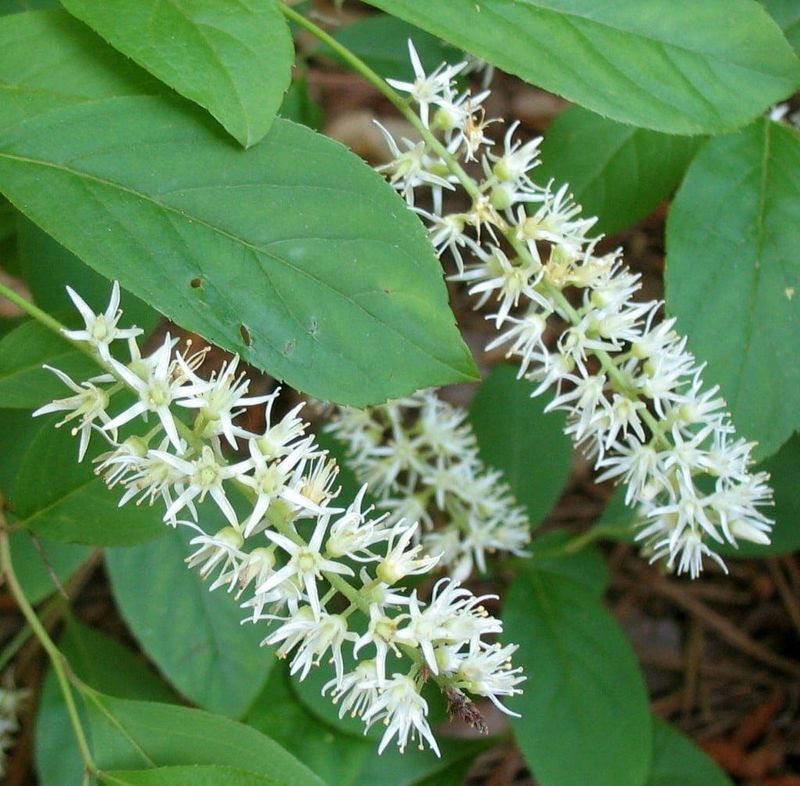
Along the edges of Georgia gardens where the landscape transitions from lawn to a more naturalized planting, Virginia sweetspire has a way of fitting in beautifully without demanding much attention.
Itea virginica is a native shrub that offers three distinct seasons of interest, starting with fragrant white bottlebrush-style flower spikes in early summer, followed by rich red and orange fall foliage, and then arching reddish stems that add subtle structure through winter.
Few native shrubs deliver that kind of multi-season value in one plant.
The flowers of Virginia sweetspire are genuinely fragrant and attract a variety of native bees and butterflies during the blooming period, which typically runs from late spring into early summer in Georgia.
The arching, graceful form of the shrub makes it well suited for softening garden edges, filling low spots near water features, and creating informal borders where a relaxed, natural look is the goal.
It tolerates wet soils better than many shrubs, which is helpful in parts of Georgia where drainage can be inconsistent.
Virginia sweetspire spreads slowly by suckers, forming a loose colony over time that provides good ground-level cover for birds and small wildlife. It grows well in partial shade to full sun and is quite adaptable to Georgia soil conditions.
Pruning is rarely necessary beyond occasional shaping to maintain the desired size.
For gardeners replacing Japanese honeysuckle along shrub borders or garden edges, Virginia sweetspire brings charm, fragrance, and seasonal color in a well-mannered native package.