These 13 Plants Often Look Messy In Oregon (Try These Instead)
Let’s be honest, not every plant ages gracefully in an Oregon garden. Some start the season looking great, then slowly unravel as the rain, wind, and uneven sunshine do their thing.
By mid-season, you’re staring at floppy stems, soggy leaves, or plants that look like they gave up halfway through the job.
It’s not always your fault. Oregon’s mix of moisture, mild temperatures, and cloudy stretches can make certain plants behave very differently than garden tags promise.
What looks neat and tidy in a catalog doesn’t always translate to real life in your backyard.
If you’ve ever walked past a bed and thought, “Why does this always look so chaotic?” you’re definitely not alone. Many gardeners keep replanting the same troublemakers, hoping this will be the year they behave better.
Spoiler alert: they usually don’t.
The good news is you don’t have to settle for messy-looking plants. There are plenty of alternatives that hold their shape, look good through the season, and handle Oregon’s conditions without constant fixing.
If you’re ready to stop babysitting high-maintenance plants and start enjoying a cleaner, more put-together garden, you’re in the right place. These plants often struggle to stay neat in Oregon, and the smarter swaps that actually work will make your garden look better with less effort.
1. Ornamental Grasses That Flop And Sprawl
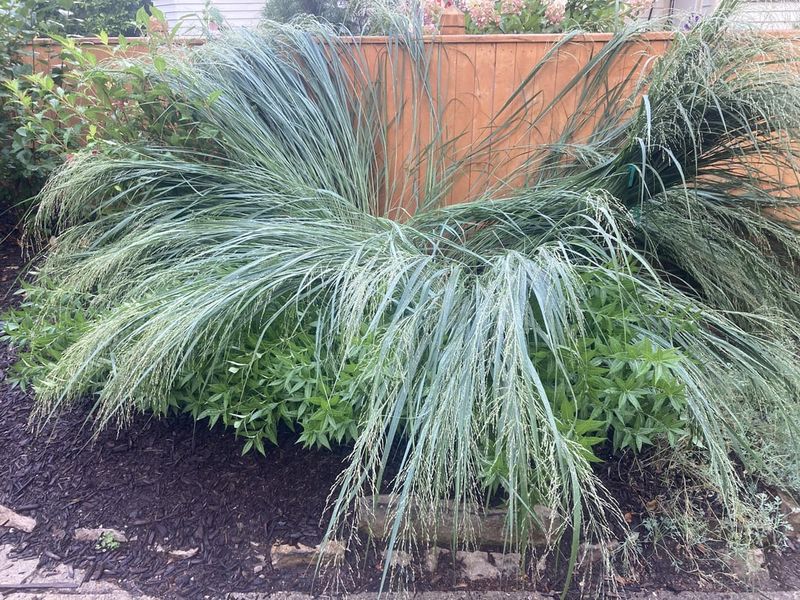
Many ornamental grasses seem like a great idea at first. They add movement and texture to your garden, but some varieties just cannot handle Oregon’s heavy rains and wind.
They flop over, creating tangled messes that look more like a haystack than a design feature.
Tall fescue and some miscanthus varieties are notorious for this problem. They grow quickly in our moist climate, but their stems get weak and bend under their own weight.
By mid-summer, you end up with a sprawling clump that blocks pathways and looks unkempt.
Try planting compact varieties like ‘Karl Foerster’ feather reed grass instead. This grass stands upright through all kinds of weather and keeps its elegant shape from spring through winter.
It grows in neat clumps that do not spread aggressively, and the golden seed heads add interest even after frost.
Another excellent choice is blue oat grass, which forms tidy mounds of blue-green foliage. Both options require far less maintenance than their floppy cousins and look polished year-round.
You will spend less time propping up stems and more time enjoying your garden’s clean lines.
2. Bamboo Running Wild Everywhere
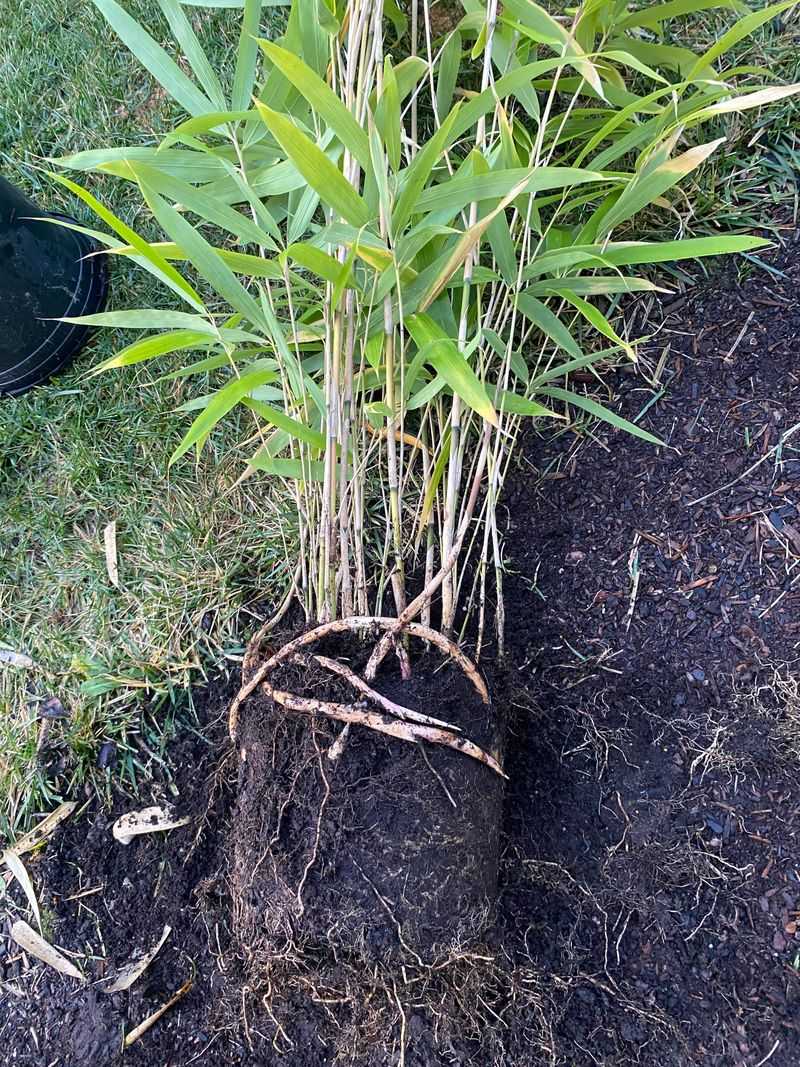
Bamboo sounds exotic and beautiful, and it can be. But running bamboo varieties spread through underground rhizomes that pop up everywhere.
Before you know it, bamboo shoots appear in your lawn, your neighbor’s yard, and even through cracks in your driveway.
Controlling running bamboo becomes a full-time job. You have to dig up new shoots constantly, and even then, it keeps coming back.
The dense growth looks messy and chaotic, especially when older canes turn brown and clutter the base of the clump.
Clumping bamboo varieties offer all the beauty without the invasion. Fargesia species stay in tight, manageable clumps and grow slowly enough that you can actually control their size.
They handle Oregon’s climate beautifully and provide that graceful, swaying foliage people love.
If you want a similar look with even less fuss, consider river birch or red twig dogwood. Both have interesting stems and foliage that move in the breeze, and they stay exactly where you plant them.
Your garden will look intentional and elegant, not like a jungle taking over your property.
3. English Ivy Climbing Up Everything
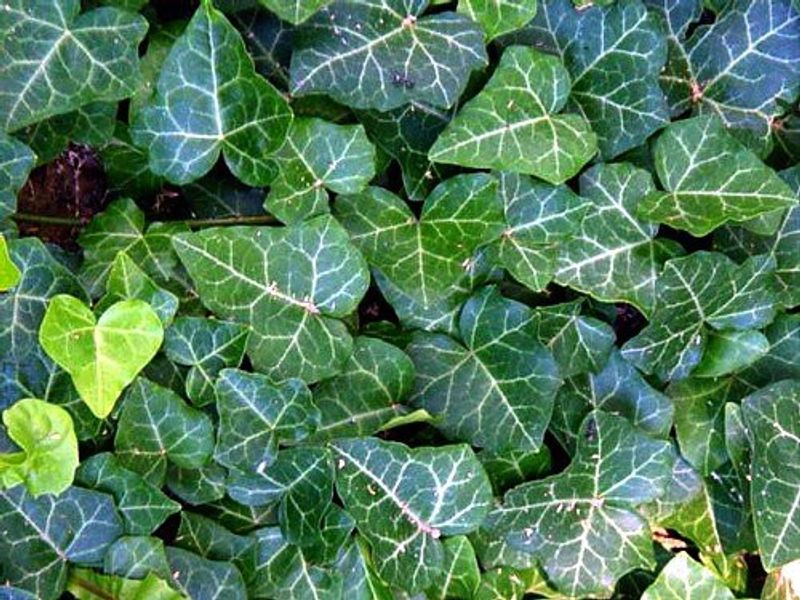
English ivy seems like an easy groundcover solution. It grows fast, fills in bare spots, and stays green all year.
But this plant has a dark side that Oregon gardeners know too well. It climbs trees, covers fences, and smothers everything in its path.
Once ivy gets established, it creates thick mats that trap moisture and debris. The lower layers turn brown and ratty while the top keeps growing.
It also damages tree bark and can topple trees by adding weight to their canopy during winter storms.
Native kinnikinnick makes a much better groundcover choice. This low-growing evergreen spreads slowly, produces pretty pink flowers in spring, and develops red berries that birds enjoy.
It stays neat and compact without trying to take over your entire yard.
Wild ginger is another fantastic alternative for shady spots. Its heart-shaped leaves create a lush carpet that looks intentional and well-maintained.
Both options give you the coverage you want without the constant battle to keep them under control. Your garden will look cared for instead of overrun.
4. Shasta Daisies Getting Leggy And Floppy
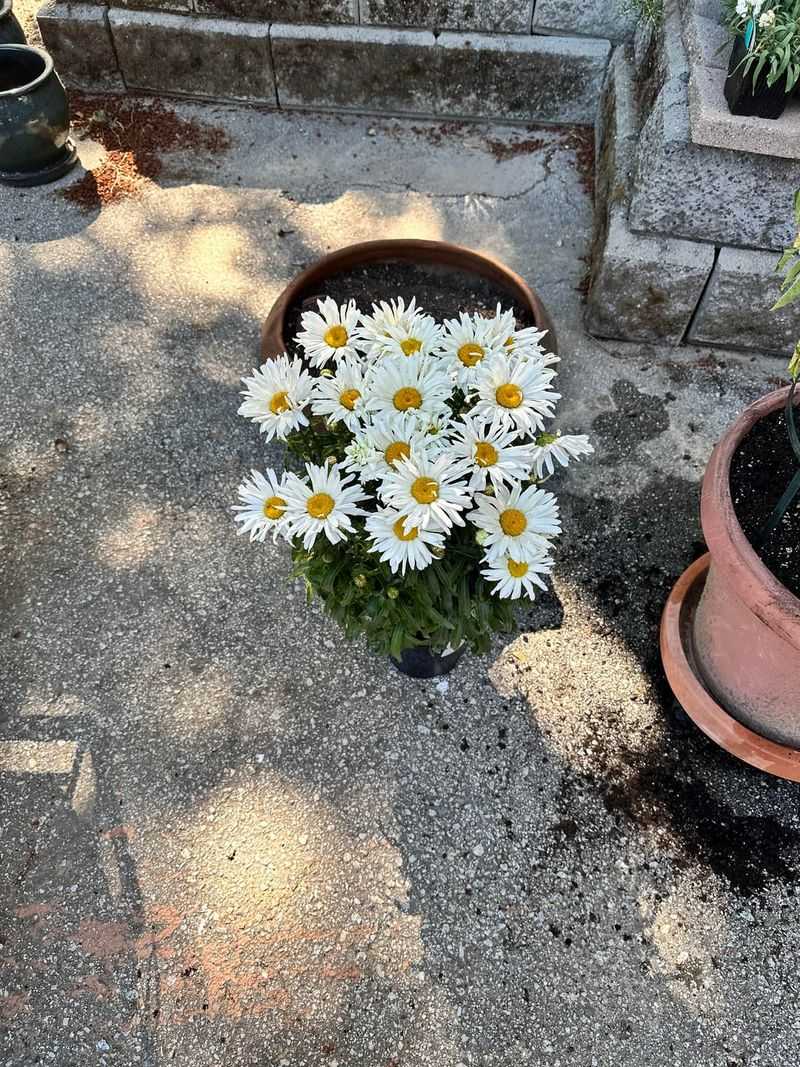
Shasta daisies bring classic white blooms to summer gardens. But in Oregon’s rich soil and frequent rain, they grow too tall and too fast.
The stems get leggy and weak, then flop over at the first sign of wind or heavy rain.
After blooming, the plants often look messy and tired. The foliage turns yellow in spots, and spent flowers cling to bent stems.
You end up staking them or cutting them back repeatedly just to keep them looking halfway decent.
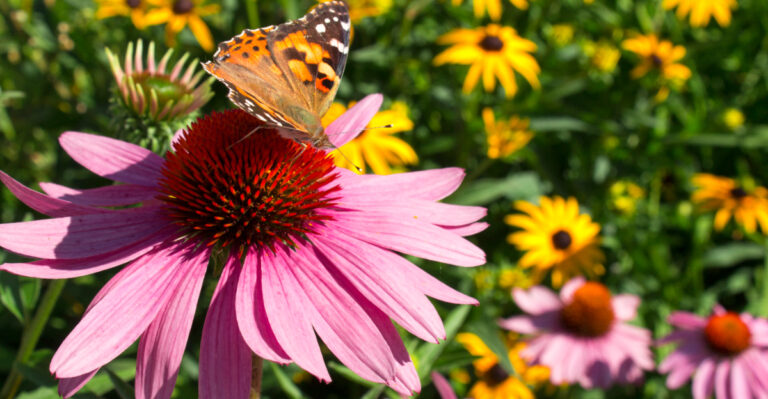
Coneflowers offer a similar daisy-like bloom with much sturdier stems. Purple coneflowers and their many colorful cultivars stand up to Oregon weather beautifully.
They have strong stems that do not need staking, and their seed heads look attractive even after the petals fade.
Black-eyed Susans are another excellent substitute. They bloom for months, handle wet or dry conditions, and keep their compact shape without any fussing.
Both options attract pollinators and provide long-lasting color without the constant maintenance that Shasta daisies demand. Your garden will look vibrant and well-kept all summer long.
5. Lamb’s Ear Turning Mushy And Brown
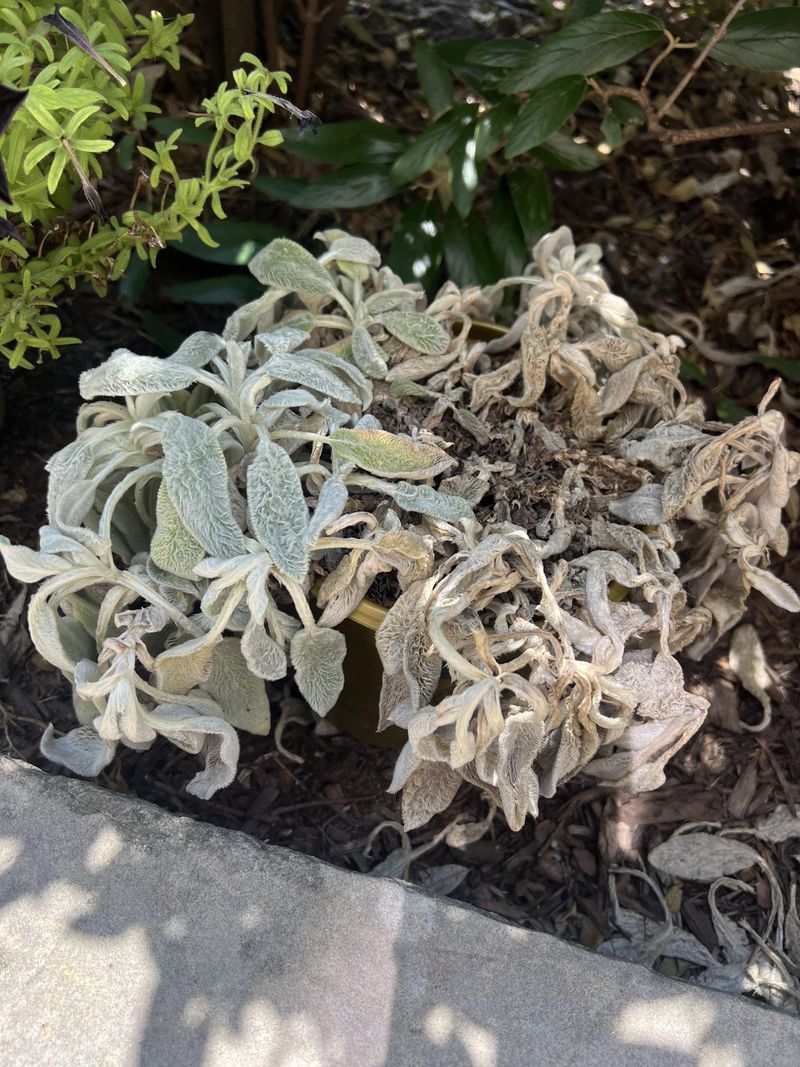
Lamb’s ear is loved for its soft, silvery foliage that feels like velvet. Kids enjoy touching it, and it adds a unique texture to garden beds.
But Oregon’s wet climate is not kind to this plant. The fuzzy leaves trap moisture, leading to rot and brown patches that look terrible.
During our rainy season, lamb’s ear often turns into a slimy, mushy mess. The lower leaves especially suffer, creating an ugly ring of decay around each plant.
Even in summer, overhead watering can cause the same problem.
Heuchera, also known as coral bells, gives you colorful foliage without the rot issues. These plants thrive in Oregon’s climate and come in dozens of colors from deep purple to bright lime green.
Their leaves stay attractive through all seasons and handle moisture beautifully.
Another smart choice is Japanese forest grass, which offers soft texture without the maintenance headaches. Its graceful arching foliage adds movement and interest to shady spots.
Both alternatives keep your garden looking fresh and healthy even during our wettest months. You will appreciate plants that work with our climate instead of against it.
6. Vinca Vine Strangling Other Plants
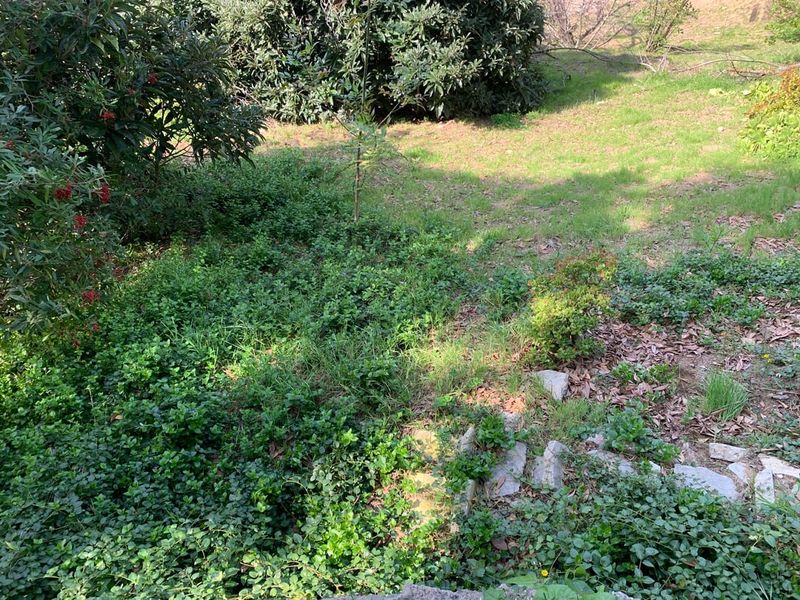
Vinca vine, or periwinkle, spreads quickly and produces pretty purple or white flowers. Many people plant it as a groundcover under trees or on slopes.
But this aggressive grower does not know when to stop. It sends out long runners that root wherever they touch soil.
Before long, vinca smothers smaller plants and creates thick tangles that look messy. The runners grow in all directions, making clean edges impossible to maintain.
It also climbs into shrubs and perennials, creating a chaotic jumble of stems and leaves.
Evergreen huckleberry makes a wonderful native alternative for shady areas. This Northwest native stays compact, produces edible berries, and has glossy leaves that look neat year-round.
It grows slowly enough that you can easily control its shape and size.
For sunnier spots, consider creeping Oregon grape. This low-growing relative of tall Oregon grape spreads moderately and has beautiful textured foliage that turns bronze in winter.
Both options give you attractive groundcover without the aggressive takeover. Your garden beds will have clear boundaries and a well-maintained appearance that makes your whole yard look better.
7. Russian Sage Falling Apart Mid-Season
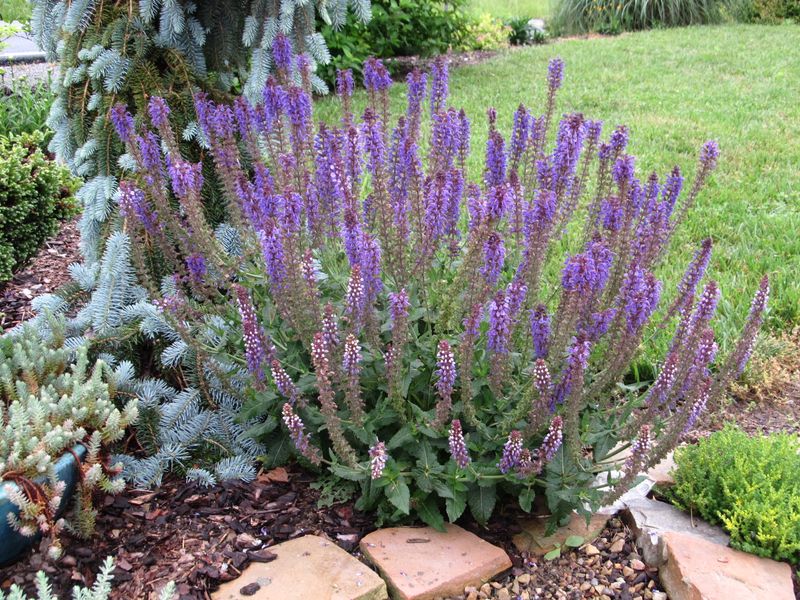
Russian sage seems perfect for Oregon gardens. It handles dry summers, produces lovely purple-blue flowers, and has aromatic foliage.
But this plant has a structural problem. The stems grow tall and thin, then split apart from the center as the season progresses.
By late summer, many Russian sage plants look like they exploded. The center opens up, revealing woody stems and bare patches.
The outer stems flop outward, creating a messy ring instead of an attractive shrub. Strong winds or heavy rain make the problem worse.
Try lavender varieties bred for our climate instead. English lavender cultivars like ‘Hidcote’ or ‘Munstead’ stay compact and keep their shape beautifully.
They offer similar purple blooms and fragrance without the structural collapse. Spanish lavender is another option that holds up well.
Catmint is also an excellent substitute. It forms neat mounds of gray-green foliage topped with purple-blue flowers that bloom for months.
It does not split apart or flop over, even in challenging weather. Both alternatives give you that cottage garden look with much better structure and appearance throughout the growing season.
8. Daylilies With Spent Blooms And Messy Foliage
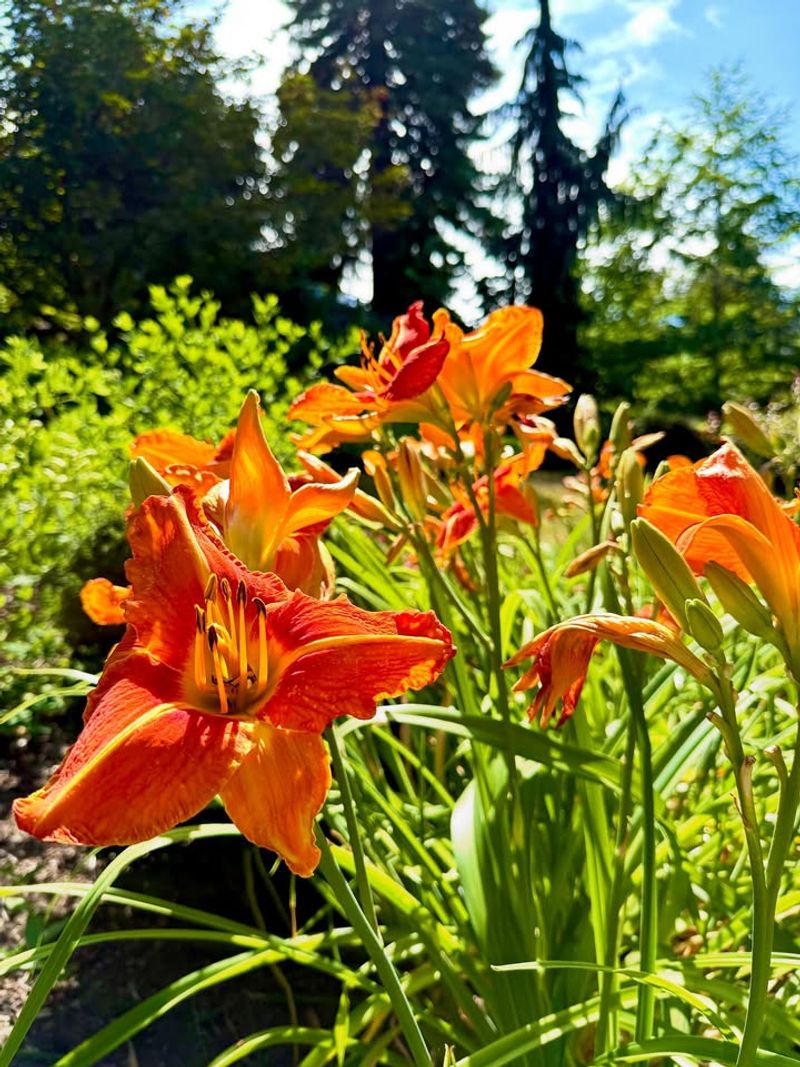
Daylilies are garden workhorses that bloom reliably and spread to fill space. But each flower only lasts one day, and those spent blooms turn into slimy brown blobs that cling to the plant.
In Oregon’s humid climate, they look particularly unattractive and can even develop mold.
The foliage also gets messy as the season wears on. Older leaves turn yellow and brown at the tips, creating a ratty appearance.
Some varieties send up so many bloom stalks that the plant looks cluttered and chaotic rather than elegant.
Siberian iris offers a similar upright form with much neater habits. The blooms last longer, and spent flowers drop cleanly from the stalks.
The sword-like foliage stays green and attractive all season, adding structure to your garden even when the plant is not blooming.
Crocosmia is another fantastic choice for bright summer color. Its arching stems of orange or red flowers look graceful and intentional.
The foliage stays tidy, and the plant forms neat clumps that do not require constant grooming. Both alternatives give you vibrant blooms without the daily cleanup that daylilies demand.
9. Bishop’s Weed Spreading Beyond Control
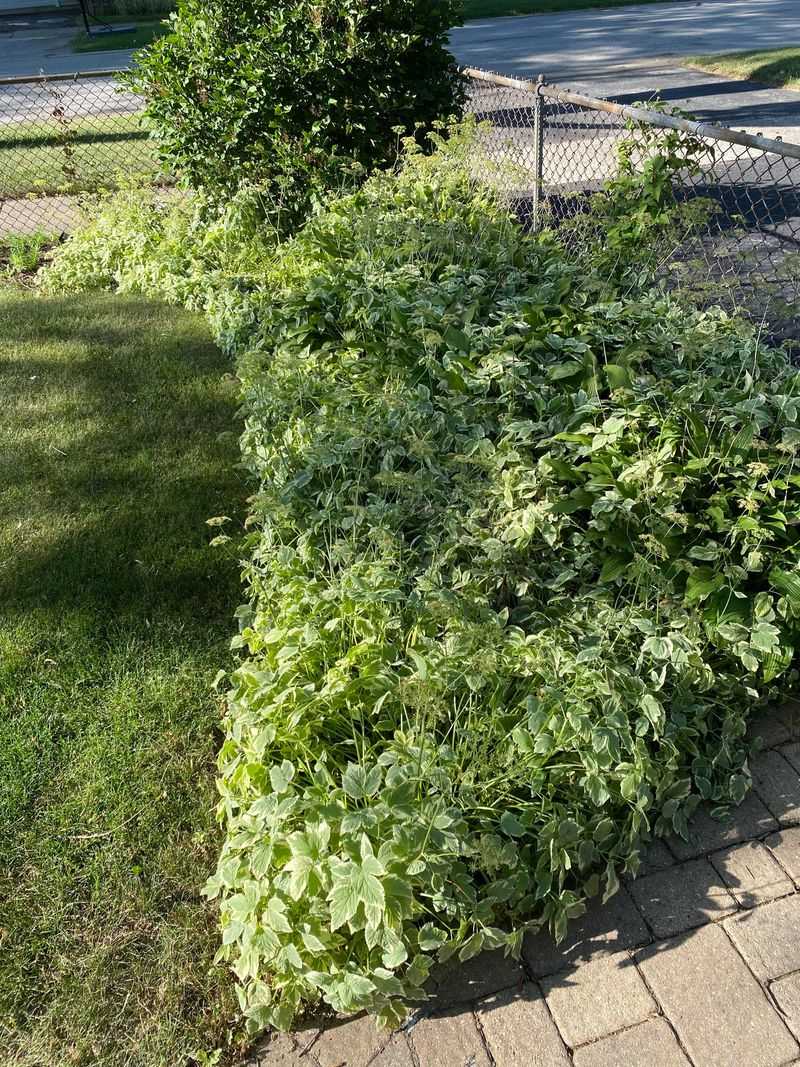
Bishop’s weed, also called goutweed, has attractive variegated foliage that brightens shady spots. Gardeners often plant it as a groundcover thinking it will solve problem areas.
But this plant spreads through aggressive underground rhizomes that are nearly impossible to remove once established.
It pops up everywhere, mixing with other plants and creating a messy patchwork. The variegated leaves lose their pattern in deep shade, turning mostly green and losing their appeal.
Trying to contain it becomes an endless battle that you cannot win.
Sweet woodruff makes a much better choice for shade. This low-growing perennial forms a neat carpet of whorled leaves and produces tiny white flowers in spring.
It spreads moderately but stays manageable and easy to control if it goes beyond its boundaries.
Canadian wild ginger is another excellent native option. Its glossy, kidney-shaped leaves create a lush groundcover that looks intentional and well-maintained.
Both alternatives give you attractive foliage without turning your garden into a constant weeding project. You will actually enjoy your shade garden instead of fighting with it every weekend.
10. Sedum ‘Autumn Joy’ Flopping Over Before Bloom
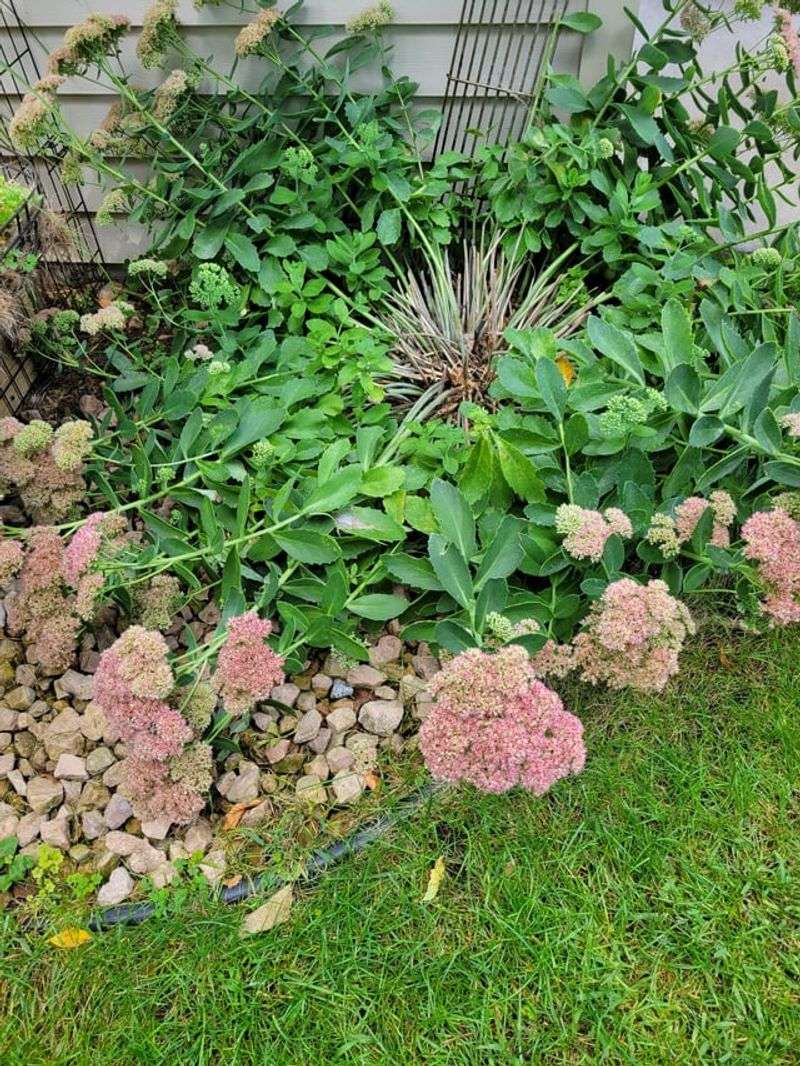
Sedum ‘Autumn Joy’ is a classic perennial with thick succulent foliage and large pink flower heads. But in Oregon’s rich soil and frequent rain, this plant grows too lush for its own good.
The stems get heavy and weak, then flop outward before the flowers even open.
By the time the blooms appear, the plant often looks like a green donut with a hole in the middle. The outer stems lie flat on the ground, getting muddy and damaged.
You can stake them, but that looks unnatural and requires constant adjustment.
Try shorter sedum varieties like ‘Vera Jameson’ or ‘Matrona’ instead. These cultivars have stronger stems and stay upright through all weather conditions.
They still provide the same late-season color but keep a neat, compact shape that looks intentional.
Asters are another great option for fall blooms. Varieties like ‘Wood’s Pink’ or ‘Purple Dome’ stay compact and do not require staking.
They bloom at the same time as sedums and attract pollinators when other flowers are fading. Both choices give you that end-of-season interest without the structural problems that make ‘Autumn Joy’ look messy in Oregon gardens.
11. Fountain Grass Looking Ragged In Winter
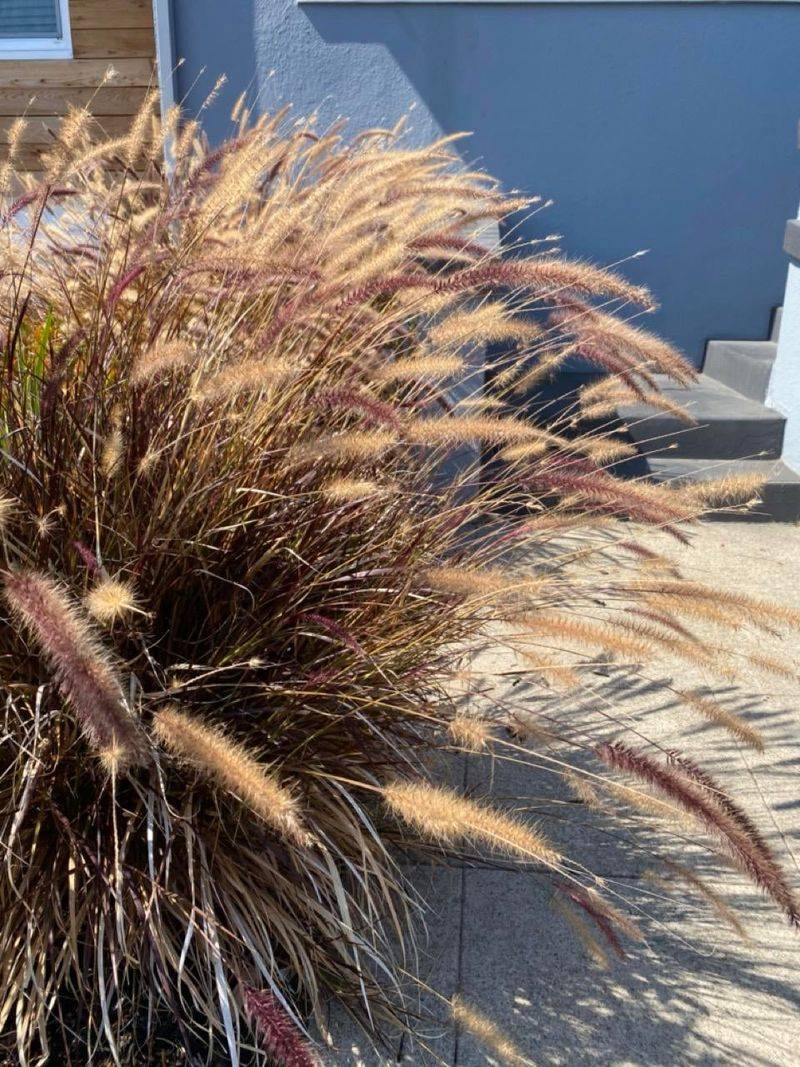
Fountain grass adds graceful texture to gardens with its arching foliage and fluffy flower plumes. During summer and fall, it looks fantastic.
But Oregon winters are not kind to this plant. The foliage turns brown and soggy, collapsing into an ugly clump that dominates your garden.
Unlike true evergreen grasses, fountain grass becomes an eyesore for months. The sodden leaves mat down and can even develop mold in our wet climate.
You either have to look at the mess all winter or cut it back, leaving bare spots in your garden.
Switch to evergreen grasses like Japanese forest grass or blue fescue. These plants keep their color and shape through winter, providing year-round interest.
Japanese forest grass has golden cascading foliage that brightens shady spots even on gray days.
Blue fescue forms neat tufts of steel-blue foliage that look good in all seasons. Both options handle Oregon’s climate beautifully and never go through that awkward brown phase.
Your garden will look intentional and attractive twelve months a year instead of having big dead spots during the rainy season.
12. Pampas Grass Growing Too Large And Messy
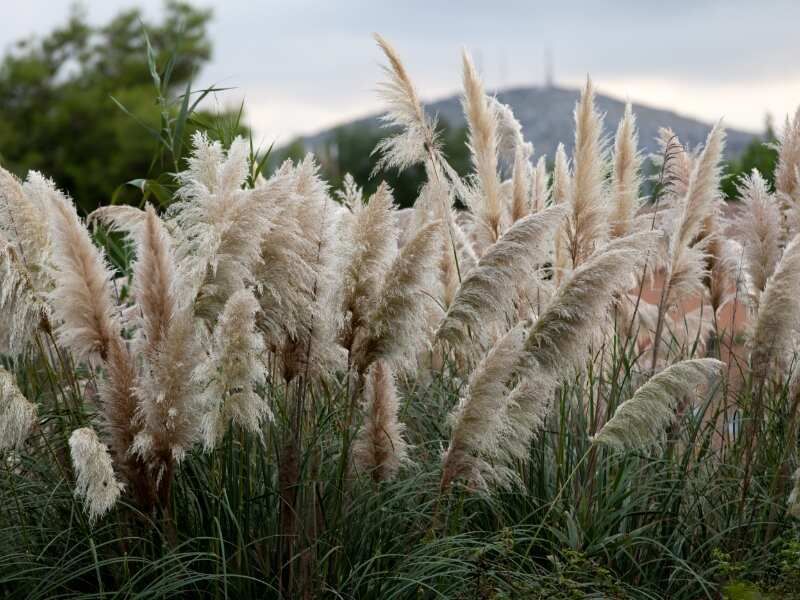
Pampas grass makes a dramatic statement with its towering plumes and fountain of foliage. But this giant grass quickly outgrows most residential gardens.
It forms massive clumps that can reach eight feet tall and equally wide, dominating entire beds and blocking views.
The sharp-edged leaves are dangerous to work around, making maintenance difficult. Old foliage accumulates in the center, creating a messy, brown core that detracts from the plant’s appearance.
In Oregon’s wind, the tall plumes often break off and blow around the yard.
Consider maiden grass varieties like ‘Morning Light’ instead. This grass offers similar graceful plumes and arching foliage but stays much more manageable.
It tops out around five feet and forms neat clumps that do not overwhelm your garden.
For an even smaller option, try ‘Karl Foerster’ feather reed grass. It grows upright to about four feet and keeps its narrow profile without spreading.
The golden plumes last through winter and do not break apart in storms. Both alternatives give you that elegant grass texture without turning your garden into a jungle that requires serious equipment to maintain.
13. Purple Coneflower Seedlings Sprouting Everywhere
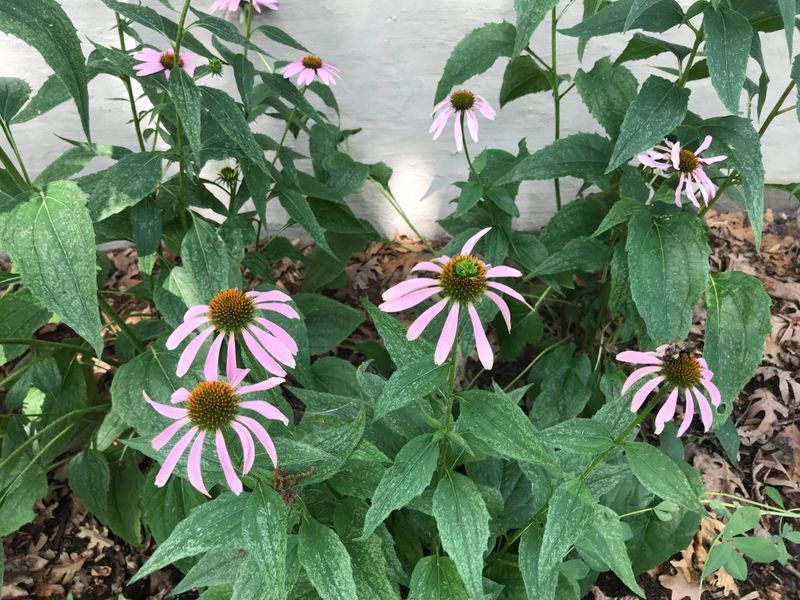
Purple coneflower is a pollinator favorite that blooms reliably and handles our climate well. But if you leave the seed heads on for winter interest or bird food, you will pay for it next spring.
These plants self-seed aggressively, and hundreds of seedlings pop up everywhere.
The volunteers appear in pathways, lawns, and mixed into other perennials. They create a messy, overcrowded look and require hours of weeding to remove.
Even when you think you got them all, more appear throughout the growing season.
Deadhead spent blooms regularly to prevent this problem, or choose less prolific self-seeders. Blanket flower offers similar daisy-like blooms in warm colors but produces far fewer volunteers.
It blooms just as long and attracts the same beneficial insects.
Salvia varieties like ‘May Night’ or ‘Caradonna’ also provide excellent pollinator habitat without the seeding chaos. They bloom for months, stay compact, and do not spread beyond their original clumps.
Both options give you beautiful flowers and wildlife benefits without turning your garden into a weeding marathon every spring. Your beds will look intentional instead of overrun with random seedlings.