These 9 Plants Thrive In Oregon’s Winter Shade
Some parts of your yard barely see the sun in winter, and it can feel like nothing wants to grow there.
Maybe you’ve tried a few plants, only to watch them struggle or fade.
I’ve definitely been there, it can be a little discouraging, especially when you want your garden to feel cheerful year-round.
The good news?
Oregon’s winter shade doesn’t have to be a bad zone.
There are plenty of plants that actually love those cooler, darker corners.
From hardy evergreens to flowering perennials that brighten up gray days, a few smart choices and a little planning, can make your shady spots feel alive all winter long.
If your winter garden has felt a bit forgotten, don’t worry, these plants can thrive where others fail, giving your yard color, texture, and life even when the sun is scarce.
With the right picks, shady areas can become some of the most interesting and low-maintenance parts of your garden.
1. Hellebores
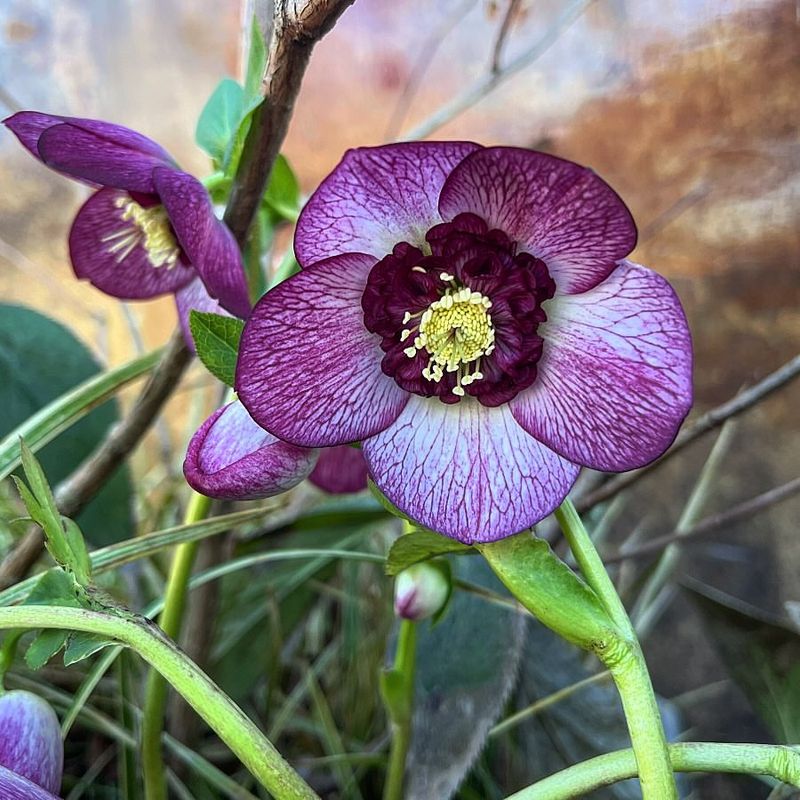
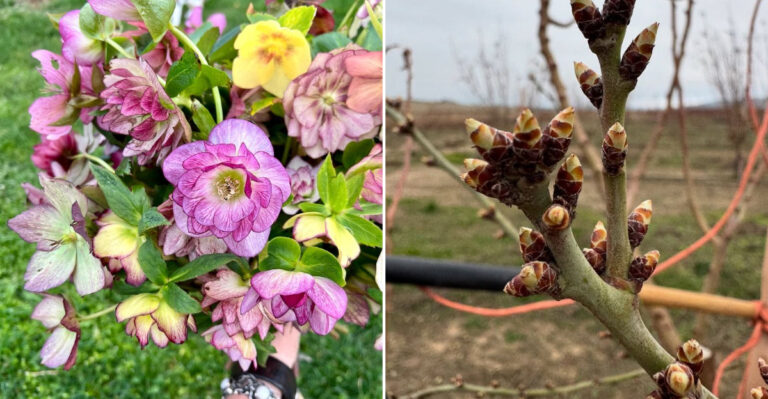
Gardeners call hellebores the winter jewels of the shade garden, and one look at their elegant blooms explains why.
Flowers appear in late winter, often pushing through frost and rain to display colors ranging from pure white to deep burgundy.
The leathery evergreen leaves stay attractive all year, providing structure when other plants have gone dormant.
Oregon’s mild winters suit hellebores perfectly since they need consistent moisture and protection from harsh afternoon sun.
Plant them beneath deciduous trees or along north-facing walls where they receive filtered light.
This positioning allows winter sun to reach them while summer shade keeps them cool.
Once established, they require minimal care and will naturalize over time, forming impressive clumps.
Their strong root systems help them thrive with little intervention.
The blooms last for months, transitioning from vibrant petals to interesting seed heads.
Even as flowers fade, they continue to add texture and interest to the garden.
Deer and rabbits typically avoid hellebores, making them excellent choices for gardens with wildlife visitors.
This resistance reduces the need for protective fencing or deterrents.
Combine them with ferns and hostas for a layered woodland effect.
Their foliage contrasts beautifully with softer, feathery plants.
Their long bloom period provides nectar for early pollinators when few other food sources exist.
With proper placement and occasional fertilizer, hellebores will reward you with reliable beauty for decades.
2. Winter Jasmine
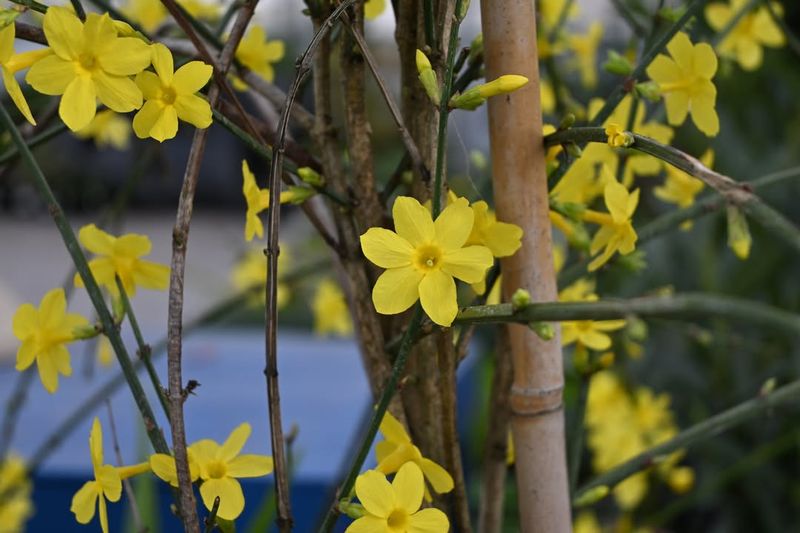
Bright yellow flowers burst forth from winter jasmine when most gardens look dormant and gray.
This deciduous shrub produces cheerful blooms on bare green stems throughout the coldest months.
The arching branches create a fountain-like shape that works beautifully cascading over walls or slopes.
Oregon’s wet winters provide the moisture winter jasmine needs without requiring extra irrigation.
Shade tolerance makes it perfect for challenging spots where other flowering shrubs struggle.
The plant grows vigorously once established, reaching four to seven feet in height and spread.
Prune after flowering finishes to maintain shape and encourage next season’s bloom production.
Small leaves emerge after flowers fade, creating a fine-textured green backdrop for other plants.
Winter jasmine tolerates various soil types as long as drainage remains adequate.
Pair it with evergreen companions to highlight the striking yellow blooms against dark foliage.
The flowers lack fragrance, unlike summer jasmine varieties, but their visual impact compensates fully.
This tough plant resists most pests and diseases, requiring little attention once roots establish.
3. Mahonia
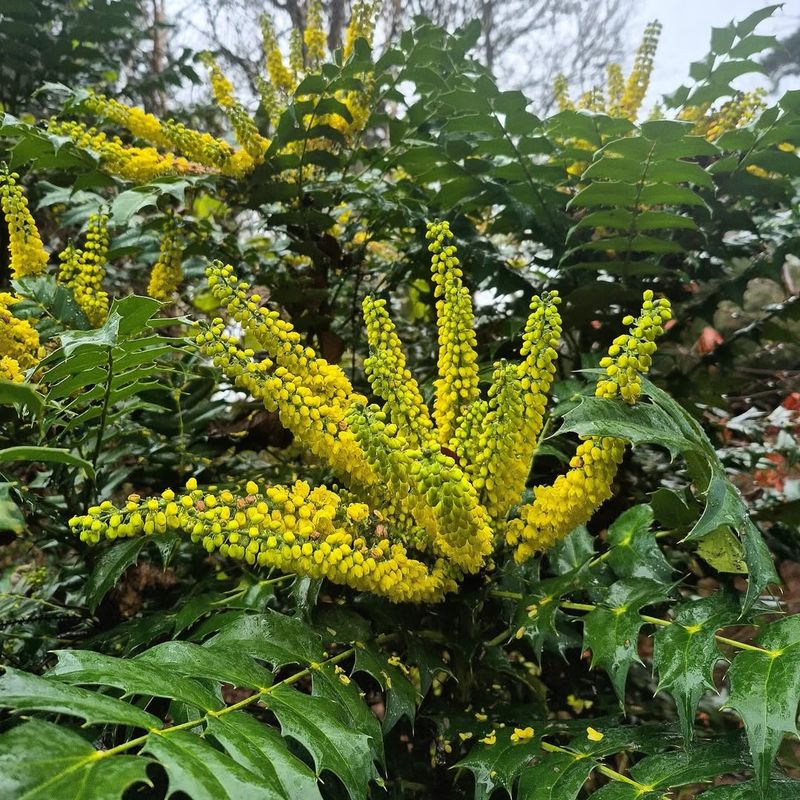
Bold architectural foliage makes mahonia a standout choice for shaded winter gardens across Oregon.
The spiky evergreen leaves resemble holly but belong to the barberry family instead.
Their coarse texture adds strong visual contrast to softer woodland plants.
Clusters of fragrant yellow flowers appear in late winter, filling the air with a sweet honey scent.
These blooms arrive when few other shrubs are flowering.
Blue-black berries follow the blooms, providing food for birds throughout spring.
Many native birds rely on these berries as an early-season food source.
Oregon grape, a native mahonia species, thrives particularly well in regional conditions.
It is well adapted to local soils and rainfall patterns.
The plant handles dry shade once established, though it appreciates supplemental water during extended droughts.
New growth emerges bronze or reddish before maturing to deep green.
This color shift adds seasonal interest even without flowers.
Some varieties display burgundy leaf tones during cold weather, adding extra winter interest.
Mahonia grows slowly but steadily, eventually forming substantial clumps four to six feet tall.
Its upright form makes it useful as a background or screening plant.
The spiny leaves deter foot traffic, making mahonia useful for boundary plantings or beneath windows.
Combine it with softer-textured plants like ferns to balance the bold foliage.
The contrast creates a more inviting and layered garden design.
Minimal pruning keeps plants tidy, though they tolerate hard cutbacks if they outgrow their space.
4. Cyclamen
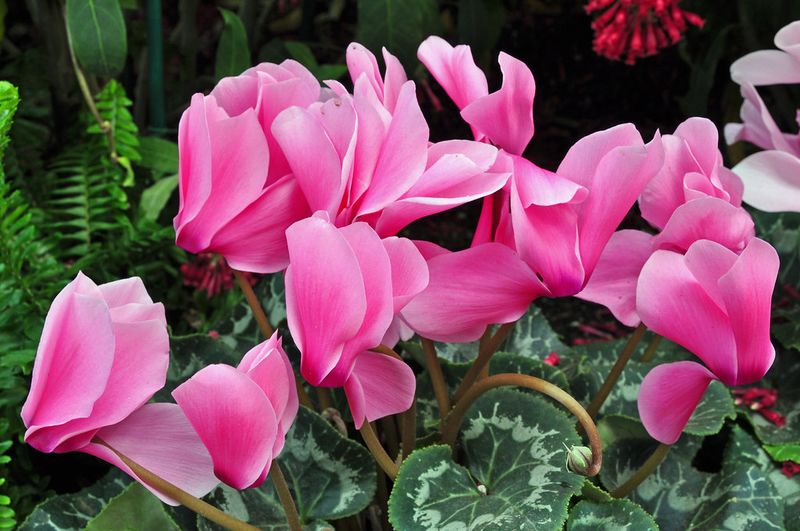
Delicate swept-back petals dance above marbled foliage when hardy cyclamen bloom throughout Oregon winters.
Their graceful flowers seem to float just above the ground.
These small perennials create magical carpets beneath trees where grass refuses to grow.
They thrive in spaces that are often challenging for other plants.
The heart-shaped leaves feature silver patterns that remain attractive even when flowers finish.
This foliage adds visual interest long after blooming ends.
Unlike tender florist cyclamen, hardy varieties tolerate freezing temperatures and wet conditions.
This resilience makes them ideal for Oregon’s winter climate.
Pink, white, or magenta blooms appear from fall through early spring, depending on the species.
The long bloom window brings color to otherwise quiet garden months.
Plant corms in late summer, placing them just below the soil surface.
Proper planting depth helps ensure strong flowering.
Cyclamen prefer the dry shade found beneath mature trees during summer months.
Oregon’s winter rain provides adequate moisture, but good drainage prevents rot.
Once established, plants self-sow freely, creating expanding colonies over time.
The low-growing habit makes cyclamen perfect for rock gardens or woodland edges.
Pair them with hellebores and ferns for a multi-season shade display.
The combination creates layers of texture and color.
Foliage goes dormant in summer, leaving space for companion plants to shine.
These charming perennials require no fertilizer and resist most pests naturally.
5. Sarcococca
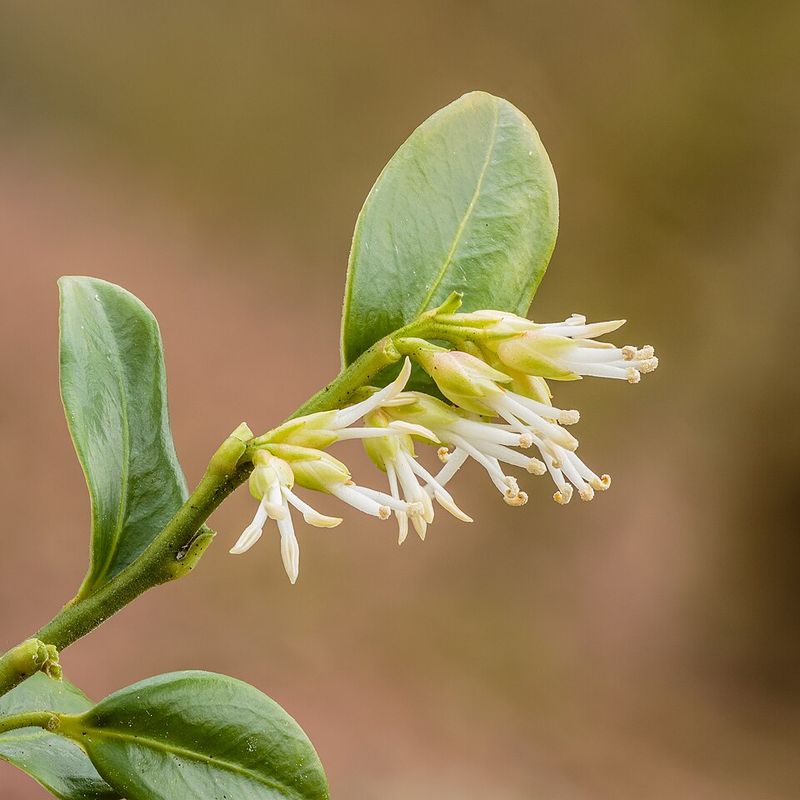
An incredible fragrance emerges from tiny white flowers hidden among sarcococca’s glossy evergreen leaves.
The blooms may be small, but their impact is anything but subtle.
Sweet box, as gardeners commonly call it, blooms during the darkest winter months.
Its flowers often appear when little else in the garden is active.
The scent carries surprisingly far, perfuming entire garden areas on still days.
Many gardeners notice the fragrance before they ever spot the plant itself.
This slow-growing shrub reaches three to five feet, forming dense mounds perfect for shaded borders.
Its compact size makes it easy to tuck into tight spaces.
Dark green foliage provides year-round structure and contrasts beautifully with lighter-colored companions.
The leaves remain glossy even through cold, wet weather.
Black berries follow the flowers, though they hide beneath the leaves.
These fruits add subtle interest without becoming messy.
Sarcococca tolerates deep shade better than most flowering shrubs, making it invaluable for difficult spots.
It thrives where many other plants struggle to survive.
Oregon’s winter moisture suits this plant perfectly, requiring no supplemental irrigation during rainy months.
Plant it near pathways or entrances where the fragrance can be fully appreciated.
Passing by on a winter morning becomes a sensory delight.
The compact growth habit needs little pruning to maintain shape.
Occasional light trimming is all it ever requires.
Combine sarcococca with ferns and hostas for a lush woodland feel.
Deer typically avoid this shrub, and it resists most common garden pests.
Once established, sweet box performs reliably for decades with minimal attention.
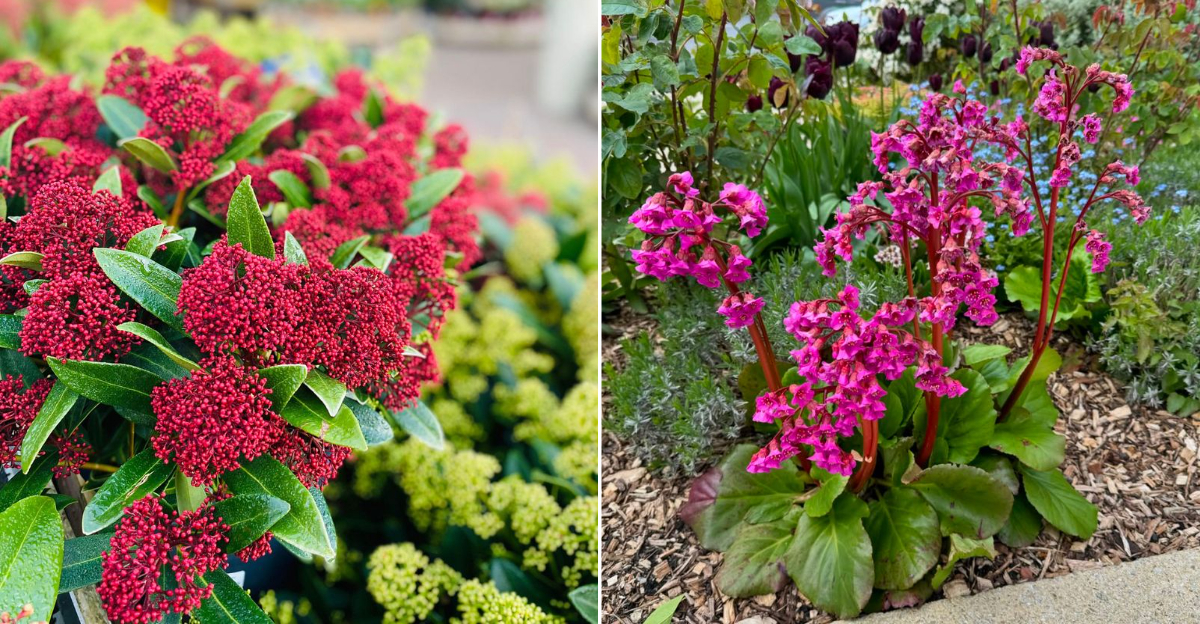
6. Bergenia
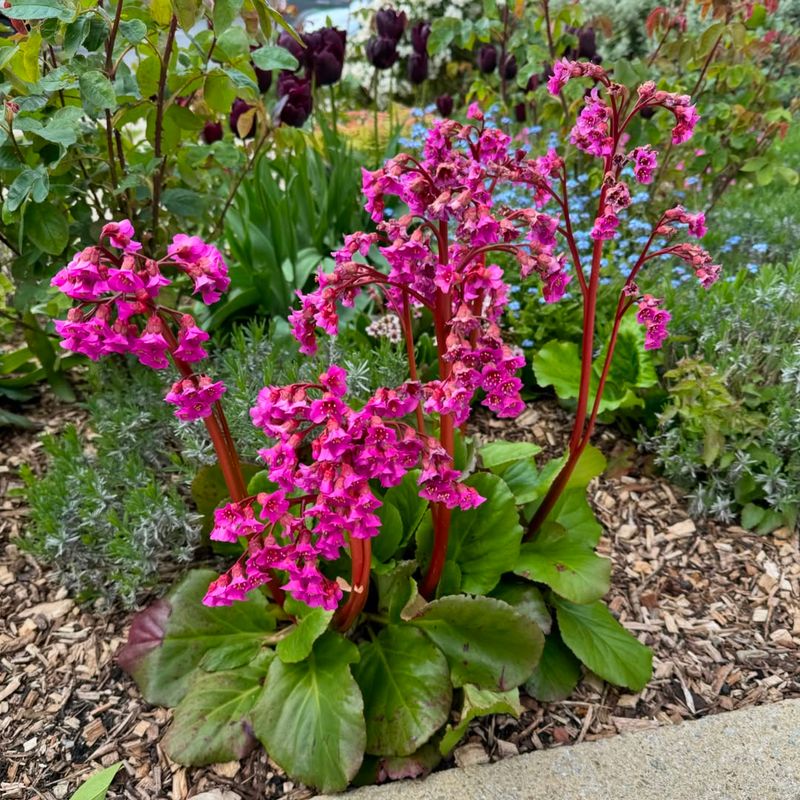
Cabbage-like leaves earn bergenia the nickname elephant ears, but this perennial offers far more than foliage.
Its bold presence anchors the garden even when little else is growing.
Clusters of pink, white, or magenta flowers emerge on sturdy stems in late winter.
These upright blooms rise well above the leaves and are visible from a distance.
The thick evergreen leaves turn bronze, burgundy, or purple during cold weather, providing colorful interest.
This seasonal color shift adds drama to winter landscapes.
Oregon winters showcase bergenia at its best, with rain keeping foliage clean and glossy.
The plant looks especially vibrant after fresh rainfall.
This tough groundcover tolerates dry shade once roots establish deeply.
It adapts well to challenging conditions that discourage more delicate plants.
Plants spread slowly through rhizomes, forming substantial clumps over several years.
Their steady growth makes them easy to manage.
The bold foliage contrasts effectively with fine-textured ferns and delicate cyclamen.
Bergenia grows well beneath trees, along shaded pathways, or in woodland gardens.
Its adaptability makes it useful in many garden designs.
Remove tattered leaves in spring to keep plants looking fresh.
This simple cleanup encourages healthy new growth.
The flowers attract early bees and other pollinators when food sources remain scarce.
Providing nectar at this time supports beneficial insects.
Divide established clumps every few years to maintain vigor and create new plants.
This also helps control size and density.
Deer and slugs usually leave bergenia alone, making it reliable for challenging gardens.
Combine it with hellebores and winter jasmine for a long-lasting winter display.
7. Skimmia
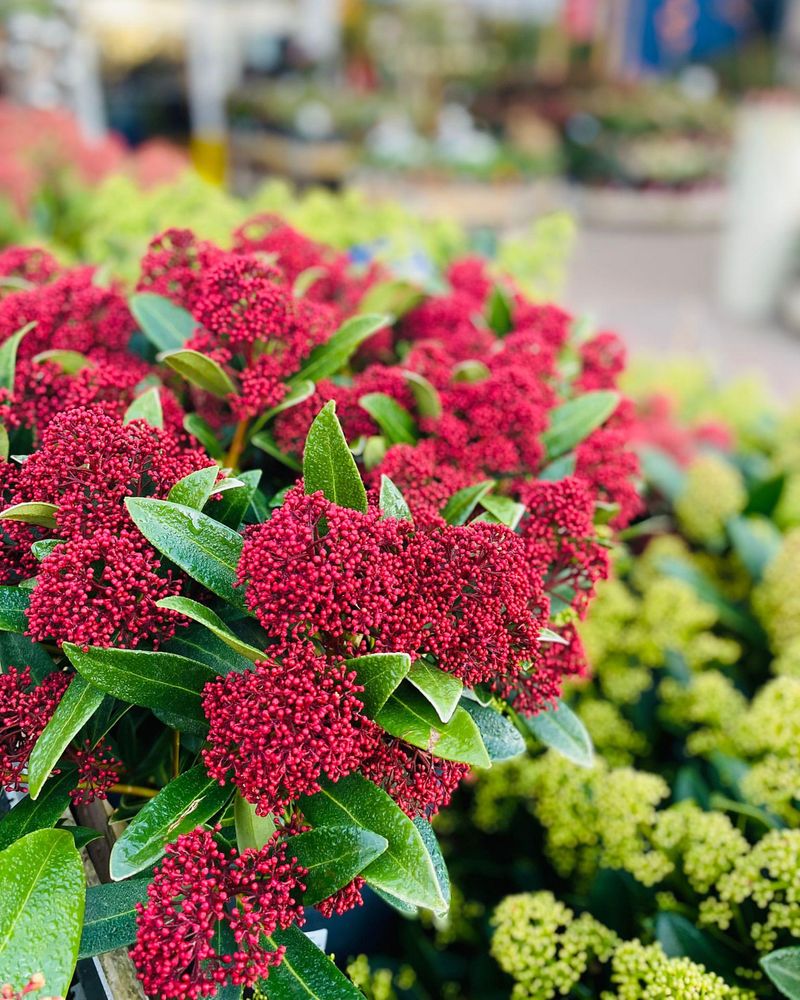
Bright red berries glow like rubies among skimmia’s dark evergreen foliage throughout Oregon winters.
These vibrant fruits stand out especially well against gray skies and muted winter landscapes.
Female plants produce these colorful fruits when a male pollinator grows nearby.
Planting at least one male nearby ensures reliable berry set each year.
Fragrant white or pink flower buds form in fall and persist through winter before opening in spring.
The buds themselves add subtle interest even before they bloom.
The compact rounded shape fits perfectly in small gardens or foundation plantings.
Its tidy form requires little shaping to look polished.
Skimmia grows slowly, reaching three to four feet tall and wide over many years.
This slow growth makes it easy to manage in confined spaces.
Shade protection proves essential since direct sun causes leaf burn and poor performance.
Filtered light or full shade produces the healthiest plants.
Oregon’s mild, moist winters create ideal conditions for this Asian native.
The glossy leaves remain attractive year-round, requiring no seasonal cleanup.
Plant skimmia in groups for maximum berry production and visual impact.
Clusters create a richer, more dramatic winter display.
Acidic soil suits this shrub best, though it adapts to various conditions with proper care.
Amending soil with organic matter helps improve long-term performance.
Combine it with ferns, hostas, and hellebores for a layered shade garden.
The berries persist for months, providing food for birds during lean winter periods.
Minimal pruning maintains shape, and plants resist most common pests naturally.
8. Primrose
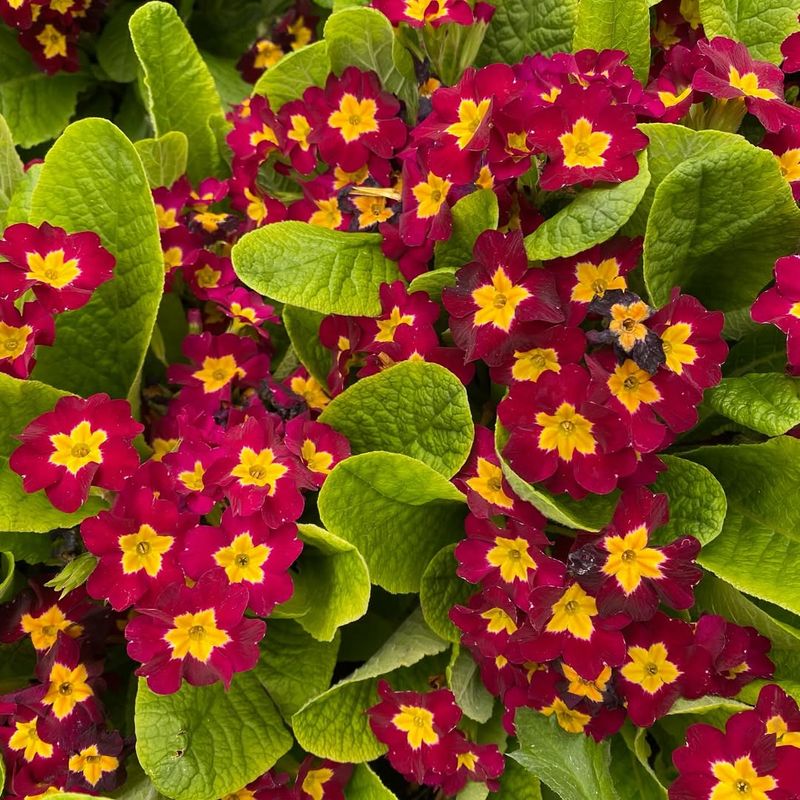
Cheerful faces in rainbow hues make primroses beloved additions to Oregon winter shade gardens.
Their bright colors bring life and optimism to gray winter days.
Flowers appear in shades of yellow, pink, purple, red, blue, and white from late winter through spring.
Many varieties also feature contrasting centers that add extra visual interest.
The low rosettes of wrinkled leaves stay close to the ground, creating colorful carpets.
This tidy growth habit keeps garden beds looking organized and full.
Oregon’s cool, moist winters suit primroses perfectly, encouraging abundant bloom production.
Regular rainfall reduces the need for supplemental watering during the growing season.
Plant them in groups for maximum color impact beneath deciduous trees or shrubs.
Mass plantings create a more dramatic and cohesive display.
Primroses prefer consistent moisture but need good drainage to prevent crown rot.
Amending soil with organic matter improves both moisture retention and drainage.
The compact size makes them ideal for container gardens or edging shaded pathways.
They also perform well in window boxes and raised planters.
Many species naturalize readily, self-sowing to create expanding colonies over time.
These colonies can fill empty spaces beautifully.
Combine primroses with ferns and cyclamen for varied textures and extended bloom periods.
Deadhead spent flowers to encourage continued blooming and prevent excessive self-seeding.
This simple task keeps plants looking tidy.
Plants may go dormant during hot summers, reappearing when cool weather returns.
Divide crowded clumps in fall to maintain vigor and create new plants.
Slugs sometimes nibble foliage, but damage rarely proves serious enough to warrant intervention.
9. Ferns
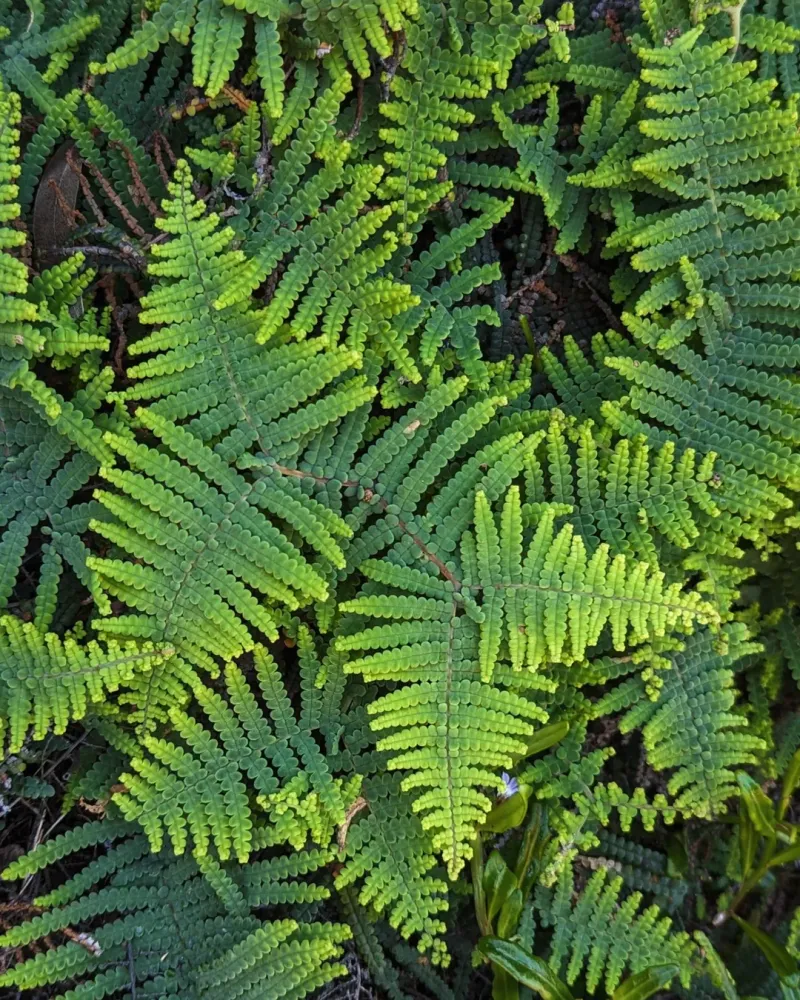
Graceful fronds bring elegant texture to shaded Oregon gardens throughout the wettest winter months.
Many fern species remain evergreen, providing structure when flowering plants go dormant.
Sword ferns, native to the Pacific Northwest, handle deep shade and dry summer conditions.
Autumn ferns emerge copper-colored before maturing to glossy green, offering seasonal interest.
Oregon’s winter rain keeps fern fronds clean and vibrant without requiring supplemental irrigation.
The arching habit softens hard edges and creates movement in still gardens.
Plant ferns in groups of odd numbers for natural-looking woodland displays.
They combine beautifully with all other shade-loving plants, providing textural contrast.
New fronds unfurl in spring, creating fascinating coiled shapes called fiddleheads.
Most ferns spread slowly through rhizomes, forming substantial clumps over time.
Remove tattered fronds in late winter to make room for fresh growth.
Ferns tolerate neglect once established, requiring little fertilizer or special care.
Deer avoid most fern species, making them reliable choices for gardens with browsing wildlife.