These Shrubs Hold Their Shape In Georgia Through Winter
Winter has a way of revealing everything in a Georgia yard, especially which shrubs keep their structure once growth slows.
When leaves drop and the landscape quiets down, weak shapes stand out immediately, while well-formed shrubs continue to look intentional. This contrast becomes especially noticeable in winter, when there’s nothing else to hide behind.
Not every winter change is a problem, but shrubs that lose their form now often require extra work once spring arrives.
Shrubs that naturally hold their shape through winter help a Georgia yard look put together long before new growth returns.
1. Holly Tea Olive
Strong structure often matters most when winter strips the landscape down to its basics.
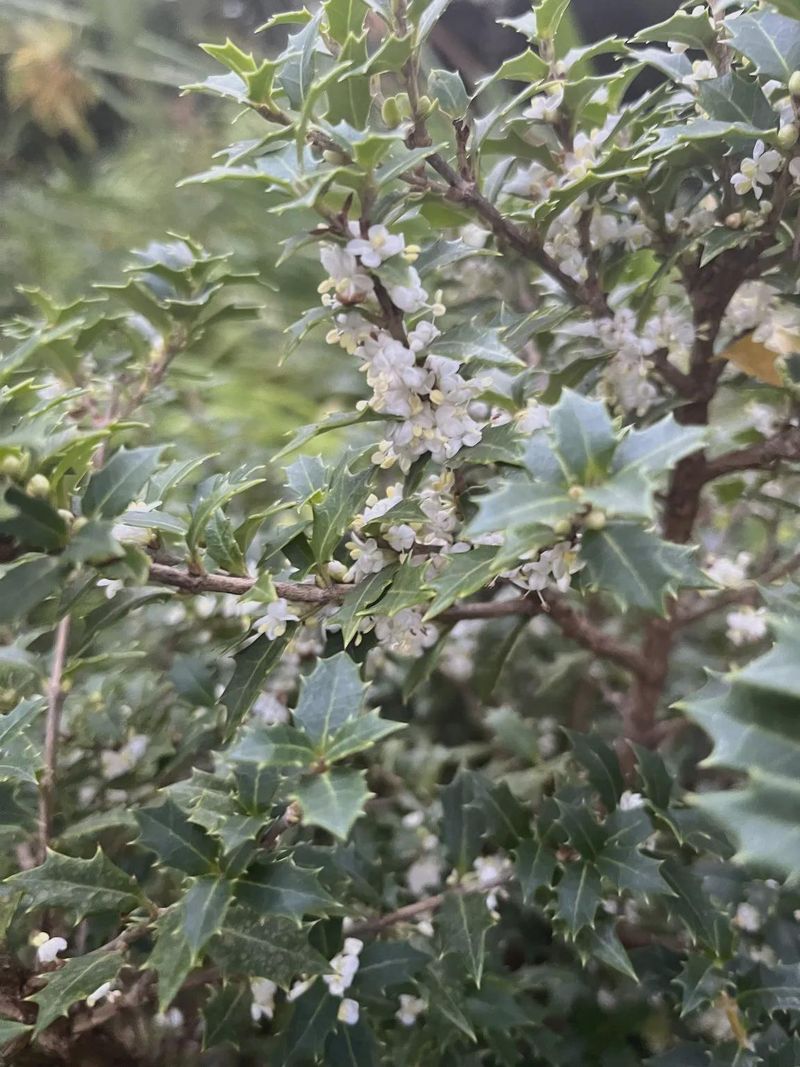
When softer plants fade and gaps become obvious, dense evergreens with clear form are what keep a Georgia yard looking intentional and complete. This shrub holds a compact, upright shape through winter, thanks to its thick, glossy leaves and naturally dense branching.
The foliage stays firm and well-arranged, preventing beds from looking thin or disorganized while growth slows across the rest of the landscape.
In Georgia yards, it’s commonly used as a foundation shrub or backdrop plant where steady form is more important than seasonal flowers. The growth habit remains controlled and balanced, which helps frame entryways, corners, and property lines without constant pruning.
Cold tolerance makes it dependable across much of the state, including areas that experience occasional freezes. Even during temperature swings, the overall shape stays intact and easy to read.
Spiny-edged leaves add subtle texture without making the plant difficult to work around.
That structure remains visible all winter, giving the yard depth and definition before spring growth returns. Placed behind lower shrubs or along foundations, osmanthus heterophyllus helps a Georgia yard maintain clean lines and visual weight through winter, keeping the landscape orderly long before new growth fills in.
It also performs well in partial shade, which makes it especially useful near homes where sunlight is limited during winter months.
Because it doesn’t rely on flowers or seasonal color to look finished, it continues to contribute structure even during the quietest part of the year.
That reliability makes it a smart choice for Georgia front yards where consistency matters more than short-lived visual impact.
2. Nandina (Sterile Varieties Only)
Vertical structure is often what front yards miss most once winter strips the landscape down to its essentials.
When softer plants fade and beds start to feel flat, upright shrubs are what keep the space looking intentional instead of unfinished.
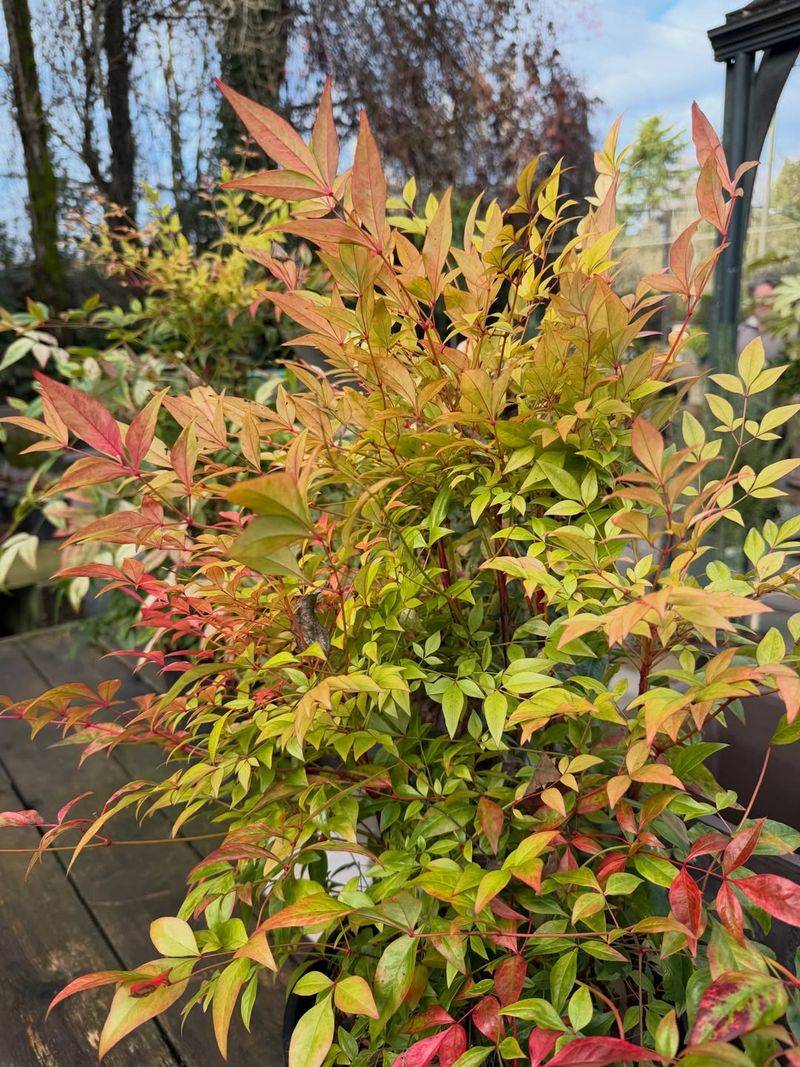
This evergreen maintains a narrow, upright silhouette throughout winter, giving Georgia front yards reliable structure even when growth slows. Stems stay firm and well-defined, preventing the plant from collapsing outward or losing its clean shape during colder months.
Foliage adds visual interest without relying on flowers. As temperatures drop, leaf color deepens into richer tones that provide contrast against lighter winter backgrounds.
That subtle color shift helps beds feel layered and composed when much of the landscape turns muted.
Across Georgia, sterile varieties are especially valued for their controlled growth.
They keep their form without spreading aggressively, which makes them suitable for foundation beds, entryway borders, and front-yard plantings where long-term reliability matters.
Cold tolerance allows the overall shape to remain intact through occasional freezes, including in regions that experience fluctuating winter temperatures.
Even after cold snaps, the plant’s upright structure stays easy to read and visually balanced.
Spacing plays an important role in how well this shrub performs. When given enough room, each clump holds its own vertical line without crowding nearby plants or blurring into surrounding foliage.
Used behind lower shrubs or paired with broader evergreens, sterile nandina adds height and rhythm to Georgia front yards.
That consistent form helps anchor the landscape through winter, keeping the space organized and visually complete long before spring growth fills everything in again.
3. Mahonia (Oregon Grape / Leatherleaf Mahonia)
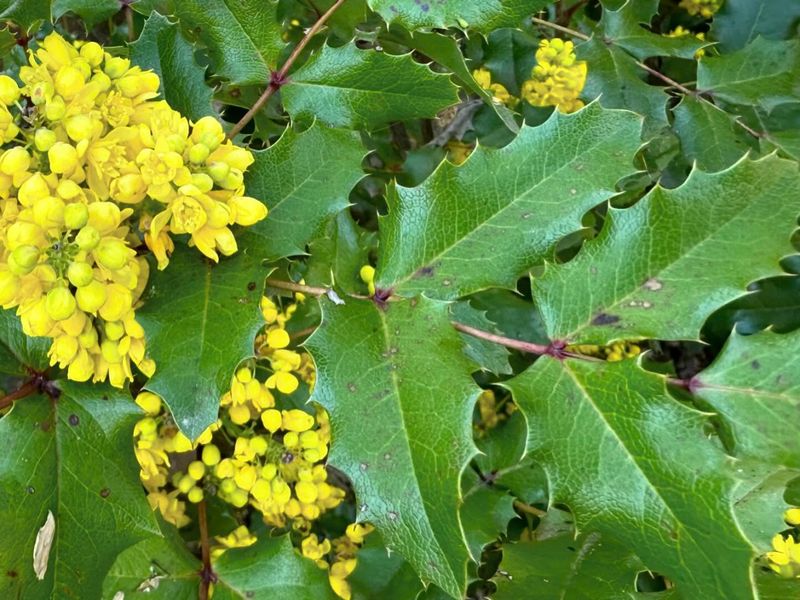
Bold, architectural form is what keeps some front yards from feeling empty once winter strips everything back.
When softer plants fade and beds lose definition, shrubs with strong leaves and upright presence are what keep the landscape readable and grounded.
This evergreen stands out for its thick, leathery foliage that stays firm through the cold months. Large, textured leaves hold their shape instead of drooping or thinning, which helps planting beds keep visual weight even during the quietest part of winter.
In Georgia landscapes, this shrub is often valued for how clearly its structure reads without flowers. The upright growth habit and layered leaf arrangement create depth and dimension, especially in areas where winter interest is usually limited.
Shade tolerance makes it particularly useful in front yards with tree cover or north-facing exposure.
While many evergreens struggle in lower light, this plant maintains density and form without becoming sparse or uneven.
Cold tolerance allows it to perform well across much of Georgia, including regions that experience occasional freezes. Even after temperature swings, the overall silhouette remains intact and easy to recognize.
Another advantage is its ability to anchor the back of beds or fill transitional spaces between taller shrubs and groundcover. The strong leaf texture contrasts well with finer foliage, adding balance without overwhelming nearby plants.
Used thoughtfully, mahonia brings year-round structure to Georgia front yards.
Its bold foliage and dependable form help landscapes stay intentional and visually complete long before spring growth begins to soften the scene again.
4. Leucothoe (Coastal Leucothoe)
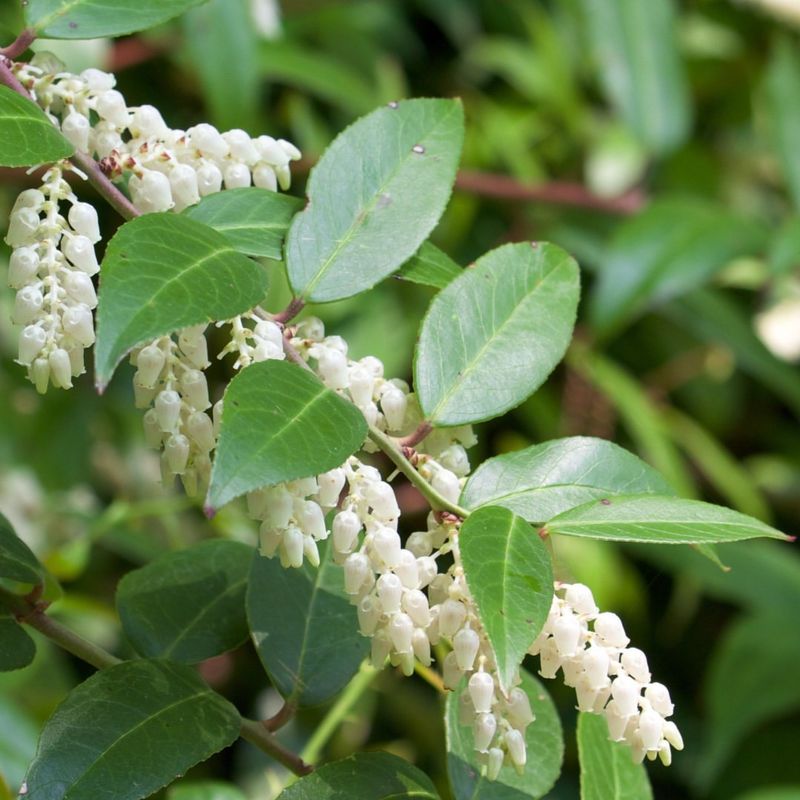
Shaded front yards often feel the most unfinished once winter settles in. When flowering plants fade and lighter foliage thins out, low-growing evergreens are what keep darker spaces from feeling empty or neglected.
This shrub provides dense, ground-hugging structure that stays visually present through the colder months.
Its arching stems and layered leaves hold together instead of collapsing, helping beds maintain clear edges and definition even when growth slows.
Foliage remains glossy and full through winter, often taking on deeper tones that add subtle contrast in shaded areas. That steady presence gives planting beds visual weight at a time when many shade plants disappear entirely.
In Georgia landscapes, this plant is especially useful beneath trees, along north-facing foundations, or in areas where sunlight is limited year-round.
It spreads in a controlled way, creating a unified mass rather than a scattered or uneven look.
Cold tolerance allows it to perform reliably across much of the state, including regions that experience winter temperature swings.
Even after cold snaps, the overall form stays intact and easy to read.
Another strength is how well it works as a connecting element in layered plantings. Positioned between taller shrubs and lower groundcover, it helps transition height smoothly without drawing attention away from the overall design.
Used thoughtfully, coastal leucothoe brings calm, grounded structure to Georgia front yards. Its dense form and dependable winter presence help shaded spaces look intentional and complete long before spring growth returns.
5. Boxwood
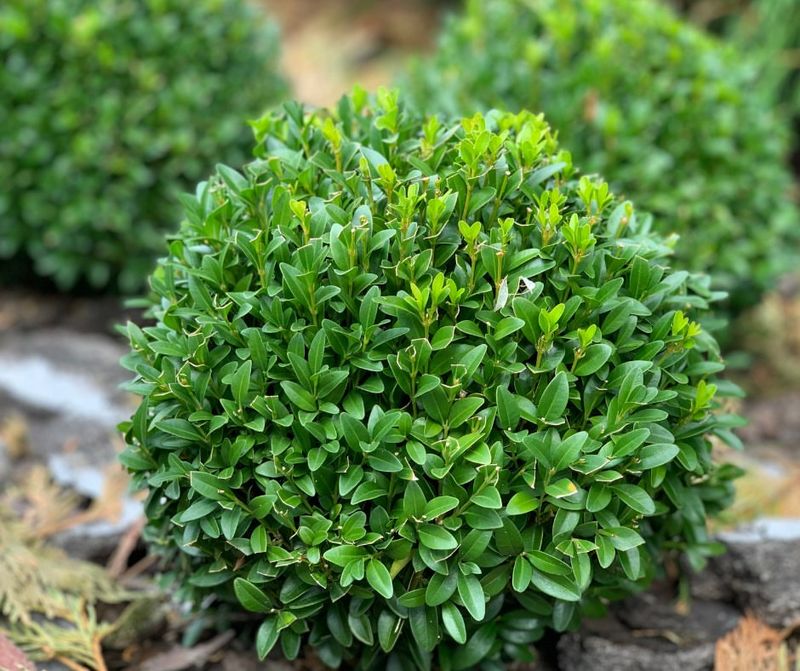
Winter structure often depends on shrubs that don’t lose definition when growth slows. Boxwood keeps a Georgia front yard looking organized long after softer plants fade back.
Its dense branching and compact growth habit hold a clean, readable shape throughout winter, even during periods of fluctuating temperatures.
The evergreen foliage stays tight and evenly distributed, preventing the thin, hollow look that many shrubs develop once active growth pauses.
That consistency makes boxwood especially valuable in foundation beds, along walkways, and near entryways where structure matters year-round.
In Georgia landscapes, boxwood is often used to anchor planting beds and provide visual order when perennials and deciduous shrubs go quiet. The natural form stays balanced without frequent pruning, which helps keep maintenance low during winter months.
Choosing disease-resistant varieties is especially important in Georgia’s climate. These selections are better suited to local humidity and temperature swings, allowing them to maintain strong structure without decline.
When spaced correctly, each plant keeps its individual shape instead of crowding nearby shrubs.
Because boxwood doesn’t rely on seasonal color or flowers, it continues contributing form and definition through winter.
That reliability helps Georgia front yards look finished and intentional long before spring growth begins to fill the landscape again.
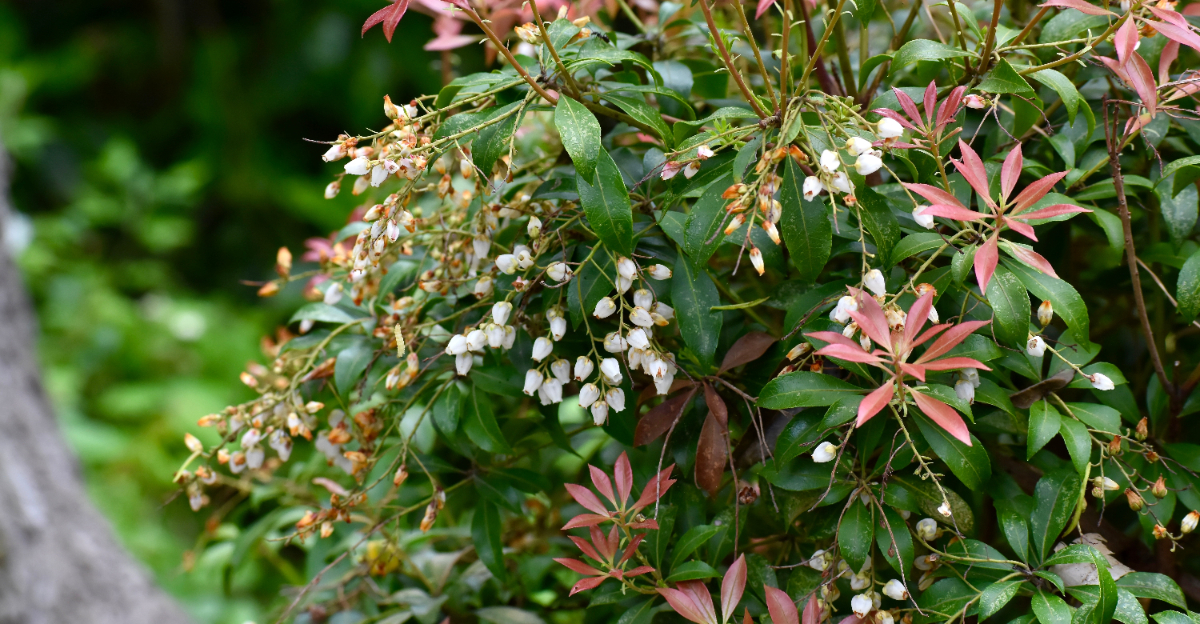
6. Pieris japonica (Japanese Andromeda)
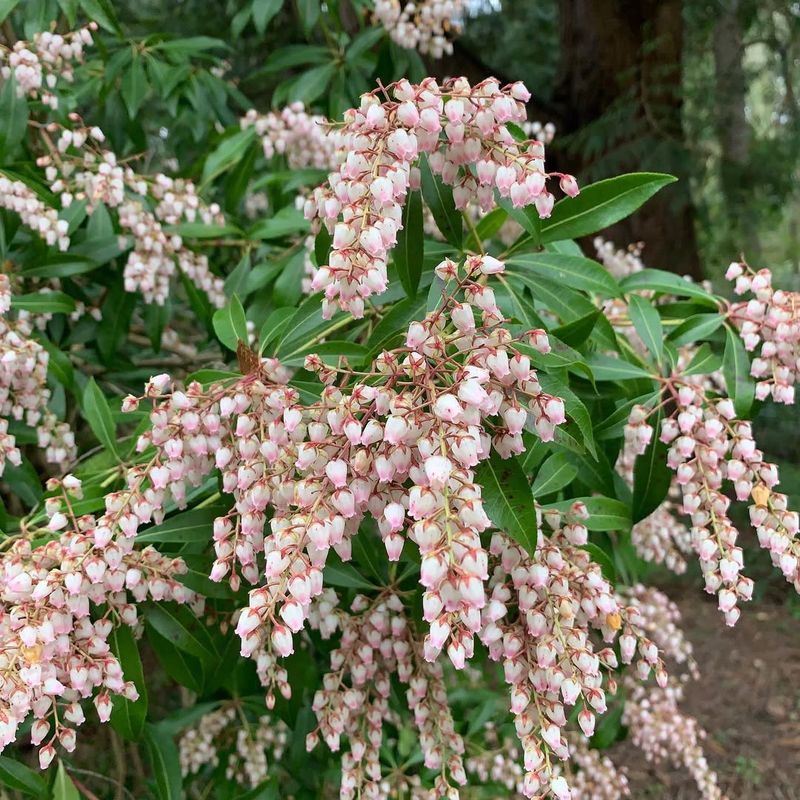
Structure in winter often depends on shrubs that don’t disappear when growth slows.
When softer plants fade and beds start to feel hollow, evergreens with clear form are what keep a Georgia front yard looking intentional and balanced.
This broadleaf evergreen maintains a dense, upright shape through winter, giving planting beds reliable volume even during the quietest months. Thick, leathery leaves stay firmly in place, preventing the shrub from looking thin or disorganized as temperatures fluctuate.
Foliage adds visual weight without relying on flowers.
Even when blooms are absent, the layered leaf arrangement keeps the plant’s silhouette easy to read, which is especially valuable in late winter when structure matters most.
In Georgia landscapes, this shrub is often used in foundation plantings or along entryways where partial shade is common.
It performs well under tree canopies or on north-facing sides of the home, holding its form without stretching or losing density.
Cold tolerance allows it to handle winter conditions across much of the state, including areas that experience occasional freezes.
New growth and flower buds are protected by the plant’s sturdy framework, helping it come through winter intact.
Another benefit is how naturally tidy the growth habit remains. Minimal pruning is needed to maintain a clean shape, which keeps maintenance low while structure stays consistent.
Used behind lower shrubs or paired with other shade-tolerant evergreens, pieris japonica helps Georgia front yards retain depth and definition through winter, ensuring the landscape still feels complete long before spring growth begins.
7. Juniper (Shrub Forms)
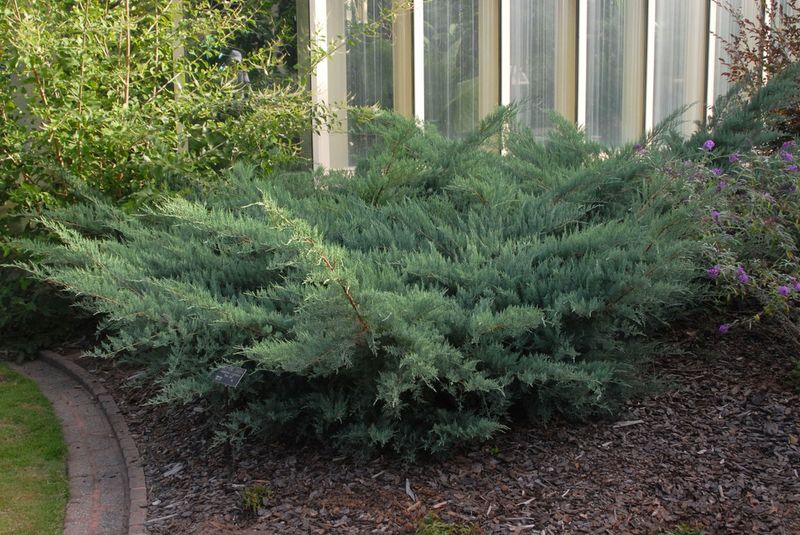
Low, grounded lines are often what front yards lose first during winter. When perennials disappear and softer shrubs fade back, plants that keep a clear horizontal or compact shape are what prevent the landscape from feeling scattered or unfinished.
This evergreen maintains strong structure through winter thanks to its dense branching and needle-like foliage.
Instead of thinning out or collapsing, the form stays steady and readable, helping beds keep their definition even as growth slows across the yard.
Foliage color ranges from deep green to blue-green or silvery tones, adding subtle contrast during the dullest months of the season.
That texture stands out against mulch, stone, or dormant plantings, giving the yard visual interest without relying on flowers.
In Georgia front yards, shrub-form junipers are commonly used along walkways, at the front of foundation beds, or on slopes where low, controlled growth matters most. The growth habit stays compact or spreading rather than tall, which helps anchor the landscape visually.
Cold tolerance makes these shrubs dependable across the state, including areas that experience winter temperature swings. Even after cold snaps, the overall shape remains intact and easy to read.
Minimal maintenance is another advantage. Once established, the form holds without frequent pruning, making it a practical choice for front yards where long-term structure matters.
Used thoughtfully, shrub-form junipers help Georgia front yards stay organized and visually grounded through winter, keeping the landscape intentional long before spring growth returns
Sun tolerance allows this shrub to perform especially well in open front yards where winter light is strong and unobstructed.
Because it doesn’t rely on seasonal growth to look finished, the structure remains consistent even during extended cold or dry periods.
That reliability makes it a smart choice for Georgia landscapes where winter form matters just as much as summer performance.
8. Illicium (Anise Shrub)
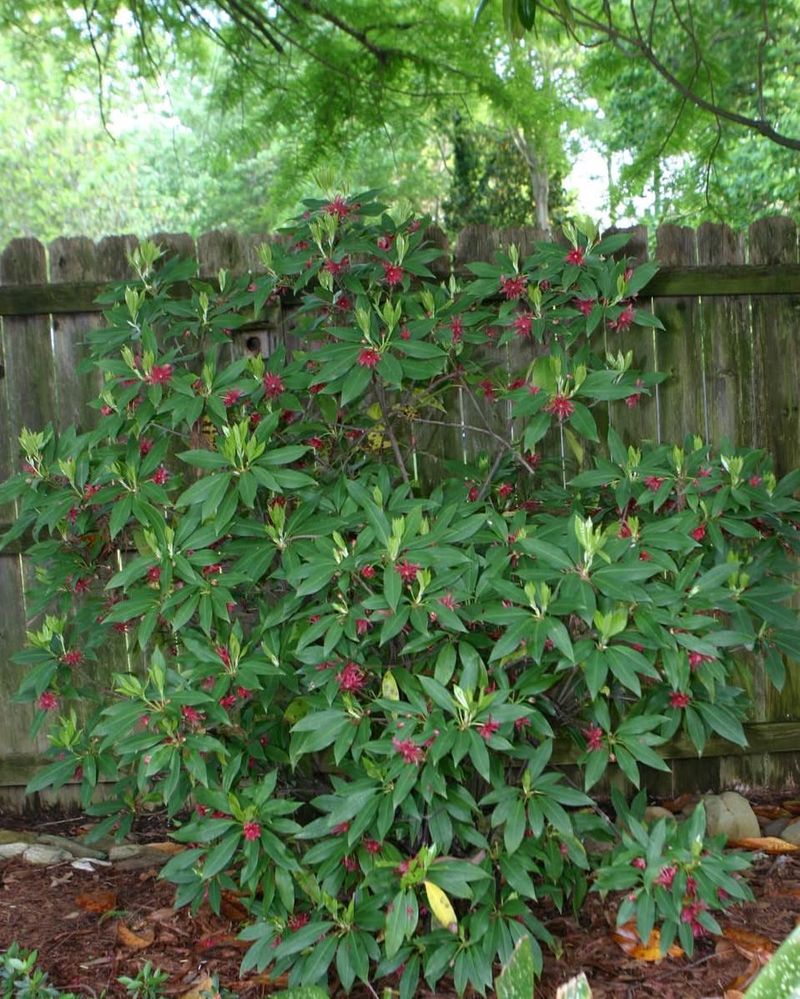
Depth and volume are often what front yards lose during winter, especially in areas where shade dominates. When lighter plants thin out and beds begin to feel hollow, broadleaf evergreens are what keep the space grounded and visually complete.
This shrub maintains a dense, rounded form through the colder months, giving Georgia landscapes steady structure even when growth slows.
Thick, glossy leaves stay firmly attached, preventing the plant from looking sparse or washed out as temperatures fluctuate.
Foliage provides visual weight without relying on flowers or seasonal color. The layered leaf arrangement keeps the silhouette easy to read, which becomes especially important in late winter when most plants offer little definition.
In Georgia front yards, this plant is often used where moisture and shade are common challenges.
Areas beneath tree canopies, along north-facing foundations, or near downspouts benefit from its ability to hold form without thinning or stretching toward light.
Cold tolerance allows it to perform reliably across much of the state, including regions that experience occasional freezes. Even after temperature swings, the overall shape remains intact and composed rather than damaged or uneven.
Another strength is how well it integrates into layered plantings. Positioned behind lower shrubs or alongside other shade-tolerant evergreens, it adds mass without overwhelming the space.
The foliage texture contrasts nicely with finer-leaved plants, creating balance within the bed.
Minimal pruning is needed to maintain its natural shape, which helps keep maintenance low while structure stays consistent. Once established, the plant adapts well to Georgia conditions and continues to provide dependable form year after year.
Used thoughtfully, anise shrub helps shaded Georgia front yards stay intentional and well-defined through winter, ensuring the landscape still feels complete long before spring growth begins to soften the scene.