These 10 Shrubs Still Bloom After Freeze Damage In Ohio
Ohio gardeners know the heartbreak. Warm April sun wakes the garden, buds swell, hope rises, then one brutal late frost arrives overnight and everything looks ruined by morning.
Leaves hang limp, stems blacken, and months of anticipation feel lost in a single cold snap. Yet some shrubs refuse to quit.
Tough, resilient bloomers push fresh growth after freeze damage and still deliver a full season of flowers. The secret lies in plants that bloom on new wood, producing buds on current growth instead of last year’s stems.
Frost may burn early shoots, but it cannot stop their summer show. Smart plant choices turn unpredictable spring weather from disaster into a minor setback.
Gardeners across Ohio rely on these dependable performers for color that returns every year, no matter how harsh spring becomes. Plant them once and late frosts lose their power over your landscape.
1. Panicle Hydrangea Blooms Reliably Even After Freeze
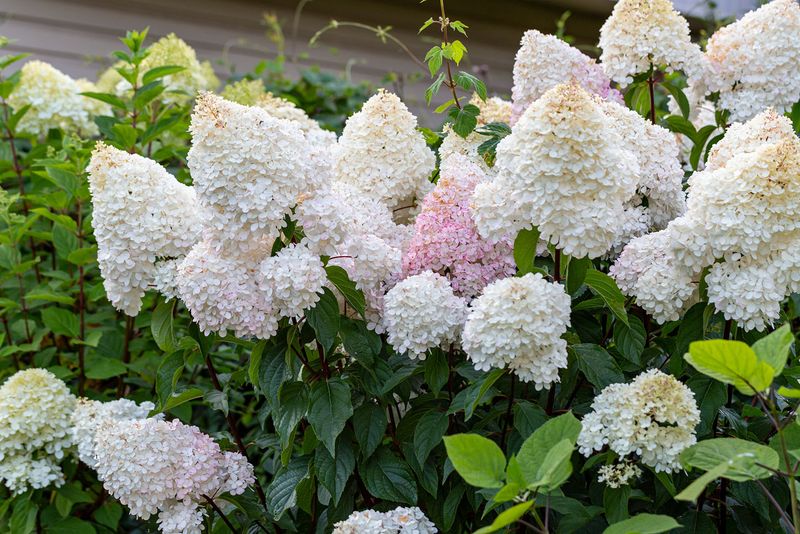
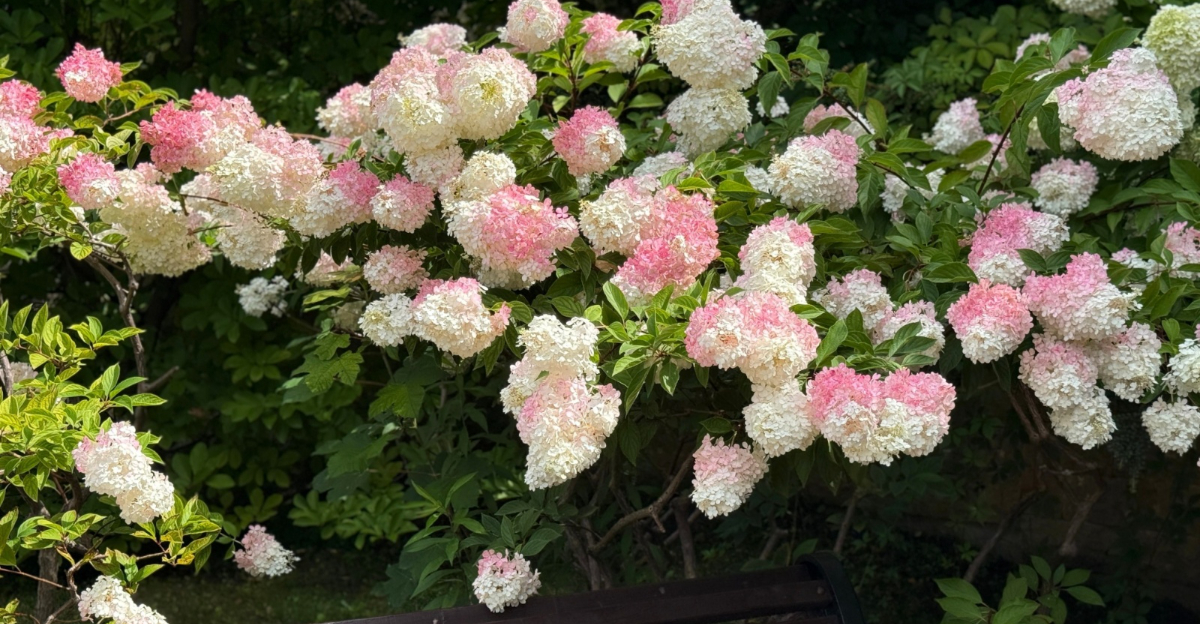
These hydrangeas stand out as one of the most dependable flowering shrubs for Ohio landscapes. Their large, cone-shaped flower clusters appear reliably every summer, even when spring freezes damage early growth because flower buds form on new stems.
Because they bloom on new wood that grows during the current season, any cold-damaged stems simply get replaced by fresh shoots that flower beautifully.
Gardeners across Ohio appreciate how forgiving these shrubs are. A late April or early May frost might knock back some tender new leaves, but the plant recovers quickly.
By mid-summer, you’ll see those impressive flower panicles opening from white to pink as the season progresses.
Pruning becomes much simpler with panicle hydrangeas compared to other types. You can cut them back hard in late winter or early spring without worrying about losing flowers.
Many Ohio gardeners prune these shrubs down to about two or three feet each spring, which encourages strong stems that support those heavy flower heads without flopping over.
Popular varieties like Limelight and Bobo thrive throughout Ohio’s diverse climate zones. They handle both the cooler northern counties and the warmer southern regions equally well.
Full sun to partial shade works fine, though more sun typically means more flowers and sturdier stems that resist wind damage better.
2. Smooth Hydrangea Reflowers On Tough New Growth
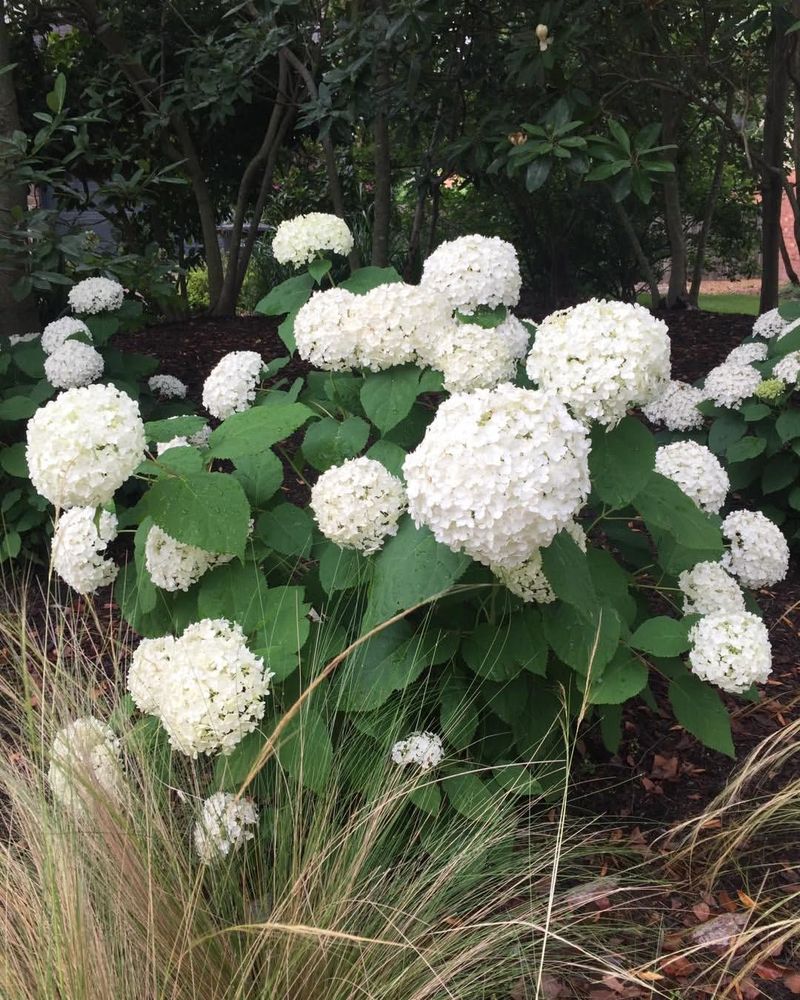
Smooth hydrangea brings those classic rounded flower clusters that gardeners love, and it does so with remarkable resilience after cold damage. Native to parts of eastern North America and well adapted to Ohio conditions, this shrub evolved to handle variable spring weather.
Freeze damage rarely stops it from flowering because every bloom forms on stems that grow fresh each spring.
What makes smooth hydrangea especially valuable is how it spreads gradually to form nice colonies over time. In home landscapes, this spreading habit stays manageable and actually helps fill in garden beds naturally.
The cultivar Annabelle remains the most popular choice, producing enormous white flower balls that can reach dinner-plate size.
After a hard freeze damages early shoots, smooth hydrangea simply sends up replacement growth from the roots. You might notice the flowering starts a couple weeks later than usual, but the blooms still arrive in full force.
The flowers open lime green, mature to bright white, then age to an attractive tan color that looks good even into winter.
Ohio gardeners often use smooth hydrangea in partly shaded areas where many other flowering shrubs struggle. It tolerates more shade than panicle hydrangea and appreciates some afternoon shade during hot summers.
Regular moisture keeps the large leaves looking their best and supports the biggest possible flowers.
3. Rose Of Sharon Produces Blooms Despite Cold Damage
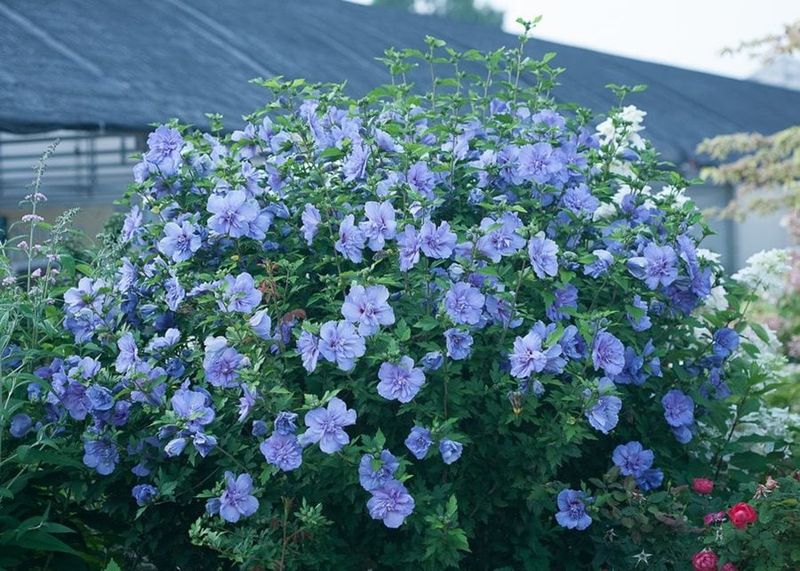
This plant earns its place as a late-summer champion in Ohio gardens. When many other shrubs have finished blooming, this reliable performer keeps producing tropical-looking flowers from July straight through September.
Spring freezes might delay its leafing out, but they won’t prevent the spectacular flower show that follows.
The shrub’s late start actually works in its favor. Rose of Sharon waits until temperatures warm reliably before pushing out new growth, which naturally protects it from most frost damage.
Even when unusually late cold snaps occur, the plant typically recovers and still blooms, though flowering may be slightly delayed because all its flowers form on the current season’s wood.
Flower colors range from pure white to pink, purple, red, and bicolors, giving you plenty of options to match your landscape design. Individual blooms look remarkably like tropical hibiscus, which makes sense since they’re closely related.
Each flower lasts just a day, but the shrub produces so many buds that you’ll always see fresh blooms opening.
One practical consideration for Ohio gardeners is that Rose of Sharon self-seeds enthusiastically. Newer cultivars like Azurri series are sterile and won’t produce seedlings, which many homeowners prefer.
These modern varieties also tend to have showier flowers and more compact growth habits that fit better in smaller yards.
4. Spirea Rebounds Fast And Blooms On New Wood
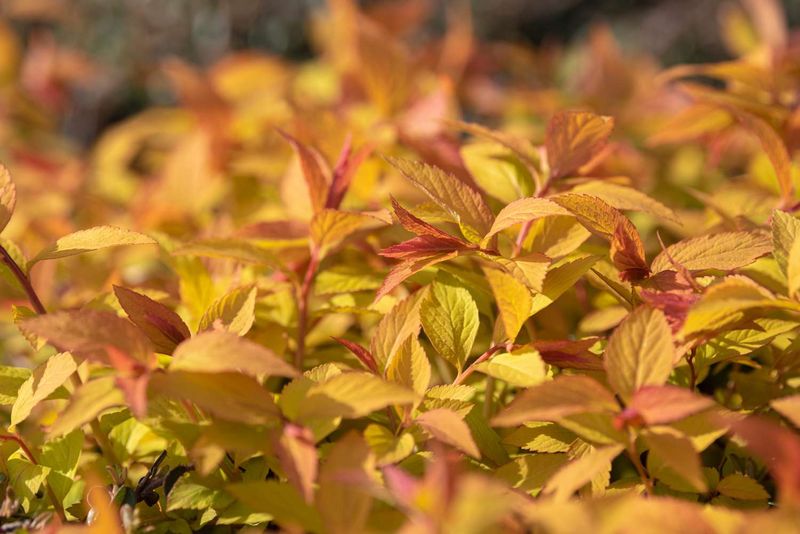
Summer-blooming spireas (such as Spiraea japonica varieties) are extremely resilient when it comes to freeze recovery. These workhorses of the Ohio landscape bounce back from cold damage faster than almost any other flowering shrub.
Their rapid growth rate means freeze-damaged stems get replaced quickly, and flowers usually still appear, though heavy freeze damage can delay blooming slightly.
Goldflame spirea is particularly popular across Ohio for good reason. Its new foliage emerges in brilliant shades of gold, orange, and red before maturing to yellow-green.
Pink flower clusters cover the plant in early summer, creating a cheerful display that brightens any landscape. Even after a harsh late freeze, this spirea pushes out colorful new growth within weeks.
Another excellent choice is Birchleaf spirea, which produces white flowers in late spring to early summer and features outstanding fall color. The finely textured foliage gives this shrub an elegant appearance that works well in both formal and casual garden settings.
It handles Ohio’s clay soils better than many other flowering shrubs.
Pruning spirea is straightforward and forgiving. You can cut summer-blooming types back hard in early spring to control size and encourage bushier growth.
Some gardeners shear them lightly after the first flush of flowers to promote a second bloom period. The plants tolerate this pruning without complaint and reward you with dense, compact growth covered in flowers.
5. Bluebeard Goes Dormant But Flowers Every Summer
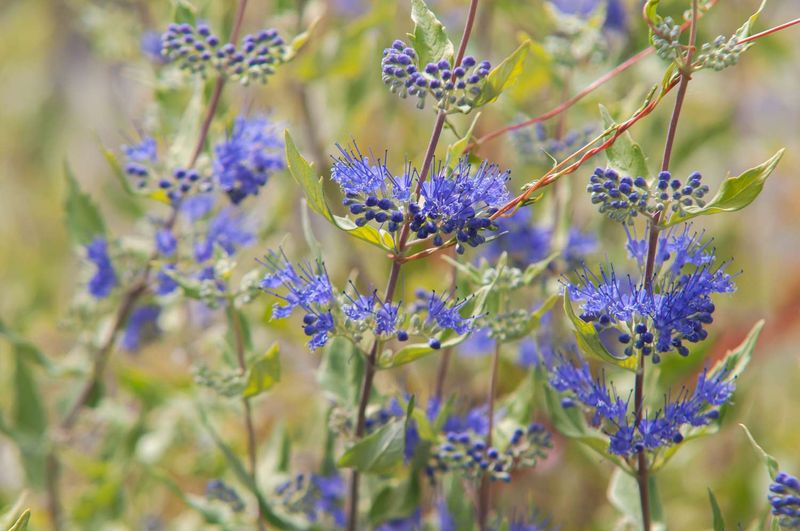
Bluebeard behaves more like a perennial than a traditional shrub in Ohio gardens, but that’s exactly why it handles freeze damage so well. The entire plant often experiences significant dieback during winter, yet it reliably returns from the roots each spring.
The flowers attract butterflies and bees like crazy, making bluebeard a valuable addition to pollinator gardens. The fuzzy, clustered blooms appear along the stems from mid-summer through early fall (typically July through September in Ohio), providing nectar when many other sources have dried up.
The gray-green foliage also adds nice texture contrast in mixed borders.
Because the plant essentially starts fresh each spring, you never have to worry about protecting old wood or losing flower buds to cold damage. Simply cut the damaged stems back to a few inches above ground level in early spring.
New shoots emerge once soil temperatures warm, and they grow quickly to reach two or three feet tall by summer.
Bluebeard prefers well-drained soil and full sun for best flowering. It tolerates drought remarkably well once established, making it a smart choice for sunny spots that dry out quickly.
The plant’s compact size works perfectly in front of taller shrubs or perennials, and it looks especially nice paired with yellow or white flowering plants that complement its cool blue tones.
6. Summersweet Blooms Even After Spring Freeze Stress
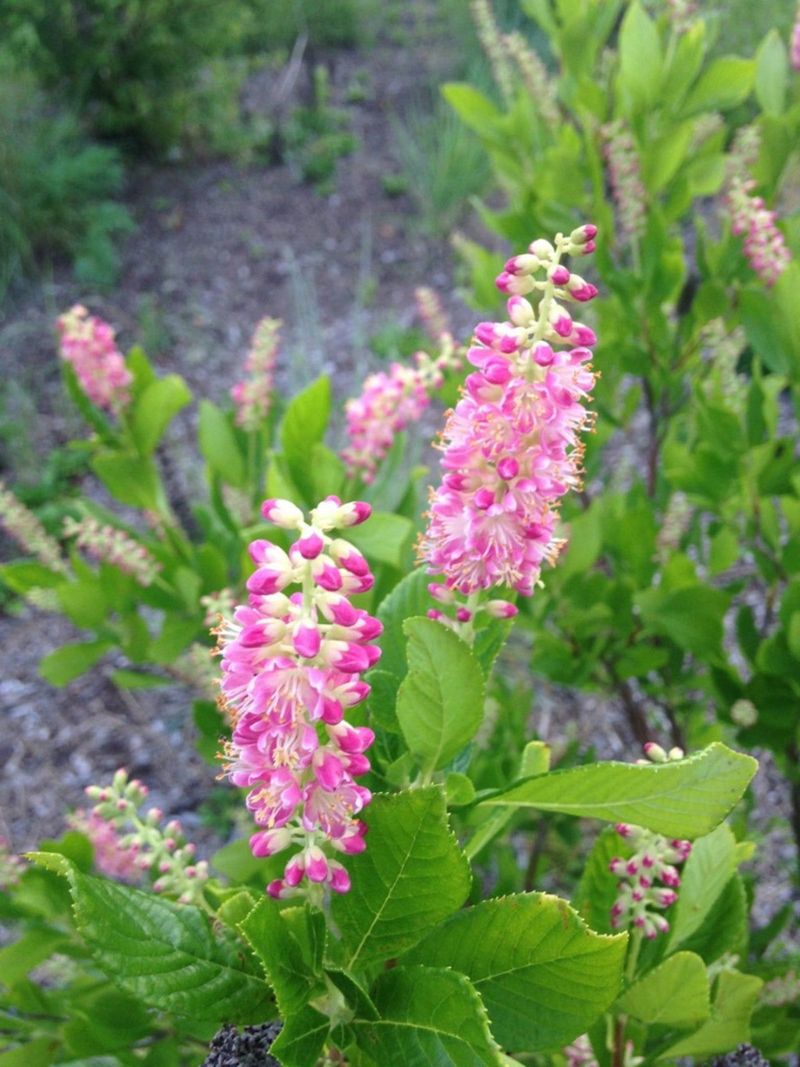
This plant brings fragrance and late-season flowers to Ohio gardens with remarkable consistency. Native to the eastern United States, this shrub evolved to handle variable weather conditions.
It leafs out relatively late in spring, which naturally protects it from most freeze events. When cold damage does occur, the plant simply grows new stems that bloom right on schedule in July and August.
The flowers release an incredible sweet fragrance that fills the entire garden on warm summer evenings. Bottlebrush-shaped spikes in white or pink attract bees, butterflies, and hummingbirds throughout their long bloom period.
The fragrance alone makes summersweet worth growing, but the plant offers multiple seasons of interest with good fall color too.
One of summersweet’s best features for Ohio gardeners is its tolerance of challenging sites. It grows naturally in wet areas and handles poorly drained soil that would rot the roots of many other shrubs.
This makes it perfect for low spots in the yard or areas near downspouts where water collects. It also tolerates shade better than most flowering shrubs, blooming nicely even with just a few hours of direct sun.
The cultivar Ruby Spice produces deep pink flowers and grows slightly more compact than the species. Hummingbird is another excellent choice with pure white flowers and a tidy growth habit.
Both perform beautifully throughout Ohio and require minimal maintenance once established.
7. Shrubby Cinquefoil Keeps Flowering Through Cold Setbacks
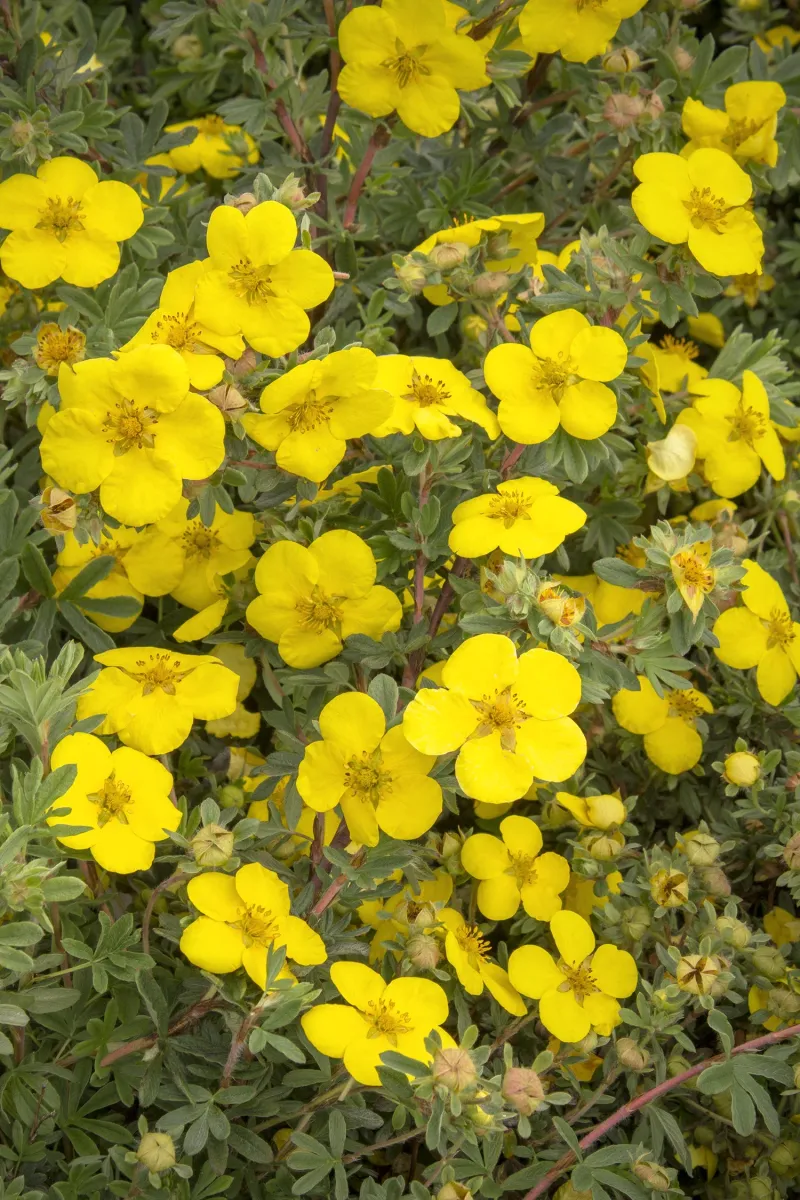
Shrubby cinquefoil might be the most underappreciated flowering shrub for Ohio gardens. This tough little plant blooms continuously from June through September, producing cheerful flowers that look like miniature wild roses.
Freeze damage barely fazes it because flowers form on new growth throughout the entire growing season.
The extended bloom period makes shrubby cinquefoil incredibly valuable for maintaining color in the landscape. While other shrubs bloom for just a few weeks, cinquefoil keeps producing fresh flowers for months.
Yellow varieties are most common, but you can also find cultivars with white, pink, peach, or red flowers to match your color scheme.
Cold hardiness is outstanding, which is why you’ll see shrubby cinquefoil thriving in northern Ohio just as well as in southern counties. The plant tolerates winter temperatures well below zero without damage, and spring freezes rarely affect it because it waits for consistently warm weather before beginning active growth.
Even if early shoots get nipped by frost, replacement growth appears quickly.
Shrubby cinquefoil adapts to various soil types and handles both full sun and partial shade. It prefers good drainage but tolerates short dry periods once established.
The compact size of most cultivars, typically two to three feet tall and wide, makes them perfect for small gardens, foundation plantings, or as low hedges along walkways.
8. Buttonbush Pushes New Growth And Summer Blooms
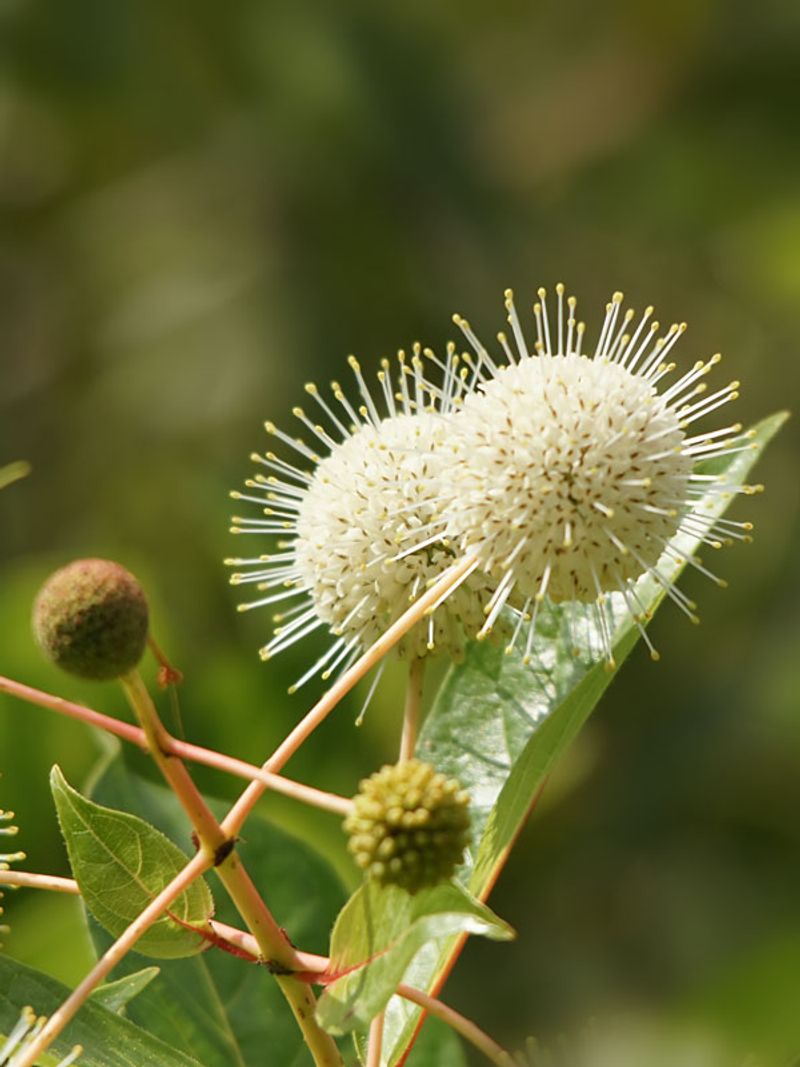
Buttonbush brings unique character to Ohio landscapes with its perfectly round flower balls that look like something from a Dr. Seuss book. This native shrub naturally grows along streams and pond edges, but it adapts surprisingly well to regular garden conditions too.
Because it blooms on new wood produced each spring, freeze damage never prevents its distinctive summer flower display.
The spherical white flowers attract an amazing variety of pollinators, including butterflies, bees, and hummingbirds. Blooming occurs in July and August when many other shrubs have finished flowering.
Each flower ball is actually composed of dozens of tiny tubular flowers packed tightly together. After pollination, the flowers transform into round brown seed heads that add winter interest and provide food for birds.
Buttonbush handles wet soil better than almost any other flowering shrub. If you have a persistently damp area where other plants struggle or standing water after heavy rains, buttonbush will thrive there.
It also tolerates occasional flooding, making it perfect for rain gardens or areas near ponds and streams. Despite its love of moisture, it adapts reasonably well to average garden soil as long as it doesn’t dry out completely during summer.
The shrub grows fairly large, reaching six to eight feet tall and wide at maturity. You can prune it hard in early spring to control size without sacrificing flowers.
This also encourages denser, bushier growth that looks more polished in formal landscapes.
9. False Indigo Bush Returns Strong After Winter Damage
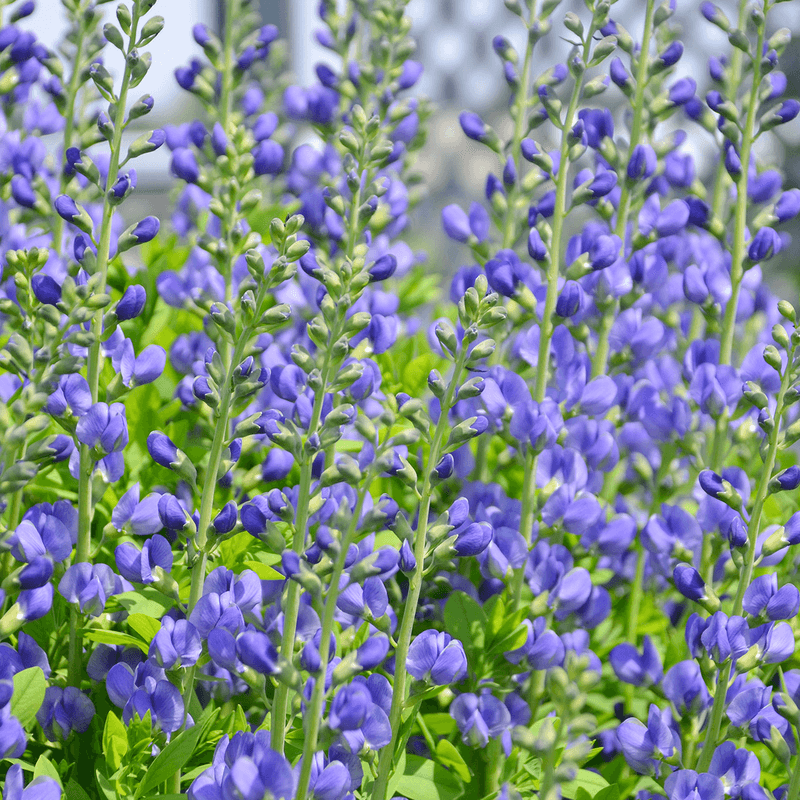
This bush delivers striking purple-blue flower spikes in late spring and early summer, and it does so with remarkable reliability even after harsh winters. Native to parts of North America including Ohio, this shrub handles cold damage by simply pushing up fresh stems from its substantial root system.
Most flowers form on new growth, so the plant usually still blooms even after winter or spring damage, though severe late freezes can sometimes reduce flowering.
The plant features beautiful blue-green foliage that looks good all season long, not just during the flowering period. After the purple flower spikes fade, interesting dark seed pods develop that rattle in the wind and add architectural interest.
Many gardeners leave these pods on the plant through winter because they look attractive covered in snow and provide texture in the dormant landscape.
False indigo bush is usually well-behaved in maintained landscapes, though it can spread in wet natural areas or near waterways. The plant actually prefers drier soil once established and tolerates drought better than many native shrubs.
False indigo bush grows three to four feet tall and wide, making it a nice mid-sized option for mixed borders or foundation plantings. It prefers full sun for best flowering but tolerates light shade.
The plant fixes nitrogen in the soil like other legumes, which can benefit nearby plants. Virtually no pests or diseases bother it, and deer usually leave it alone too.
10. St. John’s Wort Flowers On Fresh Post-Freeze Growth
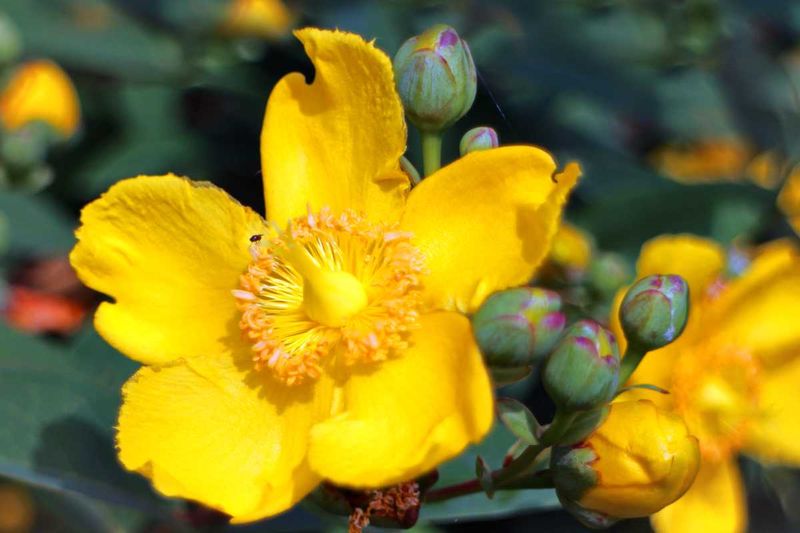
St. John’s Wort brightens Ohio gardens with cheerful yellow flowers that appear throughout summer and into fall. The shrubby types grown in landscapes handle freeze damage exceptionally well because they bloom continuously on new growth.
Even severe winter dieback doesn’t prevent flowering since the plant regrows vigorously from the roots each spring.
The flowers feature five bright yellow petals surrounding a prominent burst of stamens that give each bloom a sunny, open appearance. Individual flowers last just a day or two, but new buds open constantly from June through September.
This extended bloom period provides reliable color when many other shrubs have finished flowering for the season.
Several varieties perform well in Ohio gardens. Kalm St. John’s Wort is particularly cold-hardy and spreads slowly to form attractive colonies.
Shrubby St. John’s Wort grows more upright and features blue-green foliage that contrasts nicely with the yellow flowers. Both types tolerate a range of soil conditions and handle part shade, though flowering is heaviest in full sun.
St. John’s Wort requires minimal care once established. You can cut plants back hard in early spring to encourage bushy, compact growth.
The shrubs tolerate drought well and rarely suffer from pest or disease problems. Their moderate size, typically two to three feet tall, works perfectly in front of larger shrubs or mixed with perennials in cottage-style gardens.