These 9 Striking Architectural Plants Stand Out In Arizona Landscapes
Some plants naturally draw attention the moment you see them. In Arizona landscapes, a few bold shapes, strong lines, and unusual forms can instantly change how a garden feels.
Instead of blending into the background, these plants create structure and become the features people notice first.
Architectural plants are especially valuable in Arizona because they hold their shape even in harsh sun, dry soil, and long stretches of heat.
Many require little maintenance, yet still bring a dramatic presence that makes a landscape feel more designed and intentional.
If a yard feels flat or lacks personality, the right structural plants can completely shift the look. With striking silhouettes and bold forms, these are the kinds of plants that stand out in Arizona landscapes and give a garden a strong visual backbone.
1. Saguaro Cactus Towers Over Desert Landscapes
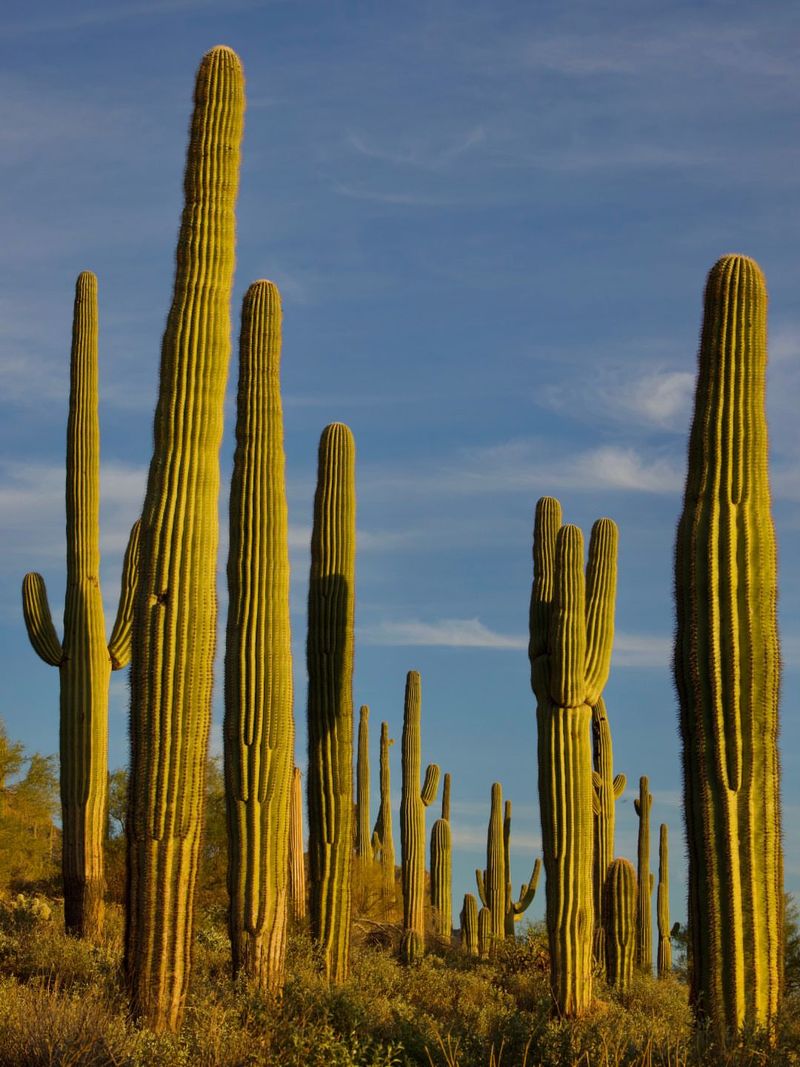
Nothing in the plant world commands a space quite like a full-grown Saguaro. Standing in an Arizona yard with one of these giants nearby feels like sharing space with something ancient, and honestly, you are.
Saguaros can live well over 150 years, and some of the tallest ones you see across the Sonoran Desert have been growing since before your grandparents were born.
Slow growth is part of the deal. A Saguaro might only reach a few inches tall in its first decade, which is why mature specimens are so valuable.
If you are planting one in your yard, buy from a reputable nursery that sells legally harvested plants. Tucson and Phoenix nurseries that specialize in native plants are your best starting point.
Placement matters more than most people realize. Saguaros need full sun and excellent drainage.
Plant them away from rooflines, walls, and foot traffic areas. Their root systems spread wide and shallow, so give them room.
In the right spot, they become the undeniable focal point of any Arizona landscape for generations to come.
Once established, saguaros require very little water and usually rely on natural rainfall to stay healthy.
Patience pays off with this cactus, because every year of slow growth adds to the character and presence that make it such an unforgettable part of an Arizona landscape.
2. Agave Brings Sculptural Rosettes To Dry Gardens
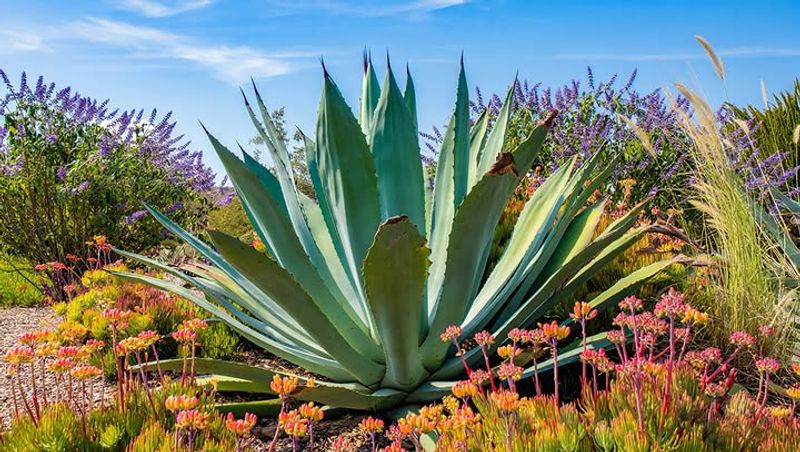
Agave is the kind of plant that earns its spot without trying hard. Drop one into a dry Arizona garden bed and watch it slowly build into something that looks like it belongs on a sculpture pedestal.
Agave Americana, often called the century plant, develops wide rosettes of thick, fleshy leaves with sharp tips that catch light in a way that makes the whole plant glow in the afternoon sun.
Arizona gardeners have long relied on agave for structure. It holds its form through brutal summer heat, monsoon storms, and the kind of dry stretches that flatten less resilient plants.
Water it occasionally during the first year to help it settle in, then back off. Overwatering is the main reason agaves struggle in desert gardens.
Spacing is something to think about early. Agave Americana can spread six to ten feet wide at maturity, so give it room to do its thing without crowding nearby plants.
It also produces offsets around the base called pups, which can be carefully removed and replanted elsewhere. In Scottsdale and Tempe landscapes, this plant shows up constantly because it simply works so well in the Arizona climate.
3. Ocotillo Creates Tall Wand Like Stems
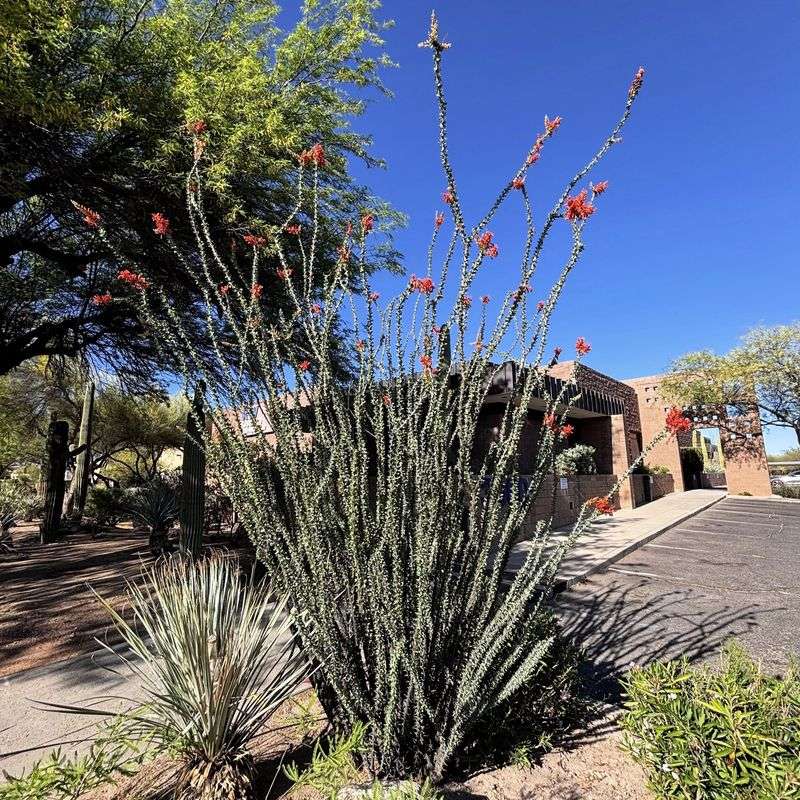
Ocotillo has a personality all its own. For most of the year, it looks like a bundle of thorny bare sticks poking straight up out of the ground, and then the rain comes.
Within days of a good monsoon soak, those canes leaf out and the tips burst into clusters of vivid red flowers that hummingbirds flock to immediately. It is one of the most dramatic seasonal transformations in any Arizona garden.
Height is where ocotillo really earns its architectural reputation. Mature plants typically reach around 10 to 15 feet tall, creating vertical lines that few other desert plants can match.
Planted along a fence line or at the back of a desert bed, a row of ocotillos creates a living wall that looks wild and intentional at the same time.
Getting one established takes some patience. Bare-root transplants are common in Arizona nurseries, and they can look worryingly bare for the first season.
Do not give up on them too quickly. Water every few weeks during dry spells in year one, then let the plant find its own rhythm.
Once it figures out your yard, it needs almost nothing from you and rewards you every single time it rains.
4. Desert Spoon Forms A Striking Fountain Shape
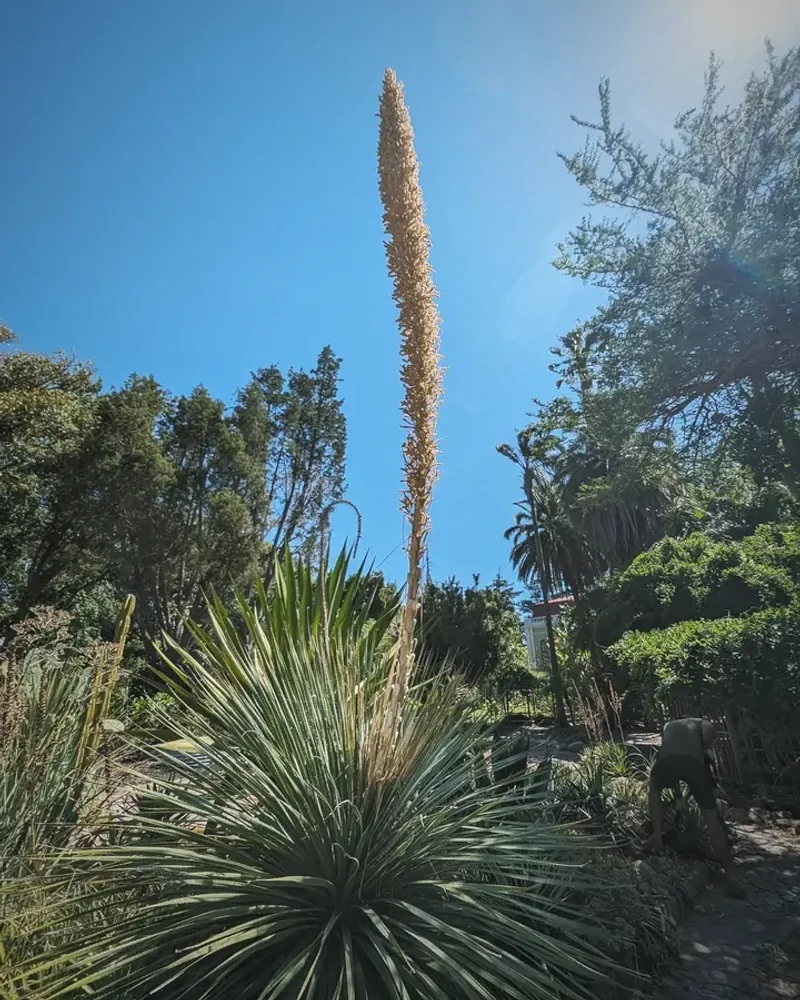
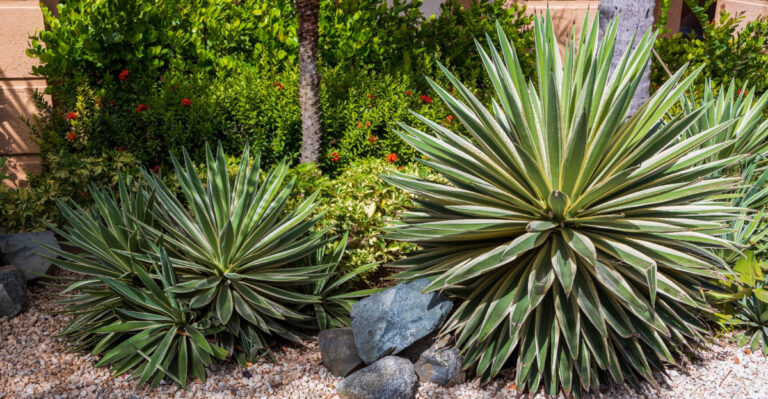
Desert Spoon looks like someone took a firework and froze it mid-explosion. Long, narrow leaves radiate outward from a central base in every direction, creating a perfect spherical fountain shape that holds its form through every season.
In an Arizona yard, it becomes one of those plants that visitors always ask about first.
Dasylirion wheeleri is the botanical name, and it is native to the Sonoran and Chihuahuan Deserts, which means Arizona conditions are not a challenge for it. Full sun, rocky or sandy soil, and minimal water are all it really asks for.
It handles the Phoenix summer heat without missing a beat, and it looks just as sharp in January as it does in August.
One detail worth knowing: the leaf edges have tiny teeth along them, so placement near pathways or play areas is not ideal. Give it a spot where it can be admired from a slight distance.
When it sends up its tall flower spike, which can reach ten feet or more, the whole plant takes on a completely different dramatic quality.
Desert Spoon is especially effective when planted in groups of three across a wide open gravel bed in Tucson or Mesa front yards.
5. Red Yucca Lifts Coral Blooms Above The Foliage
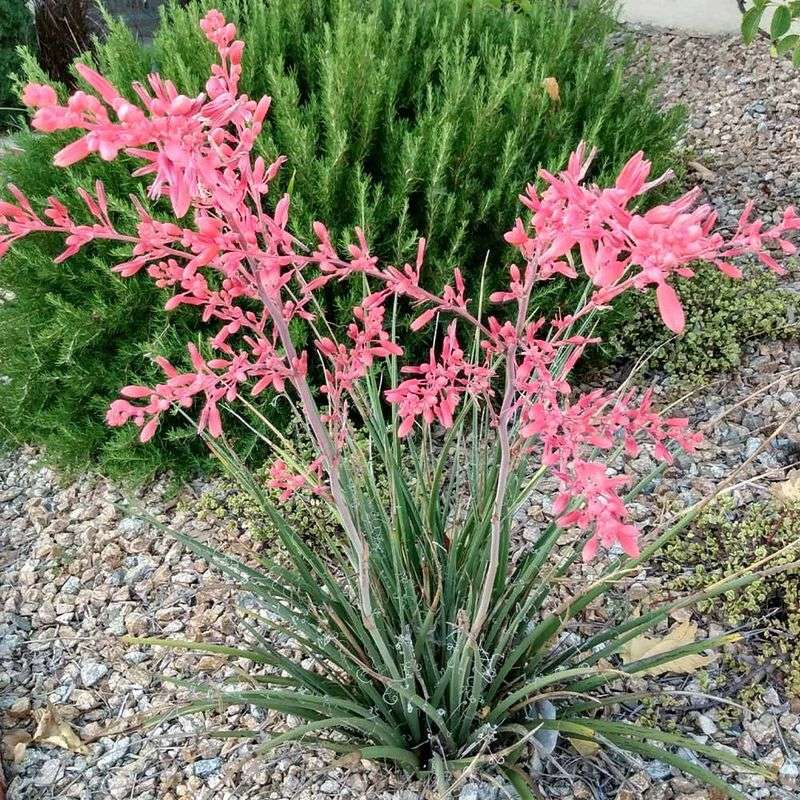
Despite having yucca in the name, Red Yucca is actually a hesperaloe, and that distinction matters because its leaves are softer and more flexible than true yuccas. No stiff spear tips here.
Arching foliage forms a loose, graceful mound that stays green year-round in most parts of Arizona, which already makes it more versatile than a lot of desert plants.
The real show happens when the flower spikes shoot up. Coral-pink tubular blooms line tall wand-like stems that can reach five or six feet above the foliage.
Hummingbirds treat these flowers like a personal buffet, and during peak bloom season you can stand near one and watch the action for a long time. Blooms typically appear in late spring and can repeat through summer in Arizona gardens.
Red Yucca is one of those plants that earns compliments without demanding attention. Water it a few times during its first summer in the ground, and after that it handles Arizona conditions well on its own.
It looks especially strong planted in clusters along a driveway or mixed into a pollinator garden with other native bloomers. Scottsdale landscape designers use it constantly, and for good reason.
6. Paddle Cactus Shows Off Wide Blue Green Pads
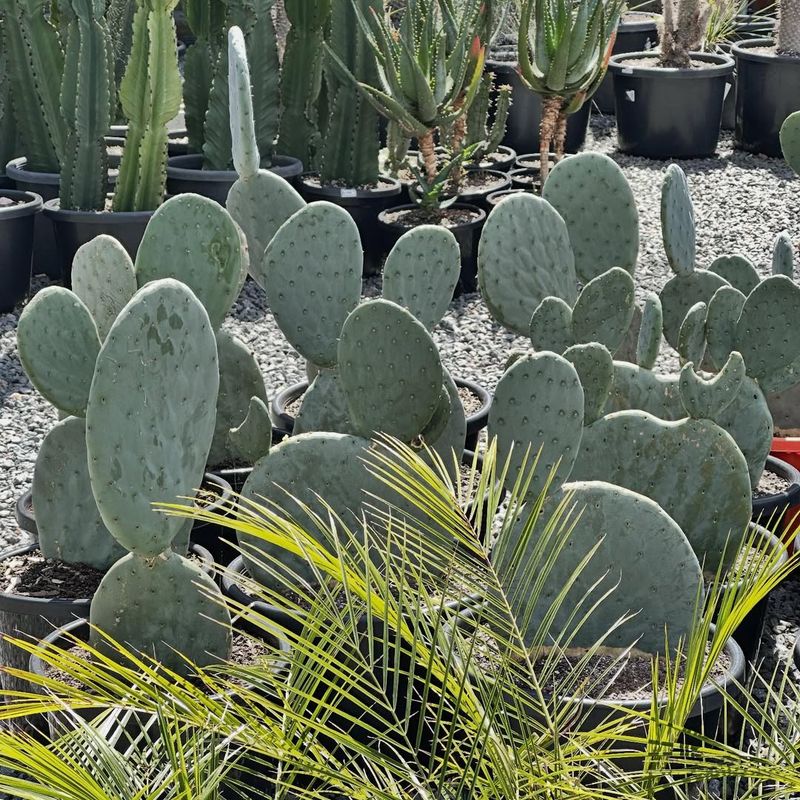
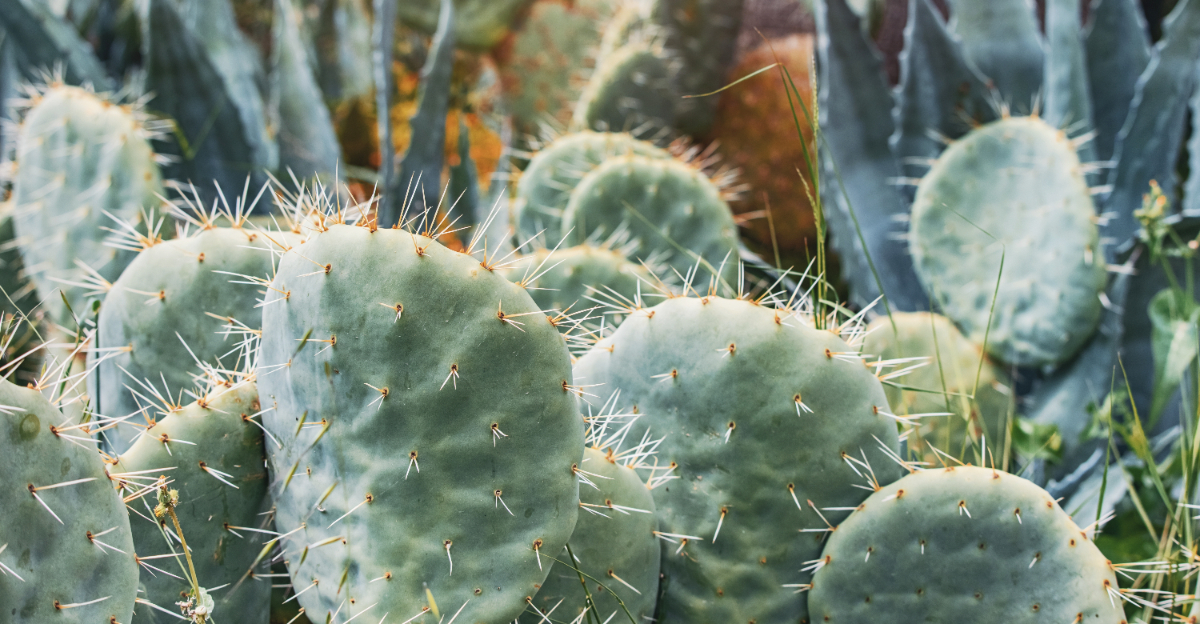
Prickly Pear is one of the most recognizable plants in the entire Southwest, but familiarity has not made it any less visually impressive.
Wide, flat pads in shades of blue-green stack and spread outward in every direction, creating a layered structure that reads as bold and graphic from across a yard.
Some varieties take on purple tones in winter, which adds a whole other seasonal dimension.
Arizona has several native opuntia species, and all of them handle the climate without complaint. They root easily, spread on their own over time, and produce bright yellow or orange flowers in spring that are followed by deep red fruits.
Birds and pollinators are drawn to both the flowers and the fruit, so planting one is essentially adding a wildlife station to your yard.
Handling is the main thing to think about before you plant one. Glochids, the tiny hair-like spines on the pads, are much harder to deal with than the larger visible spines.
Use thick gloves and tongs when planting or moving pads. Site it where you want it to stay, because moving a mature plant is a project.
In Chandler and Gilbert front yards, paddle cactus planted alongside boulders looks completely natural and effortlessly structured.
7. Barrel Cactus Stands Out With A Bold Rounded Form
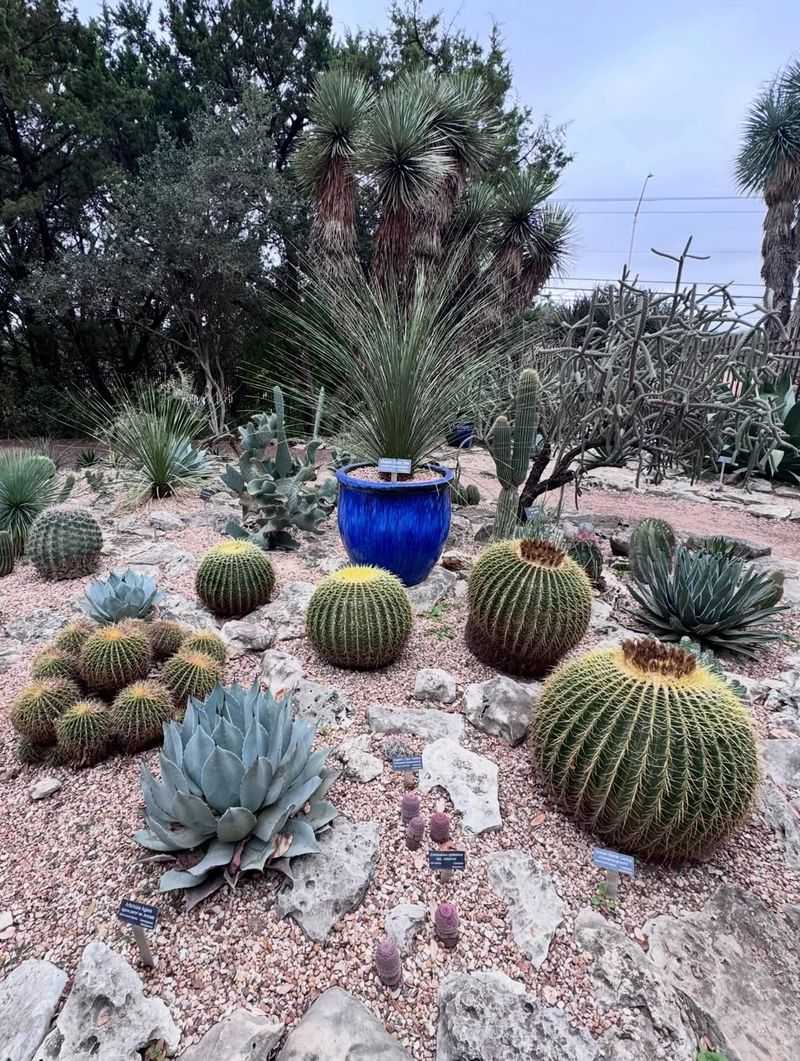
Barrel cactus has a shape that is almost comically perfect. Perfectly round, deeply ribbed, and covered in curved spines that glow reddish-orange in direct sunlight, it looks like something a landscape architect sketched by hand.
But it is completely real and completely at home in Arizona conditions, where it grows slowly into a form that holds its structure year after year without any help from you.
Ferocactus species are the most common barrel cacti found in Arizona nurseries. They thrive in full sun and sharp-draining soil, and they absolutely do not want to sit in moisture.
Plant them on a slight slope or in a raised gravel bed to keep water moving away from the base. Rot at the base is the main issue that trips up new desert gardeners.
Size at maturity varies by species, but most barrel cacti in home landscapes reach about two to four feet tall and wide. They look incredible as accent plants near boulders, at the base of a saguaro, or lined along a dry creek bed.
In the afternoon, the spines catch the light and the whole plant seems to shimmer. For a plant that asks for almost nothing, the visual return in any Arizona yard is remarkable.
8. Yucca Adds Dramatic Spikes To Desert Plantings
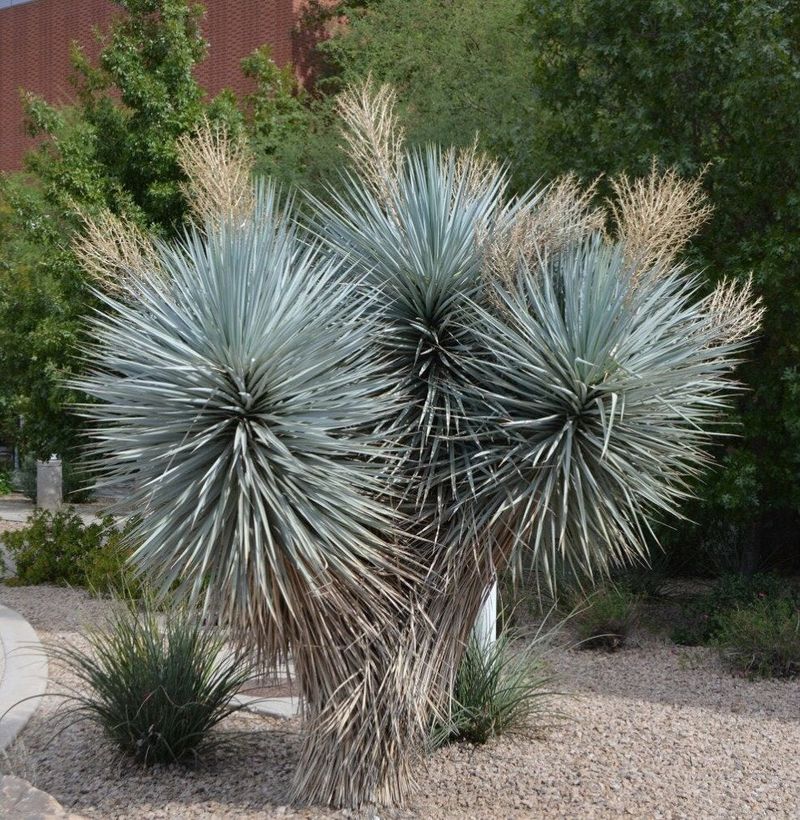
Few plants draw the eye quite like a yucca in full form. Stiff, sword-shaped leaves radiate outward in a dense, layered rosette, and the overall effect is something between a sculpture and a weapon.
In a flat, open Arizona yard, a mature yucca becomes an instant anchor point that organizes everything planted around it.
Yucca elata, the soaptree yucca, is one of the best choices for Arizona landscapes because it develops a visible trunk over time, lifting the leaf rosette up and giving the plant a tree-like silhouette.
Other species like Yucca rigida offer blue-gray foliage with exceptional color contrast against red gravel or desert soil.
Both handle Phoenix summer temperatures without any issue.
Yuccas bloom on tall spikes covered in creamy white bell-shaped flowers, usually in late spring. The blooms attract moths that are actually the plant’s primary pollinator, so the relationship between yuccas and their environment runs deep.
Planting one near an outdoor seating area lets you enjoy the bloom season up close. Just be mindful of the leaf tips near walkways, since they are sharp enough to cause a genuine surprise.
Yucca is a staple in Peoria and Glendale desert landscapes for good reason.
9. Blue Chalksticks Spreads Silvery Blue Foliage
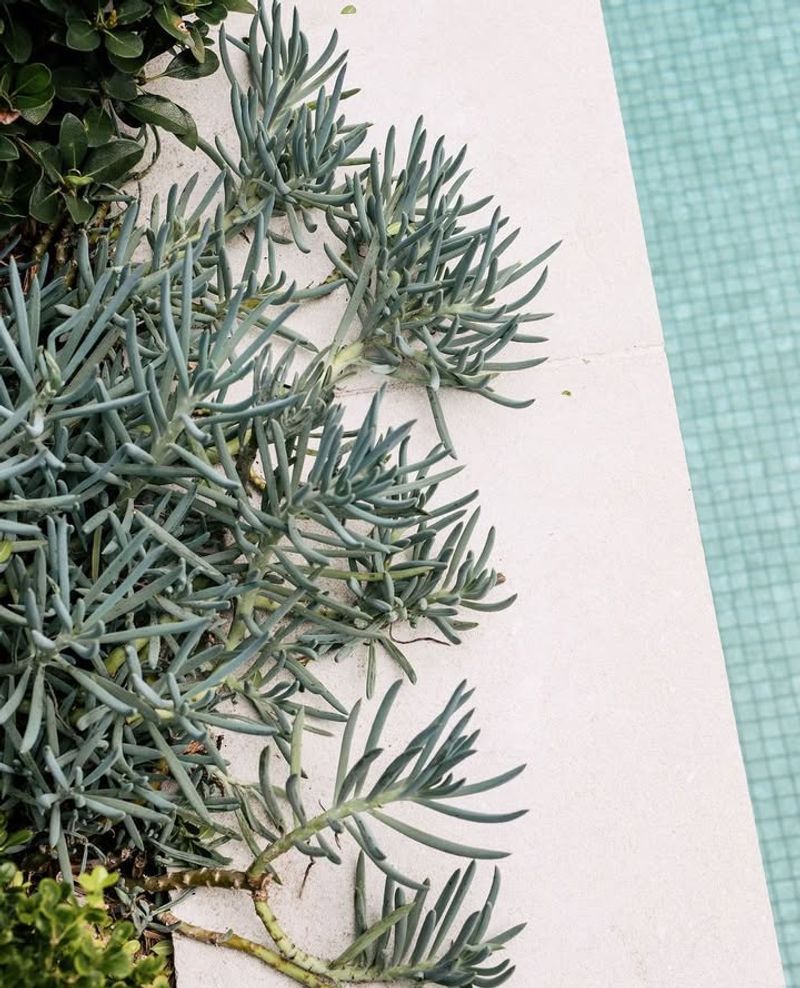
Blue Chalksticks is the plant that makes a gravel bed look intentional. Senecio mandraliscae spreads outward in a low mat of cylindrical, finger-like leaves in a cool blue-gray color that reads almost silver in bright Arizona sunlight.
It is one of the few ground-level plants that actually holds its own visually next to bolder architectural plants like agave or yucca.
Spreading habit is one of its best qualities. A single plant can cover several square feet over time, filling gaps between rocks and larger plants without climbing or tangling.
It roots wherever its stems touch soil, which makes it useful for stabilizing slopes or filling in awkward corners of a desert bed. In Tempe and Mesa yards, it shows up often as a low-water ground cover alternative to traditional turf areas.
Full sun to light afternoon shade and good drainage are important for Blue Chalksticks in Arizona.
It tolerates poor soil and reflected heat from walls or pavement, which puts it ahead of many other succulents in terms of urban yard adaptability.
The contrast it creates against warm-toned gravel, terracotta pots, or red rock borders is genuinely striking.
White flowers appear in late summer, adding a quiet seasonal detail that rounds out its year-round appeal without stealing the show from its foliage.