These 8 Tough Shrubs Handle Oregon Wind And Rain Without Fuss
Oregon gardens can be tough on shrubs, especially once the long stretch of rain settles in and winds start pushing through exposed yards.
It is not unusual to see plants leaning, struggling in soggy soil, or failing to bounce back after a rough winter.
Heavy clay, steady moisture, and coastal gusts create conditions that quickly separate weaker choices from reliable ones.
Some shrubs hold their shape, keep growing, and handle the weather without much extra care.
The ones below have earned their place in Oregon landscapes by staying strong and looking good through seasons that test just about everything planted outdoors.
1. Oregon Grape Adds Tough Evergreen Structure
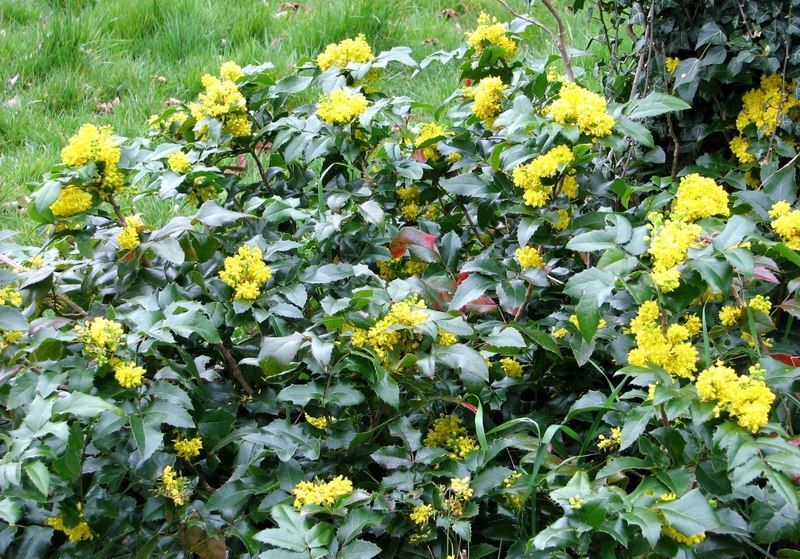
Few shrubs are as closely tied to Oregon’s identity as Oregon Grape, which also happens to be the state flower.
Mahonia aquifolium grows naturally in forests and open hillsides across the Pacific Northwest, which tells you a lot about how well it handles local conditions.
The glossy, holly-like leaves stay green through winter storms, and the plant rarely looks beaten down by rain or wind.
Clusters of bright yellow flowers appear in early spring, drawing early pollinators when not much else is blooming. By summer, those flowers turn into deep blue-purple berries that birds love.
The berries also have a long history of use in jams and jellies, so there is something useful happening in the garden beyond just good looks.
Oregon Grape handles shade well, making it a solid choice under larger trees where other shrubs struggle. It tolerates wet winters and drier summers without skipping a beat.
Most varieties reach four to six feet tall, though compact forms stay closer to two feet. Spacing plants about three to four feet apart gives them room to fill in naturally.
Occasional pruning after flowering keeps the shape tidy, but this shrub generally manages itself without much fuss from the gardener.
2. Red-Flowering Currant Brings Early Spring Color
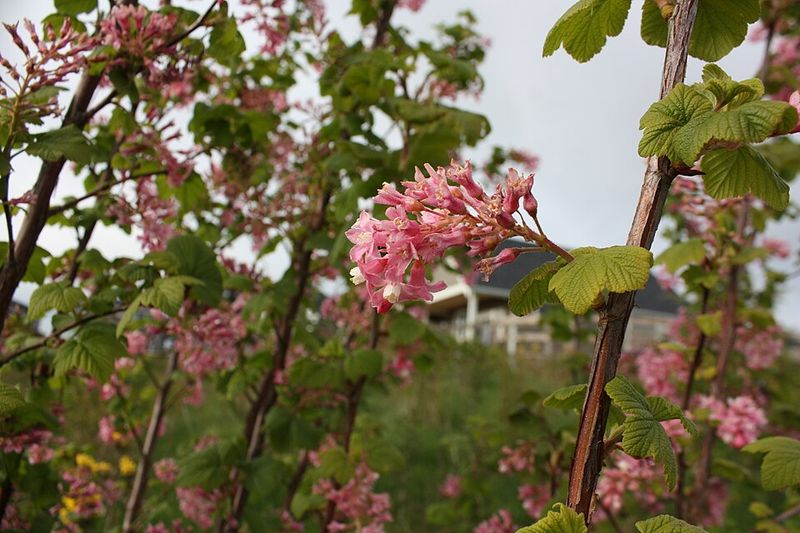
Walk past a Red-Flowering Currant in February or March and you might do a double take.
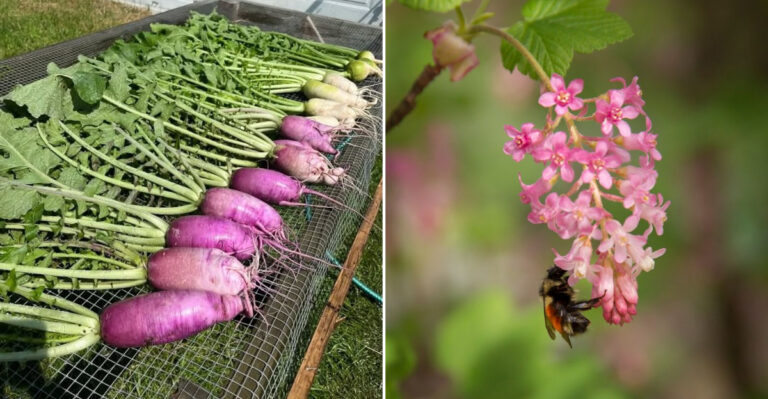
While most of the garden still looks brown and soggy from Oregon’s winter rains, Ribes sanguineum bursts into cascades of deep rose-pink flowers that stop people in their tracks.
Hummingbirds notice too, often arriving within days of the first blooms opening.
This native shrub is remarkably unfussy about soil conditions. It grows well in clay, handles seasonal waterlogging, and recovers quickly after hard rain.
Wind does not seem to bother it much either, as the flexible stems bend rather than snap in coastal gusts. Most plants reach five to ten feet tall, so give them space to show off their natural arching shape.
Full sun brings the most flowers, but Red-Flowering Currant also performs respectably in partial shade. After the flowers fade, small dark berries appear that birds appreciate through summer and fall.
Pruning right after bloom keeps the plant from getting too lanky, though many gardeners skip it entirely and just enjoy the relaxed, natural form.
For Oregon gardens that need reliable early color without any complicated care routine, this shrub delivers every single year.
3. Evergreen Huckleberry Forms Dense Wind-Resistant Growth
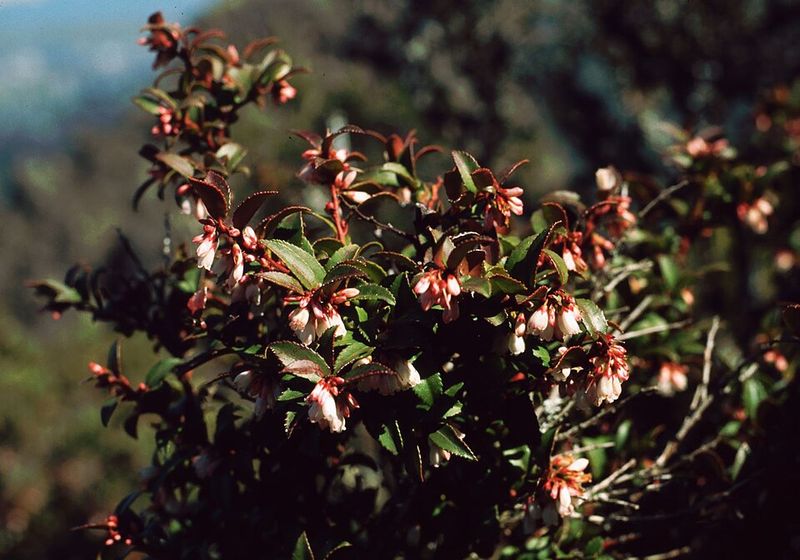
Coastal Oregon gardeners dealing with relentless wind often find that dense, low-growing shrubs outperform taller, more open ones. Evergreen Huckleberry, known botanically as Vaccinium ovatum, fits that profile well.
Its tight, layered branching creates a naturally wind-resistant structure that holds together even when gusts roll in off the Pacific.
The small, glossy leaves stay on the plant year-round, giving the garden some visual weight through the gray months of Oregon winter.
Tiny white to pinkish bell-shaped flowers appear in spring, followed by dark blue-black berries in late summer and fall.
Those berries are genuinely delicious and popular with both birds and people who like to bake.
Evergreen Huckleberry grows slowly, which means it rarely needs pruning and keeps a tidy shape on its own. In shaded spots under Douglas firs or along the edge of a woodland garden, it thrives where other shrubs would thin out.
It handles wet, acidic soils well, which matches much of western Oregon’s natural soil profile. Plants typically reach four to eight feet at maturity, though growth rate depends heavily on light.
Spacing around three feet apart allows eventual coverage without overcrowding in the early years.
4. Ninebark Handles Wet Soil And Rough Weather
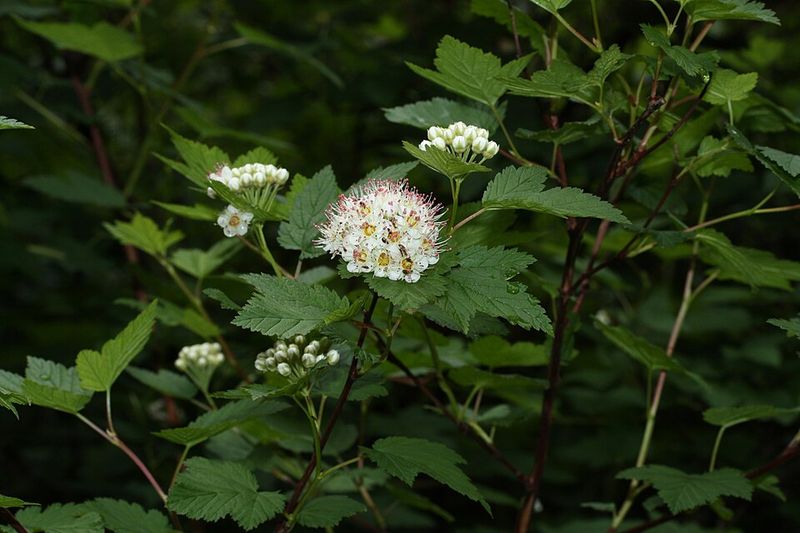
Saturated soil is one of the most common reasons shrubs fail in western Oregon, especially during those long stretches of winter rain when drainage slows to almost nothing.
Pacific Ninebark, or Physocarpus capitatus, was practically built for those conditions.
It grows naturally along streambanks and in low-lying areas throughout the Pacific Northwest, so standing water during rainy season does not stress it the way it would most ornamental shrubs.
The peeling, layered bark is one of its most interesting features, adding texture to the garden even when the plant is not in bloom. Clusters of white flowers appear in late spring and attract a surprising range of pollinators, from bees to butterflies.
The reddish seed capsules that follow add another layer of seasonal interest through summer and into fall.
Ninebark grows vigorously and can reach eight to ten feet tall if left unpruned. For smaller spaces, cutting it back by about a third after flowering keeps the size manageable without harming next year’s bloom.
It tolerates full sun and partial shade, making it adaptable to different spots around the garden.
Several cultivated varieties offer purple or gold foliage, which adds color contrast when planted alongside green-leaved neighbors in an Oregon border planting.
5. Salal Spreads Easily In Rainy, Shady Areas
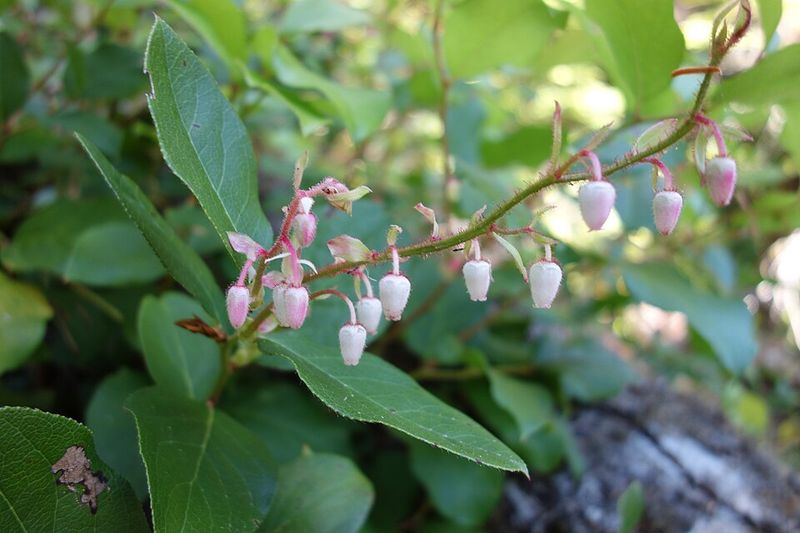
Spend any time hiking in western Oregon forests and you will recognize Salal immediately. Gaultheria shallon carpets the understory beneath towering conifers, thriving in conditions that seem almost impossibly dim and wet.
Bring that same plant into a shaded garden corner and it performs with the same reliability it shows in the wild.
The large, leathery leaves are one of Salal’s most recognizable traits, staying glossy and dark green through rain, cold, and wind without any visible damage.
Small urn-shaped white or pinkish flowers dangle from arching stems in late spring, followed by dark purple berries that wildlife finds irresistible.
Florists also prize the foliage for arrangements, so there is a practical side to growing it beyond garden aesthetics.
Salal spreads by underground rhizomes, which means it fills in gaps naturally over time. That spreading habit makes it a strong choice for erosion control on slopes that get heavy Oregon rainfall.
In smaller gardens, some light pruning helps contain it. It grows best in acidic, well-drained to moderately moist soil and prefers shade to partial shade.
Heights range from one to five feet depending on light levels, with shadier spots keeping it lower and more compact in form.
6. Douglas Hawthorn Stays Strong In Exposed Spots
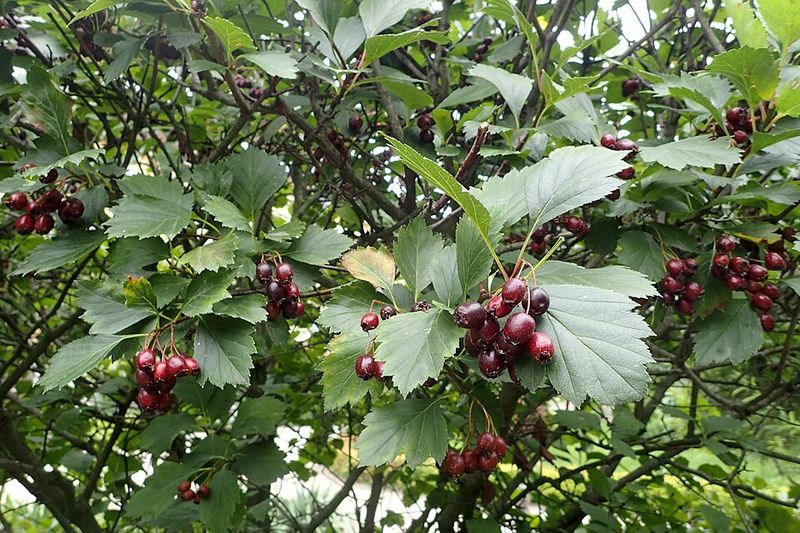
Exposed hillsides and open sites near the Oregon coast present a tough challenge for most shrubs. Wind drives in hard, rain falls sideways, and there is no tree cover to soften the impact.
Douglas Hawthorn, Crataegus douglasii, handles those conditions with the kind of rugged durability that most ornamental shrubs cannot match.
The thorny, dense branching structure is part of what makes it so wind-tolerant. Rather than offering resistance that causes breakage, the plant’s form lets air move through while the strong woody framework holds its shape.
White flower clusters appear in spring and have a light, pleasant fragrance that carries on the breeze. Dark berries follow in late summer, providing food for birds well into the fall months.
Douglas Hawthorn is also useful as a wildlife hedge or windbreak along property edges in rural Oregon settings.
It grows ten to twenty feet tall at full maturity, though regular pruning after flowering keeps it at a more manageable hedge height.
The plant handles clay soil and seasonal wet conditions without issue. One thing to keep in mind is the thorns, which can be sharp enough to make gloves necessary during any pruning work.
That same thorniness makes it a natural deterrent for unwanted foot traffic through garden beds.
7. Escallonia Works Well In Coastal Conditions
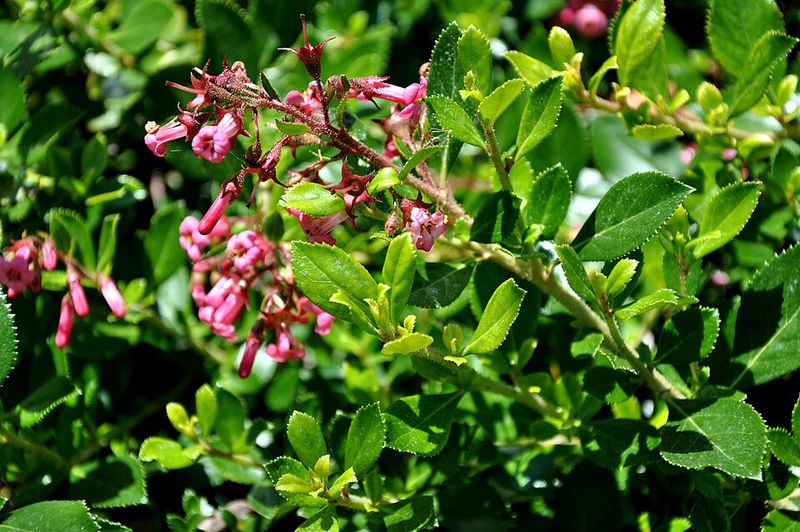
Salt spray, persistent wind, and heavy rain would knock out a lot of ornamental shrubs, but Escallonia seems to find coastal Oregon conditions more agreeable than challenging.
Originally from South America, these evergreen shrubs have a long track record in Pacific Northwest coastal gardens where the combination of mild winters and steady moisture suits them well.
The small, glossy leaves have a slightly sticky texture that helps them shed water and resist wind desiccation.
Clusters of tubular flowers in shades of pink, red, or white appear through summer and often continue into fall, giving the garden consistent color during months when other shrubs are winding down.
Bees visit the flowers regularly, adding some useful pollinator activity to the yard.
Escallonia grows quickly and can reach six to ten feet if left unpruned, making it effective as a screening hedge or windbreak along exposed property edges.
Trimming after the main flush of bloom keeps the size in check and encourages another round of flowers.
It handles light frost with little damage, though a severe inland Oregon freeze can cause tip damage that recovers with spring growth.
Plant in full sun for the best flower production, and choose a spot with decent drainage to keep the roots healthy through wet winters.
8. Manzanita Thrives In Dry, Well-Drained Soil
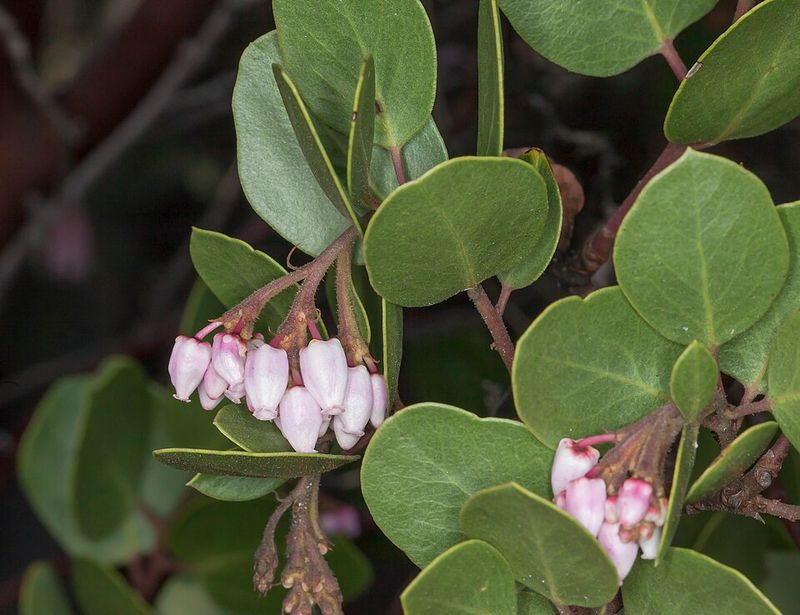
Eastern Oregon and the drier slopes of the Cascades tell a different story than the wet west side of the state.
Manzanita, from the genus Arctostaphylos, is built for those drier, rockier conditions where drainage is sharp and summer heat can be intense.
The smooth, mahogany-red bark is one of the most striking features in any Oregon garden, catching the light in a way that makes the plant interesting even when nothing is blooming.
Small clusters of white to pale pink urn-shaped flowers appear in late winter to early spring, often while temperatures are still cool. Those early blooms are valuable for pollinators emerging before many other plants have started.
The flowers give way to small berries that birds and other wildlife find useful through summer.
Manzanita does not do well in waterlogged soil, so it suits the drier parts of Oregon far better than the perpetually wet west side.
In western Oregon, planting on a slope or in a raised bed with gritty, fast-draining soil makes it much more likely to succeed.
Most varieties range from two to eight feet tall. Once established, Manzanita needs very little supplemental water and almost no fertilizing, making it one of the lower-maintenance choices for the right Oregon site.