These Trees And Shrubs Bring More Birds To California Gardens
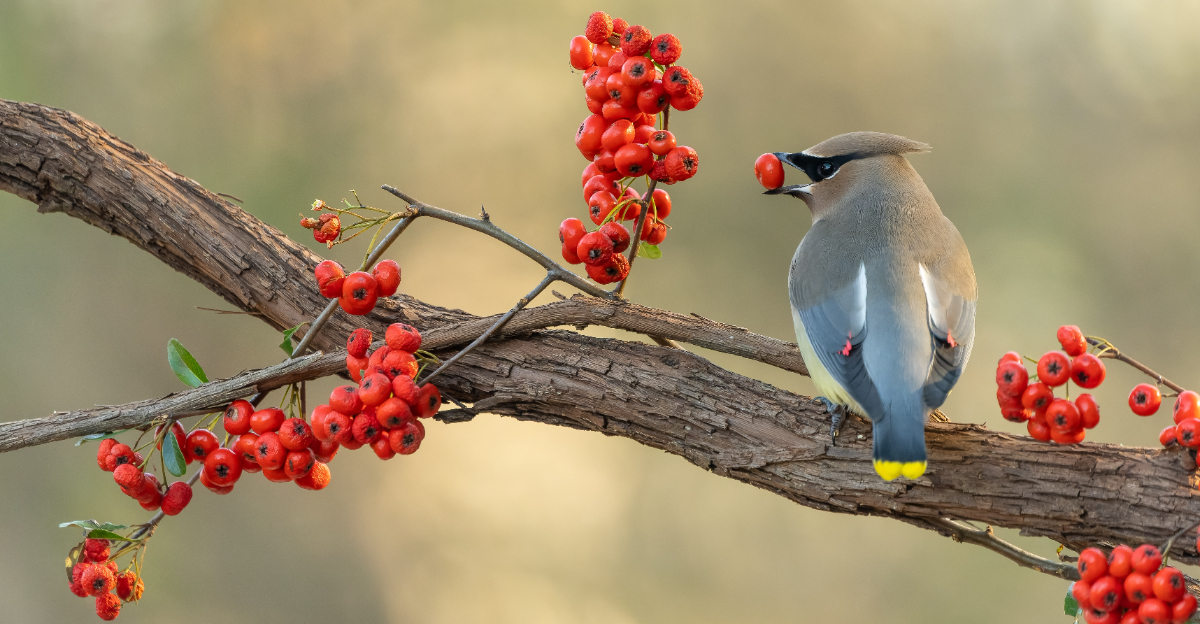
California sunshine is incredible, but a yard without any movement can feel a bit quiet. If you want to see more activity outside your window, the best move is to focus on your trees.
You are essentially creating a premium destination for the local winged population to hang out. These tall additions provide much more than just a nice bit of shade for your lawn.
They offer the specific food and shelter that your local neighbors need to feel comfortable in your yard.
California landscapes have a unique advantage because our weather allows for some truly beautiful species that thrive with very little effort. Adding a few key trees can transform a simple lawn into a busy center of natural activity.
Most of these options are sturdy and handle our dry seasons without any trouble. You can enjoy a much more energetic outdoor space by choosing the right plants at the garden center.
1. Oak
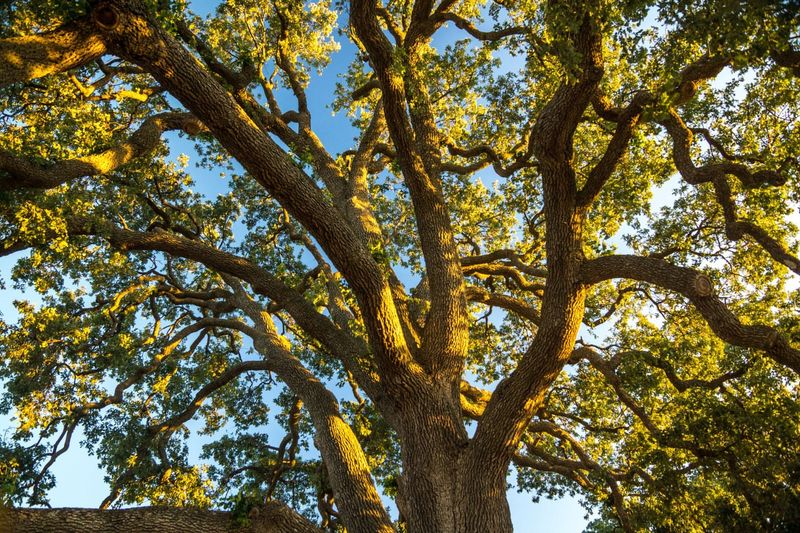
Few trees in California carry as much history and wildlife value as the Coast Live Oak. This broad, evergreen giant has been feeding and sheltering birds for thousands of years.
It is truly the backbone of many California ecosystems.
Acorns are the big draw here. Woodpeckers, jays, and band-tailed pigeons absolutely love them.
A single mature oak can produce thousands of acorns in a good season, giving birds plenty to eat through fall and winter.
Beyond food, the thick canopy offers excellent nesting spots. Hawks, owls, and small songbirds all find shelter in its branches.
The deeply furrowed bark also hides insects that woodpeckers and nuthatches love to hunt.
In California gardens, oaks grow best in well-drained soil with full sun. They are drought-tolerant once established, making them a smart choice for water-conscious homeowners.
Avoid overwatering, especially in summer, as oaks prefer dry conditions during their natural dormancy period.
Planting a Coast Live Oak is a long-term investment. It grows slowly but rewards patience with decades of beauty and endless bird activity right outside your window.
2. Elderberry
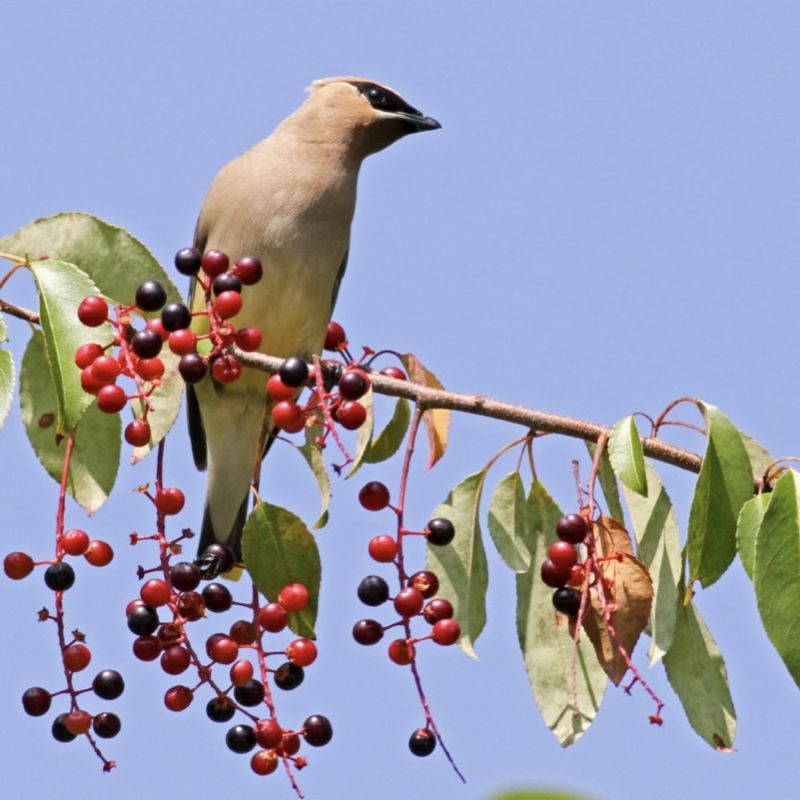
Walk past a ripe elderberry in late summer and you will almost always hear birds before you see them. The clusters of dark purple berries are irresistible to dozens of species.
Cedar waxwings, thrushes, and warblers flock to elderberries with impressive enthusiasm.
Blue Elderberry is the most common native species found across California. It grows quickly, sometimes reaching 20 feet tall, and thrives in a wide range of conditions.
You can find it growing naturally along streams, roadsides, and garden borders throughout the state.
The flowers attract hummingbirds and insects in spring, which in turn bring insect-eating birds to your yard. That layered food chain makes elderberry one of the most productive wildlife trees you can plant.
It basically does double duty all season long.
Elderberry works well in both Northern and Southern California gardens. It prefers full sun and regular water while getting established.
Once settled in, it becomes quite tough and low-maintenance.
Prune lightly after fruiting season to keep the shape tidy and encourage fresh growth. For best results, plant more than one to ensure good pollination and a heavier berry crop that birds will not want to miss.
3. Toyon
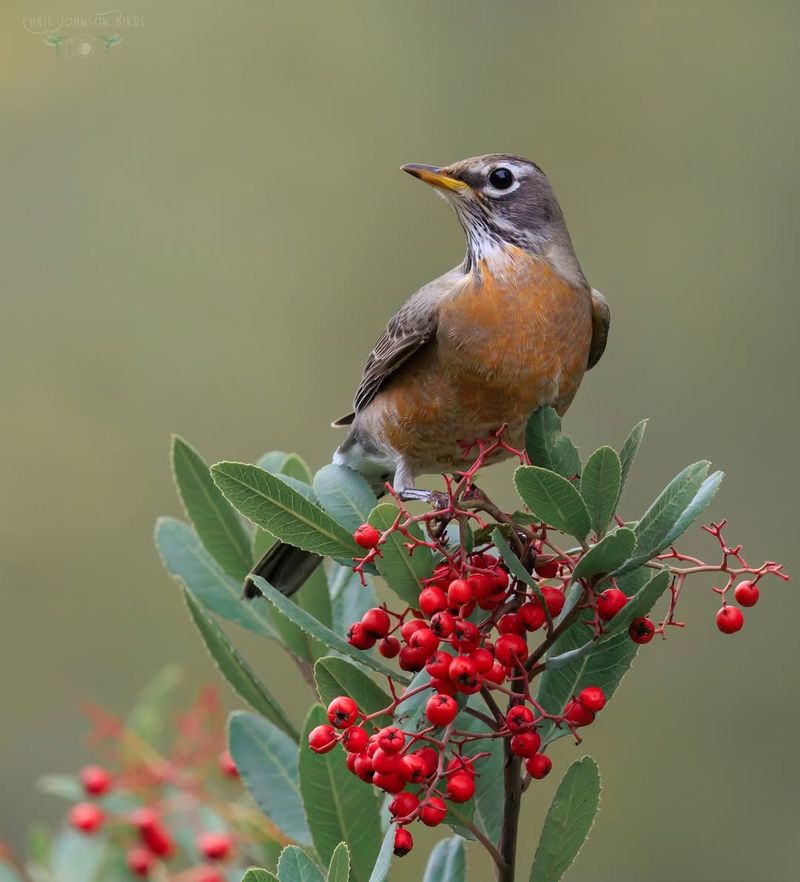
Sometimes called California Holly, Toyon is one of the most recognizable native plants in the state. Its bright red berry clusters appear just in time for the holidays, giving California gardens a festive pop of color.
But birds are far more interested in the berries than any holiday decoration.
American robins, cedar waxwings, and mockingbirds are among the most frequent visitors to a Toyon. They arrive in flocks and strip the berries quickly, so a well-established plant can attract a lot of action in a short time.
It is genuinely exciting to watch.
Toyon is also a tough, adaptable tree. It handles California’s dry summers with ease and grows well in both coastal and inland gardens.
Full sun brings the best berry production, though it tolerates some shade without complaint.
The small white flower clusters that appear in summer also attract insects, drawing in warblers and flycatchers before the berries even form. That means Toyon provides bird-attracting value across multiple seasons throughout the year.
Plant Toyon in well-drained soil and water sparingly once established. It can reach 15 feet tall but responds well to pruning if you need to keep it compact in a smaller California garden space.
4. Manzanita
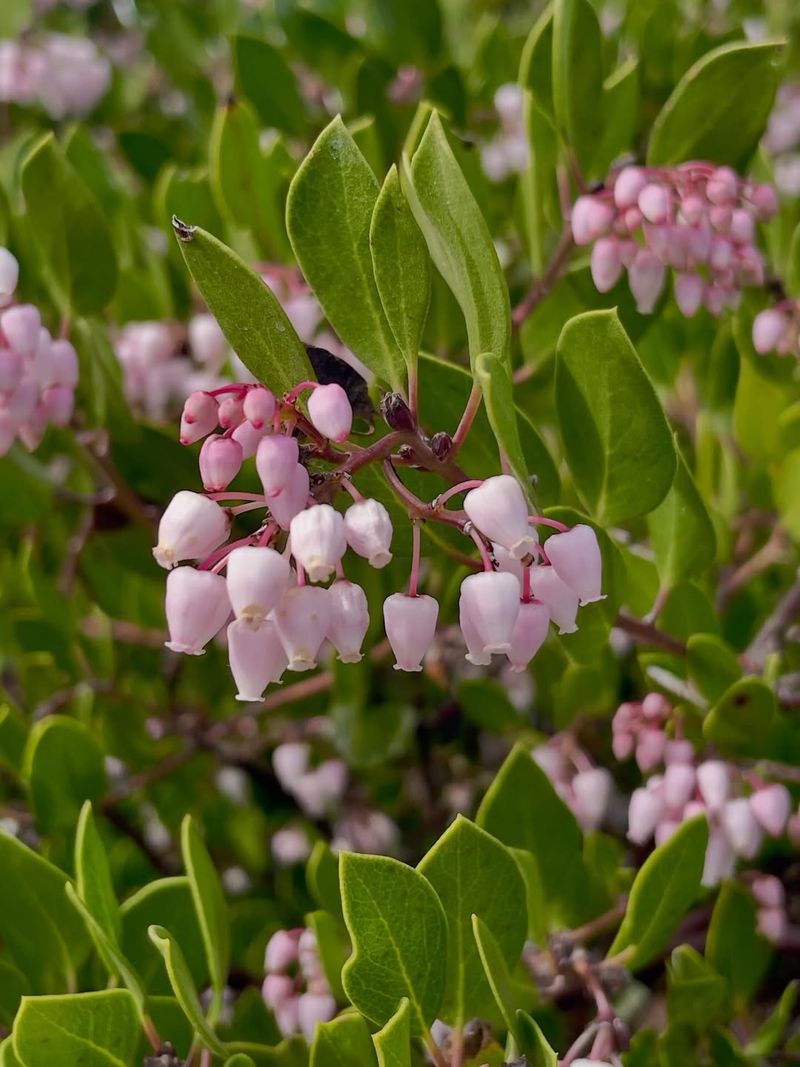
There is something almost sculptural about a mature Manzanita. Its smooth, coppery red bark and twisted branches make it one of the most visually striking plants in any California garden.
But its real gift to birds goes far beyond good looks.
In late winter and early spring, Manzanita produces small, bell-shaped pink or white flowers that hummingbirds absolutely cannot resist. Anna’s hummingbirds, which stay in California year-round, are especially devoted visitors.
Planting Manzanita near a window gives you a front-row seat to the action.
Later in the season, small berry-like fruits develop and attract thrushes, robins, and towhees. The dense, twiggy branching also provides excellent cover for small birds trying to stay safe from predators.
Many species use Manzanita as a safe resting spot between feeding visits.
There are dozens of Manzanita species native to California, ranging from low-growing ground covers to tall shrubs. Choosing the right variety for your space is easy because there is a Manzanita for nearly every garden situation across the state.
Plant it in fast-draining soil and full sun. Once established, Manzanita needs very little water, making it an ideal choice for drought-conscious California gardeners who still want a yard full of birds.
5. Serviceberry
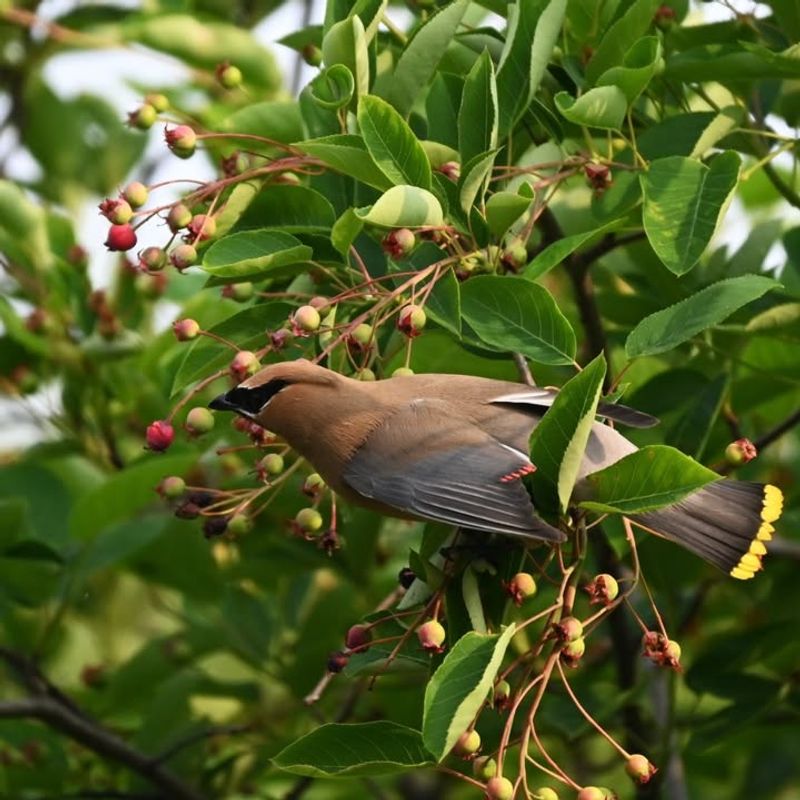
Not enough California gardeners know about Serviceberry, and that is a real shame. This small, graceful tree punches well above its weight when it comes to attracting birds.
It produces sweet, berry-like fruits in early summer that birds treat like a seasonal buffet.
Robins, bluebirds, and waxwings are among the most enthusiastic fans of Serviceberry fruit. The berries ripen quickly, so birds tend to descend in numbers when the time is right.
If you want to taste a few yourself before the birds get there, go early in the morning.
Western Serviceberry grows naturally in mountain foothills and canyon areas throughout California. It is well-suited to gardens that experience cold winters, and it puts on a lovely show of white flowers each spring before the leaves fully emerge.
The fall foliage turns beautiful shades of orange and red, adding seasonal color to your garden even after the berries are long gone. It is a four-season tree in the truest sense, offering something interesting at every time of year.
Plant Serviceberry in a spot with full sun to partial shade and keep the soil reasonably moist. It grows slowly but steadily, eventually reaching about 15 to 20 feet tall in most California garden settings.
6. Pine
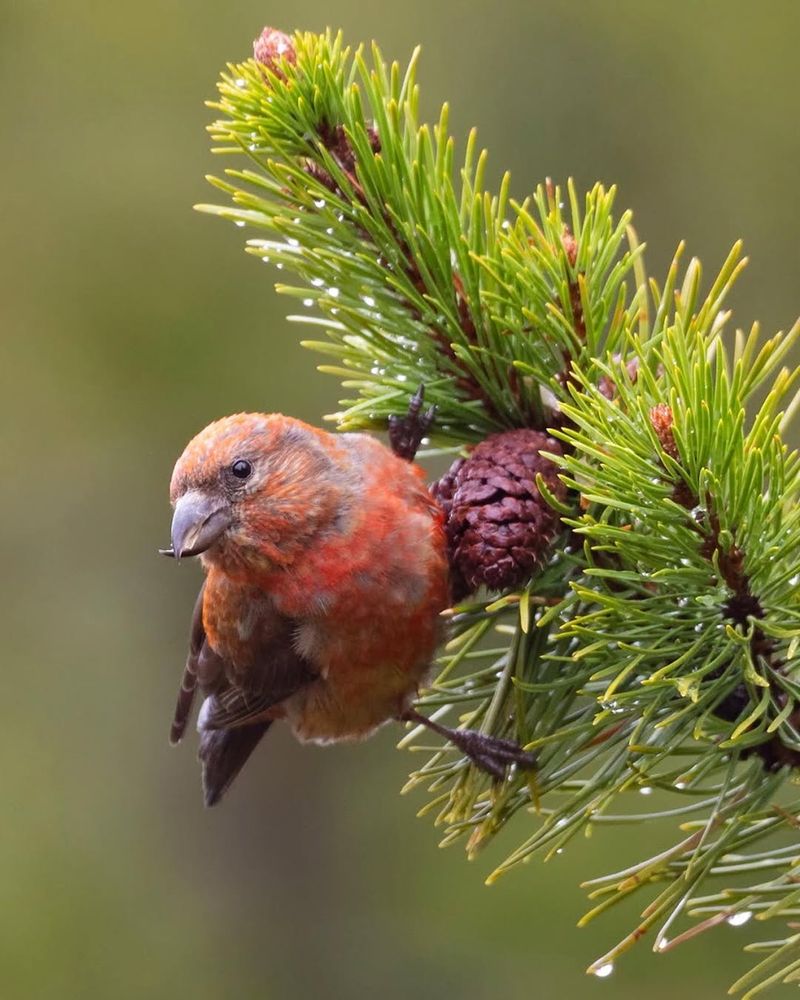
Pines are powerhouses for bird life. A mature pine tree in a California garden is basically a year-round apartment complex for birds.
The seeds, bark, and dense evergreen canopy all serve different bird species in different ways throughout the seasons.
Nuthatches, chickadees, and crossbills are well-known pine seed lovers. They work through the cones with impressive efficiency, extracting seeds that most other animals cannot reach.
Woodpeckers prefer the bark, hunting for insects tucked beneath the surface.
California has several native pine species worth considering. The Gray Pine and Ponderosa Pine are popular choices for larger garden spaces.
The Torrey Pine, found mainly in San Diego County, is a rare and striking option for Southern California gardeners with enough room.
Beyond food, pine trees offer some of the best nesting cover available. Owls, hawks, and songbirds all nest in pines.
The thick canopy also provides year-round shelter from wind and rain, which birds rely on during California’s unpredictable winter storms.
Pines grow best in well-drained soil with full sun. They are generally drought-tolerant once established, though young trees benefit from regular watering during their first two summers.
A pine is a long-term commitment that rewards your garden with bird activity for decades.
7. Bigleaf Maple
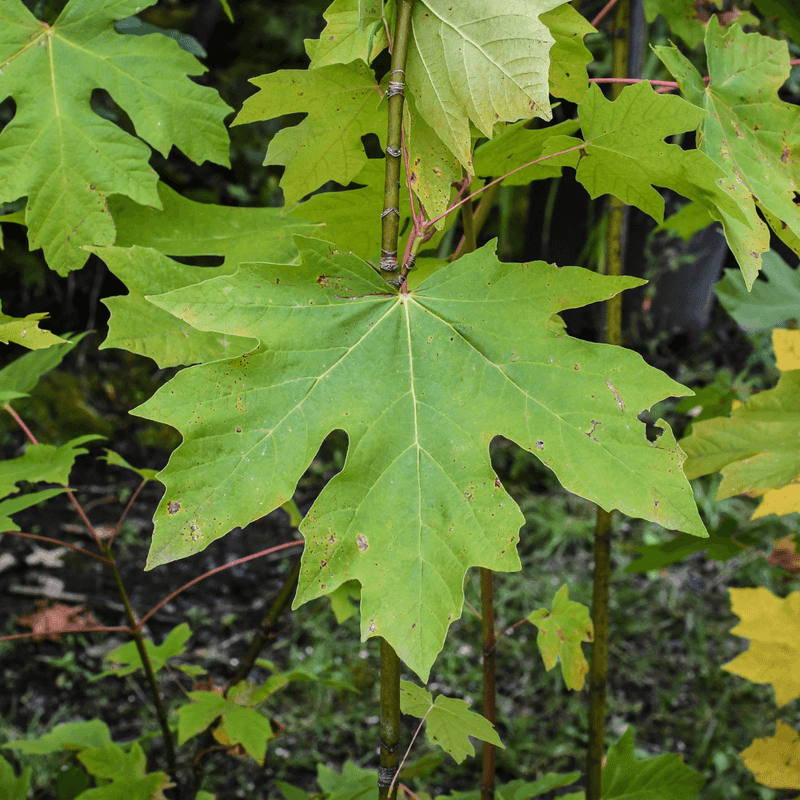
Spend time near a Bigleaf Maple in spring and you will quickly understand why birds love it so much. The large, fragrant flower clusters buzz with insects, and where there are insects, there are birds.
Warblers, vireos, and flycatchers are regular visitors during the flowering season.
This is the largest native maple in North America, and it grows naturally along streams and in moist canyon areas throughout California. The broad canopy provides excellent shade and shelter, making it one of the most welcoming trees for nesting birds in the state.
The winged seed clusters, called samaras, are eaten by grosbeaks and finches. Even the large leaves play a role, as they decompose quickly and support the insect life that ground-feeding birds like thrushes and towhees depend on throughout the year.
Bigleaf Maple puts on a brilliant fall color display, turning golden yellow before the leaves drop. That seasonal drama makes it a beautiful focal point in any California garden, not just a functional one.
It grows best in moist, well-drained soil with access to some shade during hot afternoons. If you have a spot near a water feature or a low area in your yard, Bigleaf Maple will thrive there and bring in a wonderful variety of birds throughout every season.
8. Red Flowering Currant
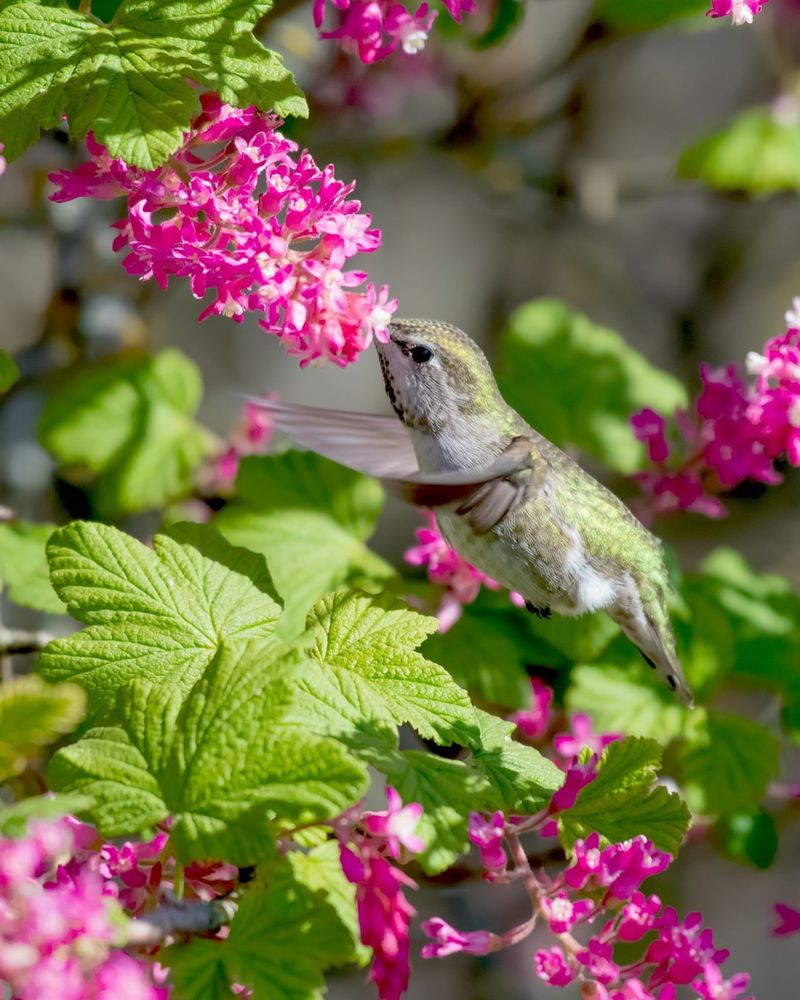
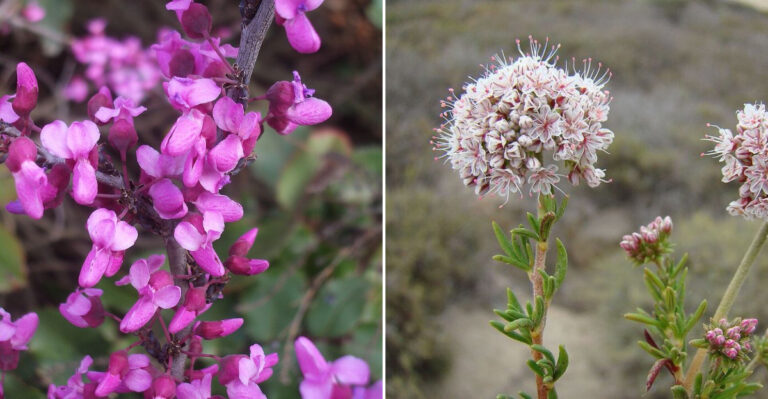
Every spring, Red Flowering Currant puts on one of the most spectacular floral displays of any California native plant. Long, drooping clusters of deep pink to red flowers appear before the leaves fully open, creating a stunning early-season show.
Hummingbirds notice immediately.
Anna’s hummingbirds and rufous hummingbirds time their spring migration routes partly around the blooming of Red Flowering Currant. Planting this shrub or small tree in your California garden essentially puts your yard on a hummingbird map.
That alone makes it worth growing.
Later in the season, small blue-black berries develop and attract robins, thrushes, and waxwings. The berries are not as showy as the flowers, but birds do not care about appearances.
They just want a reliable food source, and this plant delivers one consistently every year.
Red Flowering Currant grows naturally in the coastal ranges and foothills of Northern and Central California. It adapts well to garden conditions, tolerating both sun and partial shade with equal flexibility.
Water regularly during the first season to help it establish a strong root system. After that, it becomes quite drought-tolerant.
It stays compact enough for smaller gardens but can reach six feet tall when given the space and right conditions to grow freely.
9. Coffeeberry
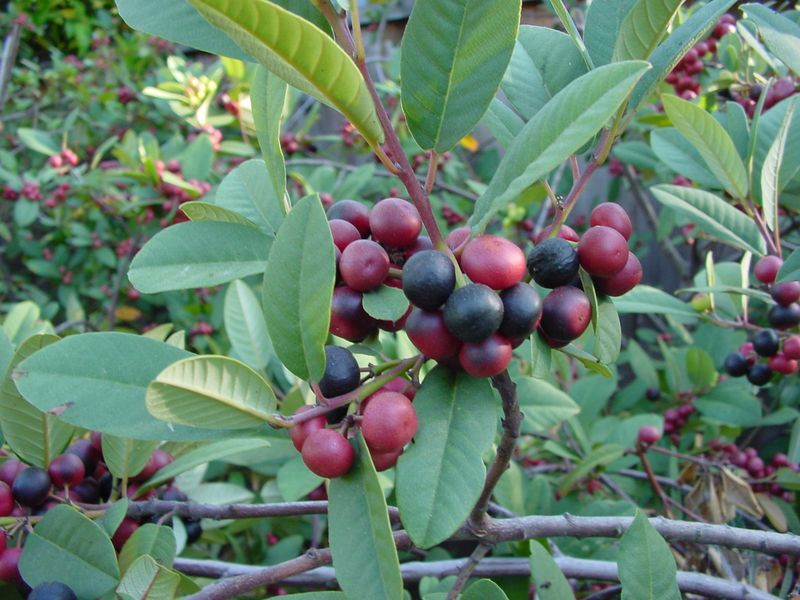
Coffeeberry earns its spot in any California bird garden through sheer reliability. It produces berries in multiple stages of ripeness at the same time, which means there is always something on the menu for birds from late summer well into fall and even early winter.
The berries cycle through green, red, and finally deep purple-black as they ripen. That color range is not just attractive to the human eye.
It signals different levels of ripeness that birds like thrushes, mockingbirds, and waxwings actively seek out at different points in the season.
Coffeeberry is also remarkably tough. It grows naturally across a huge range of California habitats, from coastal bluffs to dry inland slopes.
That adaptability means it fits comfortably into almost any garden situation without much fuss from the gardener.
The dense, evergreen foliage offers excellent year-round cover for small birds. Sparrows and wrens especially appreciate the thick branching as a place to hide, roost, and feel safe from larger predators that cruise California neighborhoods.
Plant it in full sun to partial shade in well-drained soil. Once established, Coffeeberry needs very little supplemental water.
It is a low-maintenance, high-reward plant that consistently delivers bird activity to California gardens across the entire year.
10. Hollyleaf Cherry
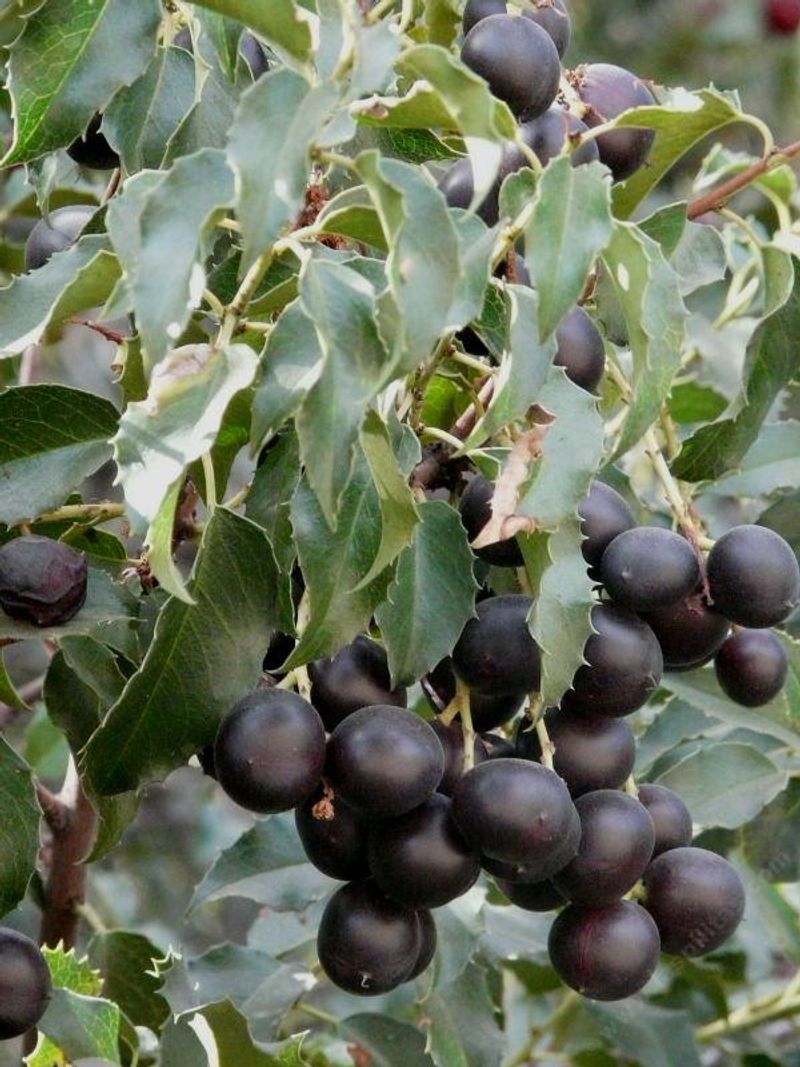
Hollyleaf Cherry is a California native that does not always get the attention it deserves, but birds know exactly where to find it. This handsome evergreen tree produces small, dark cherries in late summer that are a hit with band-tailed pigeons, mockingbirds, and scrub-jays.
The spiny, holly-like leaves give the tree a bold, textured look that works beautifully in Southern California gardens. It can grow as a large shrub or be trained into a small tree depending on how you manage it.
Either way, it becomes a reliable gathering spot for local birds.
Beyond fruit, the dense canopy makes Hollyleaf Cherry one of the best nesting trees available to California garden birds. Its thorny leaves provide extra protection for nesting pairs, giving small songbirds a safer place to raise their young without constant disturbance from predators.
It grows naturally in chaparral and coastal sage scrub habitats across Central and Southern California. That means it is perfectly adapted to the warm, dry conditions that many California gardeners deal with every summer.
Plant in full sun with good drainage and water sparingly once established. Hollyleaf Cherry is a long-lived, drought-tolerant tree that rewards patient gardeners with decades of beauty, shade, and steady bird traffic throughout the year.