These 9 Trees Create Privacy In Georgia Yards Without Fences
Some yards feel a little too open, especially once everything starts growing again in Georgia. One day it looks fine, and then suddenly the view from the street or the neighbor’s side feels a bit too close for comfort.
It is not always about building something big or permanent. Sometimes the right change blends in so naturally, it almost feels like it was always meant to be there.
There is something satisfying about creating a sense of privacy without closing everything off. A yard can still feel open, green, and alive while giving a bit more separation where it counts.
The best part is how quickly things can shift with the right choices in place.
If the goal is a yard that feels calmer, more tucked away, and still looks good through the seasons, there are a few options worth paying attention to right now.
1. Eastern Red Cedar Forms A Dense Screen That Blocks Views Year Round
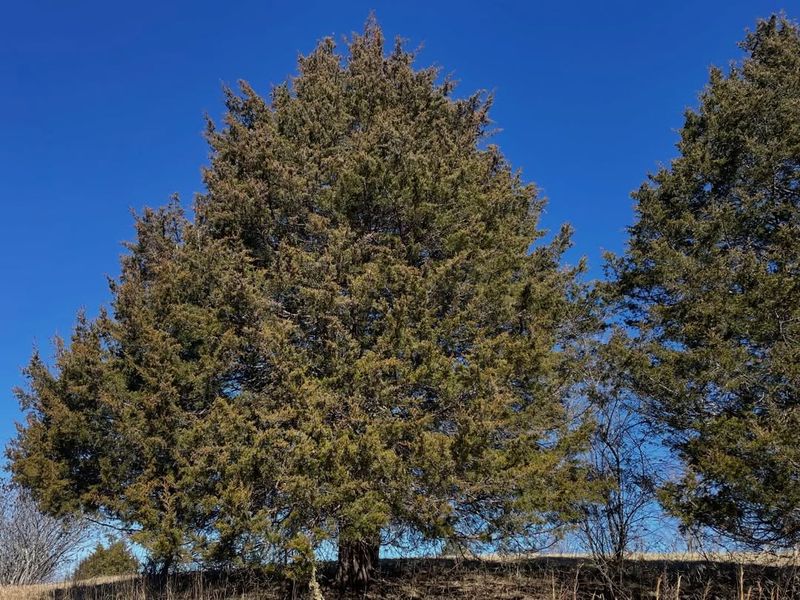
Tough as nails and completely unbothered by Georgia’s clay soil, Eastern Red Cedar earns its place in almost any yard. It handles drought, wind, and poor drainage better than most trees you’ll find at a nursery.
That toughness makes it especially useful along fence lines, roadsides, or property edges where other trees might struggle.
Mature trees reach 30 to 40 feet tall with a full, columnar shape that stays dense from the ground up.
Unlike some evergreens that get leggy at the base over time, Eastern Red Cedar holds its lower branches well, which means the screen stays solid right where you need it most — at eye level.
Plant them about 8 feet apart if you want a tight wall of green. Closer spacing speeds up the visual barrier.
Birds absolutely flock to these trees, especially in winter when the small blue berries ripen. If you’ve got a Georgia property that needs year-round coverage without a lot of fuss, this cedar is one of the most reliable choices you’ll find.
That reliability also means less maintenance over time, with minimal pruning needed to keep its shape intact. Once established, it quietly does its job season after season without demanding much attention in return.
2. Southern Magnolia Creates Privacy With Thick Evergreen Foliage
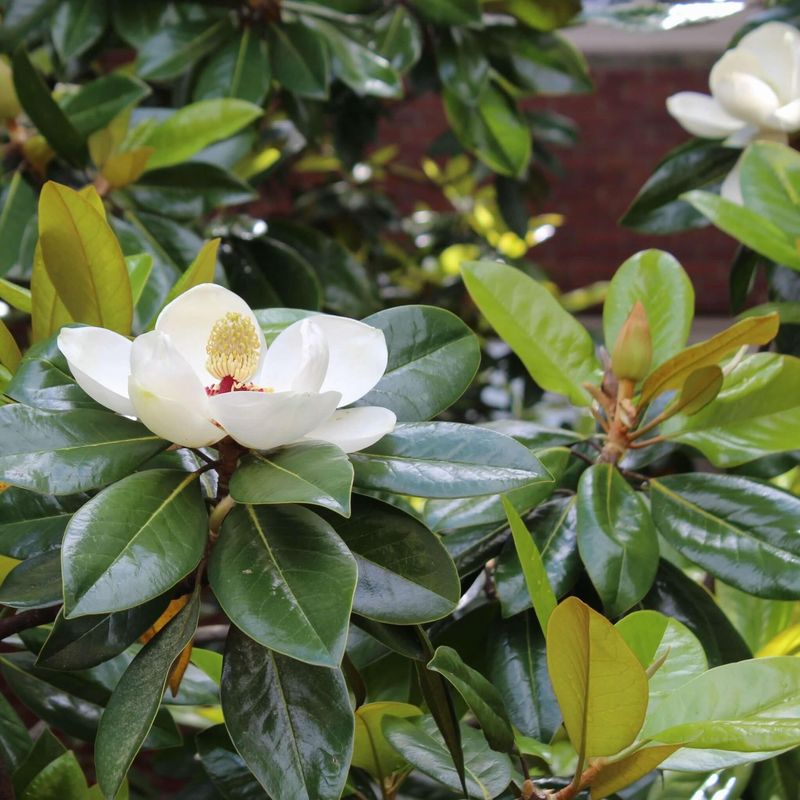
Ask any long-time Georgia gardener what tree defines the South, and Southern Magnolia comes up almost every time. Beyond the iconic white blooms, what makes it genuinely useful for privacy is that wall of thick, waxy, dark green leaves it carries all year long.
Nothing grows through that canopy.
Full-sized trees can push 60 to 80 feet, but smaller cultivars like Little Gem top out around 20 feet and work perfectly for residential lots with limited space. Either way, the foliage is so dense that even in winter, you’re getting solid coverage.
Plant one near a patio or along a side yard, and the difference is noticeable within a couple of growing seasons.
Southern Magnolias do drop leaves year-round rather than all at once in fall, so expect some cleanup. That’s a small trade-off for a tree that looks this good and works this hard.
In Georgia’s heat and humidity, they thrive without much extra attention. Space them 15 to 25 feet apart depending on the cultivar, and you’ll have a living green wall that improves every single year.
3. American Holly Grows Full And Keeps Coverage Through Every Season
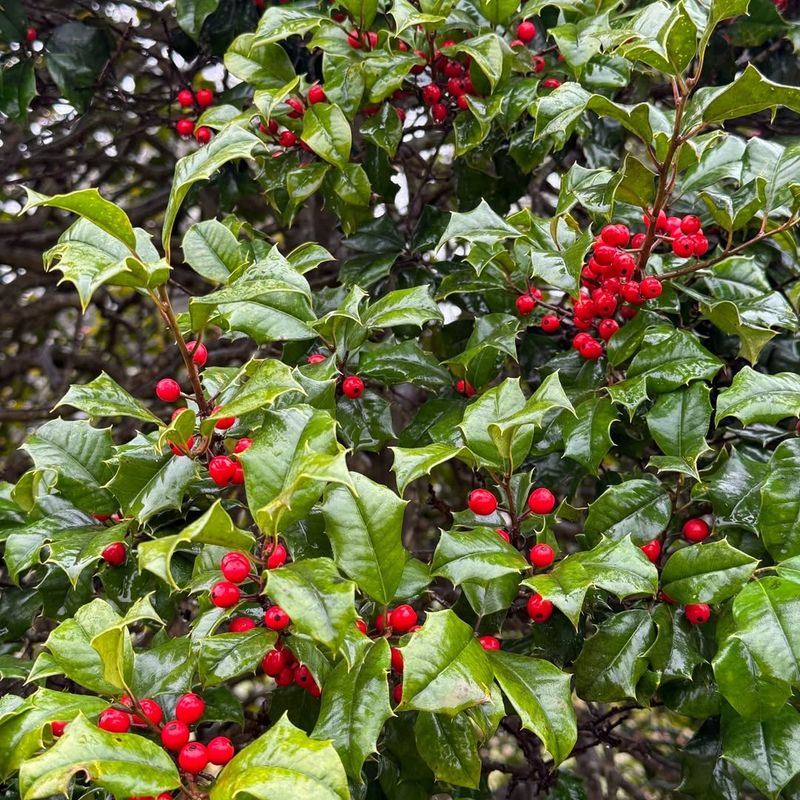
Red berries in December, spiny green leaves in July — American Holly doesn’t take a single month off.
It’s one of the most underrated privacy trees in Georgia, partly because people think of it as a shrub, but a mature American Holly is a real tree that can hit 30 feet tall with a full, dense canopy.
What sets it apart from other privacy options is how well it fills in at the bottom. The branches stay loaded with foliage from the ground up, so there’s no gap at the base where a neighbor can see through.
That lower coverage is exactly what most homeowners are looking for when they skip the fence.
Holly does best with at least one male plant nearby if you want berries, but for pure privacy purposes, a row of females works just fine. Plant them 6 to 10 feet apart along a property line and they’ll knit together into a serious green wall over time.
Georgia birds treat these trees like a buffet in winter, which is a nice bonus. Few trees handle the combination of Georgia heat, humidity, and clay soil as reliably as American Holly does.
4. Nellie R Stevens Holly Fills In Quickly And Makes A Strong Living Screen
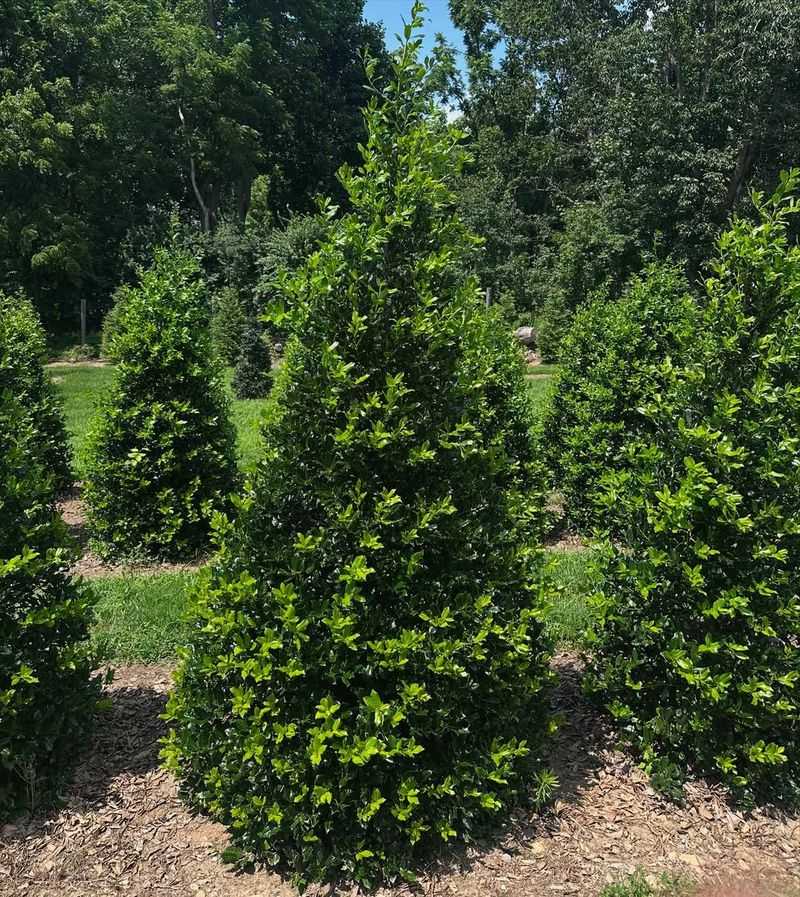
Few trees close off a sightline as fast as Nellie R Stevens Holly. It pushes 3 to 4 feet of new growth per year under good conditions, which is genuinely impressive for an evergreen that also looks polished and well-shaped.
In Georgia yards, it fills in so quickly that most homeowners notice a real difference within the first full growing season.
It grows in a naturally pyramidal shape, staying dense and full without much pruning. That clean form makes it look intentional rather than wild, which matters if you’re in a neighborhood where appearances count.
Planted in a row, these hollies create a structured green wall that looks like it was designed, not just thrown in the ground.
Mature height lands around 15 to 25 feet, which is enough to block second-story windows and elevated decks. Spacing them 5 to 6 feet apart gives you faster coverage.
Red berries show up in fall and hang on through winter, giving you a bit of color during Georgia’s quieter months. Nellie R Stevens tolerates partial shade better than most fast-growing evergreens, so it works even in yards where full sun isn’t guaranteed all day.
5. Leyland Cypress Grows Fast And Builds Privacy In A Short Time
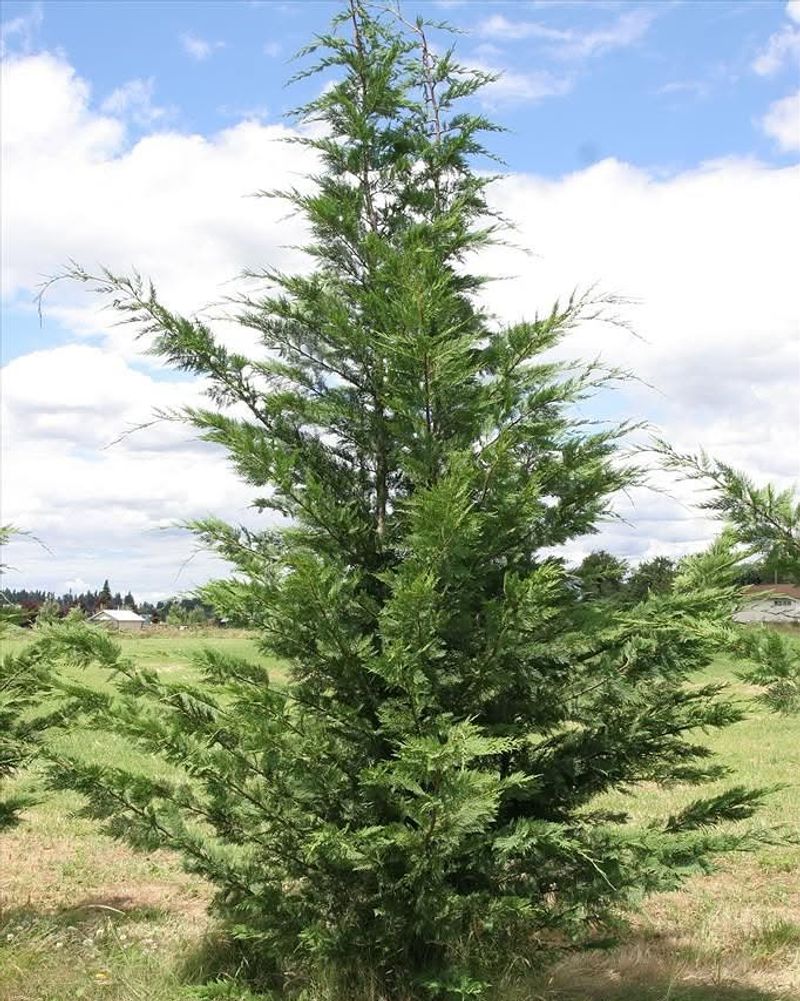
Speed is Leyland Cypress’s biggest selling point, and it delivers. Under Georgia growing conditions, expect 3 to 4 feet of upward growth per year when the tree is young and well-watered.
A row of Leylands planted at 6 feet tall can become a 20-foot wall of green in just a few years.
The feathery, soft texture of the foliage gives it a slightly different look than most privacy trees — less formal than arborvitae, more billowy and natural. Mature trees reach 40 to 60 feet, so give them room to grow without crowding structures or power lines.
Spacing of 6 to 8 feet between trees gives each one room to fill out while still creating a tight screen.
One thing worth knowing: Leyland Cypress can develop canker or root rot issues if planted in poorly drained soil or too close together. Georgia’s red clay can hold water, so amend the planting area or choose a site with decent drainage.
With proper spacing and good soil prep, it can grow quickly, but many Georgia homeowners have moved away from Leyland Cypress due to disease issues over time.
6. Green Giant Arborvitae Creates A Tall, Thick Wall Of Green
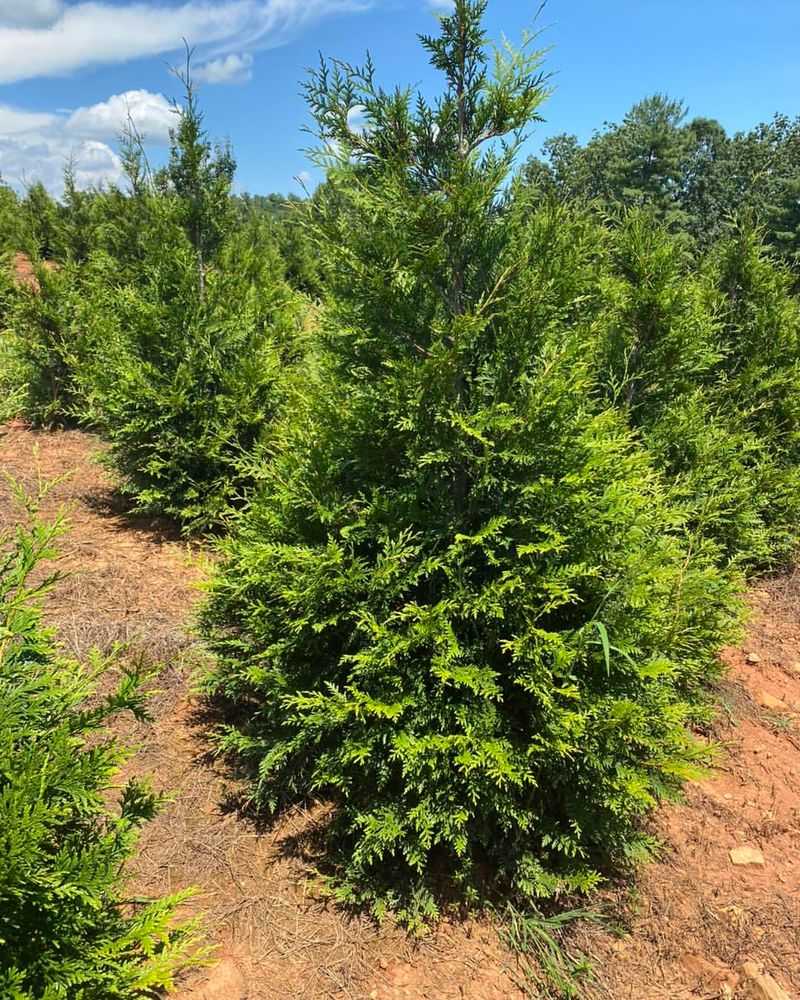
Green Giant Arborvitae has become the go-to privacy tree for Georgia homeowners who want height, density, and reliability all in one package.
Growing 2 to 3 feet per year, it reaches 40 to 60 feet at maturity with a naturally symmetrical pyramidal shape that never needs much shaping or trimming to look sharp.
Unlike some fast-growing trees that get floppy or thin as they age, Green Giant stays thick and full from top to bottom. The rich, deep green color holds through winter without bronzing or browning, which is a common complaint with other arborvitae varieties.
In Georgia, where winters are mild enough to keep evergreens looking their best, that color retention really shows.
Clay soil adaptability is one reason this tree performs so well across Georgia. It handles the region’s heavy soils better than many competing species.
Plant them 5 to 6 feet apart for a tight privacy hedge, or space them 8 to 10 feet apart if you want each tree to develop its full natural spread.
Either way, within three to five years, you’ll have a wall of green that completely eliminates sightlines and adds serious structure to your landscape.
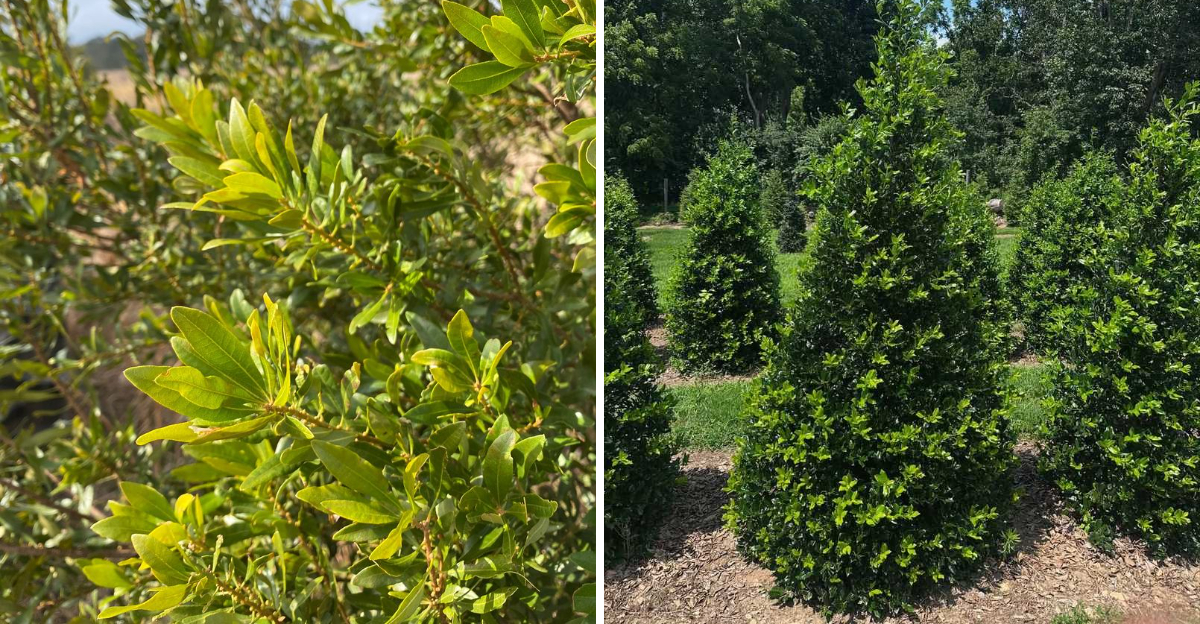
7. Wax Myrtle Fills Space Fast And Works Well As A Natural Screen
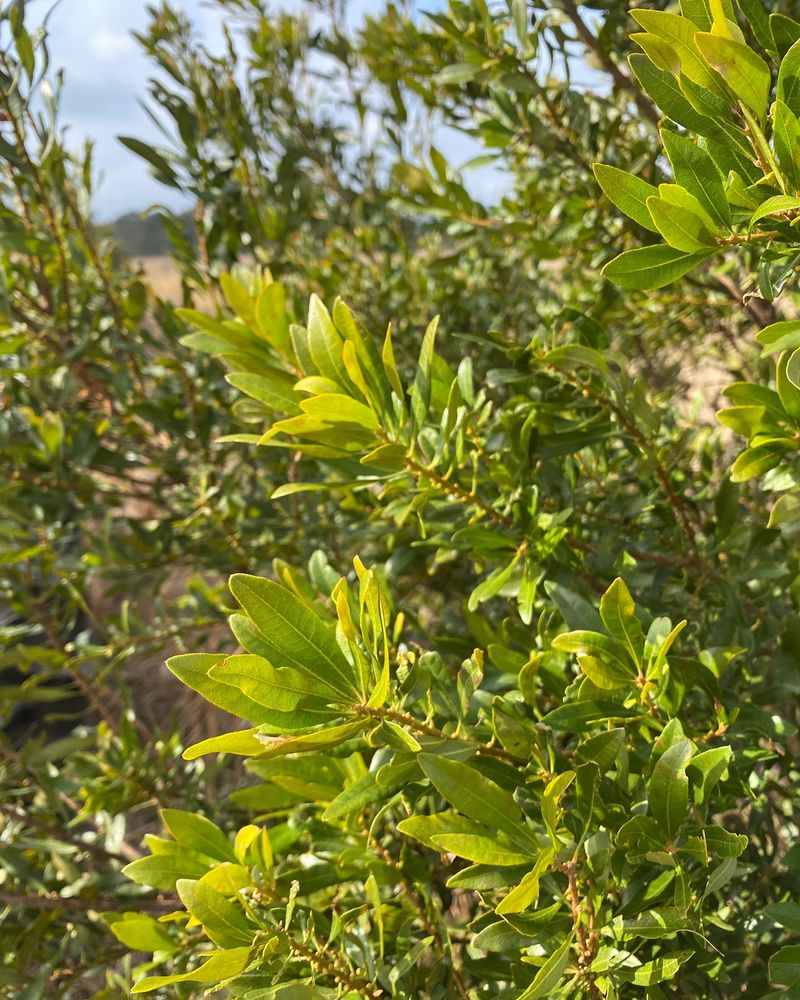
Walk past a Wax Myrtle on a warm Georgia afternoon and you’ll catch that sharp, clean fragrance from the leaves — it’s one of those small details that makes this tree feel genuinely special.
Beyond the scent, Wax Myrtle earns its spot as a privacy plant because it grows fast, stays evergreen, and handles Georgia’s humidity without complaint.
It typically grows 10 to 20 feet tall with a loose, multi-stemmed form that fills horizontal space quickly.
That spreading habit makes it better suited for wider borders than narrow side yards, but in the right spot, a row of Wax Myrtles creates a thick, airy screen that feels natural rather than structured.
It’s not a formal hedge — it’s more like a living thicket that happens to block the view.
Wax Myrtle handles wet soil, dry soil, sandy coastal conditions, and Georgia’s red clay with equal ease. Deer tend to leave it alone, which matters in suburban and semi-rural Georgia yards.
Prune it occasionally to keep it from sprawling too wide, or let it go natural for a wilder, more relaxed look. Either way, it fills in fast and earns its place in the landscape quickly.
8. Eastern Redbud Adds Light Privacy With Seasonal Color
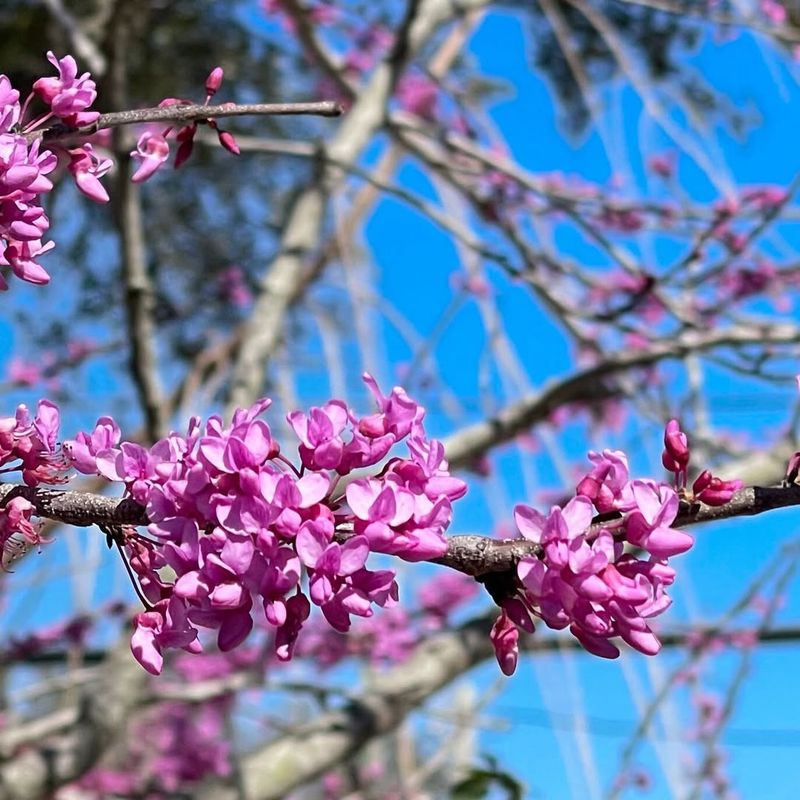
Redbud is the tree that stops people in their tracks every March in Georgia. Before the leaves even open, the branches explode in bright pink-purple flowers that cover every twig from trunk to tip.
It’s one of the most dramatic spring displays of any tree in the Southeast, and that alone makes it worth planting.
As a privacy tree, Redbud works differently than the others on this list. It’s deciduous, so winter coverage is minimal.
But from late spring through early fall, the large heart-shaped leaves fill in surprisingly well and create a soft, dappled screen that’s perfect for light filtering rather than full blockout.
Pair it with an evergreen backdrop and it adds color and texture to what might otherwise be a plain green wall.
Eastern Redbud tops out at 20 to 30 feet and spreads wide, so it works best as a mid-layer tree rather than a standalone screen. Plant it in front of taller evergreens to add seasonal interest and soften the edge of a privacy planting.
Georgia’s climate suits it perfectly — it handles summer heat well and puts on a flower show every spring that makes it one of the most rewarding trees you can grow in this state.
9. Loblolly Pine Grows Tall And Helps Break Up Open Sightlines
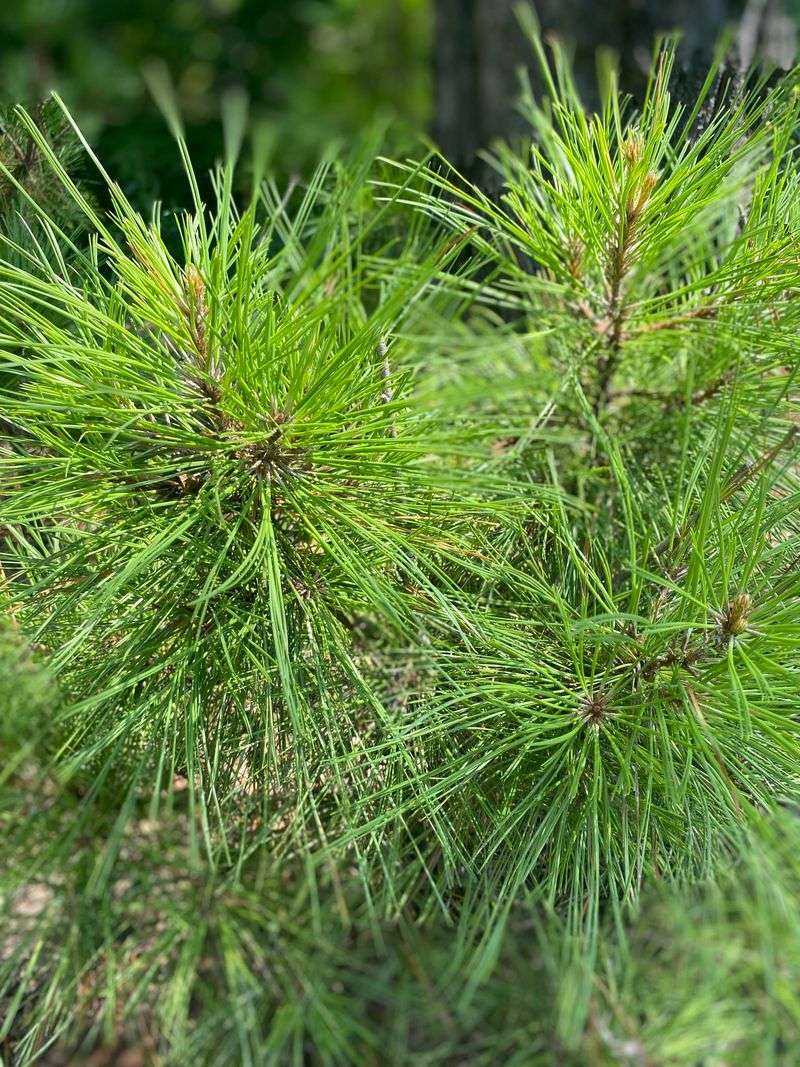
Loblolly Pine is everywhere in Georgia, and there’s a good reason for that. It grows faster than almost any other pine in the Southeast, easily putting on 2 to 3 feet per year under decent conditions.
Planted in a row along an open property line, a stand of Loblollies starts intercepting sightlines within just a few years.
At maturity, these pines push 60 to 90 feet tall with full, layered canopies that do serious work blocking elevated views, second-floor windows, and distant sightlines across open lots.
Lower branches thin out over time as the tree matures, so Loblolly works best as a high canopy screen rather than a ground-level privacy wall.
Combine it with shorter evergreen shrubs below for full coverage from ground to sky.
Georgia’s sandy and loamy soils suit Loblolly Pine extremely well, and it tolerates the state’s wet winters and dry summers without much fuss. It also acts as a windbreak, which cuts down on noise and wind exposure across open backyards.
Space them 10 to 15 feet apart for a natural-looking grove, or tighten the spacing to 6 to 8 feet if faster canopy closure is the priority. Either way, Loblolly delivers scale and presence that few other trees can match.