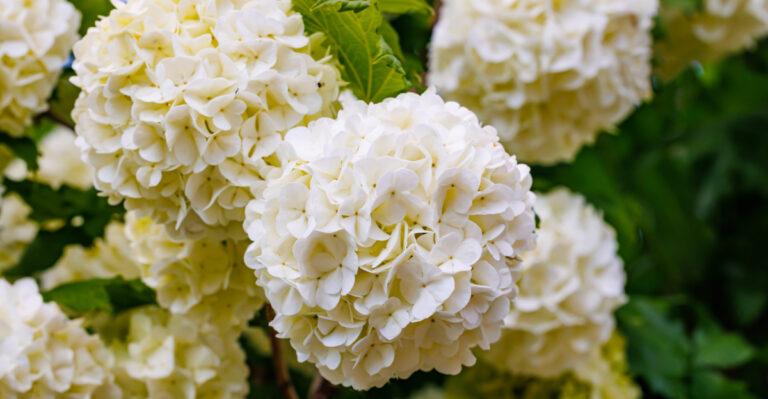
These White-Flowering Climbers Add Bright Contrast In Georgia Gardens
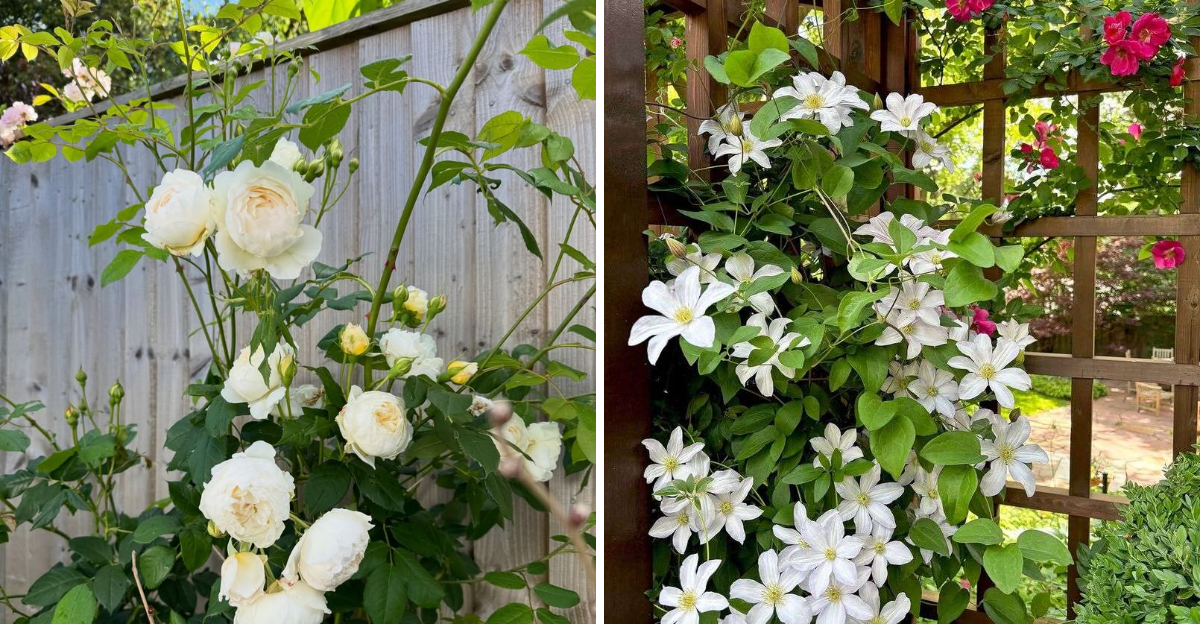
White blooms stand out in Georgia gardens in a way few colors can match, especially once deeper greens and stronger tones take over during the season.
A climbing plant with clean white flowers can shift the entire look of a fence, trellis, or entry area without needing a full redesign.
Color alone is not what makes the difference. Placement, growth habit, and how the plant fills vertical space all play a role in how noticeable that contrast becomes over time.
Some climbers stay controlled and balanced, while others can take over or lose their shape if not chosen carefully. The right ones hold their form and keep that crisp look through changing conditions.
Once those plants settle in, the contrast feels natural and steady, and the garden gains a cleaner, more defined look that lasts well beyond the first blooms.
1. Confederate Jasmine Covers Structures With Fragrant White Blooms
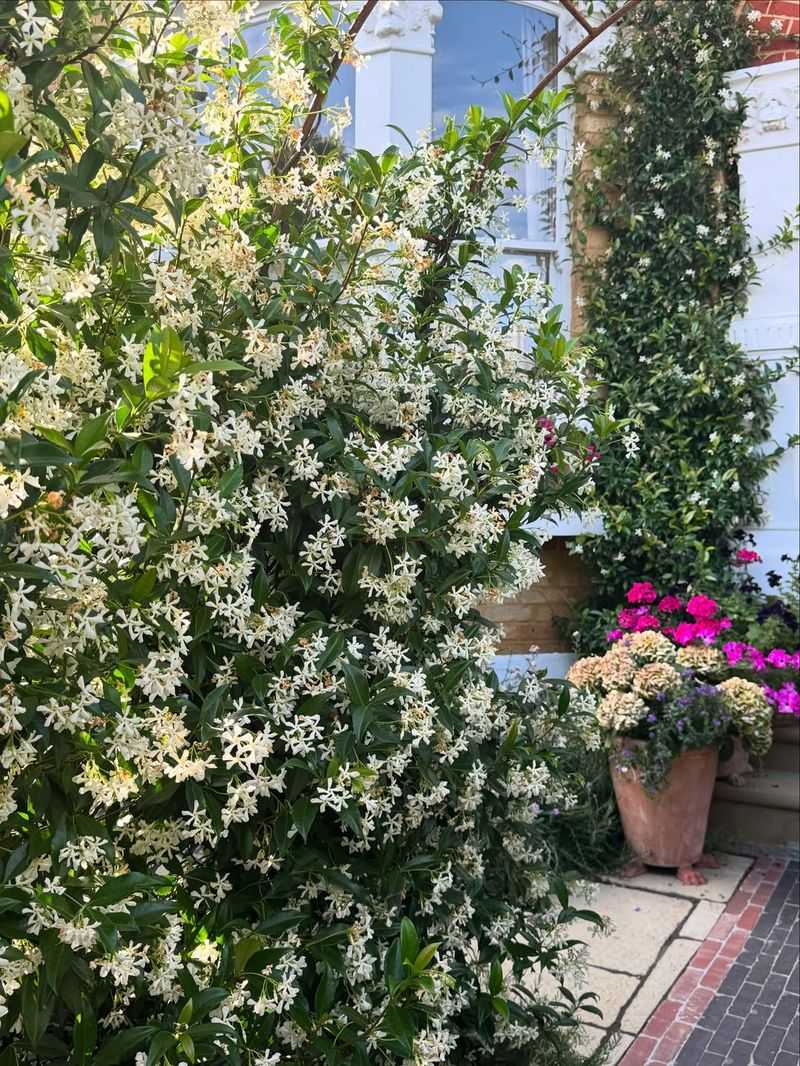
Few vines fill a Georgia garden with scent the way Confederate jasmine does in late spring. The small, pinwheel-shaped white flowers open up in clusters, and on a warm evening, the fragrance drifts across the yard in a way that’s hard to ignore.
It’s not a subtle plant when it blooms.
Confederate jasmine, known botanically as Trachelospermum jasminoides, is an evergreen twining vine that holds its dark green leaves year-round in most of Georgia. It’s well-suited to USDA zones 8 and above, which covers much of the state.
In colder parts of north Georgia, a hard freeze can damage the foliage, though the roots usually survive and push new growth in spring.
It grows well in full sun to partial shade, which gives Georgia gardeners a lot of flexibility. On a fence, trellis, or pergola, it can spread several feet wide over a few seasons.
Pruning right after flowering helps keep the size manageable without cutting off next year’s buds.
Soil drainage matters more than soil richness for this vine. It can handle average garden soil as long as water doesn’t pool around the roots.
Watering consistently during the first season helps it settle in, and after that, it typically handles dry spells reasonably well once the root system is established.
It can also be trained as a dense groundcover, where it spreads outward and forms a thick mat that helps suppress weeds over time.
2. Climbing Hydrangea Produces Soft White Flowers In Shade
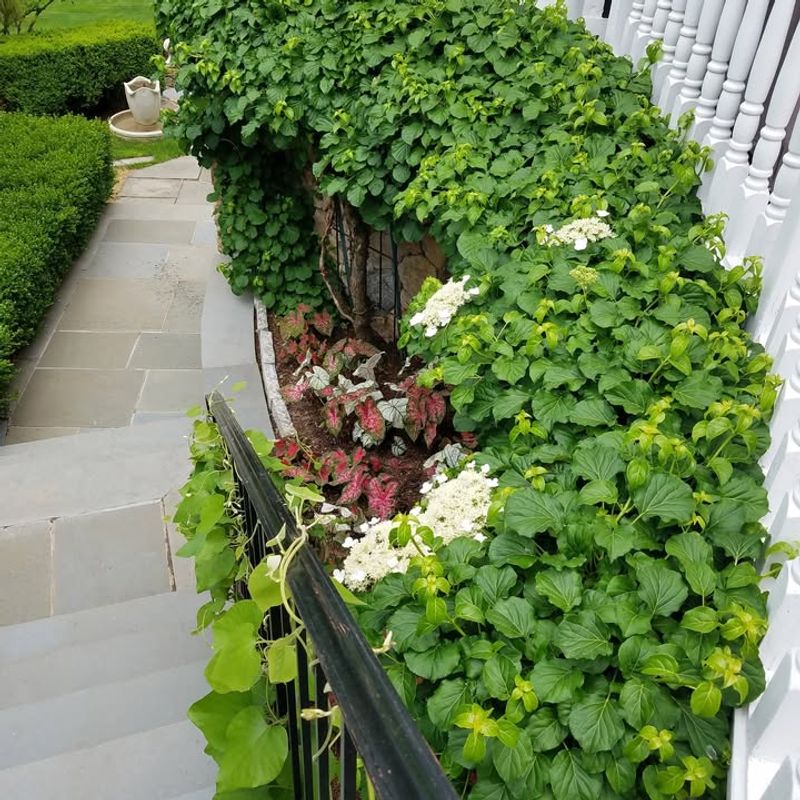
Shady spots in Georgia gardens can feel like a challenge, but climbing hydrangea actually prefers those conditions.
Hydrangea anomala subsp. petiolaris is one of the few true climbing vines that blooms reliably without full sun, producing wide, flat-topped white flower clusters that look soft and airy against a wall or fence.
The blooms appear in late spring to early summer, usually around May or June in most of Georgia. Each flower head has a ring of larger white petals surrounding a center of smaller fertile flowers, giving it a delicate, lacecap look.
The contrast between those white blooms and the dark green foliage is genuinely striking.
Unlike twining vines, climbing hydrangea uses aerial rootlets to attach directly to surfaces. Brick, stone, and rough wood work well.
Smooth painted surfaces aren’t ideal since the rootlets need texture to grip. Keep in mind that it can take a few years before flowering begins in earnest, so patience is part of growing this one.
In Georgia, it performs best in zones 6 through 8, which covers a wide stretch of the state from the mountains down through the piedmont. Afternoon shade is especially helpful during Georgia’s hottest months, when intense heat can stress the foliage.
Consistent moisture through summer keeps it looking its best.
Once established, it becomes quite long-lived and can stay in place for decades without needing to be replaced.
3. White Clematis Adds Large Bright Blooms Vertically
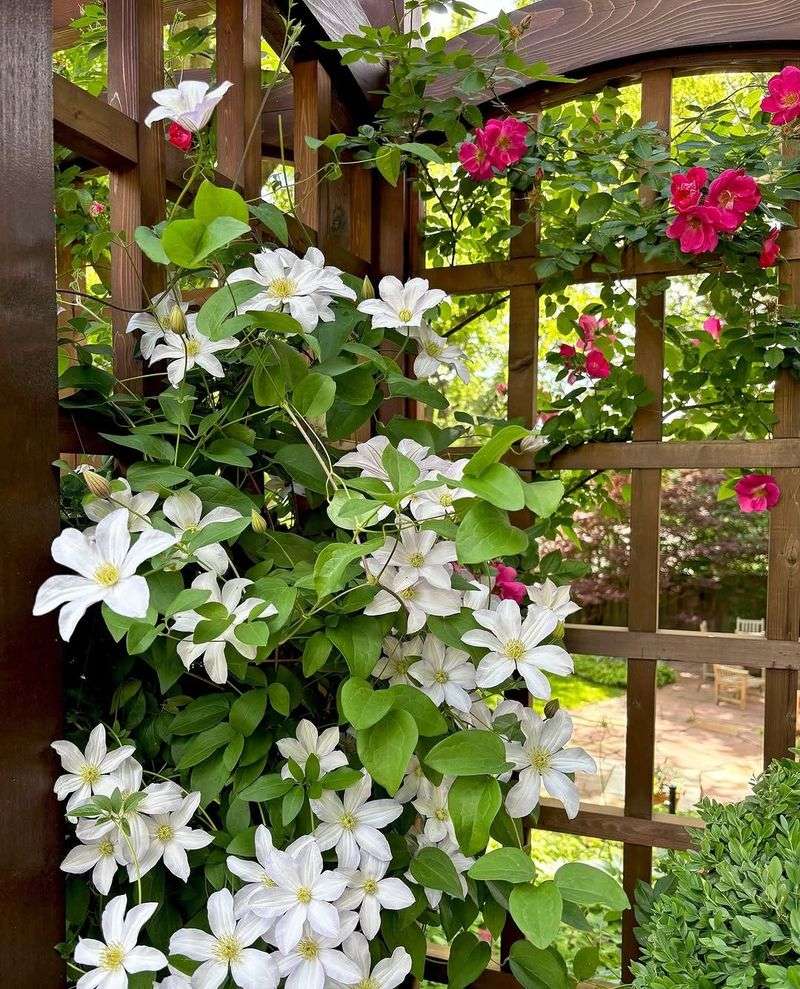
Big, flat, white flowers on a vertical surface have a way of stopping people mid-step, and that’s exactly what large-flowered white clematis varieties can do in a Georgia garden.
Varieties like ‘Henryi’ or ‘Duchess of Edinburgh’ produce blooms that can reach four to six inches across, which is a lot of visual punch for a vine.
Clematis grows best when the roots stay cool and the top of the plant reaches for sun.
In Georgia, that means planting in a spot where the base of the vine gets some shade from nearby plants or a light mulch layer, while the upper growth climbs into full or partial sunlight.
Hot afternoon sun can bleach the blooms, so east-facing spots often work better than west-facing ones.
Most large-flowered white clematis varieties are suited to USDA zones 4 through 9, so they handle Georgia’s climate across much of the state. Pruning depends on the specific variety, and getting that right matters.
Pruning at the wrong time can remove the buds that were set to bloom, so checking the variety’s pruning group before cutting is worth the effort.
A sturdy trellis or wire support is helpful since clematis climbs by wrapping its leaf stems around thin supports. Heavy wood or thick rods don’t work as well as wire or narrow lattice.
Fertilizing lightly in spring encourages strong growth without pushing excessive leafy growth at the expense of flowers.
4. Moonflower Opens Large White Blooms In The Evening
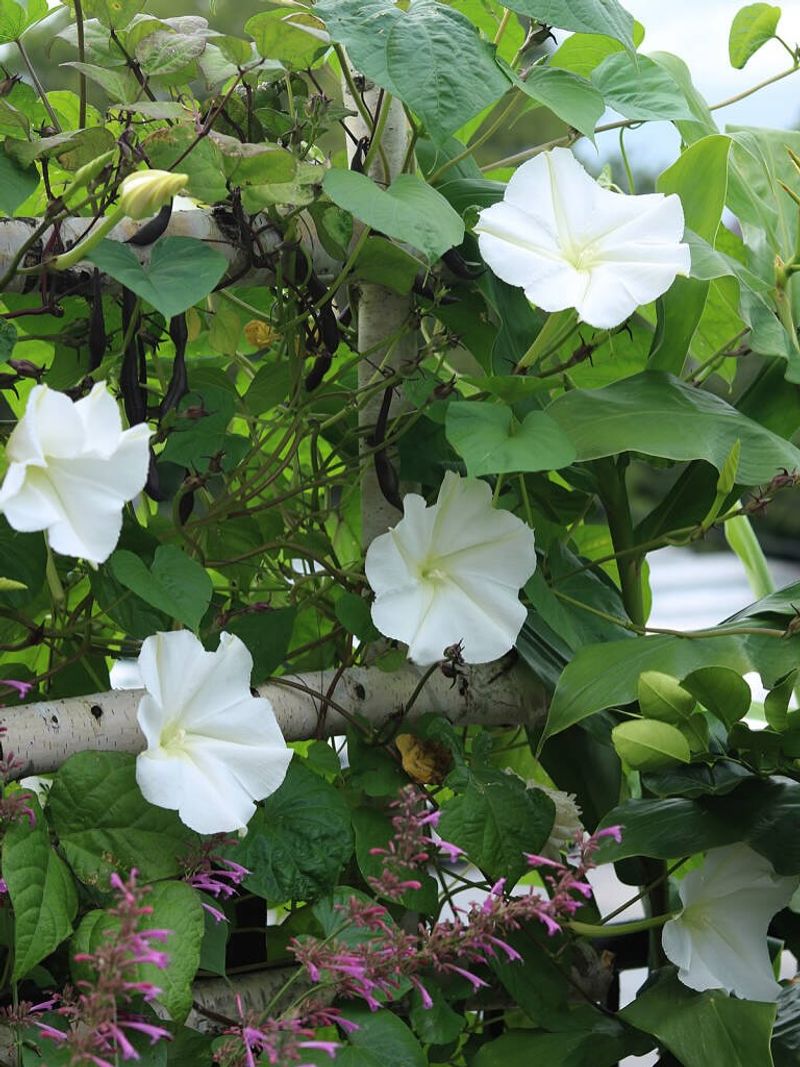
Moonflower adds a different kind of interest to a Georgia garden, especially once the sun sets and most plants fade into the background.
The large white blooms open in the evening and stay visible through the night, creating a soft, glowing effect against fences, trellises, and porch railings.
This vine grows quickly in warm conditions and handles Georgia heat well once established. Planted in full sun, it builds strong growth during the day, even though the flowers themselves wait until evening to open.
That contrast makes it stand out compared to typical daytime bloomers.
Well-drained soil is important early on, especially during spring planting. Consistent watering during the first few weeks helps the roots establish, after which the plant becomes easier to manage through the hotter months.
It still benefits from regular moisture, but it does not collapse quickly if conditions fluctuate.
Because moonflower grows fast, giving it a sturdy support from the start keeps it from tangling or spreading unevenly. A trellis or fence allows the vine to climb cleanly and show off its blooms more effectively.
In Georgia, it performs best through summer, continuing to produce flowers during warm nights when many other climbers slow down. That nighttime bloom cycle adds a different layer to the garden, keeping it visually active even after daylight fades.
5. White Climbing Roses Bring Classic Blooms
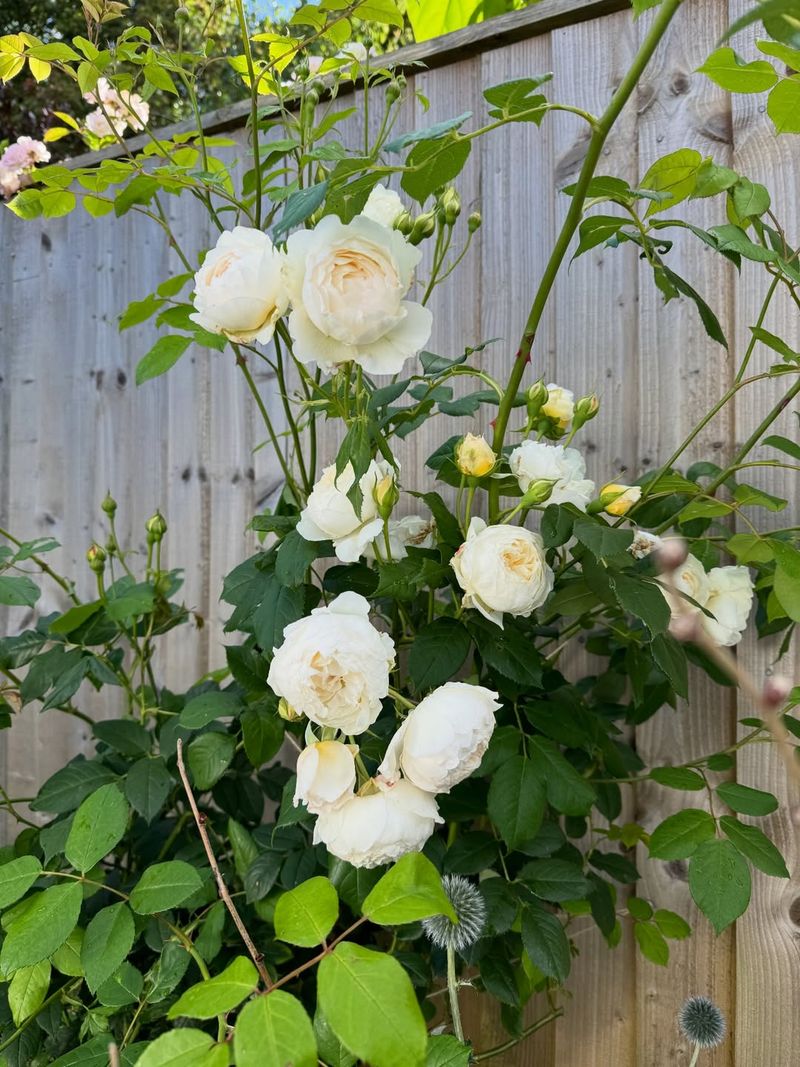
Climbing roses have been growing on Georgia fences and arbors for generations, and the white varieties carry a kind of timeless appeal that holds up season after season.
Varieties like ‘New Dawn’ (which leans blush but opens nearly white), ‘Iceberg,’ or ‘White Dawn’ can reach impressive lengths on a sturdy support over several seasons.
White climbing roses generally bloom most heavily in spring, with some varieties pushing additional flushes through summer and into fall. Repeat-blooming types are worth seeking out if you want more than one big show per year.
Deadheading spent flowers on reblooming varieties helps encourage the next round of buds.
Georgia’s heat and humidity do create some disease pressure for roses, particularly black spot and powdery mildew. Choosing varieties labeled as disease-resistant reduces but doesn’t eliminate that risk.
Good air circulation around the canes and avoiding overhead watering in the evening are practical steps that help keep foliage healthier through the season.
Full sun, at least six hours per day, gives climbing roses the best chance of blooming well. Rich, well-drained soil and consistent watering during dry stretches support strong growth.
Fertilizing in early spring and again after the first bloom flush is a common approach among Georgia rose growers. Canes need to be tied to supports since roses don’t climb on their own the way twining vines do.
6. Sweet Autumn Clematis Covers Vines With White Flowers
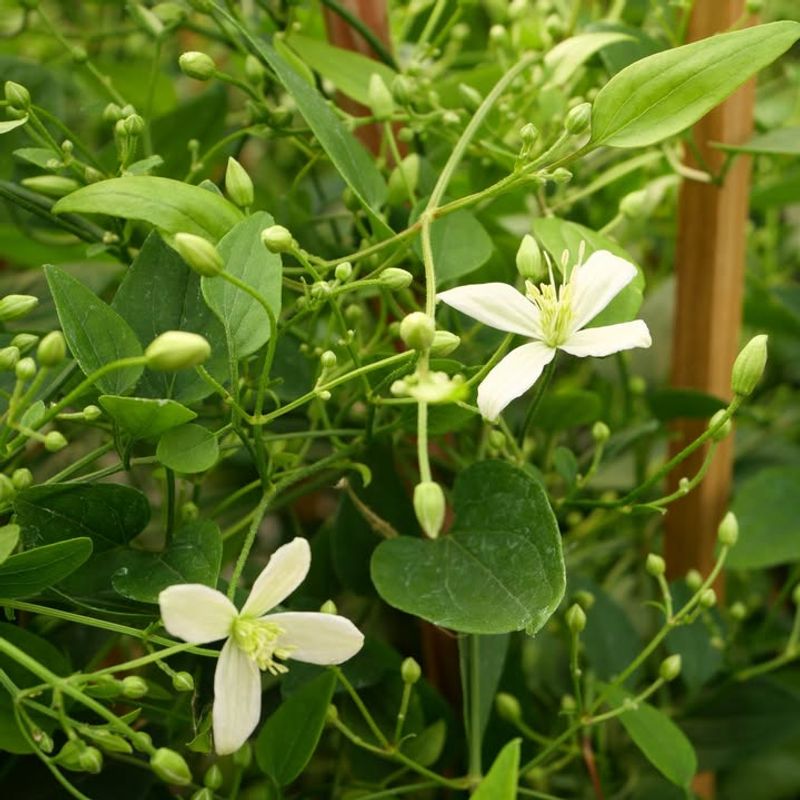
When most summer bloomers are winding down in Georgia, sweet autumn clematis is just getting started. Clematis terniflora waits until late summer and early fall to open its flowers, and when it does, the vine can be blanketed in small white blooms from top to bottom.
It’s a genuinely useful plant for filling that late-season gap.
Each individual flower is small, about an inch across, with four white petals arranged in a simple star shape. What makes the display impressive is sheer quantity.
A mature vine in a good spot can produce hundreds of flowers at once, and the combined fragrance is light and pleasant without being heavy.
Sweet autumn clematis grows vigorously in Georgia’s climate, which is worth keeping in mind before planting. It spreads by seed readily, and seedlings can pop up in nearby beds the following spring.
Cutting the spent flower heads before seeds fully mature helps reduce unwanted spread. Some Georgia gardeners treat it as a plant that needs active management rather than a set-it-and-forget-it vine.
It handles full sun to partial shade and adapts to a wide range of soil types. USDA zones 4 through 9 cover its hardiness range, so it grows across virtually all of Georgia.
Cutting the vine back hard in late winter or early spring keeps growth tidy and encourages fresh new stems that will carry that fall flower display.
7. Evergreen Clematis Produces Early White Blooms
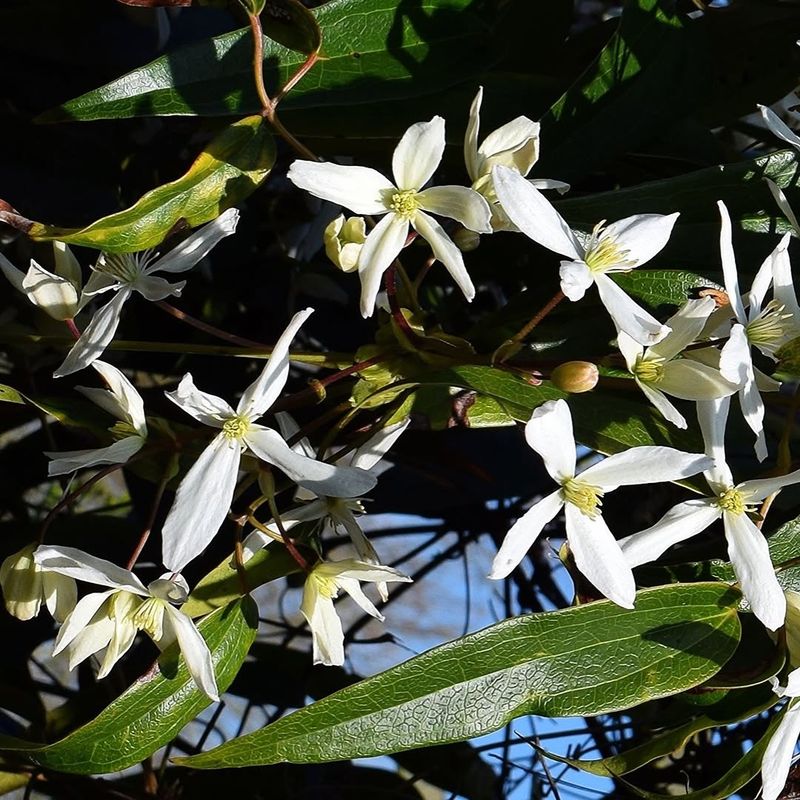
Spring in Georgia can arrive earlier than most people expect, and evergreen clematis is one of the first vines to mark that shift.
Clematis armandii blooms in late winter to early spring, often as early as February or March in warmer parts of Georgia, producing clusters of white flowers with a sweet, vanilla-like scent.
The foliage is part of what makes this vine distinctive. Long, narrow, glossy leaves stay on the vine year-round and give the plant a bold, almost tropical look even when it’s not in flower.
Against a fence or trellis, the leaf texture alone draws attention before the blooms even appear.
Evergreen clematis is suited to USDA zones 7 through 9, which fits most of Georgia outside the higher elevations of the northern mountains. It prefers a sheltered spot with some protection from cold north winds, which can damage the foliage in a hard winter.
East- or south-facing walls and fences tend to work well in Georgia gardens.
Pruning this one requires some care. Because it blooms on old wood, cutting it back hard after flowering, rather than in late fall or winter, protects next season’s buds.
Light shaping right after bloom is the standard approach. It grows vigorously in a warm Georgia spring, so giving it a strong support structure from the start prevents tangled, hard-to-manage growth later on.
8. White Wisteria Creates Cascading White Blooms
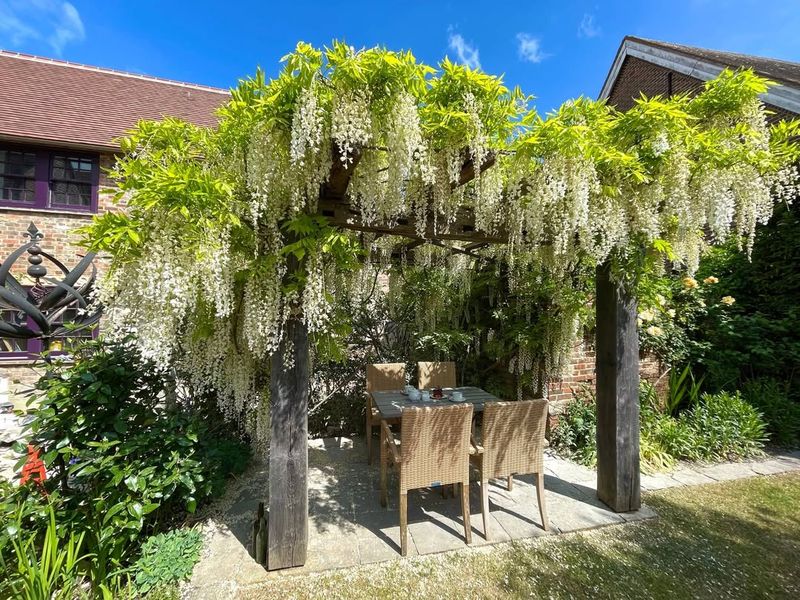
Wisteria with white flowers is a striking alternative to the more common purple varieties, and in a Georgia garden, the long pendulous flower clusters hanging from a pergola or arbor can create a genuinely dramatic spring display. ‘
Amethyst Falls’ and ‘Nivea’ are examples of varieties that lean white or near-white rather than lavender.
White wisteria blooms in spring, typically April in much of Georgia, with flower clusters that can hang eight to twelve inches long depending on the variety.
American wisteria species, like Wisteria frutescens, tend to be more manageable in size than the Asian species and are generally a better fit for residential gardens where space is limited.
Wisteria is a vigorous grower, and that’s not a warning to dismiss lightly. Without regular pruning, it can get large enough to put stress on wooden structures or shade out nearby plants.
Pruning twice a year, once in summer after flowering and again in late winter, keeps growth in check and helps promote better flowering the following season.
Full sun is important for good bloom production. Wisteria in too much shade tends to produce mostly leaves with few flowers.
Soil that drains well and isn’t overly rich works better than heavily amended beds, since high nitrogen can push leafy growth at the expense of blooms. Georgia’s warm springs generally suit wisteria well across zones 5 through 9.