These White Flowering Plants Keep Arizona Landscapes Bright
Arizona sun can wash out a garden fast. Pale blooms fade, delicate petals scorch, and what looked crisp in spring can look tired by June.
White flowers are especially tricky here because they either glow beautifully against desert backdrops or burn out under relentless light.
The difference comes down to choosing plants that handle heat, reflected light, and dry soil without losing their shape. In Arizona landscapes, the right white bloom does more than add contrast.
It cools the look of gravel yards, softens stucco walls, and stands out long after other colors start to fade.
These white flowering plants hold their brightness and structure even through the toughest desert stretches.
1. Bush Morning Glory Thrives In Arizona Sun With Silvery Foliage And Pure White Blooms
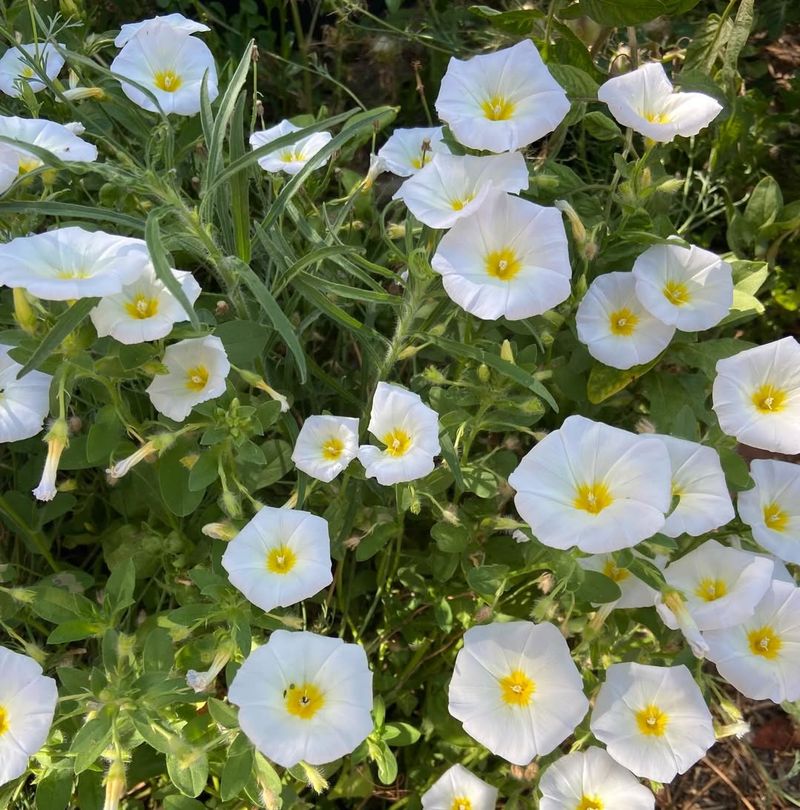
Convolvulus cneorum looks nothing like the invasive vine that takes over fences. This Mediterranean native forms a compact mound about two feet tall and wide, covered in silvery leaves that shimmer in Arizona sunlight.
The white trumpet flowers appear from spring through fall, opening fresh each morning and closing by afternoon.
Plant it in full sun where reflected heat bounces off walls or pavement. The silver foliage actually helps the plant stay cool by reflecting sunlight rather than absorbing it.
Water deeply once a week during summer, less in winter when growth slows down. Good drainage matters more than anything else with this plant.
The flowers attract bees and butterflies throughout the day while they’re open. Prune lightly after bloom cycles to keep the shape tidy and encourage more flowers.
In Phoenix and Tucson, this plant performs better than many native options because it adapted to hot, dry Mediterranean summers similar to Arizona conditions.
Expect some leaf drop during extreme heat over 110 degrees, but the plant bounces back when temperatures moderate. Pair it with purple trailing lantana or red salvia for color contrast that makes the white blooms pop even more against your landscape.
Avoid overwatering, especially in heavy soil, since soggy roots can quickly lead to decline. A light trim in early spring helps refresh the plant and remove any winter damage before new growth begins.
Once established, it becomes a low-maintenance evergreen accent that handles Arizona heat with very little attention.
2. White Gaura Brings Airy White Flowers That Handle Desert Heat
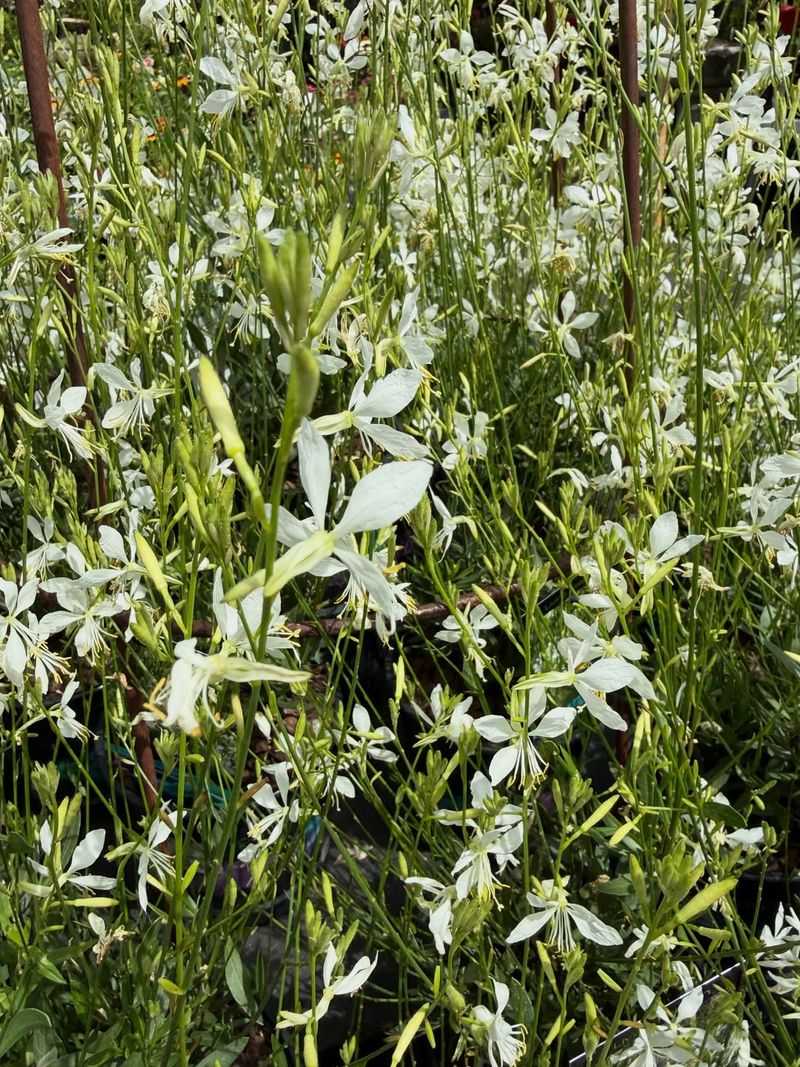
Gaura lindheimeri sends up thin stems covered in small white flowers that flutter like butterflies in the slightest breeze. The plant reaches three feet tall and spreads about two feet wide, creating an airy texture that softens hard landscape edges.
Blooms appear nonstop from April through November in Arizona gardens.
Full sun and terrible soil suit this plant perfectly. It actually struggles in rich, amended soil that holds too much moisture.
Plant it in native caliche or rocky ground and water every five to seven days once roots establish. Too much water causes root problems faster than drought stress.
The wispy appearance tricks people into thinking gaura needs babying, but this plant laughs at 115-degree days. Flowers open white and age to pink, giving you two colors on the same plant.
Cut stems back by half in late winter to promote bushier growth and more flower stems.
Hummingbirds visit the flowers regularly despite their small size. The constant movement from wind makes gaura perfect for breaking up static plantings of round shrubs.
In Prescott and Flagstaff, treat it as an annual because hard freezes damage the crown. Lower desert areas from Casa Grande to Yuma see it return year after year without protection.
3. White Cloud Texas Sage Produces Bright White Blooms After Monsoon Humidity
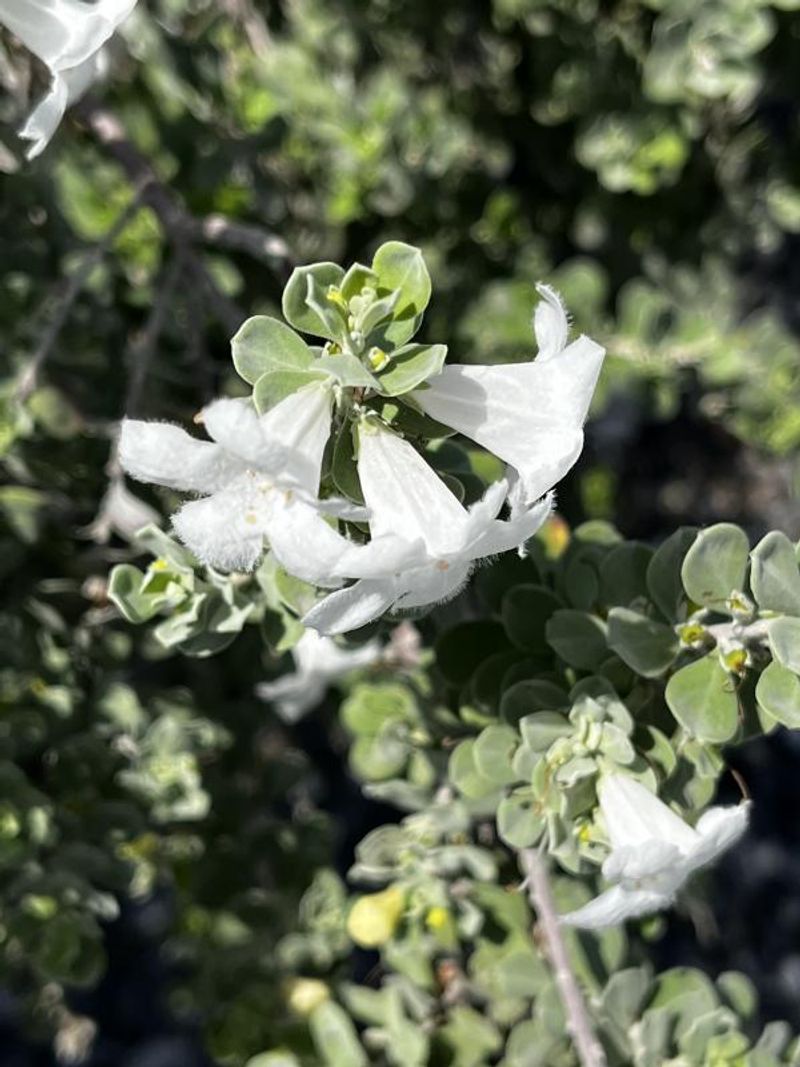
Leucophyllum frutescens ‘White Cloud’ waits for humidity spikes to put on its flower show.
When monsoon moisture rolls into Arizona between July and September, this sage responds with masses of bright white tubular flowers that cover the silvery foliage completely.
The display lasts two to three weeks, then repeats with each humidity surge.
Plant spacing matters because these shrubs reach six feet tall and wide at maturity. Full sun and zero supplemental water after the first year work best.
The silver leaves handle reflected heat from south and west exposures without burning or dropping. Avoid planting in low spots where water collects after storms.
Unlike purple Texas sage varieties, white cloud shows flowers more dramatically because the white contrasts sharply against silver leaves. Prune only to remove frost-damaged tips in spring or to shape the plant after flowering ends.
Heavy pruning reduces next season’s blooms because flowers form on older wood.
Bees work these flowers heavily during bloom periods. The plant tolerates alkaline soil and caliche better than most flowering shrubs.
Mesa and Chandler landscapes use white cloud as a foundation plant because it needs nothing once established. Pair it with red bird of paradise or yellow bells for a patriotic color scheme that handles Arizona summers.
Give it plenty of room away from walkways, since mature plants develop a naturally rounded shape that looks best when left unconfined. During unusually wet summers, you may see an even heavier bloom cycle as repeated humidity spikes trigger more flowers.
Once established, this shrub becomes one of the most dependable low-water anchors for desert landscapes across the Phoenix area.
4. Texas Olive Displays Large White Flowers That Love Full Sun
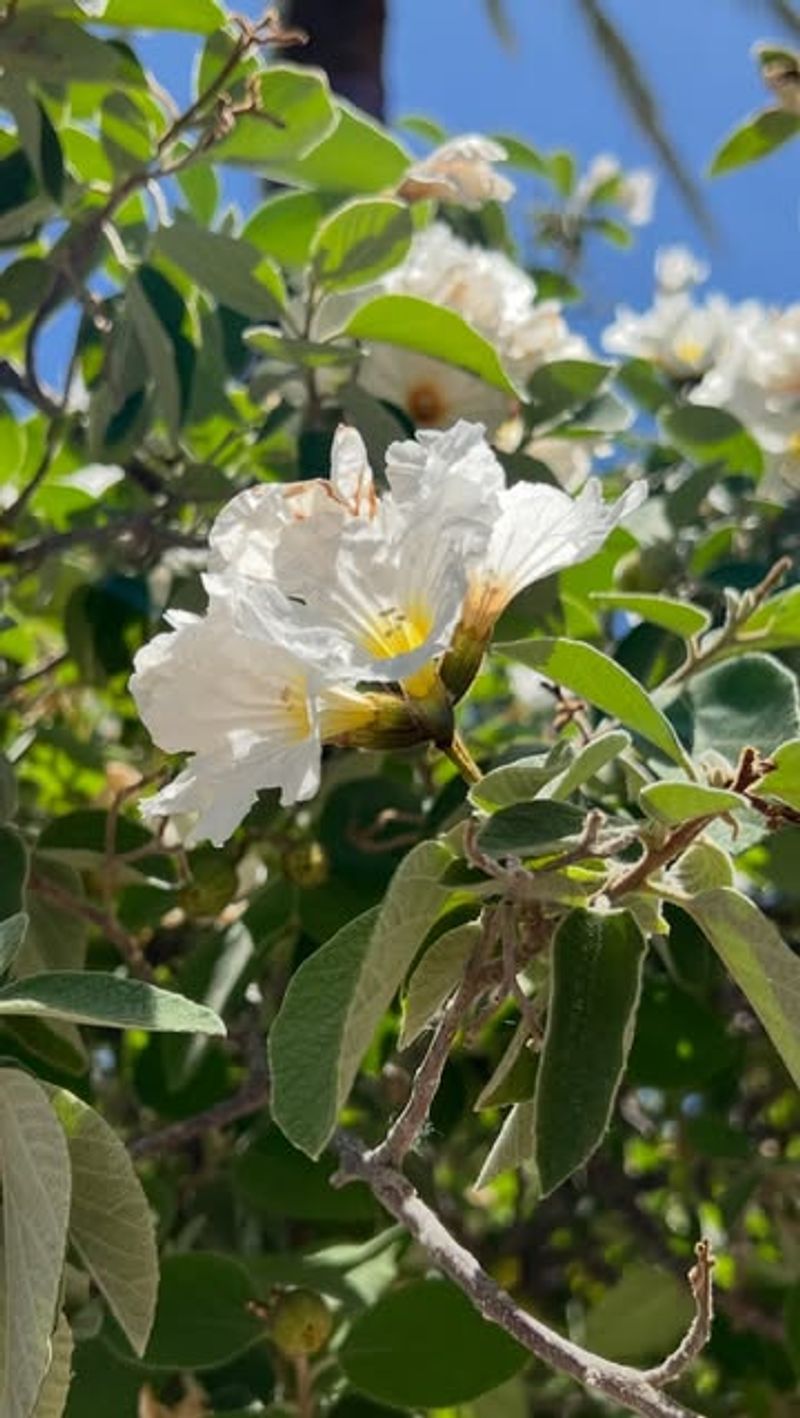
Cordia boissieri produces flowers the size of your palm with crinkled white petals and yellow centers that smell like fresh peaches. Blooms appear in waves from spring through fall, heaviest after rain or deep watering.
The small tree grows twelve to fifteen feet tall with glossy dark green leaves that stay on year-round in warmer parts of Arizona.
South-facing locations with reflected heat bring out the best flowering. Trees planted in partial shade produce fewer flowers and lankier growth.
Water every seven to ten days during summer heat, stretching to every two weeks in winter. Young trees need frost protection in Tucson and Phoenix until trunks thicken and bark matures.
The fragrance draws people outdoors when flowers open in the morning. Bees, butterflies, and hummingbirds all visit throughout the day.
Fruit follows flowers, producing small white drupes that birds devour before they ripen completely. Prune only to remove crossing branches or shape the canopy after flowering cycles end.
Texas olive fits spaces too small for desert willow but larger than typical shrubs. The evergreen foliage provides year-round screening while flowers add seasonal interest.
Combine it with pink fairy duster or purple trailing lantana as understory plants that won’t compete for water. Scottsdale and Paradise Valley landscapes feature this tree as a patio specimen that delivers shade and flowers without massive size.
5. White Lantana Keeps Blooming In Intense Heat And Reflected Sun
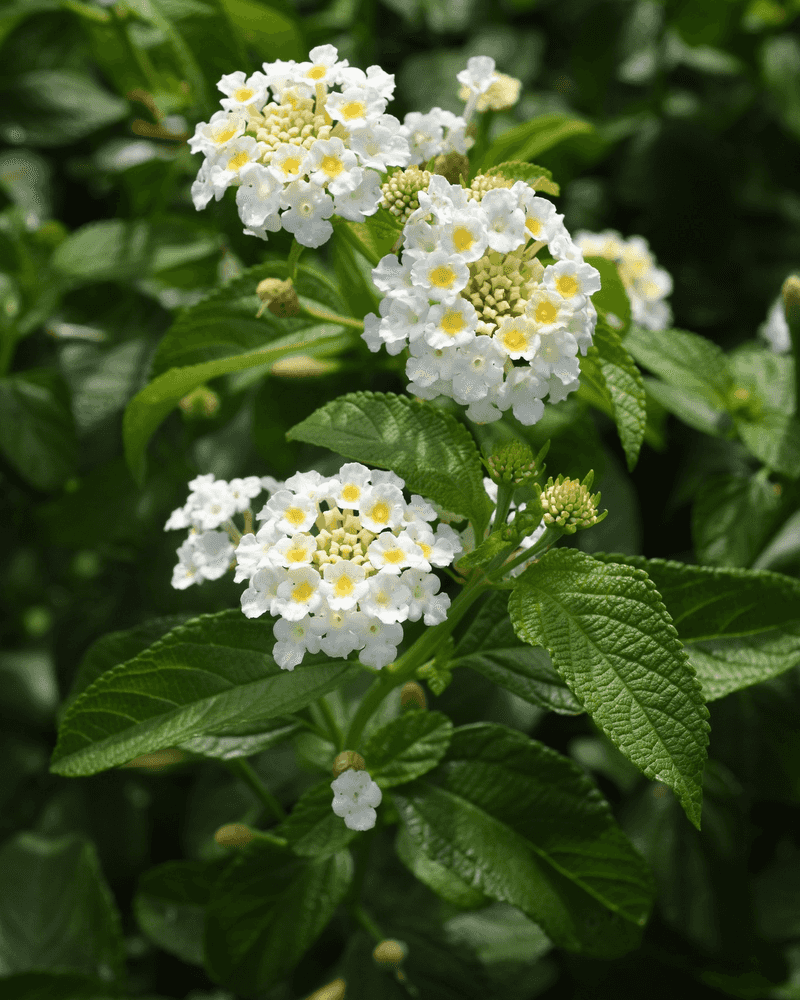
Lantana camara in white selections flowers every single day from March through November in Arizona. The clustered blooms form rounded heads about an inch across, opening fresh flowers as older ones fade.
Plants spread three to four feet wide and reach two feet tall, filling space quickly where you need reliable color.
Reflected heat from block walls or concrete doesn’t faze white lantana. Plant it in the hottest spots of your yard where other flowers struggle.
Water twice weekly during peak summer, backing off to once weekly in spring and fall. The plant tolerates missed waterings better than overwatering, which causes root problems.
Butterflies mob lantana flowers throughout the day, making it essential for pollinator gardens. Prune back by half in February before new growth starts to keep plants compact and promote heavy flowering.
White varieties stay cleaner looking than mixed colors because faded flowers don’t turn brown and crusty as noticeably.
Combine white lantana with purple trailing verbena or red salvia for nonstop color combinations. The sprawling habit works well as a groundcover on slopes or berms where mowing isn’t practical.
Tempe and Gilbert gardens use white lantana as a front-yard solution that looks maintained without weekly attention.
Expect some freeze damage in Tucson and Phoenix during cold winters, but plants regrow from roots when warm weather returns.
Add a layer of gravel mulch around the base to reduce soil splash and keep the crown dry during monsoon storms. If plants get too woody after a long season, a harder reset prune in late winter keeps growth dense and compact.
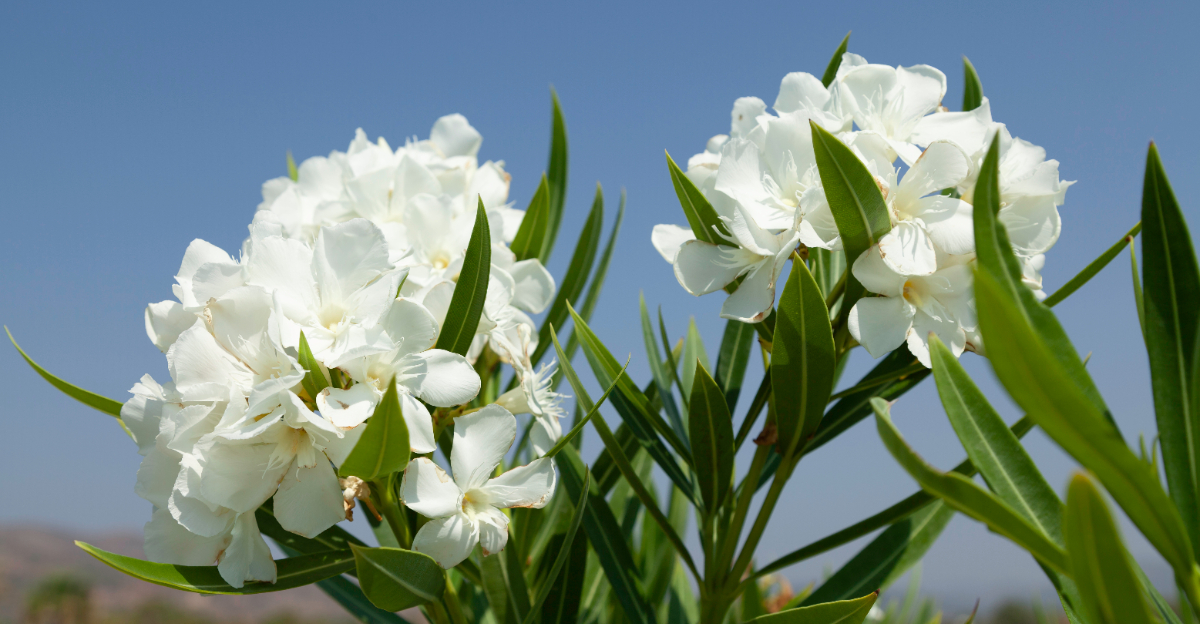
6. White Oleander Delivers Long Lasting White Flowers In Low Desert Landscapes
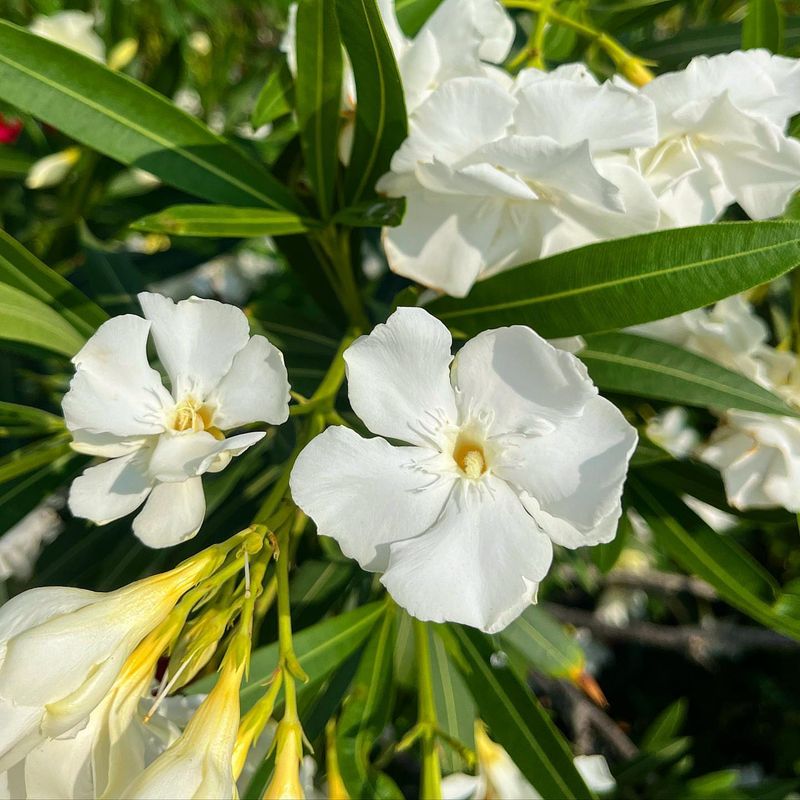
Nerium oleander in white forms creates a flowering screen that handles the absolute worst conditions Arizona throws at plants. Blooms appear in large clusters from April through October, each flower lasting several days before dropping cleanly.
Shrubs reach ten to twelve feet tall and six to eight feet wide, providing substantial mass for privacy or wind protection.
Zero supplemental water after establishment works fine in most Arizona locations. Plant in full sun where heat reflects off surfaces and other plants wilt.
The thick, leathery leaves resist wind damage and don’t scorch even when temperatures hit 120 degrees. Avoid planting where runoff collects because standing water causes more problems than drought.
All parts of oleander contain toxic compounds, so place it away from areas where kids or pets play. The flowers attract sphinx moths at dusk, creating evening interest in the garden.
Prune after bloom cycles to control size, but avoid shearing into tight hedges that reduce flowering. Natural form produces more blooms than formal shapes.
White selections show flowers more dramatically than pink or red varieties because blooms stand out against dark foliage. Pair oleander with blue plumbago or yellow lantana for color contrast.
Glendale and Peoria landscapes use white oleander along property lines where it blocks views without irrigation systems. The plant tolerates alkaline soil and caliche but still needs well-drained soil to prevent root problems.
7. Desert Lily Produces Fragrant White Spring Blooms In Native Desert Soil
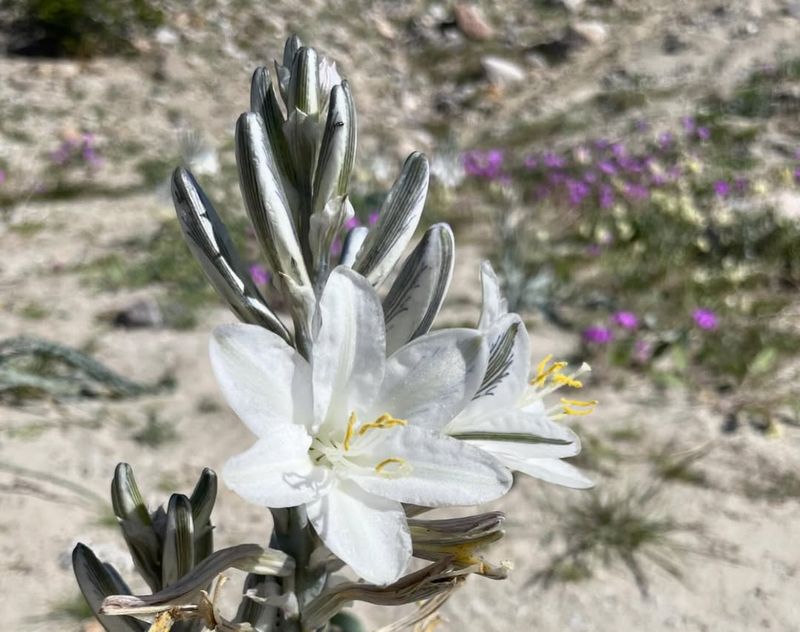
Hesperocallis undulata emerges from sandy washes after winter rains, sending up stalks topped with fragrant white trumpets in March and April. The flowers open at dusk and smell sweetest at night, attracting sphinx moths for pollination.
Each bulb produces one to three flower stalks about eighteen inches tall before disappearing completely by June.
Growing desert lily requires patience because bulbs need specific conditions to thrive. Sandy, fast-draining soil mimicking natural washes works best.
Plant bulbs four inches deep in fall and water only when winter rains fail to appear. Too much summer water rots dormant bulbs faster than anything else.
The ephemeral nature makes desert lily special for Arizona natives who understand desert timing. Flowers last only a week before fading, but the fragrance during bloom time fills evening air with sweetness.
Leaves appear before flowers, forming a rosette of wavy-edged foliage that photosynthesizes quickly before heat arrives.
Collecting wild bulbs damages native populations, so purchase nursery-propagated stock for home landscapes. Plant them in areas that stay completely dry from May through December.
Combine desert lily with other spring ephemerals like desert marigold or lupine for a native wildflower display. Maricopa County desert parks showcase these bulbs in natural settings, demonstrating how they survive without irrigation.
The bulbs may not flower every year, blooming only when winter rainfall triggers their growth cycle properly.
8. White Trailing Verbena Spreads Bright White Flowers In Sunny Arizona Beds
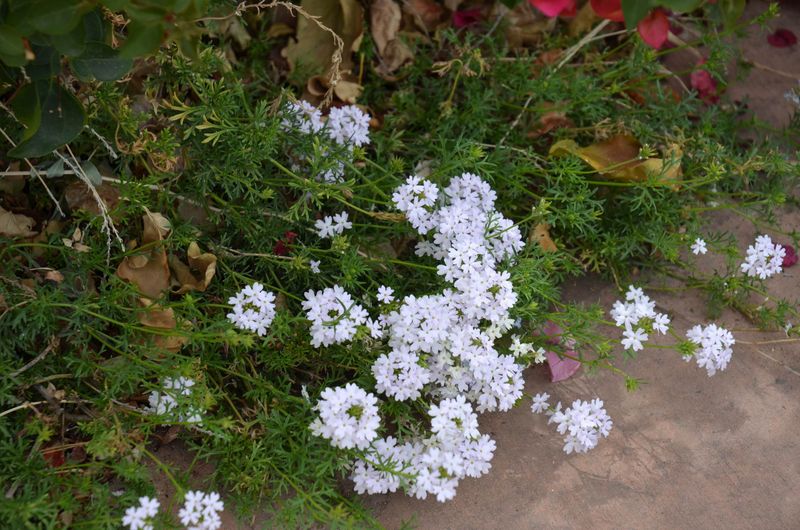
White trailing verbena spreads across the ground with stems that root wherever they touch soil, creating a flowering carpet six inches tall and several feet wide.
White flower clusters appear from March through November, heaviest in spring and fall with some reduction during peak summer heat.
The plant fills spaces between larger shrubs or cascades over wall edges naturally.
Full sun and infrequent deep watering produce the best results. Water every four to five days during summer, weekly during cooler months.
The trailing habit makes this verbena perfect for slopes where erosion control matters. Stems root as they spread, stabilizing soil while providing color.
Butterflies visit flowers constantly during daylight hours. The low profile allows taller plants behind it to show without competition.
Shear plants back by half in late February to promote fresh growth and heavier spring flowering. Old stems get woody and flower less, so regular renewal keeps displays looking fresh.
White trailing verbena softens harsh landscape edges where walls meet ground. The spreading growth fills spaces quickly without looking weedy or unkempt.
Combine it with blue plumbago or red penstemon for contrasting colors that bloom simultaneously. Surprise and Sun City gardens use white verbena as a lawn alternative in small spaces where grass struggles.
The plant tolerates foot traffic better than flowers but less than grass, making it suitable for lightly used areas between stepping stones or pavers.