These Winter Tree Growths Are Appearing In Massachusetts — And Many Get Them Wrong
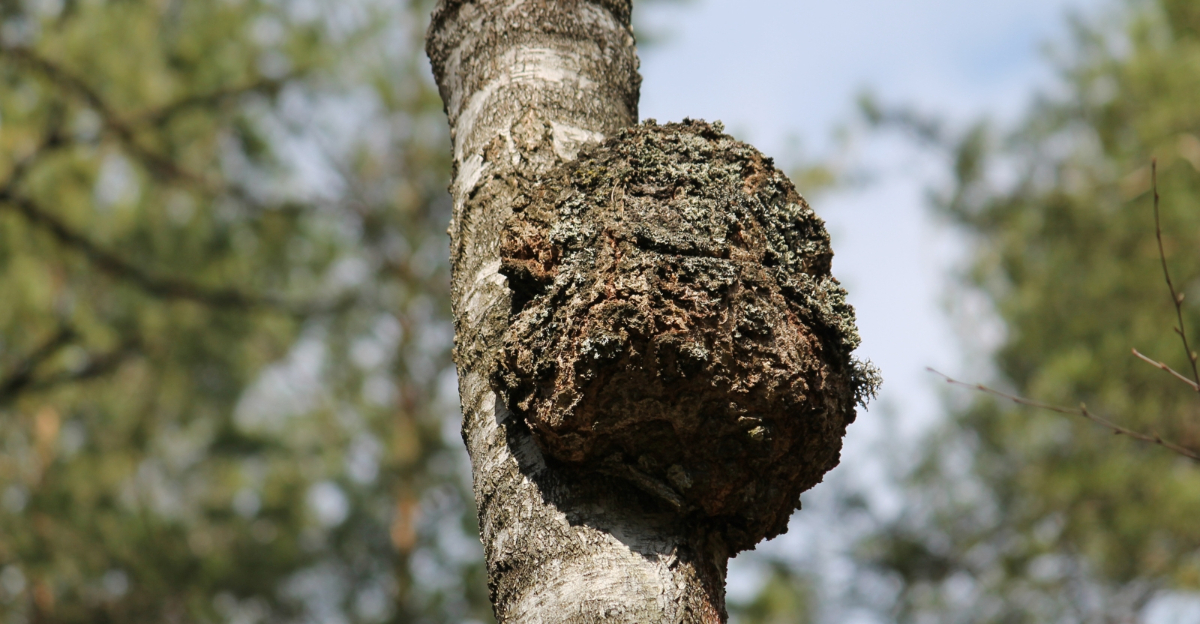
Strange growths showing up on trees across Massachusetts during winter are causing plenty of confusion, especially when bare branches make every detail more visible.
The shapes can look swollen, knobby, or misshapen, standing out sharply against dormant bark and leafless limbs.
At first glance, these growths often feel alarming, as if something has suddenly gone wrong while the tree was supposed to be resting.
Winter makes them even more noticeable because there’s nothing else on the tree to distract the eye.
What adds to the misunderstanding is that many of these formations seem to appear out of nowhere once temperatures drop.
The assumption is usually damage, disease, or a problem that needs immediate fixing.
In reality, many of these winter tree growths are natural responses that have been there longer than expected, simply becoming easier to spot during Massachusetts’ cold, quiet months.
1. The Strange Winter Growths Showing Up On Massachusetts Trees
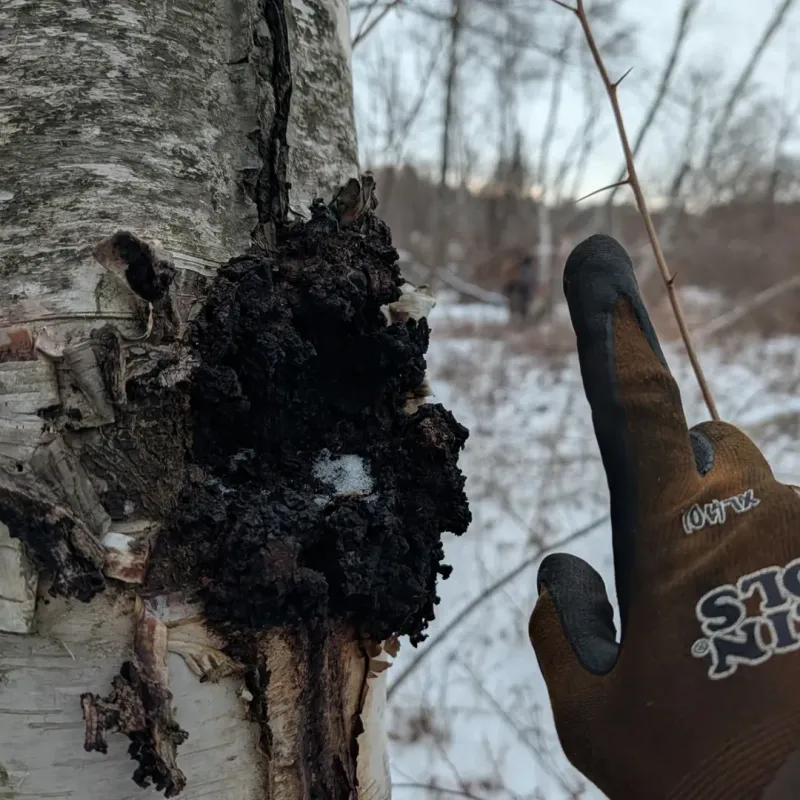
Bare branches reveal secrets that summer leaves keep hidden.
Once autumn strips away the foliage across Massachusetts, homeowners suddenly spot rounded masses clinging to tree limbs that seem to appear overnight.
Most folks panic when they first see these bulbous formations.
The immediate thought jumps to disease, parasites, or something equally troubling that might require expensive tree removal.
Reality paints a much calmer picture than initial impressions suggest.
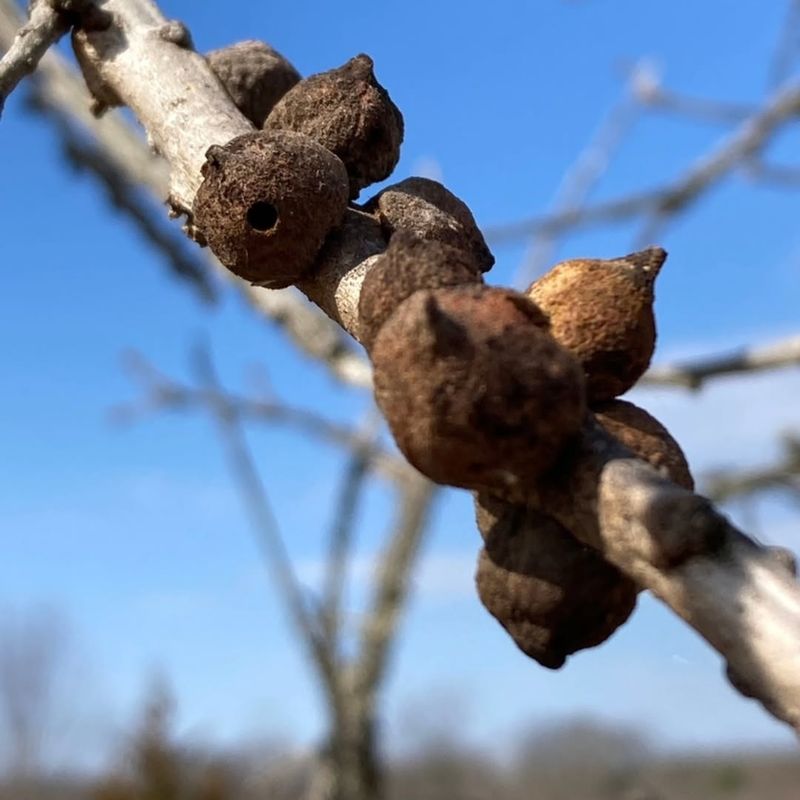
Galls represent the most common winter growth that catches people’s attention, formed when insects lay eggs in tree tissue during warmer months.
Plant tissue responds by creating a protective chamber around the developing larvae.
This natural defense mechanism produces the rounded swellings that become so visible once leaves drop in Massachusetts woodlands.
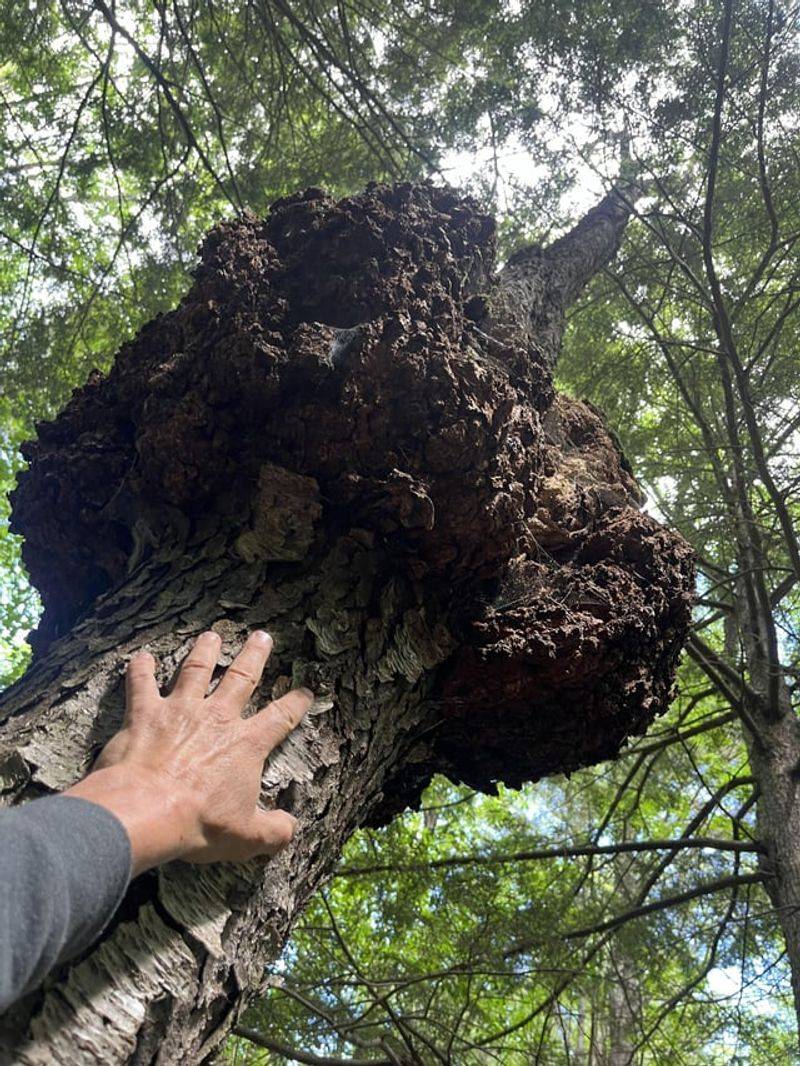
Burls present another frequently misidentified winter discovery on local trees. These woody growths develop from stress or injury, creating gnarly protrusions that artists and woodworkers actually prize for their unique grain patterns.
Witches’ brooms also confuse Massachusetts residents each winter season.
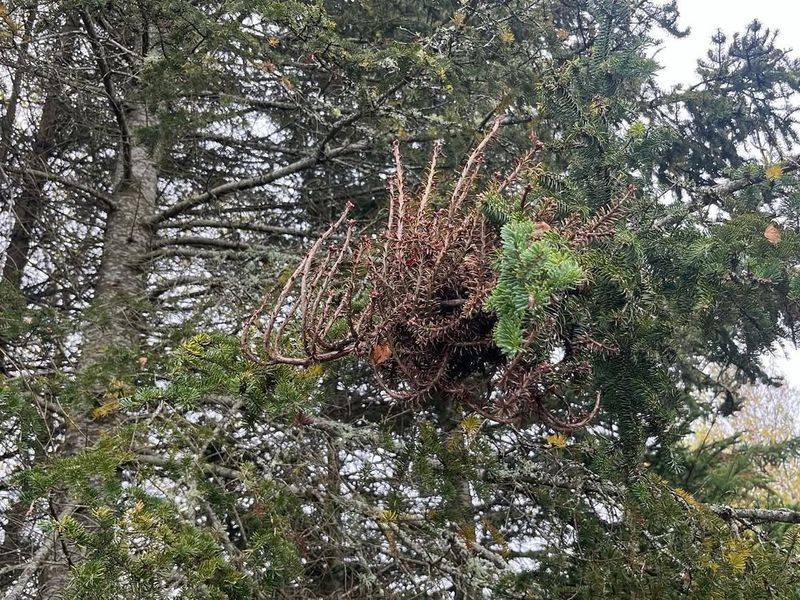
Dense clusters of twigs form tight bundles that resemble old-fashioned brooms, typically caused by fungi, mites, or genetic mutations rather than anything sinister.
Lichen colonies become dramatically more noticeable when leaves vanish. Gray-green patches spread across bark surfaces, leading worried homeowners to mistake these harmless organisms for tree infections.
Moss growth follows similar patterns of winter visibility.
What seemed like healthy bark in summer reveals thick moss coverage once Massachusetts temperatures drop and foliage disappears.
Old woodpecker holes and natural bark irregularities also stand out more prominently. Previous seasons of wildlife activity become obvious features that some mistake for new problems requiring immediate attention.
2. Why These Tree Changes Appear During Cold Months
Visibility transforms dramatically when deciduous trees shed their protective leaf cover. Summer’s dense canopy masks countless features that become obvious once Massachusetts enters its dormant season.
Photosynthesis stops demanding the tree’s full attention during winter months.
Energy conservation becomes the primary goal, allowing existing growths to stand out rather than being hidden by active growth.
Insect activity during spring and summer creates many of the formations that puzzle winter observers.
Gall wasps, aphids, and mites trigger tissue responses that develop throughout the growing season but only become apparent later.
Fungal infections establish themselves during humid conditions in Massachusetts.
Wet springs and summers provide perfect conditions for spores to settle and colonize, with visible fruiting bodies emerging as temperatures cool.
Stress responses from previous years finally show their full extent.
Drought damage, construction impact, or mechanical injury from storms creates burls and other deformities that mature over multiple seasons.
Lichen and moss thrive when moisture increases and sunlight penetration changes.
Autumn rains combined with reduced leaf shade create ideal conditions for these organisms to expand their territory on bark surfaces.
Wildlife behavior patterns shift with seasonal food availability.
Woodpeckers excavate more aggressively during certain months, leaving marks that become prominent features on bare Massachusetts trees.
Temperature fluctuations cause bark splitting and frost cracks.
Rapid freezing and thawing cycles stress tree tissues, creating fissures and raised areas that weren’t noticeable during stable weather periods.
Snow and ice accumulation highlights existing structural features. Weight from winter precipitation bends branches and exposes growth patterns that remain hidden when trees carry their full summer foliage.
3. What Most People Assume These Growths Mean
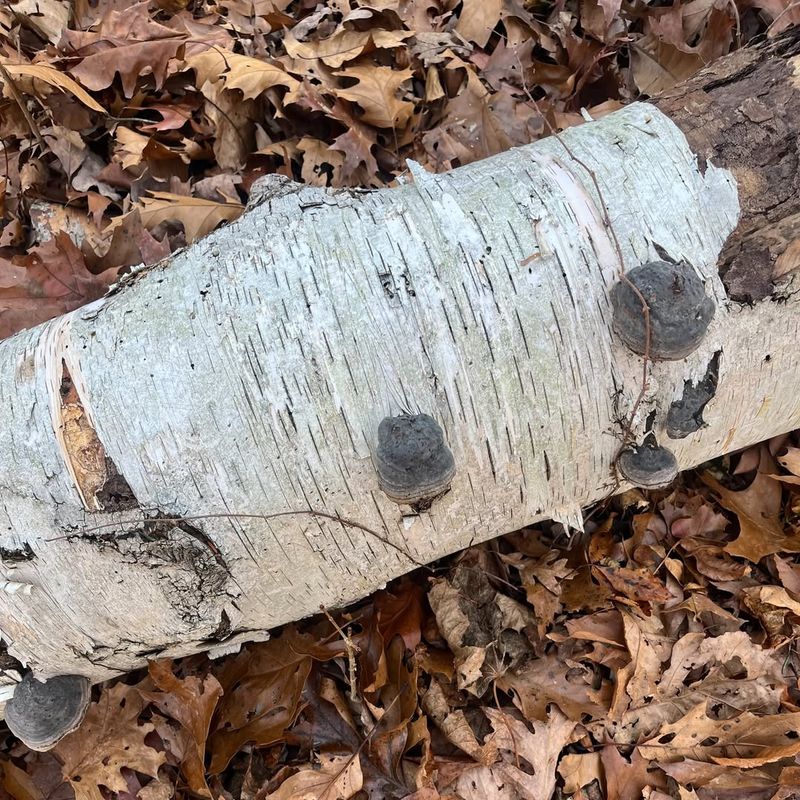
Panic sets in quickly when homeowners spot unfamiliar bumps on their property trees.
The first assumption usually involves serious disease that could spread to other plants or even pose safety risks.
Cancer comes up frequently in worried conversations about tree burls.
People draw parallels between human tumors and woody growths, fearing that their Massachusetts oaks or maples suffer from something equally devastating.
Pest infestations top the list of concerns for many residents. Visions of invasive insects boring through valuable shade trees lead to frantic calls to tree services and pest control companies.
Contagious conditions worry neighbors when multiple trees display similar features.
Community Facebook groups fill with alarmed posts about mystery diseases spreading through Massachusetts neighborhoods.
Structural failure becomes a major fear with larger burls and deformities.
Homeowners imagine heavy branches breaking off during storms and causing property damage or personal injury.
Parasitic plants get blamed for many harmless growths and discolorations.
Mistletoe exists in some regions, but Massachusetts residents often misidentify lichen and moss as damaging parasites.
Chemical exposure or pollution frequently enters the conversation about unusual tree features. Urban and suburban dwellers suspect road salt, pesticides, or industrial contamination when seeing abnormal growth patterns.
Genetic mutations spark concerns about environmental contamination.
Science fiction scenarios about radiation or toxic waste seem more plausible when confronted with truly bizarre witches’ broom formations.
Age-related decline gets confused with acute problems requiring intervention.
Natural aging processes in Massachusetts trees produce many features that appear alarming but actually represent normal maturation.
4. The Natural Process Behind These Unusual Shapes
Biology creates fascinating responses when trees encounter challenges or stimuli.
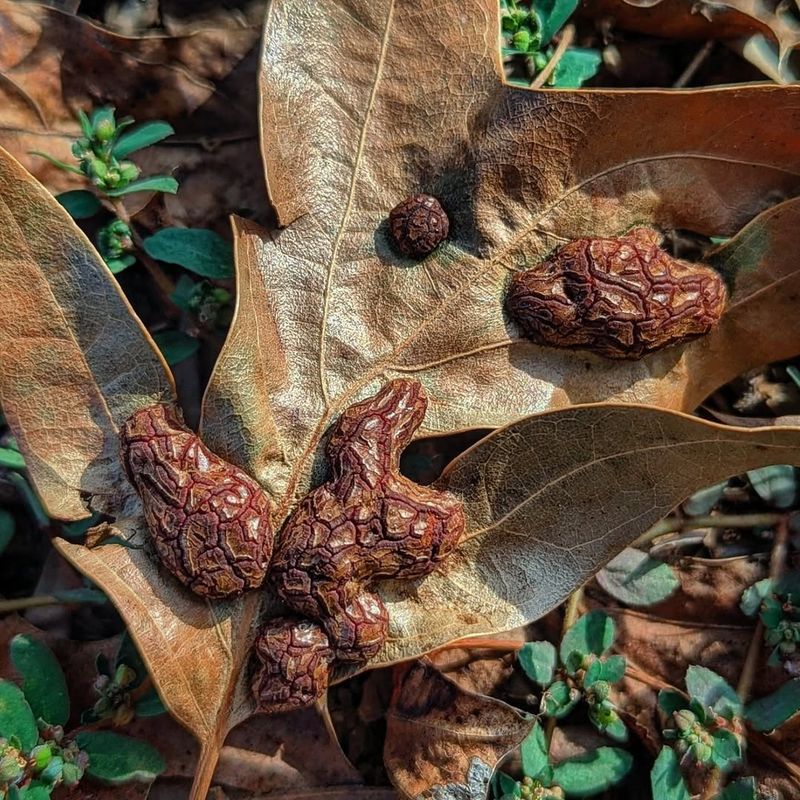
Gall formation begins when female insects inject eggs along with chemical signals into plant tissue, triggering remarkable cellular changes.
Plant hormones flood the affected area in response to insect secretions. Auxins and cytokinins cause rapid cell division and expansion, building a protective chamber that shelters developing larvae while providing them nutrition.
Each insect species produces distinctively shaped galls through their unique chemical signatures.
Oak apple galls differ dramatically from willow pine cone galls, with Massachusetts hosting dozens of gall-forming insect varieties.
Burls develop when cambium tissue receives conflicting growth signals.
Injury, infection, or genetic factors disrupt normal cell division patterns, causing wood cells to multiply in chaotic swirling formations.
Dormant buds sometimes activate inappropriately due to hormonal imbalances.
Witches’ brooms result when hundreds of buds sprout simultaneously instead of following normal branching patterns.
Fungal partners work symbiotically with algae to create lichen organisms.
Neither component harms the Massachusetts tree bark they colonize, simply using the surface as an anchoring point while producing their own food through photosynthesis.
Moss reproduces through spores that settle into bark crevices.
Moisture retention in these protected spots allows moss colonies to establish and spread across trunk surfaces without penetrating living tissue.
Freeze-thaw cycles create mechanical stress within tree trunks.
Water expands when freezing in cell spaces, occasionally causing vertical cracks that heal with raised callus tissue over subsequent growing seasons.
Wound response mechanisms activate specialized cells that seal injuries. Massachusetts trees produce callus tissue around damage sites, creating raised edges and unusual textures that persist for years.
5. Tree Types In Massachusetts Most Commonly Affected
Oak species dominate the gall formation statistics throughout Massachusetts forests.
Red oaks, white oaks, and black oaks each host specific gall wasp species that create distinctive round formations on leaves, twigs, and branches.
Willow trees produce some of the most dramatic gall structures.
Pine cone galls on willow shoots can reach impressive sizes, often alarming homeowners who mistake them for actual disease symptoms.
Maple varieties show burls more frequently than many other local species. Sugar maples and red maples in Massachusetts develop woody swellings from various stress factors, sometimes growing to enormous dimensions over decades.
Birch trees display witches’ brooms with notable frequency. Paper birch and yellow birch develop these dense twig clusters when certain fungal infections or mite infestations alter their growth hormones.
Hackberry trees host distinctive nipple galls caused by psyllid insects.
These small pointed bumps cover leaf surfaces during summer and become visible on twig scars throughout Massachusetts winters.
Cherry and plum species develop black knot fungus formations.
These rough, coal-black swellings encircle branches and can extend for several inches along affected limbs.
Ash trees once showed emerald ash borer damage before populations declined. Exit holes and bark splitting from this invasive pest created patterns that concerned observers often confused with natural growth irregularities.
Hickory trees produce large compound galls from phylloxera insects.
These clustered formations resemble small bunches of grapes and persist on branches long after the insects complete their life cycles.
Beech trees attract a variety of scale insects that create bumpy bark textures.
Massachusetts beech forests show distinctive patterns where these tiny insects establish colonies beneath protective waxy coverings.
6. When These Growths Are Harmless Versus Concerning
Size and spread rate provide crucial clues about whether intervention makes sense.
Small galls scattered across a Massachusetts oak represent normal insect activity, while rapidly expanding cankers signal genuine fungal threats.
Galls rarely harm mature trees despite their alarming appearance.
The tree compartmentalizes affected tissue effectively, and most gall-forming insects complete their life cycles without causing lasting damage to their hosts.
Burls remain cosmetic issues unless they compromise structural integrity. Small burls pose no threat, but massive formations at branch unions or on main trunks might create weak points vulnerable to storm damage.
Witches’ brooms seldom require removal unless they obstruct important views.
These dense twig clusters don’t typically spread or threaten tree health, though they may divert some energy from normal growth.
Lichen presence actually indicates good air quality in Massachusetts regions.
These sensitive organisms struggle in polluted environments, so abundant lichen growth suggests clean local air rather than tree problems.
Moss colonization becomes problematic only when it indicates excessive shade or moisture.
Thick moss coverage might suggest poor air circulation or drainage issues worth addressing for overall tree health.
Black knot fungus demands attention because it actively spreads along branches.
Pruning infected sections several inches below visible swellings prevents further colonization in cherry and plum trees.
Cankers that girdle branches or trunks require professional evaluation.
These sunken, discolored areas can cut off nutrient flow and potentially endanger entire Massachusetts trees if left untreated.
Multiple stress indicators appearing simultaneously warrant expert consultation. When burls, cankers, and unusual growths combine with leaf problems or branch loss, underlying issues may need diagnosis and treatment.
7. Why Winter Makes Them Easier To Notice
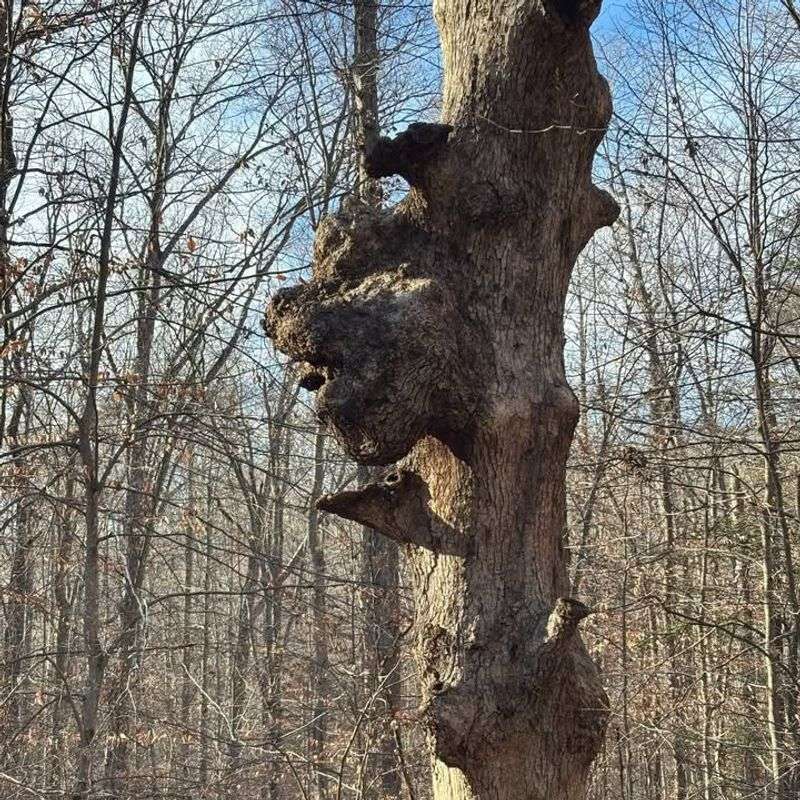
Leaf drop eliminates nature’s most effective camouflage system.
Summer foliage hides an incredible amount of detail that becomes instantly obvious once Massachusetts trees enter dormancy.
Light penetration increases dramatically in winter forests.
Sunlight reaches bark surfaces and branch structures that remained shaded for months, highlighting textures and formations invisible during the growing season.
Contrast intensifies between growths and normal bark.
Snow cover and gray winter skies create backgrounds that make every bump, crack, and discoloration stand out with remarkable clarity.
Human observation patterns shift toward structural features during dormant months.
Gardeners and homeowners inspect trees more carefully when planning pruning projects, noticing details they overlooked while admiring summer flowers.
Wildlife activity becomes more visible against bare branches.
Woodpecker excavations, squirrel nests, and bird damage appear prominently on Massachusetts trees without leaves to soften their visual impact.
Photographer and naturalist attention focuses on winter tree architecture. Increased documentation and social media sharing of winter tree features raises awareness about formations many people never noticed previously.
Storm damage reveals internal wood conditions more clearly.
Ice and wind break weakened branches, exposing decay, insect galleries, and other internal conditions that explain external growth abnormalities.
Maintenance activities bring people closer to their trees.
Raking, mulching, and winter preparation tasks position Massachusetts residents where they can observe trunk and branch details from new angles.
Educational outreach intensifies during dormant seasons.
Nature centers and extension services offer winter tree identification walks that specifically highlight bark features, buds, and growth patterns including various formations.
8. What These Growths Say About A Tree’s Past Stress
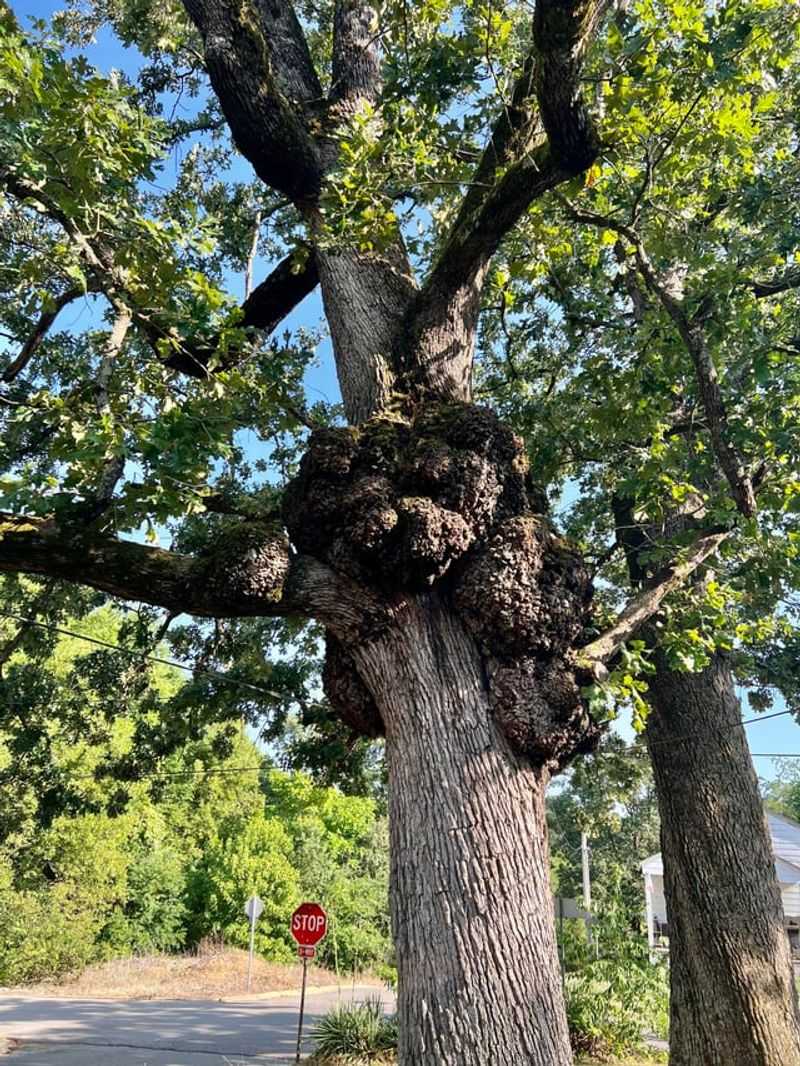
Historical records hide within bark and wood tissue patterns.
Burls often originate from injuries that occurred years or decades earlier, with the tree still responding to long-past trauma.
Construction damage frequently triggers burl formation in Massachusetts residential areas.
Soil compaction, root severing, and grade changes from building projects create stress that manifests as woody growths years after the initial disturbance.
Drought years leave lasting signatures in tree structure.
Severe water stress can initiate hormonal changes that produce burls, witches’ brooms, or other abnormal growth patterns during subsequent recovery periods.
Lightning strikes generate some of the most dramatic stress responses.
Even when trees survive direct hits, the electrical and physical trauma often results in unusual bark formations and internal wood grain distortions.
Previous pest outbreaks create lasting evidence in bark textures. Massachusetts trees that survived gypsy moth defoliation or other insect attacks may develop persistent growth irregularities from the stress of losing foliage.
Salt exposure from roadways accumulates over multiple winters.
Trees near streets and driveways show stress symptoms including bark abnormalities and burl formation from repeated sodium chloride contact.
Mechanical injuries from lawn equipment leave permanent marks.
Mower strikes and string trimmer damage to trunk bases create callus tissue buildups that remain visible throughout the tree’s lifespan.
Competition stress from overcrowding produces various responses.
Trees fighting for resources in dense Massachusetts woodlands may develop unusual growth patterns as they struggle to access adequate light and nutrients.
Climate change impacts manifest through accumulated stress indicators.
Warming temperatures, shifting precipitation patterns, and increased storm intensity combine to create more frequent and varied growth abnormalities in regional trees.