9 Things Purple Paint On Arizona Trees Really Means
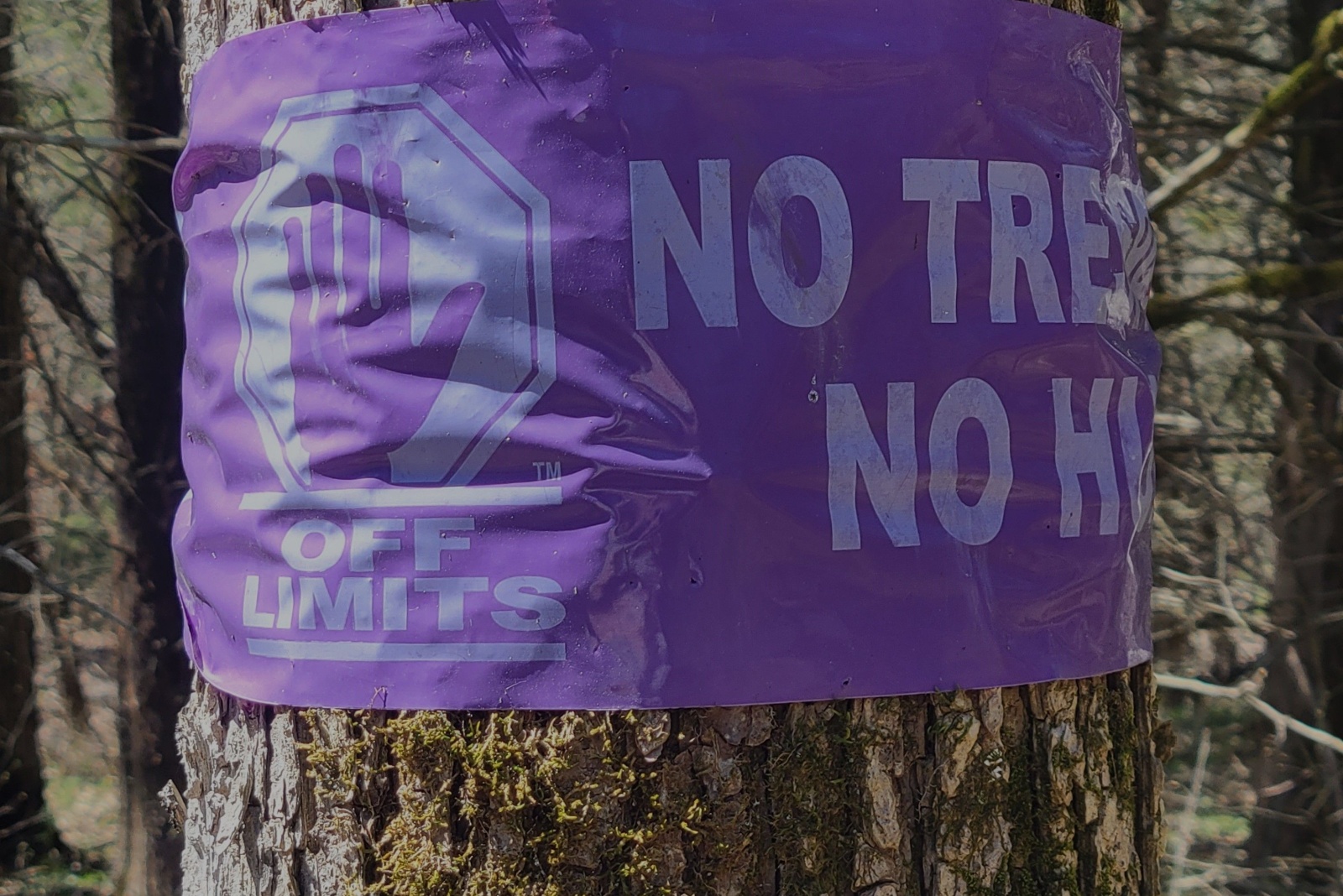
Purple paint on trees catches many Arizona homeowners and hikers off guard.
It stands out against desert browns and greens, yet few people realize it carries serious meaning.
This is not graffiti and it is not a warning meant to be ignored.
In Arizona, purple paint serves as a legal substitute for posted signs, drawing clear lines where words are not needed.
These marks often appear along property edges, trails, or rural land where signs can be stolen, damaged, or blown away.
Crossing past them without permission can lead to fines or worse, even if no fence is present.
Many people stumble into trouble simply because they do not recognize what the paint means.
Understanding these markings helps prevent costly mistakes and awkward encounters.
Sometimes staying on the right side of the law is as simple as noticing a stripe of purple on a tree.
1. No Trespassing Is Being Enforced
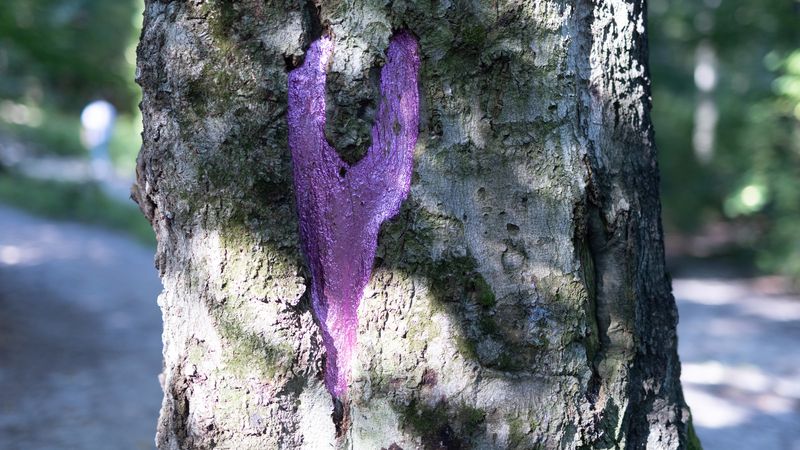
Arizona law allows property owners to use purple paint instead of traditional no trespassing signs.
When you see purple marks on trees or posts, the landowner is telling you to stay out.
This method has the exact same legal weight as a posted sign with words.
The paint serves as an official warning that the property is private and entry without permission is prohibited.
Landowners choose this approach because it communicates their wishes clearly to anyone passing by.
Many rural property owners prefer paint over signs because it lasts longer in harsh weather conditions.
The desert sun can fade printed signs quickly, but a fresh coat of purple paint remains visible for years.
If you encounter these markings while hiking or exploring, turn around and find another route.
Ignoring them could lead to serious legal consequences.
The purple paint system works especially well in remote areas where traditional signs might not be practical.
Property owners appreciate having a reliable, low-maintenance way to mark their boundaries and protect their rights.
2. Private Property Boundaries Are Marked
Property lines can be confusing in wide-open desert spaces where fences don’t always exist.
Purple paint helps define exactly where private land begins and public areas end.
Landowners apply these marks at regular intervals along their property edges to create a clear visual boundary.
Unlike survey stakes or buried markers that only professionals can interpret, purple paint is obvious to everyone.
You don’t need special training or equipment to understand what it means.
The markings help prevent accidental trespassing by people who genuinely didn’t realize they were leaving public land.
Arizona’s vast open spaces can make it difficult to tell where one property stops and another starts.
Some neighborhoods near desert areas use this system to protect their backyards from wandering hikers.
The paint creates a respectful boundary without blocking views or disrupting the natural landscape.
When you spot purple marks, you’ve reached the edge of someone’s private space.
Respecting these boundaries helps maintain good relationships between landowners and outdoor recreation enthusiasts throughout the state.
3. Property Owner Has Given Legal Notice
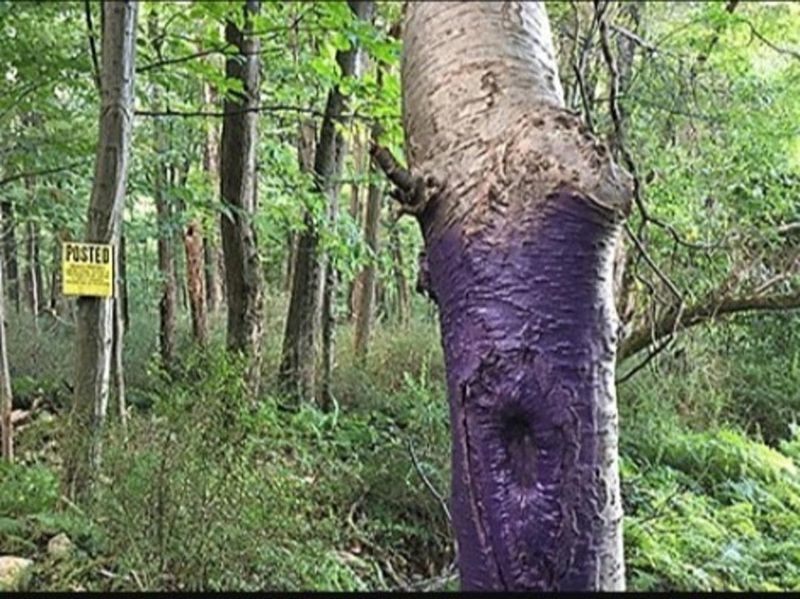
Under Arizona state law, purple paint counts as written notice to potential trespassers.
This means landowners don’t have to post actual signs with words to legally notify people that their property is off-limits.
The paint itself fulfills the legal requirement for providing notice.
Courts recognize purple markings as valid documentation that a property owner has communicated their wishes.
If someone trespasses on marked land, they cannot claim they didn’t know it was private property.
The law was designed to give rural landowners an effective tool for protecting their rights.
Many ranches and large properties span thousands of acres, making it impractical to post enough signs to cover every entry point.
Purple paint provides continuous notice that doesn’t expire or need renewal like some permits might.
Once applied, it serves as permanent legal documentation of the owner’s intent to restrict access.
Law enforcement officers throughout Arizona are trained to recognize these markings.
When investigating trespassing complaints, they treat purple paint the same way they would treat posted signs, giving landowners strong legal backing for their boundaries.
4. Hunting Fishing Or Trapping Is Not Allowed

Entering marked land for hunting, fishing, or trapping activities is illegal without the owner’s permission.
Many people mistakenly believe that if land looks unused, they can hunt or fish there.
Purple paint makes it crystal clear that these activities are prohibited.
Arizona’s wildlife-rich environment attracts many outdoor sportsmen, but respecting private property is essential.
Landowners have the right to control who hunts or fishes on their land, and purple markings enforce that right.
Some property owners want to preserve wildlife habitats without hunting pressure.
Others may have livestock or crops that could be disturbed by hunting activities.
The paint system helps game wardens and law enforcement identify areas where hunting violations might occur.
If you’re caught hunting on purple-marked property, you face both trespassing charges and potential hunting violations.
Always obtain written permission before hunting or fishing on private land, even if it looks abandoned.
The purple paint serves as your warning that the owner is actively protecting their property rights and monitoring for unauthorized use.
5. Crossing The Line Can Lead To Fines Or Charges
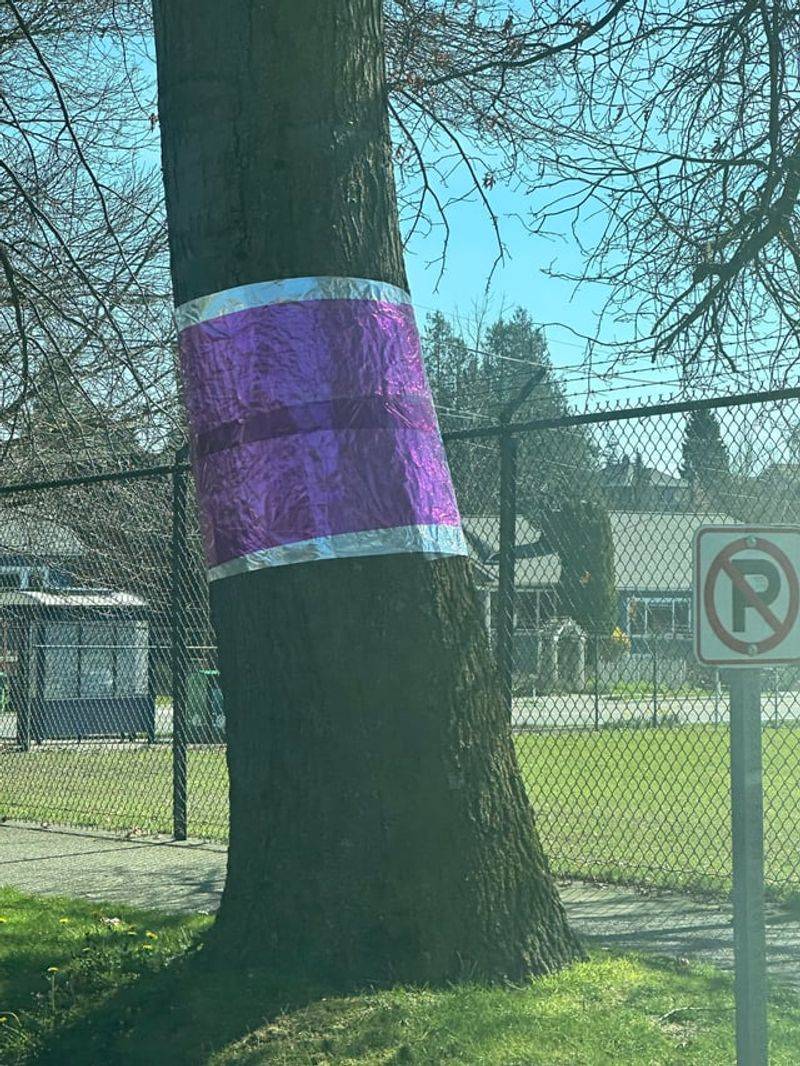
Ignoring purple paint markings can result in misdemeanor trespassing charges with real legal consequences.
Arizona law enforcement takes property rights seriously, and trespassing on marked land isn’t treated lightly.
Violators may face fines ranging from hundreds to thousands of dollars depending on the circumstances.
A trespassing conviction can appear on your criminal record, affecting future employment and background checks.
What might seem like harmless exploration could turn into a costly mistake with long-term implications.
Property owners have the right to press charges against trespassers, and many will do so to protect their land.
Some areas have experienced repeated trespassing problems, making landowners especially vigilant about enforcement.
Law enforcement officers can issue citations on the spot if they catch someone on marked property without permission.
You won’t necessarily get a warning first, especially if the purple markings were clearly visible.
Beyond legal penalties, trespassing can damage relationships between landowners and the outdoor community.
Respecting purple paint boundaries helps preserve access to the public lands that remain open for everyone to enjoy throughout Arizona’s beautiful landscapes.
6. The Marks Replace Signs That Can Be Removed
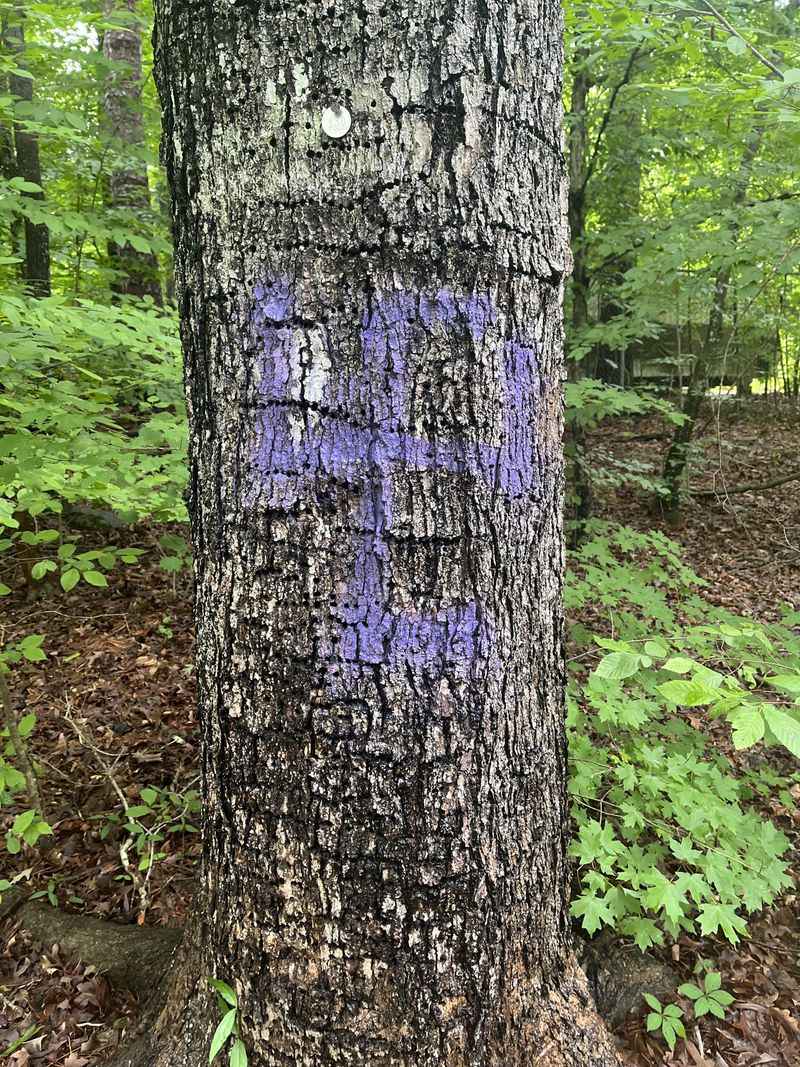
Paint is used because traditional signs fade, get stolen, or become damaged over time.
Metal and wooden signs are expensive to purchase and install, especially when covering large properties.
Vandals sometimes steal signs for souvenirs or to deliberately remove warnings.
Weather takes a heavy toll on posted signs in Arizona’s extreme climate.
Intense sun bleaches the lettering, making signs unreadable within a few years.
Wind storms can knock signs down, and flash floods can wash them away entirely.
Maintaining hundreds of signs across a large ranch becomes a never-ending and expensive task.
Purple paint solves all these problems with a simple, durable solution.
A single can of paint costs less than one professional sign and can mark dozens of trees or posts.
The paint is much harder to remove than a sign is to steal.
While it may fade over time, reapplying paint is quick and inexpensive compared to replacing stolen or damaged signs.
Landowners appreciate the permanence and cost-effectiveness of paint markings.
This practical approach lets them protect their property rights without constant maintenance or replacement expenses that signs would require.
7. Paint Marks Must Follow Legal Standards
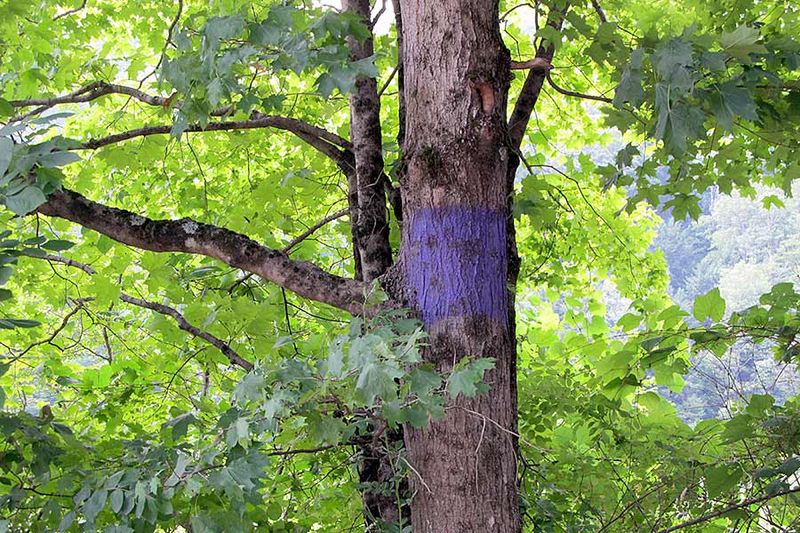
For purple paint to be legally valid in Arizona, it must meet specific requirements set by state law.
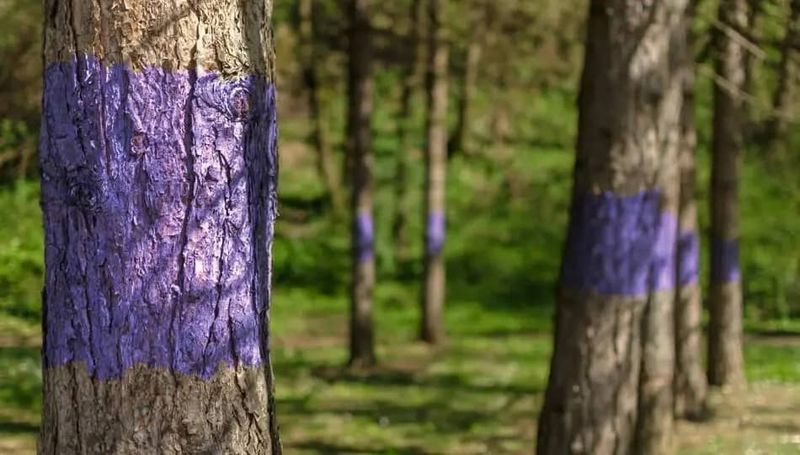
The stripes must be vertical, not horizontal or diagonal.
Each mark needs to be at least eight inches long and placed at a height between three and five feet from the ground.
The paint must be clearly visible to anyone approaching the property.
Faded or barely-visible marks don’t fulfill the legal requirements for proper notice.
Marks should be placed no more than one hundred feet apart on trees, posts, or other natural features along the boundary.
This spacing ensures that people can’t claim they didn’t see any markings.
Property owners who fail to follow these standards might find their markings don’t hold up legally if challenged in court.
Proper application is essential for the system to work as intended.
Many landowners use stencils or measuring tools to ensure their marks meet legal specifications.
Taking the time to apply paint correctly protects their rights and provides clear notice to others.
The standardized requirements make it easy for everyone to recognize valid boundary markings throughout the state, creating consistency across different properties and regions.
8. The Color Purple Is Chosen By Law
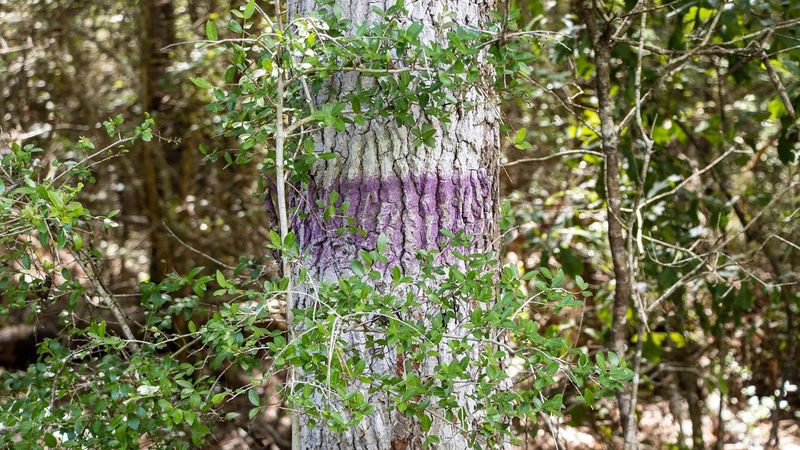
Arizona law specifically recognizes purple paint, not other colors, for marking private property boundaries.
The choice of purple is intentional because it’s not a color that occurs naturally in most outdoor environments.
This distinctive hue stands out against tree bark, wooden posts, and desert landscapes.
Other colors might be confused with natural markings, forestry codes, or utility markers.
Purple eliminates confusion by being unmistakably artificial and purposeful.
Several other states have adopted similar purple paint laws, creating regional consistency for property marking.
Outdoor enthusiasts who travel between states can recognize the meaning of purple marks wherever they encounter them.
Using any other color doesn’t provide the same legal protection for landowners.
A property owner who uses blue or red paint cannot claim they provided proper legal notice under Arizona’s purple paint statute.
The vivid color remains visible even as it weathers over time.
While fresh purple paint is bright and obvious, even faded purple markings retain enough color to be recognizable.
Hardware stores throughout Arizona stock outdoor purple paint specifically for this purpose, making it easy for property owners to comply with the law and protect their land properly.
9. The Rule Applies To Trees And Fence Posts
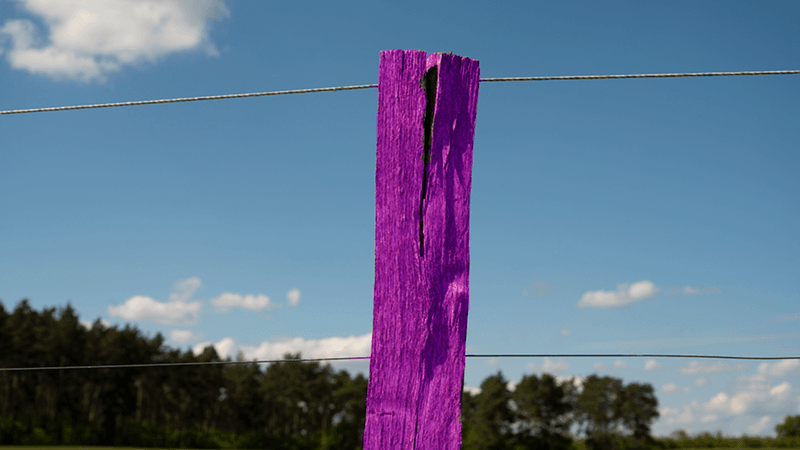
Purple marks may appear on wooden fence posts as well as living trees throughout Arizona properties.
Not all property boundaries have convenient trees for marking, especially in areas where vegetation is sparse.
Fence posts provide an alternative surface that works equally well under the law.
Some landowners install posts specifically for the purpose of displaying purple paint markings.
These posts serve no other function except to clearly mark property boundaries in treeless areas.
The law recognizes that Arizona’s diverse landscape requires flexibility in how boundaries are marked.
Desert regions, grasslands, and forested areas all present different challenges for property owners.
Wooden posts are particularly common along roads and trails where property borders public access areas.
They provide highly visible markers that drivers and hikers can easily spot.
Whether on trees or posts, the legal requirements remain the same: vertical stripes, proper height, adequate length, and appropriate spacing.
The surface doesn’t matter as long as the markings follow the established standards.
Property owners often use a combination of trees and posts to create complete boundary lines.
This flexible approach ensures continuous marking regardless of what natural features are available along the property edge.