Things To Put In Tomato Hole Before Planting In Ohio
Does your spring planting ritual involve dropping something “secret” into the tomato hole, or are you just digging a pit and hoping for the best?
Every Ohio gardener seems to have a different answer, handed down from a neighbor’s tip, an old magazine clipping, or a decades-old family secret.
But here is the reality: not all of that “wisdom” holds up under the microscope of what a tomato plant actually needs to thrive. The biggest mistake is treating every planting hole like a one-size-fits-all recipe.
In Ohio, your soil is unique – ranging from heavy, water-logged clay to loose, sandy loam – and what works in your neighbor’s yard might actually be doing your plants a disservice.
Instead of relying on garden myths, it is time to tailor your soil prep to your specific backyard conditions.
Let’s look at the science-backed amendments that actually give your tomatoes a stronger, healthier start from day one.
1. Finished Compost Builds A Better Foundation For Tomato Roots
Spring planting season in Ohio has a way of reminding gardeners just how much their soil needs before a tomato transplant goes in.
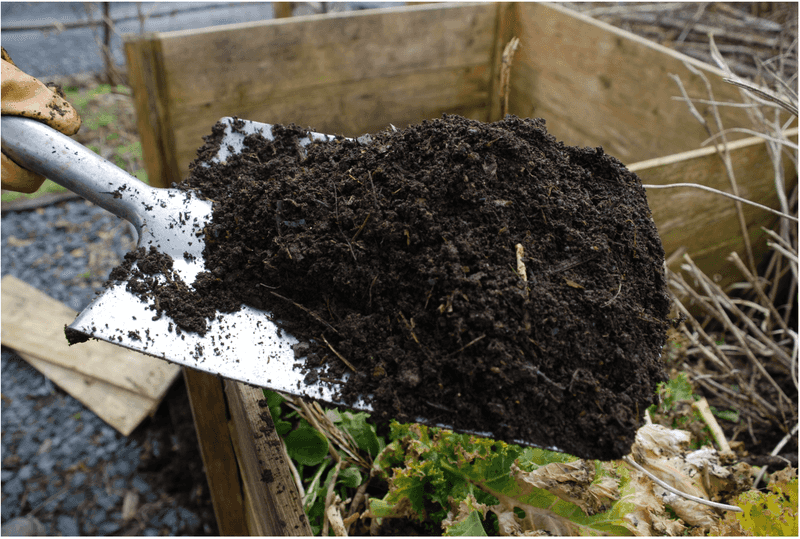
Finished compost is one of the most reliable things you can work into your planting area, and it earns that reputation for good reason.
Unlike raw organic materials that can tie up nitrogen as they break down, finished compost is already stable and ready to support plant roots almost immediately after you work it into the soil.
Compost improves soil texture in a way that benefits Ohio gardens across the board. Heavy clay soils common in central and northwestern Ohio become more workable and drain more freely when compost is blended in.
Sandier soils in other parts of the state hold moisture better and develop more microbial activity when compost is regularly added over time.
One thing worth understanding is that compost works best when it is mixed into the broader planting area rather than simply dropped into the bottom of one small hole.
Concentrating large amounts of organic matter in a single tight space can create an uneven environment where roots hit an abrupt boundary instead of spreading naturally.
Working compost into the top several inches of your garden bed before transplanting gives young tomato roots a more consistent growing environment.
Finished compost also introduces beneficial microorganisms that support nutrient cycling in the soil.
A few inches blended into the bed before planting is a practical, evidence-based habit that most Ohio tomato gardeners can use with confidence regardless of their specific soil type.
2. Composted Manure Supports Richer Soil Before Planting Time
Not every bag of manure at the garden center is ready for your tomato bed, and that distinction matters more than many gardeners realize.
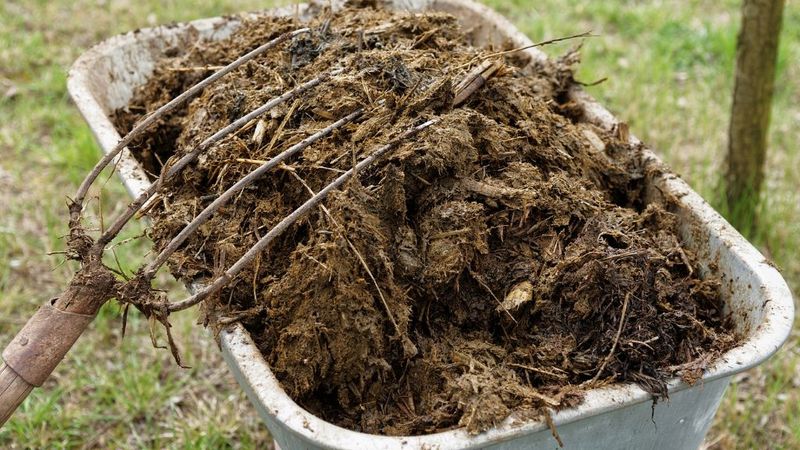
Composted manure that has been properly aged and processed is a genuinely useful soil amendment, while fresh or partially composted manure can introduce excess nitrogen, pathogens, or salt levels that stress young transplants rather than supporting them.
Well-composted manure from cattle, chicken, or horses contributes organic matter and a moderate range of nutrients that improve soil biology over time.
Ohio gardeners who have access to composted manure from local farms or purchase it in bagged form from reputable sources can work it into their garden beds ahead of planting to build a richer growing environment.
The key word is composted, meaning the material has gone through sufficient breakdown to be stable and safe for vegetable gardens.
Chicken-based composted manure tends to be higher in nitrogen than cattle or horse manure, so using it in moderation makes sense.
Adding too much nitrogen-heavy material near tomato transplants can push the plants toward excessive leafy growth at the expense of flowering and fruit development.
A few inches blended into the planting area rather than a concentrated pile in the bottom of the hole is a more balanced approach.
Like finished compost, composted manure is most effective when it improves the broader soil environment rather than acting as a localized boost in a single planting spot.
Ohio gardeners with clay-heavy beds often find that regular additions over multiple seasons produce the most noticeable improvements in soil texture and plant performance.
3. Starter Fertilizer Gives Young Tomatoes An Early Boost
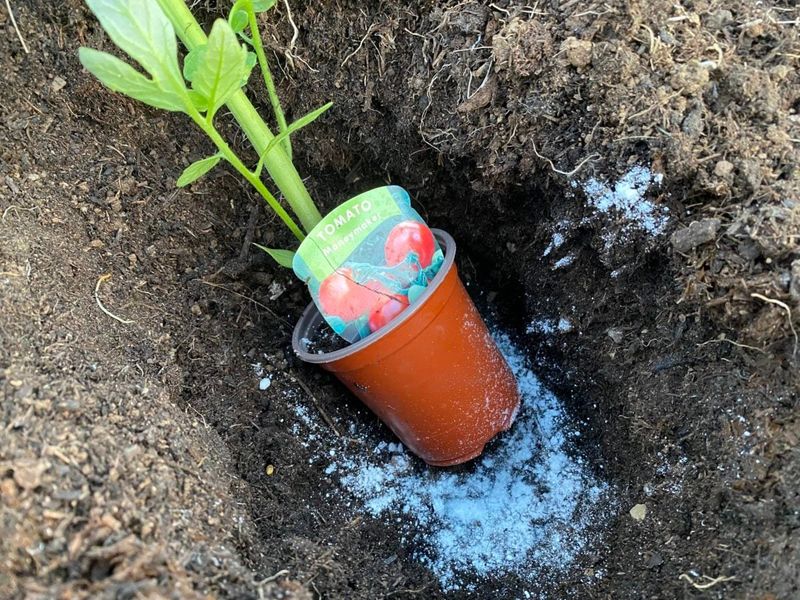
Transplanting tomatoes into cool Ohio spring soil can be a bit of a shock for young plants that have been growing in warm greenhouse conditions.
Starter fertilizers are specifically formulated to ease that transition by providing a readily available source of phosphorus that supports early root development in the critical first weeks after transplanting.
Unlike slow-release amendments, starter fertilizers deliver nutrients in a form young roots can access quickly.
Most starter fertilizers intended for transplants are water-soluble and applied as a diluted solution poured into the planting hole before or immediately after setting in the transplant.
The phosphorus in these products encourages root establishment, which matters especially in Ohio gardens where soil temperatures in early May can still run cool enough to slow nutrient uptake.
Roots that get established quickly are better positioned to support the plant through the rest of the growing season.
It is worth noting that starter fertilizers are not a substitute for broader soil preparation. A garden bed that lacks organic matter or has significant nutrient deficiencies will not be fixed by a single dose of starter solution.
Think of it as a targeted nudge rather than a complete soil-building strategy.
Phosphorus movement in soil is also quite limited, meaning the fertilizer you apply at planting stays close to where you put it. Placing it near the root zone of the transplant rather than broadcasting it widely makes the most practical sense.
Ohio gardeners who use starter fertilizers alongside good organic matter preparation tend to see the strongest early-season establishment in their tomato plants.
4. Lime Works Best When Soil PH Needs A Nudge Up
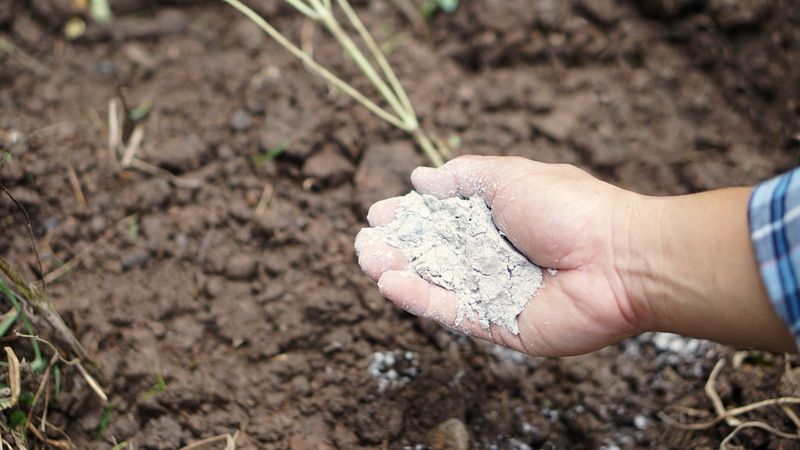
Ohio soils can vary quite a bit in pH depending on location, past management, and the kinds of amendments a garden has received over the years. Tomatoes grow best in slightly acidic soil, with Ohio guidance placing the target range at about 6.5 to 6.8.
When a soil test shows that your garden is more acidic than that, lime is the standard amendment used to raise pH toward a more favorable range for tomato growth.
The key point is the soil test. Adding lime to soil that already falls within the right range does not improve tomato growth and can push pH too high.
When that happens, nutrients such as iron, manganese, and zinc become less available to roots even if the soil contains enough of them.
Lime also works gradually rather than instantly. Ohio guidance notes that pH modification can take 3 to 6 months, which is why lime is more useful as a planned soil adjustment than a last-minute planting-hole ingredient.
Working it into the broader bed well ahead of planting is far more effective than sprinkling it into one hole at transplanting.
A soil test gives you a much clearer answer than guesswork and helps keep the planting area in the range tomatoes actually prefer.
5. Sulfur Can Bring Alkaline Soil Closer To Tomato Range
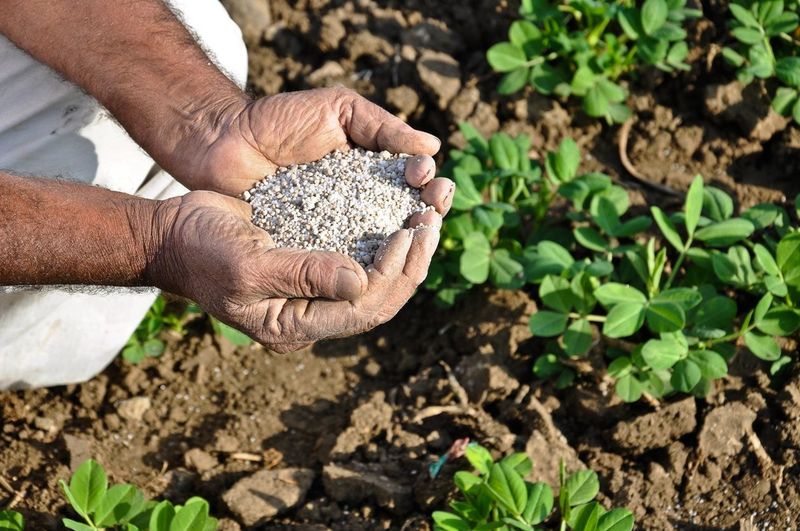
Most Ohio gardeners are more familiar with the problem of acidic soil than alkaline soil, but there are parts of the state where garden beds run higher in pH than tomatoes prefer.
Soils influenced by high limestone content, irrigated with hard water over many seasons, or amended heavily with lime in the past can sometimes sit above 7.0, which is outside the comfortable range for tomatoes.
Elemental sulfur is the most practical amendment for nudging alkaline soil back toward a more suitable pH level.
Soil bacteria convert elemental sulfur into sulfuric acid over time, which gradually lowers soil pH.
The process is not immediate and depends on soil temperature, moisture, and microbial activity to proceed at a useful rate.
Applying sulfur in fall before spring planting gives the amendment more time to work, and working it into the broader planting area rather than concentrating it in one hole produces more even results across the bed.
The amount of sulfur needed depends on how far above the target range your soil sits and what type of soil you have. Clay soils require more sulfur to shift pH than sandy soils do because of their higher buffering capacity.
Without a soil test, it is genuinely difficult to apply the right rate, which is why testing should come before any pH-adjusting amendment goes into the ground.
Sulfur is not something most Ohio tomato gardeners will need every year. If your soil pH already falls within the 6.0 to 6.8 range that tomatoes prefer, there is no reason to apply it at all.
Selective, test-guided use is what separates a useful soil amendment from an unnecessary addition that complicates your garden chemistry.
6. Calcium Amendments Make Sense Only With The Right Soil Test
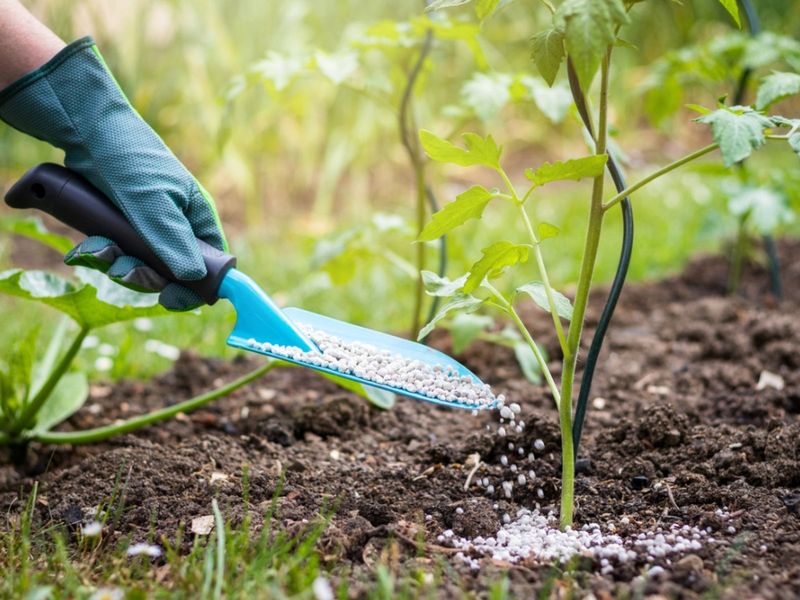
Blossom end rot is one of the most frustrating tomato problems Ohio gardeners run into, and it has convinced plenty of people that every tomato bed must be short on calcium. The reality is a little more complicated.
Ohio tomato guidance describes blossom-end rot as an insufficient supply of calcium in the fruit that can be tied to cold soil, pH imbalance, water stress, excessive nitrogen, and sometimes limited calcium availability in the soil.
That means adding extra calcium is not a universal fix.
There are still times when calcium amendments make sense. If a soil test shows low calcium, materials like gypsum or calcitic limestone can be useful.
Gypsum adds calcium without changing pH much, while calcitic lime is a better fit when calcium is low and the soil also needs a pH increase.
The popular eggshell trick is still a weak bet. Extension guidance notes that eggshells break down too slowly to supply meaningful calcium in time to prevent blossom-end rot in the current season.
If calcium is truly needed, more available sources are a better choice. Just as important, steadier watering and mulch often do more to reduce blossom-end-rot problems than dropping slow-to-break-down materials into the planting hole.