This Bright Orange Flower Thrives In California Without Daily Watering
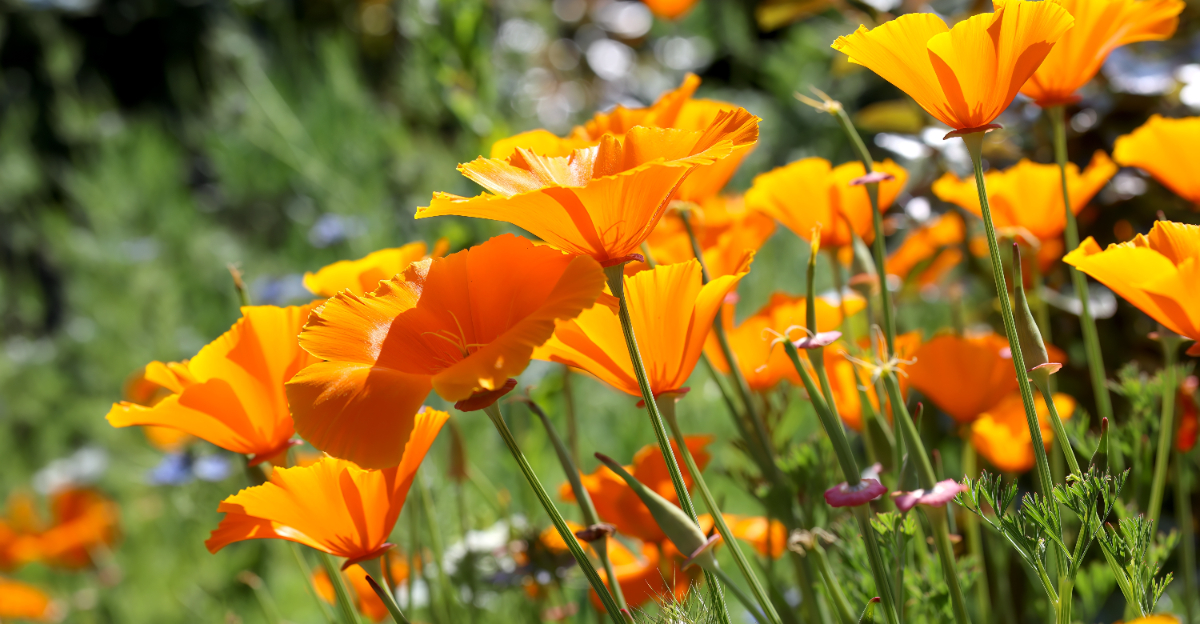
Every California garden has that one overachiever, and more often than not, it is the California poppy. While fussier plants beg for water and shade, this bright orange wildflower pops up, catches the sunlight, and happily carries on with almost no help at all.
It is bold, cheerful, and completely unfazed by dry soil and long sunny days.
Known as Eschscholzia californica, this easygoing native loves doing things its own way. It opens its silky petals to the sun, closes up in the evening, reseeds like it owns the place, and returns with even more color the next season.
Pollinators cannot resist it, gardeners barely have to think about it, and the whole yard feels brighter when it is in bloom.
Low water, low effort, big personality. The California poppy proves you do not need constant care to grow something truly eye catching under the California sun.
California’s Golden Wildflower
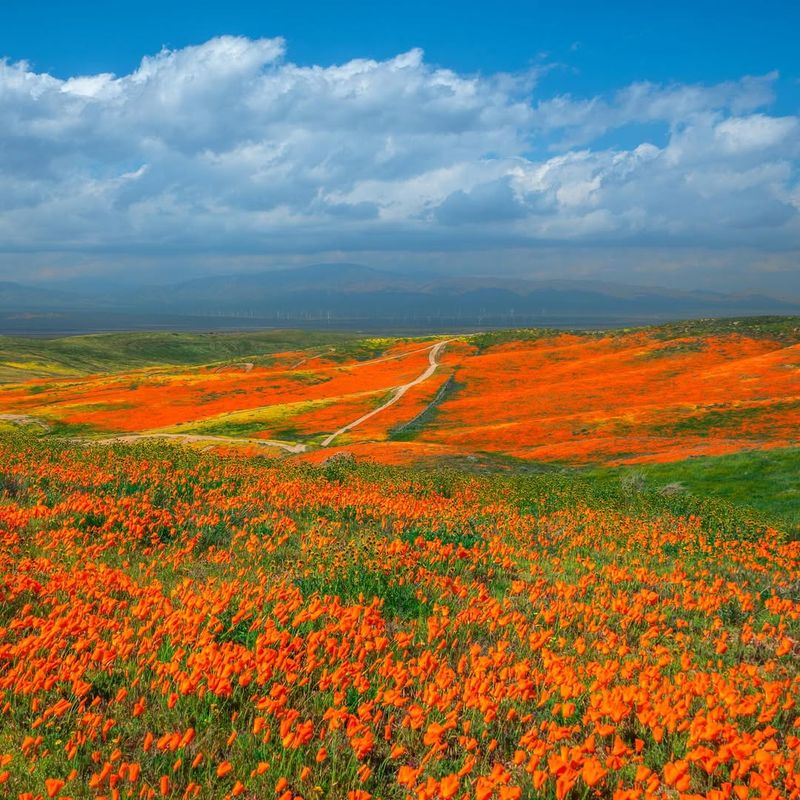
Golden hillsides covered in orange blooms define spring across California. The state flower since 1903, California poppies represent the natural beauty found throughout the region.
These flowers earned their official status because they grow wild in nearly every county.
Settlers traveling westward noticed massive fields of orange covering entire valleys. The sight became so iconic that protecting these wildflowers became a priority. Today, you can still find them blooming along highways and in protected natural areas.
Their connection to California runs deep in local culture and history. Artists paint them, photographers chase their peak bloom, and families plan outings to see the displays. Schools teach children about the state flower early in elementary grades.
Native tribes used these plants for food and oil long before modern gardeners discovered them. The petals and leaves provided nutrition during certain seasons. This historical significance adds depth to their ornamental value.
Seeing them blanket a California hillside creates an unforgettable experience. The orange waves shift in the breeze like a living painting. No wonder they symbolize the Golden State so perfectly.
Bright Orange, Zero Fuss
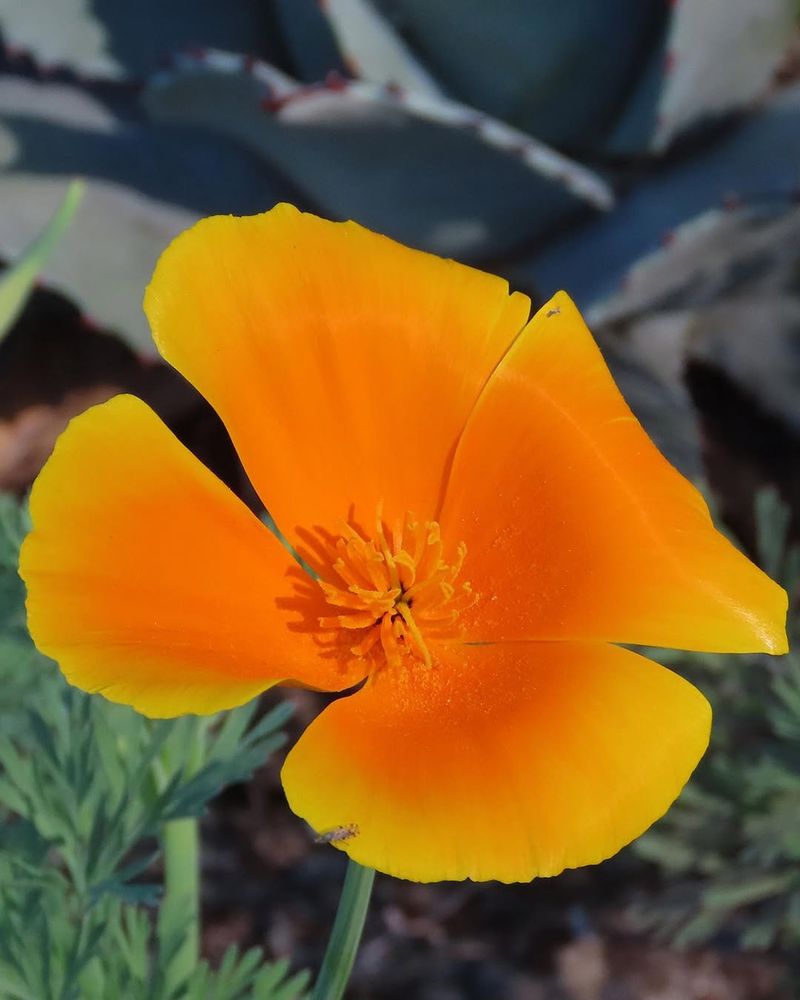
Vibrant orange petals catch your eye from across the yard. California poppies bloom in shades ranging from deep tangerine to lighter peachy tones. Each flower measures about two inches wide with silky petals that seem to glow in sunlight.
Planting them requires minimal effort compared to most garden flowers. Scatter seeds directly on bare soil in fall or early spring. Rain takes care of the rest, pushing seeds into contact with earth.
Once established, they bloom for months without special feeding or treatments. The flowers open when temperatures warm and sunshine appears. Cold snaps or cloudy weather causes them to close temporarily.
Their low maintenance nature makes them perfect for busy people. You do not need gardening experience or fancy equipment. Even children can successfully grow these flowers from seed.
California gardeners appreciate plants that deliver color without constant work. These poppies fit that description perfectly. They bloom abundantly while you focus on other tasks.
The bright color attracts beneficial insects to your yard. Bees and butterflies visit regularly for pollen. This natural pollinator support benefits your entire garden ecosystem.
Built For Sun And Dry Soil
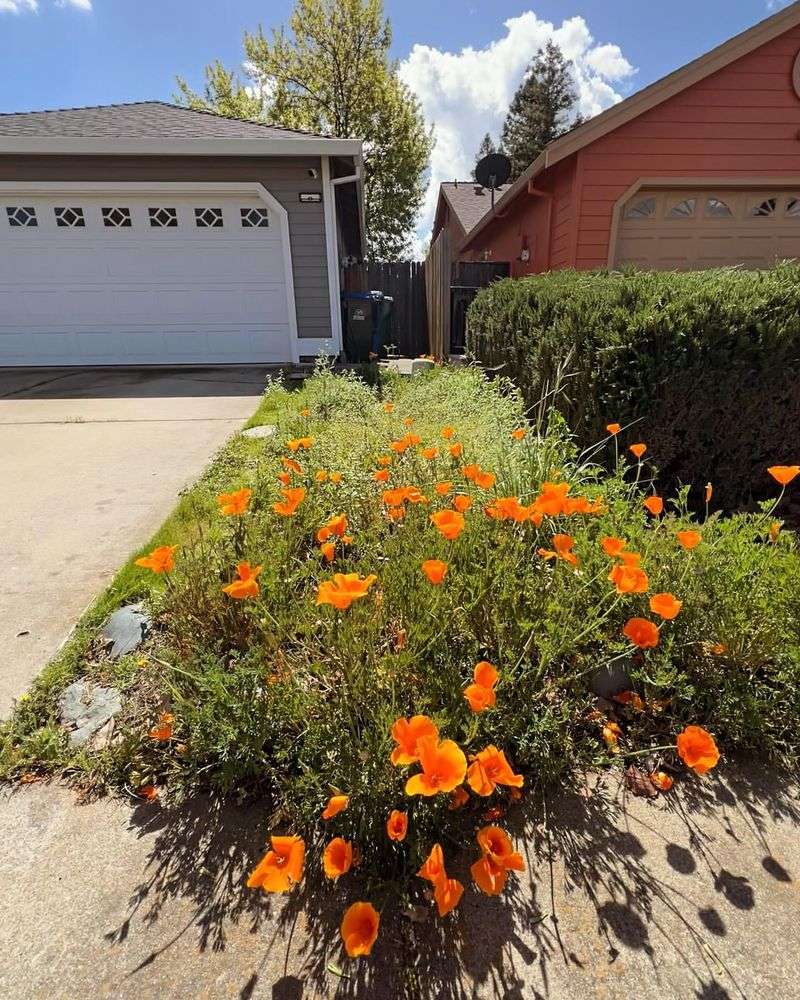
Full sun brings out the best in California poppies. They need at least six hours of direct sunlight daily to bloom abundantly. Shady spots result in fewer flowers and leggy growth.
Dry soil actually helps these plants thrive better than rich, moist ground. Their roots developed over centuries to find water deep underground. Heavy clay or constantly wet soil causes problems rather than promoting health.
Sandy or rocky ground throughout California provides ideal growing conditions. The excellent drainage prevents root issues common in other flowers. Poor soil that frustrates most gardeners works perfectly here.
Desert-like conditions during California summers do not stress these tough plants. They simply slow their growth and wait for better conditions. This survival strategy allows them to persist through challenging weather.
Amending soil with compost or fertilizer often backfires with poppies. Too many nutrients cause excessive leaf growth instead of flowers. The plants become floppy and produce disappointing blooms.
Southern California gardens with hot, dry exposures suit these flowers perfectly. They handle reflected heat from walls and pavement without wilting. Few other flowering plants tolerate such harsh conditions successfully.
The Flower That Loves Neglect
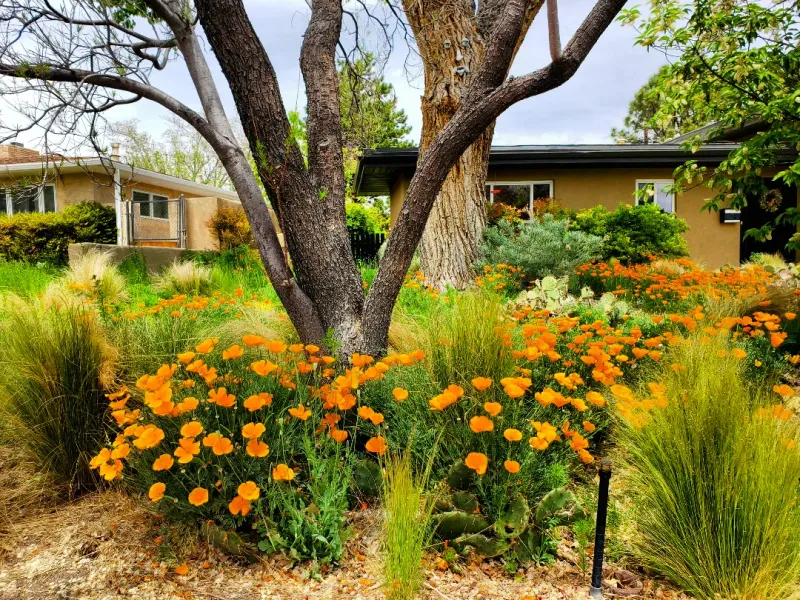
Forgetting to water actually benefits California poppies more than daily irrigation. These flowers evolved to survive California’s long, dry summers naturally. Overwatering causes more problems than underwatering ever could.
Their deep taproots search for moisture far below the surface. This root system allows them to access water that shallow-rooted plants cannot reach. Once mature, they rarely need supplemental watering.
Gardeners who fuss over every plant often struggle with poppies. The flowers respond poorly to constant attention and rich conditions. They prefer being left alone to follow their natural growth patterns.
During establishment, occasional water helps seedlings develop strong roots. After that initial period, natural rainfall provides enough moisture. Even in drought years, established plants usually survive without help.
This independence makes them perfect for vacation homes in California. You can leave for weeks without worrying about returning to withered plants. They simply keep growing and blooming on their own schedule.
Weekend gardeners appreciate flowers that do not demand regular care. California poppies deliver continuous color without weekly maintenance. Their self-sufficient nature reduces garden chores significantly.
From Hillsides To Backyards
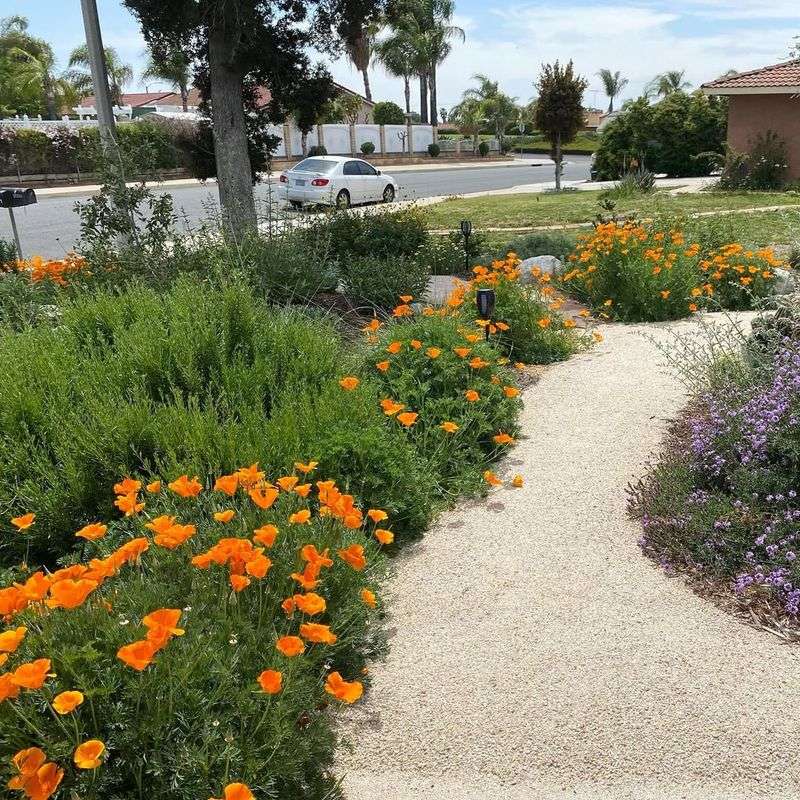
Wild populations cover thousands of acres across California each spring. From coastal bluffs to inland valleys, these flowers appear wherever conditions suit them. Protected reserves showcase massive displays that draw visitors from everywhere.
Home gardeners can recreate smaller versions of these natural shows. Backyard plantings provide the same cheerful color on a manageable scale. Even small spaces accommodate patches of poppies successfully.
Urban gardens throughout California cities feature these adaptable natives. They soften concrete landscapes and connect city dwellers to natural heritage. Rooftop gardens and parking strips become miniature wildflower meadows.
Suburban yards benefit from their informal, naturalistic appearance. They blend well with other California native plants in designed landscapes.
The casual growth habit suits modern, low-water garden styles.
Mixing them with other drought-tolerant plants creates diverse, interesting beds. Purple lupines, yellow goldfields, and white tidy tips complement orange poppies beautifully. These combinations mimic natural California plant communities.
Slopes and hillsides in residential areas become easier to manage with poppies. They stabilize soil while providing seasonal color. Their spreading habit fills space that would otherwise require constant weeding.
Blooms Without Daily Water
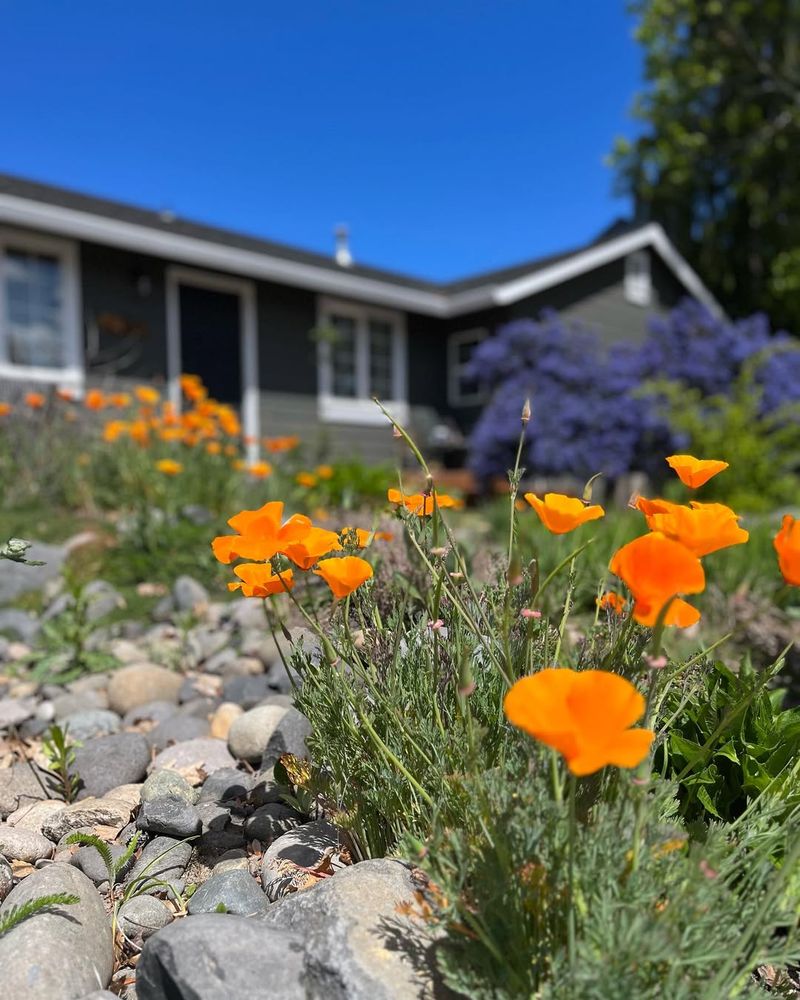
Automatic sprinklers often harm California poppies more than help them. Daily watering keeps soil too moist for these drought-adapted plants.
They perform better with infrequent, deep soaking or no irrigation at all.
Coastal California areas receive enough natural moisture from fog and occasional rain. Poppies planted near the ocean rarely need supplemental water. The marine layer provides sufficient humidity for healthy growth.
Inland regions with hotter, drier conditions still support poppies without irrigation. The plants simply bloom earlier and finish their cycle before peak summer heat. This natural timing helps them avoid the harshest conditions.
Northern California gardens enjoy more rainfall than southern areas. Poppies in these regions often receive all necessary water from winter and spring storms. Summer dormancy protects them during the dry season.
Central Valley gardens experience extreme heat but still grow beautiful poppies. The key involves planting in fall so roots establish during cool, moist months. By summer, plants can handle heat without extra water.
Water conservation efforts throughout California make these flowers increasingly popular. They deliver color while respecting limited water resources.
Choosing them demonstrates environmental responsibility without sacrificing beauty.
A Native That Reseeds Itself
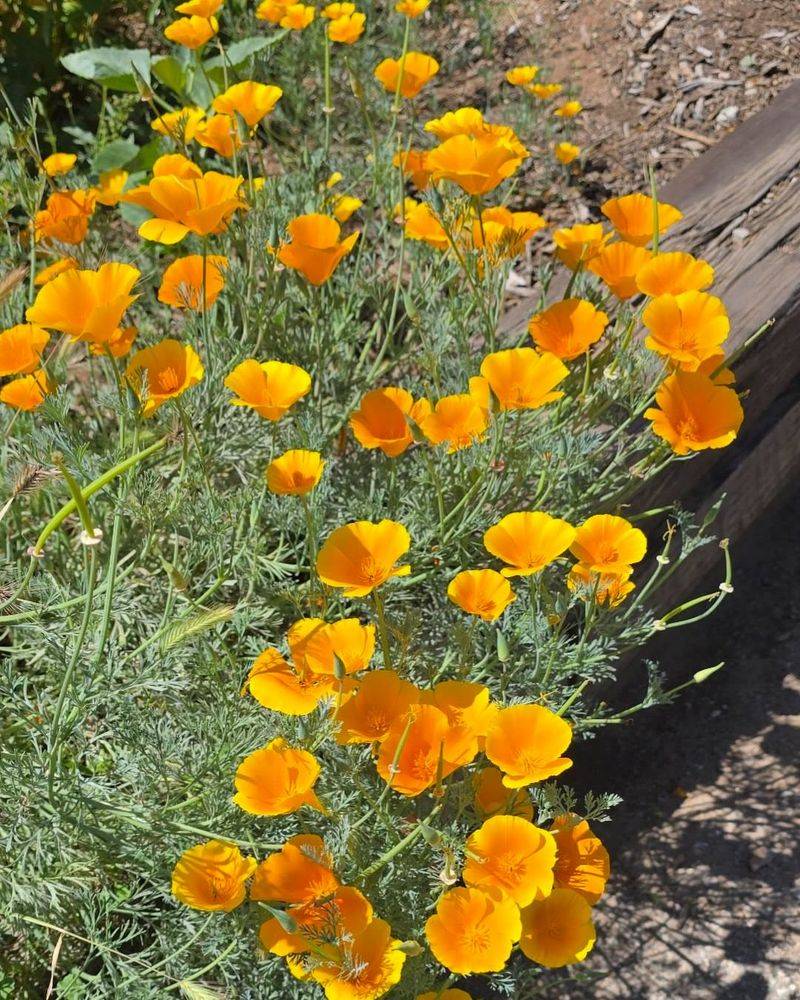
Seedpods form after flowers fade, each containing dozens of tiny black seeds. These pods split open when fully dry, scattering seeds across surrounding soil. Wind and gravity distribute them to new growing spots.
Fall rains trigger germination of seeds dropped during summer. Seedlings emerge as temperatures cool and moisture returns. By winter, small plants establish roots that carry them through to spring bloom.
This natural cycle means you plant poppies once and enjoy them for years. New plants appear each season without purchasing more seeds. The population expands gradually to fill available space.
Allowing some flowers to go to seed ensures future generations. Deadheading every bloom prevents reseeding and eventually eliminates the plants. Leaving later flowers to mature maintains the population.
Volunteer seedlings often appear in unexpected places around California gardens. They pop up in gravel paths, between pavers, and along fence lines. These surprise plants add charm and spontaneity to designed spaces.
Sharing seeds with neighbors spreads these beautiful natives throughout California communities. Collecting dried pods takes seconds and provides plenty of seeds. This generosity helps more people enjoy low-water gardening success.
Big Color, Tiny Effort
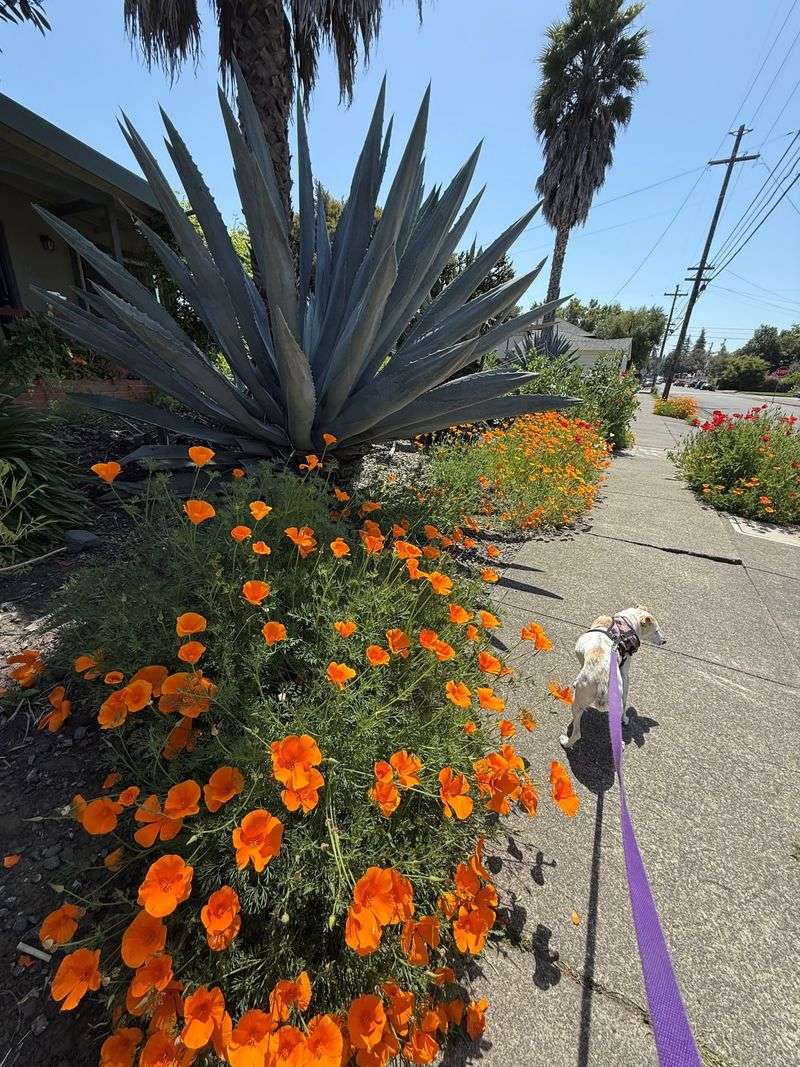
Maximum visual impact comes from planting poppies in large drifts. Scattered individual plants get lost in the landscape.
Grouping dozens together creates the eye-catching displays people associate with California wildflowers.
Preparing the planting area takes less time than most garden projects. Remove existing weeds, rake the soil smooth, and scatter seeds evenly.
Water lightly once, then let nature take over.
Within weeks, green seedlings carpet the prepared area. By spring, orange blooms transform the space completely. The dramatic change happens with minimal input from you.
Maintenance throughout the growing season requires almost nothing. No fertilizing, no staking, no spraying for pests. Occasional weeding keeps other plants from crowding the poppies.
After bloom season ends, you can cut plants back or leave them. Either approach works fine depending on your aesthetic preferences. The choice affects appearance but not plant health.
Comparing effort to results shows why California gardeners love these flowers. Few plants deliver such spectacular color for so little work. They prove that stunning gardens do not require constant labor or expensive inputs.