This Common California Spider Looks Like A Black Widow Until You Know What To Check
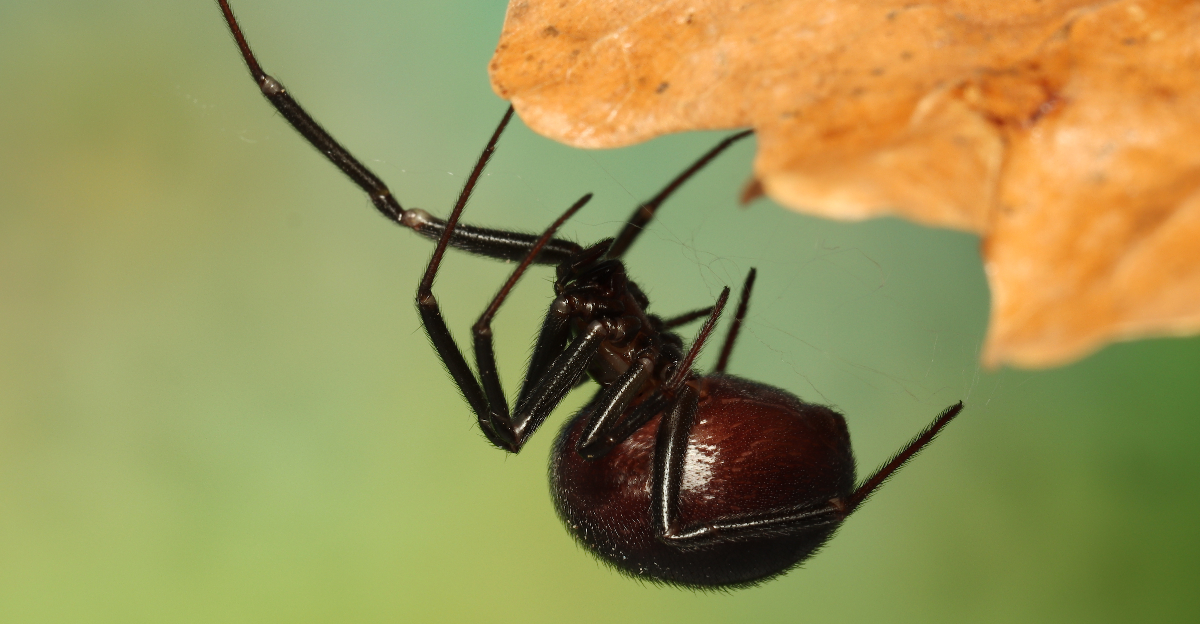
Spotting a shiny dark spider in a California yard can stop anyone mid-step. The round abdomen looks suspicious, the web seems messy, and every instinct says black widow.
Cue the instant panic. Yet one common spider often causes the same reaction despite a few key differences.
At first glance, the resemblance can feel convincing enough to send homeowners inside for gloves, a flashlight, and perhaps a second opinion.
The confusion makes sense. Color and body shape can overlap, especially in dim corners near garages, patios, or garden clutter. A rushed look rarely settles the question.
Fortunately, a few details can help separate a true black widow from its convincing look-alike. Those clues may appear on the body, in the web, or through the spider’s behavior.
Once you know what deserves attention, the encounter becomes far less mysterious and a lot less alarming.
1. The Lookalikes To Know
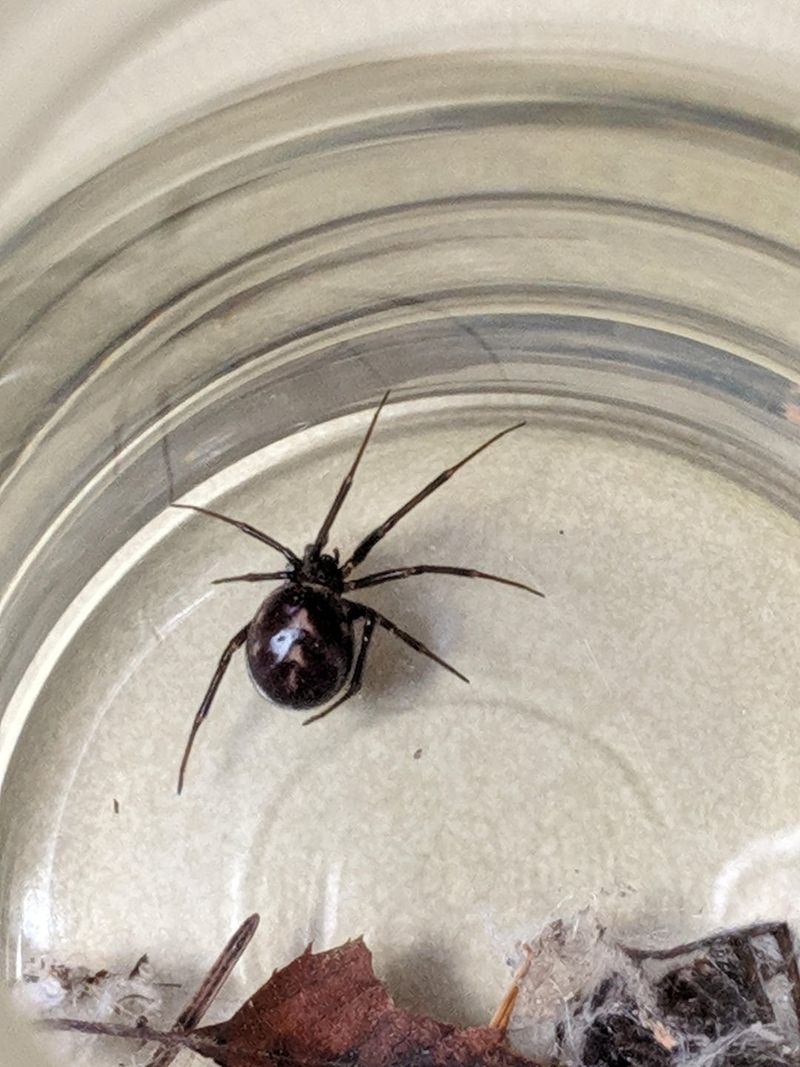
Not every dark spider hiding under your sink is cause for alarm. The cupboard spider, known scientifically as Steatoda grossa, is one of the most common household spiders found throughout California.
It belongs to the same family as the black widow, which is called Theridiidae, and that shared family tree is a big reason why people confuse the two so often.
Steatoda grossa earned the nickname “false black widow” for an obvious reason. It looks strikingly similar to its more infamous cousin at first glance.
Both spiders have round, bulbous abdomens and tend to prefer dark, sheltered spots inside homes and outbuildings.
However, the false black widow is far more common in everyday living spaces. You are more likely to encounter one in a kitchen cabinet or garage corner than a true black widow.
Knowing this spider exists and understanding its basic appearance is the first step toward staying calm when you spot something dark and round on your wall.
Cupboard spiders are not aggressive. They tend to hide and avoid contact with humans whenever possible.
Most bites happen when the spider feels trapped or threatened, such as when a person reaches into a box or puts on a shoe without checking first. Awareness is your best tool when it comes to living alongside these very common spiders.
2. The Body Shape Can Fool Homeowners
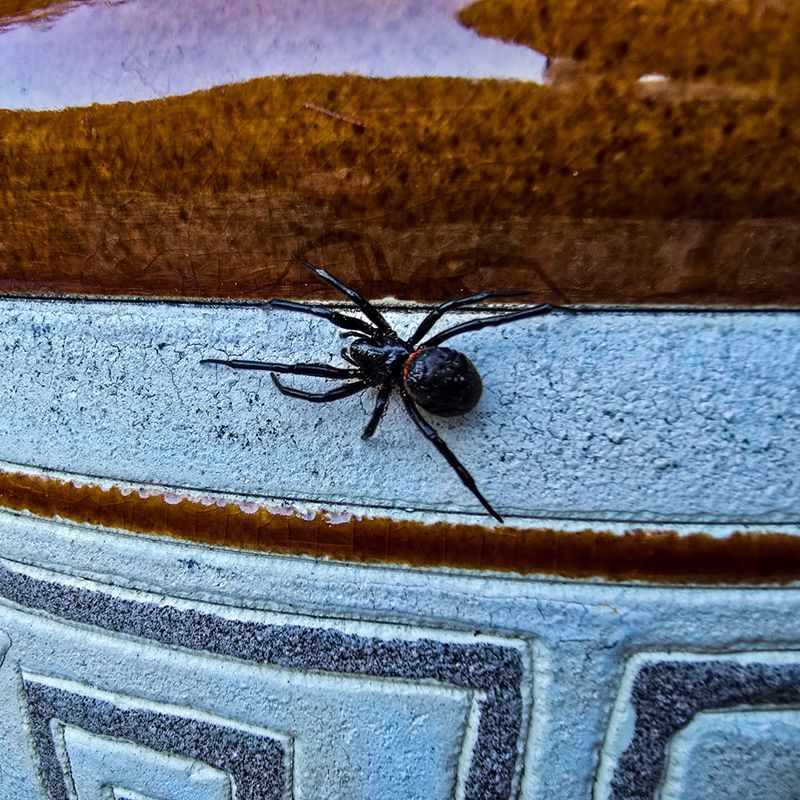
Round, glossy, and small enough to hide in a crack, the false black widow has a body shape that sends many homeowners straight to the internet in a panic.
The abdomen is noticeably large and globe-shaped, which is a feature shared with the true black widow.
That similarity in silhouette is one of the main reasons misidentification happens so often.
Both spiders have a small cephalothorax, which is the front section that holds the legs and head, and a much larger abdomen behind it.
This gives them both that distinctive teardrop or pea-shaped look that many people associate with dangerous spiders.
When you spot one quickly in dim lighting, it is easy to assume the worst.
A helpful tip is to look at the overall size of the spider. Female black widows tend to be slightly larger, often measuring close to half an inch in body length.
Your California Garden Changes Every Week. Your Plan Should Too.
Gardening in California changes quickly throughout the season. Every Friday you’ll receive a simple weekly plan showing exactly what to plant, prune, fertilize, harvest, and protect so you never miss the right timing.
False black widows are usually a bit smaller, though sizes can overlap depending on age and gender. Size alone should never be your only clue.
The legs of both spiders are also thin and relatively long compared to the body. This adds to the visual similarity.
Taking a moment to observe the spider carefully from a safe distance, rather than reacting immediately, gives you time to notice the differences that really matter.
3. The Hourglass Mark Is Usually Missing
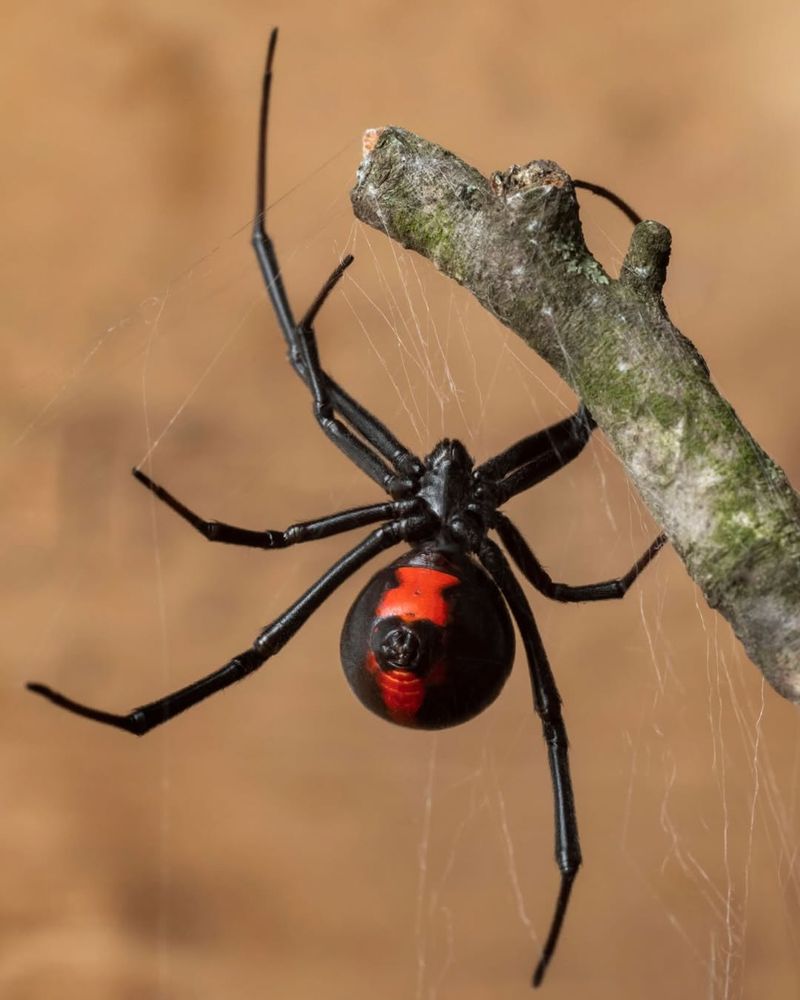
One of the most well-known features of the true black widow is the bright red hourglass marking on the underside of its abdomen. That vivid red shape is bold, clear, and easy to spot when you flip a lid or look under a ledge.
The false black widow, on the other hand, usually does not have this marking at all.
Some Steatoda grossa specimens may have faint lighter markings or pale spots on the top of the abdomen. These are not the same as the hourglass.
They tend to look more like smudgy cream or yellowish patches rather than a sharp, defined red symbol. The difference is pretty easy to see once you know what to compare.
Checking for the hourglass requires looking at the belly of the spider, which is not always easy to do safely. A good trick is to coax the spider into a clear glass jar or container.
Once it is inside, you can tilt the jar and look at the underside without putting yourself at risk. A flashlight helps a lot in this situation.
If there is no red hourglass present, that is a strong sign you are looking at a false black widow rather than a true one. This single feature is one of the most reliable ways to tell the two species apart.
Always check the belly before making any assumptions about which spider you have found.
4. Color Alone Is Not Enough To Identify It
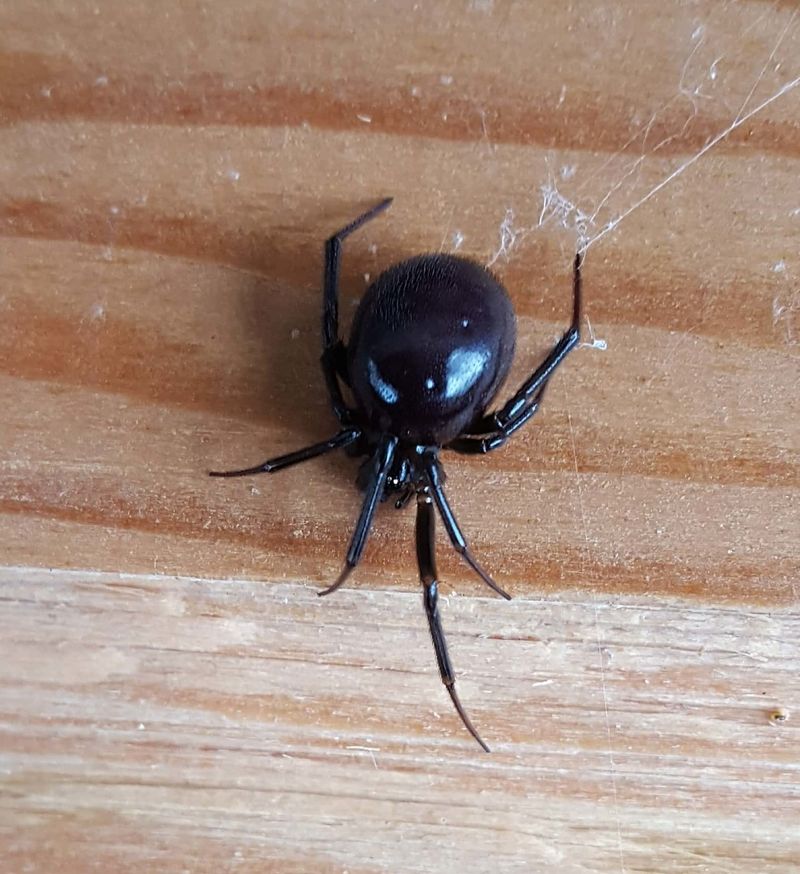
A lot of people assume that if a spider is very dark or black-looking, it must be a black widow. That assumption leads to a lot of misidentification in California.
Color is one of the least reliable ways to tell these two spiders apart, and relying on it alone can lead you to the wrong conclusion every time.
True black widows are typically a very deep, shiny black. Their color is consistent and striking, almost like polished plastic.
The false black widow, however, tends to have a darker brown tone that can sometimes appear nearly black, especially in low lighting or when the spider is not well lit.
Lighting plays a huge role in how spider color appears to the human eye. A brown spider in a dimly lit garage corner can easily look black.
That is why checking color under better lighting conditions, or using a flashlight, makes a real difference in what you see. Natural daylight works even better when possible.
Beyond lighting, the body surface texture can also differ slightly. Black widows tend to have a very smooth, shiny abdomen.
False black widows may appear slightly less glossy, though this is a subtle difference that takes some practice to notice.
Color is worth observing, but it should always be used alongside other identifying features rather than standing alone as your main clue.
5. False Black Widows Look More Brown Than Black
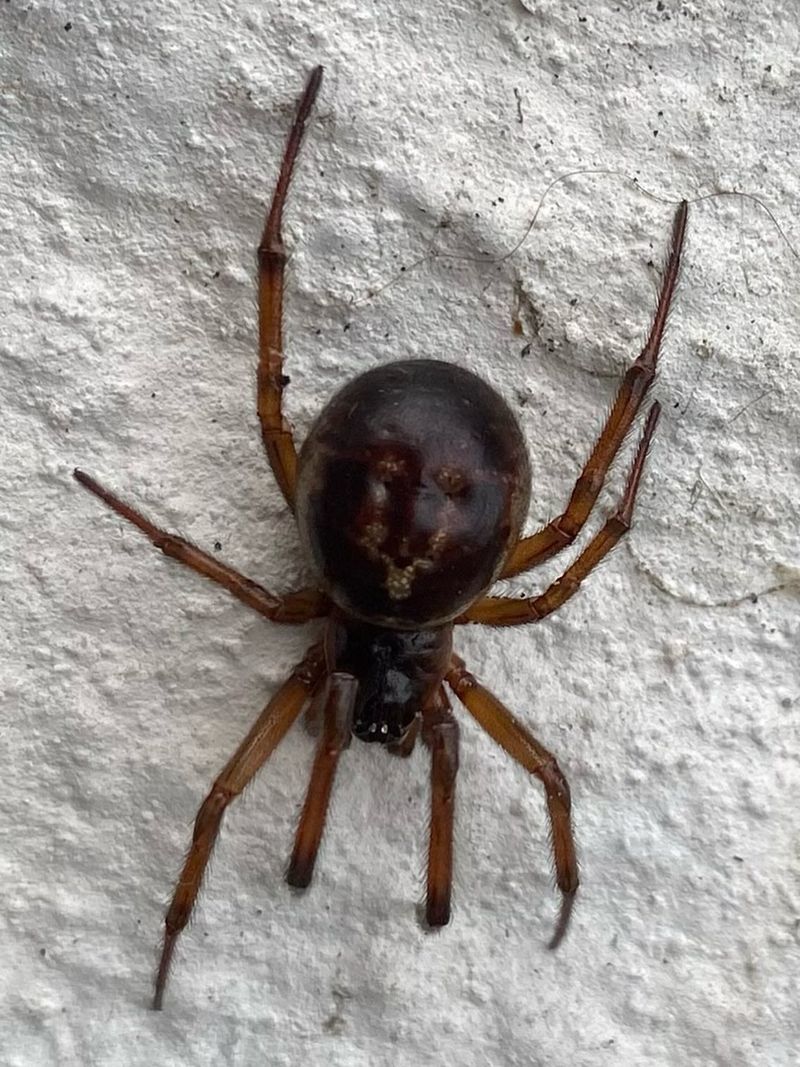
Here is something that surprises many people: once you see a false black widow in good lighting, it often looks clearly brown rather than true black.
The abdomen can range from a deep chocolate brown to a reddish-brown or purplish-brown shade.
This warmer tone is one of the most useful clues for telling it apart from a true black widow.
Many false black widows also display faint pale markings across the top of the abdomen. These can appear as small cream-colored spots or a broken band running along the center.
These markings are subtle, but they stand out against the brown background when you look closely. A true black widow does not typically have these kinds of markings on top.
Younger female false black widows and males can look slightly different from mature females. Juveniles may appear lighter in color overall, and males tend to be smaller with more visible patterning.
Knowing this helps you avoid confusion when you spot a spider that does not look quite like the typical adult form you might expect.
When in doubt, photograph the spider from multiple angles if it is safe to do so. A clear photo can be shared with local pest control experts or uploaded to spider identification apps.
Getting a second opinion from someone with experience is always a smart move when you are unsure about what you are looking at.
6. Web Location Offers Another Clue
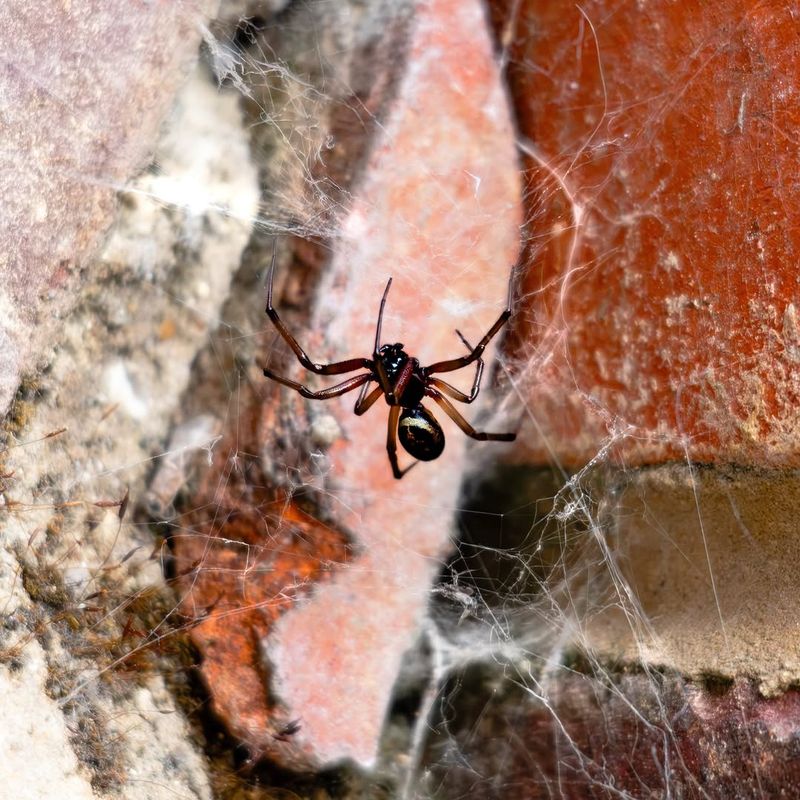
Where a spider builds its web can tell you a lot about what kind of spider you are dealing with.
Both the false black widow and the true black widow build irregular, tangled webs rather than the neat, round orb-shaped webs many people picture when they think of spiders.
But there are some location preferences worth paying attention to.
True black widows tend to build their webs very close to the ground. They favor low spots like the bases of fences, under rocks, in wood piles, and near the ground level of outdoor structures.
Their webs often have a funnel or retreat area where the spider hides during the day. The web feels noticeably strong and sticky to the touch.
False black widows are more likely to build webs inside homes, particularly in undisturbed upper corners of rooms, behind appliances, and along ceiling edges.
They still prefer sheltered and dark spots, but they are less tied to ground-level locations than the true black widow.
Finding a tangled web up near the ceiling is more often a sign of Steatoda grossa.
Web location is not foolproof on its own, but it adds useful context when combined with other clues.
If you find a messy web near the ceiling inside your home with a dark round spider nearby, you are probably looking at a false black widow rather than a true one.
Always check multiple features together for the most accurate identification.
7. Garages And Sheds Are Common Hiding Spots
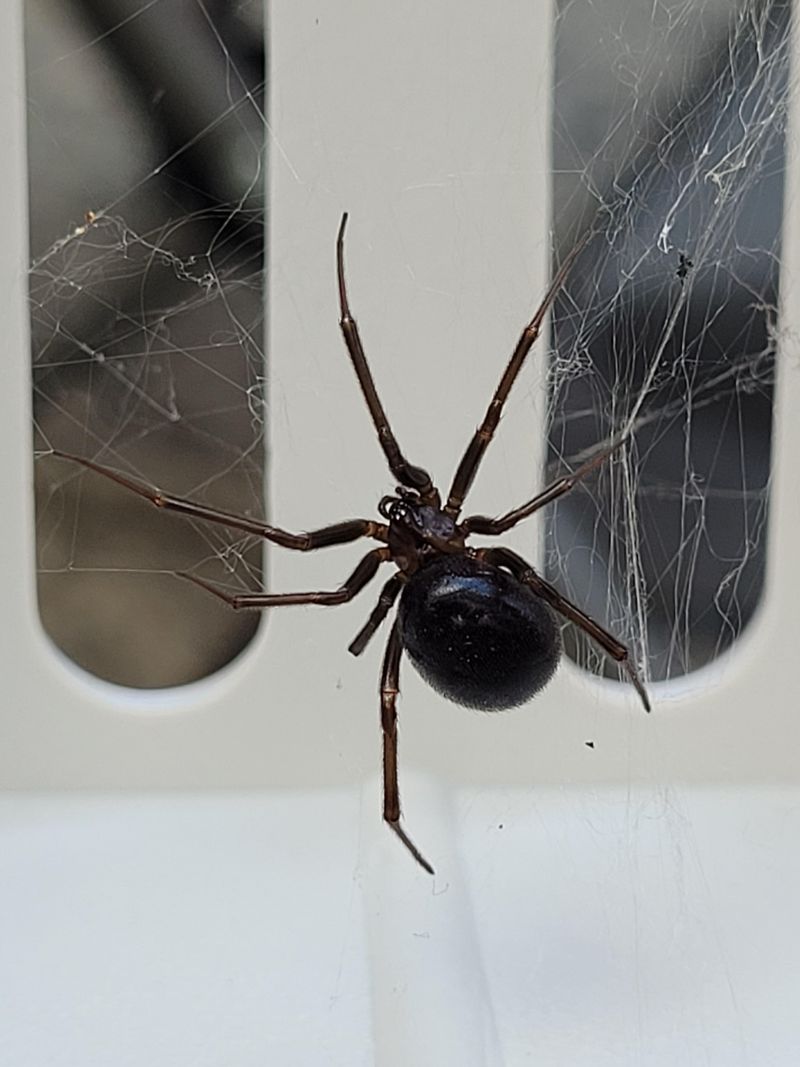
Cluttered, undisturbed spaces are like luxury apartments for false black widows. Garages, garden sheds, storage rooms, and basements are among their favorite places to set up home.
These areas offer darkness, low foot traffic, and plenty of surfaces to anchor a web. If you have a garage full of boxes, there is a decent chance at least one of these spiders has moved in.
Both the false black widow and the true black widow share a preference for these kinds of spaces, which makes it even more important to know how to tell them apart.
When you are reaching into a storage bin or moving boxes around, you could disturb either species without realizing it. Wearing gloves is a simple habit that reduces risk significantly.
False black widows tend to favor spots where they will not be bothered for long periods. Behind tool cabinets, under shelving units, and inside cardboard boxes are all common locations.
They are not looking for trouble. They just want a quiet, dark spot to wait for prey to wander into their web.
Checking your garage or shed periodically and clearing out clutter reduces the number of ideal hiding spots available to spiders of all kinds.
Regular cleaning and organizing also means you are less likely to accidentally disturb a spider that has been living undisturbed for weeks or months.
A tidy space is genuinely one of the most practical ways to reduce unwanted spider encounters.
8. Egg Sacs Can Look Different Too
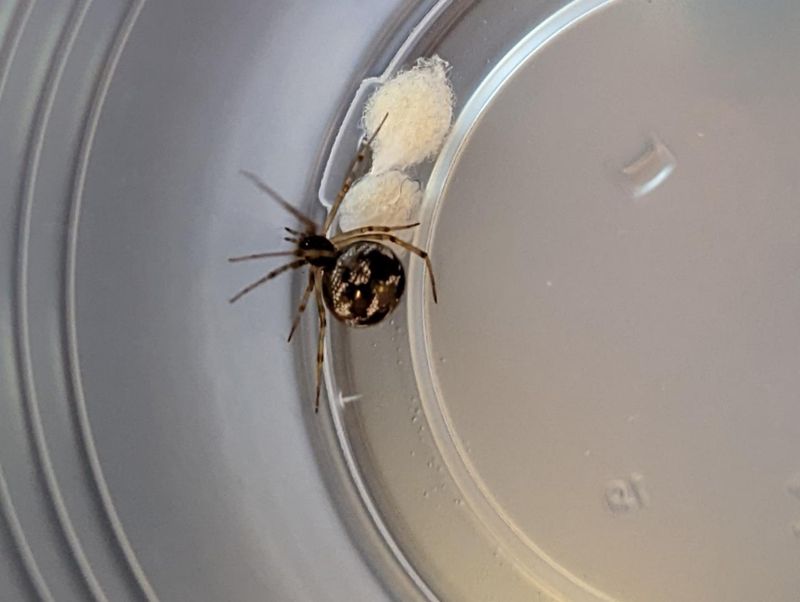
Egg sacs are another feature that can help you figure out which spider you are dealing with. Both species produce egg sacs, but there are some noticeable differences in how they look.
Paying attention to the egg sac shape and texture can give you one more piece of the identification puzzle.
True black widow egg sacs are typically round, smooth, and papery. They are usually about the size of a small marble and have a consistent, almost perfect spherical shape.
They tend to be a cream or tan color and are often found hanging in the lower part of the web near the ground.
False black widow egg sacs look a bit different. They tend to be more irregular in shape, sometimes appearing slightly lumpy or teardrop-shaped rather than perfectly round.
The surface can look a little rougher or more textured. They are also typically found higher up in the web, consistent with where the spider prefers to build.
If you spot an egg sac in your California home or garage, do not handle it with bare hands. One egg sac can contain dozens of spiderlings.
Moving the sac without care could result in a sudden release of many tiny spiders at once. A sealed container or a call to a pest control professional is the smartest way to deal with an egg sac you are not sure about.
9. Bites Are Unpleasant But Usually Less Serious
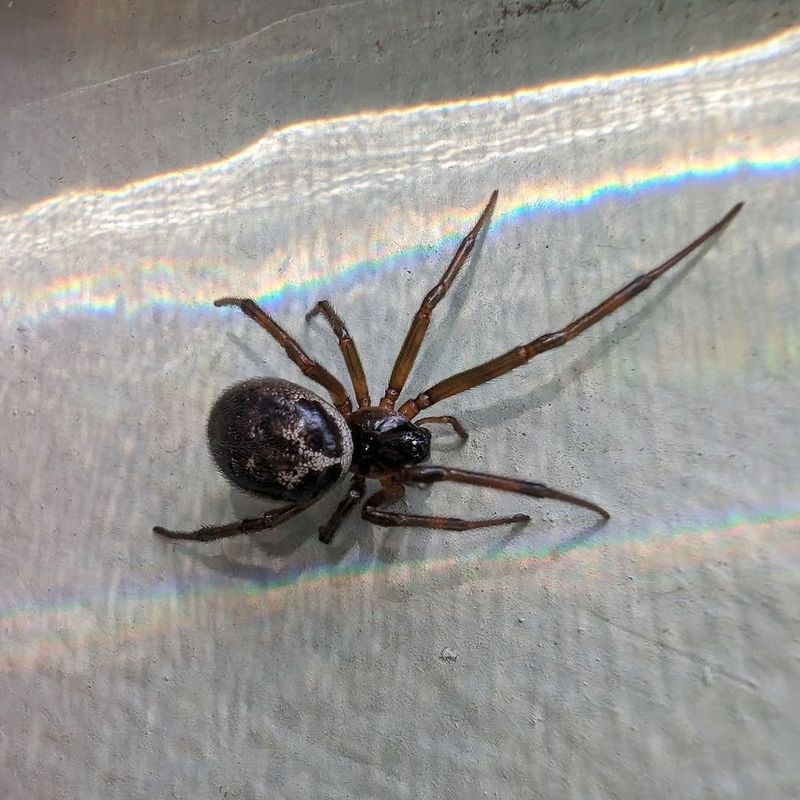
Most people want to know the same thing when they think they have been bitten by a dark spider: how serious is it?
With a false black widow, the honest answer is that bites can be uncomfortable, but they are generally much less severe than a true black widow bite.
That is genuinely reassuring news for most people.
Steatoda grossa does have venom, and a bite can cause localized pain, redness, and swelling. Some people experience a burning or throbbing sensation around the bite area.
In rare cases, symptoms can be more significant, including muscle cramps or a general feeling of being unwell.
This is sometimes called steatodism, and it resembles a mild version of the reaction caused by a true black widow.
Children, elderly individuals, and people with certain health conditions may have stronger reactions to any spider bite.
If someone is bitten and develops symptoms beyond mild local irritation, getting medical attention is the right call.
A healthcare provider can assess the situation and recommend the appropriate care.
Most healthy adults who are bitten by a false black widow recover without needing much treatment beyond basic first aid. Cleaning the bite, applying a cold pack, and monitoring for any changes is usually sufficient.
Keeping the spider in a sealed container if possible helps medical staff identify it quickly, which makes getting the right care faster and easier.