This Desert Icon Appears In Nearly Every Arizona Landscape
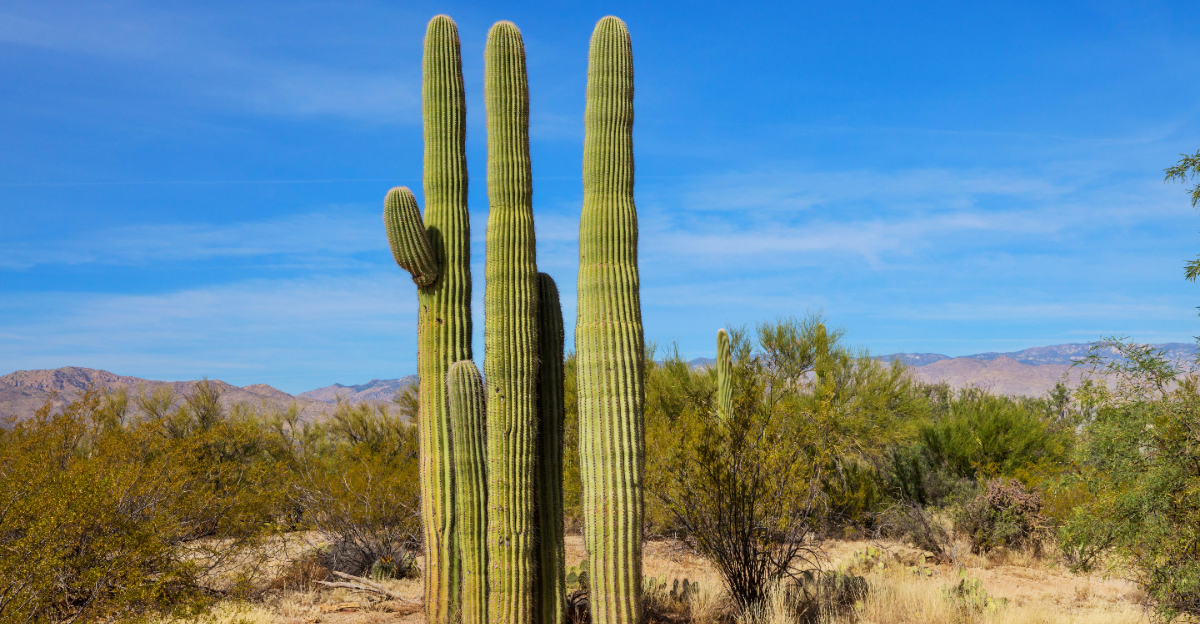
You see it on postcards, highway drives, and neighborhood front yards, yet it never feels ordinary. The Saguaro cactus stands tall across Arizona landscapes, shaping the skyline in a way no other plant can.
Even if you pass one every day, its size and structure still command attention.
This desert icon is more than a symbol, it is a survivor built for brutal sun, long droughts, and dramatic temperature swings. Its slow growth makes every arm feel earned, and every silhouette tells a story of time and endurance.
Few plants define a region as clearly as this one defines Arizona.
When you spot one rising above gravel yards or desert trails, you immediately know where you are. It anchors the landscape, adds structure, and turns open desert into something unforgettable.
1. Why This Desert Giant Only Thrives In Southern Arizona
Visitors driving through Arizona quickly notice these towering green columns dotting the hillsides and valleys throughout the state.
Saguaros grow naturally only in the Sonoran Desert, which covers much of southern and central Arizona along with small portions of California and Mexico.
Their unmistakable shape has appeared in countless Western movies, making them instantly recognizable worldwide as symbols of the American Southwest.
The saguaro’s native range stays within specific elevation and temperature zones across Arizona. You’ll find them thriving from Phoenix through Tucson and westward toward Yuma, wherever winter temperatures stay mild enough for their survival.
These cacti cannot tolerate prolonged freezing conditions, which explains why they don’t grow in Arizona’s higher elevation areas like Flagstaff or the White Mountains.
Arizona designated the saguaro as its official state flower in 1931, cementing its status as the region’s botanical ambassador. The cactus appears on everything from license plates to business logos throughout the state.
Saguaro National Park near Tucson protects thousands of these magnificent plants, offering visitors the chance to walk among dense forests of these desert giants.
Many Arizona residents take pride in having saguaros growing on their property, treating them as treasured landscape features. The cactus has become so culturally significant that state laws strictly protect them from harm or removal without proper permits.
Understanding their importance helps visitors appreciate why Arizonans feel such strong connections to these remarkable desert dwellers that define their home landscape.
2. Towering Arms Create That Classic Arizona Silhouette
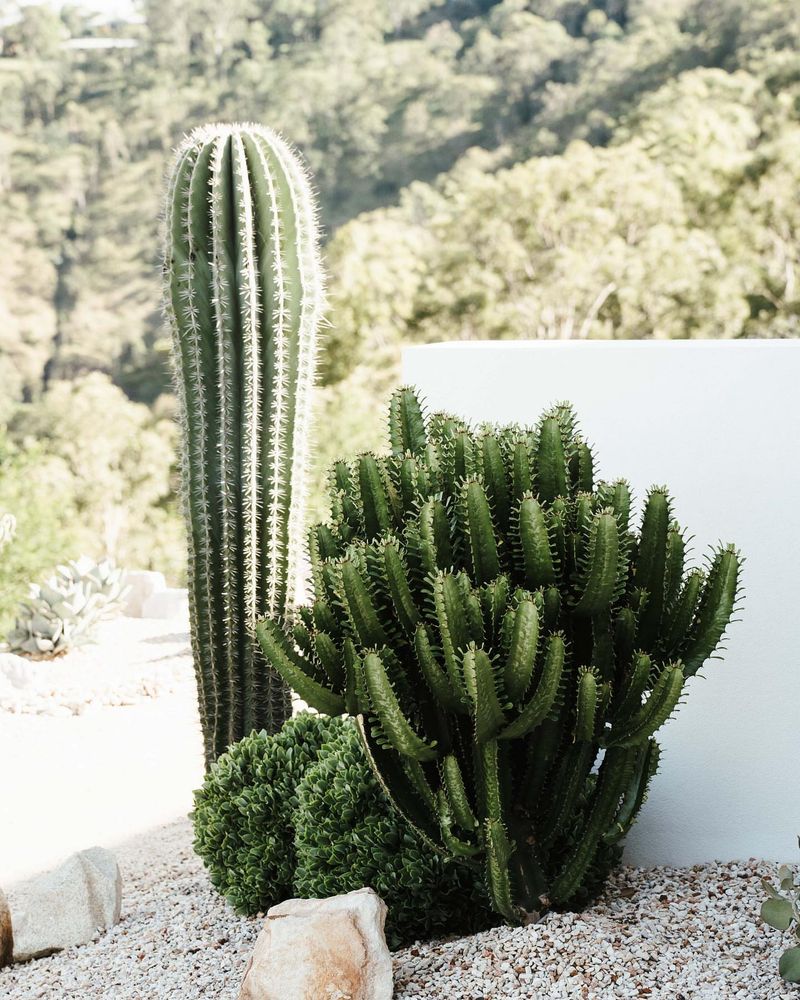
A fully mature saguaro presents one of nature’s most distinctive profiles, with multiple arms curving upward from its central trunk.
These branches don’t start appearing until the plant reaches 50 to 70 years old, making each armed saguaro a testament to decades of desert survival.
Some specimens develop just one or two arms, while others sprout ten or more, creating unique personalities that make individual cacti recognizable landmarks across Arizona.
Scientists still debate exactly what triggers arm growth, though theories point to a combination of age, available moisture, and lightning strikes. The arms typically begin as small bumps on the trunk that slowly elongate over many years.
Each arm grows at its own pace, resulting in the asymmetrical shapes that make saguaros so photogenic and memorable.
The classic cartoon image of a saguaro always shows multiple arms, but young specimens spend their first half-century as simple columns.
Height matters more than arm count when determining age, since a 10-foot saguaro might be 30 years old while a 25-foot giant with several arms could be approaching 100.
Arizona photographers love capturing saguaros with distinctive arm patterns, especially during golden hour when long shadows emphasize their dramatic shapes.
These arms serve practical purposes beyond aesthetics, providing additional surface area for photosynthesis and creating more spots for flowers and fruit. Birds particularly favor the arms for nest sites, drilling cavities that later become homes for other desert creatures.
Watching a saguaro develop its arms over decades reminds observers of the incredible patience required for desert life in Arizona’s challenging environment.
3. Built For Brutal Sun And Months Without Rain
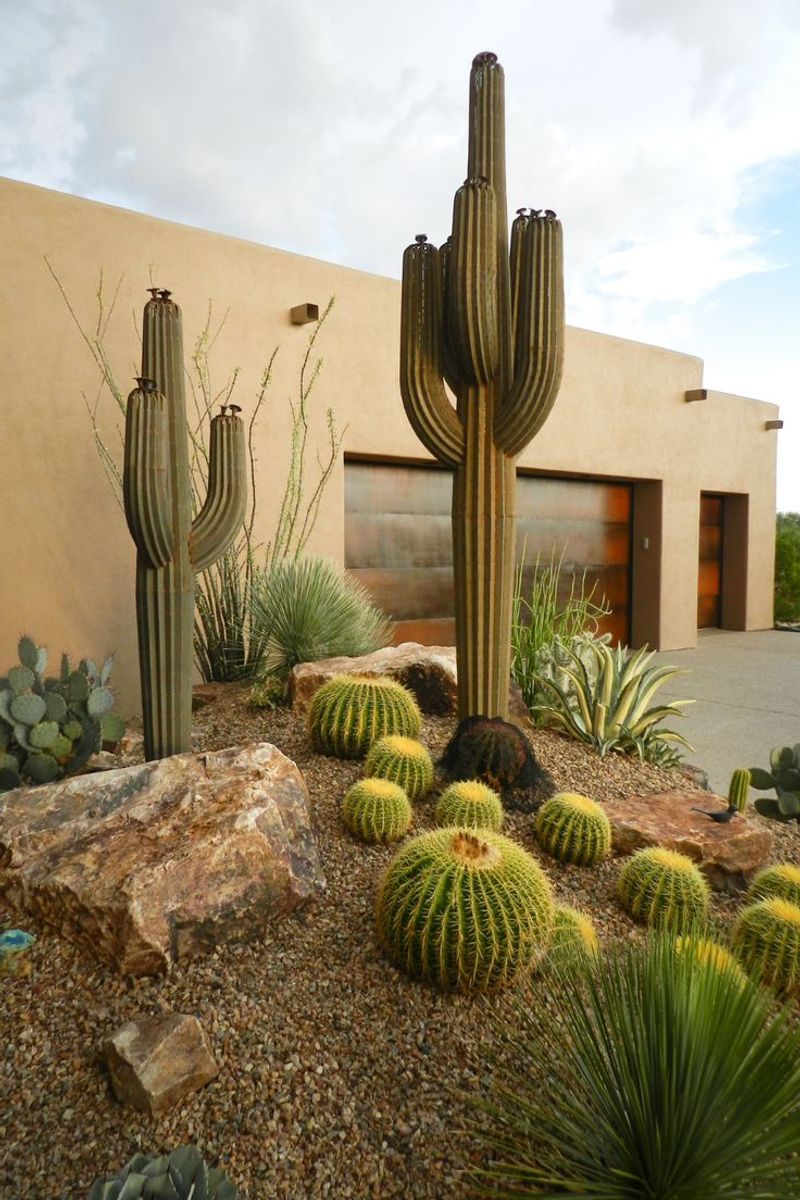
Saguaros possess remarkable engineering that lets them thrive where summer temperatures regularly exceed 110 degrees and rain might not fall for months.
Their accordion-like pleats expand and contract as the plant absorbs and uses water, allowing the trunk to swell significantly after storms.
A large saguaro can store several tons of water within its spongy interior tissue, providing reserves that sustain it through Arizona’s long dry spells.
The cactus’s thick, waxy skin minimizes water loss while its extensive but shallow root system spreads out like a giant web just below the surface. When monsoon rains finally arrive in summer, these roots quickly absorb moisture before it evaporates or runs off.
The roots typically extend as far from the trunk as the plant stands tall, creating an impressive underground network across Arizona’s desert floor.
Unlike trees with leaves that would lose precious moisture, saguaros conduct photosynthesis through their green skin. Thousands of sharp spines protect the plant from hungry desert animals while providing small patches of shade that reduce water loss.
These spines actually grow from specialized structures that would be leaf nodes on other plants, showing how evolution adapted cacti for extreme conditions.
Arizona’s saguaros open their pores to take in carbon dioxide only during cool nights, then close them during scorching days to prevent moisture escape. This clever adaptation allows them to survive in conditions that would quickly overwhelm most plants.
Their ability to endure Arizona’s harshest weather explains why these cacti have become the ultimate symbol of desert toughness and resilience.
4. Native Habitat Supports Birds, Bats, And Pollinators
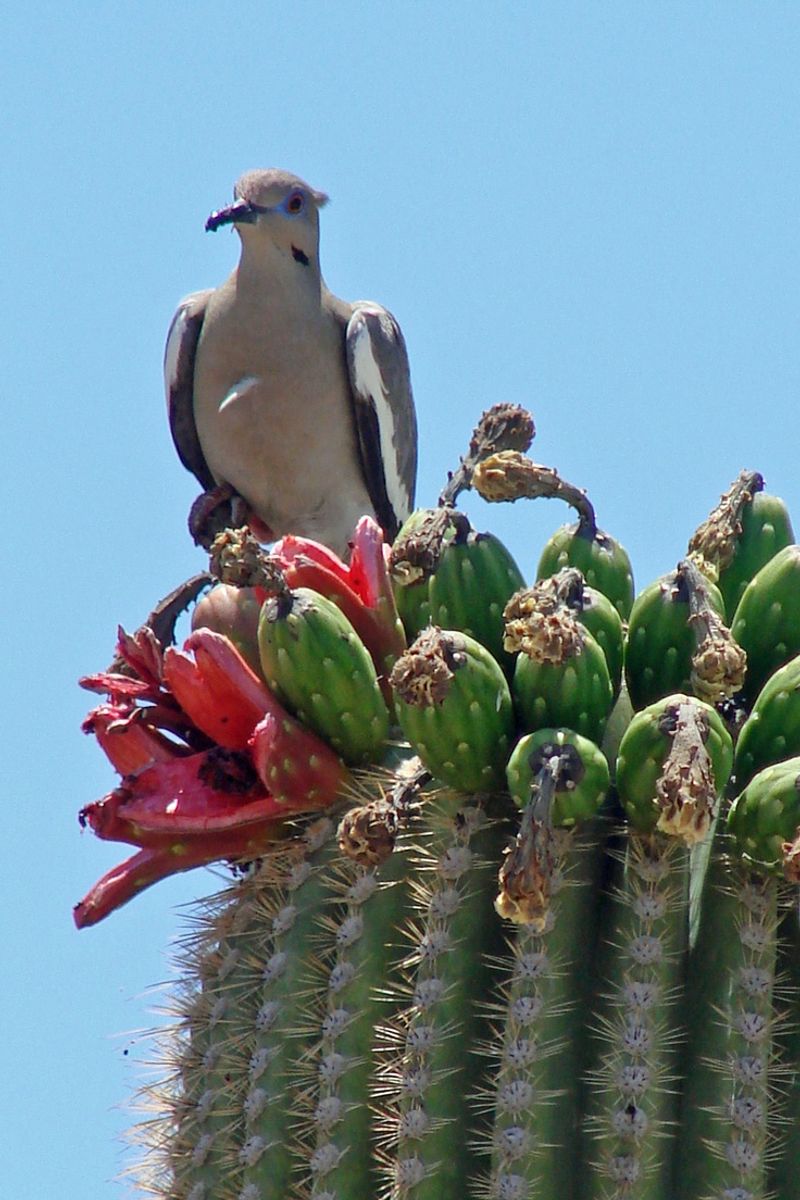
Saguaros function as apartment buildings for Arizona’s desert wildlife, providing food and shelter for dozens of species throughout the year.
Gila woodpeckers and gilded flickers drill nesting cavities into the trunks, creating homes that later become valuable real estate for elf owls, purple martins, and other birds.
The cactus responds by forming a tough, callused lining around each hole, which prevents moisture loss while creating cozy chambers that stay cooler than outside temperatures.
White-winged doves, curved-bill thrashers, and cactus wrens build nests among the protective spines of the arms. These thorny fortresses keep predators away while offering shade during Arizona’s intense summer heat.
Harris’s hawks sometimes perch atop tall saguaros to scan for prey across the desert floor, using the height advantage these cacti provide.
Lesser long-nosed bats migrate through Arizona specifically to feed on saguaro nectar, arriving just as the flowers begin blooming. These nocturnal pollinators push their faces deep into the blossoms, emerging covered with pollen that they carry to the next cactus.
Native bees, moths, and hummingbirds also visit the flowers, creating a busy pollination network that ensures fruit production.
When the red fruits ripen in summer, they become a crucial food source during the desert’s hottest, driest period. Birds, bats, coyotes, and javelinas all feast on the sweet pulp and thousands of tiny black seeds.
This wildlife activity helps spread saguaro seeds across Arizona’s landscape, though only a tiny fraction will ever germinate and survive to adulthood in the harsh desert environment.
5. Slow Growth Leads To A Century-Long Lifespan
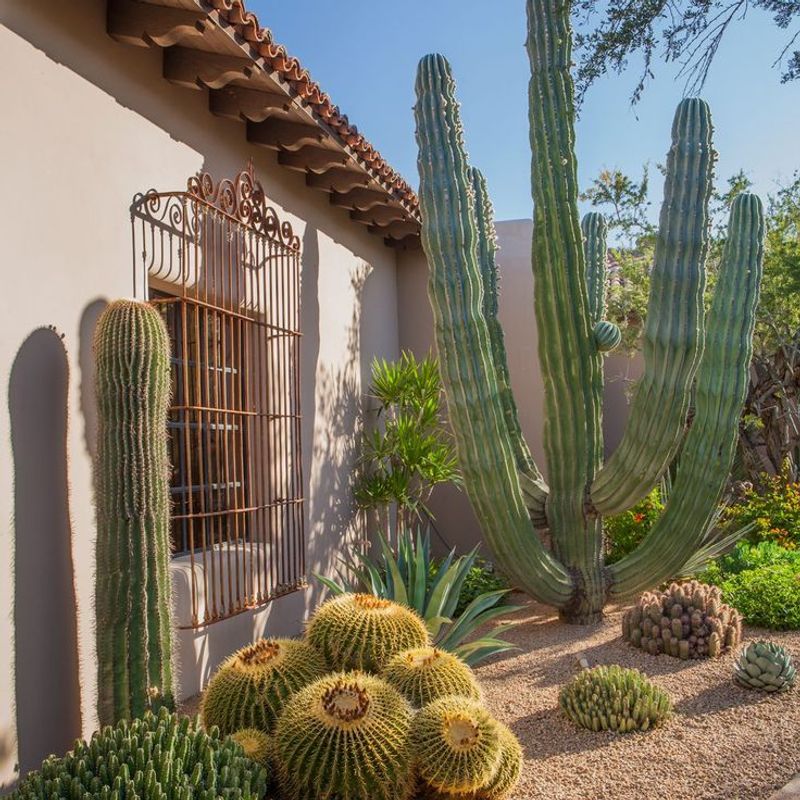
Patience defines everything about saguaro growth, with seedlings taking 10 years just to reach one inch tall in Arizona’s challenging conditions. A 15-year-old saguaro might stand only a foot high, barely noticeable among desert shrubs and rocks.
These slow early years reflect the enormous challenge of establishing roots and building enough stored resources to survive their first serious drought or cold snap.
Growth accelerates somewhat after the first few decades, with healthy specimens adding a few inches per year under favorable conditions. By age 30, a saguaro typically reaches five to six feet tall, finally becoming a noticeable presence in the Arizona landscape.
The plant won’t produce its first flower until somewhere between 35 and 40 years old, meaning decades pass before it can reproduce.
Most saguaros live between 150 and 200 years, though some ancient specimens may reach 250 years or more. Scientists determine age by measuring height and arm development rather than counting rings, since cacti don’t form annual growth rings like trees.
The oldest saguaros in Arizona witnessed the Wild West era, Spanish colonial times, and countless generations of desert dwellers.
A 40-foot saguaro weighing several tons represents nearly two centuries of surviving droughts, floods, freezes, lightning strikes, and windstorms. Eventually, age and damage take their toll, and the cactus begins declining.
Some topple during monsoon storms, while others slowly collapse as their internal structure weakens. Even in decline, these giants provide homes for wildlife and return nutrients to Arizona’s desert soil, completing a life cycle that spans human lifetimes.
6. Instant Desert Character For Front Yards And Open Spaces
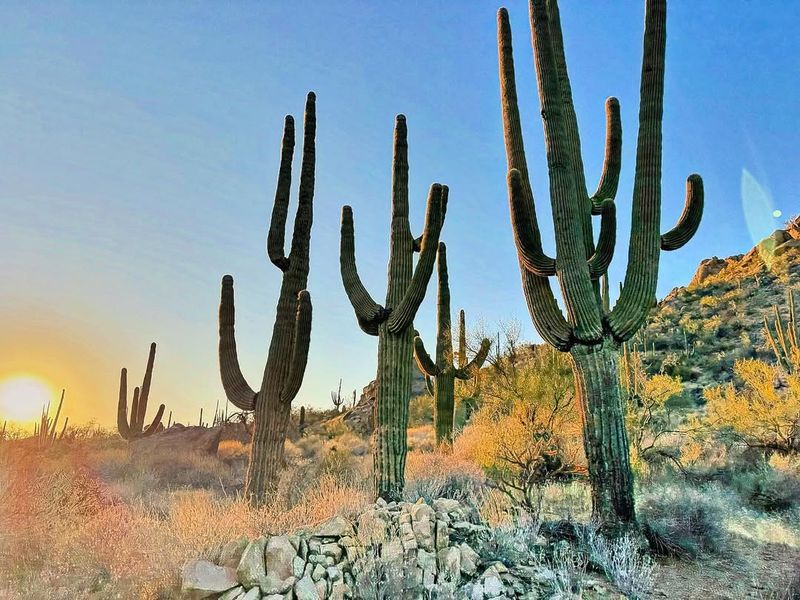
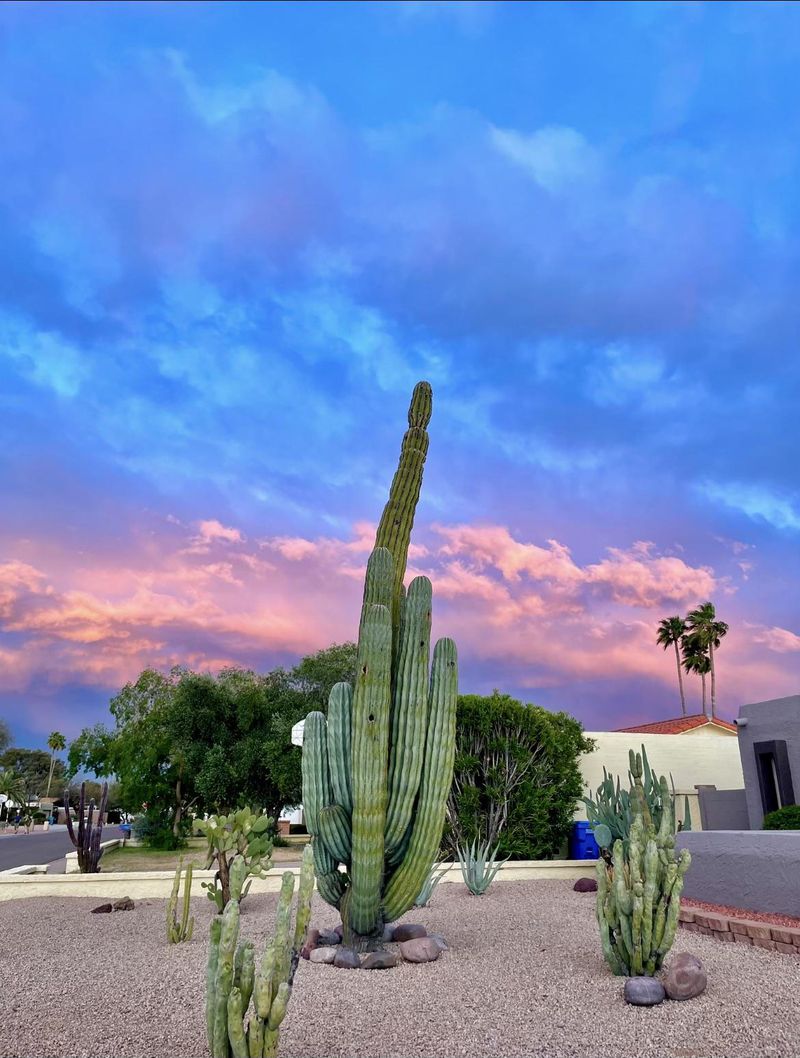
Homeowners across Arizona prize saguaros as premium landscape features that instantly establish authentic desert character. A mature specimen in the front yard can increase property value while creating a dramatic focal point visible from the street.
However, transplanting these protected cacti requires expensive permits, professional equipment, and careful planning to ensure survival in their new location.
Landscape companies specialize in relocating saguaros from construction sites to residential properties throughout Arizona.
The process involves careful excavation, crane lifting, and precise replanting at exactly the same depth and orientation the cactus grew before.
Even with expert handling, transplanted saguaros often take a year or two to recover and resume normal growth, with some never fully adjusting to their new home.
Prices for landscape-ready saguaros vary wildly based on size and arm count, with large multi-armed specimens costing thousands of dollars. Many Arizona homeowners opt for younger, smaller cacti that cost less and transplant more successfully.
These smaller plants take decades to reach impressive sizes, but they offer the satisfaction of watching a saguaro mature on your property.
Desert landscaping featuring saguaros requires minimal water and maintenance compared to traditional grass lawns, making them environmentally smart choices for Arizona yards.
The cacti pair beautifully with other native plants like palo verde trees, ocotillos, and brittlebush to create authentic Sonoran Desert scenes.
Property owners must ensure adequate drainage around saguaros, since standing water can cause root rot.
Understanding these requirements helps Arizona residents successfully incorporate these iconic cacti into their landscapes while respecting their protected status and specific needs.
7. Massive White Spring Blooms Crown Mature Plants With Drama
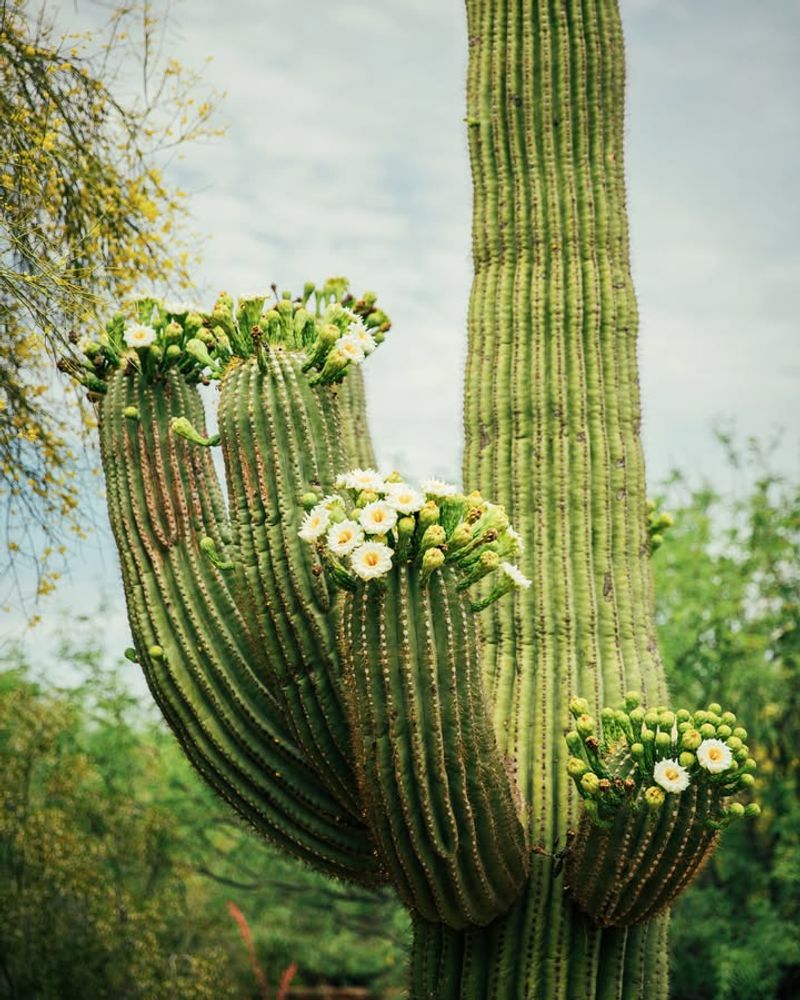
Late April through early June brings spectacular floral displays to Arizona’s mature saguaros, with dozens of creamy white blossoms opening along the arms and crown.
Each flower measures three to four inches across, with multiple layers of waxy petals surrounding a center packed with bright yellow stamens.
The blooms open during cool evening hours and stay open through the following morning, then close forever by afternoon as temperatures rise.
Individual flowers last only about 24 hours, but saguaros produce blooms in succession over several weeks, creating an extended flowering season across Arizona’s desert.
The flowers release a sweet, slightly fruity fragrance that attracts pollinators from considerable distances.
Bats arrive first during the night, followed by bees and birds after sunrise, creating continuous activity around blooming cacti.
Saguaro flowers cluster most densely at the tips of arms and the central trunk, forming crowns that can be spotted from far away. Arizona photographers and nature enthusiasts plan special trips during bloom season to capture these spectacular displays.
The contrast of pristine white flowers against blue sky and green cactus creates stunning images that celebrate the desert’s surprising beauty.
Arizona designated the saguaro blossom as the official state flower, recognizing both the cactus and its flowers as symbols of the region. Successfully pollinated flowers transform into egg-shaped green fruits that ripen to bright red by early summer.
These fruits split open to reveal sweet red pulp filled with thousands of tiny black seeds, providing important nutrition for wildlife during the hottest, driest months.
The entire flowering and fruiting cycle showcases the saguaro’s vital role in Arizona’s desert ecosystem beyond its iconic appearance.