This Fast-Spreading Groundcover Is Taking Hold In Maryland Suburbs
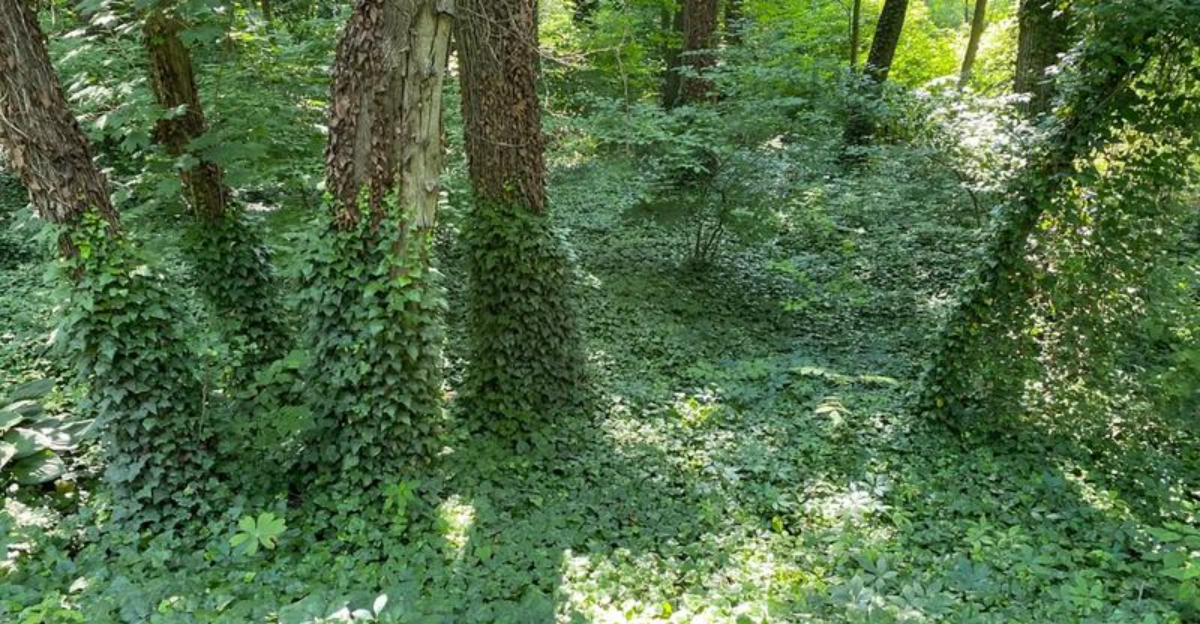
English ivy has a way of creeping in under the radar, then spreading like it owns the place.
In many Maryland suburbs, this glossy green groundcover is quietly climbing fences, crawling across yards, and wrapping itself around trees before homeowners know what hit them.
At first glance, it looks neat and low effort, the kind of plant that seems too good to pass up.
Give it a little time, though, and the tune can change.
English ivy grows fast and plays hardball, smothering native plants and stealing space, sunlight, and nutrients.
Once it settles in, getting rid of it can feel like wrestling an octopus.
Cut it back in one spot, and it pops up somewhere else like a bad penny.
Maryland’s mild seasons and shady neighborhoods are just right for ivy to thrive.
Builders once praised it as a tidy solution for bare ground, which helped it spread from yard to yard.
Now many homeowners are facing the long-term fallout of that decision.
Understanding how English ivy behaves is the first step toward taking back control.
Knowing what you are up against helps protect trees, support local plants, and keep suburban landscapes from turning into a green free-for-all.
1. English Ivy Grows At An Alarming Rate Once Established

Once English ivy takes root in Maryland soil, it can spread up to fifteen feet in a single growing season under ideal conditions.
The plant sends out runners that quickly blanket the ground, creating dense mats that smother everything beneath them.
What starts as a small decorative patch near a mailbox or fence can transform into a sprawling carpet covering entire yards within just a few years.
Homeowners in Montgomery County and Prince George’s County have reported ivy taking over their properties faster than they could manage it.
The vine climbs trees, covers shrubs, and even scales the sides of homes and sheds.
Its aerial rootlets allow it to cling to almost any surface, making removal increasingly difficult as time passes.
Maryland’s climate provides perfect growing conditions for this aggressive plant.
The state’s mild winters rarely harm established ivy, and summer rainfall gives it plenty of moisture to thrive.
Shaded suburban areas with mature trees create ideal environments where ivy outcompetes most native groundcovers.
Property owners often underestimate how quickly English ivy can spread from their yards into neighboring properties and nearby woodlands.
Seeds spread by birds and underground rhizomes help the plant colonize new areas rapidly.
What seems like a manageable garden feature today can become a neighborhood problem within just a couple of growing seasons, requiring coordinated community efforts to control its advance across Maryland suburbs.
2. This Invasive Plant Threatens Native Maryland Trees
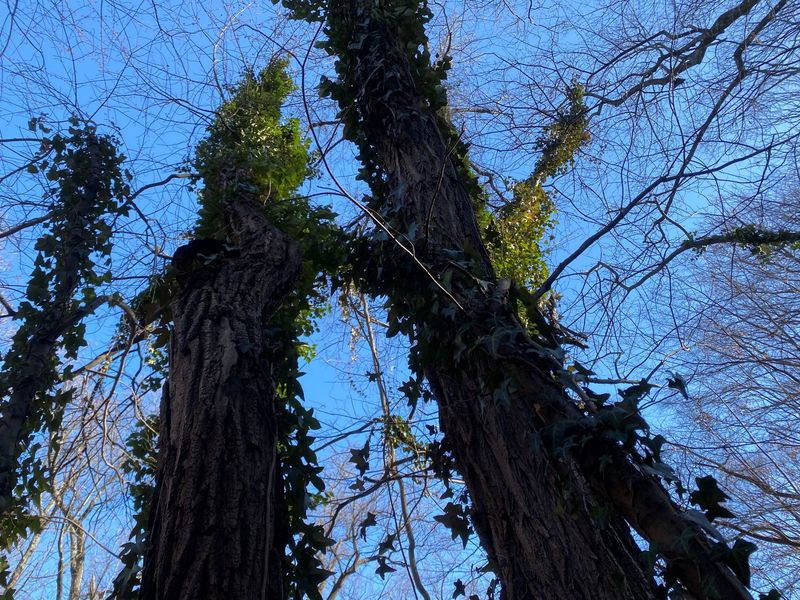
Trees throughout Maryland suburbs face serious danger when English ivy begins climbing their trunks.
The heavy weight of mature ivy vines can stress tree branches, making them more likely to break during storms and high winds.
As the ivy grows thicker over the years, it adds hundreds of pounds of additional weight that trees were never meant to support.
Beyond the physical burden, ivy creates a dense evergreen blanket that blocks sunlight from reaching tree bark and lower branches.
This shade prevents trees from photosynthesizing properly and can weaken their overall health over time.
The moisture trapped beneath ivy mats also creates perfect conditions for rot, fungal infections, and insect infestations that further compromise tree vitality.
Maryland’s native oaks, maples, and other hardwoods have evolved without ivy as a natural competitor.
When ivy covers a tree’s trunk completely, it essentially acts like a sail during winter ice storms and summer thunderstorms.
The increased surface area catches more wind and precipitation, dramatically raising the risk of the entire tree toppling over.
Arborists working in Anne Arundel County and Howard County report treating more ivy-damaged trees each year.
The problem becomes especially visible after major weather events when ivy-covered trees suffer disproportionate damage compared to their ivy-free neighbors.
Removing established ivy from mature trees requires careful work to avoid damaging bark, and prevention remains far easier than dealing with decades of unchecked growth covering valuable shade trees in Maryland residential areas.
3. Native Wildlife Loses Critical Habitat To Ivy Takeover

Maryland’s native ground-dwelling creatures struggle to survive when English ivy replaces their natural habitat.
Birds that typically nest near the ground find ivy mats inhospitable because the dense, waxy leaves provide no nesting materials and offer poor insulation compared to native plants.
The thick groundcover also eliminates the leaf litter layer where many insects, salamanders, and small mammals normally forage for food.
Butterflies and native bees depend on wildflowers and native plants that bloom throughout Maryland’s growing season.
English ivy produces flowers, but they appear late in the fall when few pollinators remain active.
The plant provides almost no ecological value to the insects that form the foundation of local food webs, essentially creating zones where diverse native plant communities once thrived.
Songbirds that migrate through Maryland or nest in suburban neighborhoods rely on native plants that produce berries, seeds, and attract insects at the right times of year.
Research shows that native plants support over thirty times more butterfly and moth species than non-native alternatives.
When ivy dominates a landscape, it drastically reduces the food available to birds raising their young during spring and summer months.
Wildlife biologists studying suburban areas in Baltimore County and Carroll County have documented declining populations of ground-nesting birds and native insects in neighborhoods where English ivy has become widespread.
The loss of biodiversity happens gradually, so many residents don’t notice the change until local ecosystems have been fundamentally altered across entire Maryland communities and surrounding natural areas.
4. Property Values Can Suffer When Ivy Gets Out Of Control
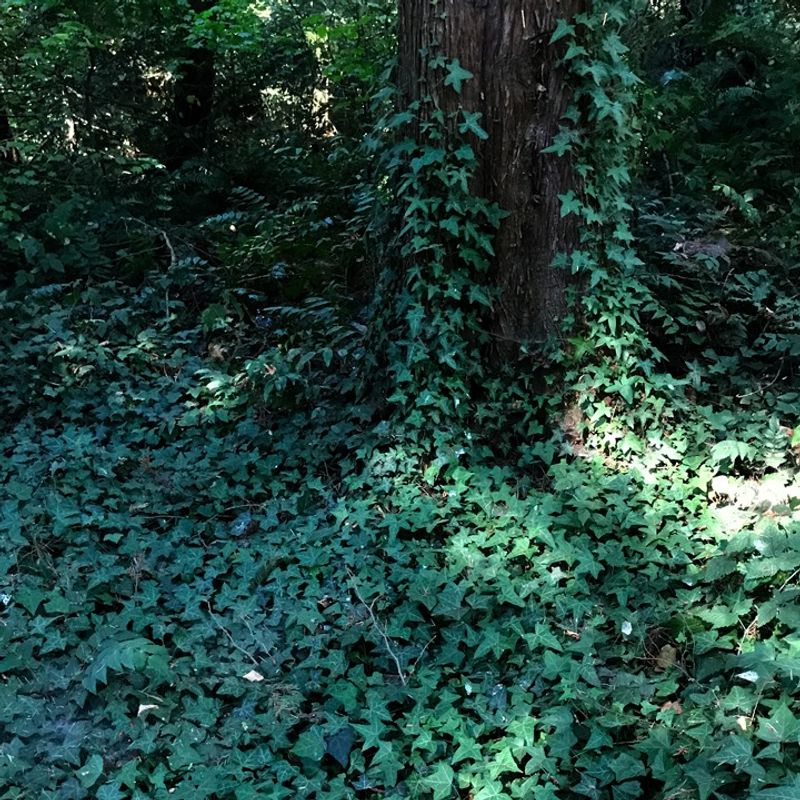
Real estate agents working throughout Maryland suburbs have observed that homes with severe ivy problems often sit on the market longer than comparable properties.
Potential buyers view extensive ivy growth as a red flag indicating neglected maintenance and possible hidden damage to foundations, siding, and roofing.
The cost of professional ivy removal can run into thousands of dollars, which buyers typically deduct from their offers or use as negotiating leverage.
Ivy climbing on house exteriors creates multiple problems that concern home inspectors and insurance companies.
The aerial rootlets burrow into mortar joints, wood siding, and even vinyl, causing structural damage that worsens over years of unchecked growth.
Moisture trapped behind ivy encourages wood rot, paint deterioration, and can lead to expensive repairs that might not be covered by standard homeowner policies.
Curb appeal takes a significant hit when ivy overwhelms landscaping features and creates an unkempt appearance.
While some buyers might initially find ivy-covered walls charming, they quickly learn about the maintenance burden and potential costs involved.
Properties in Rockville, Bethesda, and other desirable Maryland communities lose their competitive edge when ivy problems become obvious to prospective purchasers.
Neighborhood associations in some Maryland suburbs have begun addressing ivy as a community concern because unchecked growth on one property inevitably spreads to adjacent lots.
This creates tension between neighbors and can even lead to property line disputes.
Maintaining property values requires vigilant ivy management, and homes that demonstrate proper landscape maintenance consistently command better prices in Maryland’s competitive real estate markets throughout all seasons
5. Removal Requires Persistence And The Right Techniques
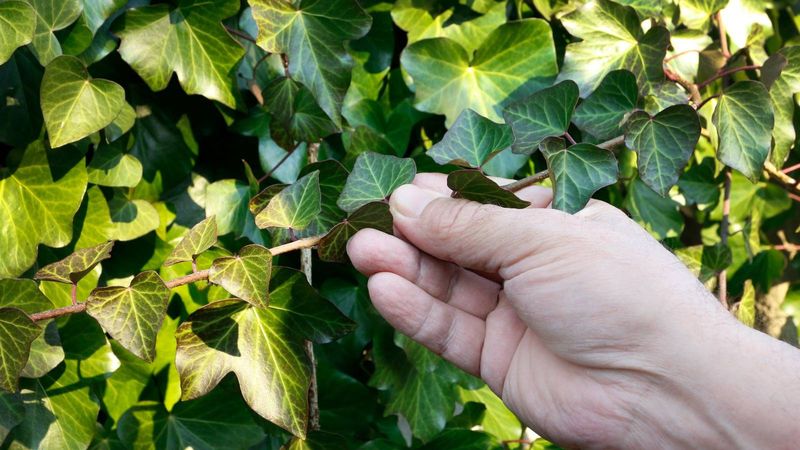
Getting rid of established English ivy in Maryland yards demands more than just pulling a few vines and hoping for the best.
The plant’s extensive root system can regenerate from even tiny fragments left in the soil, meaning incomplete removal efforts often result in the ivy returning stronger than before.
Successful eradication requires a systematic approach that addresses both above-ground growth and underground rhizomes.
Homeowners should start by cutting ivy vines at the base of any trees, then carefully removing the climbing portions without damaging tree bark.
Ground ivy needs to be dug out by the roots, which often extend several inches deep and spread laterally for many feet.
This labor-intensive process works best in spring when soil moisture makes roots easier to extract, though Maryland’s clay-heavy soils in many areas can make the job physically demanding.
Covering cleared areas with thick mulch or landscape fabric helps prevent new ivy shoots from emerging while native plants become established.
Some Maryland residents have success using cardboard layers weighted with wood chips, which smother remaining ivy while eventually decomposing to enrich the soil.
Patience proves essential because ivy seeds can remain viable in soil for several years, requiring ongoing monitoring.
Professional removal services operating in Frederick County, Harford County, and throughout central Maryland typically use a combination of manual removal and targeted treatments for stubborn patches.
They emphasize that property owners should expect to spend at least two to three growing seasons managing any ivy problem, checking regularly for new growth and addressing it immediately before roots become reestablished in residential landscapes.
6. Better Groundcover Alternatives Thrive In Maryland Gardens
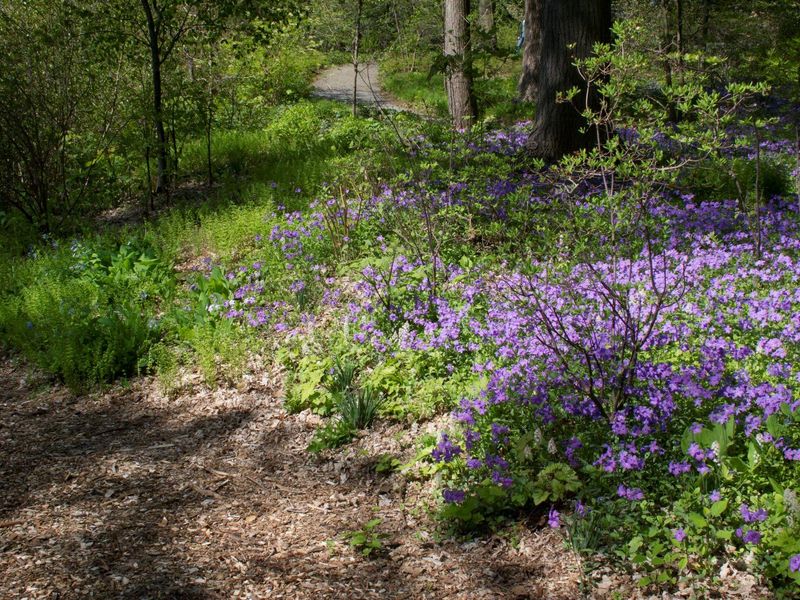
Native plant enthusiasts throughout Maryland have discovered numerous attractive groundcovers that provide beauty without the ecological problems associated with English ivy.
Wild ginger offers glossy heart-shaped leaves and spreads steadily to create attractive carpets in shaded areas.
This Maryland native requires minimal maintenance once established and supports local insect populations that birds depend on for feeding their nestlings.
Pachysandra, while not native, behaves far less aggressively than ivy and stays where it’s planted without invading natural areas.
For sunnier spots, creeping phlox produces stunning spring blooms in pink, purple, and white while forming dense mats that suppress weeds effectively.
These alternatives give homeowners the coverage they want without contributing to the invasive species problems plaguing Maryland’s forests and parks.
Pennsylvania sedge has gained popularity in recent years as a lawn alternative for shady areas where grass struggles to grow.
This native grass-like plant stays low, requires no mowing, and tolerates foot traffic reasonably well.
It provides year-round green color and supports a much richer variety of wildlife than English ivy ever could in suburban settings.
Local nurseries in Columbia, Silver Spring, and other Maryland communities now stock extensive selections of native groundcovers suitable for various light and moisture conditions.
Extension agents recommend choosing plants based on specific site conditions rather than simply replacing ivy with whatever seems convenient.
Making thoughtful selections ensures that replacement plantings will thrive long-term, preventing the temptation to return to problematic species like English ivy when initial choices struggle in Maryland’s variable climate and diverse soil conditions.
7. Community Efforts Make The Biggest Impact Against Ivy Spread
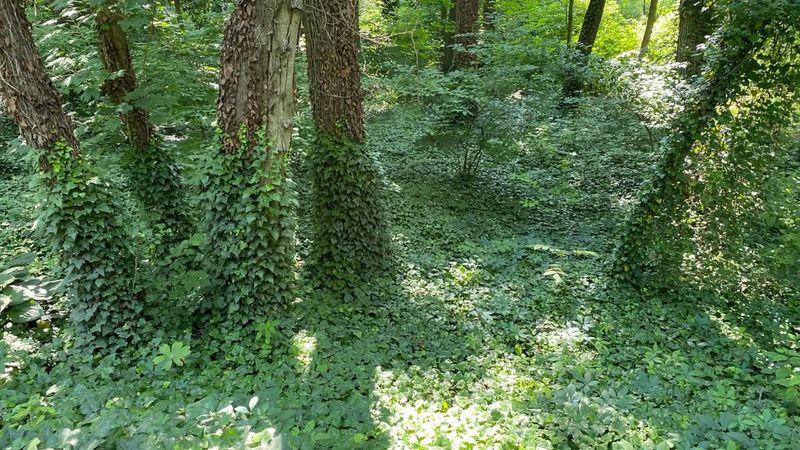
Individual homeowners fighting English ivy often feel like they’re battling an impossible opponent, especially when neighboring properties remain covered in the invasive vine.
Seeds blow across property lines, and underground runners don’t respect boundaries, making coordinated neighborhood action far more effective than isolated efforts.
Several Maryland communities have organized “ivy pulls” where volunteers gather to tackle the problem together in parks and residential areas.
Watershed groups in Montgomery County have documented dramatic improvements in stream health and forest regeneration after organizing systematic ivy removal from public lands.
These successes inspire nearby residents to address ivy on their own properties, creating momentum that spreads throughout entire neighborhoods.
When communities work together, they can clear larger areas faster and prevent recolonization from untreated nearby sources.
Education plays a crucial role in community-wide ivy management efforts.
Many Maryland residents simply don’t realize that the attractive groundcover in their yards causes environmental harm or that better alternatives exist.
Neighborhood associations that share information through newsletters, social media, and community meetings help residents understand why ivy removal matters and provide practical guidance for tackling the problem effectively.
Some Maryland municipalities have begun offering resources to support resident ivy removal efforts, including free yard waste collection for ivy disposal and native plant giveaways to replace removed invasive groundcovers.
These programs recognize that individual property owners need support to address a problem that ultimately affects entire communities and surrounding natural areas throughout the state’s diverse suburban landscapes from western mountains to eastern bay regions.