This Garden In Georgia Blooms With Over 20 Million Daffodils Each Year
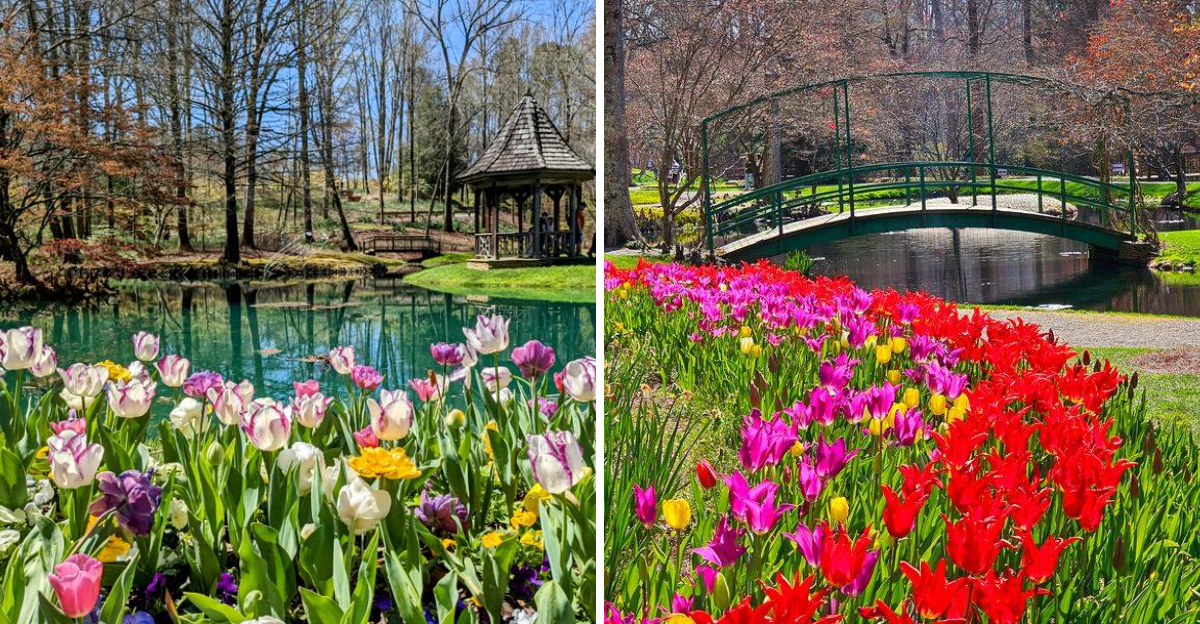
If you think you have seen daffodils before, this Georgia garden will completely reset that idea the moment you step onto the paths.
Every spring, Gibbs Gardens in Ball Ground explodes into color with more than 20 million daffodils blooming across rolling hills and carefully designed beds.
It is not just a flower display, it is an experience that feels almost unreal in scale.
Seeing millions of bright yellow blooms stretching across the landscape changes how you think about spring in Georgia. One visit makes ordinary daffodil patches feel tiny by comparison.
The sheer number of flowers creates waves of color that feel endless and unforgettable.
Gibbs Gardens has quietly become one of the most breathtaking spring destinations in the state. When you stand in the middle of those blooms, you understand why this garden draws visitors back year after year.
1. Gibbs Gardens Turns North Georgia Into A Sea Of Gold Each Spring
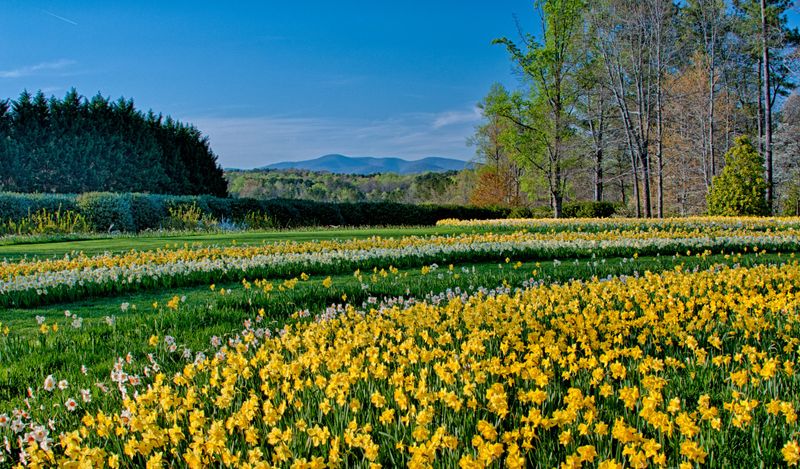
Spring in North Georgia reaches another level when entire hillsides turn bright yellow almost overnight.
At Gibbs Gardens, located at 1987 Gibbs Drive, Ball Ground, GA 30107, more than 20 million daffodil bulbs burst into bloom across 50 acres each year.
The scale is hard to picture until you see it in person and realize the flowers stretch far beyond a single garden bed.
The founder carefully selected over 100 different daffodil varieties to create a layered display that changes week by week. Some bloom in early March, while others peak in mid April, keeping the landscape in motion throughout the six week season.
The experience shifts as colors deepen and new varieties take center stage.
What makes the display stand out is how the bulbs follow the natural slopes instead of neat rows. The daffodils sweep across hillsides in wide drifts that look like rivers of gold flowing through the valleys.
Flower Magazine has recognized Gibbs Gardens as one of the World’s 10 Best Places to See Daffodils. Visitors travel from across the country to witness this transformation, and many return each spring to see the hills glow again.
The sheer number of blooms creates a feeling that photos cannot fully capture. Standing among them feels immersive and almost surreal.
It is one of those rare places where scale and design come together in a way that leaves a lasting impression.
2. When The Bloom Reaches Its Most Spectacular Moment
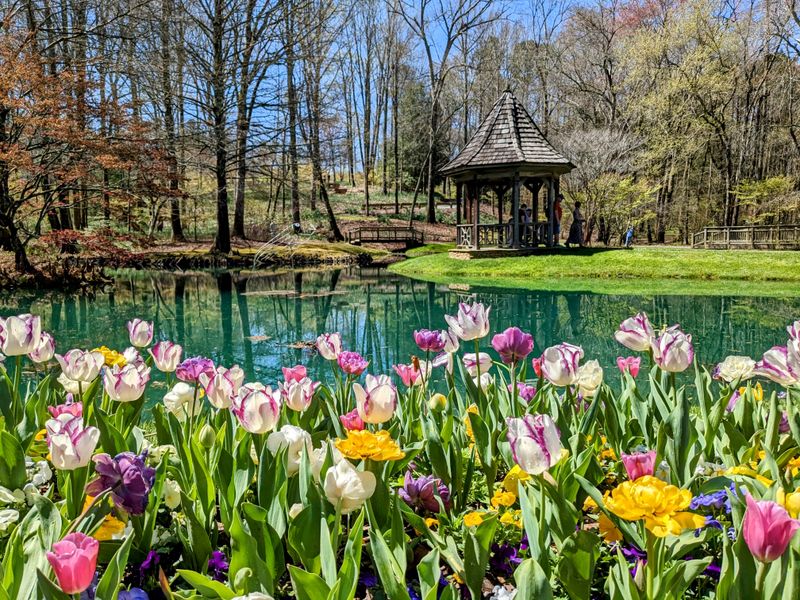
Timing your visit to Gibbs Gardens can make all the difference between a nice experience and an absolutely unforgettable one.
The daffodil season typically runs from early March through mid April, but the peak moment when the most flowers are open at the same time usually happens in late March.
Weather plays a huge role in exactly when peak bloom arrives each year. A warm early spring can push the flowers to open sooner, while cooler temperatures might delay the show by a week or two.
The garden staff monitors the blooms closely and posts updates on their website to help visitors plan the perfect time to come.
During peak bloom, you will see layer upon layer of flowers creating an almost unbelievable carpet of color. Early blooming varieties mix with mid season types, blending yellows, whites, creams, and even soft peach tones across the hills.
The effect feels larger than life once you are standing in the middle of it.
The garden operates Tuesday through Sunday from 9 a.m. to 4 p.m. during daffodil season. Arriving earlier in the day often means softer light for photos and smaller crowds along the main paths.
Comfortable shoes are a must because the rolling terrain encourages long, slow walks. Checking bloom updates before you go helps you experience the display at its most impressive stage.
Planning around peak bloom gives you the best chance to see the hillsides covered in their fullest, brightest display.
3. Curving Hillsides Planted In Massive Drifts Of Color
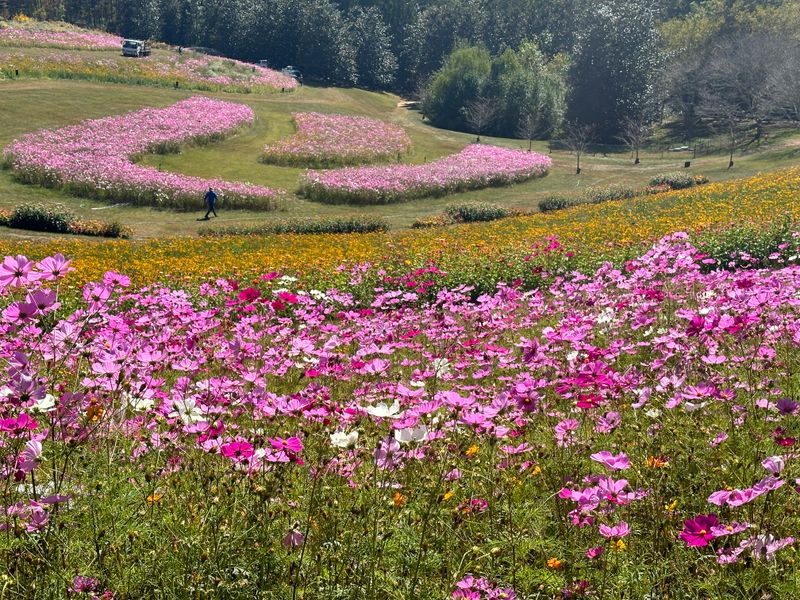
A visit to Gibbs Gardens feels nothing like stepping into an ordinary flower garden. The designers created something called “streams” of daffodils—bands of color that are 5 to 10 feet wide and flow down the hillsides like actual rivers of flowers.
These streams aren’t planted randomly. Each one contains specific varieties chosen for their bloom time and color, carefully arranged to create the most dramatic effect possible.
One stream might feature bright golden trumpets, while the neighboring band showcases pure white petals with delicate yellow centers.
The genius of this design becomes clear when you realize how it extends the blooming season. As early varieties in one stream start to finish, the next band over begins opening, keeping the hillsides constantly colorful throughout the entire six weeks.
It’s like watching a slow-motion wave of color roll across the landscape.
Photographers absolutely love these curving drifts because they create natural leading lines in pictures. The way the colors flow and bend around the hills gives every photo depth and movement.
Whether you’re capturing memories with your phone or bringing professional camera equipment, you’ll find countless angles that showcase these remarkable plantings in all their glory.
4. Garden Paths That Pull You Straight Into The Display
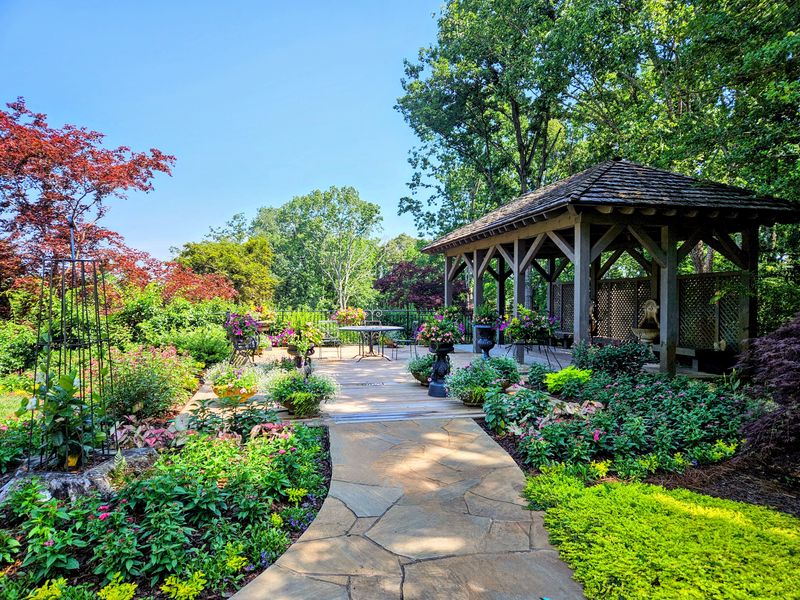
One of the best features at Gibbs Gardens is how the pathways are designed to immerse you completely in the daffodil experience.
Rather than keeping visitors at a distance, the trails wind directly through the plantings, putting you right in the middle of millions of blooms.
The paths are well maintained and accessible for most visitors, though some sections involve gentle slopes since you are walking through hilly terrain.
Comfortable walking shoes are recommended because you will likely want to explore every trail to see different perspectives of the flowers.
As you follow the paths, the daffodils seem to surround you on all sides. Some areas lead through valleys where flowers climb up the hills in both directions.
Other sections guide you to higher viewpoints where waves of color stretch across the landscape below.
The pathway system is designed to create variety throughout your visit. You might turn a corner and face an entirely new blend of colors and shapes.
Benches are placed along the trails so you can pause and take it all in without feeling hurried.
The layout encourages slow exploration instead of rushing from one viewpoint to the next. Each section feels slightly different, which keeps the experience engaging from start to finish.
5. A Collection Of Daffodil Varieties Rarely Seen In One Place
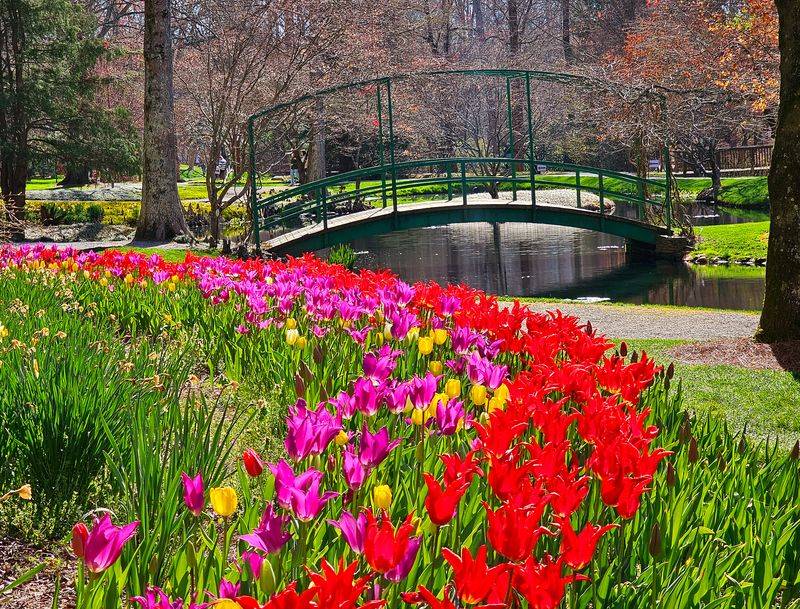
Most people think all daffodils look pretty much the same—just yellow flowers with a trumpet in the middle. Gibbs Gardens will completely change that assumption.
With over 100 different varieties planted across the property, you’ll discover daffodils come in an amazing range of forms, sizes, and colors.
Some varieties feature huge blooms as big as your palm, while miniature types produce delicate flowers no larger than a quarter. You’ll see double-petaled varieties that look almost like roses, and others with split coronas that create star-like shapes.
The color range extends far beyond simple yellow, including pure whites, creamy ivories, soft peaches, and even bicolor combinations.
The garden includes early-blooming varieties that open in early March, mid-season types that peak in late March, and late bloomers that continue into mid-April. This careful selection ensures something is always at its best throughout the entire season.
Some of these varieties are quite rare and difficult to find in typical garden centers.
For gardening enthusiasts, visiting Gibbs Gardens offers an incredible education in what’s possible with daffodils.
You can observe which varieties perform best in Georgia’s climate, note which colors and forms appeal to you most, and gather inspiration for your own spring garden plans back home.
6. Scenic Vantage Points That Show Just How Vast It Really Is
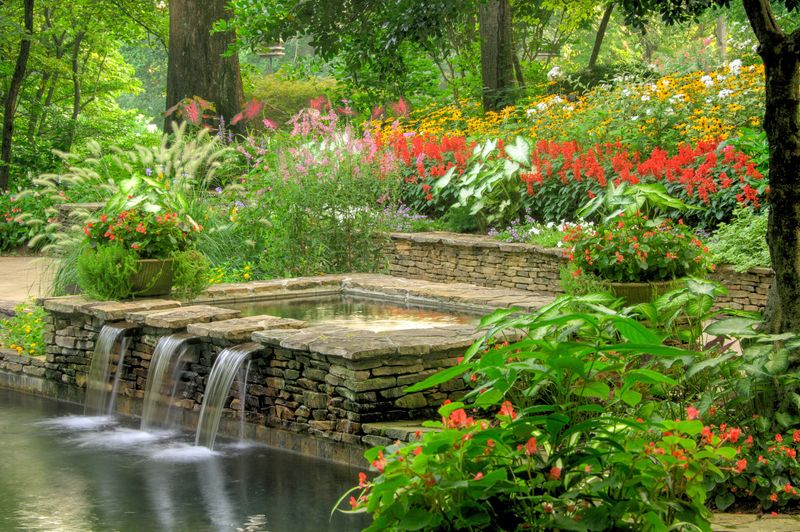
Photos of Gibbs Gardens are stunning, but they honestly can’t capture the true scale of this incredible display. You really need to see it with your own eyes to understand just how massive 20 million daffodils actually looks.
Fortunately, the garden includes several elevated viewing areas where the full scope becomes clear.
These strategic vantage points are positioned to give you sweeping views across the valleys and hillsides. From these spots, you can see how the streams of color flow down multiple slopes simultaneously, creating a landscape that seems more like a painting than reality.
The way the colors shift and blend in the distance creates an almost three-dimensional effect.
On clear days, the views are particularly spectacular. The bright flowers contrast beautifully against the deep green of the surrounding forests and the blue Georgia sky.
You can often spot other visitors scattered throughout the gardens below, which helps emphasize just how enormous the planted area truly is.
These overlooks also provide perfect opportunities for group photos and panoramic shots. Many visitors find themselves standing at these viewpoints much longer than they planned, simply taking in the remarkable scene.
It’s one of those moments where you realize why people travel from far away to experience this spring spectacle at Gibbs Gardens in Ball Ground.
7. A Spring Day Trip That Feels Worlds Away From Atlanta
Located just about 50 miles north of Atlanta at Ball Ground, GA 30107, Gibbs Gardens offers an easy escape from city life without requiring a long road trip.
The drive takes you through increasingly scenic countryside as you head into the foothills of the Blue Ridge Mountains, building anticipation for what awaits.
Despite being relatively close to metro Atlanta, the garden feels remarkably peaceful and removed from urban hustle. The property sits on 376 total acres, though the daffodil display covers about 50 of those acres.
This spaciousness means you can find quiet spots to enjoy the flowers even on busier weekends.
Many visitors make Gibbs Gardens part of a larger day trip exploring the charming towns of North Georgia. Ball Ground itself offers cute shops and local restaurants worth checking out.
The nearby town of Dahlonega provides additional attractions including wineries, hiking trails, and historic sites from Georgia’s gold rush era.
Planning tip: The garden doesn’t allow pets, and outside food and drinks aren’t permitted in the daffodil areas, though picnic areas are available in other sections. There’s a gift shop on site where you can purchase daffodil bulbs and other garden-related items.
Most visitors spend two to three hours exploring the daffodil gardens, though serious flower enthusiasts often stay longer to fully appreciate every section.
8. Why This Annual Bloom Has Become A Georgia Tradition
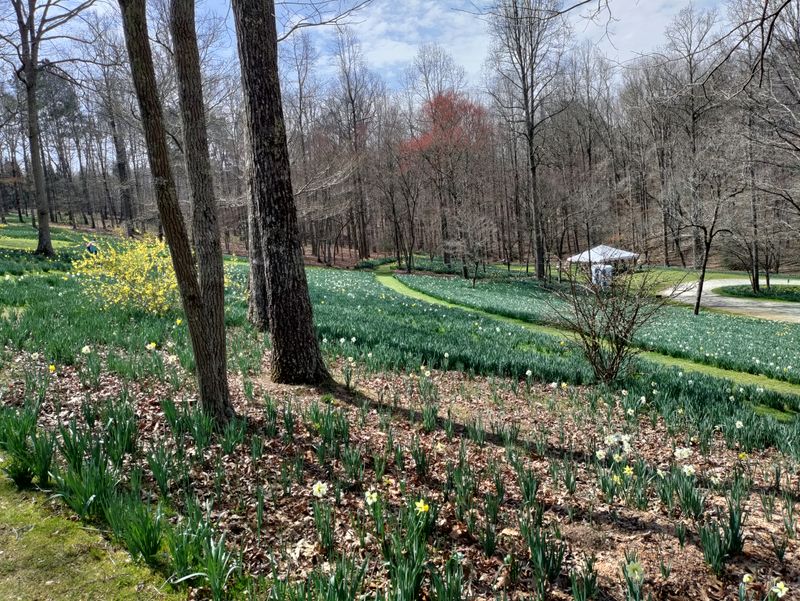
Over the years, visiting Gibbs Gardens during daffodil season has become a beloved spring tradition for thousands of Georgia families.
Many people mark their calendars each year, planning their visit as an annual celebration of winter’s end and the arrival of warmer days.
The garden’s reputation has grown steadily since it opened to the public. Word spread quickly about the incredible scale and beauty of the daffodil display.
Social media has amplified awareness, with visitors sharing stunning photos that inspire friends and family to plan their own trips. National recognition from Flower Magazine and other media outlets has brought even more attention to this North Georgia destination.
What keeps people coming back year after year is how the experience never feels identical. Because weather and bloom timing shift each season, every visit offers a slightly different view.
Some years the hills glow earlier, other years the color stretches deeper into April, and certain varieties take center stage depending on the conditions.
For many Georgia residents, seeing the daffodils at Gibbs Gardens feels like an official sign that spring has arrived. The display creates a shared memory that families return to again and again.
It is one of those rare traditions that grows stronger with time instead of fading. Long after the blooms are gone, the image of those golden hills tends to stay with you.
Photographers often plan entire weekends around capturing the peak bloom, hoping to frame the rolling hills under clear blue skies. Garden enthusiasts study the layout and planting style, gathering ideas they can adapt to their own landscapes at home.
Even first-time visitors often leave already talking about when they will return the following spring.