This Is Why Ohio Lawns Show Sidewalk Stripe Damage After Winter
Look around your neighborhood right after the snow melts. The snow is gone, temperatures start to rise, and lawns across Ohio slowly begin turning green again.
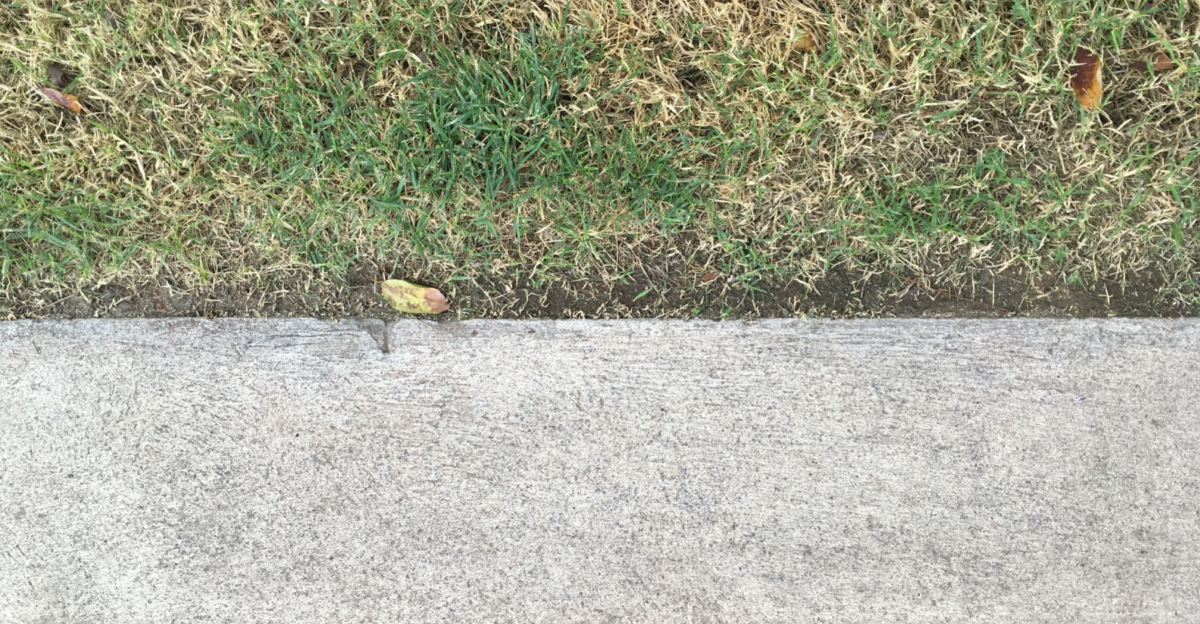
But along sidewalks and driveways, something stands out. Brown, lifeless stripes appear in the same narrow bands, making otherwise healthy lawns look damaged and uneven.
Many homeowners assume it is just normal winter burn or poor grass, but the real cause runs deeper than most people realize. All winter long, these edge areas face harsher conditions than the rest of the lawn.
Hidden winter forces quietly work against these narrow edge zones for months beneath the surface. By spring, the damage finally reveals itself in those familiar lines seen in neighborhoods everywhere.
There is a very specific reason Ohio lawns suffer this pattern every single year.
1. Road Salt Burn Creates Harsh Edge Lines
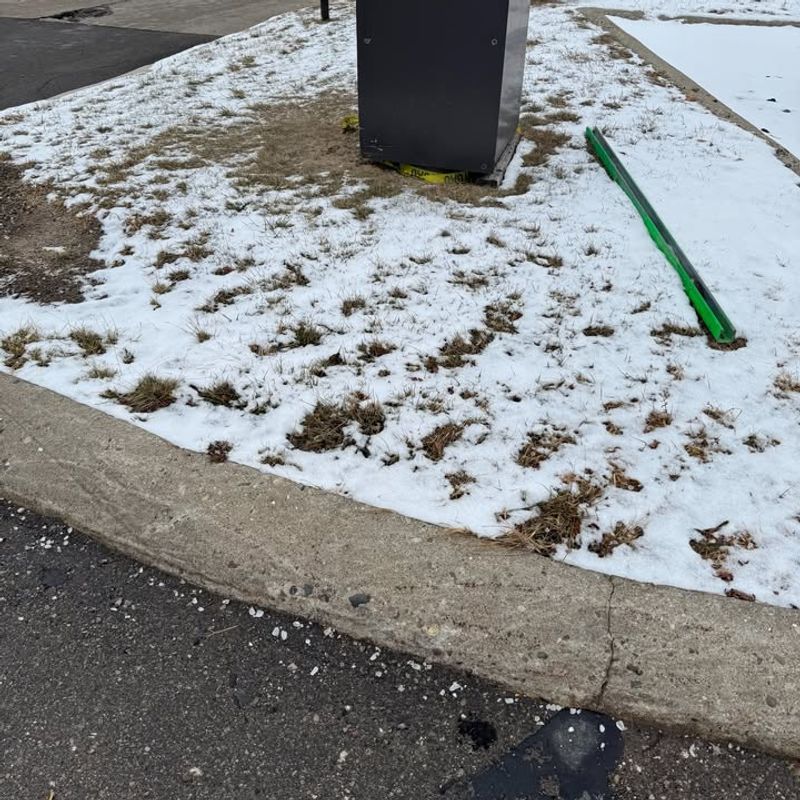
Salt damage ranks among the most visible culprits behind those brown stripes you see each spring. When winter crews spread salt on sidewalks and roads, the crystals don’t just melt ice, they also seep into the soil where your grass grows.
Sodium chloride draws moisture away from grass blades and roots, essentially dehydrating the plants from the inside out.
The damage appears in narrow bands because salt application concentrates along walkways and pavement edges. As people walk across treated surfaces, they carry salt particles on their shoes directly onto the grass.
Rain and melting snow wash additional salt from concrete into adjacent turf areas, creating a toxic zone right at the lawn’s edge.
Grass blades touched by concentrated salt solutions turn brown within days. The roots suffer even more serious harm as sodium builds up in the soil structure.
This accumulation disrupts the plant’s ability to absorb water and essential nutrients, leaving weakened turf that struggles to green up when warmer weather arrives.
Ohio winters mean repeated salt applications throughout the season. Each new snowfall brings another round of treatment, and the salt keeps accumulating in those same edge zones.
By March, the soil along your sidewalk may contain salt levels several times higher than what grass can tolerate, resulting in those telltale brown stripes that define winter lawn damage across the state.
2. Snow Piles Concentrate Salt And Chemical Runoff
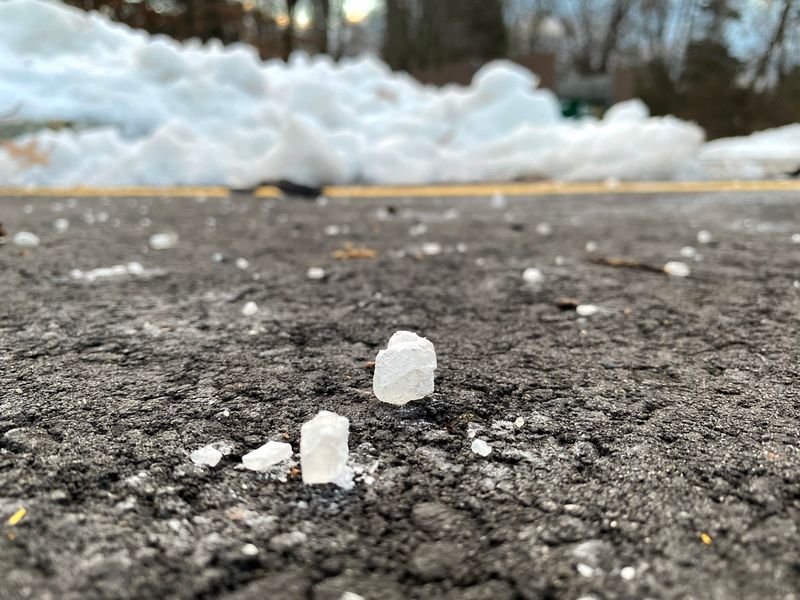
Where does all that shoveled snow go? Most homeowners pile it right at the lawn’s edge, creating concentrated zones of trouble.
Every shovelful of snow carries salt crystals, dirt, and chemical residue from the pavement surface. When you stack snow in the same spot repeatedly, you’re essentially creating a toxic dump site on your grass.
As temperatures rise above freezing, those snow piles begin their slow melt. The water doesn’t just disappear; it carries dissolved salt and chemicals directly into the soil below.
Unlike natural snowfall that melts evenly across your lawn, these concentrated piles release their chemical load into a small area, overwhelming the grass’s ability to cope.
The stripe pattern emerges because snow piles follow predictable locations. You shovel your walk the same way each time, pushing snow to the same edge zones.
Plows push street snow onto the same boulevard strips. This repetition means certain areas receive ten or twenty times the salt exposure compared to the rest of your lawn.
Ohio’s variable winter weather makes this problem worse. Frequent freeze-thaw cycles mean snow piles partially melt and refreeze multiple times.
Each melt cycle pushes more salt deeper into the root zone. By late February, the soil beneath your snow piles has absorbed months of accumulated chemicals, creating perfect conditions for those spring stripes that frustrate homeowners across the region.
3. Freeze-Thaw Cycles Stress Grass Along Concrete
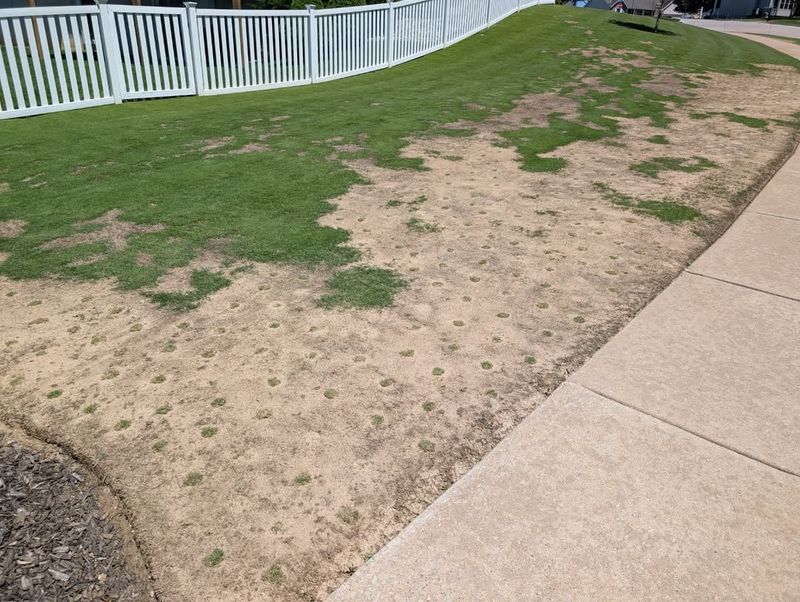
Concrete and grass experience winter completely differently. Pavement absorbs solar radiation during sunny days, warming up significantly even when air temperatures stay below freezing.
This heat radiates into adjacent soil, causing grass roots near sidewalks to experience wild temperature swings that plants farther from concrete never encounter.
Your lawn’s crown, the growing point where roots meet shoots, sits just below the soil surface. When temperatures fluctuate rapidly, ice crystals form inside plant cells and then melt repeatedly.
Each freeze-thaw event tears delicate cell structures, weakening the plant’s ability to function normally. Grass along sidewalk edges endures dozens more of these cycles than turf just three feet away.
Ohio’s winter weather pattern practically guarantees this stress. January might bring a warm spell with temperatures reaching fifty degrees, followed by a hard freeze the next night.
February often delivers sunny afternoons that warm concrete surfaces while nighttime temperatures plunge back to the teens. March continues this unpredictable pattern, extending the stress period well into spring.
The resulting damage shows up as brown stripes because pavement influences a narrow band of soil temperature. Usually this zone extends twelve to eighteen inches from the concrete edge.
Grass crowns in this area suffer repeated cellular damage throughout winter, leaving them too weak to green up properly when spring arrives. The sharp boundary between damaged and healthy grass creates that distinctive stripe pattern that marks winter’s toll on Ohio lawns.
4. Compacted Snow Suffocates Turf Near Sidewalks
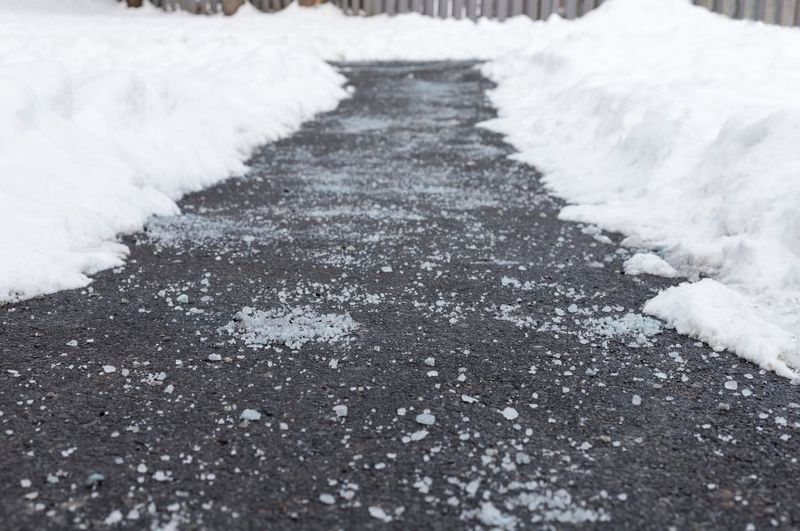
Walking the same path every day creates more than just a trail; it creates a suffocation zone for your grass. Each footstep compresses snow into dense ice layers that block oxygen from reaching the soil.
Grass remains alive under snow cover, but it needs some air exchange to maintain basic life functions through winter dormancy.
Sidewalk edges receive the heaviest foot traffic on your property. People naturally walk close to pavement edges, kids cut across corners, and dogs follow established paths.
This concentrated traffic packs snow into an almost impenetrable layer that can last weeks or months. Meanwhile, snow on the rest of your lawn stays fluffy and breathable, allowing adequate oxygen to reach grass crowns.
The longer grass stays trapped under compacted snow, the weaker it becomes. Root systems slow their respiration, energy reserves deplete, and the plant enters a stressed state.
When snow finally melts in March, you discover brown stripes exactly where foot traffic was heaviest all winter long.
Ohio winters bring enough snow to create persistent cover, but not always enough cold to keep it frozen solid. This means repeated compaction events as snow partially melts, gets walked on, refreezes, and gets covered by new snow.
Each cycle adds another layer of dense material over your grass. By late winter, some sidewalk edges sit under six inches of ice-hard snow that hasn’t seen fresh air in months, creating perfect conditions for that spring stripe damage.
5. Deicing Chemicals Alter Soil Balance And Roots
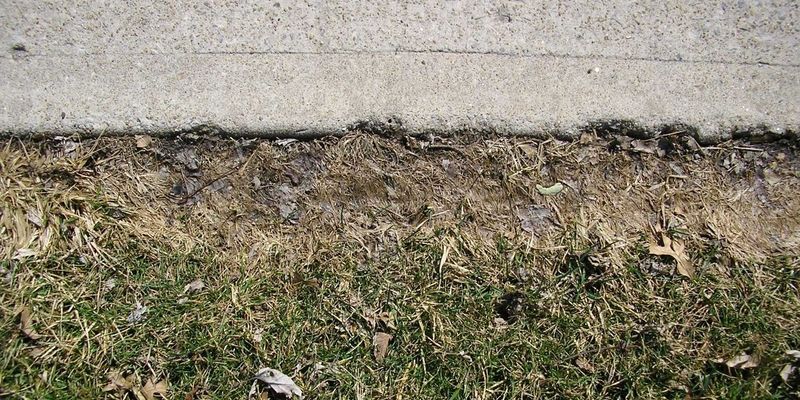
Sodium doesn’t just burn grass blades; it fundamentally changes how your soil works. When salt dissolves in soil water, sodium ions displace calcium and magnesium that normally hold soil particles together.
This disruption causes clay particles to swell and lose their structure, creating dense, poorly aerated soil that roots struggle to penetrate.
Root hairs, the tiny structures that actually absorb water, are incredibly sensitive to salt concentrations. When sodium levels rise in soil water, osmotic pressure reverses, pulling moisture out of roots instead of into them.
Essentially, your grass becomes dehydrated even though water surrounds the roots. This backwards water movement weakens the entire plant and prevents normal spring recovery.
The damage accumulates over time rather than appearing instantly. First-year salt exposure might cause minor browning that recovers by June.
But each winter adds more sodium to the soil profile. After three or four years of repeated applications, soil along Ohio sidewalks can become so salt-saturated that grass simply cannot grow there anymore.
Recovery requires more than just waiting for spring rain. Sodium binds to soil particles and doesn’t wash away easily.
Heavy watering helps, but it takes months of consistent flushing to restore soil balance. Meanwhile, damaged roots must regrow in compromised soil, slowing the greening process.
This explains why sidewalk stripes often appear worse each successive year—the problem compounds as salt levels build up season after season across Ohio neighborhoods.
6. Concrete Reflects Heat And Worsens Winter Stress
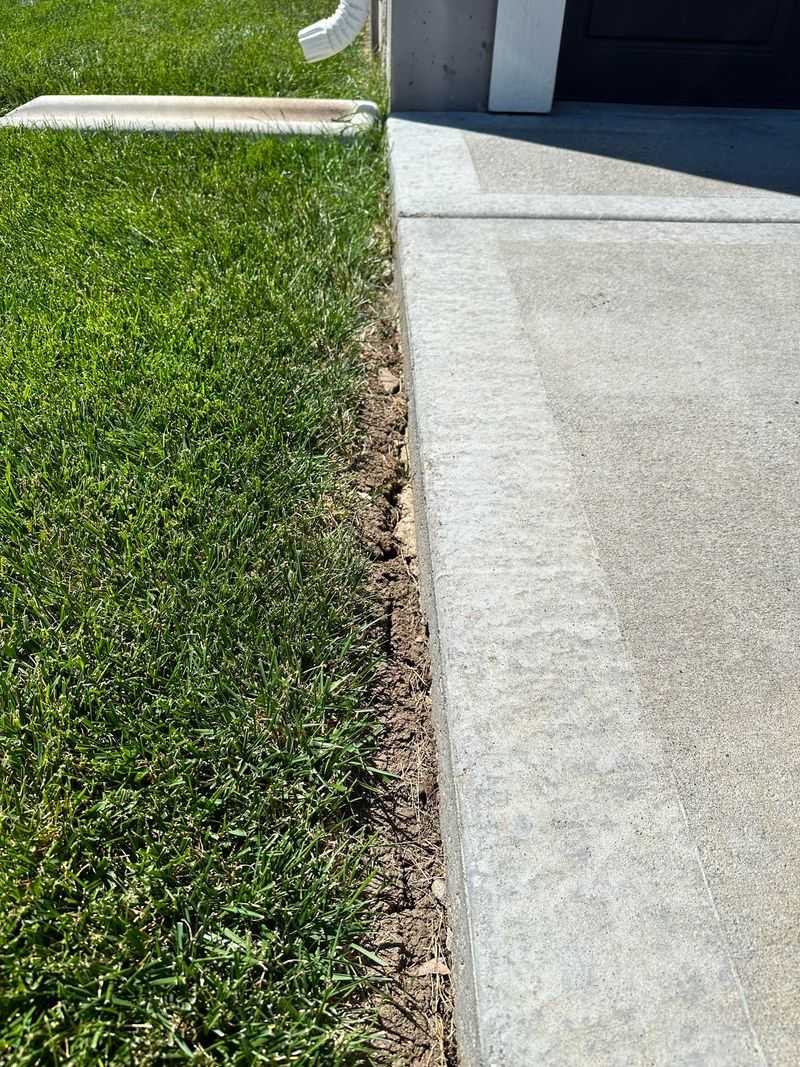
Pavement acts like a mirror for solar radiation, bouncing light and heat onto adjacent grass. During winter days when the sun shines, concrete surfaces can warm to forty or fifty degrees even when air temperature stays at twenty-five.
This reflected heat creates a microclimate along sidewalk edges where grass experiences conditions completely different from the rest of your lawn.
Warm spells become especially problematic when combined with concrete’s heat effects. A February afternoon might feel pleasant enough for grass along your sidewalk edge to break dormancy and begin growing.
But when nighttime temperatures plunge back below freezing, that premature growth suffers severe damage. Grass in the middle of your lawn, protected from reflected heat, stays safely dormant throughout the temperature swing.
The stripe pattern reflects this narrow zone of temperature influence. Concrete typically affects grass growing within one to two feet of the pavement edge.
Plants in this band experience dozens of false spring signals throughout Ohio’s variable winter, each one triggering growth that subsequent freezes damage.
Combined stresses multiply the damage beyond what any single factor would cause. Grass already weakened by salt exposure becomes even more vulnerable to temperature stress.
Roots damaged by freeze-thaw cycles cannot support plants trying to grow during warm spells. Compacted snow prevents oxygen from reaching stressed crowns.
By the time spring truly arrives, grass along sidewalk edges has endured a perfect storm of winter damage that leaves those distinctive brown stripes marking months of accumulated stress.
7. Poor Drainage Traps Salty Meltwater In Lawn Edges
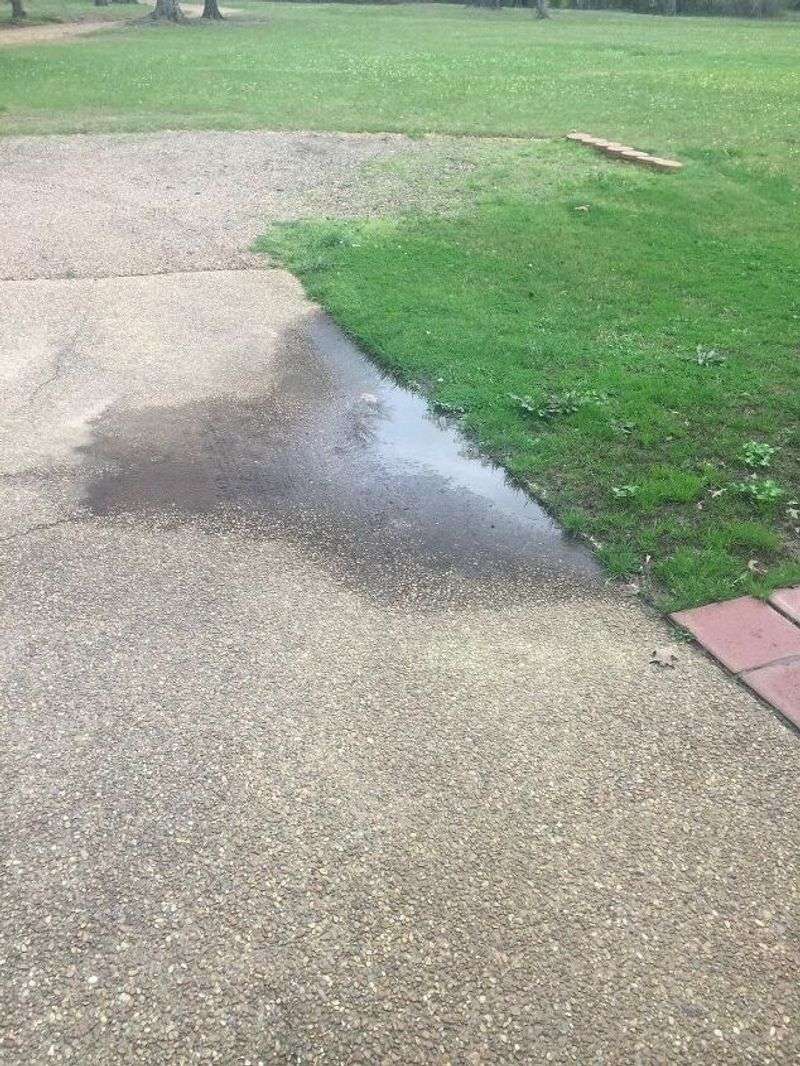
Water always follows the path of least resistance, and unfortunately that path often runs right along your sidewalk edge. Many properties have slight depressions where lawn meets pavement, created either during construction or gradually over years of settling.
These low spots become collection zones for every drop of salty meltwater running off your sidewalk throughout winter.
When snow melts on concrete, the water carries dissolved salt with it. Properly graded lawns allow this runoff to flow away quickly, distributing salt across a wide area where grass can tolerate it.
But low spots trap the water, letting it sit for hours or days while salt soaks deep into the root zone. Each melt cycle adds another dose of salt to the same trapped water, increasing concentration to toxic levels.
Ohio’s clay-heavy soil makes drainage problems worse. Clay drains slowly even in ideal conditions, but winter frost penetrates twelve to eighteen inches deep, creating an impermeable frozen layer that blocks downward water movement.
Salty meltwater has nowhere to go except sideways, spreading along the frozen soil surface and saturating grass roots in a narrow band.
Spring reveals the damage pattern clearly. Brown stripes follow the exact contours of winter drainage paths.
Where water pooled deepest, grass looks worst. Areas with better drainage show faster recovery.
If you notice your sidewalk stripes are wider in some areas than others, poor drainage probably explains the difference. Fixing the grade can prevent future damage, but first you need to flush accumulated salt from the soil profile to help this year’s grass recover.
8. Winter Plowing Pushes Salt Directly Into Grass Strips
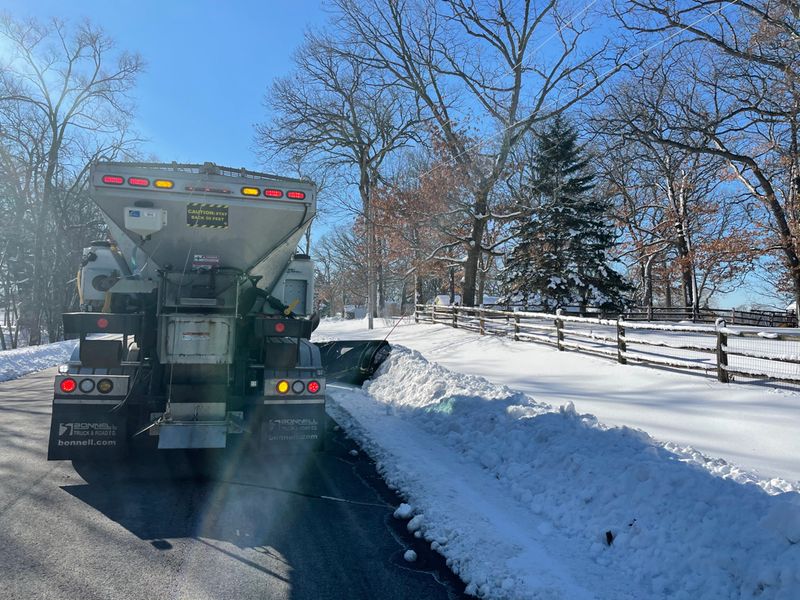
Plows and shovels don’t just move snow; they actively transfer salt from pavement onto your grass. Each pass of a shovel blade scrapes up salt crystals along with snow, and that mixture gets deposited wherever you pile the load.
Boulevard strips between sidewalks and streets receive the worst treatment, catching snow pushed from both the street and the walk.
Municipal plows compound the problem with their size and power. A single plow pass can throw hundreds of pounds of salty snow onto boulevard grass.
Repeated plowing throughout winter means some strips receive dozens of salt applications, far exceeding what lawn grass can survive. The mechanical force also tears grass blades and damages crowns, adding physical injury to chemical stress.
The pattern repeats with predictable precision. Plows follow the same routes, pushing snow to the same locations every storm.
Your own shoveling habits probably haven’t changed in years, meaning you pile snow on the same lawn areas each time. This consistency explains why damage stripes appear in identical locations every spring; those zones receive concentrated salt exposure all winter long.
Ohio’s lake-effect snow regions see the worst plow damage. Cities near Cleveland and along the Lake Erie shore might experience twenty or thirty plowing events in a typical winter.
Each event adds more salt to already saturated soil. By March, boulevard grass in these areas often looks completely brown, creating those dramatic stripes that define winter lawn damage across northern Ohio neighborhoods.
Recovery requires patience, proper care, and often overseeding to restore thick, healthy turf.