This Michigan Botanical Garden Is A Must See When You Visit Detroit
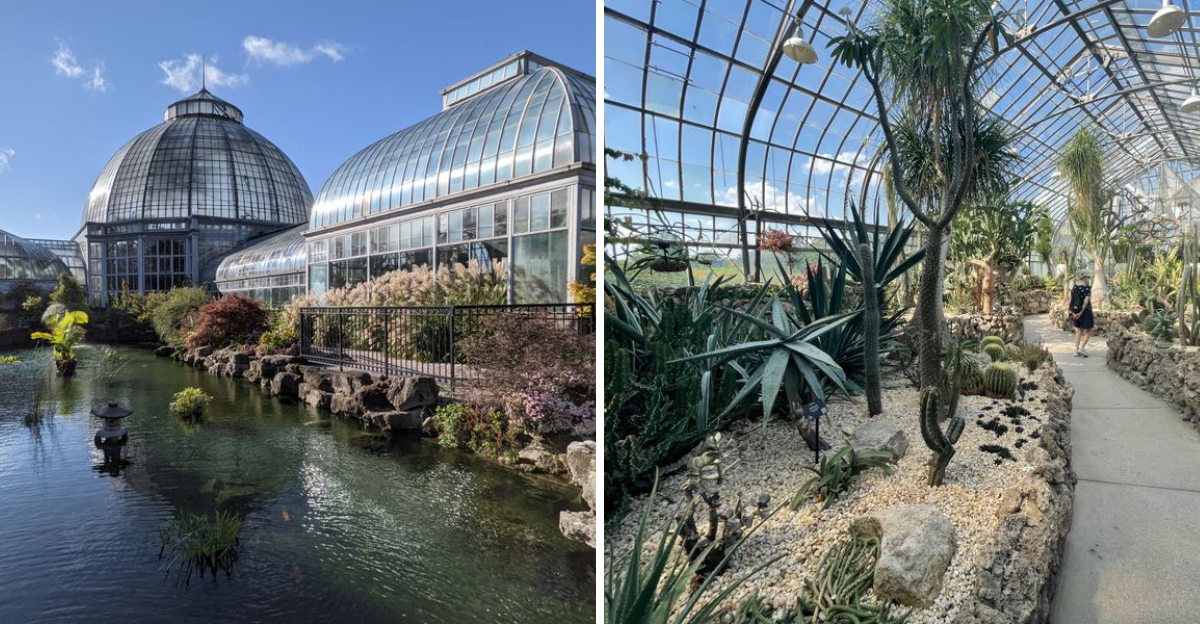
Detroit holds a botanical treasure that has welcomed visitors for over a century.
The Belle Isle Conservatory feels like stepping into another world, where towering tropical palms stretch toward sunlit glass ceilings and delicate orchids bloom in warm, carefully tended spaces.
Every corner reveals lush greenery, vibrant color, and plants gathered from far beyond Michigan’s climate. The historic glass structure itself adds to the experience, blending classic architecture with living beauty in a way few places can match.
Walking through its pathways offers a peaceful break from busy city life, replacing noise with calm and curiosity.
Whether you come for inspiration, photography, or a quiet moment among exotic plants, the conservatory delivers a rare chance to explore global plant life without ever leaving Detroit, making each visit feel both refreshing and unforgettable.
It’s Known As The Anna Scripps Whitcomb Conservatory
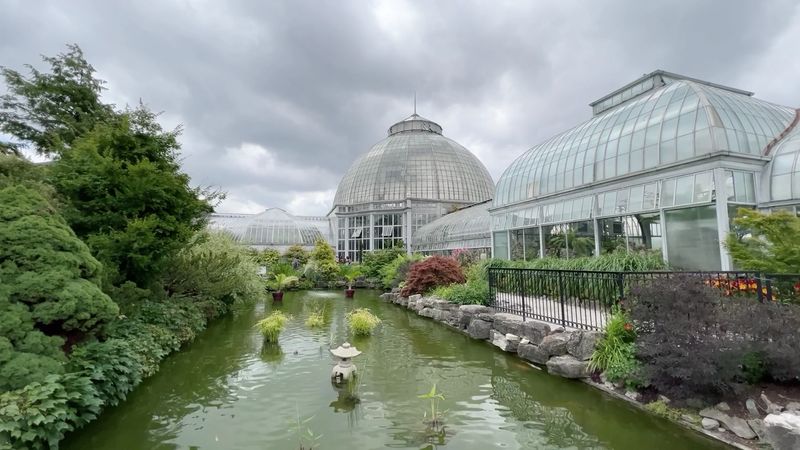
Most locals simply call it the Belle Isle Conservatory, but its official name honors a remarkable woman who changed everything. Anna Scripps Whitcomb transformed this botanical paradise through her incredible generosity and passion for rare plants.
Her legacy lives on in every corner of this stunning facility. The conservatory received its formal name after Anna donated her extraordinary personal orchid collection in 1955.
Before that moment, visitors could enjoy many beautiful plants, but nothing compared to what came next. Her gift included 600 precious orchids, many with fascinating wartime stories attached to their roots.
Understanding both names helps visitors appreciate the conservatory’s dual identity in Detroit’s cultural landscape. Tour guides often explain how the building serves as both a public botanical garden and a memorial.
The name change recognized Anna’s transformative contribution to making world-class horticulture accessible to everyone.
Walking through the entrance today, you can feel the weight of history and generosity. Signs throughout the building explain Anna’s vision for sharing botanical beauty with her community.
Her belief that everyone deserves access to natural wonders continues inspiring the conservatory’s mission of free public education through living plant collections that delight thousands of annual visitors.
It’s One Of The Oldest Continuously Operating Conservatories In The U.S.
Since opening its doors in 1904, this conservatory has never stopped welcoming plant lovers through its grand entrance. That remarkable streak makes it America’s oldest continuously operating conservatory, a record few institutions can match.
Through wars, economic downturns, and changing times, the doors stayed open. Many similar facilities across the country closed temporarily or permanently during challenging periods throughout the 20th century.
Detroit’s conservatory persevered through the Great Depression, both World Wars, and industrial decline. Staff members and dedicated volunteers refused to let this botanical sanctuary fade away.
The building witnessed incredible changes in Detroit while maintaining its core mission of plant education and preservation. Early visitors arrived in horse-drawn carriages, while today’s guests drive cars or take the bridge to Belle Isle.
Technology evolved from gas lamps to LED grow lights, yet the commitment to showcasing botanical diversity remained constant.
Celebrating over 120 years of operation represents more than just longevity. The conservatory became a steady presence in a city that experienced dramatic transformations.
Generations of Detroit families created memories wandering among tropical plants and seasonal flower displays, building traditions that grandparents now share with grandchildren exploring the same glass-enclosed wonderland their ancestors enjoyed decades earlier.
Historic Design By Prominent Architects
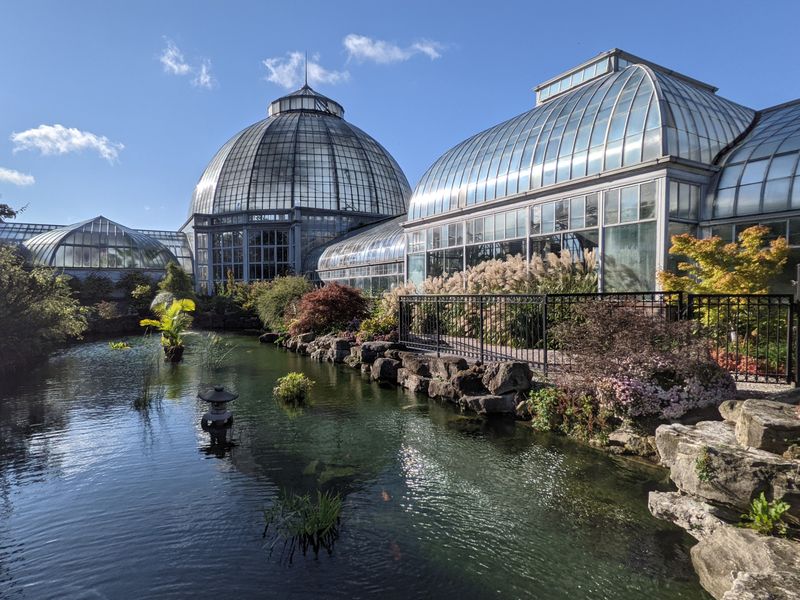
Two architectural legends collaborated to create this masterpiece of early 20th-century design. George D.
Mason and Albert Kahn brought their considerable talents together, crafting a structure that balanced beauty with botanical function. Their vision resulted in a building that still captivates visitors more than a century later.
Albert Kahn would later become famous for revolutionizing factory design, but his early work included elegant public buildings. His partnership with Mason produced a conservatory that borrowed inspiration from European glass palaces.
They understood that plants needed specific light, temperature, and humidity conditions to thrive indoors.
The architects chose materials and proportions that would stand the test of time while creating an inspiring environment. Curved glass panels allow maximum sunlight penetration, essential for tropical plant growth.
Iron framework provides strength without blocking precious light that keeps thousands of specimens healthy year-round.
Walking through the conservatory today, visitors experience the architects’ genius in how spaces flow from one botanical zone to another. Each section transitions smoothly while maintaining distinct environmental conditions.
The design allows staff to create mini-climates under one roof, from steamy tropical areas to dry desert environments, all while maintaining the building’s cohesive aesthetic that makes every visit feel like stepping into an elegant botanical palace from another era.
Spans Approximately 13 Acres Within Belle Isle Park
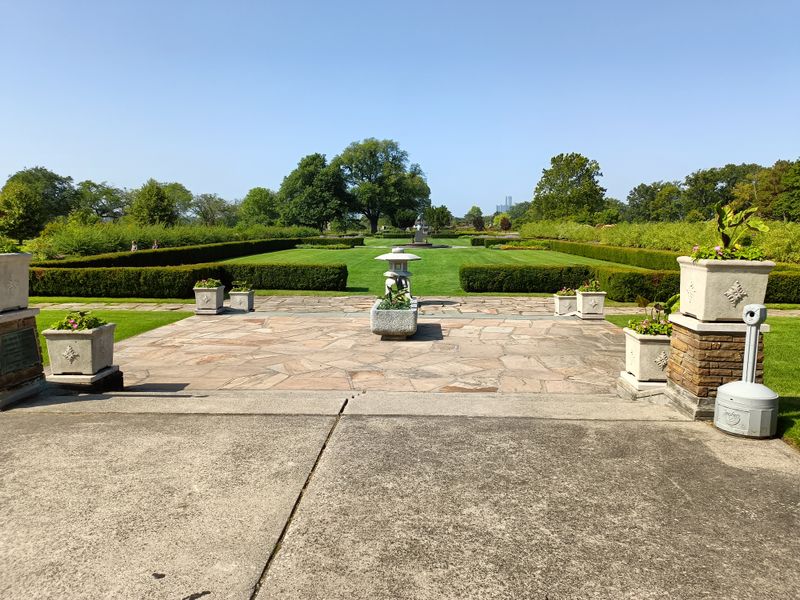
The conservatory building itself impresses visitors, but the surrounding botanical paradise extends across roughly 13 acres of Belle Isle. Those acres contain formal gardens, walking paths, lily ponds, and seasonal plantings that complement indoor collections.
Exploring everything requires time and comfortable walking shoes. Outdoor spaces change dramatically with Michigan’s seasons, offering new discoveries throughout the year. Spring brings tulips and daffodils carpeting garden beds in vibrant colors.
Summer showcases perennials at peak bloom, while fall transforms foliage into warm amber and crimson tones.
Landscape architects designed the grounds to provide year-round visual interest even during harsh winters. Evergreen specimens and architectural plantings maintain structure when deciduous plants rest.
Pathways wind through different garden styles, from formal Victorian layouts to more naturalistic prairie-inspired sections.
Families often spend entire afternoons exploring both indoor and outdoor areas without seeing everything. Children love discovering hidden garden nooks and watching koi fish in reflecting pools.
Photographers find endless subjects from macro flower shots to sweeping landscape compositions.
The generous acreage means crowds rarely feel overwhelming, even during popular visiting times. Benches throughout the grounds invite visitors to pause and absorb the peaceful atmosphere.
Whether studying a single rare orchid indoors or strolling through acres of outdoor gardens, the expansive property offers something for every nature enthusiast’s interests and energy level.
Famous For Its Orchid Collection
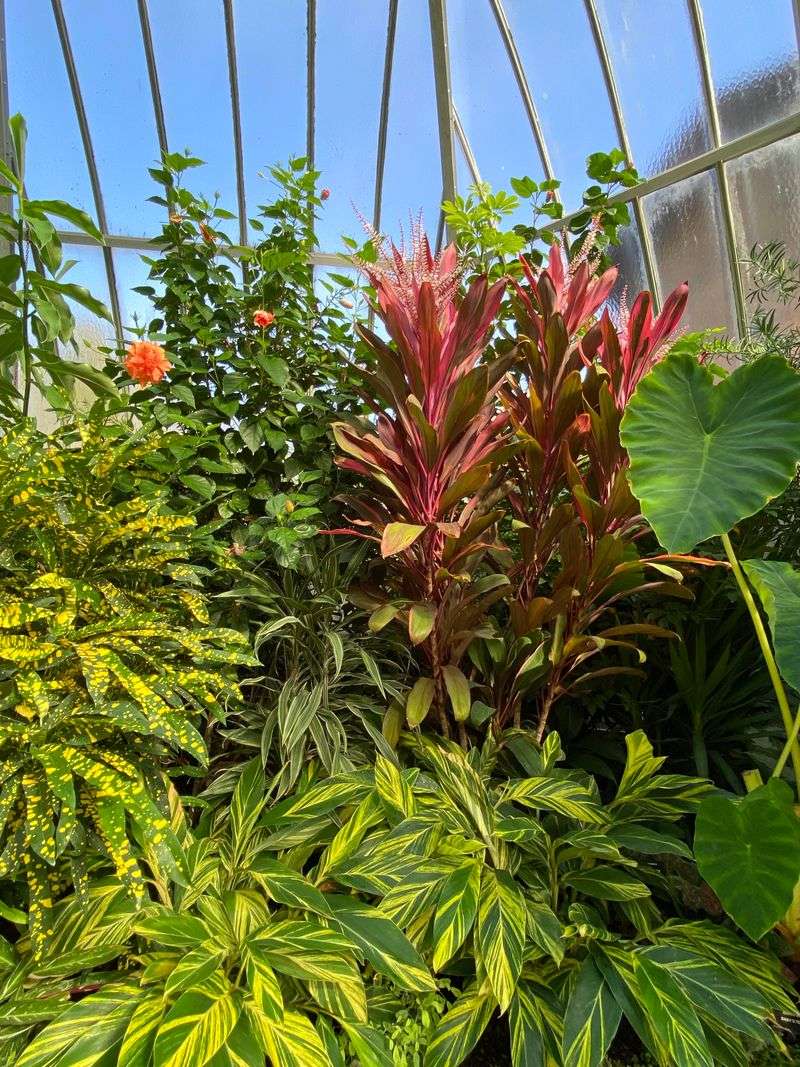
Anna Scripps Whitcomb’s 1955 donation transformed this conservatory into an orchid destination of international significance. Her gift of 600 orchids created one of America’s largest municipally owned collections practically overnight.
Many specimens carried remarkable stories of survival from World War II Britain. During the war, British orchid enthusiasts worked desperately to save precious specimens from bombing raids and neglect.
Heated greenhouses became impossible to maintain as fuel grew scarce. Anna helped rescue these botanical refugees, bringing them safely across the Atlantic to her Michigan estate.
Her personal collection grew to rival those of major botanical institutions before she decided to share them publicly. The donation ensured these rare plants would receive expert care while educating future generations.
Today’s collection includes descendants of those original wartime survivors plus many additions acquired over subsequent decades.
Visitors can view orchids in every color imaginable, from pure white to deep purple and vibrant orange. Some bloom year-round while others flower seasonally, rewarding repeat visitors with new displays.
Staff members carefully maintain temperature and humidity levels that recreate each species’ native habitat.
The orchid room often becomes the highlight of many visits, with guests spending considerable time admiring intricate flower structures.
Educational signs explain each plant’s origin and growing requirements, inspiring home gardeners to try cultivating these supposedly difficult plants in their own spaces.
Divided Into Multiple Distinct Botanical Sections
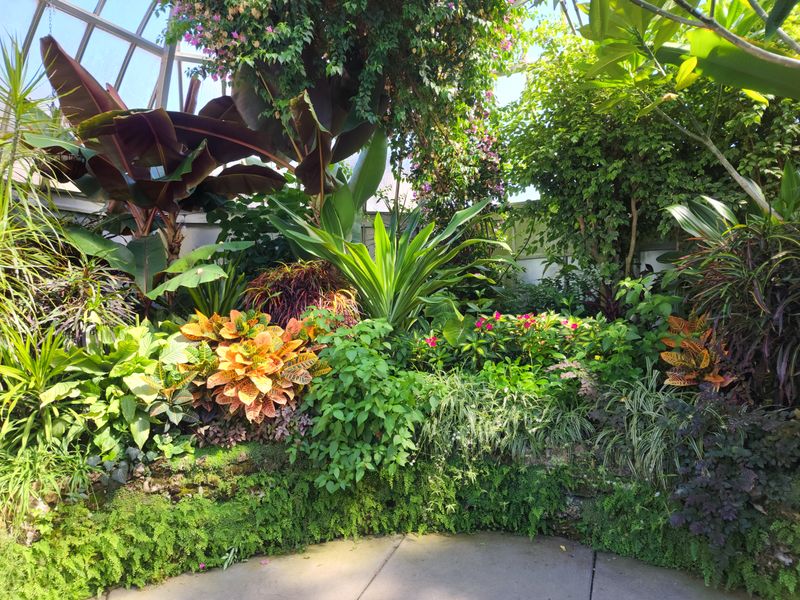
Five distinct botanical environments exist under the conservatory’s roof, each recreating specific plant habitats from around the world. The Palm House towers overhead with majestic specimens reaching toward the glass ceiling.
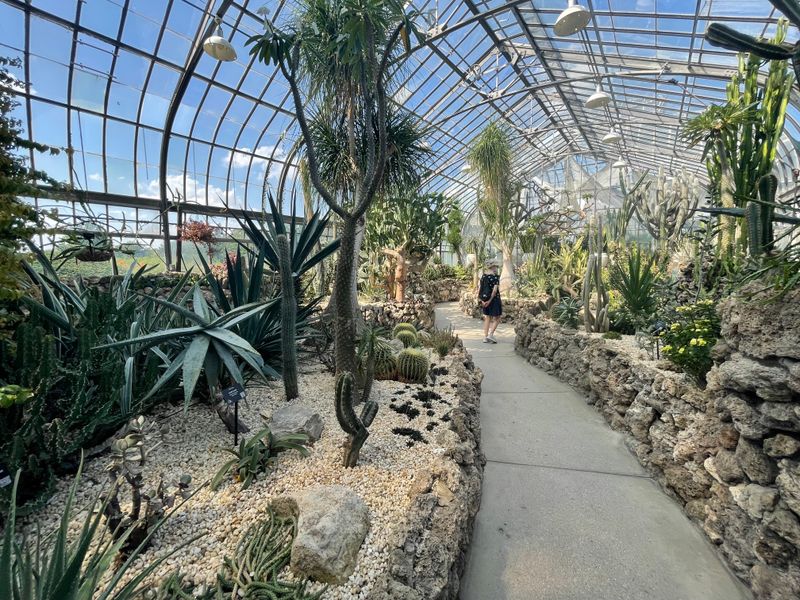
Tropical House humidity wraps around visitors like a warm, moist blanket. Moving into the Cactus House feels like teleporting to an Arizona desert, with spiny succulents adapted to extreme dryness.
The Fernery offers cool, shaded tranquility where ancient plant families thrive in filtered light. Show House rotates seasonal displays featuring whatever blooms most spectacularly at that moment.
Each section maintains precise environmental controls that keep plants healthy and thriving far from their native lands. Temperature, humidity, and light levels differ dramatically between adjacent rooms.
Walking from steamy tropics into arid desert takes only a few steps. This organization helps visitors understand how climate shapes plant evolution and diversity.
Children grasp concepts about adaptation when they see fuzzy cactus spines versus broad tropical leaves. Teachers frequently bring classes to experience these living laboratories firsthand.
Staff members work carefully to maintain boundaries between sections, preventing temperature or humidity from bleeding across zones.
The architectural design supports these distinct environments through strategic placement of doors, vents, and heating systems.
Visitors appreciate how thoughtful planning allows such diverse plant communities to coexist peacefully, creating a botanical world tour without leaving Detroit’s city limits.
Iconic 85-Foot Central Dome
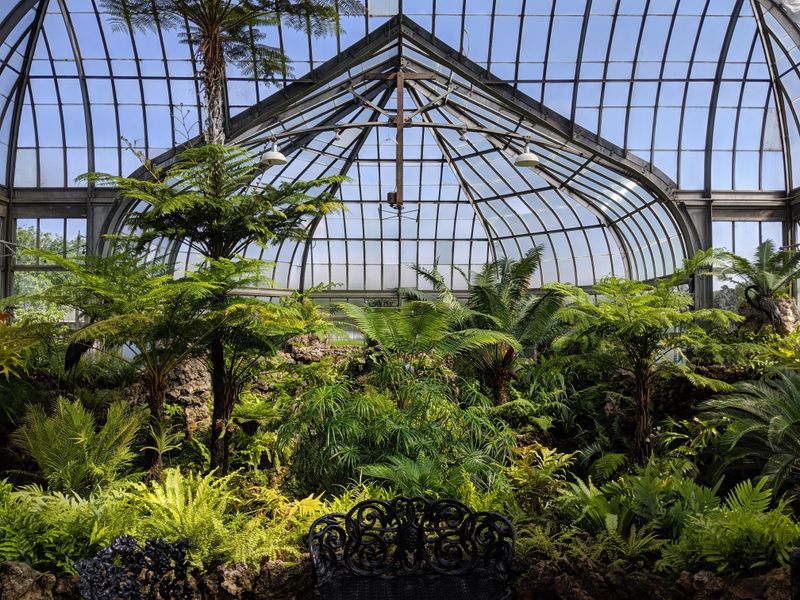
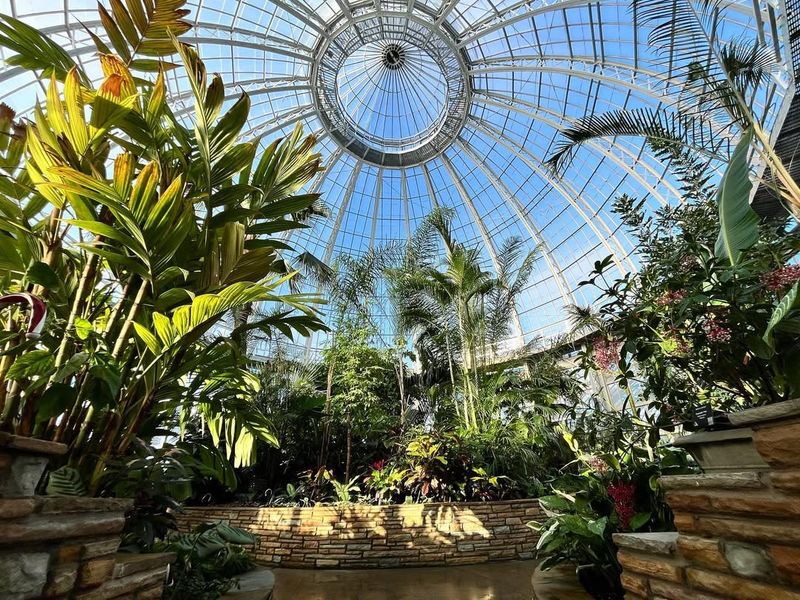
The conservatory’s central dome soars 85 feet overhead, creating a cathedral-like space filled with towering palms and dramatic tropical specimens. This architectural centerpiece immediately captures attention when visitors enter the building.
Sunlight filters through hundreds of glass panels, creating ever-changing patterns on the floor below.
Engineers designed the dome to support its own weight while withstanding Michigan’s harsh weather conditions. Snow loads, wind pressure, and temperature extremes all factored into calculations that have proven remarkably successful.
The structure has weathered over a century of Great Lakes storms without major failures. Tall palms planted beneath the dome can grow to their natural heights without constraint.
Some specimens reach 40 or 50 feet, their fronds spreading wide in the generous vertical space. Other tropical trees create a layered canopy that mimics rainforest structure.
Photography enthusiasts love capturing the dome’s geometric beauty from various angles throughout the conservatory. Morning light produces different effects than afternoon sun streaming through western panels.
The interplay of natural and structural elements creates compositions that feel both organic and architectural.
Restoration work completed recently ensured this landmark feature will inspire future generations. Workers replaced thousands of glass panes, repaired metalwork, and updated systems while preserving historical character.
The dome now sparkles like new while maintaining its vintage charm, standing as a testament to early 20th-century engineering ambition and botanical passion that continues welcoming visitors into this spectacular space.
Seasonal Floral Displays And Garden Beds
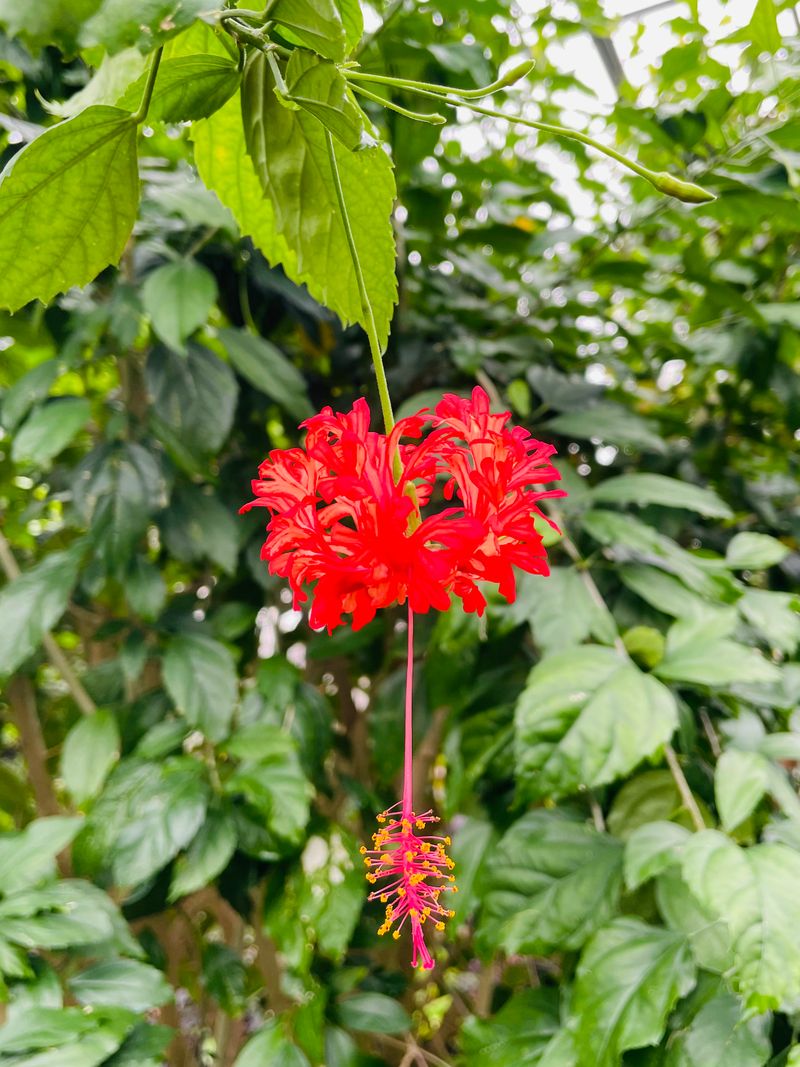
Outdoor gardens surrounding the conservatory explode with color during growing seasons, offering constantly changing displays throughout the year. Horticulture staff plan elaborate seasonal rotations that keep beds interesting from early spring through late fall.
Each season brings new combinations of flowers, foliage, and textures. Spring tulip displays draw crowds eager to escape winter’s gray monotony with bold reds, yellows, and purples.
Thousands of bulbs planted each fall burst forth in coordinated color schemes. Daffodils and hyacinths add fragrance to the visual spectacle.
Summer transforms beds into lush tapestries of annuals and perennials working together. Salvia, marigolds, petunias, and zinnias provide continuous blooms that attract butterflies and hummingbirds.
Foliage plants add contrasting textures between flowering specimens. The lily pond garden offers serene beauty with aquatic plants floating on still water surfaces. Water lilies bloom in shades from white to deep pink, their flowers opening with the sun.
Koi fish add movement and interest below the surface. Fall brings ornamental grasses, late-blooming perennials, and carefully selected annuals that tolerate cooler temperatures. Chrysanthemums in autumn colors provide traditional seasonal beauty.
Even winter offers interest through evergreen plantings and structural elements that look beautiful dusted with snow, ensuring the conservatory grounds remain worth visiting regardless of season or weather conditions outside.
Recently Reopened After Major Renovations
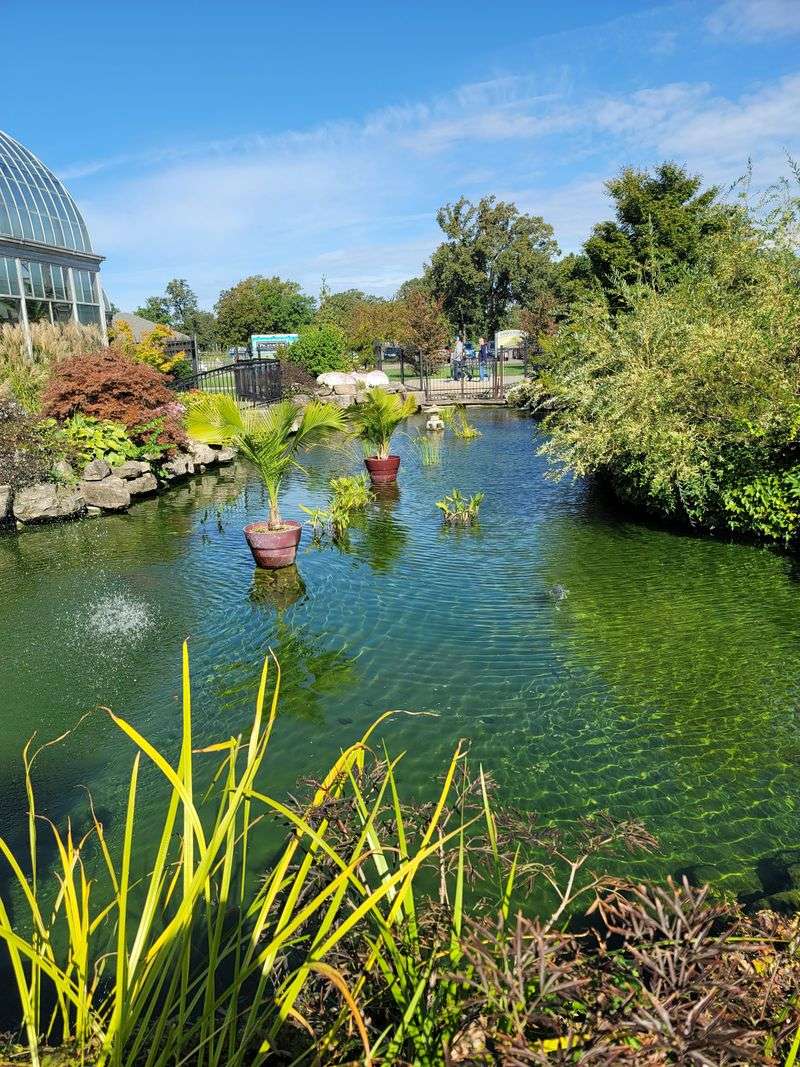
After years of careful restoration work, the conservatory reopened to the public in late 2024 with renewed splendor. Decades of weathering had taken their toll on glass panels, metal framework, and mechanical systems.
Extensive renovations became necessary to preserve this historic treasure for future generations.
Workers painstakingly replaced thousands of individual glass panes, matching original specifications while incorporating modern improvements. Structural elements received reinforcement and repair where corrosion had weakened connections.
Updated climate control systems now maintain precise conditions more efficiently than vintage equipment.
The restoration team faced challenges balancing historical preservation with contemporary building codes and sustainability goals. Every decision required careful consideration of how changes would affect the building’s character.
Experts consulted historical photographs and documents to ensure authenticity. Plant collections temporarily relocated to protected areas during construction, requiring elaborate planning and coordination.
Staff members worked to minimize stress on specimens during moves and environmental changes.
The successful return of plants to their restored home marked a celebration of both horticultural and architectural achievement.
Visitors now enjoy improved accessibility features, better lighting, and enhanced educational displays alongside the conservatory’s renewed physical beauty.
The reopening represents Detroit’s commitment to preserving cultural landmarks and providing quality public spaces.
Fresh paint, sparkling glass, and healthy plants create an experience that honors the past while embracing the future, ensuring this botanical gem continues inspiring wonder and appreciation for plant diversity.
It’s Free To Visit And A Key Belle Isle Attraction
Perhaps the conservatory’s best feature is its completely free admission policy that welcomes everyone regardless of economic circumstances. No tickets, no reservations, no hidden fees stand between visitors and this world-class botanical collection.
The democratic access reflects Anna Scripps Whitcomb’s original vision for sharing natural beauty with all people.
Located within Belle Isle Park, the conservatory benefits from the island’s scenic setting surrounded by the Detroit River. Families can combine their conservatory visit with picnicking, playground time, or exploring other park attractions.
The entire island offers recreational opportunities that create full-day adventures. Free admission removes barriers that might prevent school groups, seniors on fixed incomes, or families with tight budgets from experiencing botanical wonders.
Educational programs welcome students without charging participation fees. Everyone deserves opportunities to learn about plant diversity and environmental stewardship.
The conservatory’s status as a must-see Belle Isle destination brings visitors from across Michigan and beyond. Tourist guides consistently rank it among Detroit’s top attractions.
Many visitors return repeatedly, developing deep connections with favorite plants and seasonal displays.
Operating hours accommodate various schedules, though checking current times before visiting prevents disappointment. Parking on Belle Isle requires a recreation passport for Michigan residents or day passes for out-of-state guests.
The conservatory itself remains free once you reach the island, making it an exceptional value for anyone seeking beauty, education, and peaceful respite from urban life.