This Simple Pruning Trick Makes Oregon Crape Myrtles Bloom Like Crazy
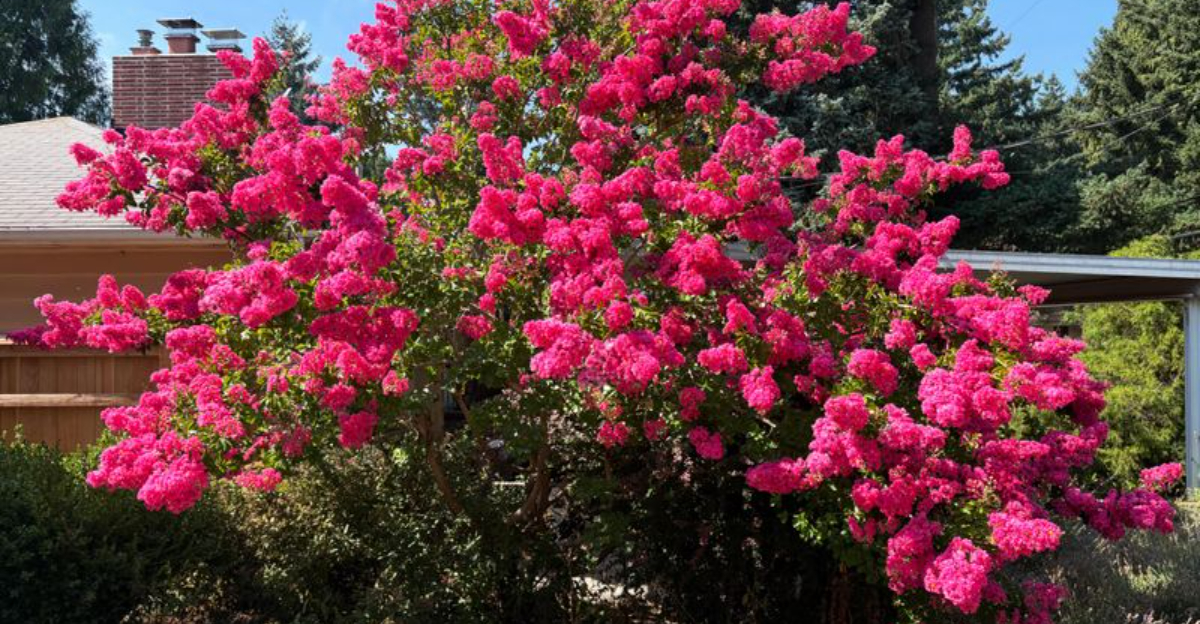
Crape myrtles are a favorite in Oregon gardens for their long-lasting summer blooms, but getting them to flower like crazy takes a little know-how. The secret isn’t harsh pruning or complicated techniques, it’s a simple trick called selective thinning.
Instead of cutting back every branch, selective thinning focuses on removing just the right stems to open up the plant. This allows more sunlight and air to reach the remaining branches, encouraging bigger, healthier blooms.
It’s a gentle approach that keeps your crape myrtle looking natural while boosting flower production.
Even if you’ve struggled with sparse blooms in the past, this method can make a dramatic difference. You don’t need a lot of tools or years of experience, just some careful observation and a few strategic cuts at the right time of year.
Let’s dive into how selective thinning works and why it makes crape myrtles thrive in Oregon’s climate. With this simple pruning trick, your trees can produce a vibrant, eye-catching display that brings color and life to your yard all season long.
1. Why Crape Myrtles Bloom On New Growth
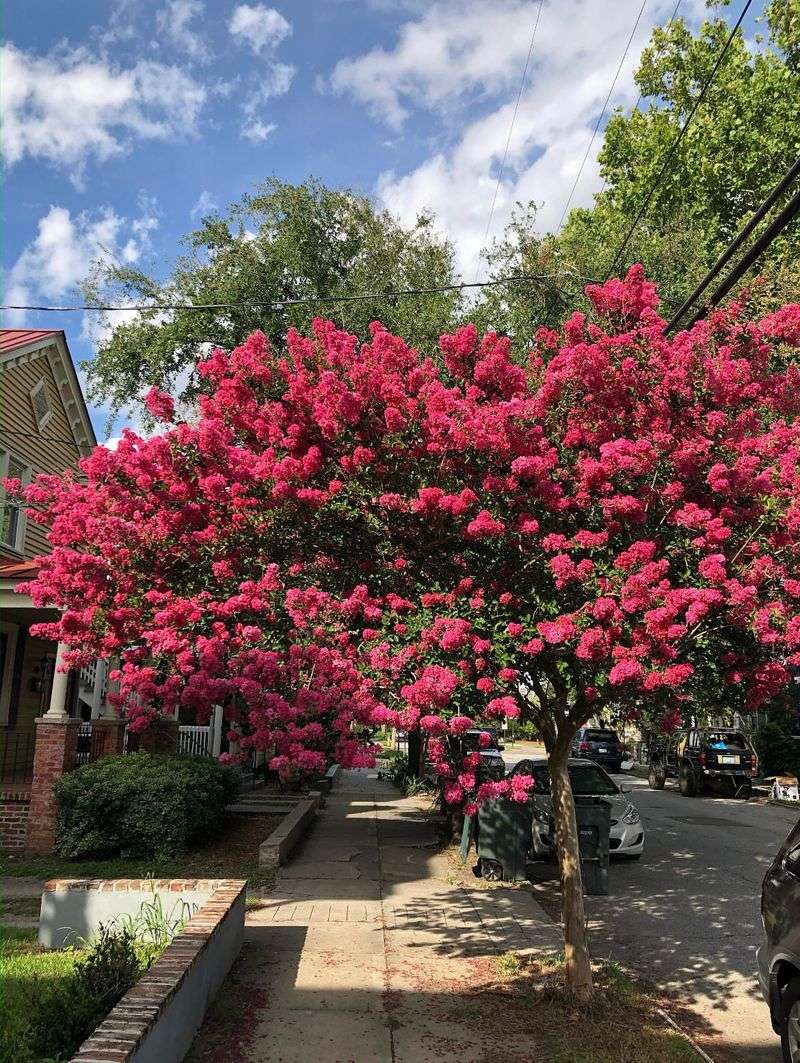
Crape myrtles produce their spectacular flower clusters on branches that grew during the current season, not on old wood from previous years. This means every spring, your tree pushes out fresh shoots, and those shoots develop flower buds at their tips by midsummer.
Understanding this growth habit is the key to unlocking better blooms without butchering your tree.
When you prune correctly, you’re essentially telling the tree where to focus its energy. Instead of wasting resources on weak, crowded, or damaged branches, the tree channels everything into producing strong new growth.
More vigorous shoots mean bigger flower clusters and a longer blooming period that can stretch from July well into September in Oregon.
Here’s where Oregon homeowners sometimes get confused: because crape myrtles bloom on new wood, some people think cutting everything back hard will force more flowers. But that’s not how it works.
Heavy cuts create stress, delay leafing out, and produce thin, whippy shoots that can’t support heavy blooms.
Light, selective pruning gives you the best of both worlds, plenty of new growth without shocking the tree or sacrificing its natural beauty and structure year after year.
2. The Biggest Pruning Mistake Oregon Homeowners Make
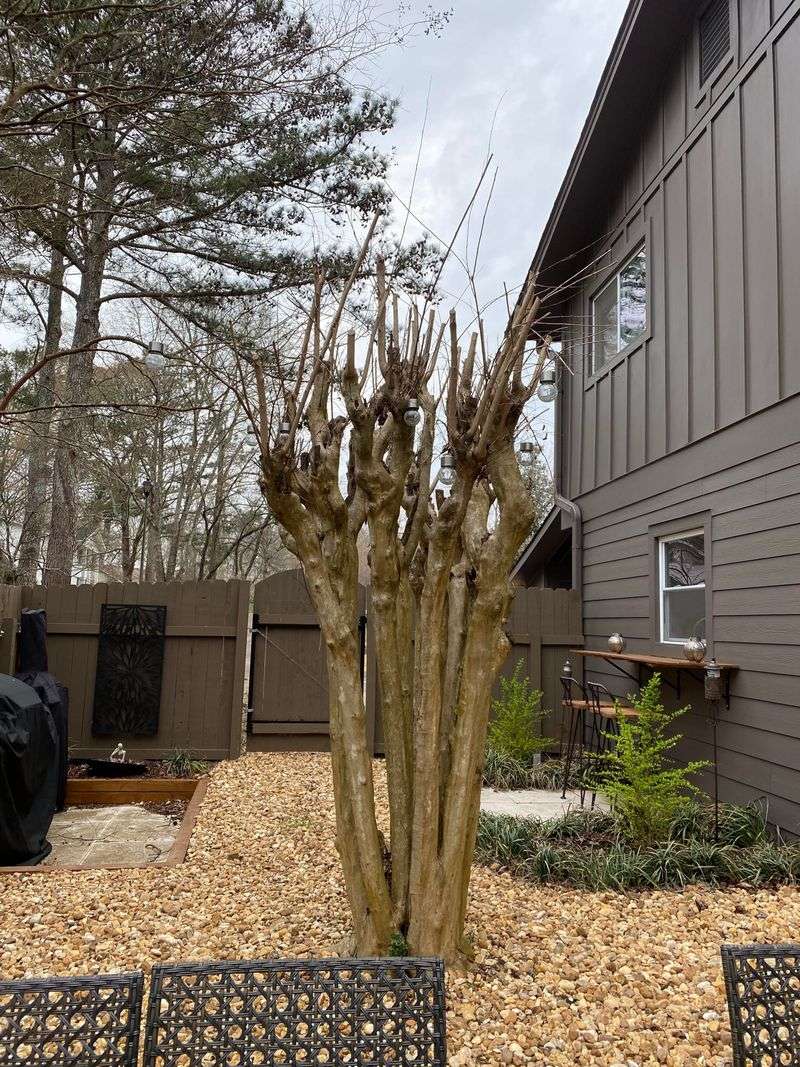
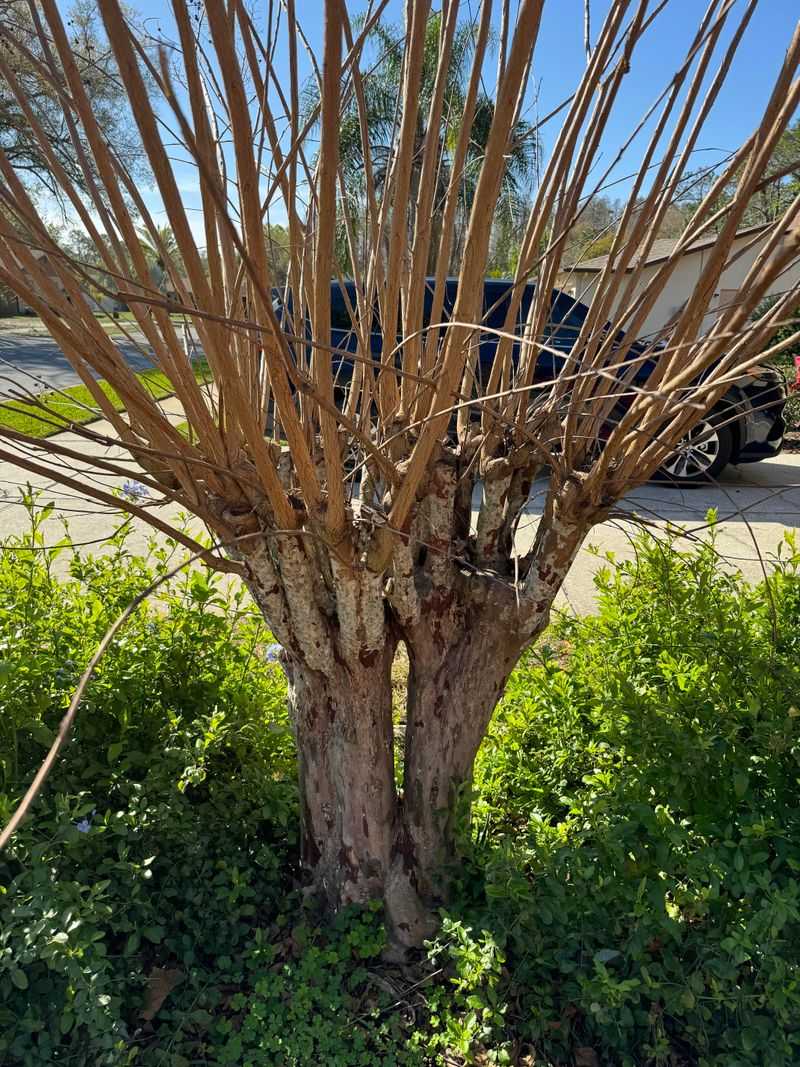
Walk through any Oregon neighborhood in late winter and you’ll see it: crape myrtles chopped down to stumps, with every main branch cut back to thick, knobby stubs.
Arborists call this incorrect pruning and it’s the number one reason these trees underperform in our climate.
People think they’re helping, but they’re actually setting the tree up for weaker blooms and uglier growth.
When you top a crape myrtle, the tree responds by sending up dozens of thin, fast-growing shoots from those cut ends. These shoots are weak, crowded, and can’t support the weight of full flower clusters.
They also leaf out later than normal because the tree has to recover from the trauma. In Oregon, where our springs are already cool and slow, this delay can push blooming back into late summer or even early fall.
Topping also ruins the tree’s natural vase shape and creates permanent knobs that get bigger and uglier every year. Once you start this cycle, it’s hard to stop without leaving gaps in the canopy.
The smarter approach is selective thinning, removing specific branches instead of beheading the whole tree, which keeps the shape intact and encourages healthier, more productive growth.
3. Why Late Winter Timing Works Best In Oregon
Timing your pruning makes all the difference between a tree that blooms early and strong versus one that limps into fall still trying to flower.
In Oregon, late February through early March is the sweet spot, right before the tree breaks dormancy but after the hardest freezes have passed.
Pruning during dormancy minimizes stress and gives the tree maximum time to produce new flowering shoots once warm weather arrives.
If you prune too early in winter, you risk exposing fresh cuts to hard freezes that can damage the cambium layer under the bark.
If you wait too long into spring, you’re cutting off branches that have already started putting energy into leaf buds, which wastes the tree’s stored resources.
Late winter pruning lets you see the tree’s structure clearly without leaves in the way, making it easier to identify which branches need to go.
Oregon’s cool, wet springs mean crape myrtles already leaf out later than they would in warmer states. Pruning at the right time ensures your tree isn’t playing catch-up all season.
You’ll notice buds swelling and shoots emerging by April, giving the tree plenty of time to develop strong flowering wood before July rolls around and bloom season kicks off in full force.
4. How Selective Thinning Boosts Flower Production
Selective thinning means removing entire branches back to their point of origin, whether that’s the trunk, a main limb, or a branch collar, rather than cutting partway down a branch and leaving stubs.
This technique redirects the tree’s energy into fewer, stronger shoots that can support larger, more abundant flower clusters.
It’s the exact opposite of topping, and it’s what professional arborists recommend for crape myrtles in every climate, including ours.
When you thin out crowded or crossing branches, you’re giving the remaining shoots more access to sunlight, water, and nutrients. Each shoot grows thicker and more vigorous, which means it can hold more flowers without drooping or breaking.
You’ll also notice the blooms themselves are bigger and more vibrant because the tree isn’t spreading its resources too thin across dozens of weak shoots.
In Oregon, where our growing season is shorter and cooler, selective thinning is especially important. You want every branch the tree produces to count.
Removing the weakest or least productive branches early means the tree doesn’t waste energy on growth that won’t contribute to the summer flower show.
The result is a cleaner canopy, better airflow, and a tree that blooms like it’s living in the South, even in the Pacific Northwest.
5. Improving Sunlight And Airflow Inside The Canopy
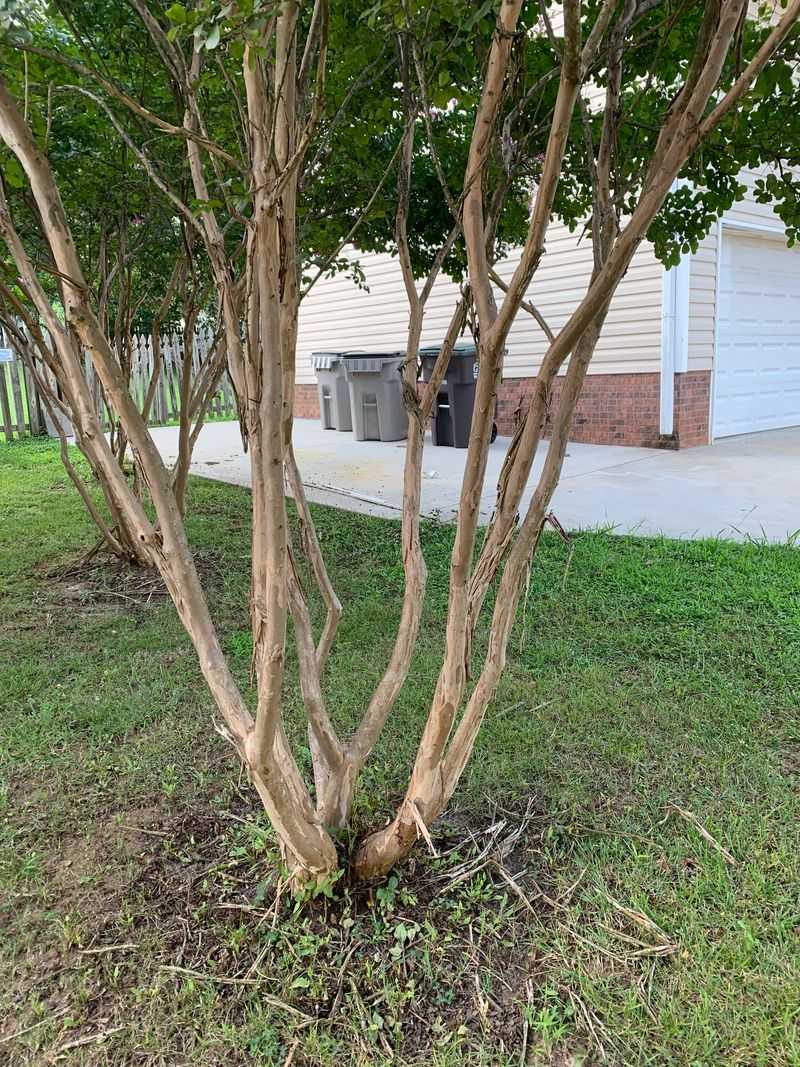
One of the biggest benefits of smart pruning is opening up the interior of the tree so sunlight can reach the inner branches and air can move freely through the canopy.
Crape myrtles love full sun, and when the center of the tree is clogged with crisscrossing branches and twiggy growth, those inner shoots stay shaded and weak.
They won’t flower well, and they’re more prone to fungal issues like powdery mildew, which thrives in still, humid air.
By removing inward-growing branches, suckers from the base, and any shoots that cross or rub against each other, you create a more open structure. Sunlight penetrates deeper, which encourages even the interior branches to produce flower buds.
Better airflow reduces moisture buildup on leaves, cutting down on disease pressure and keeping your tree healthier overall. In Oregon’s damp spring climate, this airflow is especially valuable.
You’ll also notice the tree looks better from every angle. Instead of a dense, tangled mess, you get a graceful, airy shape that shows off the beautiful bark and branch structure crape myrtles are known for.
And when bloom time arrives, flowers appear throughout the canopy, not just on the outer tips, giving you a fuller, more impressive display that neighbors will ask about all summer long.
6. What Branches You Should Remove First
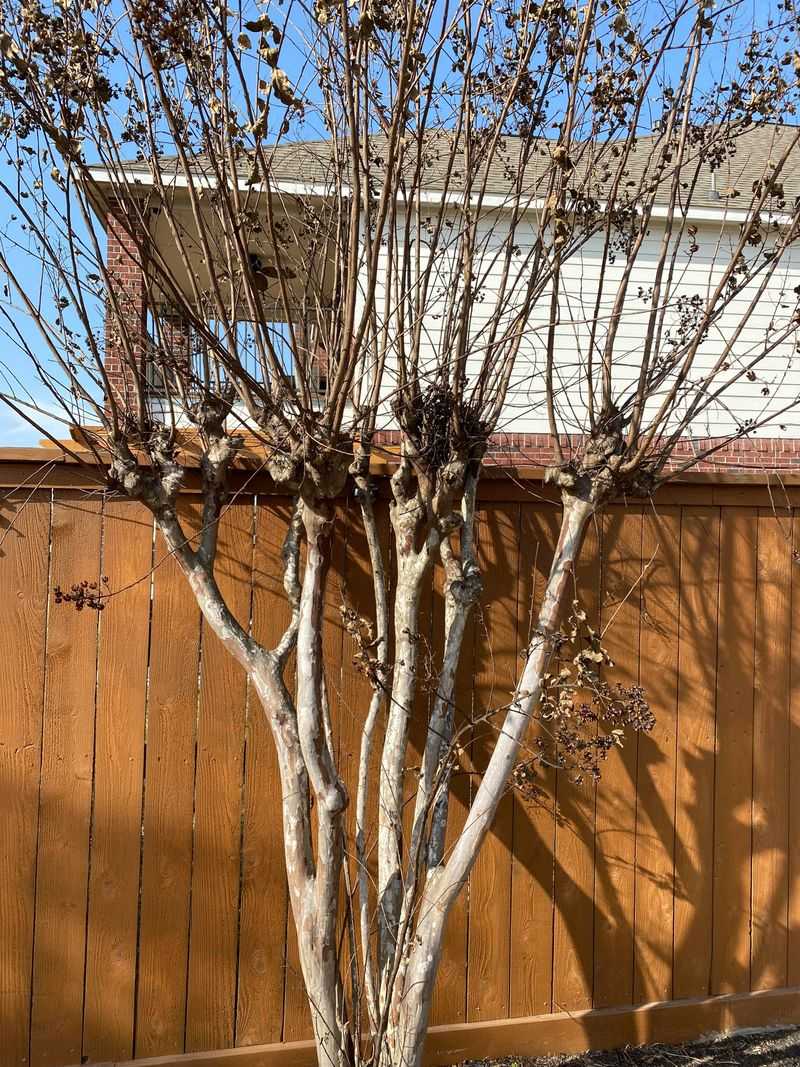
Not all branches are created equal, and knowing which ones to remove first makes the whole pruning process faster and more effective. Start with the obvious problems: any dead, diseased, or damaged wood.
These branches aren’t contributing to the tree’s health or bloom production, and removing them immediately improves the tree’s overall vigor. Look for brittle, discolored, or cracked branches and cut them back to healthy wood or the trunk.
Next, tackle suckers and water sprouts. Suckers are shoots that emerge from the base of the tree or the roots, and water sprouts are thin, fast-growing shoots that pop up along the trunk or main branches.
Both steal energy from the flowering wood and clutter the canopy. Remove them completely at their base, don’t just shorten them, or they’ll come back even stronger.
Finally, look for branches that cross, rub, or grow inward toward the center of the tree. These create congestion, block sunlight, and can damage each other over time.
Choose the weaker or less well-placed branch and remove it cleanly at the branch collar. Once you’ve cleared out these problem areas, step back and assess the tree’s shape.
You’ll probably find you don’t need to cut much more, just a few targeted cuts can transform the tree’s structure and set it up for an incredible bloom season.
7. How Much To Cut Without Overdoing It
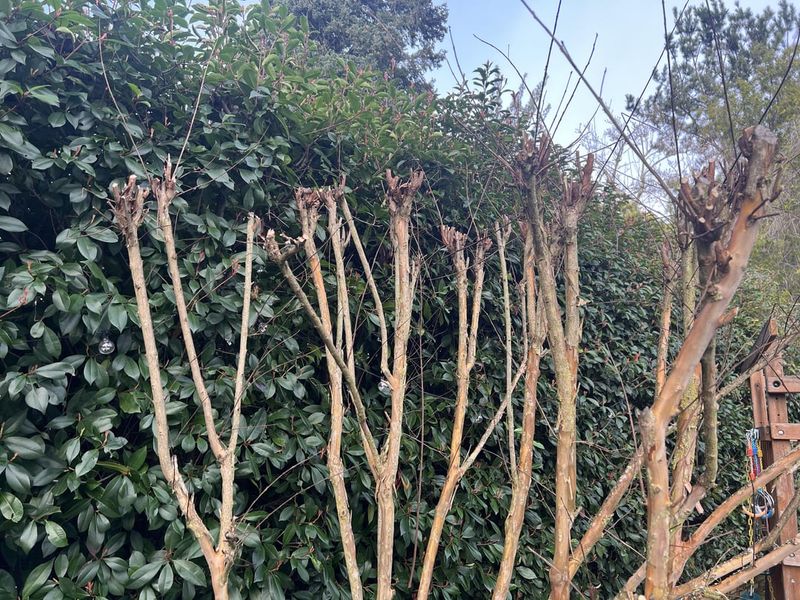
One of the biggest fears homeowners have is cutting too much and ruining the tree. The good news is crape myrtles are forgiving, but the even better news is you don’t need to cut much at all to get great results.
A general rule of thumb is to remove no more than 20 to 30 percent of the tree’s canopy in a single year. This keeps the tree balanced, reduces stress, and ensures you still get plenty of blooms the same season.
Focus on quality over quantity. You’re not trying to reshape the entire tree in one session, you’re just cleaning up problem areas and improving structure.
If you’re not sure whether to remove a branch, leave it. You can always come back next year and fine-tune further.
Over-pruning is much harder to fix than under-pruning, and in Oregon’s climate, a heavily pruned tree can take weeks longer to leaf out and bloom.
After you’ve removed the obvious problems, step back and look at the tree from all angles. Does it have a balanced, vase-like shape?
Can you see through the canopy without it looking bare? Are the remaining branches evenly spaced and pointing outward?
If the answer is yes, you’re done. Put the pruners down, clean up the debris, and let the tree do its thing.
You’ll be amazed at how much better it performs with just a little smart, restrained pruning.
8. What To Expect After Proper Pruning
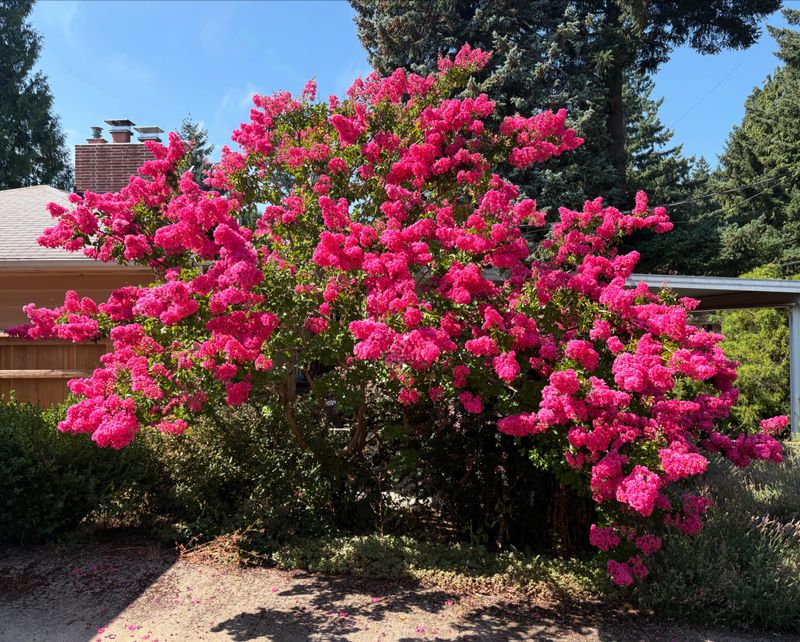
Once you’ve finished pruning, the waiting game begins, but it’s a rewarding one. In Oregon, you’ll start seeing leaf buds swell by mid to late April, depending on the weather.
By May, fresh green shoots will be pushing out from the pruned branches, and you’ll notice they’re thicker and more vigorous than the weak, twiggy growth you might have seen in previous years.
This is exactly what you want: strong, healthy shoots that can support big flower clusters.
By late June or early July, flower buds will start forming at the tips of the new growth. If you pruned correctly, you’ll see buds appearing throughout the canopy, not just on the outer edges.
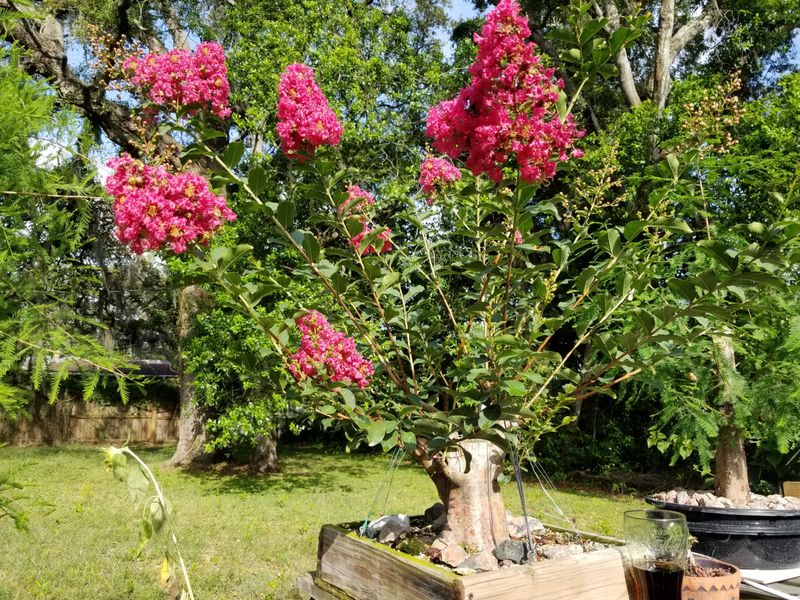
When the flowers open, they’ll be larger, more colorful, and longer-lasting than blooms from an over-pruned or neglected tree.
You’ll also notice the tree looks better overall: cleaner lines, better shape, and a more open, elegant structure that shows off the bark and branching.
Don’t be surprised if neighbors stop to ask what you did differently. A well-pruned crape myrtle is a showstopper, and once you see the results, you’ll never go back to topping or guessing.
The best part? This method gets easier every year as the tree develops a strong, balanced framework that needs less intervention over time.
You’re not just improving this season’s blooms, you’re setting your tree up for years of healthy, abundant flowering.