This Strange Star-Shaped Mushroom In Oregon Looks So Unreal People Think It Is Fake
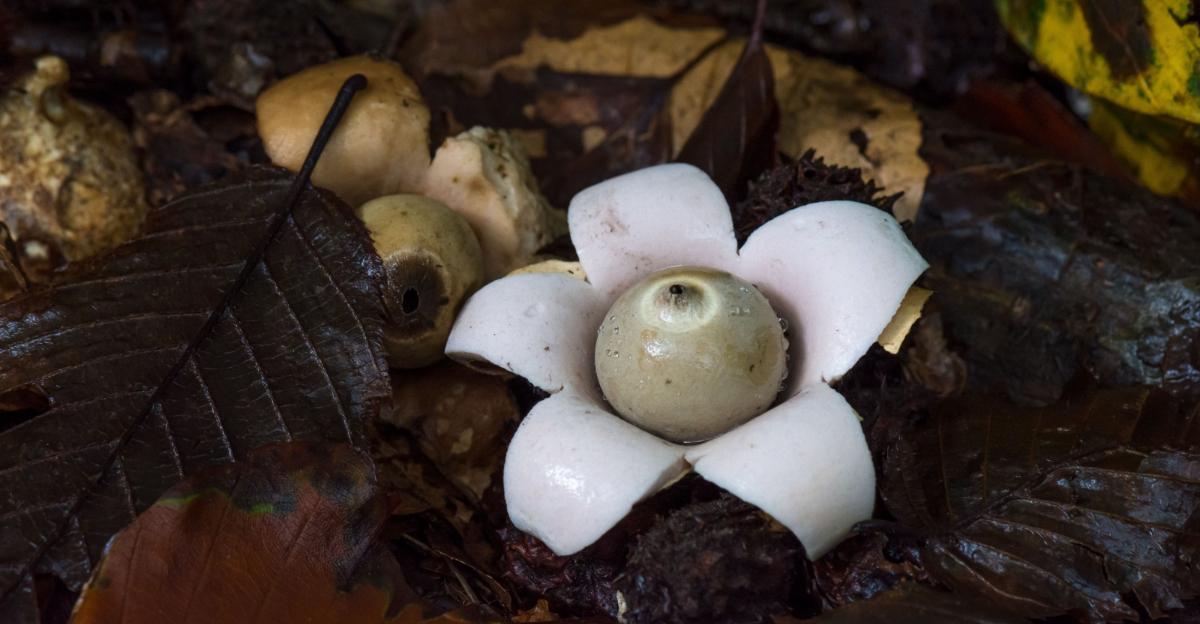
Oregon’s damp, shaded forests have a way of surprising even seasoned hikers, and Earth Star mushrooms are one of those finds that make people stop mid-step.
Resting on the forest floor like a tiny starburst, this unusual fungus can look more like something crafted than something growing naturally.
Many Oregon hikers do a double take, wondering if it was placed there as a joke. Tucked beneath conifers and hardwoods, these mushrooms quietly emerge in the right conditions.
Once you know what you’re looking at, spotting one can turn an ordinary walk through Oregon woods into something far more memorable.
1. Earth Star Mushrooms Stand Out For Their Unusual Shape
Walking through an Oregon forest and suddenly spotting what looks like a tiny star lying on the ground is a genuinely startling experience.
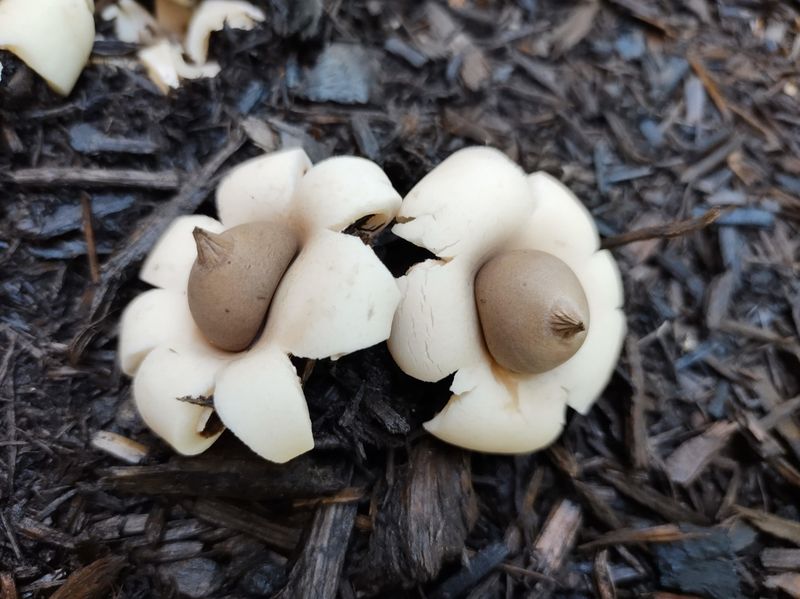
The Earth Star mushroom has a shape so unlike the typical cap-and-stem form most people picture when they think of fungi that it almost seems to belong to another world entirely.
Its arms radiate outward from a central round sac, creating an unmistakable silhouette that catches the eye even in dim, filtered light.
What makes the shape even more striking is how deliberate it looks. The outer skin peels back in neat, symmetrical sections that curl downward, almost as if someone carefully folded them into place by hand.
Hikers who encounter one for the first time frequently crouch down to poke at it, half expecting to find it is made of rubber or plastic.
The rounded spore sac sitting at the center adds to this surreal quality, looking smooth and oddly tidy compared to the rough forest floor around it.
Scientists classify Earth Stars within the puffball family, which explains the spore-filled inner sac. The star-like outer layer is actually a modified outer skin that splits apart as the mushroom matures.
Oregon’s rich woodland habitats give these fungi plenty of space to develop fully, which is why the state offers some of the most striking examples of this unusual shape anywhere in the Pacific Northwest.
2. The Outer Layer Splits Open To Form A Star-Like Structure
Few natural processes in the fungal world are as visually dramatic as watching an Earth Star’s outer casing peel apart.
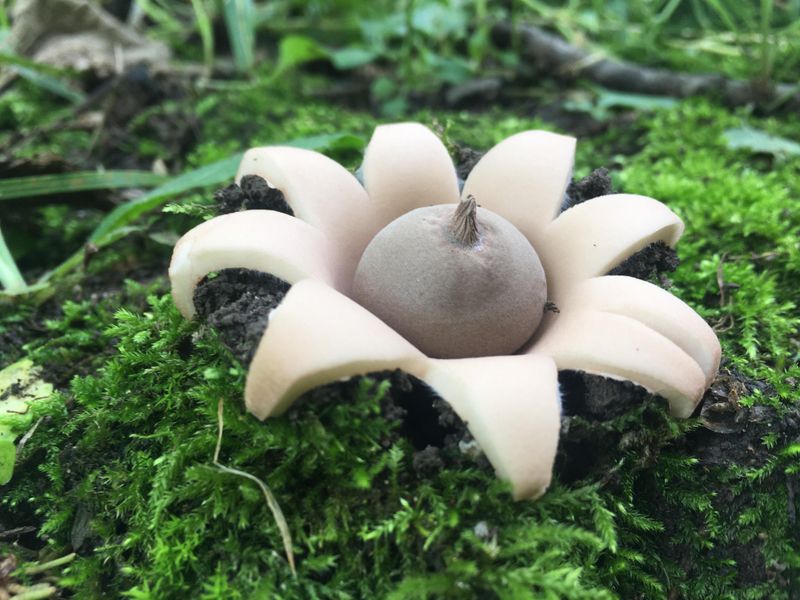
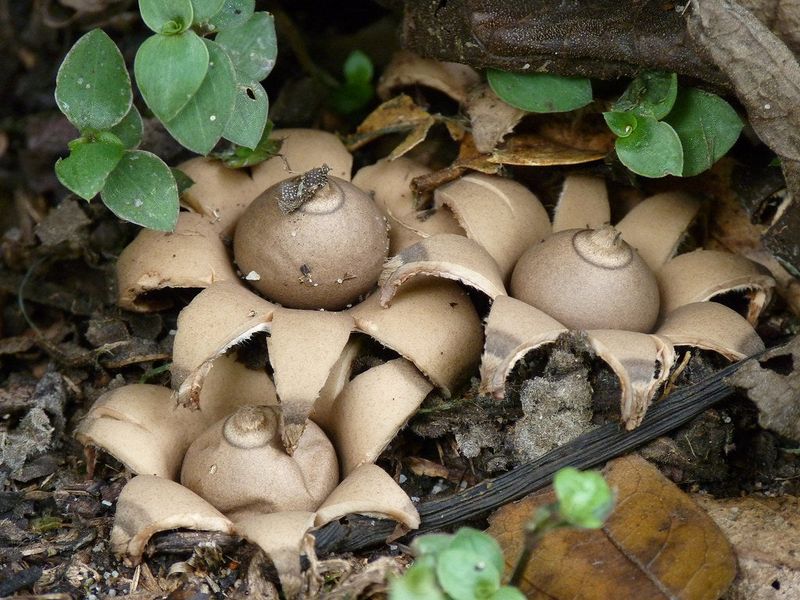
When the mushroom first pushes up through leaf litter, it resembles a small, rounded ball with a pointed tip, giving almost no hint of the transformation ahead.
As moisture levels shift and the mushroom matures, the outer skin begins to crack along natural seams and curl outward in a slow, methodical unfurling.
The result is anywhere from four to nine pointed arms that spread wide and often bend downward, lifting the central spore sac slightly off the ground.
This raised position is actually functional rather than purely decorative.
By elevating the spore sac, the mushroom improves its chances of catching air currents that carry spores away from the parent site.
Raindrops landing on the sac’s small opening at the top also help puff spores outward in small clouds, a clever passive dispersal system.
In Oregon, the seasonal rhythm of rain and dry spells plays a noticeable role in how quickly this transformation happens. Wetter periods encourage faster expansion of the outer arms, while drier stretches can slow or pause the process.
The arms themselves are tough and leathery, allowing them to persist on the forest floor long after the spores have been released. That durability is part of why dried Earth Stars are sometimes found months after their active season ends.
3. Oregon Forest Floors Provide Ideal Growing Conditions
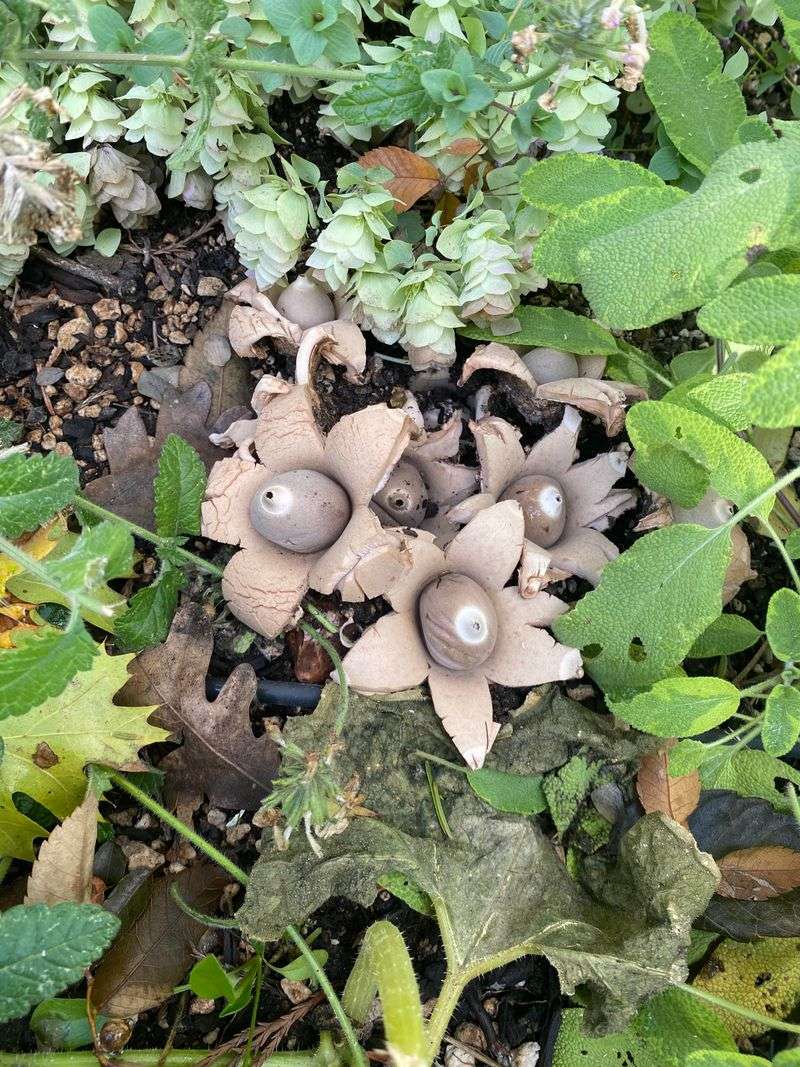
Oregon’s forests are among the most biologically productive in North America, and the conditions beneath their canopies create a near-ideal environment for unusual fungi like the Earth Star.
The combination of towering Douglas firs, big-leaf maples, and red alders produces a dense overhead canopy that keeps the forest floor shaded and relatively cool throughout much of the year.
That shade slows evaporation and keeps moisture locked into the soil and organic debris below.
The western side of the Cascades receives substantial rainfall from Pacific weather systems, and that consistent moisture keeps the leaf litter and soil rich with decomposing material.
Earth Stars tend to favor spots where organic matter has been accumulating for several seasons, particularly near the base of stumps, around buried wood, or in deep pockets of leaf debris under hardwoods.
Oregon’s mix of tree species creates exactly these kinds of layered, moisture-retaining environments across millions of acres of forestland.
Even in drier eastern Oregon, pockets of suitable habitat exist where ponderosa pine stands create shaded, needle-covered floors that support fungal growth.
The key factor across all these regions is the presence of decaying organic material combined with reasonable soil moisture.
Oregon’s varied geography means that Earth Stars can appear in coastal rainforests, valley woodlands, and even shaded garden corners where fallen leaves have built up over time.
4. Moisture And Decaying Organic Matter Support Their Growth
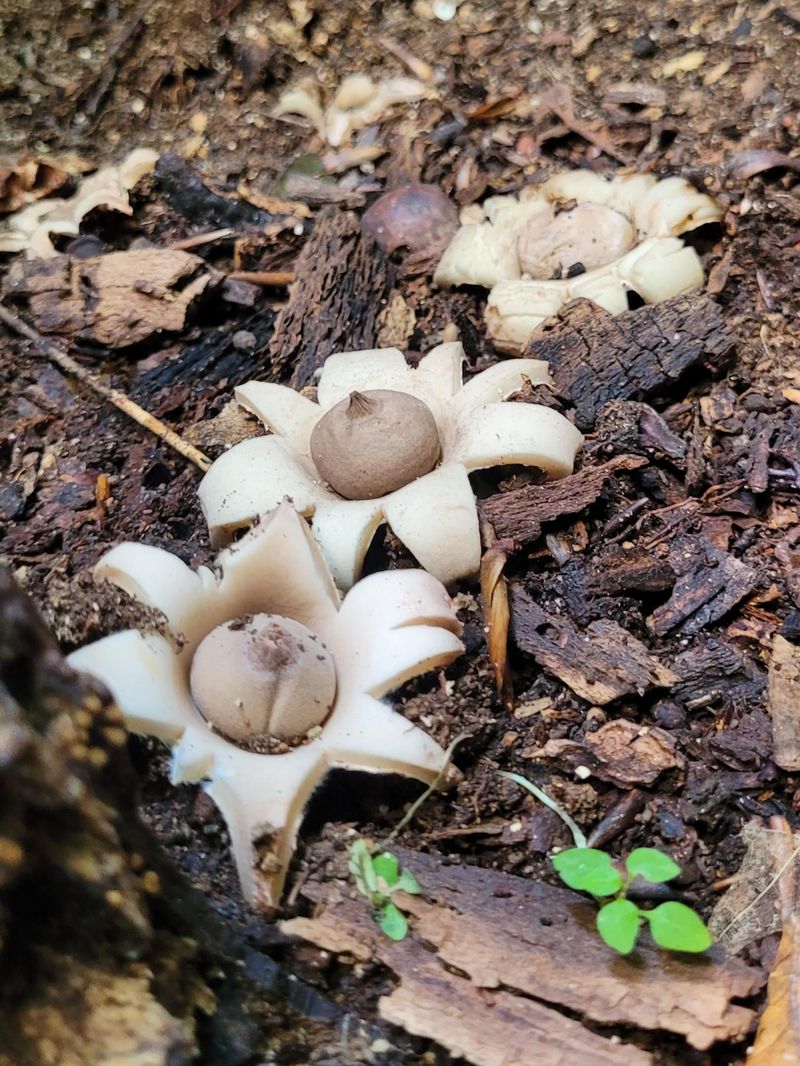
Spend any time reading about fungi and one theme keeps coming up: moisture is everything. Earth Stars are no exception.
Their fruiting bodies form only when conditions below the surface have stayed consistently damp long enough for the underground mycelium to gather the energy and resources needed for reproduction.
In Oregon, the autumn rains that sweep in from the Pacific are often the trigger that sets this process in motion after the dry summer months.
Decaying organic matter is the other half of the equation. Earth Stars are saprotrophic, meaning they break down organic material to obtain nutrients rather than forming partnerships with living tree roots like some other fungi.
Piles of decomposing leaves, rotting logs, and buried wood fragments all serve as fuel for the mycelium network spreading invisibly through the soil.
Oregon’s forests generate enormous quantities of this kind of debris every year, giving Earth Star fungi a consistently replenished food source.
Garden spaces in Oregon can also support Earth Stars, particularly in beds where wood chip mulch or thick layers of fallen leaves have been left undisturbed.
Homeowners are sometimes surprised to find these star-shaped fungi appearing in their yards after a wet autumn.
Rather than seeing them as a problem, that kind of spontaneous appearance is actually a sign that the soil beneath is biologically healthy and rich with organic activity, which benefits surrounding plants as well.
5. Earth Star Mushrooms Play A Role In Breaking Down Forest Debris
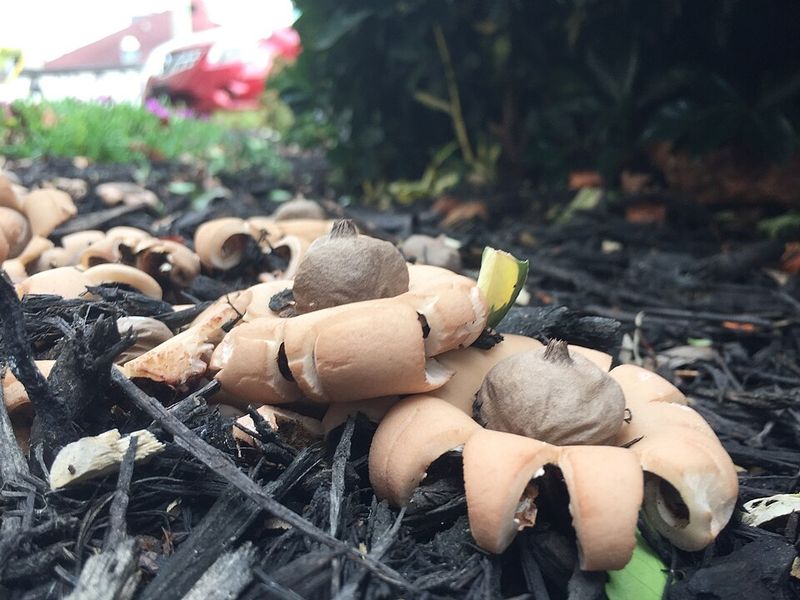
Oregon’s forests would look very different without fungi doing the slow, steady work of breaking down organic material.
Earth Stars contribute to this process as saprotrophic decomposers, releasing enzymes into the surrounding organic matter and absorbing the nutrients that result.
Over time, this activity helps convert fallen leaves, bark fragments, and woody debris into simpler compounds that enrich the soil and make nutrients available to surrounding plants.
The mycelium network that produces Earth Star fruiting bodies can spread through several inches of leaf litter and upper soil layers.
As it grows, it physically breaks apart organic material and speeds up decomposition in ways that benefit the broader forest ecosystem.
Without decomposers like Earth Stars working through the debris layer, organic material would accumulate far more slowly, and the nutrients locked inside it would remain unavailable to trees and understory plants for much longer.
Thinking about a mushroom as part of a recycling system helps shift how people see these unusual-looking fungi.
The star-shaped fruiting body that appears above ground is just the visible tip of a much larger organism doing quiet but meaningful work beneath the surface.
In Oregon’s productive forest ecosystems, that work adds up across millions of square feet of woodland floor every year.
Appreciating Earth Stars for their ecological role makes encountering one feel like a small window into the hidden machinery that keeps forests running.
6. Key Features Help With Accurate Identification
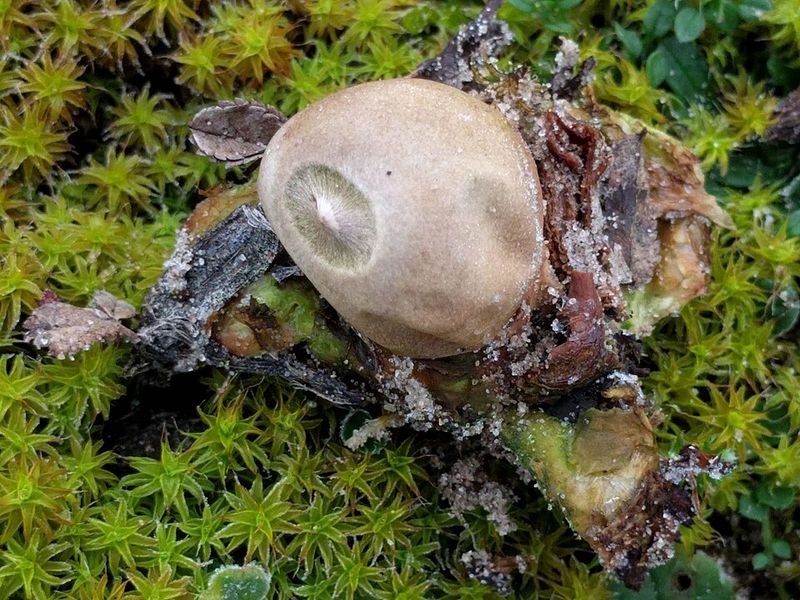
Spotting an Earth Star in the woods is exciting, but knowing exactly what you are looking at adds a whole new layer of confidence to the experience.
The rounded Earth Star, known scientifically as Geastrum saccatum, is the species most commonly encountered across Oregon’s forests.
When fully expanded, the fruiting body typically measures between three-quarters of an inch and two inches across, making it small enough to overlook if you are not paying close attention to the ground.
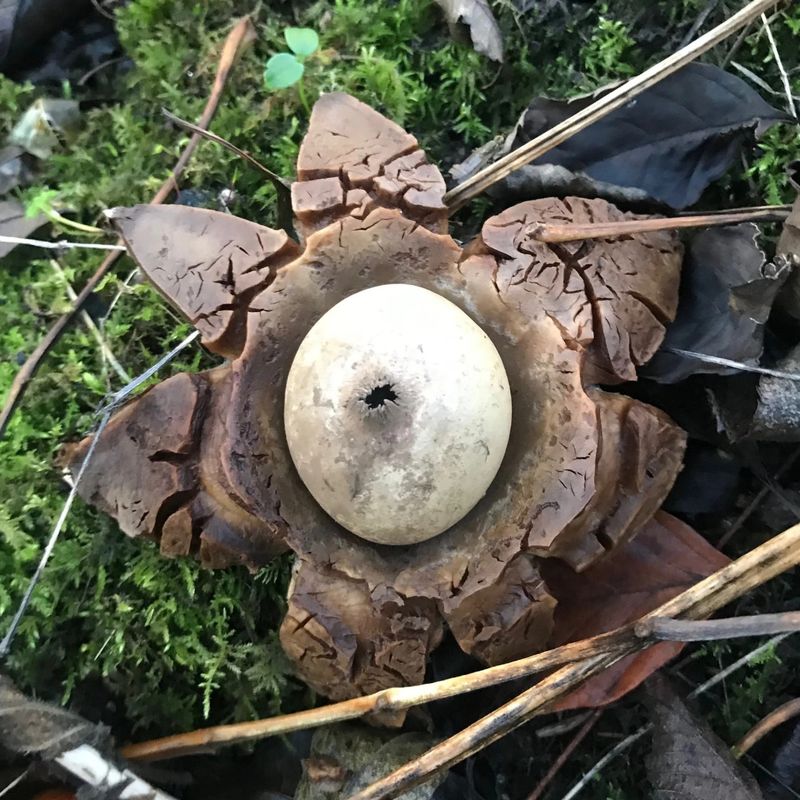
The outer arms, which number anywhere from four to nine, are thick and leathery with a matte, grayish-brown surface. They spread outward and often curl under slightly, giving the whole structure a cupped or cradled look.
The inner spore sac is smooth, tan to light brown, and sits on a very short, barely noticeable stalk. At the very top of the spore sac is a small opening called the apical pore, which is where spores exit when disturbed by rain or air movement.
One helpful identification detail is that the collar or ring around the apical pore on Geastrum saccatum is not distinctly defined, which sets it apart from some related species.
The flesh of the outer arms has a fibrous, non-fleshy texture that does not resemble typical mushroom tissue.
Carrying a regional field guide or using a reliable mushroom identification app while exploring Oregon trails can help confirm a sighting and rule out any similar-looking species in the area.
7. Edibility Is Limited And Often Not Recommended
One of the first questions people ask when they find an unusual mushroom is whether they can eat it. With Earth Stars, the short answer is that it is generally not worth trying.
These fungi are not considered toxic or poisonous in the way that some dangerous species are, but their texture is tough, leathery, and fibrous in a way that makes them thoroughly unpleasant to chew or swallow.
Cooking does not soften them enough to make them palatable by most accounts.
The spore mass inside the inner sac is technically edible when the mushroom is very young and the interior is still white and firm, similar to how young puffballs can be eaten before their spores develop.
However, that window is extremely narrow, and by the time most people encounter an Earth Star, the spores are already maturing or fully developed, making the interior powdery and unsuitable for eating.
Mistiming this stage is easy, and the results are unappetizing at best.
For anyone exploring Oregon’s forests with foraging in mind, Earth Stars are best left on the ground and appreciated visually.
Picking edible wild mushrooms in Oregon requires solid identification skills and ideally guidance from an experienced forager or a local mycological society.
Many Oregon communities have active mushroom clubs that offer guided forays and educational events, which are far safer and more enjoyable ways to learn about edible species than experimenting independently.
8. Fall And Early Winter Bring The Best Chances For Spotting Them
Timing a walk to coincide with Earth Star season in Oregon means paying attention to the weather in late September and October.
The transition from dry summer conditions to the wetter autumn months is when the mycelium beneath the forest floor receives enough moisture to push fruiting bodies up through the leaf litter.
Overcast days following a stretch of rain are often the most productive for finding these fungi along shaded trails and in wooded parks.
November and early December can also yield sightings, particularly in years when rainfall starts early and stays consistent.
The leathery outer arms of Earth Stars are durable enough to persist well into winter, so even after the active fruiting period has passed, dried specimens can still be found on the ground.
These older, dried-out examples lack the fresh tan coloring of newly emerged specimens but still display the characteristic star shape clearly enough to be recognizable.
Oregon’s coastal regions and the wetter valleys west of the Cascades tend to see fruiting activity start a bit earlier than drier inland areas.
Keeping an eye on local weather patterns and heading out within a few days of significant rainfall gives the best chance of finding freshly opened Earth Stars in their prime.
State parks, county forest preserves, and even shaded neighborhood greenspaces in Oregon cities are all worth checking during this seasonal window.
9. Common Species That Can Be Found In Oregon
Oregon is home to several Earth Star species beyond the commonly encountered Geastrum saccatum, and knowing a bit about each one makes time spent in the woods more rewarding.
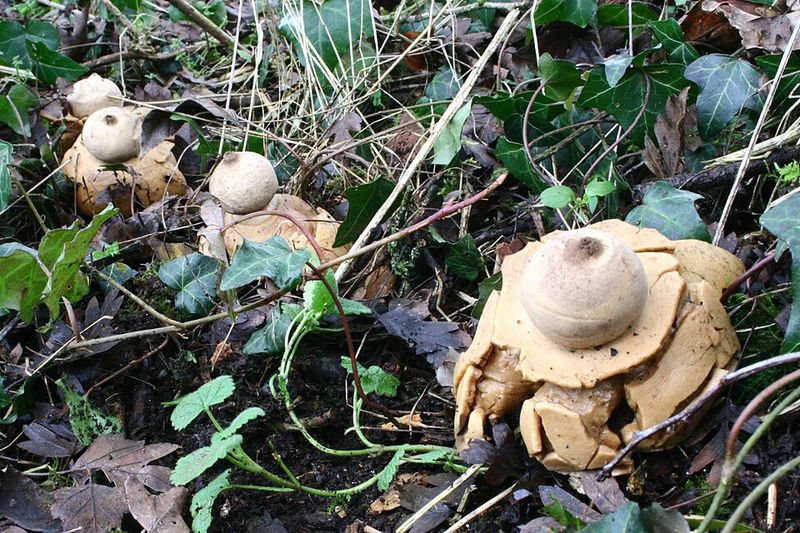
Geastrum triplex, sometimes called the collared Earth Star, is another species that shows up in Oregon woodlands.
It tends to be slightly larger than Geastrum saccatum and develops a distinctive collar-like structure around the base of the inner spore sac, which gives it a layered, almost architectural appearance.
Geastrum fimbriatum, the fringed Earth Star, is another species recorded in the Pacific Northwest.
Its apical pore is surrounded by a finely fringed or fibrous border rather than a smooth or defined collar, which helps separate it from related species under close examination.
These subtle differences matter when trying to identify which species you have found, and a hand lens or magnifying glass can be a useful tool for examining the finer details in the field.
Native American cultural traditions add another layer of interest to these fungi. The Blackfoot people referred to Earth Stars as ka-ka-toos, meaning fallen stars, and associated them with supernatural events.
That cultural connection gives these already remarkable mushrooms an additional dimension of meaning.
For Oregon residents and visitors exploring the state’s forests, encountering any species of Earth Star is a reminder of how much biological and cultural richness exists beneath the canopy of even a familiar-looking woodland trail.