This Tall Flower Brings Bees, Hummingbirds, And Butterflies To Georgia Gardens
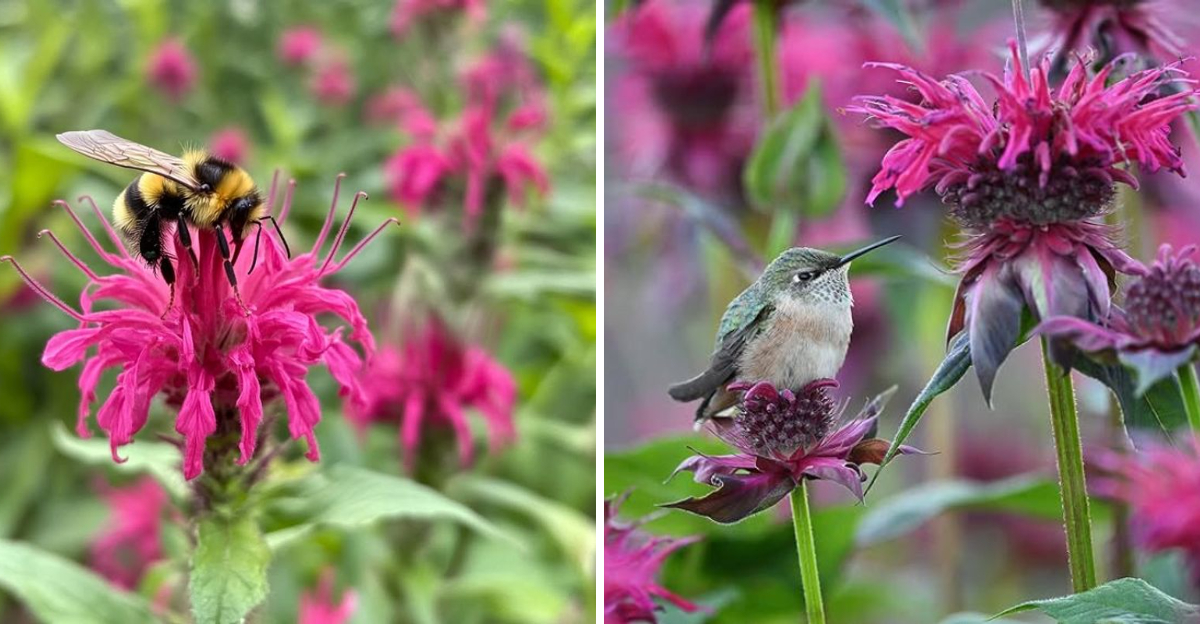
Some flowers do more than simply look beautiful in a garden. They turn the entire space into a busy little hub of activity.
Bees begin circling the blooms, butterflies drift from flower to flower, and hummingbirds suddenly start making regular visits.
This tall flowering plant has quietly become a favorite in many Georgia gardens for exactly that reason. Once it begins blooming, pollinators seem to notice immediately.
The bright flowers stand above surrounding plants, making them easy for hummingbirds and butterflies to spot from a distance.
It also handles Georgia’s summer heat surprisingly well, which makes it even more appealing for gardeners who want reliable color and wildlife activity.
When a single plant can bring so much life into a garden, it quickly becomes one that many gardeners start paying attention to.
1. Bee Balm Flowers Are A Major Food Source For Bees
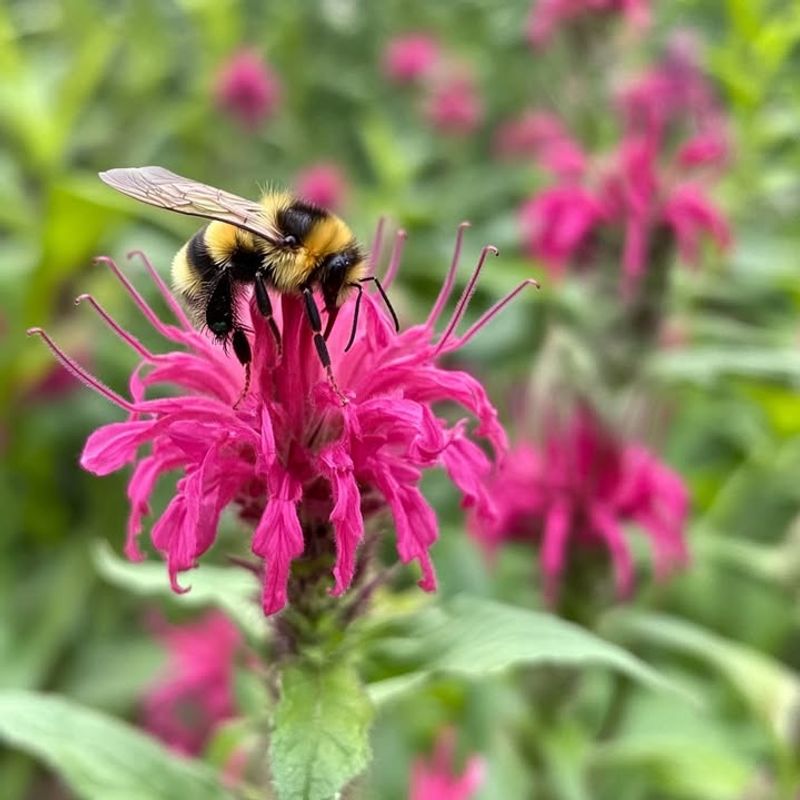
Walk past a patch of bee balm on a warm Georgia morning and you will likely hear it before you see it. Bees absolutely swarm this plant, and not just one or two species.
Honeybees, bumblebees, and smaller native bees all compete for space on the same blooms at the same time.
Bee balm produces a generous amount of nectar tucked deep inside each tubular floret. Bees have the right body shape to reach that nectar, and they return again and again throughout the day.
A single cluster can host multiple bees feeding at once without any competition issues.
What makes this especially useful for Georgia gardeners is that bee balm blooms right during the summer stretch when many other nectar sources slow down. Planting it near vegetable beds actually helps with pollination of nearby crops too.
Squash, tomatoes, and peppers all benefit when more bees are active in the area.
Bees are drawn to the scent as much as the color. Bee balm has a strong herbal fragrance that carries on the breeze, pulling pollinators in from a surprising distance.
Planting a few clumps rather than just one or two stems makes the scent stronger and the visual target bigger.
If you have ever struggled to get bees visiting your Georgia garden consistently, adding bee balm to a sunny border can shift that completely. It is reliable, it blooms heavily, and bees treat it like a favorite stop on their daily route every summer.
2. The Nectar-Rich Blooms Easily Attract Hummingbirds
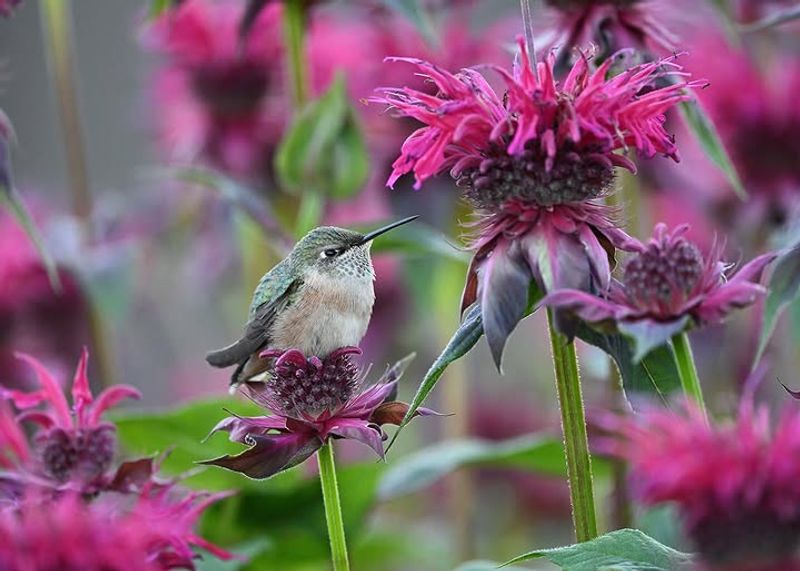
Hummingbirds have a reputation for being picky, but bee balm is one plant they almost never pass up. Ruby-throated hummingbirds, which are the most common species visiting Georgia gardens, are drawn straight to those long tubular florets.
Their bills fit perfectly inside each flower, and the nectar reward keeps them coming back.
Red and hot pink varieties tend to pull hummingbirds in faster than softer colors. That bold color registers easily against green foliage, and hummingbirds can spot it from far away while flying patrol routes through the yard.
Planting bee balm near a window or porch gives you a front-row seat to the action.
Hummingbirds are territorial, so one bird might claim a whole patch and spend the day defending it from others. Planting multiple clusters in different spots around your Georgia yard can help spread the feeding activity out.
More plants means more birds, and more birds means more entertainment every single morning.
Bee balm blooms at the right time for hummingbirds migrating through Georgia in late summer. Keeping fresh blooms going by removing spent flower heads encourages new growth and extends the window when hummingbirds can feed.
Even a few extra weeks of blooming can make a real difference during migration season.
Pairing bee balm with other hummingbird favorites like cardinal flower or salvia creates a reliable feeding station right in your backyard. Hummingbirds learn routes quickly, and once they discover your garden, they tend to return to the same spots year after year.
3. Butterflies Regularly Visit Bee Balm Throughout Summer
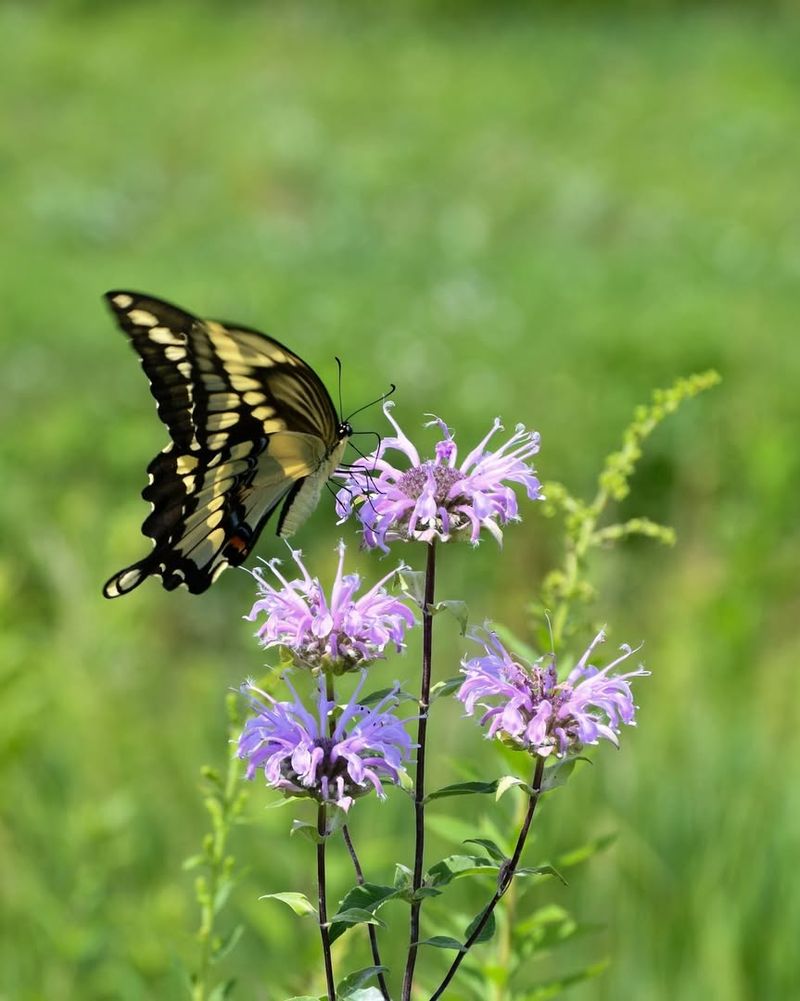
Swallowtails, fritillaries, and skippers all show up at bee balm regularly, and watching them work through a patch of blooms is genuinely one of the better parts of summer gardening in Georgia.
Butterflies are not always easy to attract, but bee balm seems to cut through their usual hesitation pretty effectively.
Butterflies prefer landing platforms where they can pause and feed without hovering. Bee balm’s wide, rounded flower clusters give them exactly that.
A butterfly can land, settle its wings, and feed at a relaxed pace rather than rushing from bloom to bloom the way it might with smaller flowers.
Eastern tiger swallowtails are especially fond of bee balm in Georgia. These large yellow and black butterflies show up reliably when bee balm is blooming, and their size makes them easy to spot from across the yard.
They tend to visit during the warmest part of the day when nectar production is at its peak.
Planting bee balm in a spot with full sun and some shelter from strong afternoon wind helps butterflies feel comfortable enough to stay and feed longer.
Butterflies do not like being tossed around mid-meal, so a slightly protected location in the garden makes a real difference in how often they visit.
Mixing bee balm with flat-topped flowers like milkweed or yarrow nearby creates a layered feeding area that serves different butterfly species at the same time.
Georgia summers are long enough that a well-planned pollinator garden can stay active for months with the right plant combinations.
4. Tall Stems Help The Flowers Stand Out To Pollinators
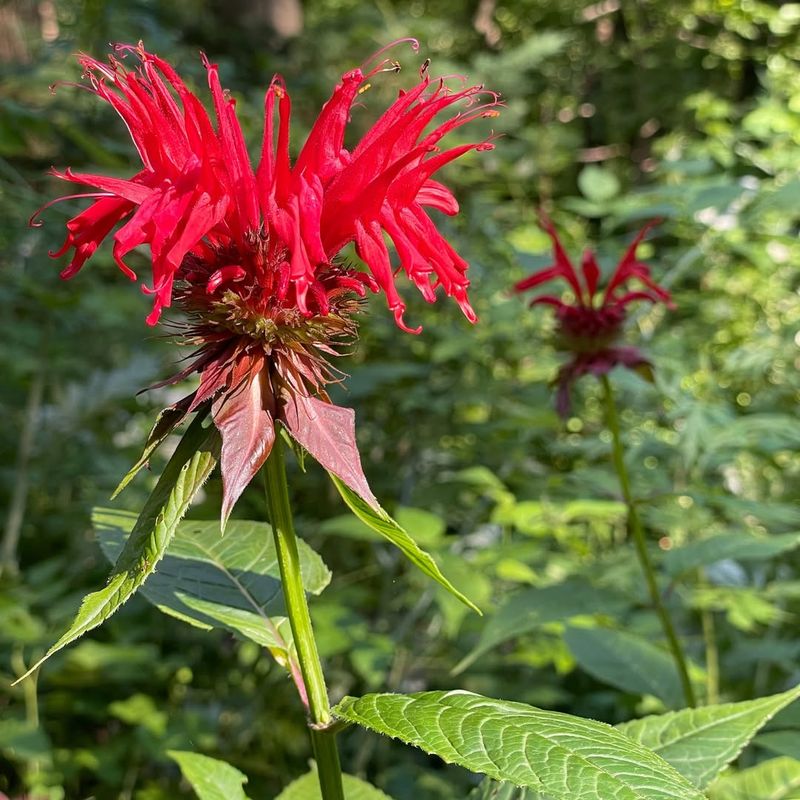
Height matters more than most gardeners realize when it comes to attracting pollinators.
Bee balm can reach four to five feet tall, and that extra elevation puts its blooms right in the flight path of hummingbirds and large butterflies that tend to cruise at mid-height through the garden.
Short flowers often get overlooked simply because they blend into the landscape. Tall plants like bee balm act as visual anchors that pollinators can spot from a distance.
A hummingbird flying through a Georgia neighborhood is scanning the horizon for color, and a tall cluster of red blooms stands out clearly against fences, shrubs, and grass.
Bees also benefit from height because taller plants tend to catch more breeze, which carries the scent of the flowers further.
Scent is a major factor in how bees locate food sources, and bee balm’s strong herbal fragrance spreads more effectively when the plant is elevated above low ground cover.
Planting bee balm toward the back of a border lets shorter plants fill in the front while the tall stems rise behind them. This layered look is both attractive and functional, giving pollinators multiple levels to work through as they move across the garden bed.
In Georgia’s heat, tall plants also create a bit of shade at the base, which helps soil retain moisture during dry spells in July and August.
Keeping the roots cooler means the plant stays healthier and continues producing blooms even when temperatures push into the nineties.
Tall plants pull their weight in more ways than one.
5. Bright Red And Pink Blooms Make The Plant Easy For Pollinators To Spot
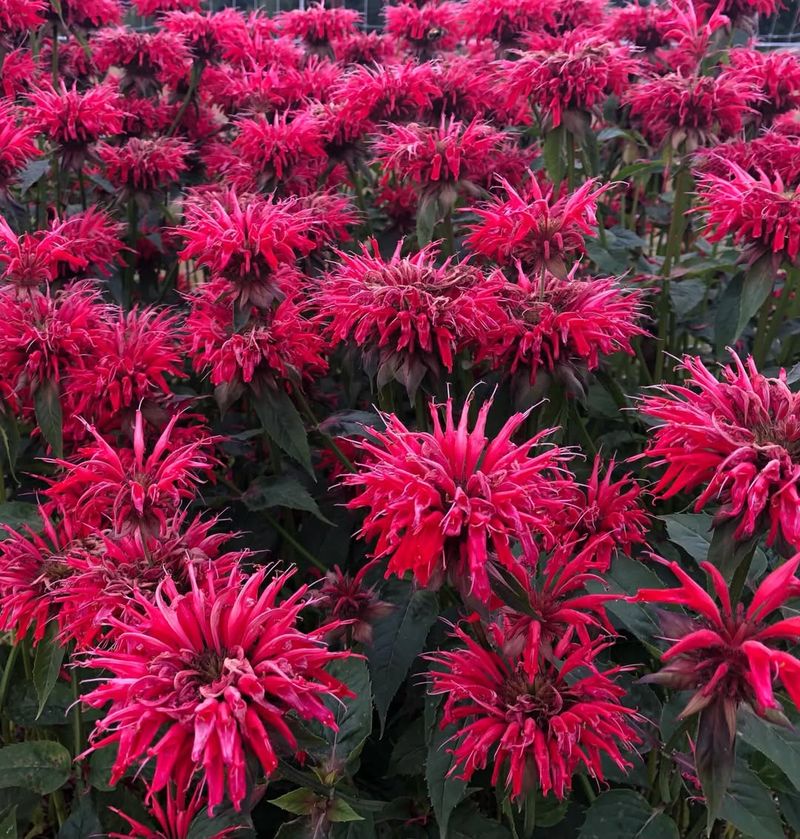
Color is a communication tool in the garden, and bee balm speaks loudly.
Red and hot pink varieties send a strong visual signal that pollinators are wired to respond to, especially hummingbirds, which are among the most color-sensitive creatures visiting Georgia gardens.
Hummingbirds have excellent red-detection in their vision, which is why red flowers almost always outperform other colors when it comes to attracting them.
Bee balm varieties like Jacob Cline and Raspberry Wine hit exactly the right color range to grab their attention fast.
Planting these specific cultivars gives you a noticeable edge over softer-colored alternatives.
Butterflies respond strongly to pink and purple tones, so the raspberry and lavender bee balm varieties work especially well for butterfly traffic.
Having a mix of red and pink plants in the same bed can pull in both hummingbirds and butterflies simultaneously, which makes for a busy and lively garden scene throughout the Georgia summer.
Bees are less focused on red specifically but respond well to the contrast between the bright blooms and the dark green foliage behind them.
High contrast makes any flower easier to spot from the air, and bee balm’s bold colors against its own leaves create exactly that kind of visual pop that draws bees in during foraging flights.
Choosing the right color variety for your goals is worth thinking about before you plant.
A Georgia gardener who wants hummingbirds should lean toward deep red, while someone hoping for heavy butterfly traffic might get better results planting a mix of pink and lavender bee balm varieties together.
6. Long Blooming Period Keeps Pollinators Returning For Weeks
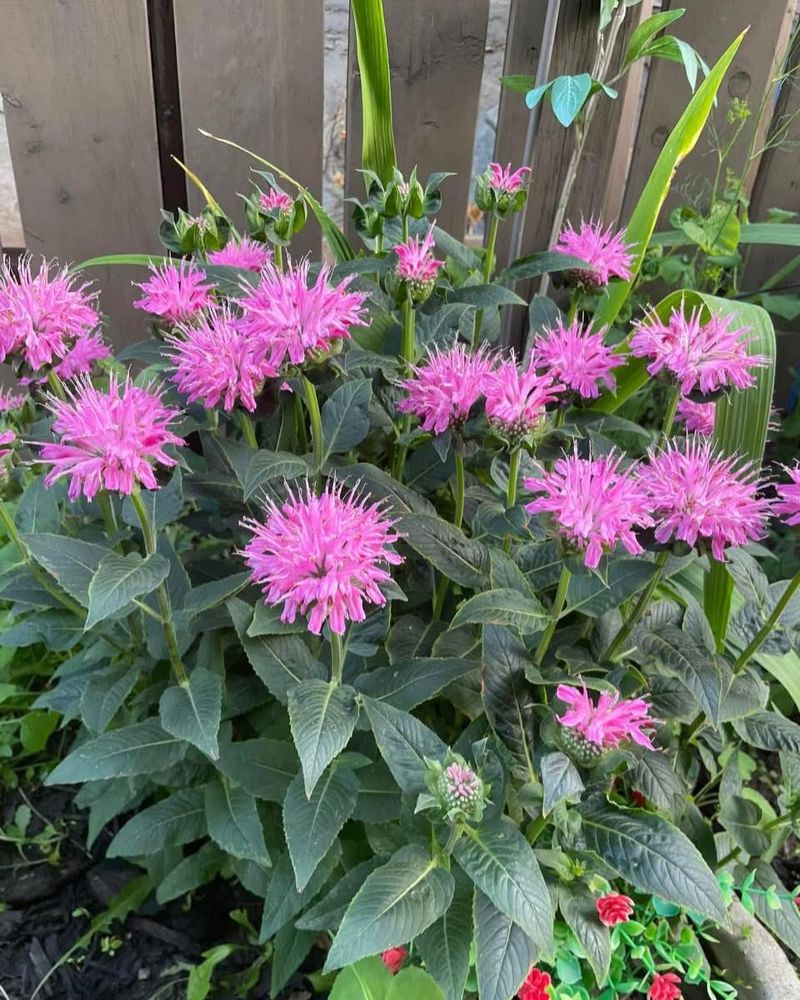
Some plants bloom hard for two weeks and then go quiet for the rest of the season. Bee balm is not one of those plants.
Under good conditions in a Georgia garden, it can stay in bloom for six to eight weeks, sometimes stretching from late June all the way into August depending on the variety and the weather.
Deadheading spent blooms is the single best trick for extending that window. Snipping off flower heads that have finished blooming signals the plant to push out new ones.
It takes about five minutes of work every few days, and the payoff is weeks of additional blooms that keep pollinators active in the garden longer.
Georgia summers are long and hot, which can shorten blooming periods for some plants. Bee balm handles the heat better than expected as long as it has good drainage and is not sitting in waterlogged soil.
Afternoon shade during the hottest part of the day also helps blooms last longer without fading or wilting prematurely.
Planting bee balm alongside other summer perennials like black-eyed Susan or coneflower creates a staggered bloom sequence. When one plant starts to fade, another picks up the slack, and pollinators never run out of food sources in the garden.
Continuity of bloom is one of the most valuable things a Georgia gardener can offer wildlife.
Reliable, extended blooming is what separates a garden that pollinators visit occasionally from one they treat like a home base.
Bee balm earns that loyalty season after season without requiring much in return beyond decent soil and regular sunshine throughout the summer months.
7. Large Flower Clusters Provide Plenty Of Nectar For Visiting Insects
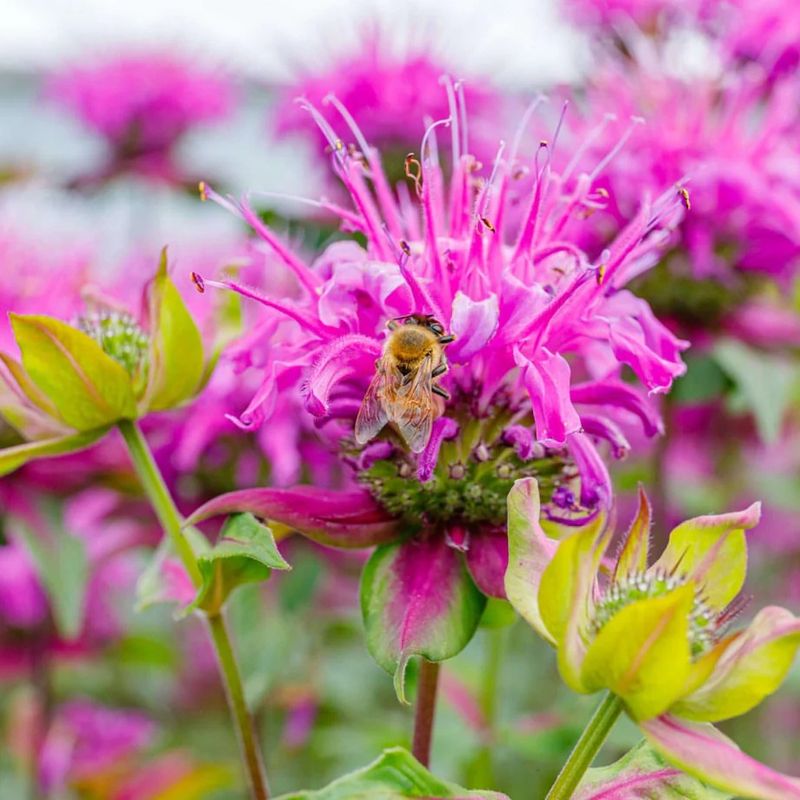
Bee balm does not produce just a single small flower on each stem. Each bloom is a dense, rounded cluster made up of dozens of individual tubular florets, and every one of those florets holds nectar.
That structure means a single flower head can feed multiple insects at the same time without running dry quickly.
Watch a mature bee balm plant on a Georgia summer morning and you might count five or six different insects feeding on one cluster simultaneously. Bees work the outer florets while a butterfly settles on top and a hummingbird dips in from the side.
It is a genuinely chaotic and impressive scene that a smaller flower simply cannot produce.
Nectar availability matters most during the hottest stretches of summer when insects are burning more energy to stay cool and active.
Bee balm’s generous output during July and August makes it especially valuable during exactly the period when other food sources tend to be scarce in Georgia landscapes.
Larger clusters also mean more pollen transfer per visit. Bees bumbling around a big flower head pick up and deposit pollen more efficiently than they do on tiny individual flowers.
That efficiency benefits the surrounding garden too, improving fruit set on nearby vegetables and increasing seed production in other flowering plants.
Growing bee balm in groups of three or more plants rather than a single specimen dramatically increases the total nectar available in one spot. Pollinators are efficient foragers and they prefer locations where food is concentrated.
A generous planting gives them a reason to stay in your Georgia garden rather than moving on down the street to someone else’s yard.