This Tree Disease Is Moving Through Ohio — Signs Homeowners Should Notice
Homeowners across Ohio are starting to notice subtle changes in their beech trees, from distorted leaves to thinning canopies that don’t bounce back like they used to.
At first glance, these symptoms often seem minor or seasonal, which is why the problem continues spreading unnoticed through neighborhoods and woodlots.
The issue behind these changes is Beech Leaf Disease, a fast-moving condition quietly affecting both mature trees and young saplings across the state.
Once established, the disease weakens trees year after year, reducing leaf function and overall vigor without an obvious point of recovery.
Early recognition is critical because delayed action allows long-term damage to progress before homeowners realize anything is seriously wrong.
1. Beech Leaf Disease Is Spreading Across Ohio
Homeowners in Ohio have started noticing something strange happening to their beech trees over the past few years without understanding the cause.
Beech Leaf Disease first appeared in the state around 2012 and has been steadily expanding its reach across counties ever since then.
Scientists believe a microscopic worm called a nematode is responsible for causing the damage that weakens these trees over several growing seasons.
The disease doesn’t respect property lines, moving from yard to yard and forest to forest throughout Ohio’s diverse landscapes and residential neighborhoods.
Both American beech and European beech varieties show symptoms, making nearly every beech tree in the state potentially vulnerable to this condition.
Experts across Ohio are working to understand how the disease spreads and what factors make certain areas more susceptible than others nearby.
Early detection gives homeowners the best chance to monitor their trees and make informed decisions about care and treatment options available today.
Awareness is growing, but many residents still don’t recognize the subtle changes that signal this disease has arrived in their neighborhood landscapes.
The disease progresses slowly, which often gives a false sense of security while internal damage continues to build season after season.
Learning the early warning signs helps homeowners respond sooner instead of discovering the problem when decline becomes impossible to ignore.
2. Why This Disease Is Hitting Ohio Trees So Hard
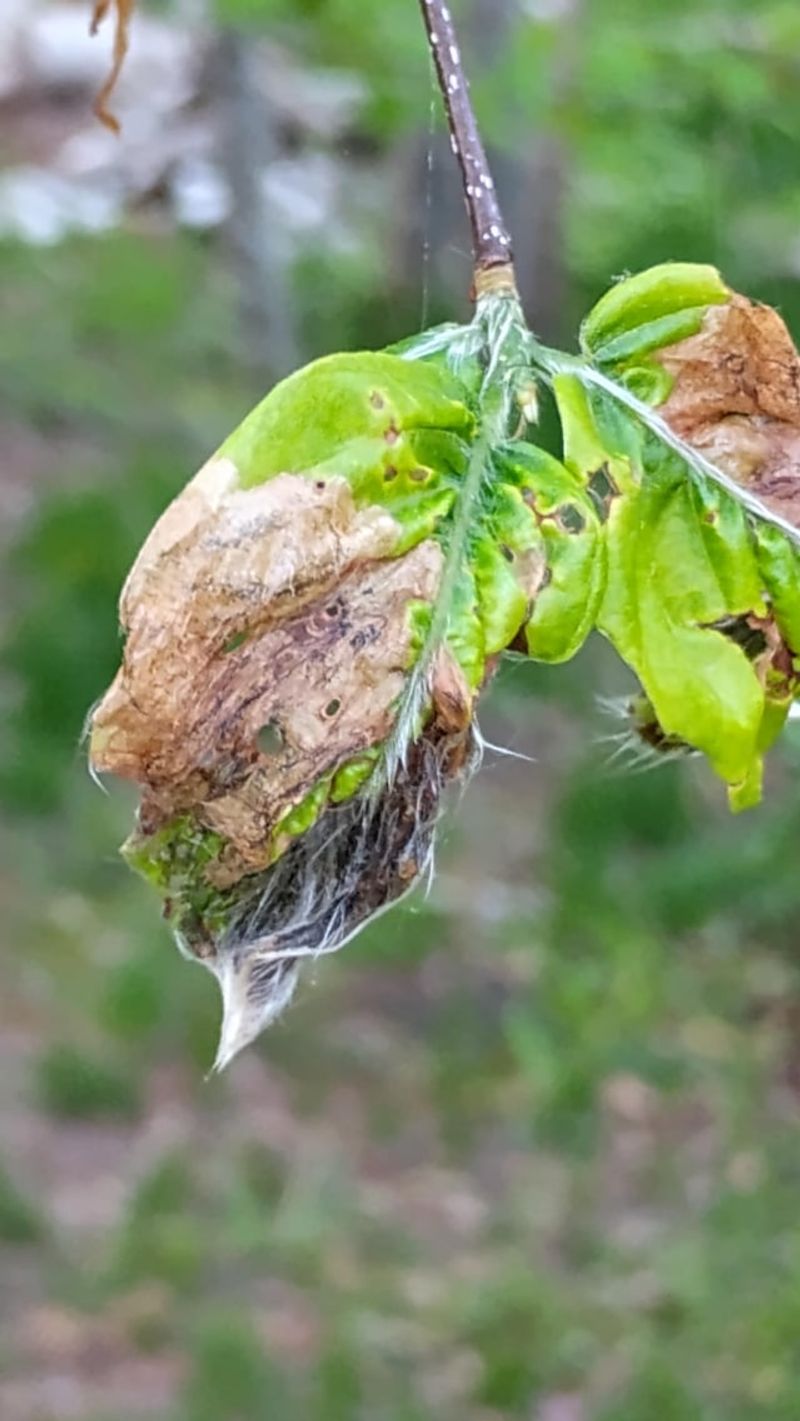
Ohio’s climate and forest composition create ideal conditions for Beech Leaf Disease to flourish and spread rapidly through both urban and rural settings.
The state has extensive beech tree populations in woodlands, parks, and yards, providing countless hosts for the microscopic nematodes causing the problem.
Mild winters and humid summers in Ohio allow the disease to remain active longer throughout the year compared to cooler northern regions.
Beech trees naturally grow close together in many Ohio forests, which makes it easier for the nematodes to move from one host.
Residential areas often feature mature beech trees planted decades ago, and these older specimens can show severe symptoms after just a few seasons.
The disease doesn’t require wounds or stress to infect healthy trees, unlike many other tree ailments that only affect weakened or damaged specimens.
Ohio’s dense network of roads and human activity may also contribute to spreading the nematodes through soil, equipment, or plant material movement.
Understanding these factors helps explain why so many communities across the state are seeing rapid declines in their beech tree populations recently.
Once established in an area, Beech Leaf Disease can persist for years, making long-term management especially challenging for homeowners and land managers.
Without awareness and monitoring, entire stands of beech trees can decline simultaneously, altering local ecosystems and neighborhood landscapes across Ohio.
3. The First Leaf Changes Homeowners Tend To Miss
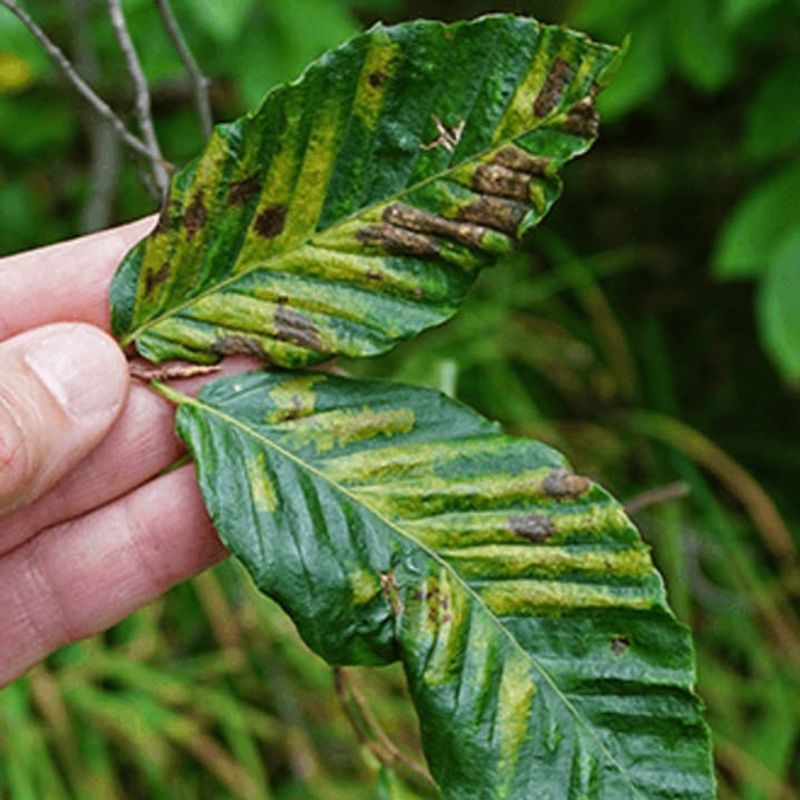
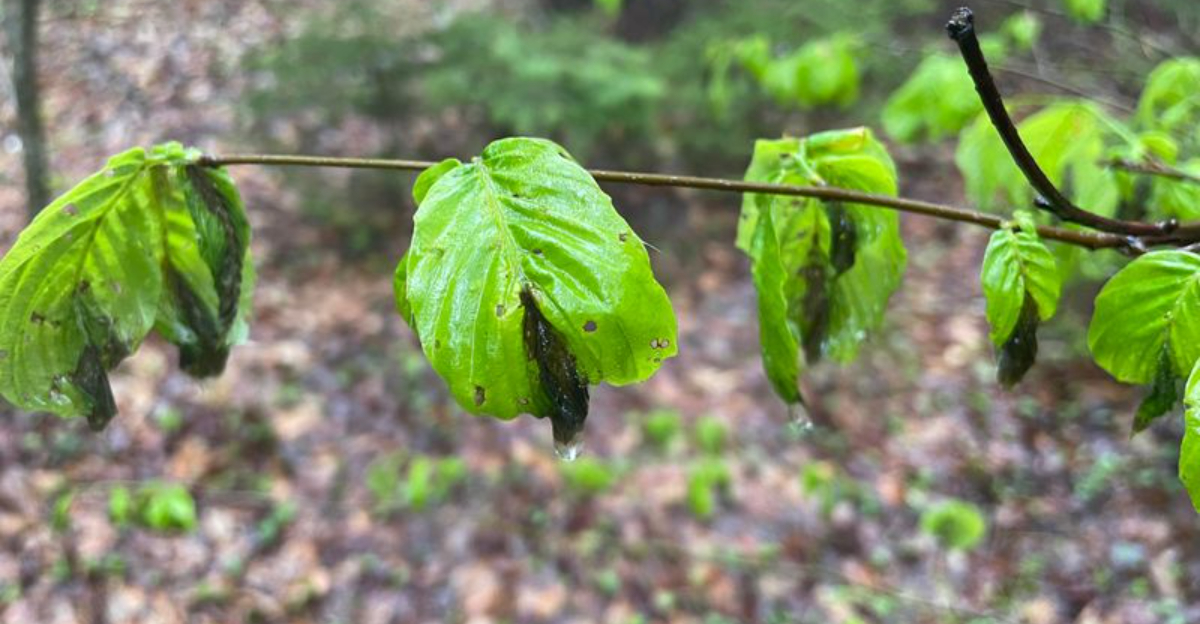
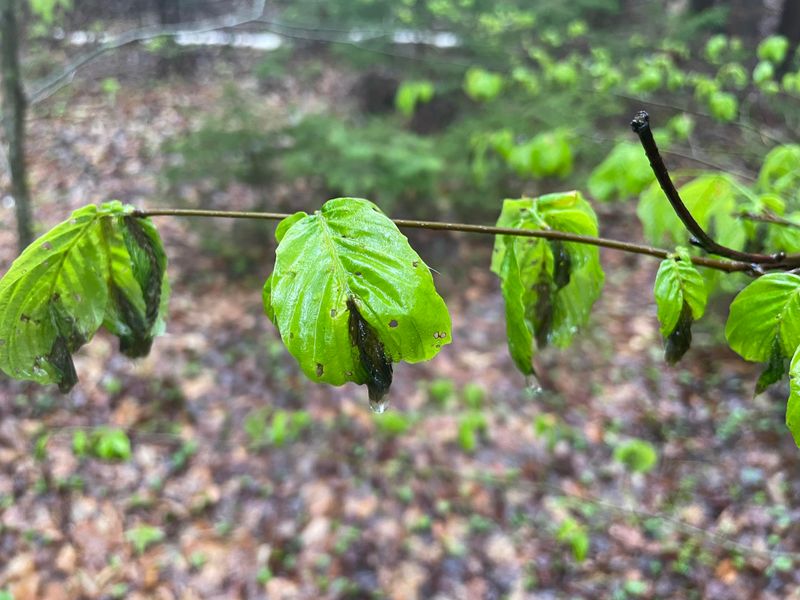
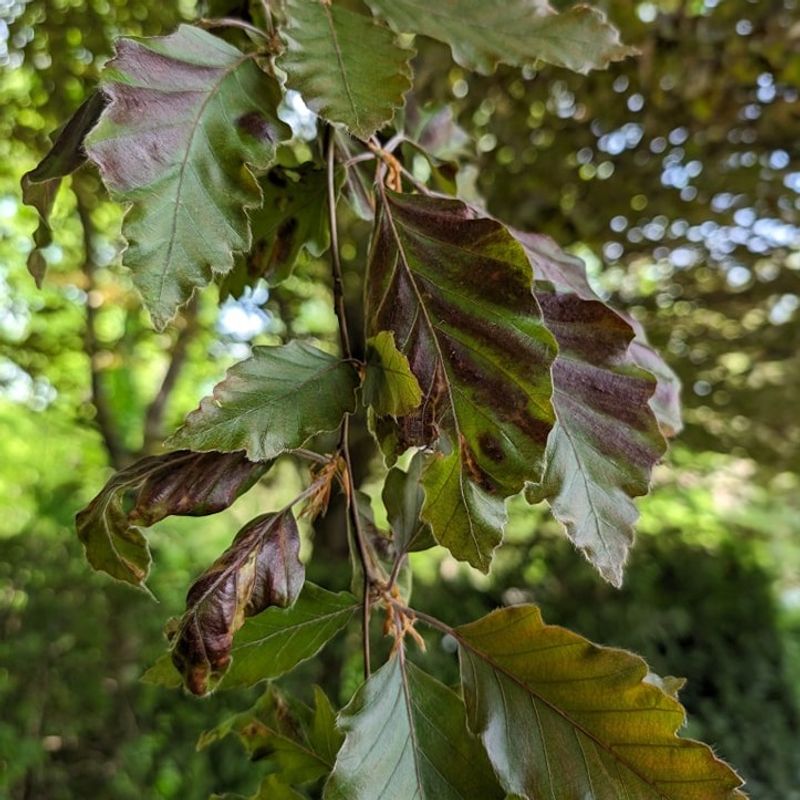
Subtle dark stripes between the veins on beech leaves often appear long before homeowners realize anything is wrong with their Ohio trees.
These narrow bands look almost like someone drew thin lines with a marker, but they’re actually areas where leaf tissue is damaged.
Early in the infection, only a few leaves on lower branches might show these striping patterns, making them easy to overlook completely.
Leaves may also appear slightly thicker or more leathery than normal, though this texture change is hard to spot without close inspection.
Some homeowners in Ohio mistake these early symptoms for nutrient deficiencies or minor insect damage that doesn’t seem concerning at first glance.
The stripes typically run parallel between the leaf veins, creating a distinctive pattern that becomes more obvious as the season progresses forward.
By the time leaves show severe darkening or curling, the disease has usually been present for at least one full growing season already.
Checking your beech trees regularly for these small changes can help you catch the disease early and understand what’s happening on your property.
4. How The Disease Moves Through Neighborhood Trees
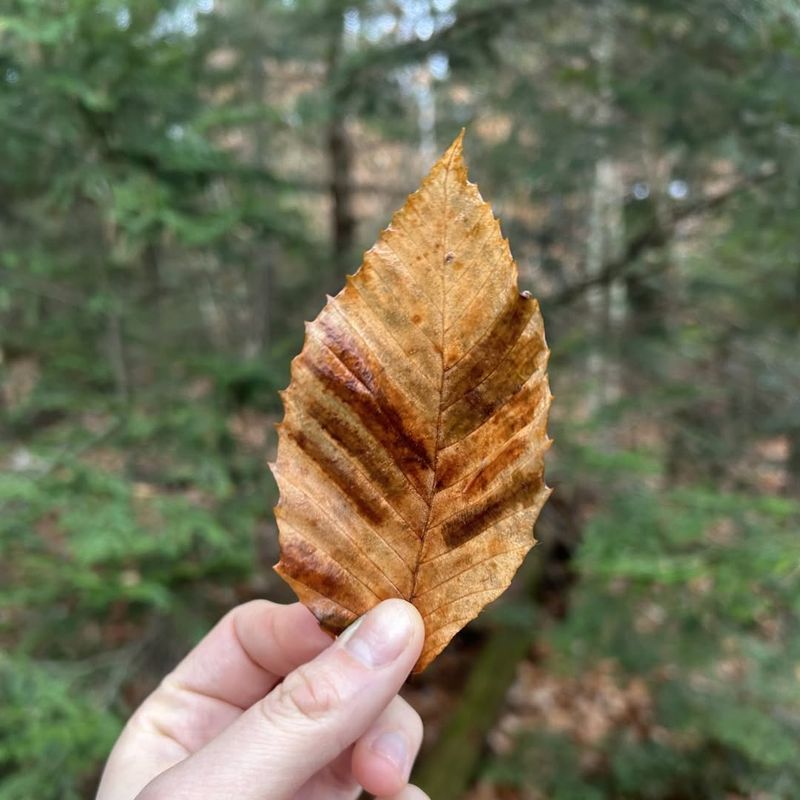
Beech Leaf Disease spreads gradually from tree to tree across Ohio neighborhoods, often starting with one infected specimen and expanding outward over time.
The microscopic nematodes can move through soil, potentially traveling along root systems or being carried by water movement during heavy rain events.
Wind might carry tiny amounts of infected plant material or soil particles containing nematodes to nearby trees, especially during storms or strong gusts.
Homeowners unknowingly spread the disease when they move mulch, soil, or yard waste from infected areas to other parts of their property.
Shared equipment like lawn mowers or pruning tools can also transport nematodes if used on multiple properties throughout Ohio neighborhoods without proper cleaning.
Trees planted close together, like those in landscaped yards or along streets, face higher risk because the nematodes don’t have far to travel.
Once a neighborhood has one infected beech tree, it’s common to see additional trees showing symptoms within a year or two afterward.
Understanding these spread patterns helps homeowners recognize why multiple trees in their area might decline simultaneously despite being on different properties entirely.
5. Why Symptoms Often Worsen Each Growing Season
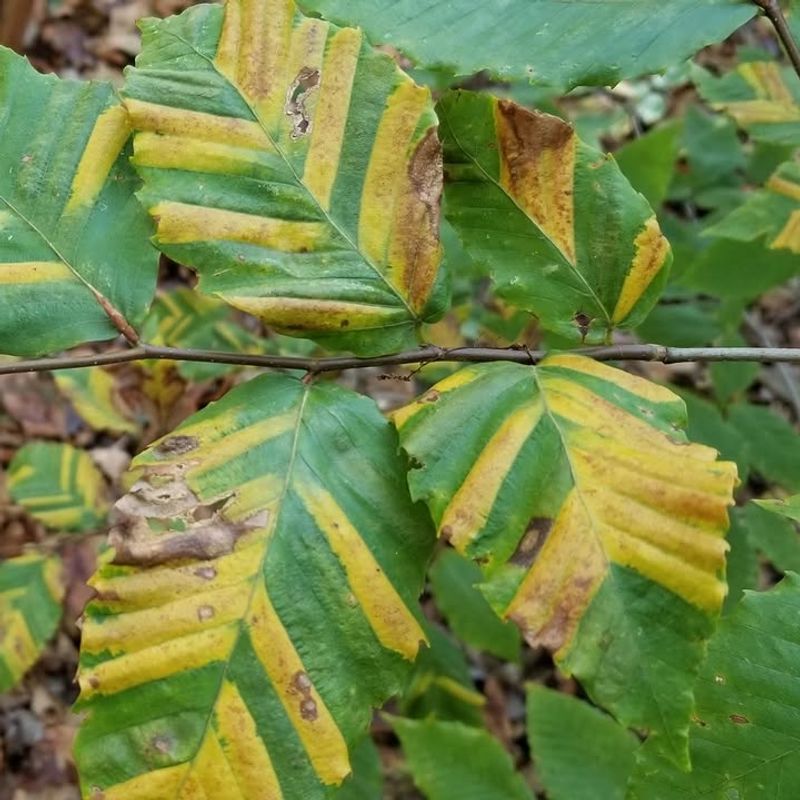
Beech trees in Ohio typically show progressively worse symptoms each year after the initial infection, with damage accumulating over multiple growing seasons.
The nematodes continue multiplying within the leaf buds and tissue, increasing their population and the extent of damage they cause annually.
First-year symptoms might include just a few striped leaves, but by the second or third year, entire branches may show severe discoloration.
Infected trees struggle to produce healthy leaves, which reduces their ability to photosynthesize and create the energy needed for overall health maintenance.
As the tree weakens, it becomes less able to defend itself against the nematodes, allowing the disease to progress even faster than before.
Homeowners often notice that leaves emerge smaller and more deformed each spring, with symptoms appearing earlier in the season than the previous year.
The cumulative stress on the tree affects root growth and overall vigor, creating a downward spiral that becomes increasingly difficult to reverse.
Understanding this progressive nature helps Ohio residents recognize that early intervention and monitoring are far more effective than waiting to see improvement naturally.
6. Which Beech Trees Are Most At Risk
Every beech tree in Ohio faces potential risk from this disease, but certain characteristics seem to make some specimens more vulnerable than others.
Young saplings and newly planted trees often show symptoms faster and more severely than mature trees with well-established root systems and reserves.
American beech trees, which are native to Ohio, appear just as susceptible as European beech varieties commonly used in landscaping and ornamental plantings.
Trees growing in stressed conditions, such as compacted soil or areas with poor drainage, may decline more rapidly once infected by nematodes.
Ornamental cultivars with purple or variegated leaves don’t seem to have any natural resistance, showing symptoms similar to standard green-leaved varieties.
Beech trees in densely wooded areas of Ohio face higher exposure risk due to proximity to many other potential hosts for the nematodes.
Interestingly, tree size doesn’t provide protection, as both towering forest specimens and small yard trees can develop severe symptoms within similar timeframes.
Homeowners should monitor all beech trees on their property regardless of age, size, or variety, since none have proven immune to this disease.
7. How Infected Trees Slowly Lose Strength
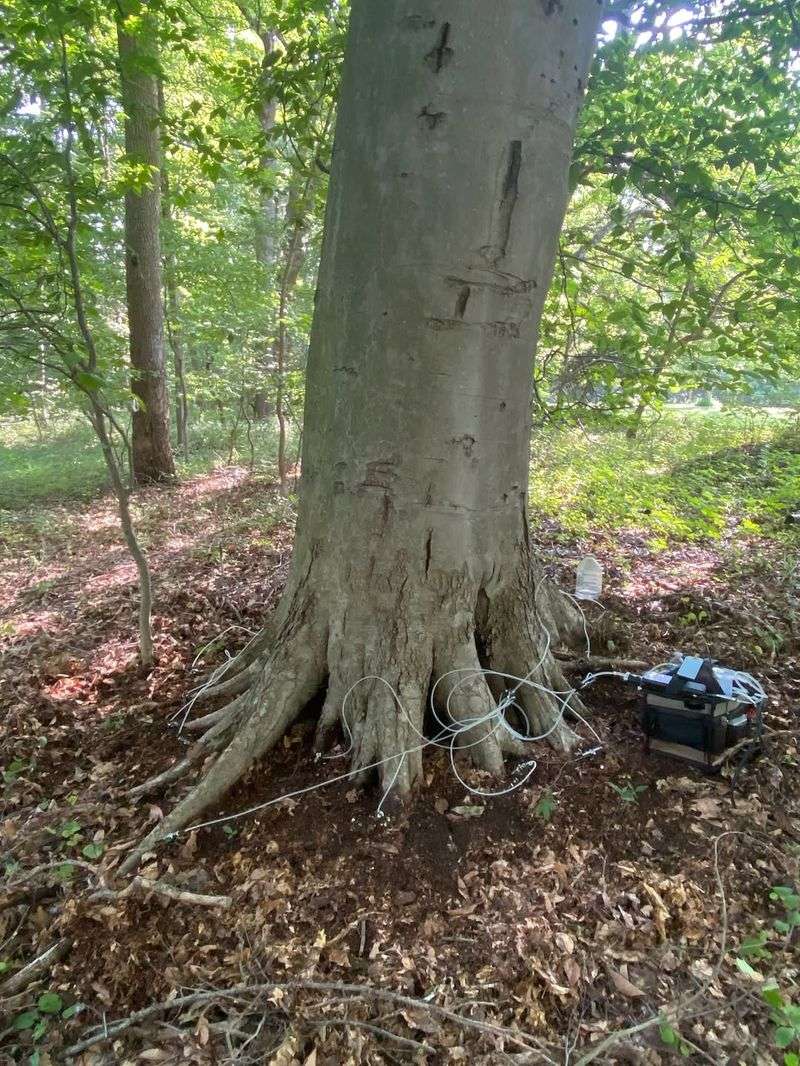
Beech trees affected by this disease experience a gradual decline in overall health that becomes more noticeable with each passing year in Ohio.
Leaf production decreases as the nematodes damage buds, resulting in thinner canopies that provide less shade and have a sparse appearance overall.
The tree’s ability to produce food through photosynthesis drops significantly when leaves are damaged, reducing energy available for growth and defense mechanisms.
Branch decline often begins in the upper canopy, with twigs and small branches failing to leaf out properly during spring in affected specimens.
Root systems may shrink over time as the tree redirects limited resources to trying to produce healthy foliage instead of maintaining underground growth.
Bark may appear dull or develop areas of discoloration, though these changes are usually subtle and occur later in the disease progression.
Homeowners in Ohio notice that infected trees become less vigorous, with slower growth rates and reduced production of beechnuts compared to previous seasons.
The overall weakening makes trees more vulnerable to secondary problems like insects, other diseases, or weather damage that healthy specimens would normally tolerate.