Those Flying Insects Around Michigan Houseplants In Spring May Not Be Fruit Flies
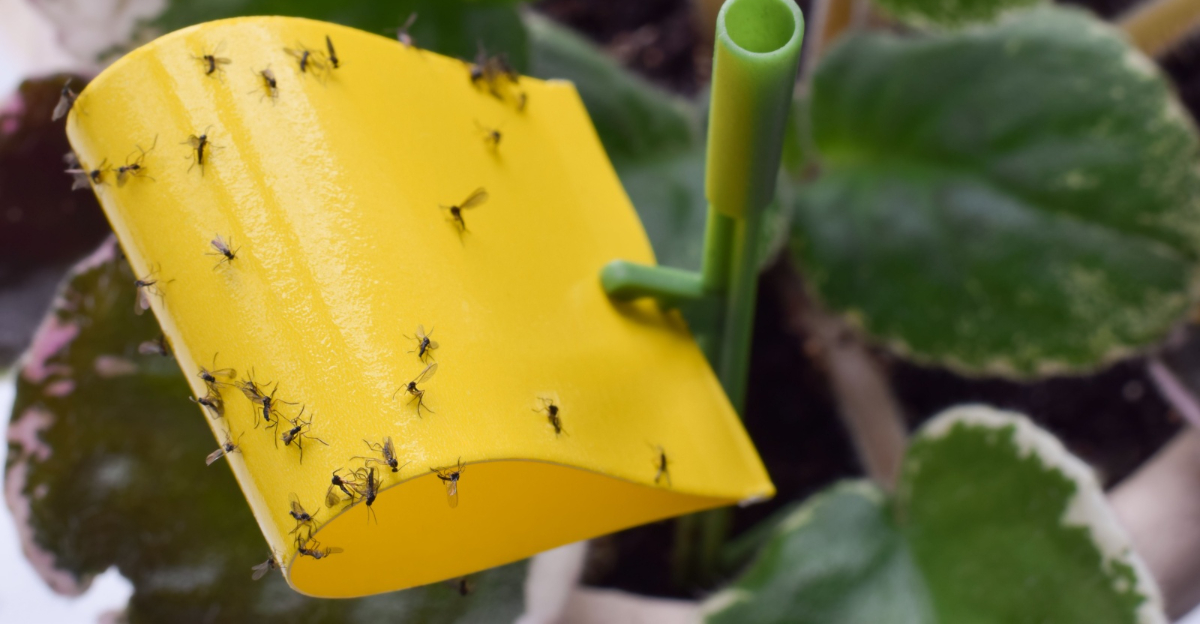
You water your houseplants, step back, and suddenly notice tiny flies hovering around the soil. Most Michigan plant owners assume fruit flies right away, but that is not always what you are seeing.
In many cases, those small insects are fungus gnats, and they behave very differently.
As winter fades across Michigan and daylight increases, watering patterns shift and indoor conditions change, often leaving soil damp longer than expected.
That creates the kind of environment these insects are drawn to. Knowing what you are actually dealing with early on can make a noticeable difference in how you manage your houseplants through the season.
1. Fungus Gnats Thrive In Damp Indoor Soil Conditions
Wet soil sitting inside a warm Michigan home during spring is practically a welcome mat for fungus gnats.
These small, dark insects are drawn almost exclusively to moist growing conditions, and they spend most of their life cycle in the soil rather than flying around your kitchen looking for overripe bananas.
That distinction alone separates them clearly from fruit flies.
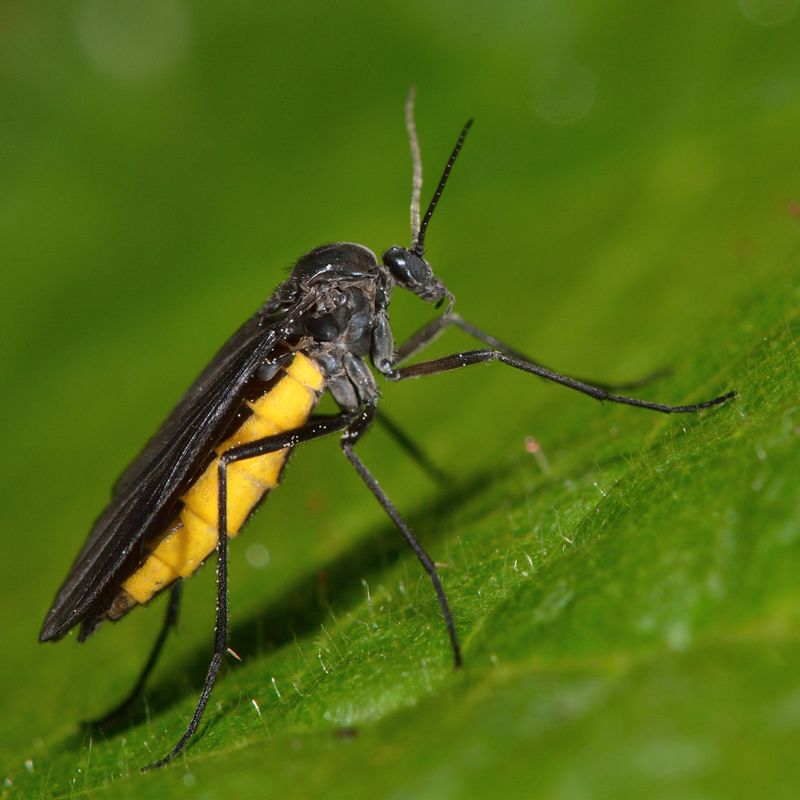
Adult fungus gnats are roughly 1/8 inch long, with long legs, slender bodies, and a distinctive Y-shaped vein pattern on their wings.
They are weak fliers and tend to hover near the soil surface or crawl along the rim of pots rather than zooming across the room.
Most Michigan plant owners spot them when watering or moving a pot, which is when adults scatter in small groups.
The real activity happens underground, where larvae hatch and begin feeding on organic material in the soil. Damp conditions accelerate this process because moisture supports fungal growth, which is a primary food source for larvae.
Michigan homes in spring often retain higher indoor humidity as temperatures outside begin rising while heating systems still run intermittently.
That combination keeps soil wet longer than expected, creating an environment where fungus gnats can establish themselves across multiple generations before most plant owners realize what is happening.
2. Overwatering Creates The Ideal Environment For Infestations
Spring has a way of making Michigan plant owners generous with the watering can.
After months of dry indoor air from forced-air heating systems, houseplants can look a little stressed, and the natural instinct is to give them extra moisture as the season shifts.
Unfortunately, that generosity often tips the balance toward soil conditions that fungus gnats love.
When soil stays consistently wet from the top layer all the way down, it creates a humid, oxygen-reduced environment in the root zone. Fungus gnats do not simply tolerate these conditions; they actively seek them out for egg-laying.
A single female can deposit around 200 eggs near the soil surface, and those eggs hatch within a few days when moisture levels remain high.
The cycle can move quickly when watering habits do not adjust to what the plant actually needs.
A practical approach is to check soil moisture before every watering rather than following a fixed schedule. Pressing a finger about an inch into the soil gives a reasonable sense of whether more water is actually needed.
For most common Michigan houseplants, including pothos, snake plants, and peace lilies, allowing the top layer to dry out between waterings significantly disrupts the fungus gnat life cycle without stressing the plant.
Reducing water frequency in spring, even slightly, can break the cycle before it becomes a larger problem.
3. Larvae Feed On Organic Matter And Fine Roots
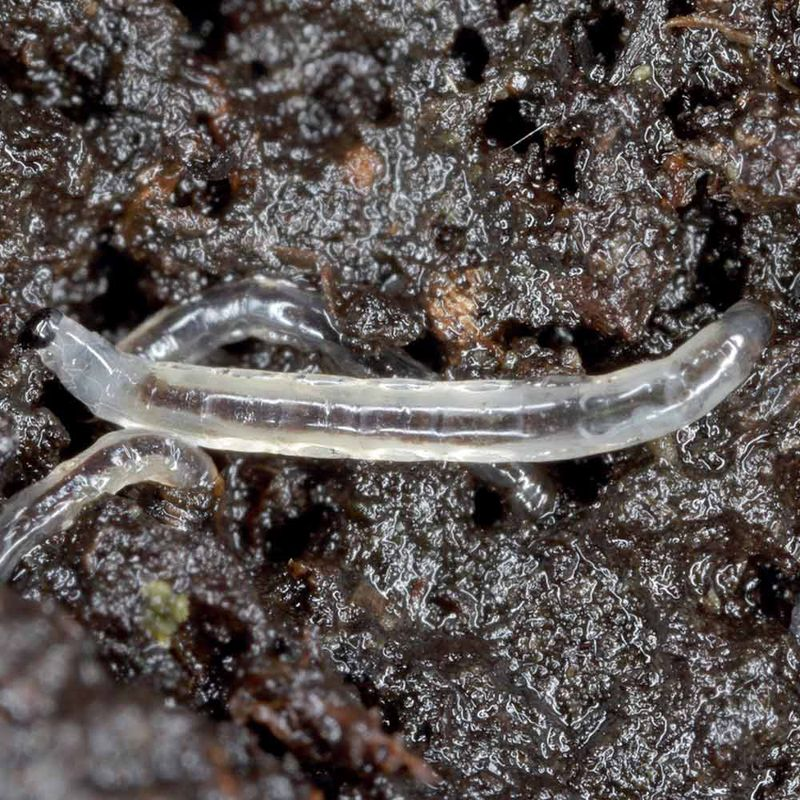
Most of the damage associated with fungus gnats does not come from the adults fluttering around your living room.
The real concern is what is happening a few inches below the soil surface, where translucent larvae feed on decomposing organic matter and, when populations grow large, on the fine root hairs that plants rely on for water and nutrient uptake.
Fungus gnat larvae are small, legless, and white with a shiny black head. They are rarely visible unless you examine the soil closely or unpot a plant for inspection.
In smaller infestations, plants may show only minor stress responses such as slightly slower growth or occasional yellowing of lower leaves.
These signs are easy to overlook or attribute to other causes like low light or inconsistent watering.
When larval populations build up over several generations, root systems can become noticeably compromised. Seedlings and young transplants are especially vulnerable because their root systems are not yet extensive enough to compensate for the feeding activity.
Michigan gardeners who start seeds indoors during late winter and early spring often encounter this issue when trays stay consistently moist under grow lights.
Monitoring soil conditions carefully and keeping organic matter from accumulating on the soil surface can help limit the food sources available to larvae, which reduces how quickly populations establish themselves indoors.
4. Tiny Flying Adults Are Often Mistaken For Fruit Flies
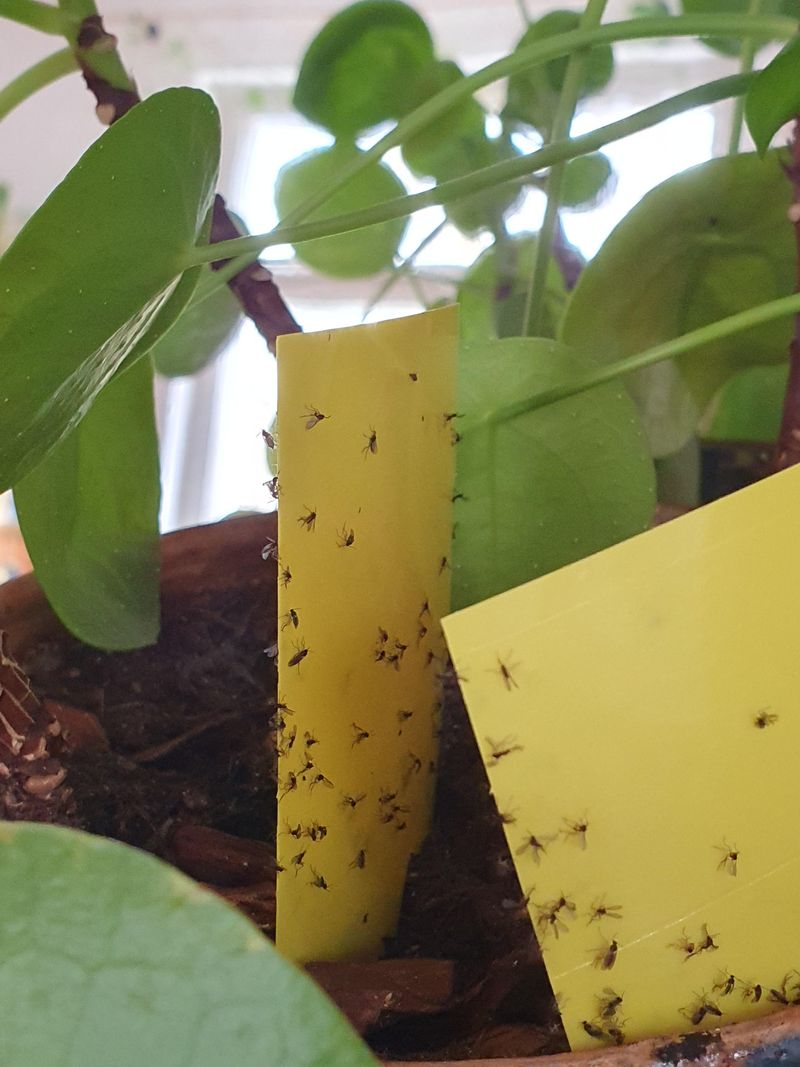
Standing in your Michigan kitchen watching a small insect hover near your fiddle-leaf fig, it is genuinely easy to assume you are looking at a fruit fly.
Both insects are tiny, both fly in that slow, meandering way that makes them hard to swat, and both seem to appear out of nowhere once spring arrives.
But a closer look reveals some meaningful physical differences worth knowing.
Fruit flies are typically light brown or tan with noticeably red eyes, and they gravitate toward fermented or overripe food sources. Fungus gnats, by contrast, are darker, almost black or dark gray, with longer legs and a more mosquito-like silhouette.
Their wings have that Y-shaped vein structure that sets them apart under magnification, though most people are not reaching for a magnifying glass when a small fly buzzes past.
Behavior is often the more practical way to tell them apart. If the insects are consistently found hovering near plant pots, crawling along soil surfaces, or scattering when a pot is moved, fungus gnats are the far more likely culprit.
If they are clustering near a fruit bowl, a recycling bin, or a drain, fruit flies become the better guess.
Michigan homes in spring can host both at the same time, so paying attention to where the insects spend their time helps narrow down which pest you are actually managing and what steps make the most sense to take.
5. Indoor Seed Starting Mixes Can Harbor Eggs
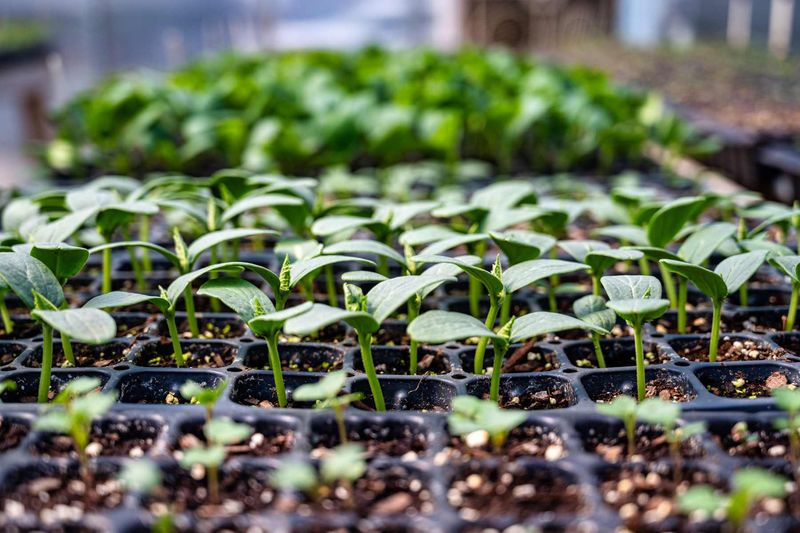
Seed starting season in Michigan typically runs from late February through April, and for many indoor gardeners, that means rows of shallow trays filled with moist, fine-textured growing media sitting under grow lights for weeks at a time.
That setup creates conditions that are almost tailor-made for fungus gnat egg-laying and larval development.
Seed starting mixes are formulated to retain moisture consistently, which is exactly what germinating seeds need.
The trade-off is that this same moisture retention keeps the medium wet at the surface for extended periods, which is where fungus gnats prefer to deposit their eggs.
The fine, peat-heavy texture of many commercial mixes also provides an abundance of organic material that larvae can feed on once they hatch.
Gardeners in Michigan who start tomatoes, peppers, herbs, or annual flowers from seed indoors often notice tiny flying insects appearing within a few weeks of setting up their trays.
The issue is not always related to soil brought in from outside.
Fungus gnat eggs and larvae can sometimes be present in commercially packaged potting and seed starting mixes before the bag is even opened.
Using fresh, sealed media and allowing the top layer of trays to dry slightly between waterings can help reduce how quickly populations develop.
Covering trays with humidity domes only until germination occurs also limits the prolonged surface moisture that encourages egg-laying.
6. Poor Drainage Keeps Soil Wet Longer Than Expected
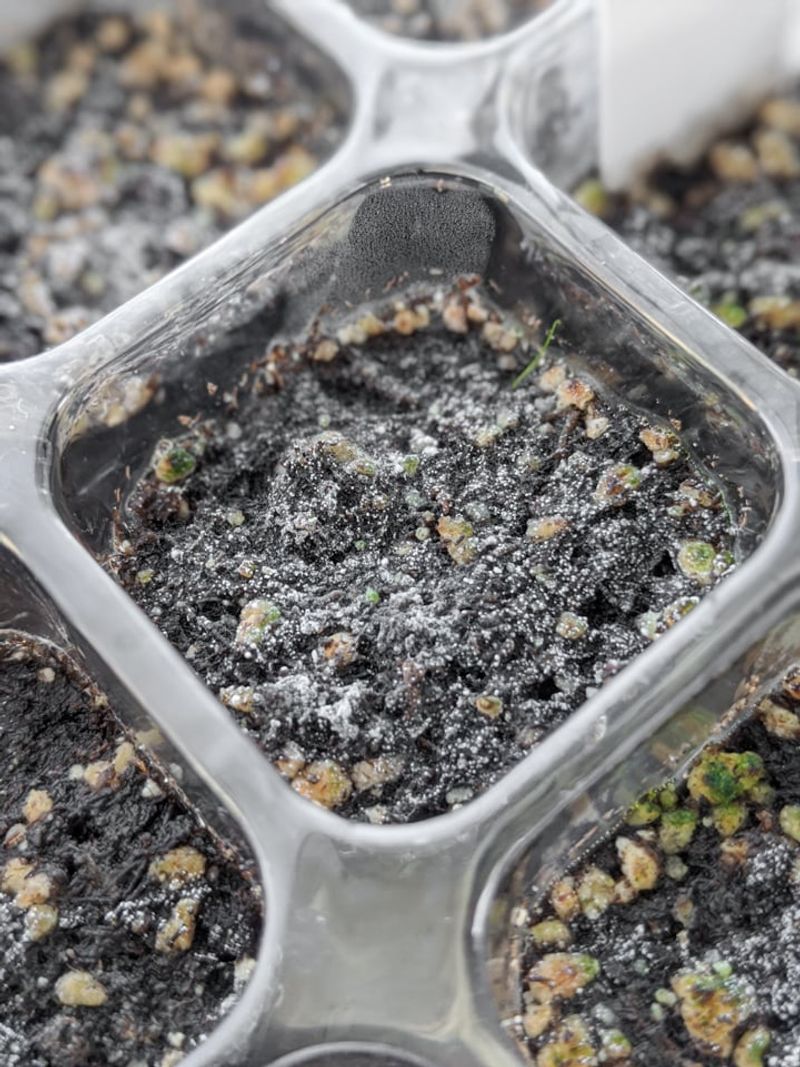
Drainage might not be the most exciting topic in houseplant care, but it has a direct and measurable impact on how quickly fungus gnats establish themselves in a pot.
When water cannot move freely through the soil and out of the container, it accumulates at the bottom and keeps the entire root zone saturated far longer than the plant actually benefits from.
Pots without drainage holes are a common contributor to this problem in Michigan homes.
Decorative containers are popular for a reason, they look great, but placing a plastic nursery pot inside a decorative cover without monitoring water buildup creates a hidden reservoir that maintains soil moisture for days or even weeks after watering.
That prolonged wetness is precisely what fungus gnat larvae need to complete their development before emerging as adults.
Compacted soil is another factor that slows drainage. Over time, potting mix breaks down and loses its structure, reducing airflow and water movement through the root zone.
Repotting plants into fresh, well-aerated soil every year or two, and choosing containers with adequate drainage holes, helps keep conditions less hospitable for fungus gnats.
Adding a layer of coarse perlite to the bottom third of a pot can also improve drainage in containers that tend to retain water.
Small adjustments to container setup often produce noticeable improvements in how quickly soil dries between waterings.
7. Spring Light Changes Can Increase Indoor Activity
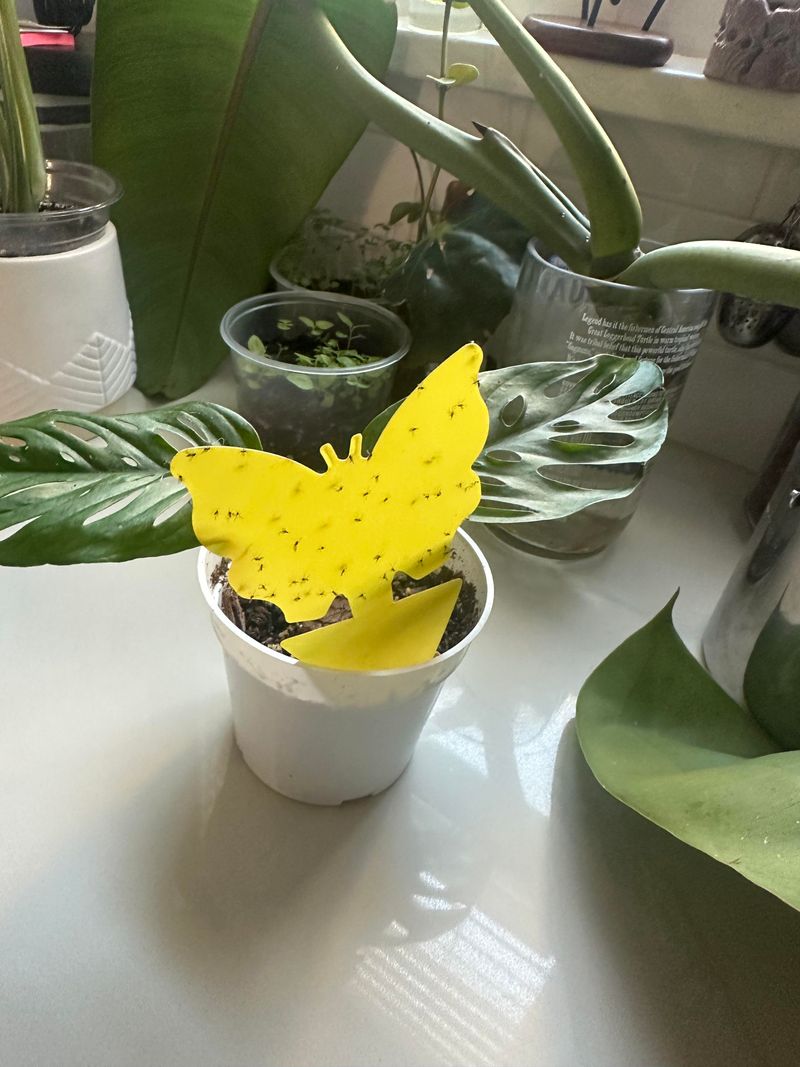
One of the less obvious reasons fungus gnat activity seems to spike in Michigan homes each spring is the shift in natural light levels.
As days grow longer and sunlight becomes more intense, houseplants respond by pushing new growth, which often prompts plant owners to begin watering more frequently to support that growth.
More frequent watering, even when well-intentioned, can tip soil conditions back toward the consistent moisture that fungus gnats prefer.
Warmer indoor temperatures also play a role. Michigan homes that ran heating systems all winter begin warming up as outdoor temperatures rise, and that warmth accelerates the fungus gnat life cycle.
Eggs hatch faster, larvae develop more quickly, and adults emerge in greater numbers over a shorter span of time. What might have been a slow, barely noticeable presence in January can become a visible nuisance by April.
Increased light can also encourage plant owners to move pots closer to windows, which sometimes places them near gaps in window frames where outdoor fungus gnats could potentially enter.
While most infestations originate in the soil itself, improving airflow around plants near windows can help reduce the humid microclimates that tend to develop around dense foliage.
Running a small fan on low near your plant collection for a few hours each day encourages soil to dry more evenly and makes the environment slightly less inviting for egg-laying adults throughout the Michigan spring season.
8. Sticky Traps Help Monitor And Reduce Adult Gnats
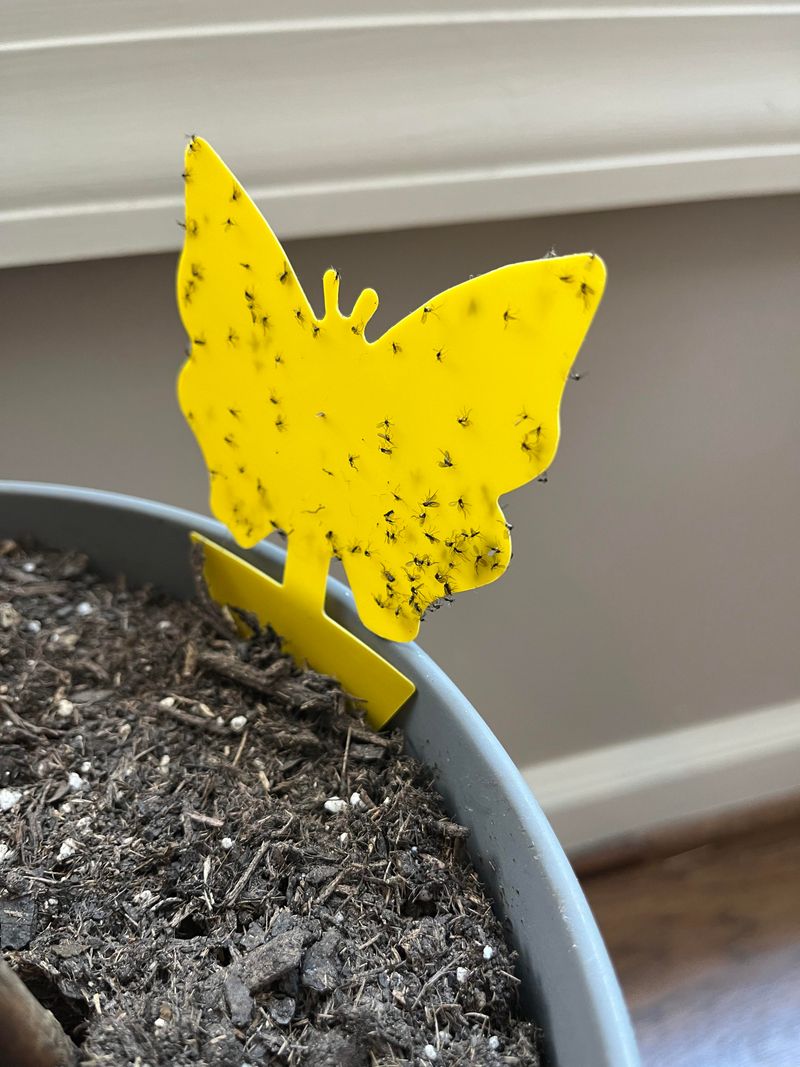
Yellow sticky traps are one of the most straightforward and widely recommended tools for managing fungus gnats in Michigan homes, and they work for a simple reason: adult fungus gnats are attracted to the color yellow.
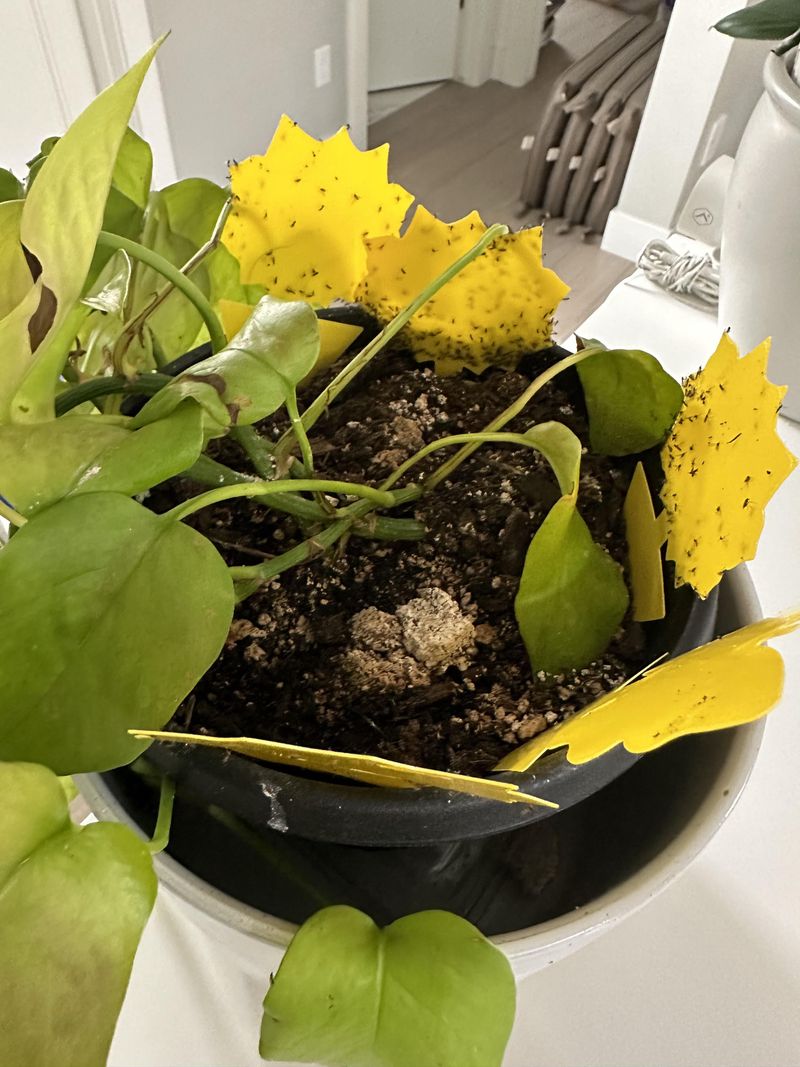
Placing a trap near the soil surface of an affected plant catches adults before they have a chance to lay more eggs, which gradually reduces the next generation of larvae.
Sticky traps serve a monitoring function just as much as a management one. When you check the traps every few days, you get a realistic sense of how many adults are present and whether the population is growing, holding steady, or starting to decline.
That information helps you decide whether current management steps are working or whether adjustments are needed.
It is a low-effort way to stay informed about what is happening in your plant collection without having to disturb the soil regularly.
For best results, place traps horizontally just above the soil surface rather than vertically at plant height, since adults spend much of their time near the soil rather than flying higher up.
Replacing traps every one to two weeks keeps them effective and gives you fresh data on population trends.
Used alongside adjusted watering habits and improved drainage, sticky traps become part of a practical, multi-step approach that Michigan plant owners can maintain throughout the spring season without relying on chemical treatments.