Those Tiny Flying Gnats In Pennsylvania Soil Are Not What You Think
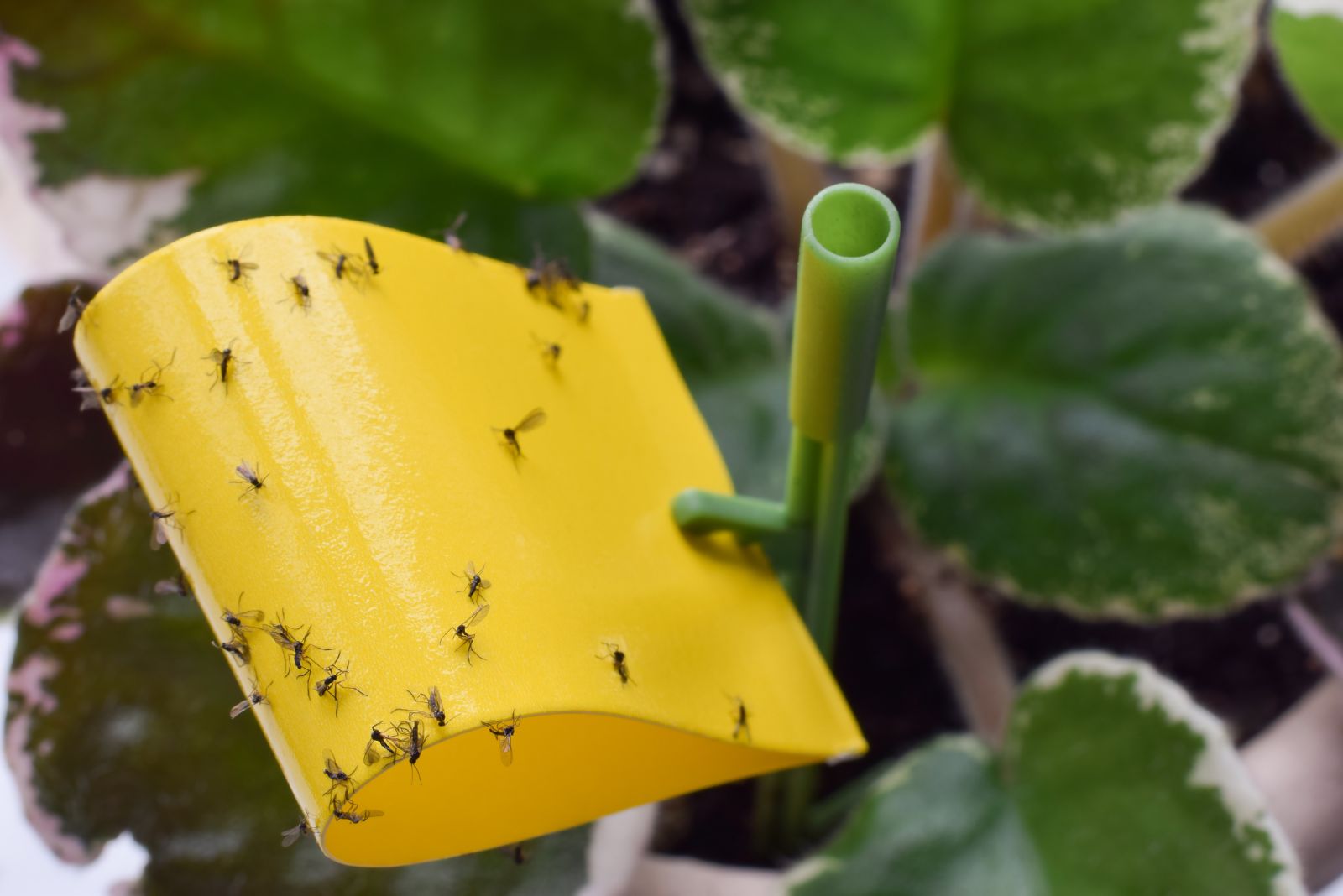
Those tiny flying bugs hovering around the soil can be surprisingly annoying, especially when they keep popping up every time you water a plant or walk past a pot.
A lot of Pennsylvania gardeners assume they are harmless little nuisances, or worse, think they are fruit flies that somehow ended up in the dirt.
But these pests usually point to something very specific happening in the soil, and ignoring them can make the problem drag on much longer than it should.
That is why they tend to catch people off guard. They look small and almost insignificant, yet they can multiply fast and become a constant headache indoors or in sheltered growing spaces.
Fungus gnats are especially common when soil stays too damp, giving them the perfect place to breed and hang around. The good news is that once you know what they really are and why they showed up, they become a lot easier to deal with.
A few simple changes can make a big difference and help your plants feel a lot healthier too.
Those Tiny Flying Gnats Are Usually Fungus Gnats, Not Fruit Flies
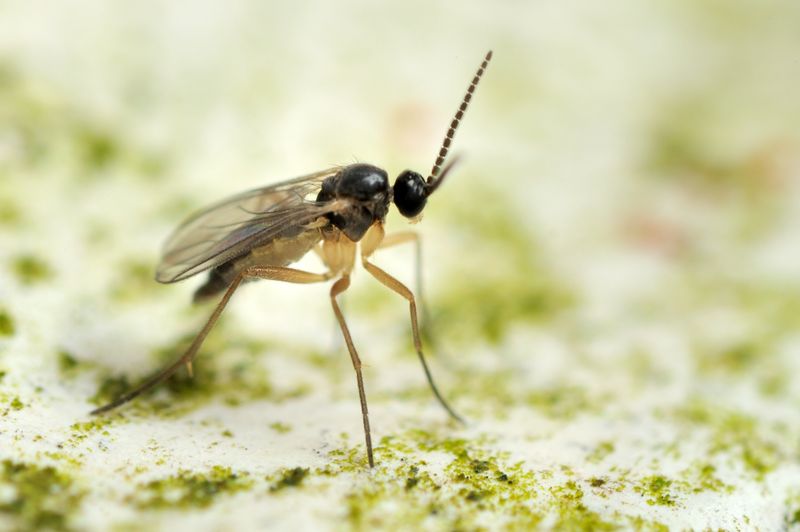
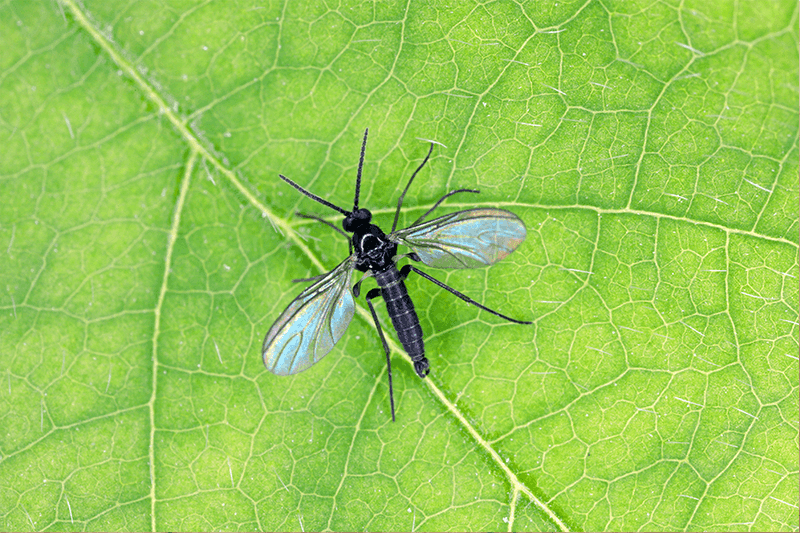
Many Pennsylvania homeowners spot tiny insects floating around their houseplants and immediately assume they are fruit flies. However, fungus gnats are very small, delicate, grayish-black, mosquito-like insects that are closely tied to moist potting soil.
They are a completely different creature from the fruit flies that buzz around your kitchen counter.
Fungus gnats belong to several insect families, most commonly Sciaridae. They are usually no bigger than one-eighth of an inch long.
Their long, spindly legs and wings give them a fragile, almost mosquito-like appearance that can catch you off guard the first time you see them up close.
Fruit flies, on the other hand, tend to hover near ripe or rotting food, vinegar, and beverages. Fungus gnats almost always stay near plant containers and soil.
If the tiny bugs in your Pennsylvania home are circling a potted plant rather than your fruit bowl, you are most likely dealing with fungus gnats.
Knowing the difference matters because the solutions are different. Treating your kitchen counter will not help if the real source is a soggy potted fern in the corner of your living room.
Fungus gnats are attracted to soil conditions, not food. Once you correctly identify them, managing the problem becomes much more straightforward and less frustrating for Pennsylvania plant owners everywhere.
Why They Show Up In The First Place
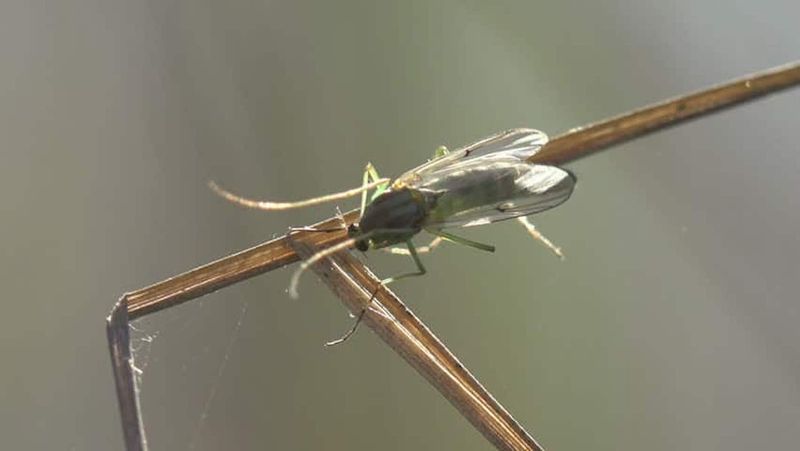
Overwatering is probably the single biggest reason fungus gnats become a recurring problem for Pennsylvania plant lovers. Fungus gnats are strongly attracted to consistently damp soil and potting mixes that are rich in organic matter.
Wet conditions create the perfect environment for the fungi and decaying material these insects need to survive and reproduce.
Most indoor potting mixes contain peat moss, compost, or bark, which are all organic materials that stay moist for a long time. When you water your plants too frequently or too heavily, that soggy organic mix becomes an open invitation.
Adult fungus gnats can detect moist soil from a surprising distance, and they will quickly move in to lay their eggs.
Pennsylvania winters make this problem worse. During the colder months, houseplants are brought inside or kept indoors full time.
Homes are heated and windows stay closed, which slows down evaporation from the soil. Plants dry out more slowly than they would outdoors, so many well-meaning plant owners accidentally keep their soil wetter than necessary.
The cycle feeds itself quickly. A female fungus gnat can lay up to 200 eggs in moist soil over her short lifetime.
Those eggs hatch within a few days, and new adults emerge within a couple of weeks. Before long, a single overwatered plant in your Pennsylvania home can produce what feels like a full-blown infestation.
The good news is that fixing the root cause, which is the watering habit, goes a long way toward breaking that cycle for good.
What They Are Actually Doing In The Soil
Most people focus on the adult gnats flying around, but the real action is happening underground. Fungus gnat larvae live inside the potting mix, where they feed mainly on fungi and decaying organic matter.
Adults are mostly just annoying, but the larvae are the stage that can actually cause problems for your plants.
The larvae are small, white, and worm-like with a shiny black head. They are usually no more than a quarter-inch long.
Under normal conditions with a light infestation, they mostly munch on fungi and decomposing plant material without doing significant damage to healthy roots.
However, in heavier infestations, the larvae will start chewing on root hairs and tender young roots. This can stress your plants, causing symptoms like yellowing leaves, slow growth, and wilting even when the soil is moist.
Seedlings and young plants are especially vulnerable because their root systems are still small and fragile.
Pennsylvania gardeners who start seeds indoors in late winter or early spring should be especially watchful. A fungus gnat infestation in a seed-starting tray can wipe out young seedlings before they ever get a real chance to grow.
The combination of consistently moist seed-starting mix and warm indoor temperatures creates an almost perfect breeding environment.
Recognizing that the damage is happening below the surface, not above it, helps you understand why simply swatting the adults flying around your plants does very little to actually fix the underlying problem you are dealing with.
Why Pennsylvania Gardeners Often Misidentify Them
Misidentifying these insects is incredibly common, and honestly, it makes sense. Fungus gnats are tiny, they move fast, and most people do not have a magnifying glass handy when a small cloud of bugs rises up from a potted plant.
Many Pennsylvania residents assume they are dealing with fruit flies or just random outdoor gnats that wandered in through a window or door crack.
Outdoor gnats, like the black flies managed by Pennsylvania’s Department of Environmental Protection, are a completely separate group of insects.
Those black flies are associated with rivers, streams, and outdoor spaces, not houseplant containers sitting on a windowsill.
Mixing up these very different insects can lead to a lot of wasted effort and frustration.
Fruit flies also get blamed frequently. But fruit flies have reddish eyes, a tan or brownish body, and they are almost always found near fermenting food, overripe produce, or sugary drinks.
Fungus gnats are darker, slimmer, and almost exclusively tied to soil and plant containers. If your tiny flying insects are hovering around a pot and not your fruit bowl, that is a solid clue.
Getting the identification right saves time and effort. Pennsylvania plant owners who treat for fruit flies while ignoring their soggy soil will keep seeing gnats no matter what they try.
How To Get Rid Of Them Without Overcomplicating It
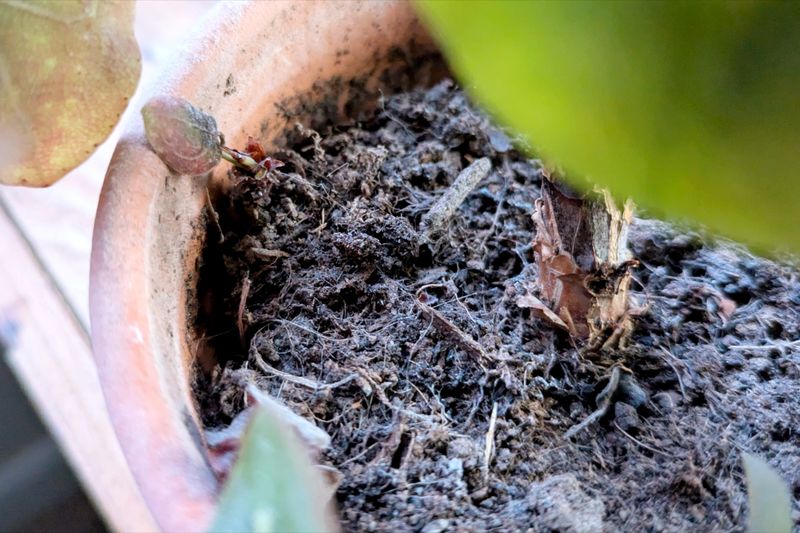
You do not need a cabinet full of chemicals to get fungus gnats under control. The most effective first step is also the simplest: let the top inch or two of soil dry out completely between waterings.
Fungus gnats cannot complete their life cycle in dry soil, so cutting back on moisture is the fastest way to break the infestation cycle for Pennsylvania plant owners.
Improving drainage also helps a lot. Make sure your pots have holes at the bottom so water can escape freely.
Avoid letting plants sit in saucers filled with standing water, because that moisture keeps the lower layers of soil constantly wet even when the surface looks dry. Empty those saucers after watering.
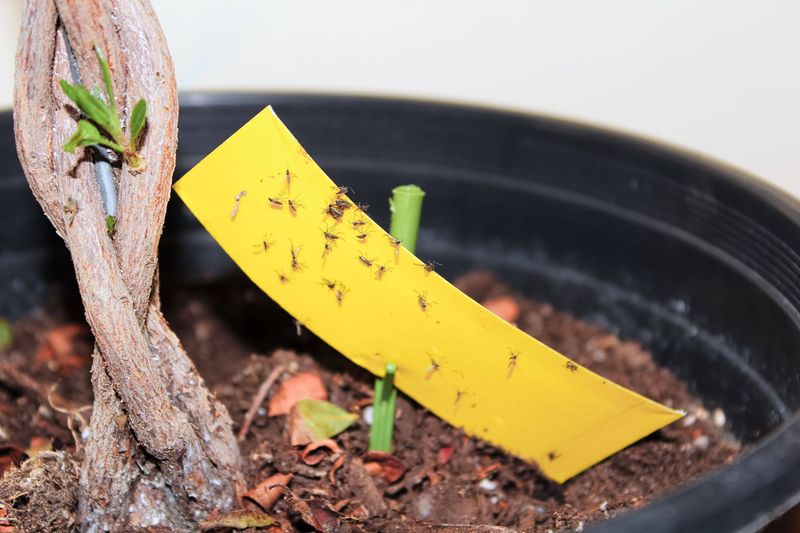
Yellow sticky traps are a simple and affordable tool for catching adult gnats. Place them horizontally at soil level near your affected plants.
Adults are attracted to the yellow color and get stuck before they can lay more eggs. They will not eliminate the problem on their own, but they significantly reduce the adult population while you address the soil conditions.
Sprinkling a thin layer of horticultural sand or coarse perlite on top of the potting soil creates a dry, gritty surface that discourages adult females from laying eggs. Larvae need moisture close to the surface to survive, and a dry top layer interrupts that process effectively.
For serious infestations in Pennsylvania homes, you can also use Bacillus thuringiensis israelensis, commonly called Bti, as a soil drench. Bti is a naturally occurring soil bacterium that targets gnat larvae without harming people, pets, or plants.
Why They Are More Annoying Than Dangerous
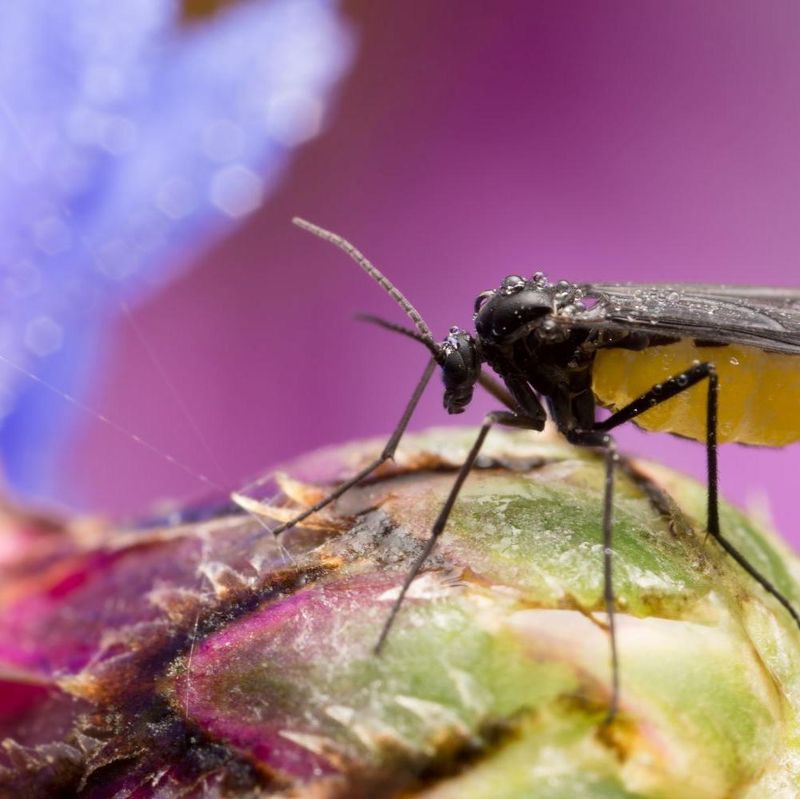
Here is the reassuring part: fungus gnats are almost always more of a nuisance than a serious threat to your plants or your household. Unlike the black flies found near Pennsylvania rivers and streams, fungus gnats do not bite people.
They do not spread disease, and they are not going to swarm out of your houseplant and cause chaos in your home.
Healthy, well-established plants can usually tolerate a light fungus gnat infestation without showing much visible stress at all.
The larvae feeding on fungi and decomposing organic matter in the soil is actually a pretty normal part of what happens underground in any garden setting.
Problems tend to escalate only when infestations grow large or when vulnerable seedlings are involved.
What fungus gnats are really telling you is something useful about your plant care habits. If they keep showing up in your Pennsylvania home, the message is straightforward: your potting soil is staying too wet for too long.
These insects are almost like a warning signal pointing to an overwatering problem you may not have even noticed yet.
Adjusting your watering routine, checking your drainage, and giving your soil a chance to dry between waterings will usually solve the gnat problem and make your plants healthier at the same time.
Many Pennsylvania plant owners actually find that fixing the conditions that attract fungus gnats leads to stronger, happier plants overall.
So while these tiny insects are genuinely annoying, they can also be a surprisingly helpful reminder that your plants might need a little less water and a little more breathing room.