7 Tips To Get Your Stapelia Blooming (Ohio Succulent Guide)
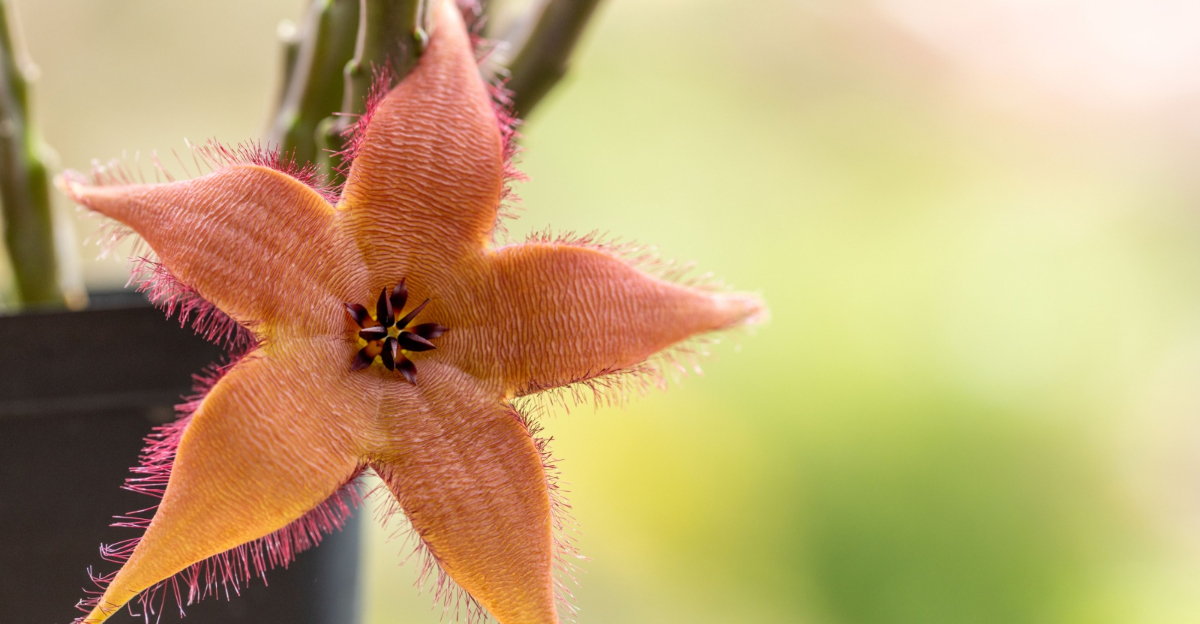
Stapelia is not just another succulent sitting quietly on a windowsill. This strange, star flowering plant sparks curiosity, conversation, and sometimes disbelief the moment people notice it.
Ohio growers often keep one for years, watching thick stems spread and twist, waiting for that rare, unforgettable bloom that turns the plant into a living spectacle. Few houseplants carry this much personality or mystery.
One season it seems calm and ordinary, the next it can surprise you with something truly dramatic.
Growing Stapelia in Ohio brings a different kind of excitement, part patience, part fascination, part reward.
Behind its strange beauty lies a story of subtle cues and quiet signals that shape how this unusual succulent grows, revealing layers of character rarely found in any typical plant collection.
1. Give It Strong Bright Light Every Day
Light makes all the difference when you want blooms from your Stapelia. These succulents come from sunny African habitats where they soak up intense rays for hours each day, and they need similar brightness indoors to trigger flowering.
Without enough light, your plant might grow just fine but never produce those stunning star-shaped blooms you’re hoping for.
A south-facing window works perfectly in Ohio homes, giving your Stapelia the strongest light available throughout the day. East or west windows can work too, especially during spring and summer when the sun arcs higher and daylight lasts longer.
Just make sure the plant sits close to the glass where light intensity stays highest, not several feet back into the room where brightness drops significantly.
Winter presents the biggest challenge for Ohio growers since our days get shorter and cloud cover increases. Your Stapelia won’t bloom during these darker months anyway since it naturally rests, but maintaining decent light keeps the plant healthy and ready for spring.
Move it to your brightest window during winter, and consider supplementing with a grow light if your home stays particularly dim.
Watch for signs your plant needs more light, like pale green growth or stems that stretch and lean toward the window. Healthy Stapelia stems should be plump and upright with good color.
Rotate your pot every week or two so all sides receive equal exposure, preventing lopsided growth and encouraging even bud development when blooming season arrives.
2. Use Fast Draining Gritty Succulent Soil
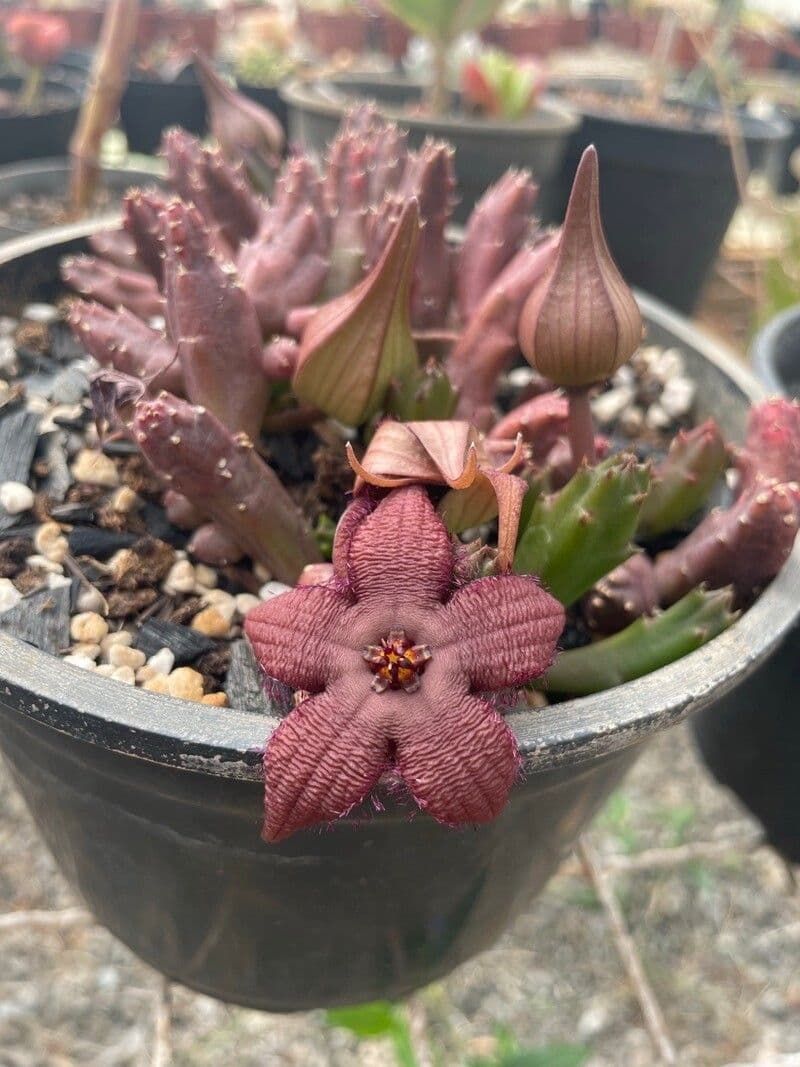
Soil choice directly impacts whether your Stapelia thrives or struggles, and ultimately whether it produces blooms. Standard potting soil holds too much moisture for these succulents, keeping roots wet for days after watering.
That prolonged dampness leads to root problems that weaken the plant and prevent flowering, especially during Ohio’s humid summers when soil dries even slower.
A proper succulent mix drains within seconds of watering, allowing excess moisture to flow right through. You can buy commercial cactus and succulent soil from garden centers, but most brands still contain too much organic matter.
Improve any mix by adding extra perlite, coarse sand, or pumice until at least half the blend consists of these gritty materials that create air pockets and drainage channels.
Making your own mix gives you complete control over drainage. Combine equal parts regular potting soil, coarse sand or fine gravel, and perlite or pumice for a blend that dries quickly but still provides some moisture retention and nutrients.
The grittier texture might look harsh, but Stapelia roots actually prefer it since they’re adapted to rocky, lean soils in their native habitat.
Repot your Stapelia into fresh gritty mix every two to three years, or sooner if the soil starts breaking down and holding more water. Spring works best for repotting since the plant enters active growth and recovers quickly.
Good soil creates the foundation for healthy roots, strong growth, and reliable blooming year after year in your Ohio home.
3. Water Only When Soil Turns Completely Dry
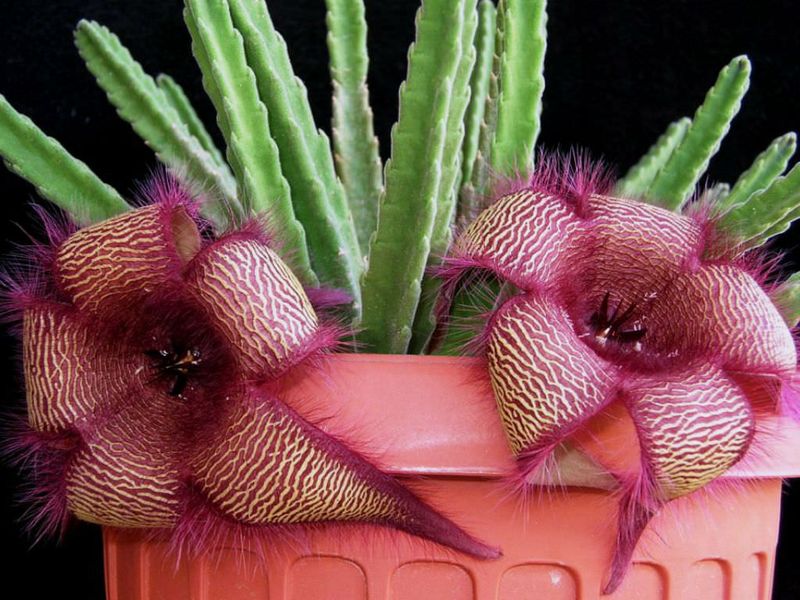
Watering mistakes probably prevent more Stapelia blooms than any other care issue. These succulents store water in their thick stems and need far less moisture than typical houseplants, especially during Ohio’s cooler months when growth slows naturally.
Overwatering keeps the plant in survival mode rather than blooming mode, and soggy roots simply cannot support flower production.
Always check soil dryness before watering by poking your finger an inch or two down into the pot. If you feel any coolness or moisture, wait longer.
The entire root zone should be completely dry, not just the surface, before you water again. This might mean waiting a week during hot Ohio summers or three weeks during winter when indoor heating dries the air but the plant barely grows.
When you do water, drench the soil thoroughly until water runs freely from the drainage holes. This ensures the entire root system gets moisture, not just the top layer.
Then wait for that complete dry-out before watering again. Frequent light sprinkles cause more harm than good since they encourage shallow roots and never truly satisfy the plant’s needs.
Reduce watering significantly from November through February when Stapelia naturally rests. During these months, water just enough to prevent stems from shriveling, perhaps once a month or even less.
This rest period with cooler temperatures and reduced water actually helps trigger blooming once spring returns and you resume normal watering. Pay attention to your plant’s signals and adjust your schedule based on how quickly soil dries in your specific home conditions.
4. Keep It Warm And Away From Cold Drafts
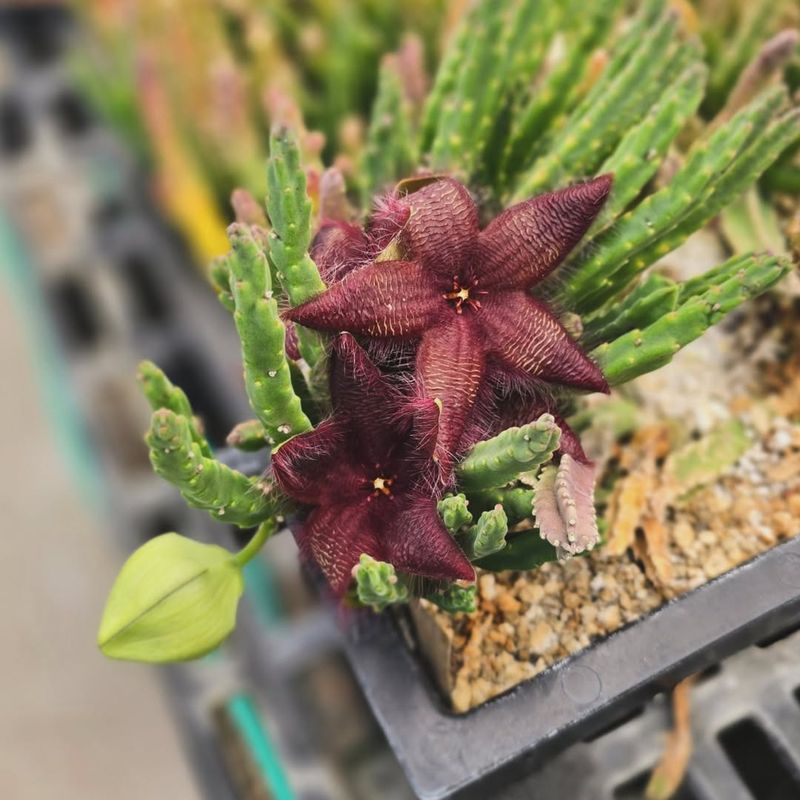
Temperature plays a crucial role in Stapelia blooming, and maintaining warmth matters more than most people realize. These succulents come from warm climates and need consistent temperatures above 60 degrees to grow actively and develop flower buds.
Cold stress interrupts blooming cycles and can prevent flowers from forming even if everything else is perfect.
Room temperature between 65 and 80 degrees works beautifully for Stapelia during spring and summer when blooming naturally occurs. Most Ohio homes stay comfortably within this range, making temperature easy to manage during warmer months.
The plant actually appreciates our warm humid summers as long as you’re providing proper light and not overwatering in the increased moisture.
Winter cold poses the real challenge, particularly if your Stapelia sits near windows where temperatures drop at night. Glass radiates cold inward during Ohio winters, and that chill zone extends several inches from the pane.
Move your plant back from the window at night if temperatures near the glass fall below 55 degrees, or relocate it to a warmer spot entirely during the coldest months.
Watch out for cold drafts from doors, windows, or air conditioning vents that blast your plant with temperature fluctuations. Stapelia tolerates a winter rest period with slightly cooler conditions around 60 degrees, but sudden cold shocks or prolonged exposure below 50 degrees damages stems and prevents spring blooming.
Keep your plant in a stable location away from temperature extremes, and it will reward you with healthy growth and those incredible flowers when warm weather returns.
5. Keep The Pot Slightly Snug For Better Blooms
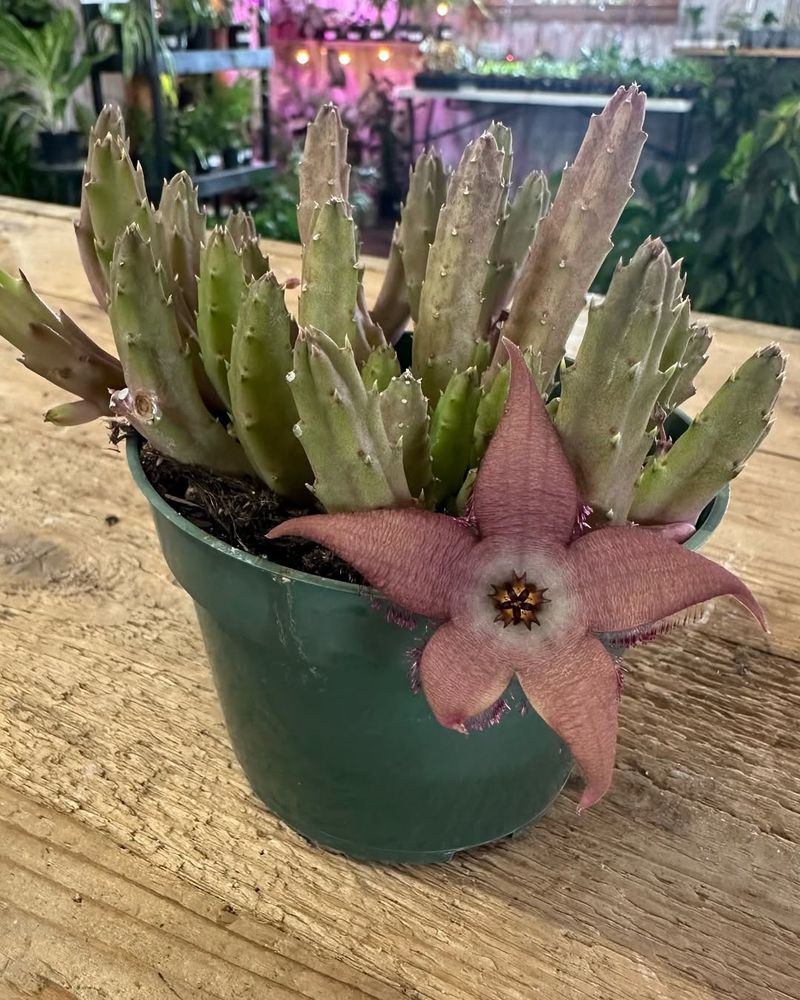
Pot size affects blooming more than most gardeners expect, and bigger isn’t always better with Stapelia. These succulents actually flower more reliably when their roots feel slightly crowded in the container.
A too-large pot holds excess soil that stays wet longer and encourages the plant to focus energy on root growth rather than producing flowers.
Choose a container that gives the roots just an inch or two of space around the existing root ball. When you unpot your Stapelia, the roots should nearly fill the container without being completely jammed in.
This slight snugness creates a stress signal that triggers blooming as the plant’s natural response to limited resources, similar to how it would behave in a rocky crevice in its native habitat.
Terracotta pots work exceptionally well for Stapelia since the porous clay allows moisture to evaporate through the pot walls, not just the drainage hole. This extra drying power helps prevent overwatering issues that are common in Ohio homes, especially during humid summer months or when indoor heating dries the air unevenly in winter.
The weight of terracotta also provides stability for top-heavy plants.
Resist the urge to repot into a much larger container even when your Stapelia produces new stems and grows fuller. Move up just one pot size, maybe two inches wider in diameter, when repotting becomes necessary.
Many successful Stapelia growers keep mature plants in relatively small pots for years, only repotting when roots literally push through drainage holes or the plant becomes unstable and tips over easily.
6. Feed Lightly During Active Growing Season
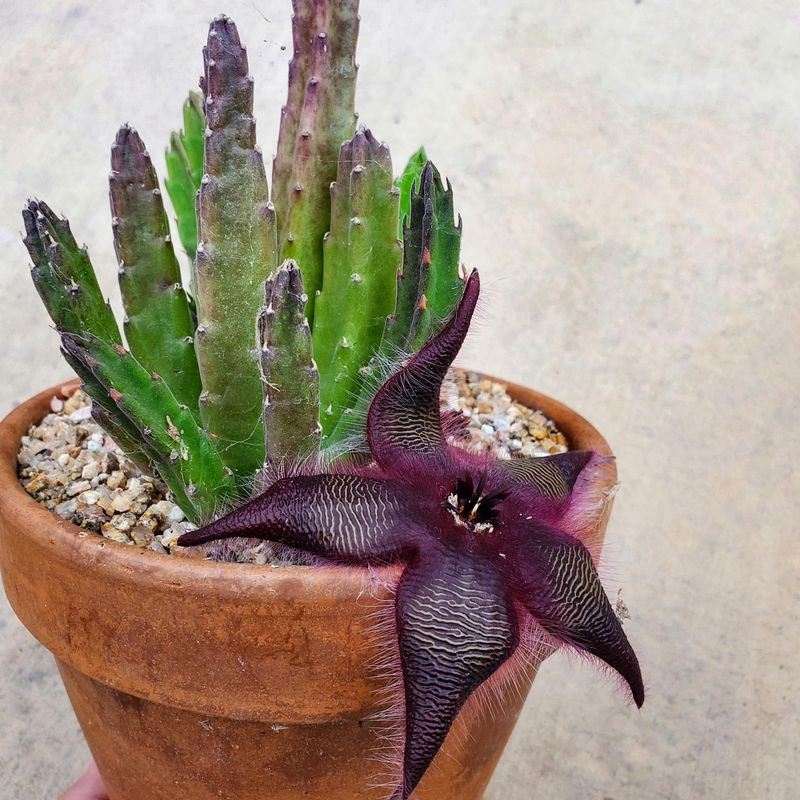
Fertilizer helps Stapelia build the energy reserves needed for blooming, but less is definitely more with these plants. Heavy feeding produces soft, weak growth that’s prone to problems and doesn’t bloom well.
Light, occasional fertilizing during the growing season gives your plant a gentle boost without overwhelming it or causing the lush growth that actually inhibits flowering.
Use a balanced liquid fertilizer formulated for cacti and succulents, or dilute a standard houseplant fertilizer to quarter strength. Apply this weak solution once monthly from April through August when your Stapelia is actively growing and the longer Ohio days provide plenty of light.
Always fertilize after watering when the soil is already moist, never on completely dry soil which can burn roots.
Skip fertilizer entirely from September through March when the plant naturally rests and growth slows or stops. Feeding during dormancy pushes unwanted growth when the plant should be conserving energy, and this disruption can interfere with the natural cycle that leads to spring blooming.
The rest period with no fertilizer and reduced water actually helps set the stage for flowers.
Watch your plant’s response to feeding and adjust accordingly. If stems grow rapidly and look pale or elongated, you’re giving too much fertilizer or feeding too often.
Healthy Stapelia growth should be steady but slow, with firm stems that maintain good color. Remember that these succulents evolved in nutrient-poor soils and genuinely thrive on less feeding than most houseplants require for their best performance and reliable blooming.
7. Leave It In One Spot And Let It Set Buds
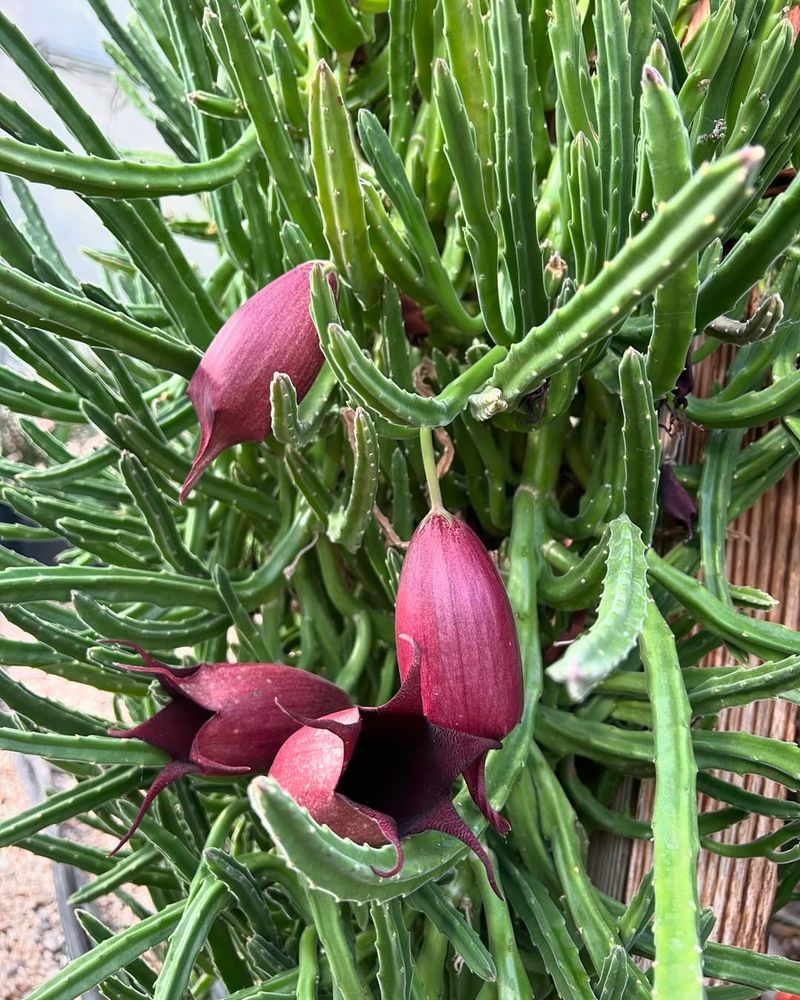
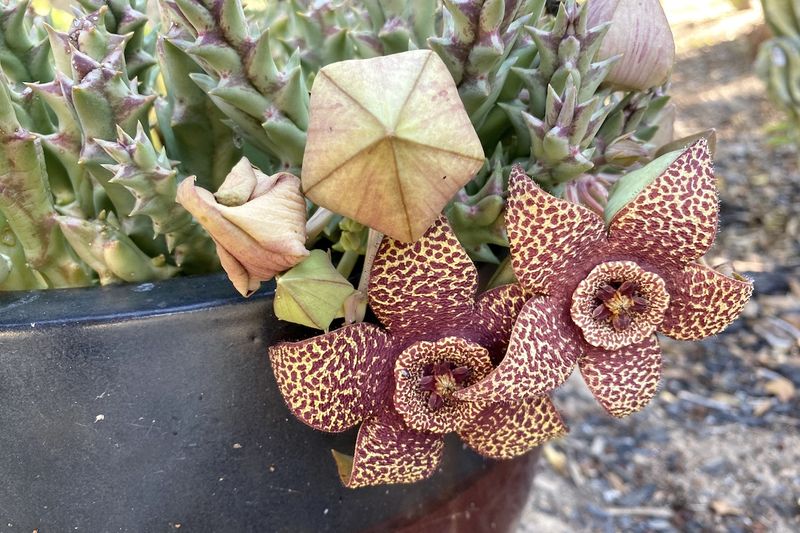
Patience and stability make the final difference between a Stapelia that blooms and one that doesn’t. Once your plant starts forming buds, which look like small bumps emerging from the stem sides, resist any urge to move, rotate, or fuss with it.
Stapelia is surprisingly sensitive to changes in orientation and environment during bud development, and moving the pot can cause those promising buds to drop before they open.
Bud formation typically happens in spring or early summer when temperatures warm up and day length increases in Ohio. You might notice several buds developing at once, or just one or two depending on your plant’s size and health.
This exciting stage means all your care is paying off, but it’s also when growers accidentally sabotage their success by moving the plant to show someone or rotating it for better light distribution.
Keep the pot in exactly the same spot and orientation once you see buds forming. Even turning the plant 180 degrees can confuse its response to light direction and cause bud drop.
If you’ve been rotating your Stapelia regularly for even growth, stop completely once buds appear and let the plant finish what it started without any positional changes.
Buds take several weeks to develop and open into those remarkable star-shaped flowers. Maintain your regular care routine with proper watering, light, and temperature, but otherwise leave the plant alone.
Once flowers open, they typically last several days to a week. The smell might be unpleasant since Stapelia flowers mimic carrion to attract flies as pollinators, but the visual display is absolutely worth the wait and effort you’ve invested in your Ohio-grown succulent.