Top 7 Orange Flowering Shrubs In California For Bright Garden Color
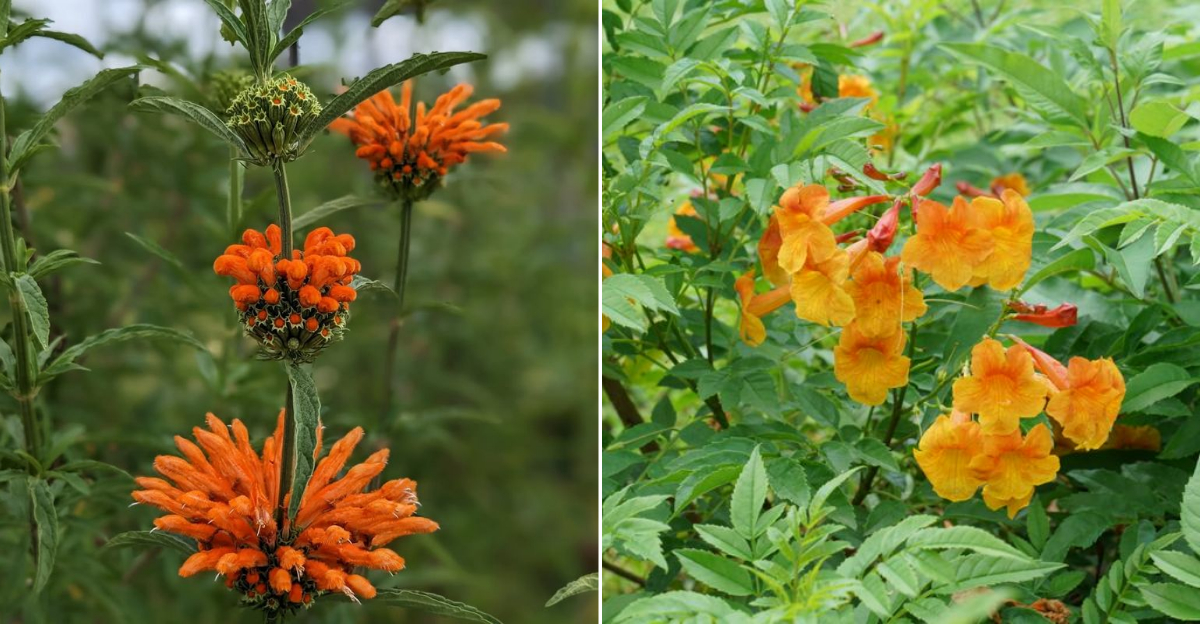
Orange is one of those colors that instantly changes how a California yard feels. It adds warmth, energy, and that sun-soaked look that fits perfectly with the state’s long dry summers and mild winters.
The trick is choosing shrubs that can actually handle California’s conditions, from coastal fog to inland heat and drought.
Many gardeners reach for flashy options that fade out or struggle after a season, but there are better choices that stay strong and keep blooming.
Native and climate-adapted shrubs tend to hold up best, especially once established in well-drained soil. With the right picks, you can build a landscape that feels vibrant without constant watering or fuss.
These orange flowering shrubs are known for bringing bold color while still fitting naturally into California’s climate and rhythm.
1. California Fuchsia With Its Fiery Late Season Blooms
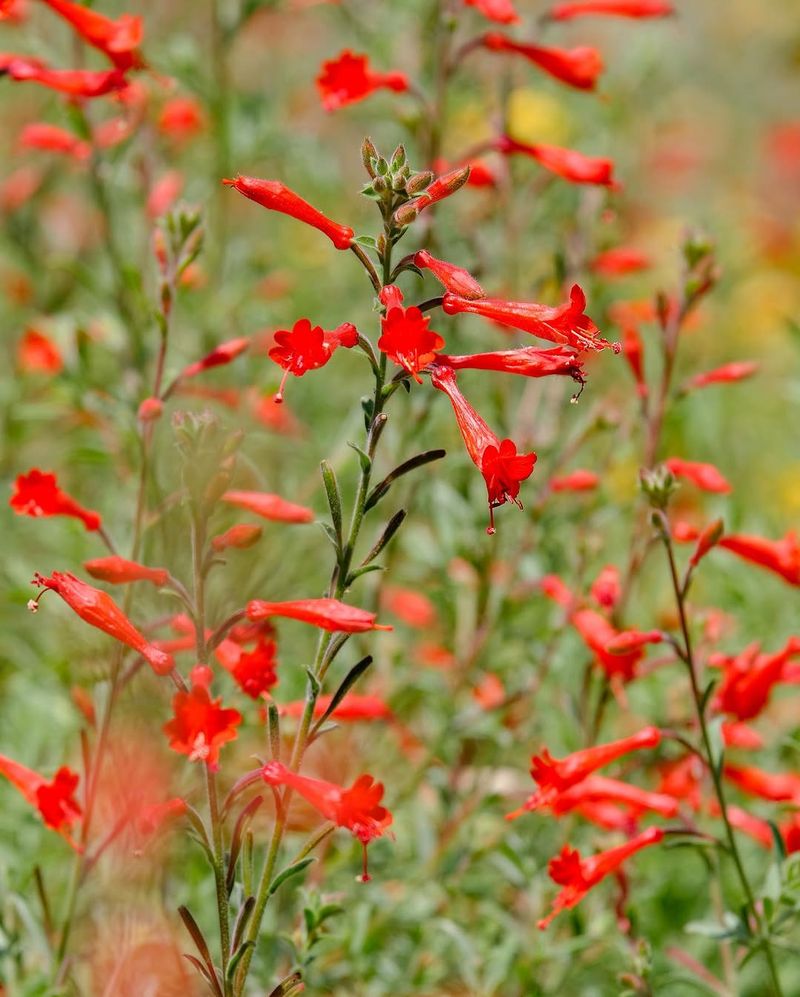
Few plants stop a hummingbird in its tracks quite like California Fuchsia. Known scientifically as Epilobium canum, this tough shrub produces narrow, trumpet-shaped flowers in vivid shades of orange and red from late summer through fall.
Its bold color holds up in intense sunlight, making it one of the most noticeable bloomers late in the season, even in exposed garden spaces.
That timing matters. It flowers when many other plants are fading, providing an important nectar source for pollinators across California.
Its ability to handle dry, sunbaked conditions makes it a strong choice for low-water and native-focused landscapes, especially when other nectar sources become limited late in the growing season.
Growing about one to three feet tall and spreading up to four feet wide, California Fuchsia works well on slopes, along borders, and in dry garden beds. It tolerates poor, rocky soil and needs very little water once established.
Its spreading habit also helps stabilize soil, making it useful for erosion control in dry areas.
This makes it a natural fit for water-conscious gardeners, particularly in Southern California where drought is a regular concern. It blends easily into xeriscape and native plant designs focused on long-term sustainability and reduced irrigation needs.
Cutting it back in late winter encourages fresh growth and stronger flowering the following season. Plant it in full sun for best results, though it can handle light shade.
California Fuchsia spreads by underground runners, so give it space to fill in naturally. Pair it with ornamental grasses or purple sage for a strong native combination that looks right at home.
2. Lion’s Tail Towering With Bold Orange Spikes
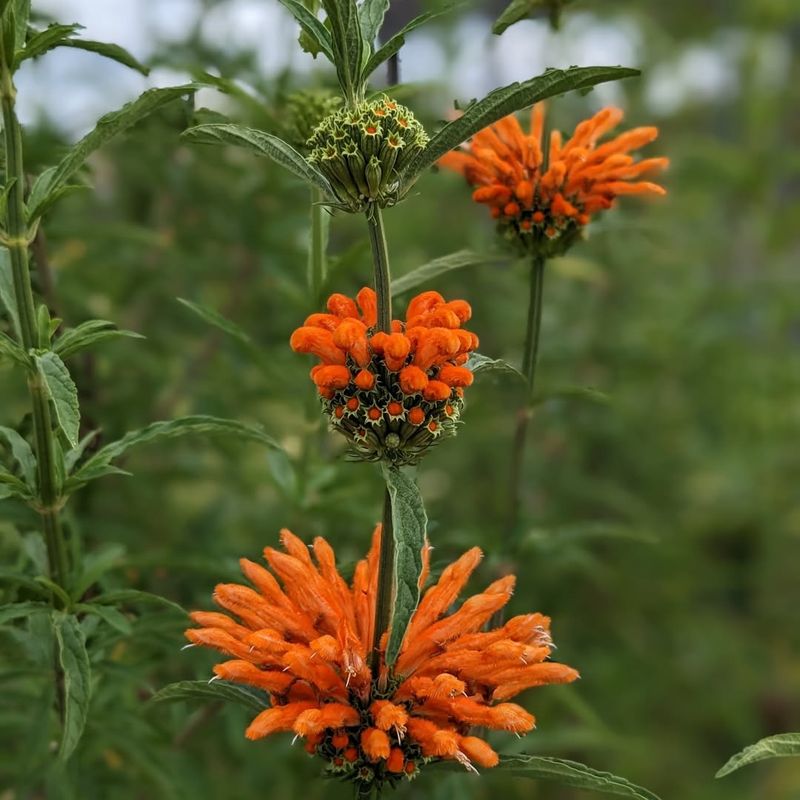
Tall stems lined with bold orange flower clusters give this shrub a striking, almost architectural look in warm-climate gardens. Lion’s Tail is a fast-growing, sun-loving plant that performs best in warm, frost-free parts of California with dry summer conditions and well-drained soil.
Its dramatic flower structure adds a unique visual element that stands out in both modern and traditional landscapes.
It performs best in full sun, where it develops sturdy growth and produces its signature tiered blooms from late summer into fall. Its upright form adds height and structure, making it easy to pair with lower-growing drought-tolerant plants.
This makes it especially useful for adding vertical interest without overwhelming smaller planting spaces.
This plant is considered drought tolerant once established, though it benefits from occasional deep watering during extended dry periods, particularly in hotter inland areas. Overwatering or heavy soils can reduce vigor, so good drainage remains important.
Keeping soil on the drier side helps maintain strong stems and more consistent flowering throughout the season.
In ideal conditions, it can reach 4 to 6 feet tall and wide, creating a loose, upright shrub that works well as a focal point or in the back of a mixed border. Its size makes it especially useful for filling larger gaps in sunny planting areas.
The bright orange flowers are rich in nectar and highly attractive to hummingbirds, butterflies, and other pollinators, making it a valuable addition to wildlife-friendly gardens. Its long bloom period also helps fill a seasonal gap when many other plants have slowed down.
This extended bloom time keeps gardens lively even as summer transitions into early fall.
With the right placement, Lion’s Tail brings bold color, height, and strong pollinator activity to California landscapes. It is especially effective in sunny, open areas where its structure and color can fully stand out.
3. Flannel Bush With Massive Golden Flowers
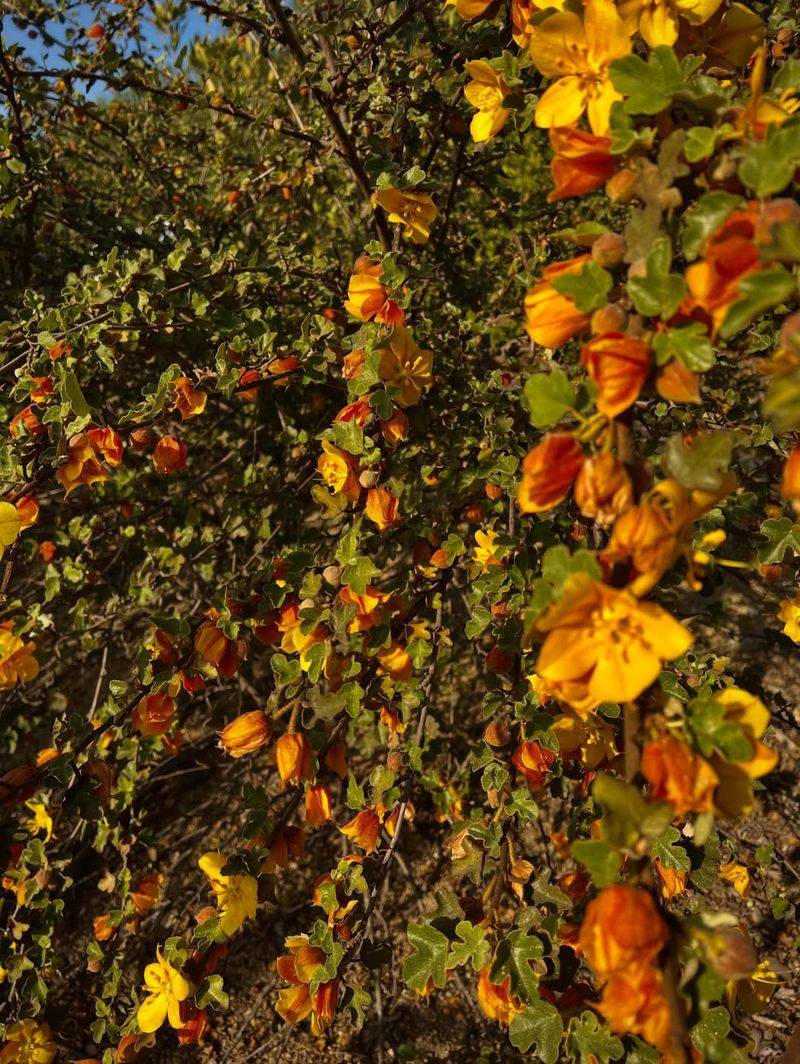
Imagine a shrub so covered in golden-orange blooms that you can barely see the leaves underneath. That is exactly what you get with Flannel Bush, or Fremontodendron californicum, during its peak bloom in spring.
The intensity of its bloom can transform an entire section of the garden almost overnight with bold seasonal color.
The flowers are large, waxy, and saucer-shaped, glowing in shades of deep yellow to rich orange that practically light up a garden. Native to the foothills and mountain slopes of California, this shrub is built for the state’s warm, dry summers.
Its natural habitat gives it an edge in tough conditions where many other shrubs struggle to perform consistently.
Flannel Bush can grow quite large, reaching anywhere from six to twenty feet tall depending on the variety, so it works well as a dramatic backdrop or a standalone specimen plant. It thrives in fast-draining soil and full sun, and once established, it needs almost no supplemental watering.
Choosing the right location early on helps prevent the need for frequent pruning or reshaping later.
In fact, overwatering is one of the biggest mistakes people make with this plant. Give it dry conditions and lean soil, and it will reward you with spectacular color every spring.
Keeping irrigation minimal encourages stronger growth and reduces the risk of root-related issues over time.
Compact cultivars like ‘Ken Taylor’ stay smaller and are easier to manage in residential spaces. Plant it near a wall or fence where it can soak up reflected heat and show off those jaw-dropping blooms to their fullest potential.
Warm microclimates like these often result in more consistent flowering and overall stronger plant performance.
4. Bush Poppy Brightening Dry Spaces With Ease
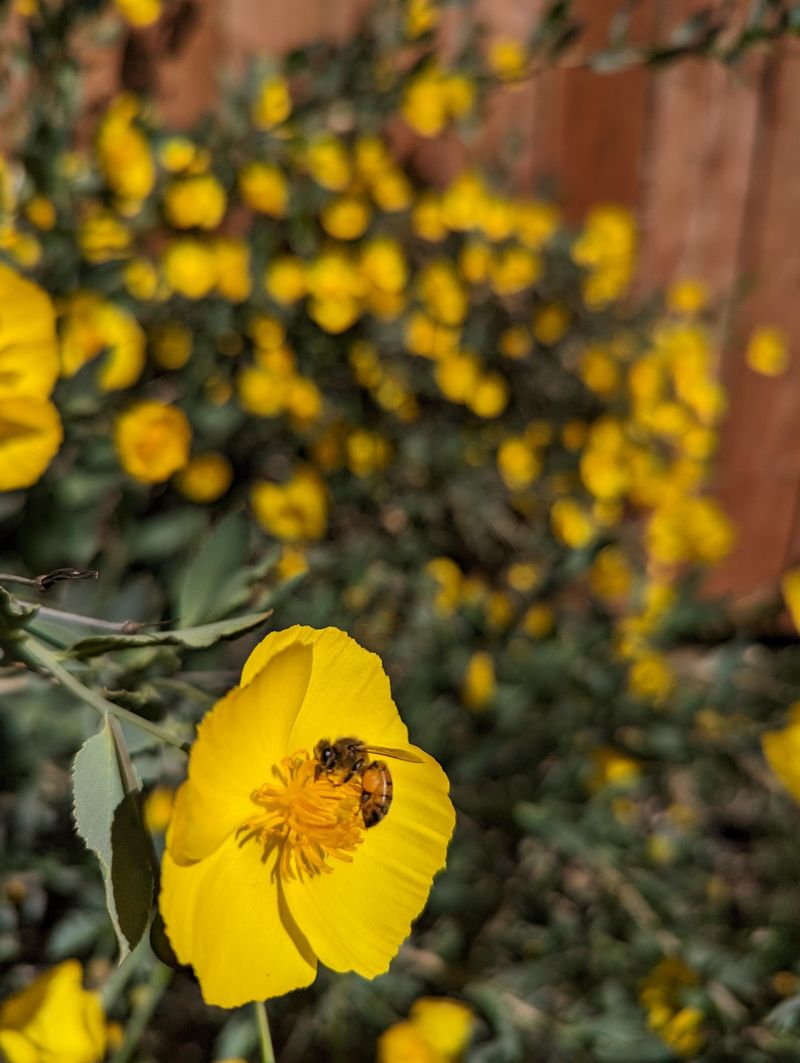
There is something almost cheerful about Bush Poppy, formally called Dendromecon rigida. Its bright, golden-orange flowers look like little suns scattered across a sea of blue-green leaves, and they bloom for a long stretch from late winter all the way through summer.
This extended bloom period helps bridge the gap between spring and peak summer color in many gardens.
Native to dry chaparral slopes and rocky hillsides throughout California, this shrub has adapted over centuries to handle heat, drought, and poor soil without complaint. These natural adaptations make it especially reliable in low-maintenance and water-wise planting designs.
Bush Poppy grows between four and eight feet tall, forming a rounded, open shape that works well in naturalistic garden designs. It loves full sun and fast-draining soil, and once it gets established, you can essentially leave it alone.
Its relaxed growth habit fits beautifully into informal landscapes and native plant groupings.
Supplemental watering during summer can actually cause problems, so resisting the urge to water frequently is key to keeping it healthy and thriving in California gardens. It is also notably deer-resistant, which is a huge bonus for gardeners in rural or semi-rural areas of the state.
This makes it especially useful in regions where browsing pressure limits plant choices.
It pairs beautifully with other California natives like toyon and manzanita for a cohesive, low-water landscape. Light pruning after the main bloom period helps maintain a tidy shape and can encourage a fresh flush of flowers.
Grouping it with similar plants helps create a more unified and resilient planting scheme overall.
For gardeners seeking an authentic California native experience, Bush Poppy is an outstanding and underappreciated option. It offers strong performance with very little input, which is exactly what many gardeners are looking for.
5. Heartleaf Keckiella With Soft Tubular Blooms
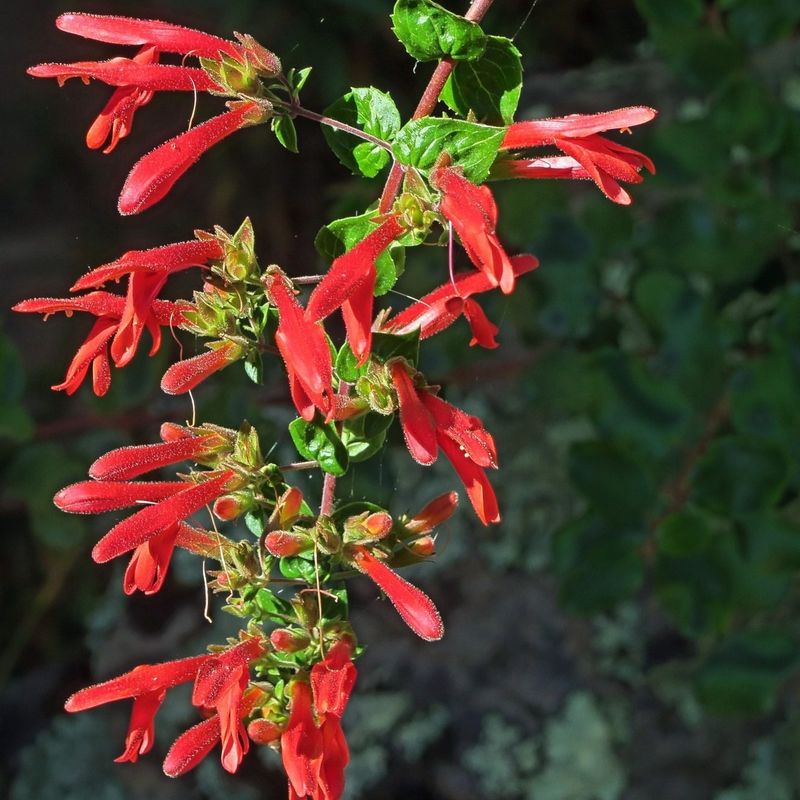
Not every gardener has heard of Heartleaf Keckiella, and that is honestly a shame because this California native deserves far more attention. Keckiella cordifolia is a scrambling, semi-woody shrub that produces clusters of tubular orange to red flowers that hummingbirds simply cannot resist.
Its more relaxed growth habit gives it a natural, slightly wild look that works beautifully in informal settings.
It grows naturally in the chaparral and coastal sage scrub communities of Southern and Central California, clinging to rocky slopes and canyon walls with surprising tenacity. This rugged background makes it particularly well-suited for challenging planting areas where other shrubs may fail.
In the garden, Heartleaf Keckiella works well as a sprawling ground cover, a slope stabilizer, or a casual climber when given something to lean against. It grows anywhere from three to eight feet long depending on conditions, and its heart-shaped leaves give it a lush, full appearance even when it is not in bloom.
This versatility allows it to fill multiple roles depending on how it is planted and supported.
The main flowering season runs from spring through early summer, though warm California winters can sometimes coax out a few early blooms. Full sun to partial shade suits it well, and like most California natives, it prefers dry summers with little to no irrigation once established.
Allowing it to follow natural seasonal patterns helps maintain long-term plant health and consistent performance.
It combines nicely with other drought-tolerant natives and adds a wild, natural texture to the garden. For anyone wanting to support local wildlife while enjoying vivid orange color, this plant is a wonderful and rewarding find.
Its informal shape helps soften hard edges and creates a more relaxed, natural planting style.
6. Orange Esperanza On A Nonstop Summer Flowering Streak
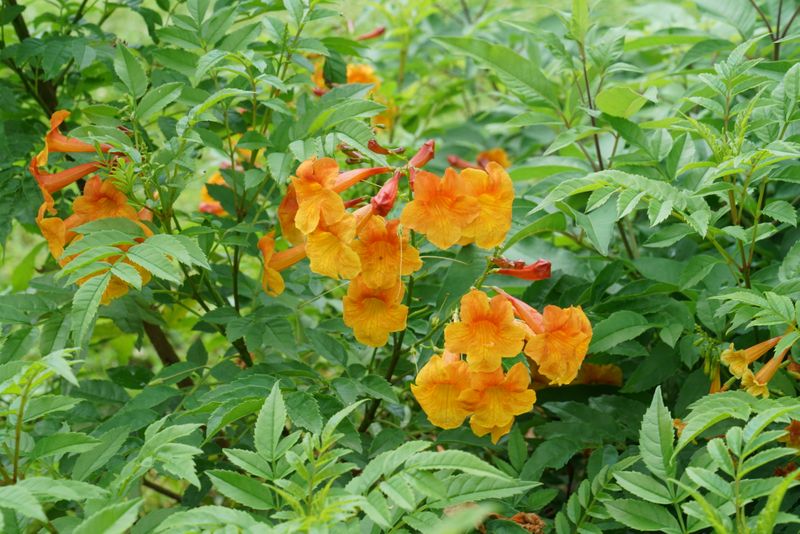
Clusters of bright orange, trumpet-shaped flowers bring nonstop color and a tropical feel to warm-climate landscapes. Orange Esperanza is a sun-loving shrub that performs especially well in hot, dry regions of California, where long summers and strong sunlight encourage steady blooming from late spring through fall.
Its vibrant color stands out strongly against neutral backdrops like gravel, stone, or stucco walls.
It prefers full sun and well-drained soil, and it can struggle in areas with poor drainage or consistently cool, damp conditions. In protected, warmer spots, it often flowers more heavily and holds its foliage longer into the season.
Choosing a warm microclimate can significantly improve both flowering and overall plant vigor throughout the growing season.
In frost-free areas, it may remain evergreen and continue producing blooms well into late fall. This extended bloom window makes it especially valuable in regions with long, warm growing seasons.
Once established, it is considered drought tolerant, though occasional deep watering helps maintain more consistent flowering during extended heat. Growth is fast under the right conditions, with plants often reaching 4 to 6 feet tall and wide, sometimes larger in frost-free areas.
Faster growth also means it can quickly fill empty spaces in new or recently planted landscapes.
The vivid orange blooms are rich in nectar and highly attractive to hummingbirds, bees, and butterflies, making it a strong choice for pollinator-friendly gardens. Flowering tends to be heaviest during the warmest months, when many other shrubs slow down.
This helps keep pollinator activity high even during the hottest part of the season.
Foliage is made up of bright green, compound leaves that give the plant a soft, airy texture. Pruning in late winter or early spring helps shape the plant and encourages fuller growth.
Regular shaping also prevents it from becoming too open or uneven as it matures.
With the right placement, Orange Esperanza delivers long-lasting color and reliable performance in sunny California landscapes.
7. Sticky Monkeyflower With Vivid Blooms In Tough Spots
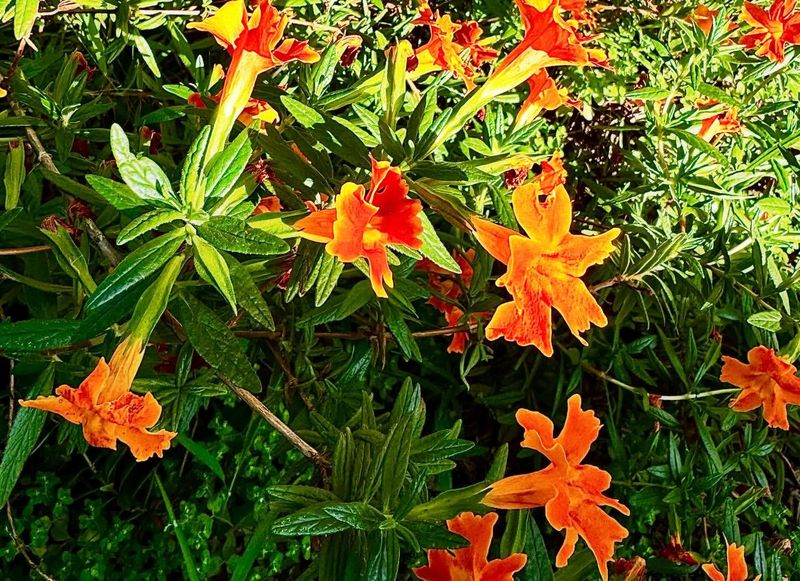
Bright orange blooms that seem to glow in the sun are one of the easiest ways to spot this California native in the landscape. Sticky Monkeyflower is a well-adapted shrub found naturally along the California coast and into nearby foothills, where it handles dry summers and mild, wetter winters with ease.
Its natural resilience makes it a dependable choice for gardeners looking to reduce maintenance and water use.
In the right setting, it can provide consistent color with very little ongoing care or maintenance. This makes it a strong option for both new landscapes and established gardens needing dependable performers.
Once established, it is known for strong drought tolerance, making it a dependable option for water-wise gardens. Regular watering is helpful during the first growing season, but too much moisture later on, especially in heavier soils, can lead to decline.
Allowing the soil to dry out between waterings helps maintain healthy root systems and prevents stress.
Good drainage matters far more than frequent watering. Sandy or rocky soils tend to produce the best long-term results for this species.
Plants typically reach about 3 to 5 feet tall and wide, forming a loose, slightly woody shape that fits well into naturalistic plantings. The narrow green leaves have a slightly sticky texture, giving the plant its common name.
Its relaxed growth habit blends easily with other natives and softens the overall look of a planting area.
Flowering begins in spring and can continue through summer, sometimes lasting into fall in coastal areas. This extended bloom period adds valuable seasonal interest across multiple parts of the year.
The tubular orange flowers attract hummingbirds and other pollinators, adding both movement and ecological value to the garden. Light pruning after flowering helps maintain a fuller shape, but heavy cutting into older wood is best avoided for consistent performance.
Gentle maintenance is usually all it needs to stay healthy and attractive year after year.