5 Toxic Succulents For Cats And 4 Safe Alternatives In Arizona
Living in Arizona makes succulents feel like the easiest plant choice, especially when heat and dry air are part of daily life. But if you share your home with a curious cat, not every succulent is as harmless as it looks.
Some popular varieties can cause irritation, stomach issues, or worse if chewed.
It only takes one bite for a problem to start, and many toxic succulents are sold everywhere across Arizona garden centers. A plant that thrives in desert conditions is not automatically safe for pets.
Choosing the wrong one can turn a simple décor decision into a stressful situation.
The good news is you do not have to give up succulents entirely. There are beautiful, cat safe options that grow well in Arizona homes and patios.
With the right information, you can keep your space stylish while protecting the cat that depends on you.
1. Aloe Vera May Heal Skin But It Can Upset Your Cat’s Stomach
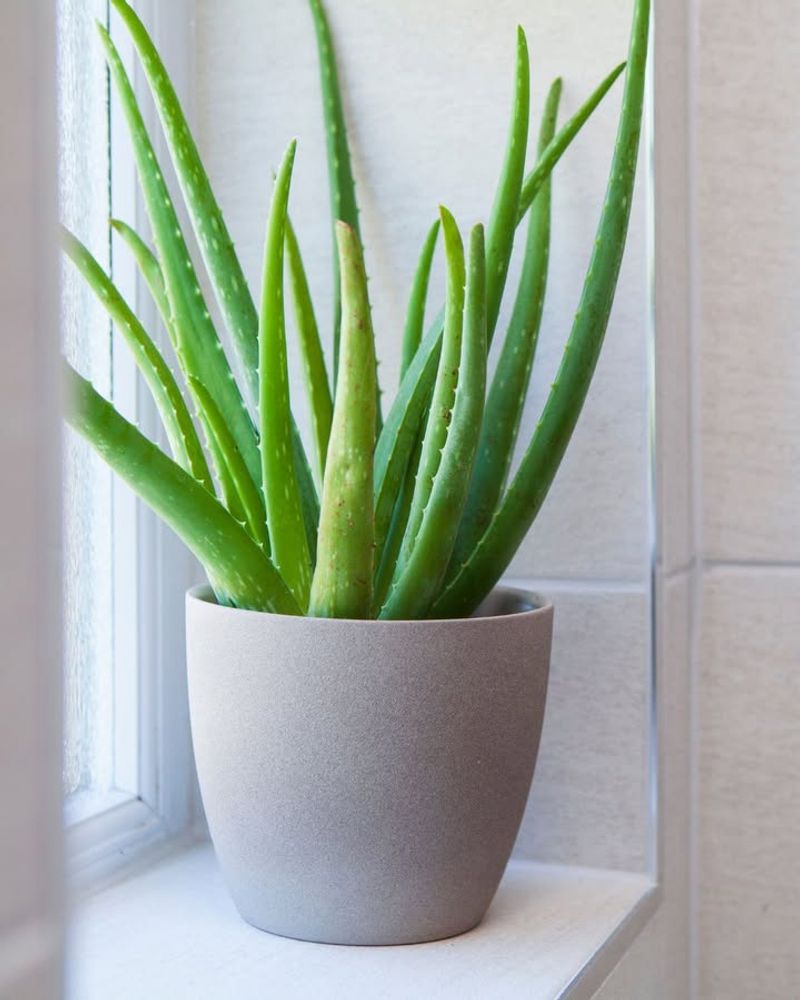
People across Arizona keep aloe vera on windowsills for treating sunburns and skin irritations. The clear gel inside those thick, spiky leaves works wonders on human skin.
Cats, however, should never chew on this plant because it contains saponins and anthraquinones that irritate their digestive system.
When cats bite into aloe leaves, they might start drooling excessively or seem uncomfortable. Their stomach can get upset, leading to vomiting or loose stools.
The latex layer between the outer leaf and inner gel is especially problematic for felines.
Arizona’s dry climate makes aloe vera incredibly easy to grow indoors, which is why so many homes have one. If you notice your cat showing interest in your aloe plant, move it to a room your pet cannot access.
High shelves might not work since cats are excellent climbers.
Consider replacing your aloe with a pet-safe alternative if your cat is particularly curious. Many Phoenix and Tucson veterinarians see cases each year involving cats and aloe vera.
Keeping this healing plant away from your feline companion prevents unnecessary trips to the animal clinic and keeps your pet feeling good.
You can also place a physical barrier around the pot, such as a decorative plant cover or enclosed stand, if moving it is not practical.
A few simple precautions can protect both your cat’s health and the plant’s place in your Arizona home.
2. Jade Plant Looks Harmless But It’s Toxic If Chewed
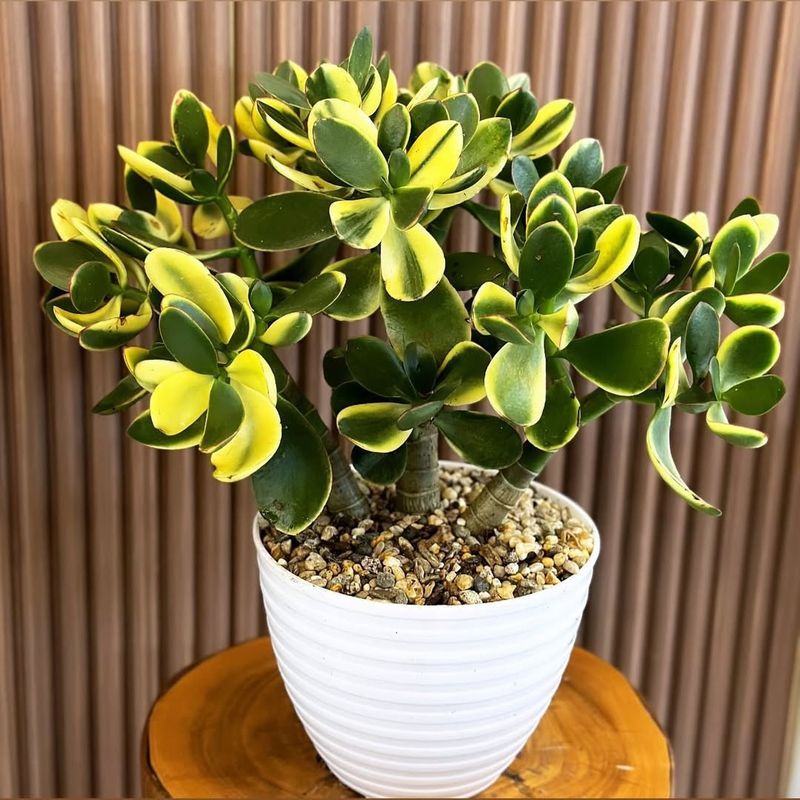
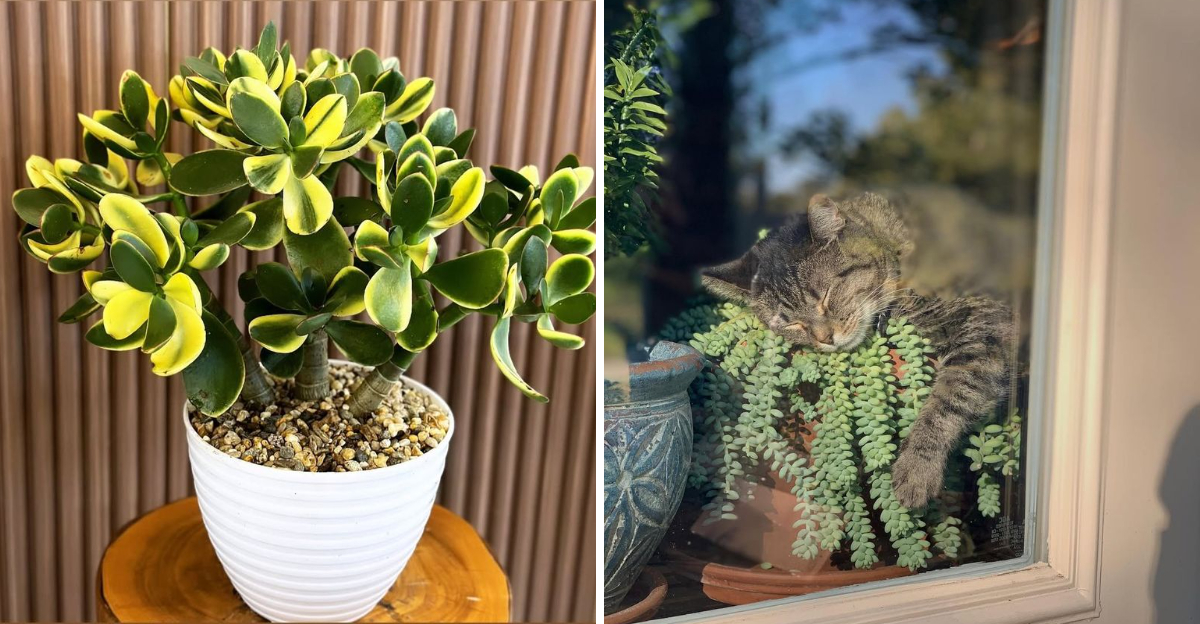
Jade plants have been popular houseplants for decades, with their glossy oval leaves and tree-like appearance. They grow slowly and need minimal care, making them perfect for Arizona homes.
Unfortunately, these pretty succulents contain unknown toxic compounds that affect cats when ingested.
Symptoms usually appear within a few hours of a cat chewing jade leaves. Your pet might seem wobbly or uncoordinated, almost like they are dizzy.
Vomiting is common, and some cats experience a slower heart rate.
The thick, water-storing leaves are tempting for cats who like to bat at dangling things. Even a small amount can cause problems, so it is not worth the risk.
Many Scottsdale and Mesa residents love jade plants for their feng shui appeal and easy maintenance.
If you want to keep your jade plant, place it in a room your cat never enters or consider giving it to a friend without pets. Watch your cat closely if you suspect they have nibbled on jade leaves.
Contact your veterinarian right away if you notice unusual behavior or stomach issues. Plenty of other succulents offer similar visual appeal without putting your furry friend at risk in your Arizona home.
It is easy to underestimate the risk because jade plants look sturdy and harmless sitting on a sunny windowsill. Curious cats often investigate new textures with their mouths, especially when leaves are thick and easy to snap.
Choosing pet-safe greenery helps you enjoy indoor plants without constantly worrying about what your cat might taste next.
3. Kalanchoe Produces Bright Blooms And Dangerous Compounds For Cats
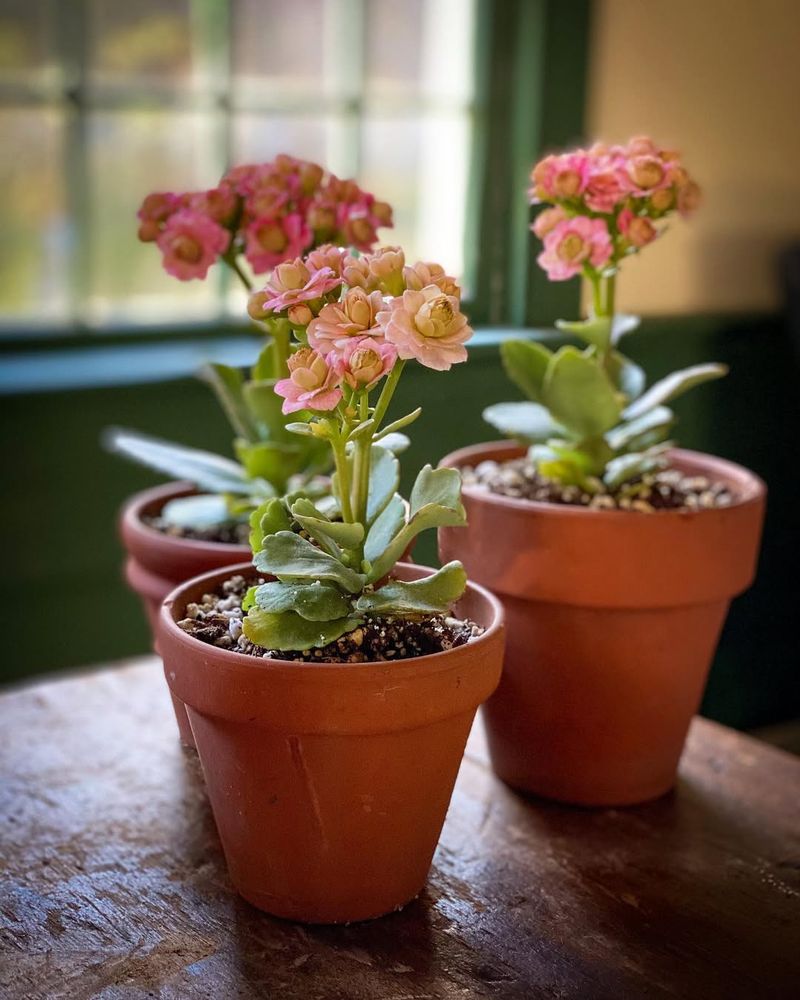
Bright flowers make kalanchoe a favorite among Arizona gardeners who want color year-round. These succulents bloom in shades of red, orange, yellow, and pink, adding cheerful pops to any space.
Behind that beauty lies a serious danger for cats, as kalanchoe contains cardiac glycosides that affect the heart.
Even small amounts of kalanchoe can cause serious problems for felines. Early signs include excessive drooling, vomiting, and diarrhea.
In more severe cases, cats can develop abnormal heart rhythms that require immediate veterinary care.
The flowers and leaves both contain these harmful compounds, so every part of the plant poses a threat. Many Tucson garden centers sell kalanchoe because they thrive in hot, dry conditions.
Cat owners should skip this plant entirely, no matter how attractive those blooms appear.
If your cat has eaten any part of a kalanchoe plant, contact your veterinarian or an emergency animal clinic right away. Time matters when dealing with this type of ingestion.
Arizona pet owners have many safer options for adding color to their homes. Choosing non-toxic plants means you can enjoy beautiful greenery without worrying every time your cat walks past your plant collection.
Keeping toxic bloomers out of reach is far easier than dealing with a heart-related emergency later. A quick plant label check before buying can save you stress and protect your cat from a preventable health scare.
4. Pencil Cactus Leaks A Sap That’s Risky For Curious Pets
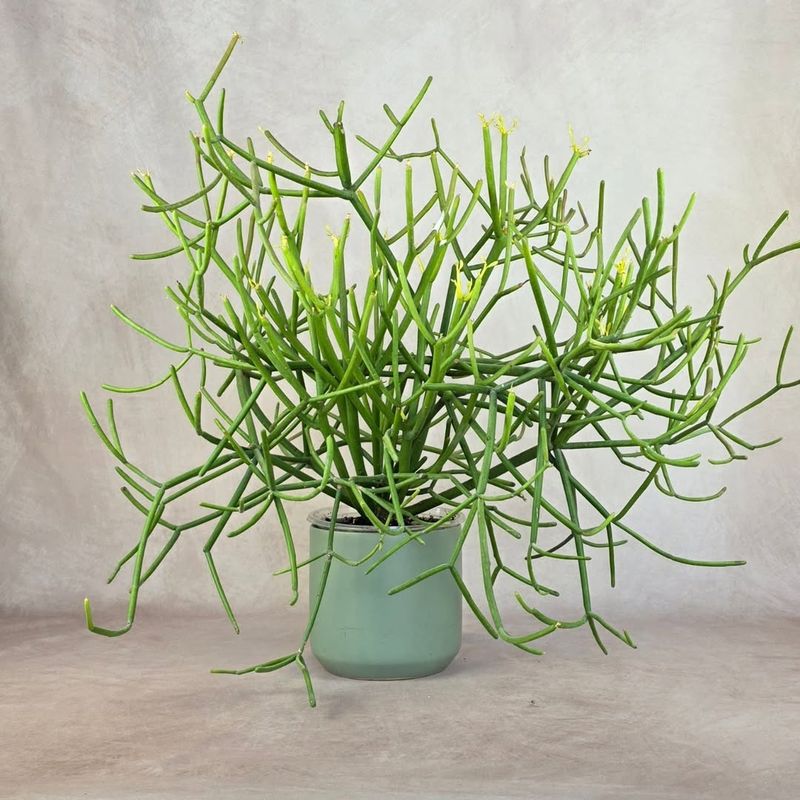
Pencil cactus stands out with its unique appearance, featuring thin green branches that look like pencils stuck together. This striking succulent grows well in Arizona’s climate and adds modern architectural interest to homes.
The milky white sap inside those branches is highly irritating and toxic to cats.
When a cat bites or breaks a pencil cactus branch, the sap can get on their mouth, paws, or fur. This causes immediate burning and irritation.
Cats might paw at their face, drool heavily, or try to rub the affected area on furniture.
The sap can also irritate a cat’s eyes if they touch their face after contact with the plant. Some cats experience vomiting or stomach discomfort if they swallow any sap.
Phoenix area plant shops often carry pencil cactus because of its trendy look and low water needs.
Handle this plant carefully yourself, as the sap irritates human skin too. If you have a pencil cactus and cats, keeping them completely separated is essential.
Consider rehoming the plant or placing it in an enclosed sunroom. Arizona has plenty of pet-safe succulents that offer interesting shapes without the toxic sap risk.
The sap can cling to surfaces, so even a small smear on the floor or pot may cause trouble later during grooming. Swapping it for a pet-safe plant with a similar sculptural shape helps maintain the look of your space without putting your cat in harm’s way.
5. Snake Plant Is Popular Indoors But Not Pet Friendly
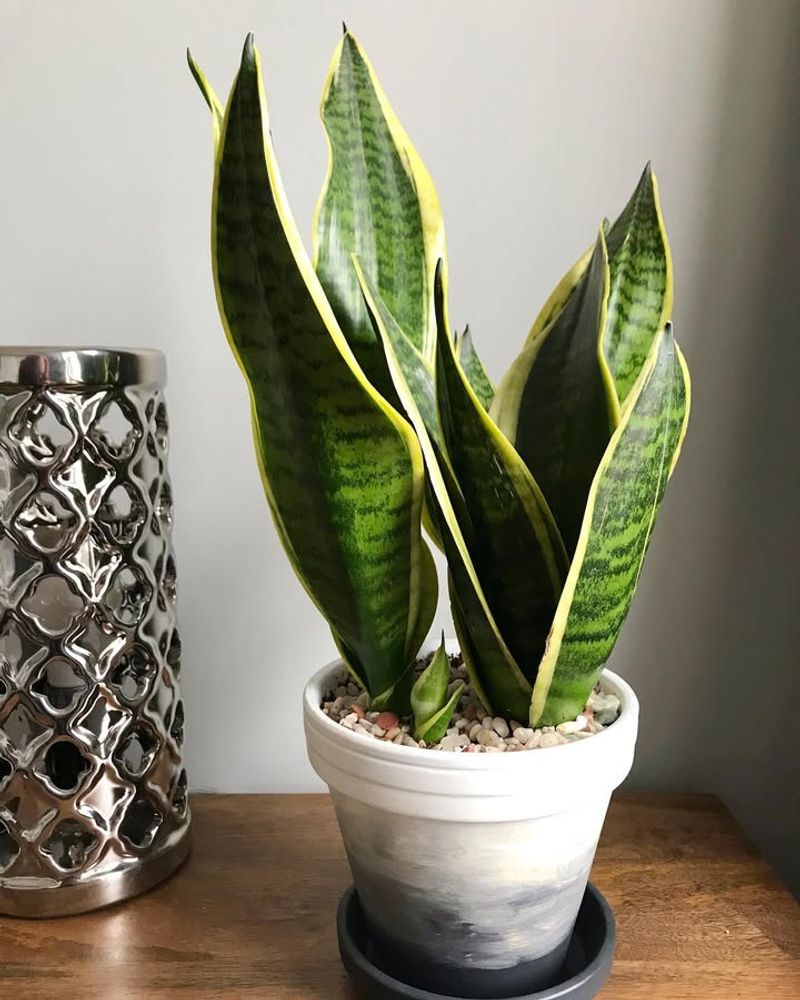
Tall, sword-shaped leaves make snake plants instantly recognizable in homes across Tempe and Chandler. These hardy succulents tolerate low light and irregular watering, earning their reputation as nearly indestructible.
The leaves contain saponins that cause gastrointestinal upset in cats who chew on them.
Cats attracted to the long, swaying leaves might take a bite out of curiosity. Within hours, you might notice your pet vomiting or having diarrhea.
Some cats drool more than usual or seem less interested in food.
Snake plants are sometimes called mother-in-law’s tongue, and they come in several varieties with different leaf patterns. All varieties pose the same risk to cats.
Their vertical growth makes them popular for tight spaces, but that does not make them safer for pets.
Arizona homes often feature snake plants in bedrooms and bathrooms where they help filter air. If you are committed to keeping your snake plant, place it somewhere your cat absolutely cannot reach.
Better yet, swap it for one of the safe alternatives listed later in this article. Your cat’s health is worth more than any plant, no matter how trendy or easy to care for it might be.
6. Haworthia Gives You The Aloe Look Without The Toxic Risk
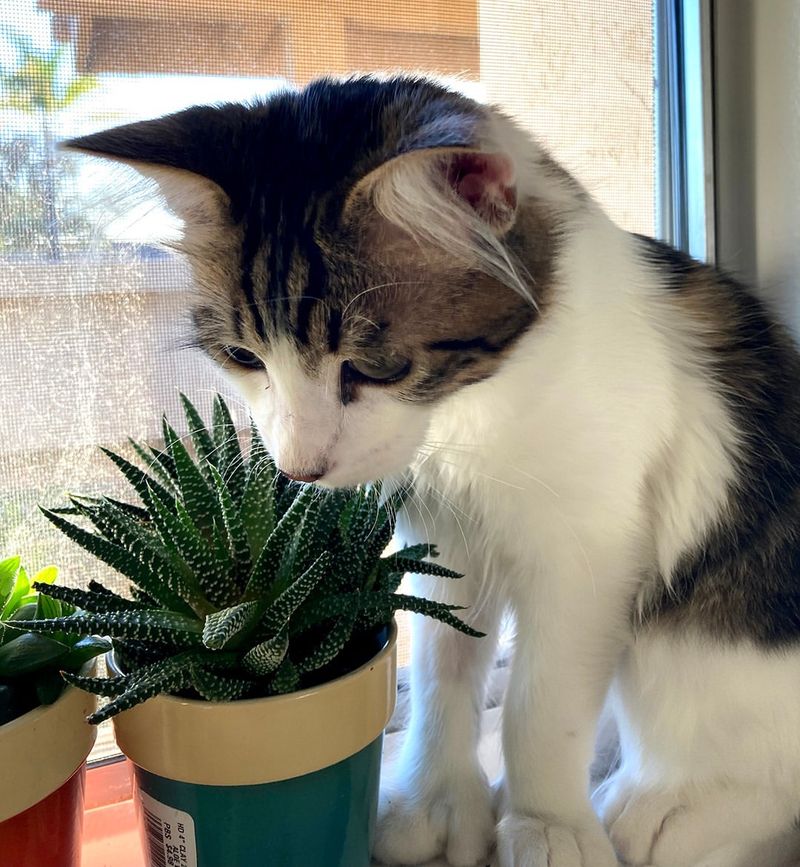
Small rosettes of thick, pointed leaves make haworthia look like a miniature aloe plant. This similarity is perfect for Arizona cat owners who want that aloe aesthetic without the toxicity concerns.
Haworthia is completely safe for cats, allowing you to display it anywhere in your home.
These compact succulents stay small, rarely growing larger than a few inches across. They thrive in bright indirect light and need watering only when the soil dries out completely.
Glendale and Gilbert residents love haworthia for windowsill gardens and small spaces.
Unlike aloe, you can relax if your cat knocks over a haworthia or takes a curious nibble. The plant will not harm your pet at all.
Many varieties exist, featuring different leaf patterns, colors, and textures to suit your decorating style.
Haworthia works beautifully in dish gardens or grouped with other small succulents. You can create an entire collection without worrying about your cat’s safety.
Arizona garden centers stock these plants year-round because they handle our climate so well. Starting with haworthia is a smart choice for new plant parents with cats.
You get the satisfaction of growing something green while keeping your feline companion completely safe from harm.
7. Echeveria Adds Desert Style And Stays Safer Around Cats
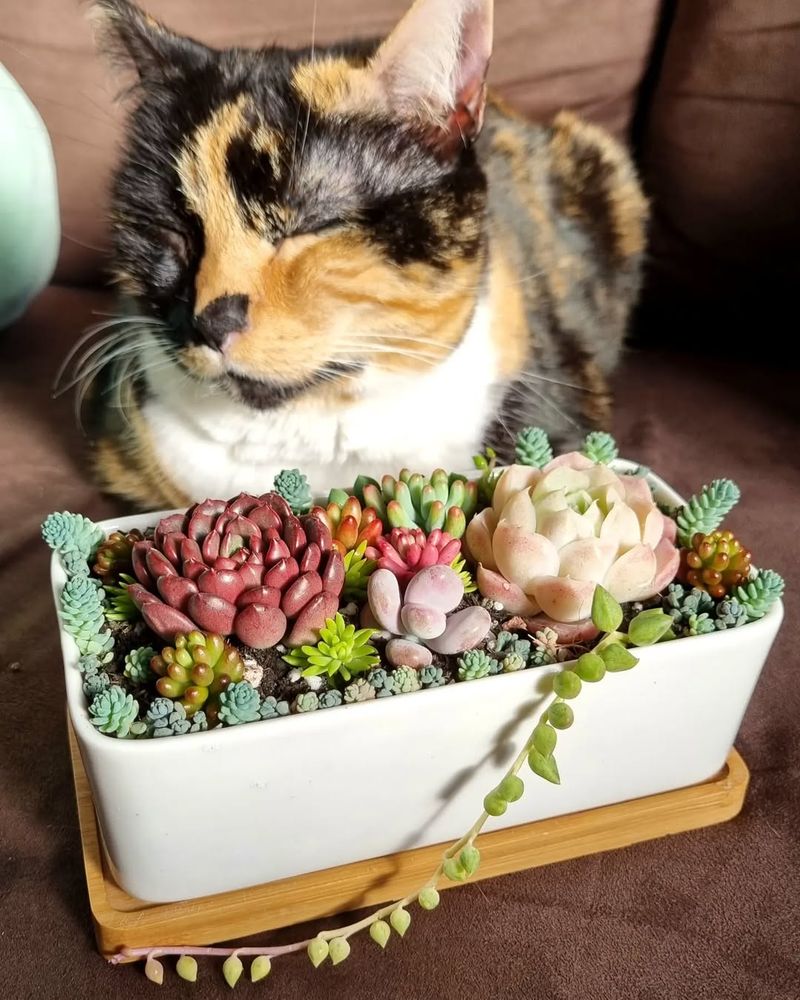
Rose-shaped rosettes make echeveria one of the most beautiful succulents for Arizona homes. These plants come in stunning colors ranging from pale green to deep purple, often with a powdery coating that adds to their charm.
Best of all, echeveria is considered non-toxic to cats.
While not meant to be eaten, echeveria will not cause serious harm if your cat takes a small taste. You might see minor stomach upset, but nothing like the reactions caused by toxic succulents.
This makes echeveria a much safer choice for homes in Surprise and Peoria where cats roam freely.
Echeveria produces tall flower stalks with bell-shaped blooms in spring and summer. The plants prefer bright light and well-draining soil, conditions easily provided in Arizona.
They look gorgeous in colorful pots on patios or grouped together in shallow dishes.
Many varieties exist, each with unique leaf shapes and colors to explore. You can build an entire succulent collection using only echeveria types.
These plants propagate easily from leaves, letting you grow new plants to share with friends. Cat owners appreciate having beautiful succulents they do not need to hide or worry about constantly.
Echeveria delivers desert style while keeping curious cats out of danger.
8. Burro’s Tail Trails Beautifully And Is Non-Toxic To Pets
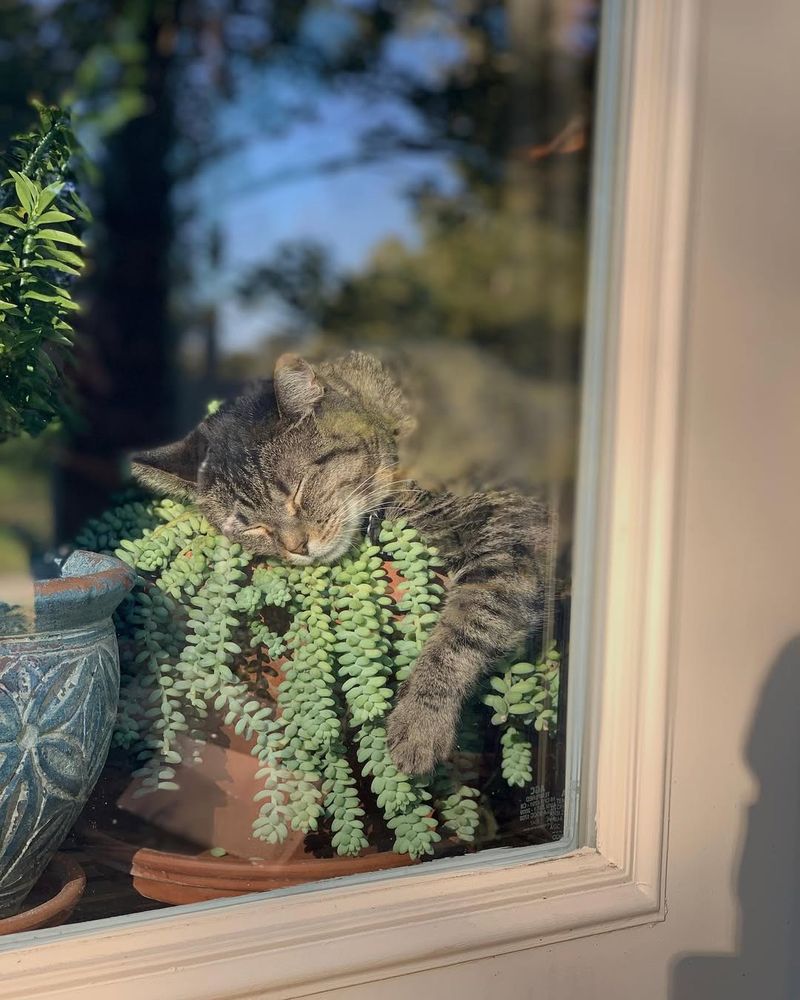
Cascading stems covered in plump, teardrop-shaped leaves give burro’s tail its distinctive look. This trailing succulent works perfectly in hanging baskets where its stems can dangle down dramatically.
Arizona cat owners can hang these plants without fear because burro’s tail is non-toxic to felines.
The leaves are somewhat fragile and fall off easily when touched, but they are not harmful to cats. If your pet bats at the trailing stems or knocks off a few leaves, no toxic reaction will occur.
This makes burro’s tail ideal for homes in Casa Grande and Yuma where playful cats explore every corner.
Burro’s tail prefers bright indirect light and infrequent watering, typical needs for succulents in our desert climate. The stems can grow several feet long over time, creating a living curtain effect.
Place them near windows or on covered patios where they get plenty of light.
These plants look especially attractive in macrame hangers or colorful ceramic pots. The blue-green color adds a cool tone to warm Arizona interiors.
Fallen leaves can be propagated into new plants, though they root slowly. Having a pet-safe trailing plant opens up decorating options you might have avoided with toxic varieties.
Your cat can safely investigate while you enjoy the unique beauty of burro’s tail.
9. Parlor Palm Brings A Lush Feel And Is Safe For Arizona Homes With Cats
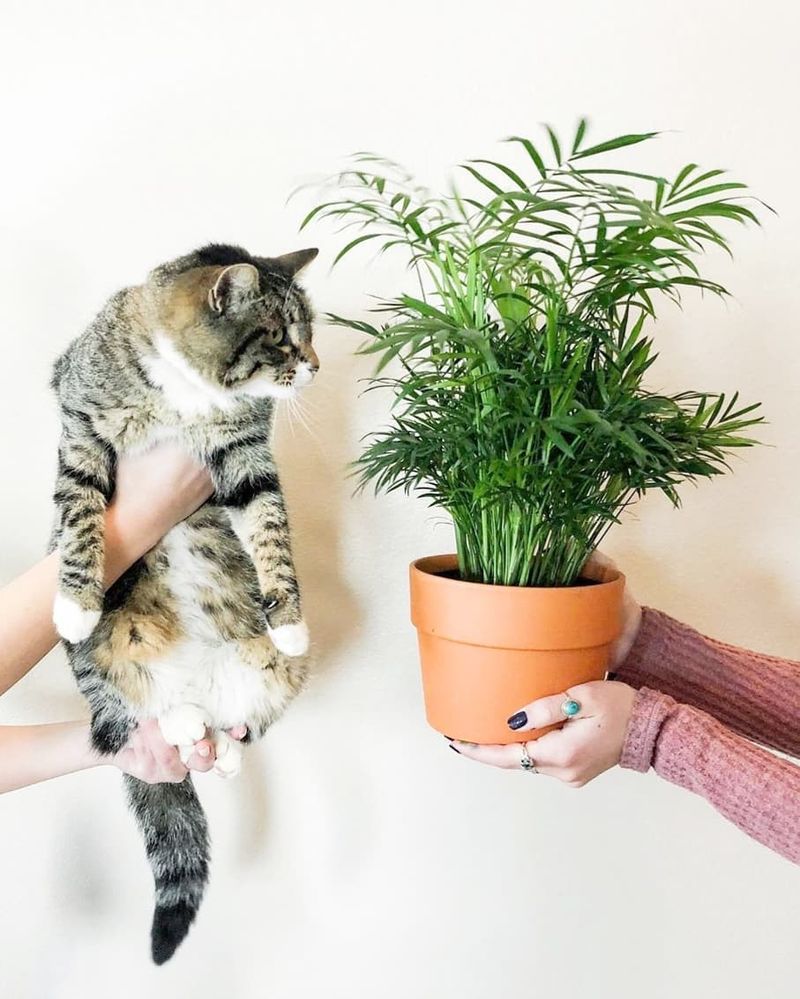
Delicate fronds and a compact size make parlor palm a favorite houseplant for adding tropical vibes to Arizona homes. While not a succulent, this palm deserves mention because it thrives indoors with minimal care and is completely safe for cats.
Fountain Hills and Flagstaff residents especially appreciate plants that handle varying indoor temperatures.
Parlor palms tolerate lower light conditions than most succulents, making them perfect for rooms away from bright windows. They prefer consistent moisture but forgive occasional missed waterings.
Cats can brush against the fronds or even chew on them without any toxic effects.
The feathery leaves add softness and movement to spaces filled with angular succulents. Parlor palms grow slowly and stay relatively small, usually reaching three to four feet tall indoors.
They work beautifully in corners or grouped with other pet-safe plants.
These palms help purify indoor air while providing a lush backdrop for your home. Unlike toxic succulents that require constant vigilance, parlor palms let you relax around your cats.
Arizona homes often feel dry and desert-like, but adding a parlor palm creates a more humid, comfortable atmosphere. You can enjoy greenery throughout your home without dividing spaces into cat-safe and cat-danger zones.
Parlor palms prove that beautiful, easy-care plants and curious cats can coexist peacefully.