7 Toxic Trees Georgia Homeowners Should Avoid Planting In Their Yards
Planting a tree is often seen as a long-term gift to a home, but in Georgia, some trees come with hidden strings attached.
A tree that looks harmless can turn into a real wolf in sheep’s clothing once it takes root.
Toxic leaves, bark, or seeds can pose risks to kids, pets, and even nearby plants, catching homeowners off guard.
Georgia’s warm climate helps many tree species grow fast, but fast growth is not always a blessing.
Certain toxic trees spread trouble just as quickly, dropping harmful debris or exposing people to irritants during yard work.
One careless choice can create years of worry and extra cleanup.
Many homeowners rely on looks alone when choosing trees, focusing on shade or flowers while missing warning signs.
Garden centers and online tips do not always spell out the dangers, leaving people to learn the hard way.
A smart planting choice starts with knowing what to avoid.
Steering clear of toxic trees protects your family, keeps pets safe, and saves you from headaches down the road.
In the long run, the right tree brings comfort and beauty, not risk hiding in plain sight.
1. Chinaberry Tree
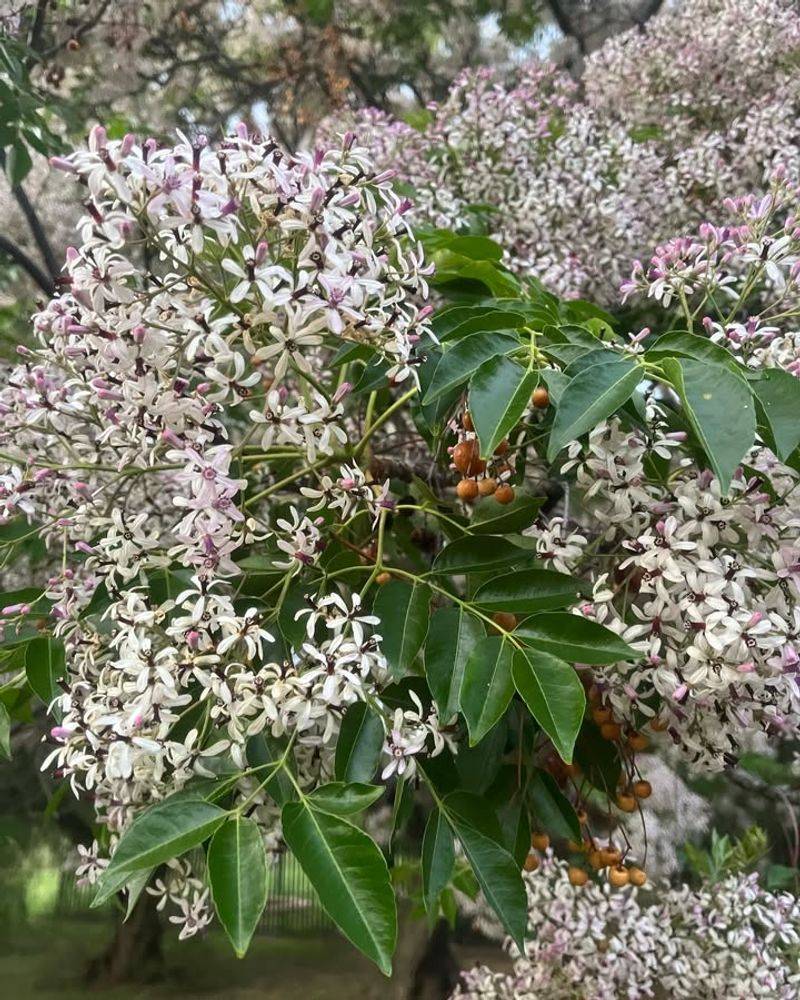
Chinaberry trees might catch your eye with their pretty purple flowers and shade-providing canopy, but Georgia homeowners should think twice before planting one.
Originally from Asia, this invasive species has spread throughout the Southeast, including neighborhoods across Georgia.
Every part of this tree contains dangerous toxins called tetranortriterpenes, which affect the nervous system and digestive tract.
The golden-yellow berries are especially problematic because they look tempting to children and pets during fall and winter months.
Even a small handful can cause serious stomach upset, vomiting, diarrhea, and weakness.
Birds sometimes eat the berries and spread seeds everywhere, which is why you’ll find these trees popping up uninvited in Georgia yards from Augusta to Columbus.
Beyond the safety concerns, chinaberries are messy trees that drop fruit, leaves, and branches constantly throughout the year.
They grow fast but have weak wood that breaks easily during Georgia’s summer thunderstorms and occasional ice storms.
The roots are aggressive and can damage sidewalks, driveways, and even home foundations.
Many Georgia counties actually consider chinaberry an invasive pest that outcompetes native trees and disrupts local ecosystems.
If you’re looking for a shade tree with spring flowers, consider native alternatives like dogwood or redbud instead.
These beautiful options provide similar visual appeal without the toxicity risks or invasive tendencies.
Your family, pets, and local environment will all benefit from choosing safer trees that belong in Georgia’s natural landscape.
2. Black Walnut
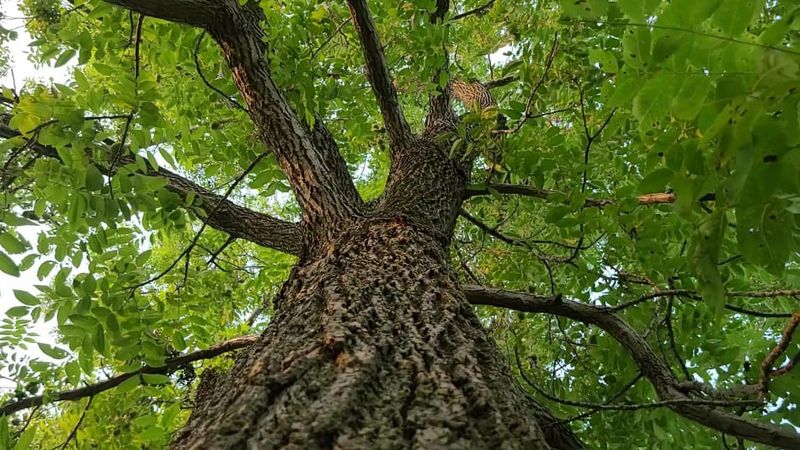
Black walnut trees produce delicious nuts that squirrels adore, but they’re terrible neighbors for most other plants in your Georgia yard.
The roots, leaves, and nut hulls release a chemical called juglone that acts like natural weed destroyer for many common garden plants.
Tomatoes, azaleas, rhododendrons, and blueberries, all popular in Georgia gardens, can’t survive near black walnuts.
Juglone poisoning causes plants to wilt suddenly, turn yellow, and eventually perish within days or weeks of exposure.
The chemical spreads through the soil up to 50 feet from the trunk, creating a zone where most flowers, vegetables, and shrubs simply won’t grow.
Georgia homeowners who love gardening will find themselves constantly frustrated trying to landscape around these trees.
The nuts themselves create another problem when they fall each autumn.
The thick green hulls stain everything they touch, driveways, patios, cars, and hands, with a dark brown color that’s incredibly difficult to remove.
Walking barefoot in the yard becomes unpleasant when hard nuts litter the ground from September through November.
Horses are particularly sensitive to black walnut shavings and contact, which matters for rural Georgia properties with livestock.
Even brief exposure can cause serious hoof problems called laminitis.
While black walnuts grow naturally in northern Georgia’s mountains, intentionally planting them in residential yards creates unnecessary challenges.
Native hickory or pecan trees offer similar shade and wildlife value without the allelopathic effects that make gardening so difficult around black walnuts.
3. Yew Trees
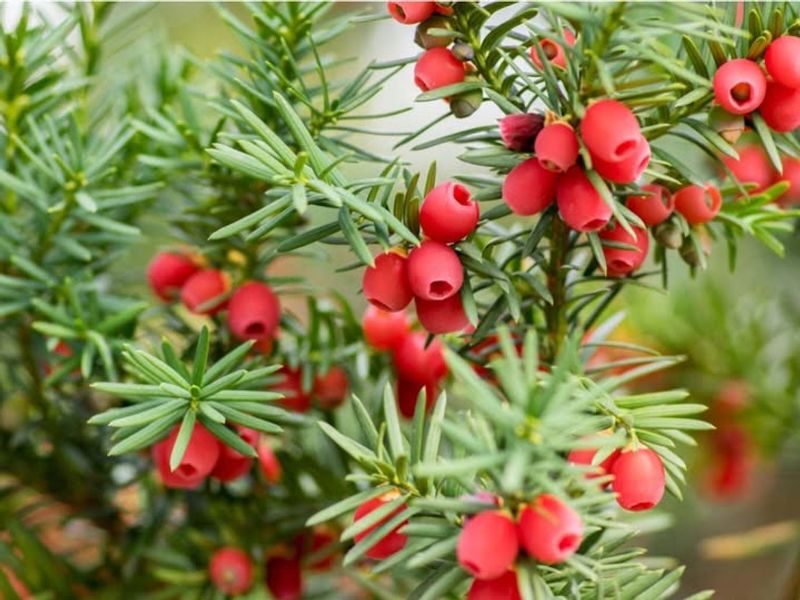
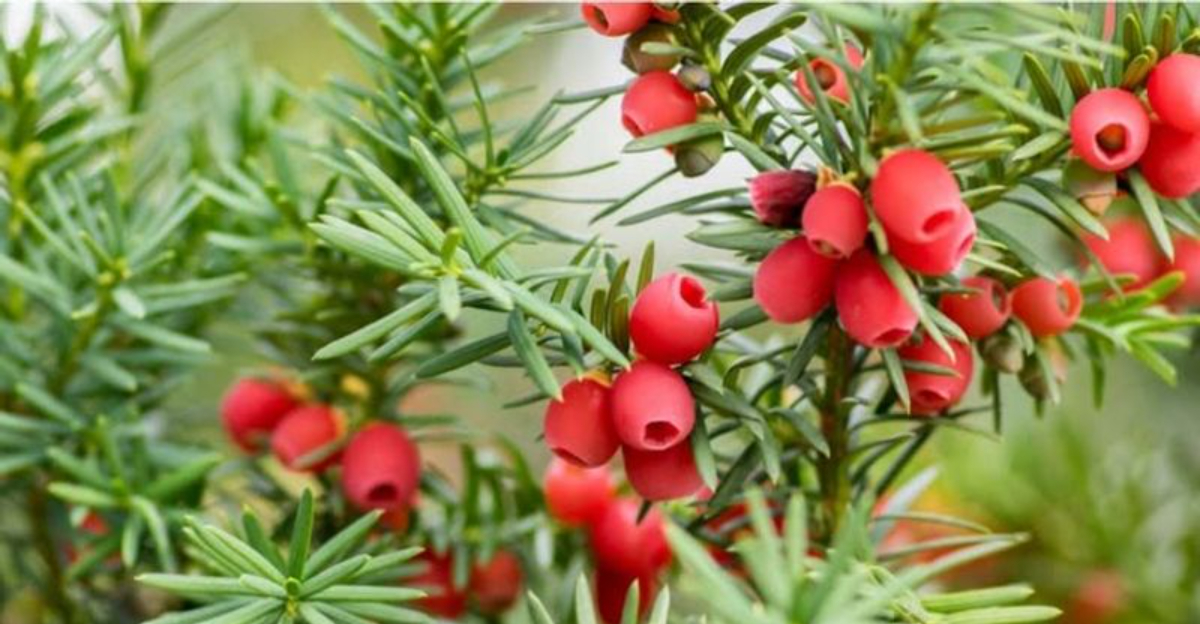
Yews look elegant with their dense evergreen foliage and bright red berries, making them popular foundation plantings and privacy screens throughout Georgia.
However, these attractive shrubs and small trees rank among the most dangerous plants you can have around homes with children or pets.
Nearly every part of the yew, needles, seeds, bark, and wood, contains taxine alkaloids that affect the heart.
What makes yews particularly scary is how quickly symptoms appear after ingestion.
Within just a few hours, someone who has eaten yew needles or seeds might experience dizziness, difficulty breathing, and irregular heartbeat.
The sweet red flesh surrounding the seed is the only non-toxic part, but the seed inside is extremely dangerous.
Georgia homeowners often plant yews because they tolerate shade and maintain their green color year-round, unlike many plants that struggle in our hot summers.
Landscapers frequently use them around commercial buildings and upscale neighborhoods across metro Atlanta and other Georgia cities.
The problem is that curious toddlers and pets don’t understand the danger.
Even animals that normally avoid poisonous plants sometimes eat yews when other food is scarce during winter months.
Deer occasionally browse on yews without apparent problems, but horses, cattle, dogs, and cats can suffer severe reactions from even small amounts.
If you’re determined to have evergreen screening in your Georgia yard, consider native alternatives like Southern magnolia, American holly, or Eastern red cedar instead.
These options provide similar benefits without putting your family and pets at risk from one of nature’s most potent plant toxins.
4. Oleander
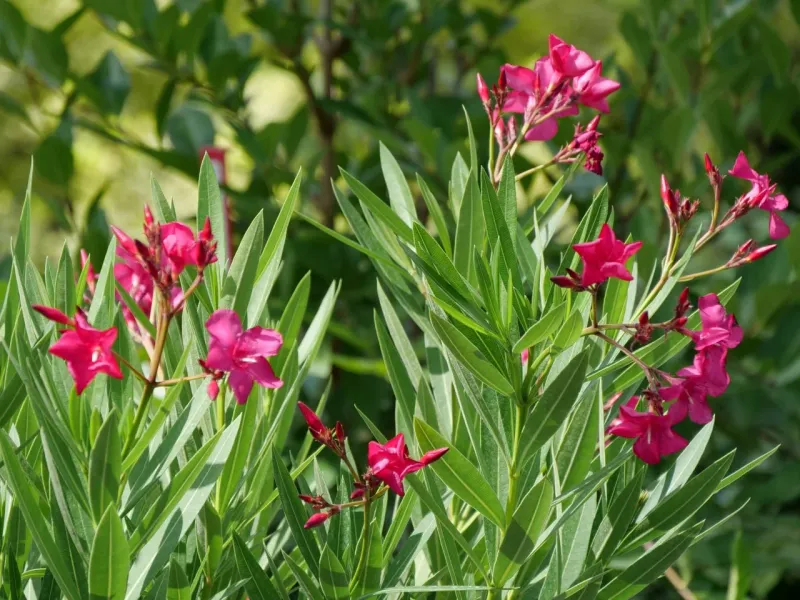
Drive through coastal Georgia or southern parts of the state, and you’ll see oleanders blooming beautifully along highways and in commercial landscapes.
Their showy pink, white, or red flowers and drought tolerance make them seem like perfect low-maintenance choices for Georgia’s hot summers.
But oleanders contain cardiac glycosides throughout every part of the plant, leaves, flowers, stems, roots, and even the nectar.
A single leaf contains enough toxin to cause serious problems for a child or pet.
Symptoms include nausea, abnormal heart rhythms, and severe weakness.
What’s particularly concerning is that the toxins remain dangerous even after the plant has been trimmed or has fallen to the ground as litter.
Some Georgia homeowners have gotten sick simply from burning oleander trimmings and breathing the smoke.
Others have experienced problems after using oleander branches as skewers for roasting marshmallows or hot dogs.
The plant is so toxic that even water in a vase holding oleander flowers becomes contaminated.
Despite these serious risks, oleanders remain popular in Georgia because they handle heat, drought, and poor soil better than many flowering shrubs.
They also resist deer browsing, which is actually fortunate since deer consumption would be harmful to the animals.
Coastal areas from Brunswick to Savannah feature oleanders extensively because they tolerate salt spray.
For Georgia homeowners wanting similar tropical-looking blooms without the danger, consider hibiscus, crape myrtle, or butterfly bush instead.
These alternatives provide gorgeous flowers throughout summer and won’t send anyone to the emergency room if a child or pet gets curious about tasting the pretty petals.
5. Horse Chestnut
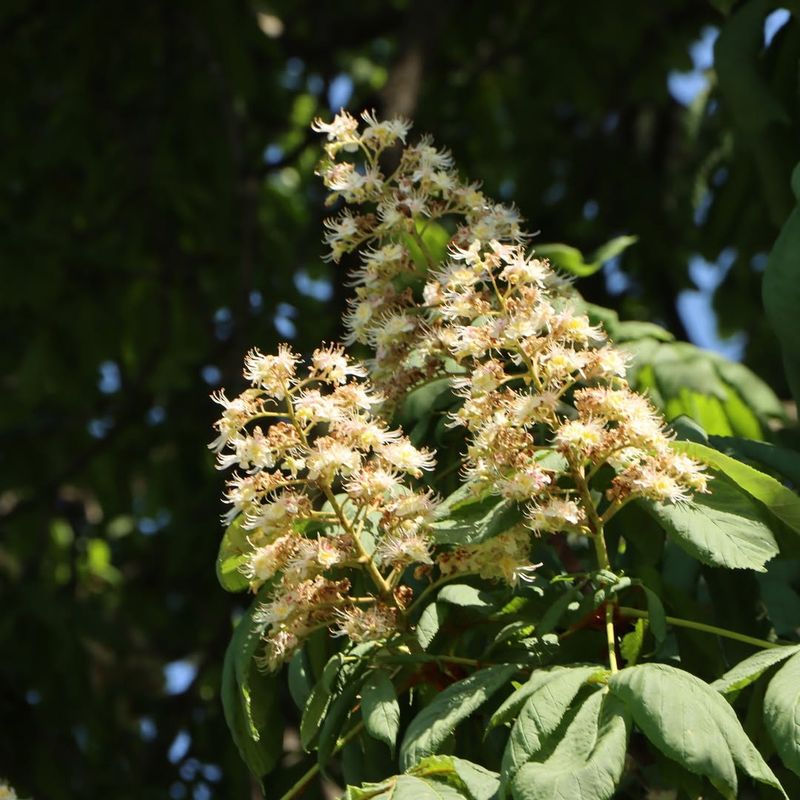
Horse chestnuts are sometimes confused with edible sweet chestnuts, but they’re completely different species with a dangerous distinction, horse chestnuts are toxic.
These large shade trees produce attractive candle-like flower clusters in spring and shiny brown seeds encased in spiky green husks.
Georgia children sometimes collect these seeds for craft projects or simply because they look interesting, which creates a real safety concern.
The seeds, leaves, bark, and flowers all contain aesculin and other compounds that cause digestive distress and neurological symptoms when consumed.
Young children might be tempted to taste the seeds because they resemble edible chestnuts you can roast.
The confusion has led to numerous accidental poisonings across the country, including incidents in Georgia.
Horse chestnuts aren’t native to Georgia, but some homeowners have planted them for their impressive size and spring flower display.
The trees can reach 70 feet tall with a broad spreading canopy that provides excellent shade.
Unfortunately, they’re also messy trees that drop sticky buds in spring, leaves in fall, and those spiky seed pods in autumn.
The seeds are particularly problematic because they scatter across yards and sidewalks where children playing outside might pick them up.
Even adults have mistakenly tried to eat them, thinking they had found edible chestnuts.
Georgia’s native buckeyes are related species that also contain similar toxins, so they present comparable concerns.
If you want a large shade tree for your Georgia property, consider safer alternatives like red maple, willow oak, or tulip poplar.
These native options grow well throughout the state, provide excellent shade, and won’t leave dangerous seeds scattered around your yard each fall.
6. Poison Sumac
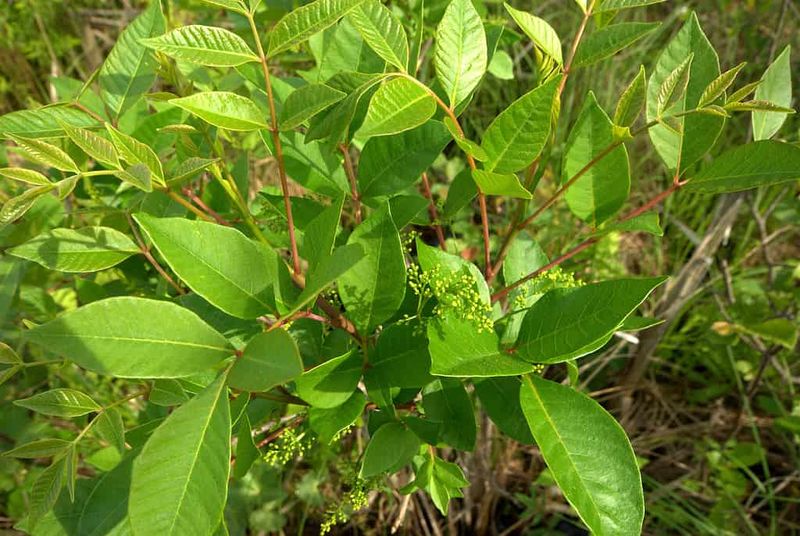
Most Georgia homeowners know to avoid poison ivy, but fewer recognize poison sumac, which is actually more potent and can cause even worse skin reactions.
This small tree or large shrub grows naturally in wet, swampy areas throughout Georgia, particularly in the coastal plain and along stream banks.
Its compound leaves with 7-13 smooth-edged leaflets turn brilliant red and orange in fall, making it look attractive enough that someone might consider planting it.
Don’t be fooled by its beauty.
Poison sumac contains urushiol, the same oil found in poison ivy and poison oak, but in higher concentrations.
Simply brushing against the leaves, stems, or roots can transfer the oil to your skin, causing severe itching, blistering rashes that last for weeks.
The reaction often appears within 12-48 hours after contact and can spread across large areas of skin.
Some Georgia residents have experienced reactions so severe they required medical treatment.
The oil can remain active on tools, gloves, pet fur, and clothing for months, causing reactions long after the initial contact.
Poison sumac differs from the harmless staghorn sumac and smooth sumac (which have red berries) by its white or grayish berries that hang in drooping clusters.
Georgia’s wetland areas provide ideal growing conditions, so you’ll find poison sumac in places like the Okefenokee Swamp region and along river bottomlands throughout the state.
If you have a wet area on your property, resist any temptation to transplant or encourage poison sumac, even though its fall color is stunning.
Instead, choose water-loving alternatives like river birch, bald cypress, or red maple that provide similar visual interest without the painful consequences of accidental contact.
7. English Yew
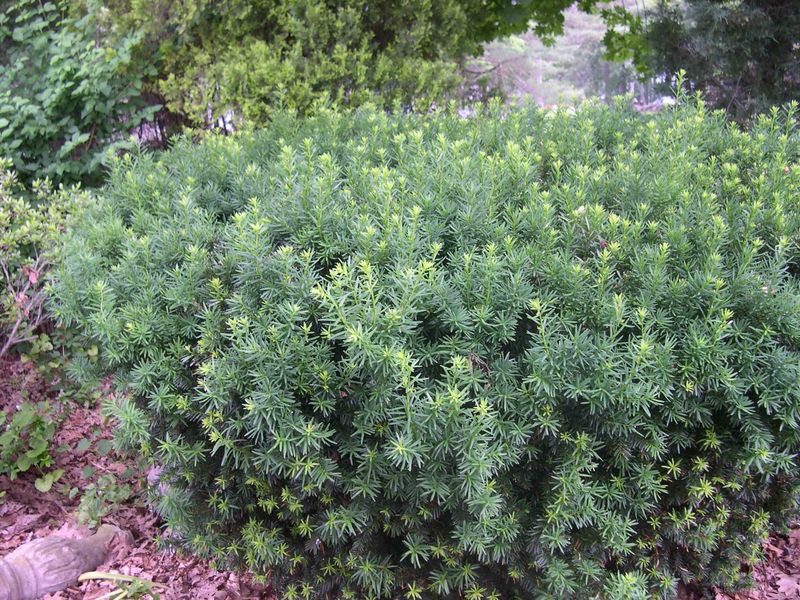
English yew has been a landscaping staple for centuries in Europe and has found its way into formal gardens and estates across Georgia.
This slow-growing evergreen can be shaped into elegant hedges or topiaries that maintain their appearance year-round.
Upscale neighborhoods in Atlanta, Athens, and other Georgia cities sometimes feature these stately trees in their landscapes.
But beneath that refined appearance lurks one of the plant kingdom’s most dangerous toxins.
Taxine alkaloids in English yew affect the heart’s electrical system, potentially causing cardiac arrest.
Unlike some poisonous plants that taste bitter and discourage eating, yew needles don’t have a strongly unpleasant taste that would immediately warn someone to spit them out.
Children playing hide-and-seek around yew hedges might absentmindedly chew on a twig, and pets sometimes nibble on the foliage.
The bright red berry-like structures that appear on female trees look tempting and sweet, which they actually are, but the seed inside each one is highly toxic.
A child might eat several of these attractive berries before parents even notice.
Georgia’s climate allows English yews to thrive, particularly in the northern parts of the state where temperatures are slightly cooler.
Professional landscapers still use English yew because it accepts heavy pruning, grows well in shade, and looks sophisticated in formal designs.
However, homeowners with young children or pets should seriously reconsider this choice.
Georgia offers many beautiful native evergreens like Southern magnolia, Carolina cherry laurel, or Eastern red cedar that can provide similar landscaping functions without the extreme toxicity risk.
Making thoughtful plant choices means you can enjoy your yard without constantly worrying about dangerous plants.