7 Trees Arizona Gardeners Love For Natural Privacy And Shade
In Arizona, the right tree can change the whole feel of a yard. A well-placed canopy can add privacy, soften harsh sun, and make patios and outdoor spaces far more comfortable during the hottest months.
That matters in a state where heat, reflected light, alkaline soil, and long dry stretches make tree choice more important than many gardeners expect. A tree that looks great at the nursery may not be the right fit once it faces a real Arizona summer.
The strongest choices earn their place by creating shade, screening views, and holding up through demanding desert conditions year after year.
1. Southern Live Oak Builds Deep Shade And Long-Term Structure
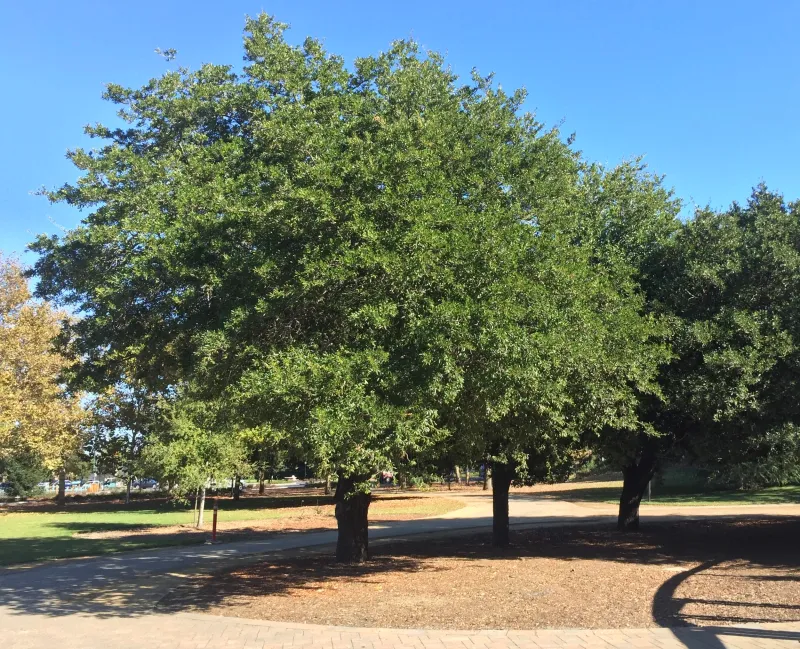
When long-term shade and a broad canopy are the goal, Southern Live Oak offers a strong, established look that few trees can match.
Quercus virginiana is best suited to warmer parts of Arizona where winter cold is limited, and it’s valued for its wide-spreading structure that creates deep, consistent shade over time.
This tree typically grows 40 to 60 feet tall with a canopy that can spread even wider, making it a better fit for larger yards where it has room to develop naturally.
The foliage stays dense and dark green, giving it a full appearance that helps with both privacy and cooling around patios and open spaces.
Southern Live Oak performs best in full sun and well-drained soil. While it becomes more drought-tolerant as it matures, it benefits from deep, consistent watering during establishment and occasional deep irrigation during extended heat.
It does not handle standing water well, especially in compacted or poorly draining soils.
One key consideration is space. The wide canopy and spreading roots mean it should be planted well away from foundations, driveways, and walkways.
A good sign is steady canopy expansion with full, healthy foliage. A trouble sign is thinning leaves or branch dieback, which can point to stress from poor drainage or inconsistent watering.
2. Desert Willow Brings Beautiful Blooms And Dappled Shade
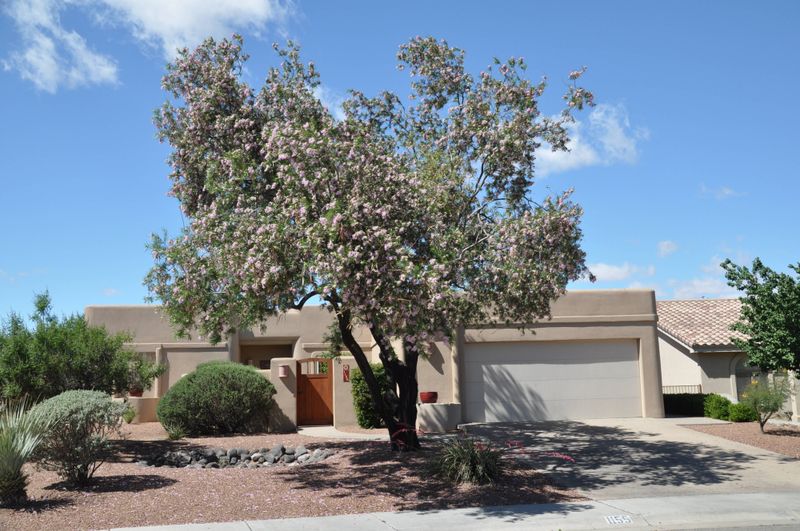
When a yard needs color, movement, and lighter shade, Desert Willow brings all three without feeling too heavy for the space.
Chilopsis linearis is a native tree that fits Arizona landscapes especially well, thanks to its narrow leaves, airy branching, and trumpet-shaped flowers in shades of pink, lavender, and white.
This tree usually reaches about 15 to 25 feet tall with a spreading canopy that casts dappled shade rather than deep cover, which makes it a strong fit for front yards, patio edges, and smaller garden spaces.
The flowers are a big draw for hummingbirds and bees, and the overall shape stays graceful enough to work in both naturalistic and more structured landscapes.
Desert Willow performs best in full sun and well-drained soil. It is especially well-suited to low-desert Arizona, where heat and dry conditions are part of the norm, though it often looks better with deep, occasional watering than with frequent shallow irrigation.
Once established, it is relatively low water use compared with many flowering trees.
A good sign is steady blooming and fresh new growth through the warm season.
A trouble sign is drooping or curling leaves paired with poorly drained soil or inconsistent watering, which can point to root stress rather than a simple lack of moisture.
3. African Sumac Brings Fast Shade And A Dense Evergreen Screen
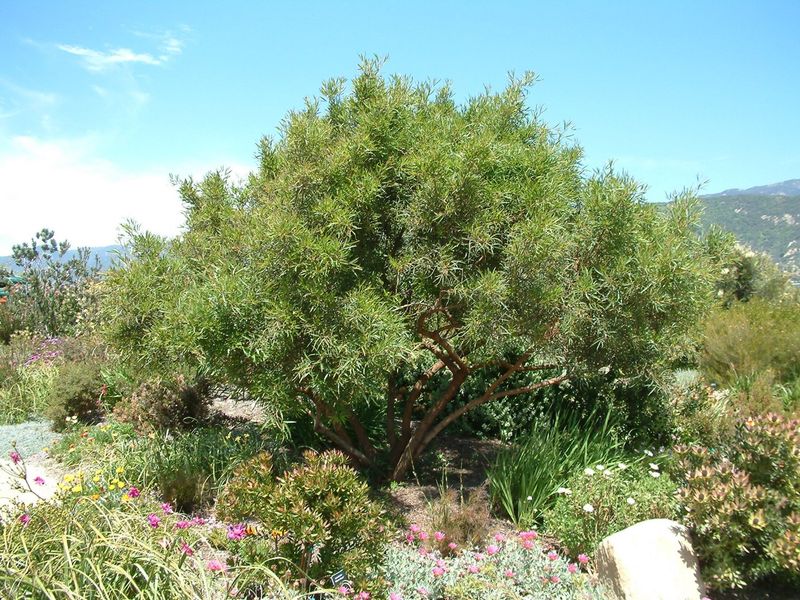
When privacy needs to happen quickly in an Arizona yard, African Sumac is often one of the first trees people consider.
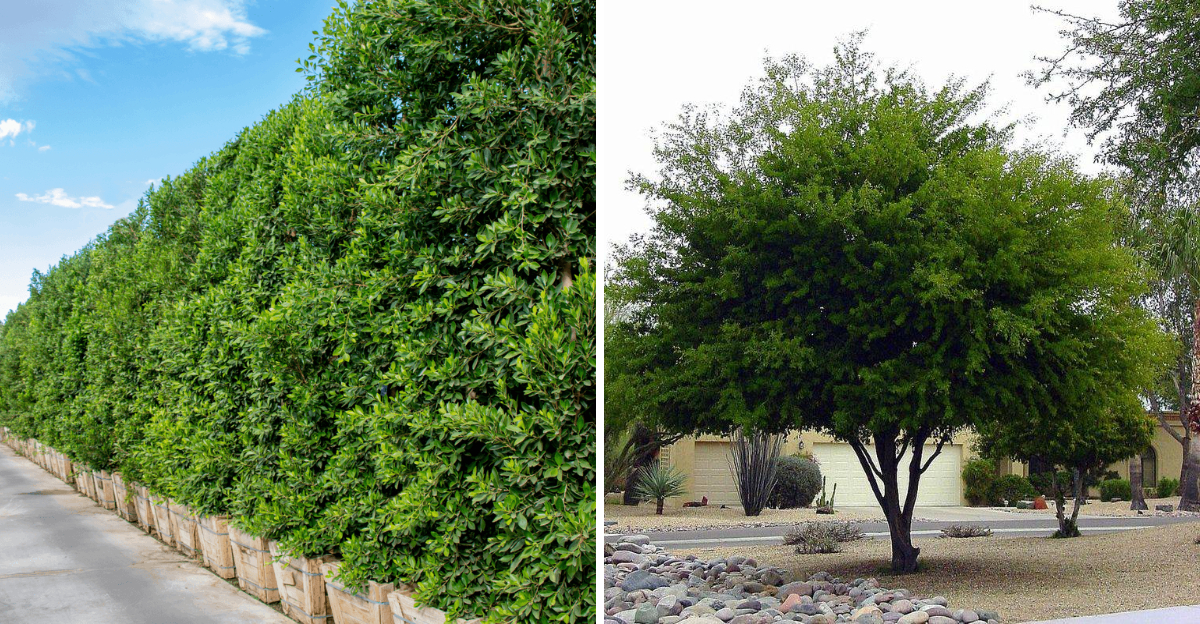
Rhus lancea is widely used in the low desert because it handles heat, reflected sun, and alkaline soils with relatively few issues once established.
Its fine, willow-like foliage creates a soft but fairly dense canopy that works well for screening neighbors or shading patios.
In Phoenix and Tucson landscapes, it typically grows 20 to 30 feet tall and nearly as wide, forming a rounded, spreading shape that can block views from multiple angles.
It performs best in full sun and well-drained soil, and it tolerates drought once roots are established, though it benefits from deep, occasional watering during extended heat.
One important planning detail is spacing. African Sumac develops a broad canopy and a spreading root system, so planting it too close to walls, driveways, or pools can lead to conflicts later.
It is better suited for larger front yards or open areas where it has room to expand naturally.
A good sign is steady new growth and a full canopy with evenly colored foliage. A trouble sign is thinning leaves or branch dieback, which can point to overwatering, poor drainage, or root stress in compacted soil.
4. Arizona Cypress Offers Cool Color And Strong Wind Protection
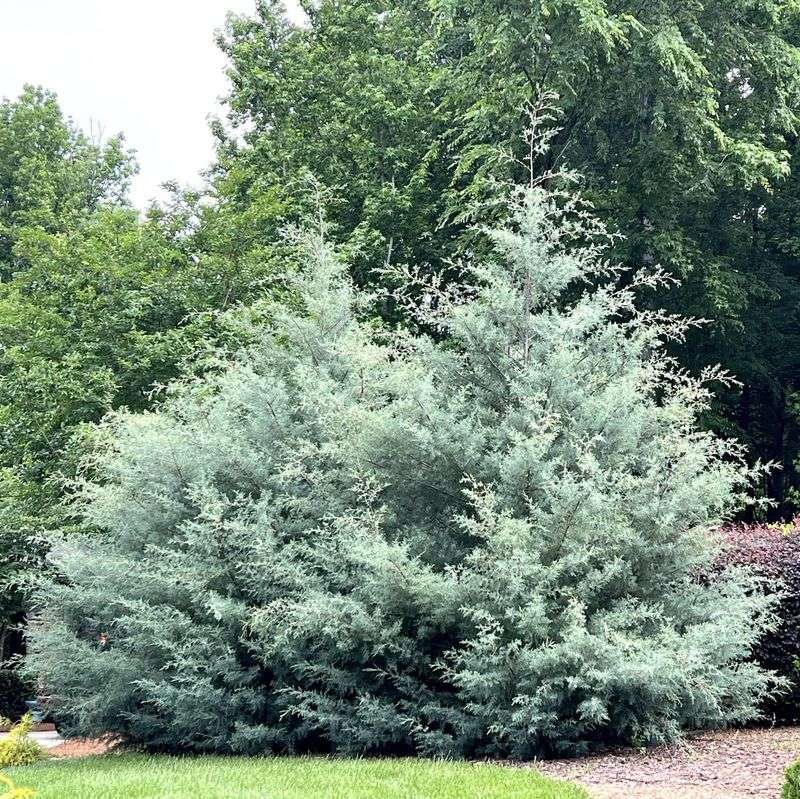
If you want year-round privacy with a cooler color tone, Arizona Cypress stands out immediately.
Cupressus arizonica is native to the Southwest and fits naturally into Arizona landscapes, especially in areas with good drainage and full sun exposure.
Its blue-green to silvery foliage adds contrast against desert plants and hardscape, making it both functional and visually striking.
This tree is often used as a windbreak or privacy screen, especially in higher elevations such as Prescott, Payson, and Flagstaff, though it can also be grown in parts of the low desert with careful siting.
Mature trees can reach 30 to 50 feet tall with a narrow to pyramidal shape, making them useful for vertical screening without taking up too much horizontal space.
Arizona Cypress prefers well-drained soils and does not perform well in areas where water collects. During establishment, consistent deep watering helps roots develop, but once established, it becomes relatively drought-tolerant.
Spacing is important for airflow, especially in warmer regions, since dense plantings can lead to stress over time. A good sign is tight, upright growth with consistent blue-green color.
A trouble sign is browning interior foliage or dieback, which may indicate drainage or spacing issues.
5. Ficus Indian Laurel Creates A Thick Green Privacy Wall
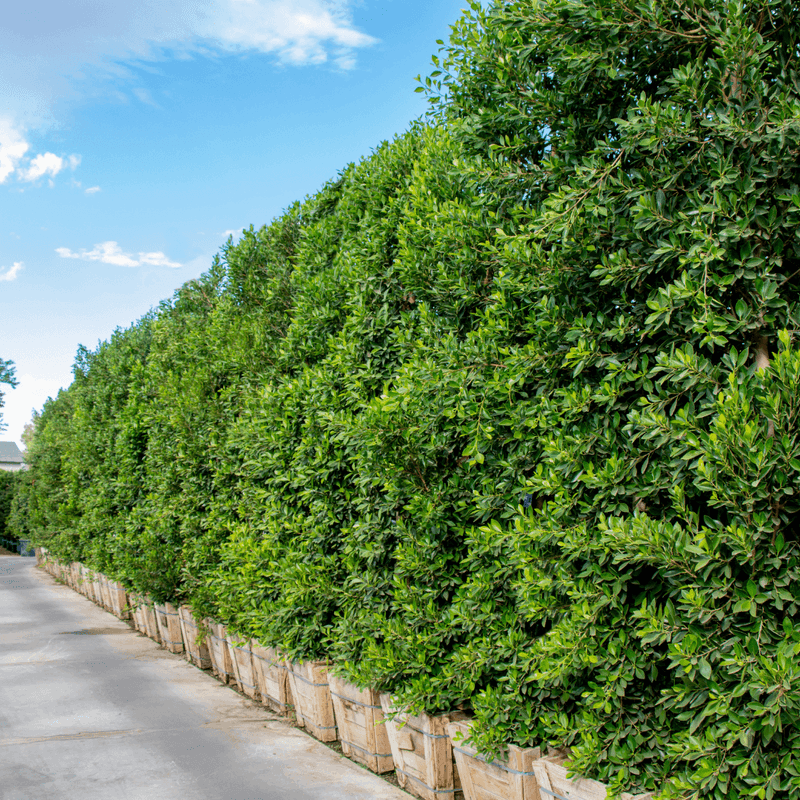
For a truly dense, almost wall-like screen, Ficus Indian Laurel is one of the most commonly used trees in Arizona urban landscapes.
Ficus nitida is especially popular in the Phoenix area for hedges and tightly spaced privacy plantings because of its lush, glossy foliage and rapid growth.
In frost-free or very mild winter areas, it can be shaped into a tall hedge or allowed to grow into a tree reaching 30 to 40 feet tall. The canopy becomes extremely dense, which makes it effective for blocking noise, wind, and neighboring views.
It thrives in full sun to partial shade and adapts well to Arizona’s alkaline soils when given consistent irrigation.
However, this is not a low-water tree. Ficus requires regular watering to maintain its dense appearance, especially during the hottest months.
Its aggressive root system is another key consideration, as roots can lift sidewalks or invade nearby structures if planted too close.
Because of its sensitivity to cold, it performs best in the warmest parts of the low desert and can be damaged by frost in colder areas. A good sign is thick, vibrant green foliage with steady growth.
A trouble sign is leaf drop or thinning, which can result from cold damage, inconsistent watering, or root restriction.
6. Texas Ebony Brings Dense Evergreen Shade In A Compact Form
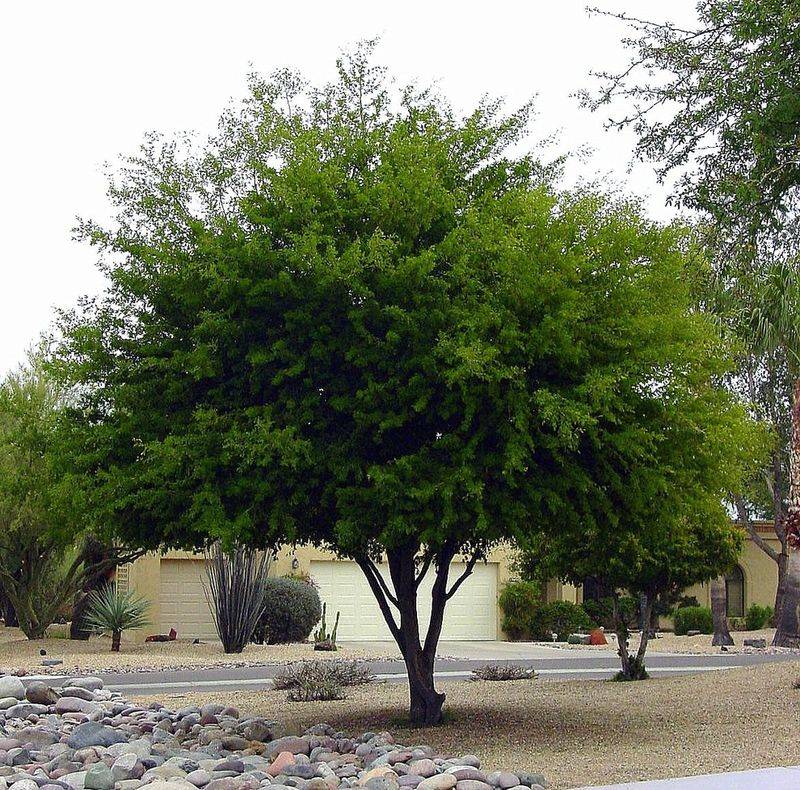
When space is limited but shade and privacy still matter, Texas Ebony offers a strong solution.
Ebenopsis ebano is well-suited to Arizona’s low desert conditions and is valued for its dense, evergreen canopy that provides consistent coverage throughout the year.
This tree typically grows 15 to 30 feet tall with a rounded, somewhat compact canopy, making it easier to fit into smaller front yards compared to larger shade trees.
The foliage is dark green and glossy, creating a rich contrast against lighter desert materials like gravel and stucco.
Texas Ebony thrives in full sun and handles heat and drought once established, though it benefits from occasional deep watering during extended dry periods.
It prefers well-drained soil and does not tolerate standing water, especially in heavier soils with caliche.
One important factor to consider is the presence of thorns, which can be sharp and noticeable. This makes placement important, especially near walkways, driveways, or entry points.
A good sign is steady, compact growth with dense foliage. A trouble sign is sparse canopy development or yellowing leaves, which can indicate overwatering or poor drainage.
7. Eastern Red Cedar Offers Year-Round Shelter And Wildlife Benefits
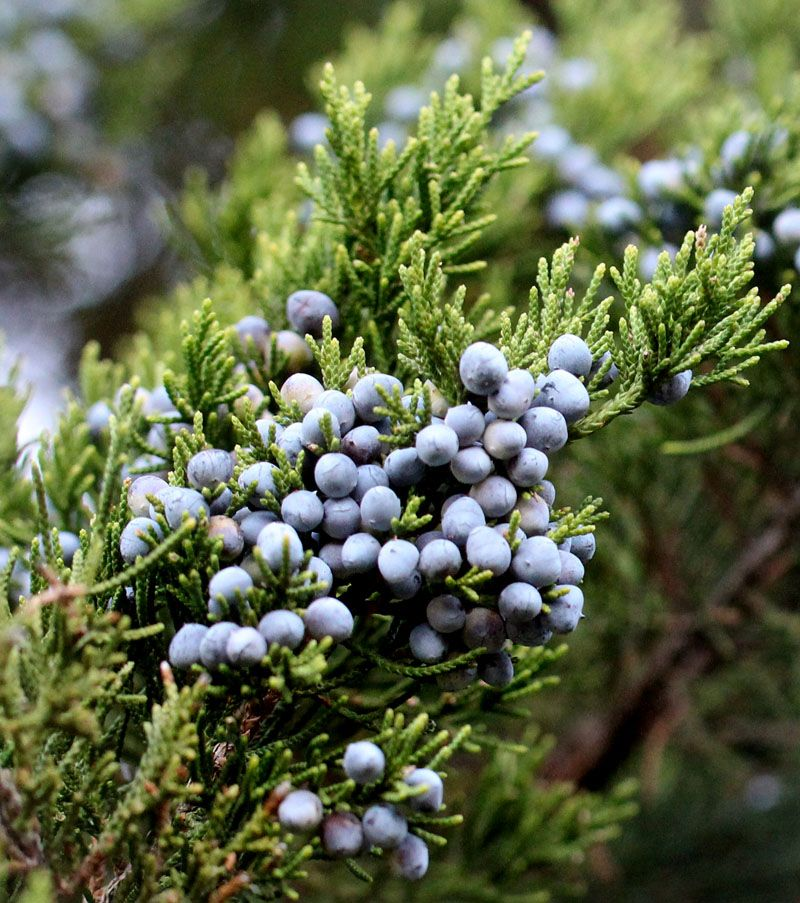
When year-round privacy matters more than flowers or seasonal color, Eastern Red Cedar brings steady structure and a dependable evergreen presence.
Juniperus virginiana is a hardy tree that suits many parts of Arizona, especially the northern and central regions where rocky soils, wind, and drier conditions can make plant choices more limited.
This tree typically reaches about 30 to 40 feet tall with a narrow, columnar to broadly pyramidal shape, which makes it useful for privacy screens, windbreaks, and property borders.
The bluish-green foliage holds its color through the seasons, and the dense branching gives it real screening value even when planted as a single specimen. Small blue berry-like cones add another benefit by attracting birds and giving the tree extra wildlife value.
Eastern Red Cedar performs best in full sun and well-drained soil. It can handle rocky, shallow ground and becomes quite drought-tolerant once established, which makes it a practical choice for Arizona yards that do not get frequent irrigation.
The main thing to avoid is overwatering or planting in a spot where water lingers after rain.
A good sign is dense, even foliage with steady upright growth. A trouble sign is browning branches or thinning growth in wet soil, which can suggest drainage problems rather than a lack of water.