8 Trees That Create Natural Privacy In Arizona Yards Without A Fence
Privacy can feel hard to come by in Arizona, especially when yards sit close together and fences do not always give the coverage people expect. A bare wall or open view can make even a well-kept yard feel unfinished.
That is where the right trees quietly change everything. Some grow in a way that softens the view, adds shade, and creates a sense of separation without making the space feel closed in.
Instead of relying on structures, it becomes about planting with purpose and letting nature do the work over time.
Certain trees handle the sun, dry conditions, and tough soil while still filling in enough to block unwanted views.
Choosing the right ones means gaining privacy that feels natural and fits right into the landscape instead of standing out as something forced.
1. Willow Acacia Grows Fast With A Light, Airy Screen
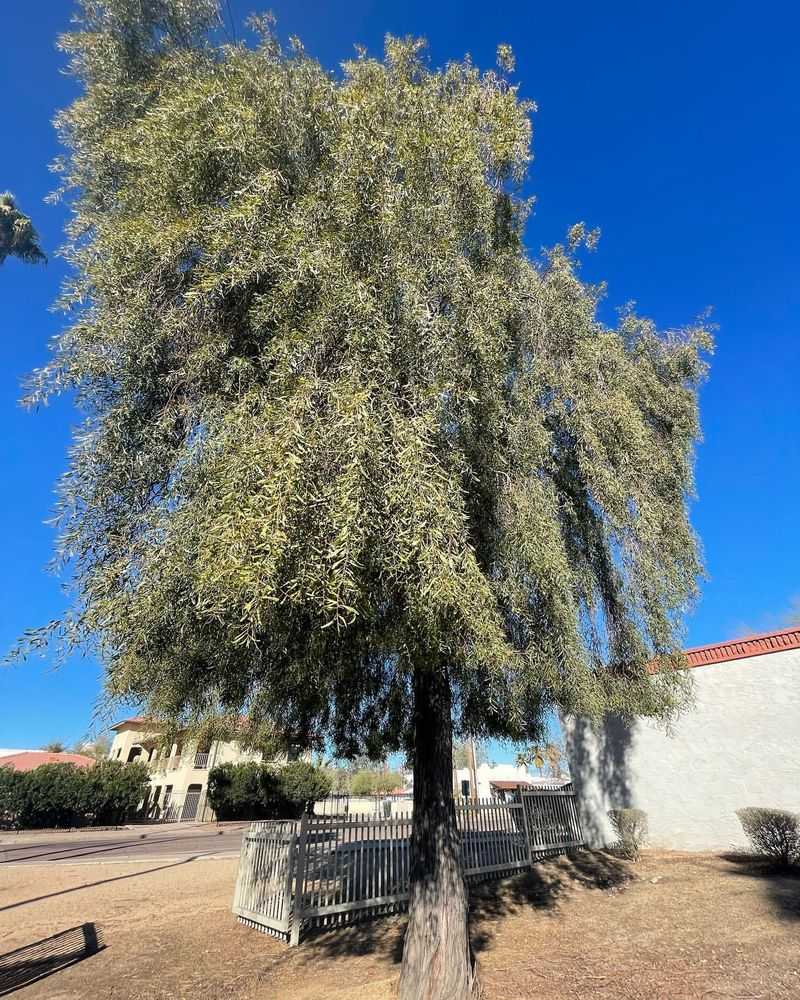
Willow Acacia moves fast — and in Arizona, that matters a lot when you want privacy sooner rather than later. Within just a few years, this tree can reach 20 to 40 feet tall, with long, narrow leaves that hang down like curtains in a gentle breeze.
It doesn’t look heavy or blocky, but it still does the job of blocking sightlines surprisingly well.
What makes it stand out in Arizona yards is how it handles heat. Summers in Phoenix can push past 110 degrees, and Willow Acacia barely flinches.
It’s drought-tolerant once it gets going, and it doesn’t need much fussing to stay healthy and full.
Plant it along a property line or near a patio where you want a soft visual barrier without deep shade. Space multiple trees about 10 to 15 feet apart to build a continuous screen over time.
The feathery texture gives your yard a relaxed, natural feel that a solid fence just can’t match.
One thing worth knowing — it does drop small leaves and seed pods, so expect a little cleanup. Still, most Arizona gardeners consider that a fair trade for how quickly and gracefully this tree fills in.
It’s a solid first choice if speed and a lighter look are your top priorities.
The delicate, flowing canopy creates a sense of movement and life in the yard. Minimal maintenance combined with rapid growth makes it a reliable solution for fast, attractive privacy.
2. Fan-Tex Ash Builds Quick Shade With Seasonal Coverage
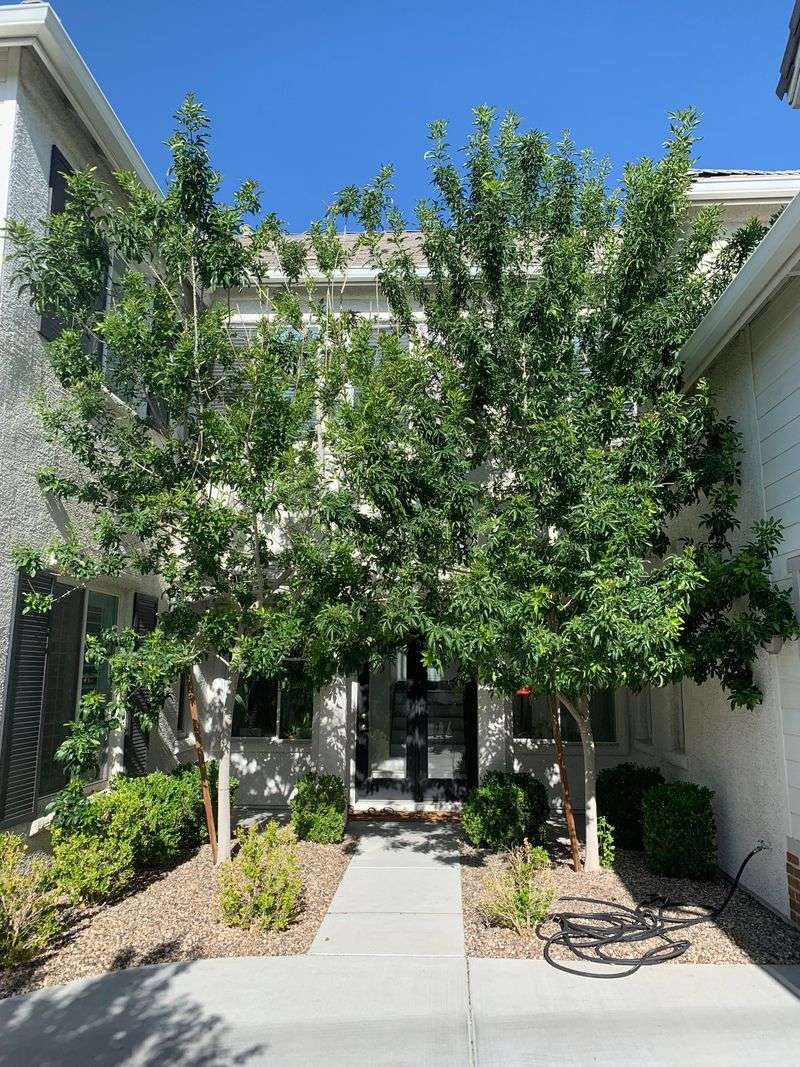
Shade is a serious luxury in Arizona, and Fan-Tex Ash delivers it fast.
Known for its oversized leaves and wide canopy, this tree grows quickly and fills in with thick, lush coverage that can block both sun and prying eyes from neighboring yards or second-story windows.
It’s a deciduous tree, which means you’ll lose the leaf coverage in winter. But honestly, that seasonal shift works in your favor — more warmth and sunlight reach your yard during cooler months when you actually want it.
Come spring, the leaves return quickly and the canopy fills back in before the brutal Arizona heat really kicks in.
Fan-Tex Ash does best with regular deep watering, especially during its first couple of growing seasons. Plant it on the west or south side of your yard to maximize shade where it counts most.
Tucson and Phoenix gardeners often use it near patios and outdoor sitting areas for that reason.
Mature trees can reach 25 to 35 feet tall with a canopy that spreads just as wide. A single well-placed Fan-Tex Ash can screen a large section of yard on its own.
Pair it with an evergreen option nearby if you want year-round coverage without gaps during the leafless months.
A wide, leafy canopy provides instant relief from the Arizona sun and creates inviting outdoor spaces. With quick growth and impressive coverage, this tree makes shade both practical and beautiful.
3. Arizona Cypress Forms A Thick Evergreen Barrier
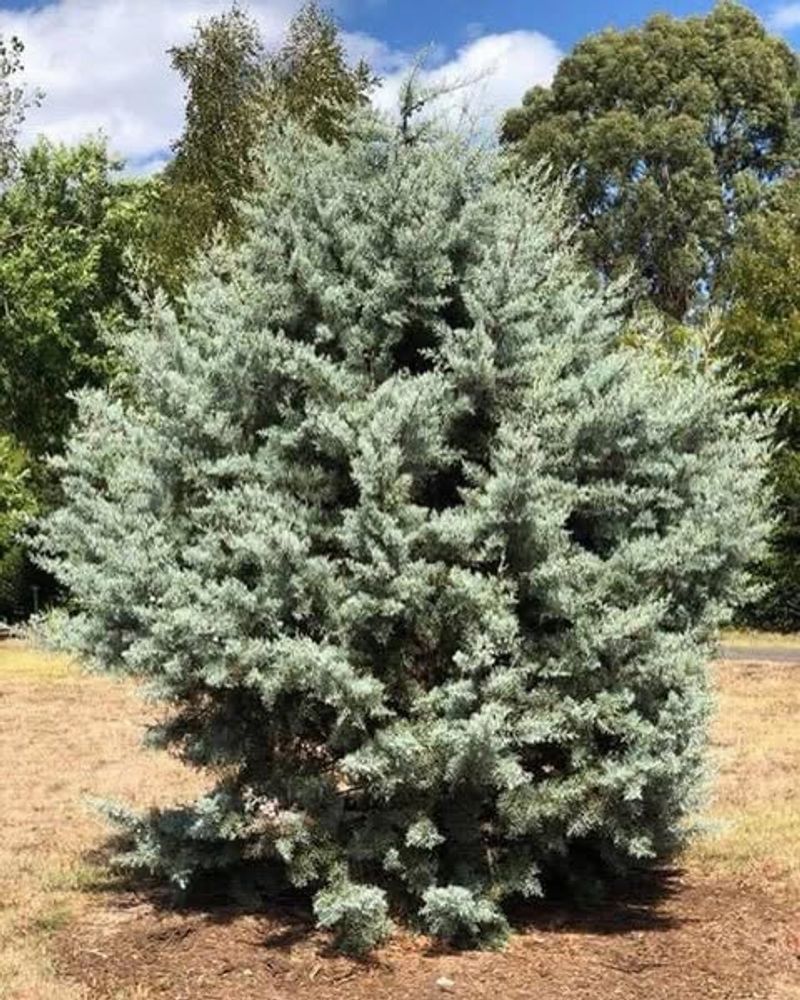
If you want a wall of green that never goes bare, Arizona Cypress is one of the best choices for this state. It’s a true native, adapted to everything Arizona throws at it — brutal heat, cold desert nights, rocky soil, and stretches of dry weather that would stress out most other trees.
Planted in a row, these trees form a tight, dense barrier that blocks wind, noise, and visibility all at once. Growth is steady, reaching heights of 40 feet or more at maturity, with a naturally columnar or pyramidal shape that doesn’t require much pruning to stay tidy.
That upright form makes it ideal for property lines where space is limited.
The blue-gray to green foliage has a distinct look that adds some real character to an Arizona yard. It doesn’t blend into the background — it makes a statement.
Some homeowners in Tucson and Prescott use it as a dramatic backdrop for smaller desert plants and flowering shrubs.
Water young trees regularly for the first year or two to help them get established, then back off considerably. Mature trees handle dry spells well and don’t need much intervention.
Spacing them about 6 to 8 feet apart creates a full, overlapping screen that fills in completely within a few growing seasons.
When planted in a row, they create a continuous, eye-catching privacy screen. Low-maintenance and heat-tolerant, these trees deliver lasting structure and color to any Arizona landscape.
4. Texas Ebony Creates Dense Privacy With Dark Foliage
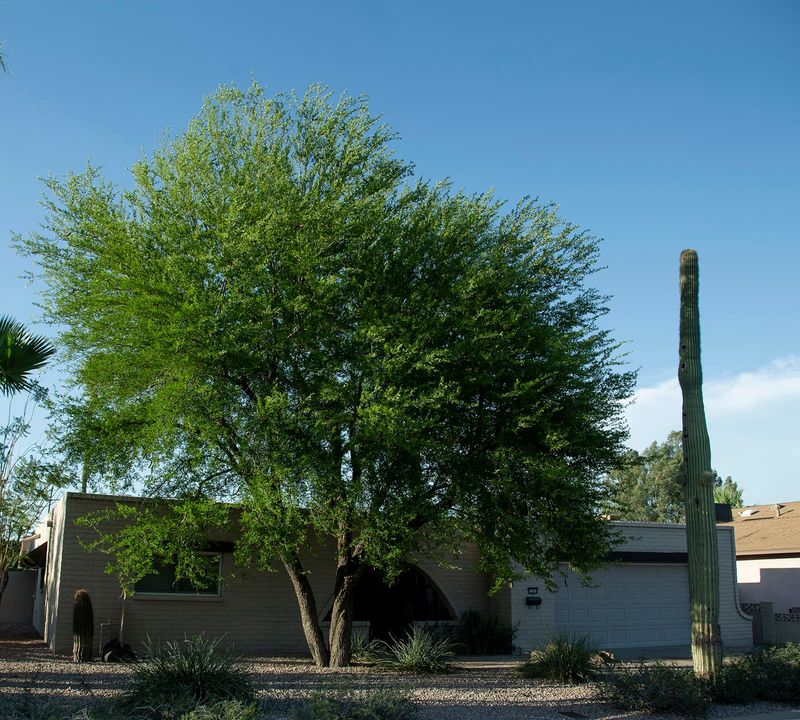
Dark, glossy, and almost impossibly dense — Texas Ebony is the kind of tree that makes a neighbor’s yard completely disappear. Its small, compound leaves pack tightly together, creating a canopy so full that light barely filters through.
In Arizona’s low desert, that density is exactly what you want from a privacy tree.
Growth starts out moderate but picks up speed once roots get comfortable in the ground. Expect the tree to reach 15 to 25 feet tall and nearly as wide, forming a rounded, full shape without much help from you.
Occasional trimming keeps it tidy, but it doesn’t demand constant attention.
Texas Ebony also blooms with small, fragrant creamy-yellow flowers in summer, which is a nice bonus most people don’t expect from a privacy tree. After flowering, it produces woody seed pods that add some visual interest and attract local wildlife.
It’s a tree that earns its space in more ways than one.
Tucson and southern Arizona gardeners especially love this tree because it thrives in the Sonoran Desert climate without complaint. Deep, infrequent watering suits it well, and it handles reflected heat from walls and pavement without skipping a beat.
Plant it where you need a permanent, no-fuss screen that looks good every single month of the year.
5. Hopseed Bush Shapes Easily Into A Full Living Screen
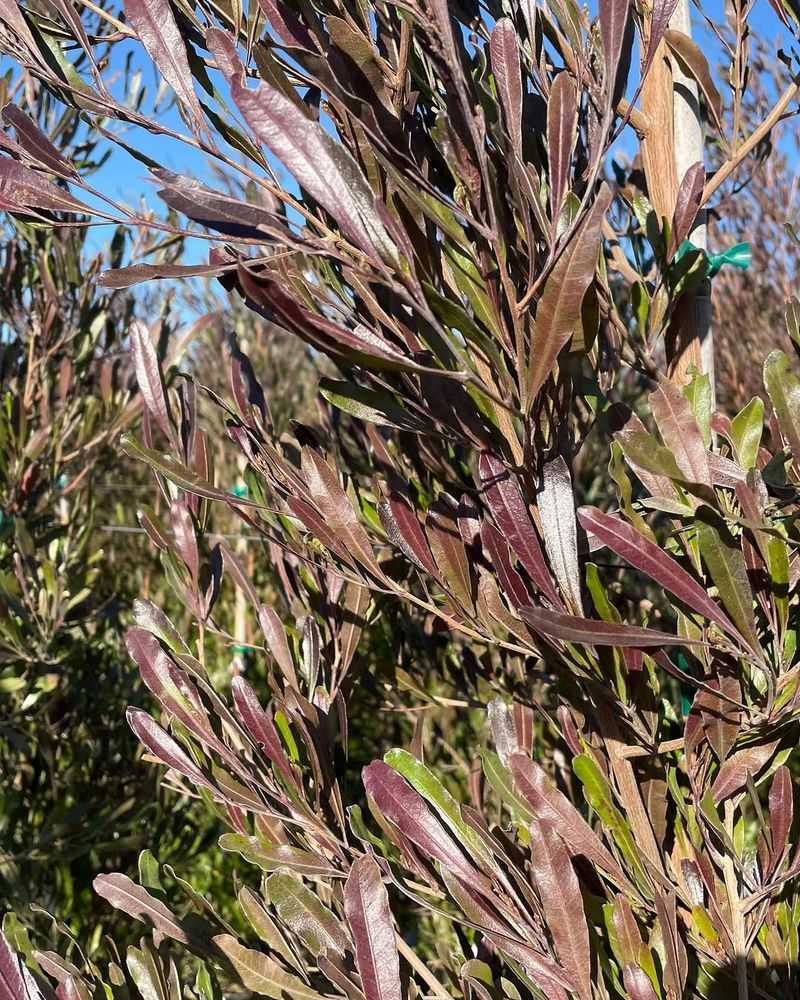
Hopseed Bush is one of those plants that quietly does everything right. Technically a large shrub, it can be trained and shaped into a small tree or left to grow naturally as a full, bushy screen.
Either way, it fills in thick and stays green year-round, which makes it a reliable privacy option across most of Arizona.
Narrow, leathery leaves give it a clean look that fits well with both desert-style and traditional landscaping. Clusters of papery, pinkish seed pods appear in spring and add a pop of color that most people find genuinely attractive rather than messy.
Birds seem to agree — they visit regularly once the seeds ripen.
Hopseed handles full sun, poor soil, and dry conditions without much drama. In Phoenix and Scottsdale, where reflected heat from walls and driveways can stress out lesser plants, Hopseed Bush tends to hold its own.
It’s also relatively fast-growing, putting on a couple of feet per year under good conditions.
Planting several in a staggered row creates a layered, natural-looking screen that feels less formal than a clipped hedge. Space them roughly 4 to 6 feet apart for a tight barrier, or give them more room if you want a looser, more relaxed look.
Either way, they knit together well and build real density within a few seasons.
6. Upright Junipers Offer Narrow Screening In Tight Spaces
Not every Arizona yard has room for a wide-spreading tree.
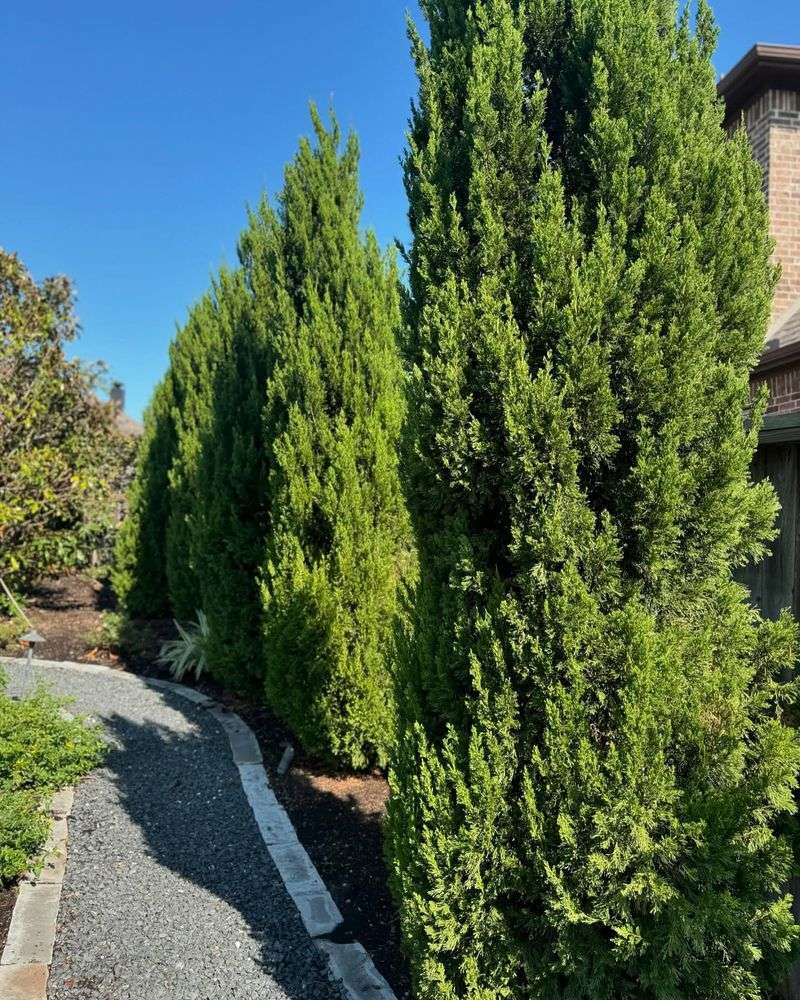
Upright junipers can solve that problem cleanly when you choose heat-tolerant types — they grow tall and stay narrow, which means you get real height and screening without taking up much ground space.
A 3-foot-wide strip along a wall or fence is often enough for them to work, especially in areas with good drainage and full sun.
Several upright varieties can work in Arizona when you stick with more heat-tolerant types, especially in slightly cooler or protected areas. These trees can reach 15 to 20 feet while staying just a few feet wide.
Dense, evergreen foliage holds its color through the seasons with only basic care.
Junipers are tough in a way that earns respect. Rocky soil, dry spells, and intense Arizona sun don’t slow them down much.
They’re also resistant to most common pests and diseases, which keeps maintenance simple over the long haul.
One practical tip — stagger your planting slightly instead of placing them in a perfectly straight line. Slightly offset rows create a fuller visual barrier and look more natural than a rigid lineup.
Spacing about 3 to 4 feet apart gives each tree enough room to develop fully while keeping the screen tight. In smaller Scottsdale or Tempe yards where space is at a premium, upright Junipers are genuinely hard to beat for the footprint they require.
7. Italian Cypress Adds Tall Vertical Privacy Without Spreading
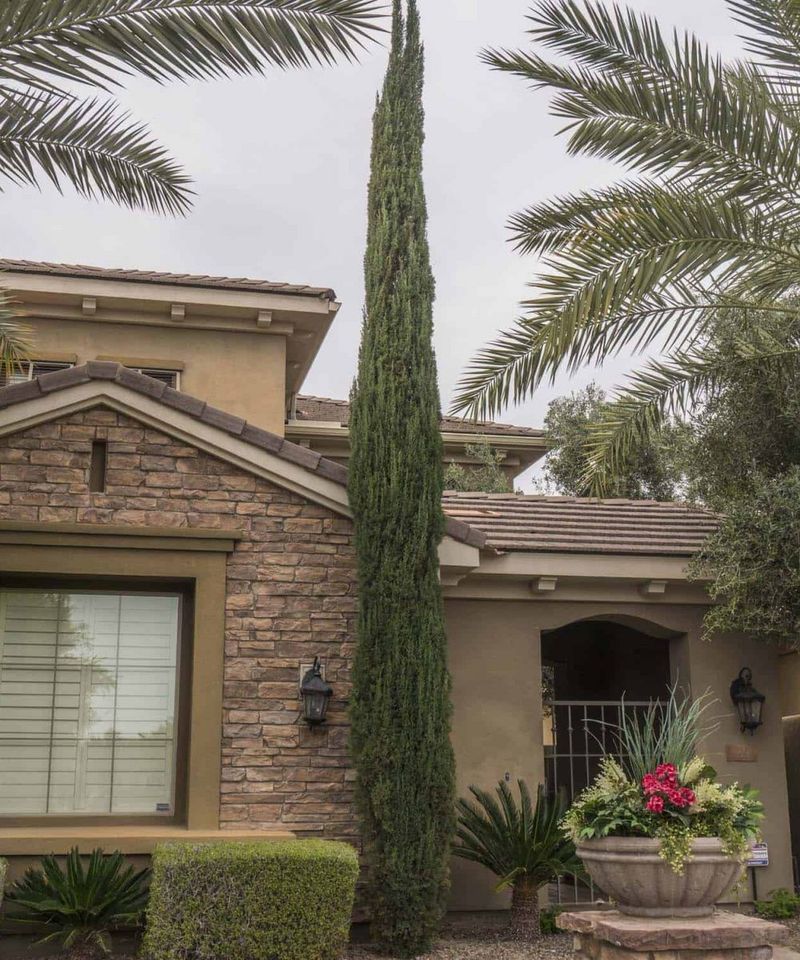
Few trees make a visual statement quite like Italian Cypress. Tall, pencil-thin, and sharply vertical, these trees can hit 40 to 70 feet in height while staying just 3 to 5 feet wide.
Planted in a row, they create one of the most striking and effective privacy screens you can put in an Arizona yard.
Arizona’s dry, hot climate actually suits Italian Cypress well. It prefers good drainage and full sun — two things most Arizona yards have in abundance.
Once established, it handles dry periods without much trouble and doesn’t need regular pruning to maintain its signature upright shape.
The dark green, columnar silhouette adds a strong architectural element to a yard that softer, rounder trees simply can’t replicate.
In neighborhoods where homes sit close together, the height of Italian Cypress screens upper floors and second-story windows effectively, something shorter privacy plants can’t always manage.
Planting spacing matters here — 3 to 5 feet apart gives a solid continuous screen without crowding. Root systems stay relatively contained, so they won’t cause problems for nearby sidewalks or foundations the way some larger shade trees might.
Around Chandler and Gilbert, where lot sizes are moderate and neighbors are close, Italian Cypress shows up in yards regularly for good reason. It’s a clean, elegant solution to a very practical problem.
8. Evergreen Elm Fills Out Fast With A Broad Canopy
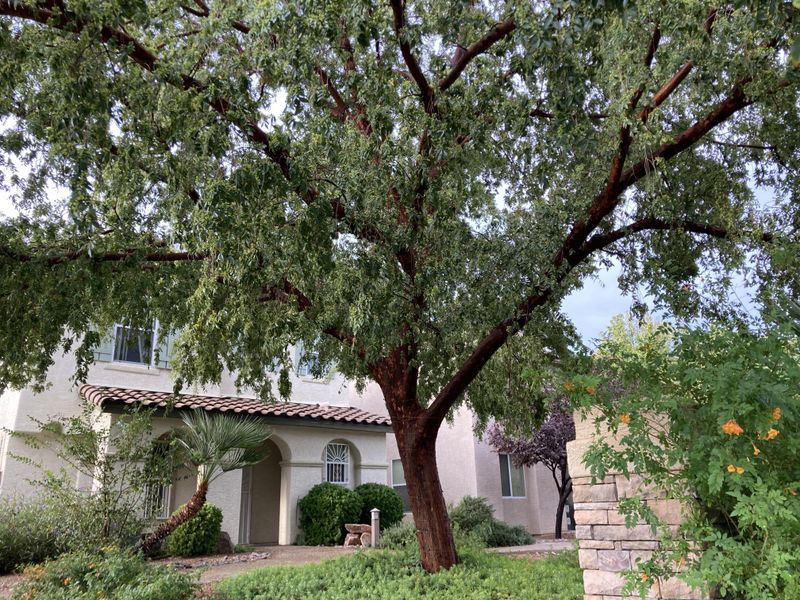
Speed and size — Evergreen Elm brings both to the table, and Arizona yards tend to reward trees that don’t waste time.
In good conditions, this tree adds several feet of growth each year, quickly building the kind of broad, spreading canopy that blocks views from multiple angles and directions at once.
Unlike many elms, the Evergreen Elm holds onto most of its leaves through winter in warmer parts of Arizona. In Phoenix and the low desert, it stays nearly fully leafed out year-round.
Cooler spots like Flagstaff might see more leaf drop, but even there it recovers fast in spring.
The canopy spreads wide — sometimes 50 feet or more at full maturity — so give it space to develop. It’s not a tree for a narrow side yard, but for a larger backyard or along a back property line, the coverage it provides is genuinely impressive.
Deep, consistent watering helps it grow fast and stay healthy through Arizona’s long, hot summers.
Tucson homeowners often plant Evergreen Elm as a centerpiece tree that handles both shade and privacy in one shot. Fewer trees do both jobs as efficiently.
The dense leaf cover filters afternoon sun, drops temperatures in the yard noticeably, and fills in visual gaps that smaller privacy plants sometimes leave behind. It’s a workhorse tree that rewards the space you give it.