7 Vegetable Pairs Ohio Gardeners Should Grow Together In Raised Beds For Bigger Harvests
Raised bed space in Ohio is precious. The season is short, the square footage is limited, and every plant you put in the ground is a calculated bet against the calendar.
Most gardeners fill their beds methodically, one crop at a time, without giving much thought to what is growing right next to it. That neighbor relationship matters more than most people realize.
Certain vegetables have a way of bringing out the best in each other when they share space. Better growth, fewer pests, stronger root development.
It is not garden folklore either, a lot of it comes down to basic biology and soil chemistry working in your favor. Companion planting gets overcomplicated fast, so this list keeps it practical.
A few pairings that actually make sense for Ohio raised beds, based on how these crops grow, what they pull from the soil, and what they put back. Plant them together right and your beds start working harder than the square footage suggests they should.
1. Pair Tomatoes With Basil To Make Better Use Of Bed Space
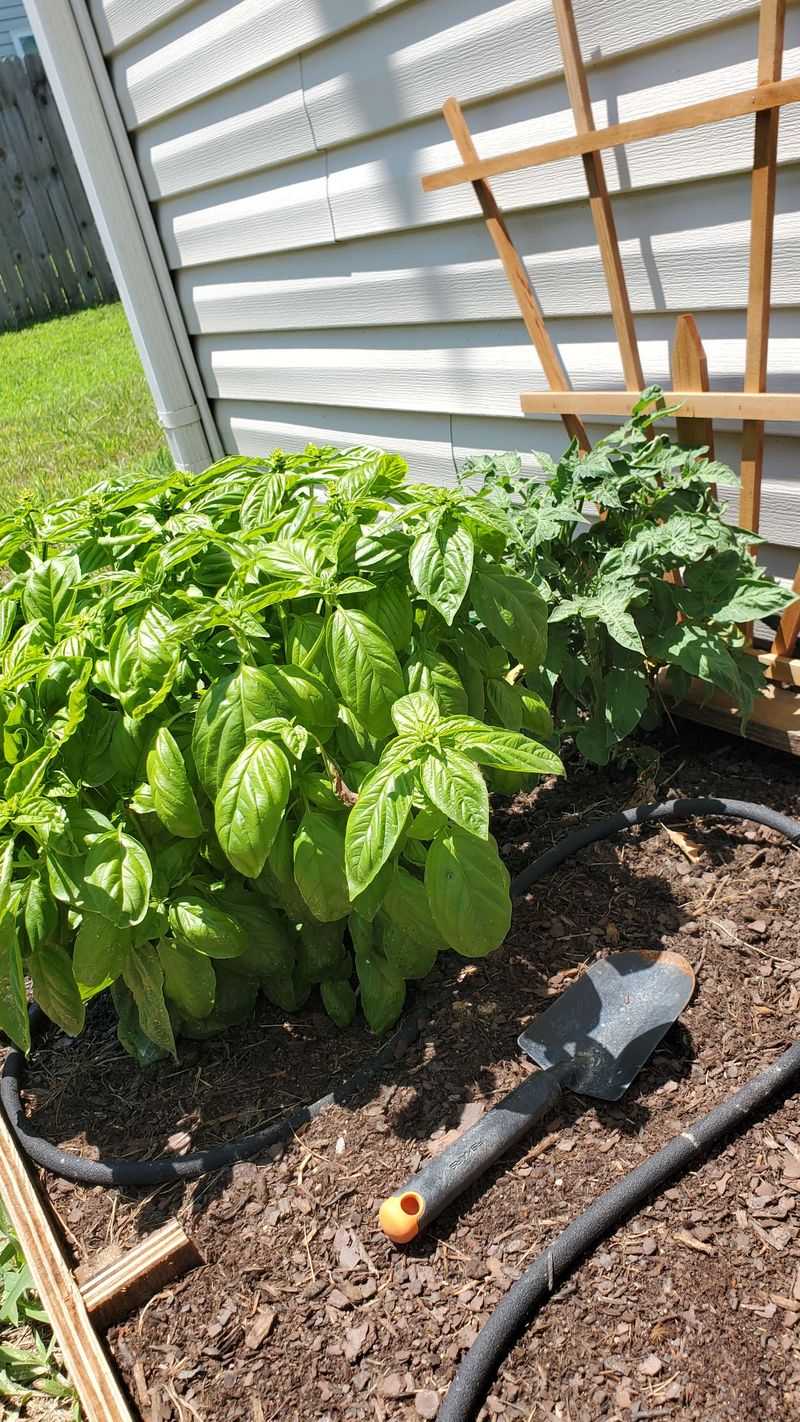
Most gardeners already love growing both tomatoes and basil, but the question is whether they belong in the same raised bed. The honest answer is yes, with some planning.
Both crops thrive in full sun and warm temperatures, which means they share the same planting window, typically after the last frost date, which ranges from late April in southern regions to mid-May in northern areas near Lake Erie.
The key is spacing. Tomatoes need at least 18 to 24 inches between plants depending on the variety, and they need good airflow to reduce the risk of fungal diseases like early blight and septoria leaf spot, both of which are common in humid summers.
Basil can be tucked near the edge of the bed without crowding the tomato plants, but it should never be shoved underneath a sprawling canopy where it will struggle for light.
Staking or caging tomatoes early helps keep the canopy off the soil and allows air to move through the bed. Water at the soil level rather than overhead to reduce leaf wetness and slow the spread of disease.
Basil prefers the same watering approach and will do best when it gets at least six hours of direct sun daily.
Some sources suggest basil may deter certain insects near tomatoes, but the evidence for this in a typical home garden setting is limited. The real benefit here is practical: two warm-season crops share a bed efficiently, freeing up space elsewhere.
Pinch basil flowers regularly to keep the plant producing fresh leaves through the summer.
2. Grow Carrots Beside Onions To Fill Different Root Zones
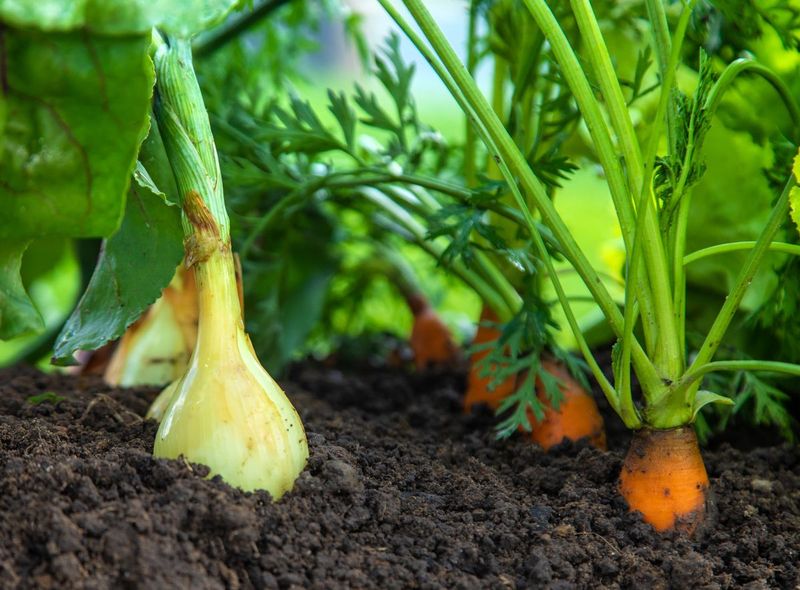
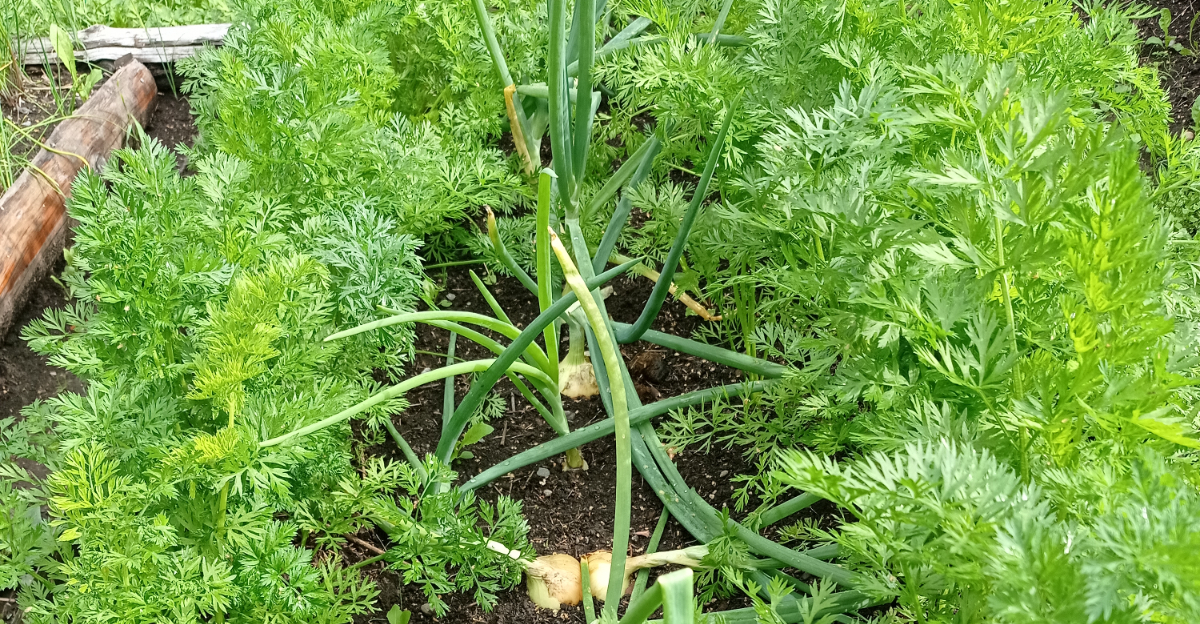
One of the most underrated strategies in a small raised bed is pairing vegetables that grow in completely different directions underground. Carrots push deep into the soil while onions develop a shallow bulb and send narrow upright leaves toward the sky.
That contrast in growth habit means both crops can share a bed without fighting each other for the same root space, as long as you give each plant enough room on the surface.
Your Ohio Garden Changes Every Week. Your Plan Should Too.
Gardening in Ohio changes quickly throughout the season. Every Friday you’ll receive a simple weekly plan showing exactly what to plant, prune, fertilize, harvest, and protect so you never miss the right timing.
Loose, well-amended soil is non-negotiable for straight carrot roots. Native soil is often clay-heavy, which is one reason raised beds work so well for root crops.
Fill your bed with a mix that drains well and has no large clumps or rocks that would cause carrots to fork. Avoid adding fresh manure to carrot beds, since high nitrogen can cause forked or hairy roots.
Aged compost is a better amendment choice.
Carrot germination is notoriously slow and uneven, sometimes taking two to three weeks. Keep the bed evenly moist during that window.
Covering the seeded area with a thin board or burlap for a few days can help retain moisture, but check daily and remove the cover as soon as sprouts appear.
Thin carrots carefully once seedlings are about two inches tall, aiming for about two to three inches between plants. Onion sets or transplants can be planted four to six inches apart in the same bed.
Some gardeners claim this pairing confuses certain pests, but spacing and soil quality will do more for your harvest than any companion planting effect alone.
3. Plant Lettuce Under Peppers For Light Summer Shade
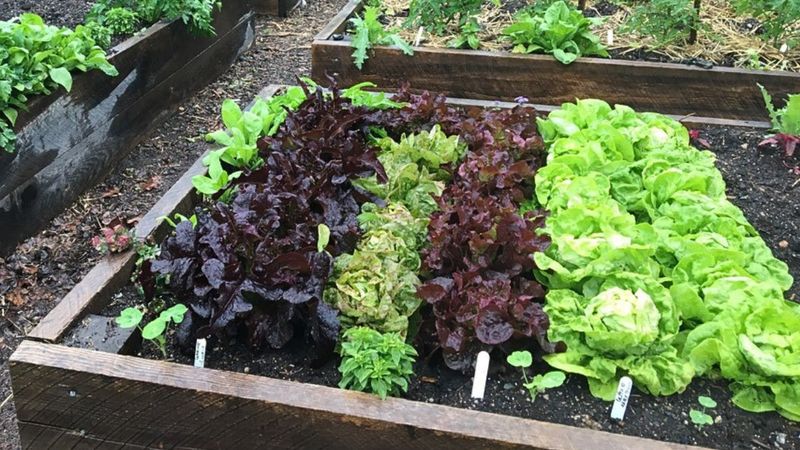
By late May or early June, lettuce is already starting to feel the pressure. Longer days and rising temperatures trigger bolting, which turns leaves bitter and ends the harvest fast.
Growing lettuce under or beside taller warm-season plants like peppers can provide just enough filtered shade to slow that process and squeeze a few extra weeks out of a cool-season crop that would otherwise be done by Memorial Day.
Peppers are not the biggest plants in the garden, but they do cast some afternoon shade once they fill out. Planting lettuce on the east or north side of a pepper row gives the greens a break from the hottest afternoon sun without cutting off morning light entirely.
Lettuce still needs several hours of direct sun each day to grow well, so this pairing works best as a seasonal bridge rather than a long-term solution.
Plan the timing carefully. Start lettuce in early spring so it has several weeks of cool growing conditions before the peppers are transplanted.
Peppers go in after the last frost when nighttime temperatures stay reliably above 55 degrees Fahrenheit. At that point, your lettuce should already be producing leaves you can harvest regularly while the peppers are still getting established.
Do not expect this pairing to carry lettuce through a full summer. Once temperatures consistently reach the upper 80s, lettuce will bolt regardless of shade.
Harvest leaves frequently, pull spent plants when bolting begins, and use that freed-up space for a second succession of warm-season crops. The real win here is maximizing early season production before summer fully arrives.
4. Tuck Radishes Around Cucumbers For A Fast Early Crop
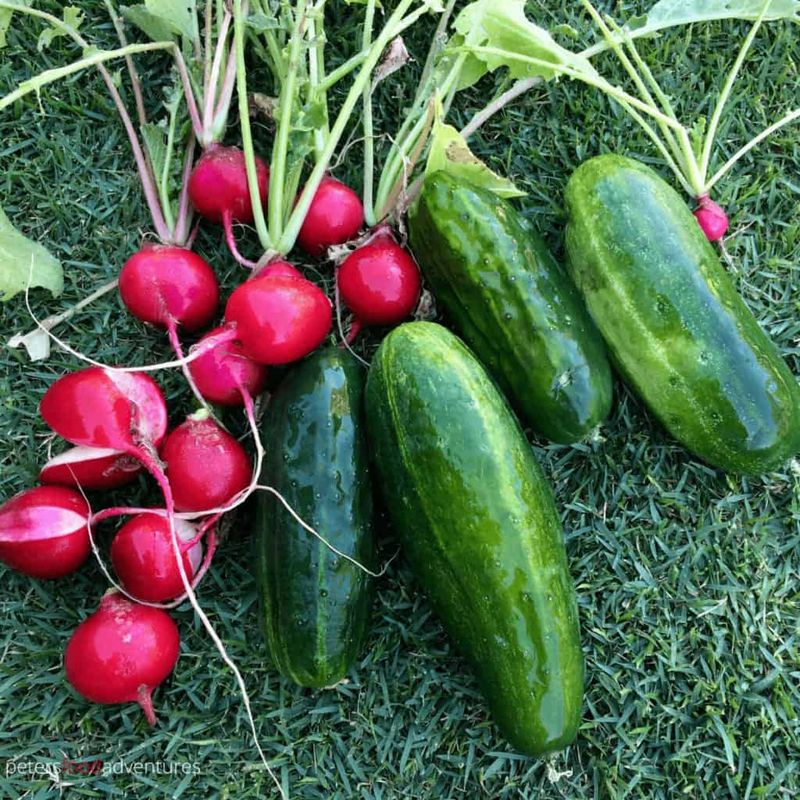
Radishes might be the most underappreciated vegetable in the garden. They mature in as few as 25 days, which means you can plant them in a bed that is not quite ready for its main warm-season crop and harvest something useful before the season fully shifts.
Tucking radishes around the edges of a cucumber planting is one of the most practical ways to use a raised bed during that awkward transition from late spring to early summer.
Cucumbers need warm soil to germinate and grow well. University Extension recommends waiting until soil temperature reaches at least 60 degrees Fahrenheit before direct seeding cucumbers, which typically puts planting around late May in central regions.
Radishes, by contrast, can go in weeks earlier when soil is still cool. Plant them around the perimeter of the bed and they will be ready to pull right around the time your cucumber seedlings need the space to spread.
Cucumbers grow quickly once the weather warms and need consistent moisture, full sun, and support if you are growing them vertically on a trellis, which is a smart choice for small raised beds. Vertical growing keeps fruit off the soil, improves airflow, and makes harvesting easier.
Keep the bed weeded and mulched to hold moisture, since cucumbers are sensitive to drought stress.
Some gardeners mention that radishes may reduce certain pest pressure around cucumbers, but the research supporting that claim in home garden settings is not strong enough to rely on. Treat the pairing as a timing and space strategy.
Getting two crops from one bed in one season is a solid practical win on its own.
5. Grow Beans Near Corn Only With Enough Bed Space
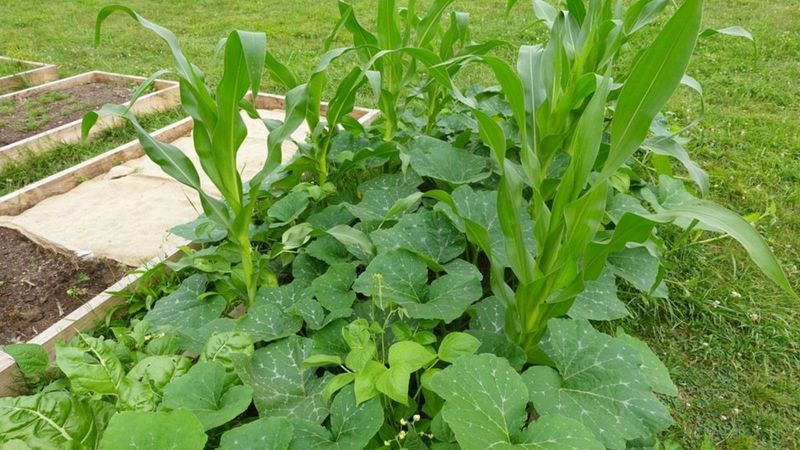
The traditional pairing of beans and corn goes back centuries in Native American agricultural practice, often combined with squash in what is known as the Three Sisters system. The idea is appealing, and the logic makes sense on a larger scale.
Corn can provide structure for pole beans to climb, beans add nitrogen to the system over time, and squash covers the ground to reduce weeds and hold moisture. The challenge is that raised beds often make this trio more complicated than helpful.
Corn has specific pollination needs that most backyard gardeners overlook. Corn is wind-pollinated, and a single row of four or five plants will produce poorly filled ears because there is not enough pollen moving between plants.
Ohio State University Extension and other Midwest sources consistently recommend planting corn in blocks of at least four rows rather than single rows to support good pollination. In a small raised bed, fitting a proper block of corn is genuinely difficult.
Beyond pollination, corn plants are tall and can shade out everything nearby, including the beans they are supposed to support. Wind can also push tall corn over in a narrow raised bed that lacks the surrounding soil mass of an in-ground row.
Bush beans are often a more practical choice for raised beds, since they stay compact and produce well without needing any support structure.
If your raised beds are large, at least four feet by eight feet or bigger, and you want to try a small corn block, space plants about 12 inches apart in a grid pattern.
Add bush beans around the edges rather than pole beans to keep things manageable and avoid shading out lower crops.
6. Pair Cabbage With Dill To Support Beneficial Insects
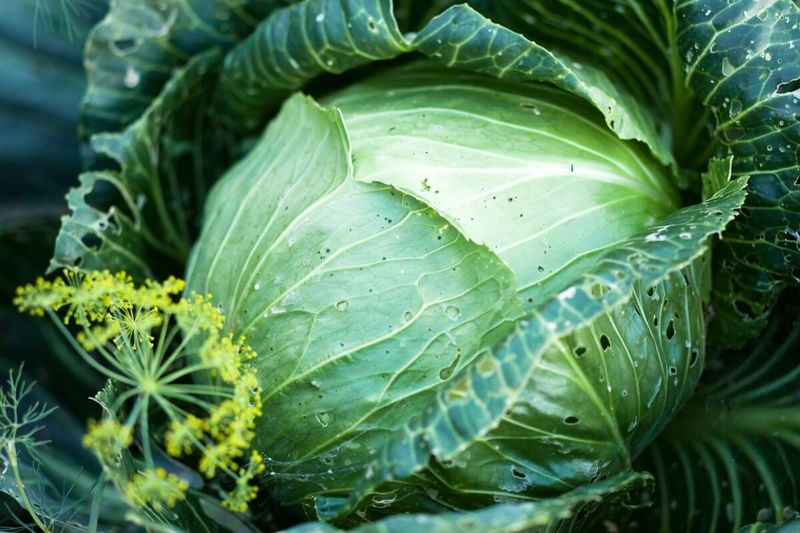
Letting dill flower in your garden might feel counterintuitive if you have been pinching herb plants all season to keep them producing.
However, allowing some dill to bloom near cabbage plants is one of the more evidence-supported strategies for attracting beneficial insects.
The small umbrella-shaped flowers of dill are known to attract parasitic wasps and other predatory insects that feed on common garden pests, according to several university Extension resources focused on integrated pest management.
Cabbage is a reliable producer in cool spring and fall seasons, but it comes with a lineup of potential pest problems. Imported cabbageworm, cabbage loopers, and aphids can all put pressure on brassica crops during the growing season.
Row cover applied right after transplanting is one of the most effective physical barriers against cabbage moths laying eggs on plants. Remove the cover when temperatures get very hot or when you need to check plant progress.
Spacing matters a lot with cabbage. Heading types typically need 12 to 18 inches between plants to form tight heads, and crowding them reduces airflow, which increases the risk of fungal issues in wet spring weather.
Plant dill nearby, but not so close that it shades or crowds the cabbage. A border planting of dill along one edge of the bed works well.
Check cabbage plants regularly for small white eggs on the undersides of leaves and remove caterpillars by hand when found. Dill supports the beneficial insect population, but it does not replace scouting and manual management.
Good fertility, adequate moisture, and consistent attention will do more for your cabbage harvest than any single companion planting choice.
7. Plant Spinach With Peas For A Cool Spring Start
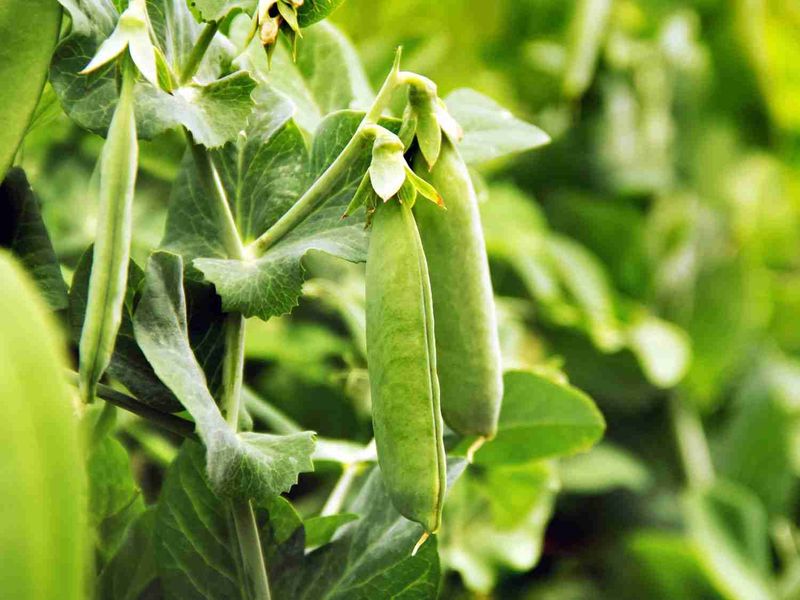
Few things feel better in a garden than getting something in the ground early.
Peas and spinach are two of the earliest crops you can plant in spring, often going in the ground four to six weeks before the last frost date, which means late March or early April in many parts of the state.
Both crops prefer cool weather and actually grow slowly or stop altogether once summer heat arrives, making them a natural pair for the same raised bed during that narrow spring window.
Peas climb when given support, so a simple trellis made from stakes and netting or twine works well in a raised bed. Grow peas on the north or west side of the bed so their vertical growth does not shade the spinach below.
Spinach stays low and compact, using ground-level space that the peas leave open. The combination keeps the entire bed productive without either crop shading out the other significantly during the cool weeks they share.
Plant both crops as soon as the soil is workable in spring, meaning it is not frozen solid and crumbles rather than smearing when squeezed. Raised beds warm up faster than in-ground soil, which gives you a slight head start.
Peas prefer soil temperatures around 45 to 75 degrees Fahrenheit for germination, and spinach germinates best below 70 degrees.
Harvest spinach leaves regularly to encourage new growth. As temperatures climb toward summer, spinach will bolt and turn bitter.
Pull spent spinach plants and let the peas finish their run. Once both crops are done, clear the bed and replant with warm-season vegetables to keep production going through the rest of the growing season.