12 Vegetables North Carolina Gardeners Can Plant Once And Harvest For Years
North Carolina gardeners know the value of a plant that earns its keep.
While annual vegetables demand replanting year after year, perennial vegetables quietly come back stronger, offering reliable harvests with far less effort.
These vegetables thrive in North Carolina’s climate, settling into the soil and producing season after season once established.
They reduce labor, conserve water, and create a garden that feels more like an ecosystem than a checklist.
Plant them once, and they reward patience with consistency.
From early spring shoots to fall harvests, perennial vegetables stretch the growing season and lighten the workload.
For gardeners who want more food with less fuss, these plants are a long-term investment that pays dividends year after year.
1. Asparagus (Asparagus Officinalis)
Patience pays off beautifully with asparagus, one of the most rewarding perennial vegetables for North Carolina gardeners.
Once you plant crowns in well-drained soil enriched with compost, you’ll wait about three years before taking your first full harvest.
This waiting period allows the root system to establish deeply and strongly.
After establishment, asparagus beds can produce tender spears for fifteen to twenty years or even longer with proper care.
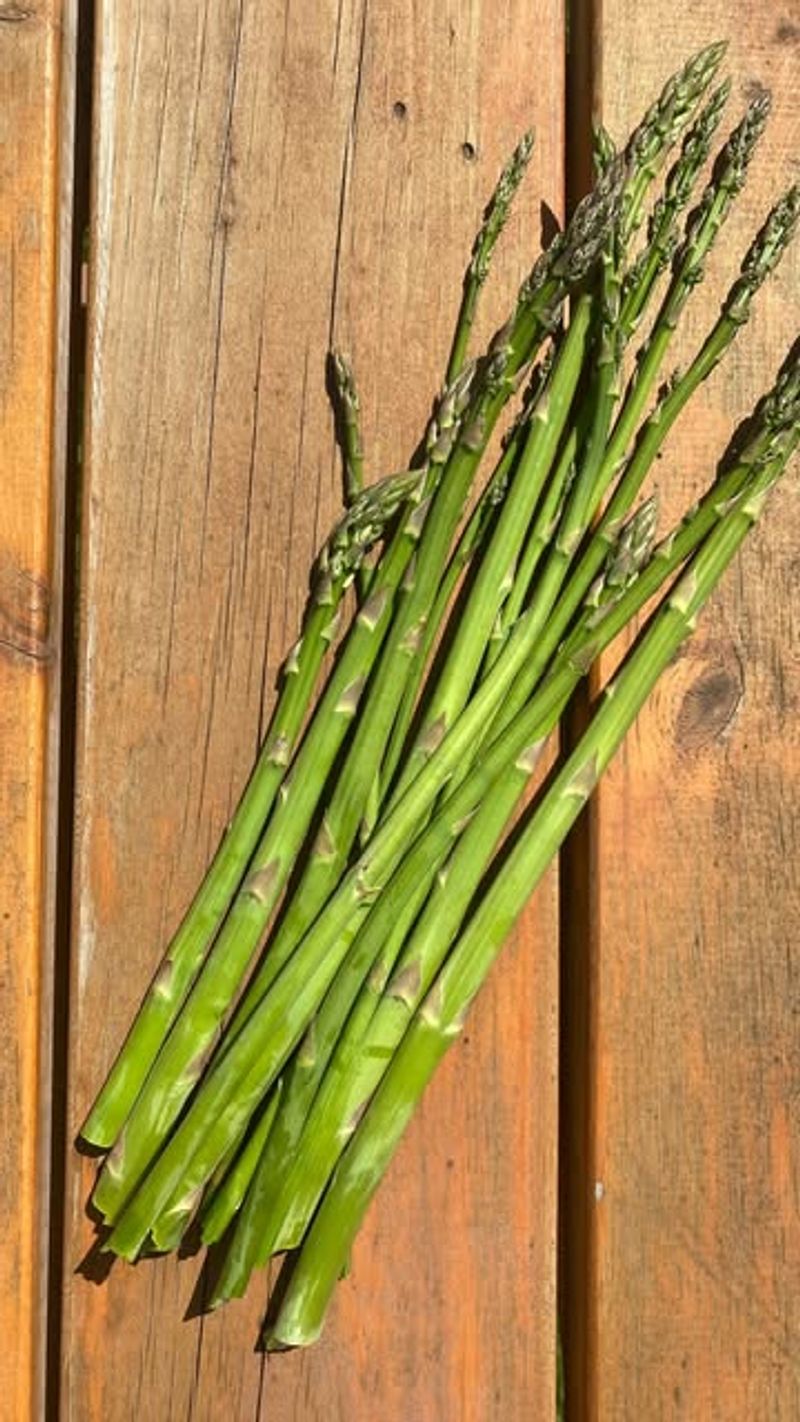
Each spring, as soil temperatures warm, thick green or purple spears emerge rapidly, sometimes growing several inches daily.
Harvest season typically lasts six to eight weeks, giving you plenty of fresh asparagus for grilling, roasting, or steaming.
North Carolina’s moderate winters provide the necessary cold dormancy period asparagus needs to thrive.
Choose a permanent location with full sun and excellent drainage, since these plants dislike wet feet.
Regular weeding, annual compost applications, and allowing ferns to grow after harvest season keeps beds productive for decades.
Male plants generally produce more spears than female plants, which spend energy making berries.
Modern all-male hybrid varieties offer higher yields and fewer unwanted seedlings.
With minimal annual maintenance, your asparagus patch becomes a reliable spring tradition that feeds your family year after year.
2. Walking Onions / Egyptian Onions (Allium × Proliferum)
Walking onions earn their quirky name through a fascinating self-planting habit that makes them nearly effortless for North Carolina gardeners.
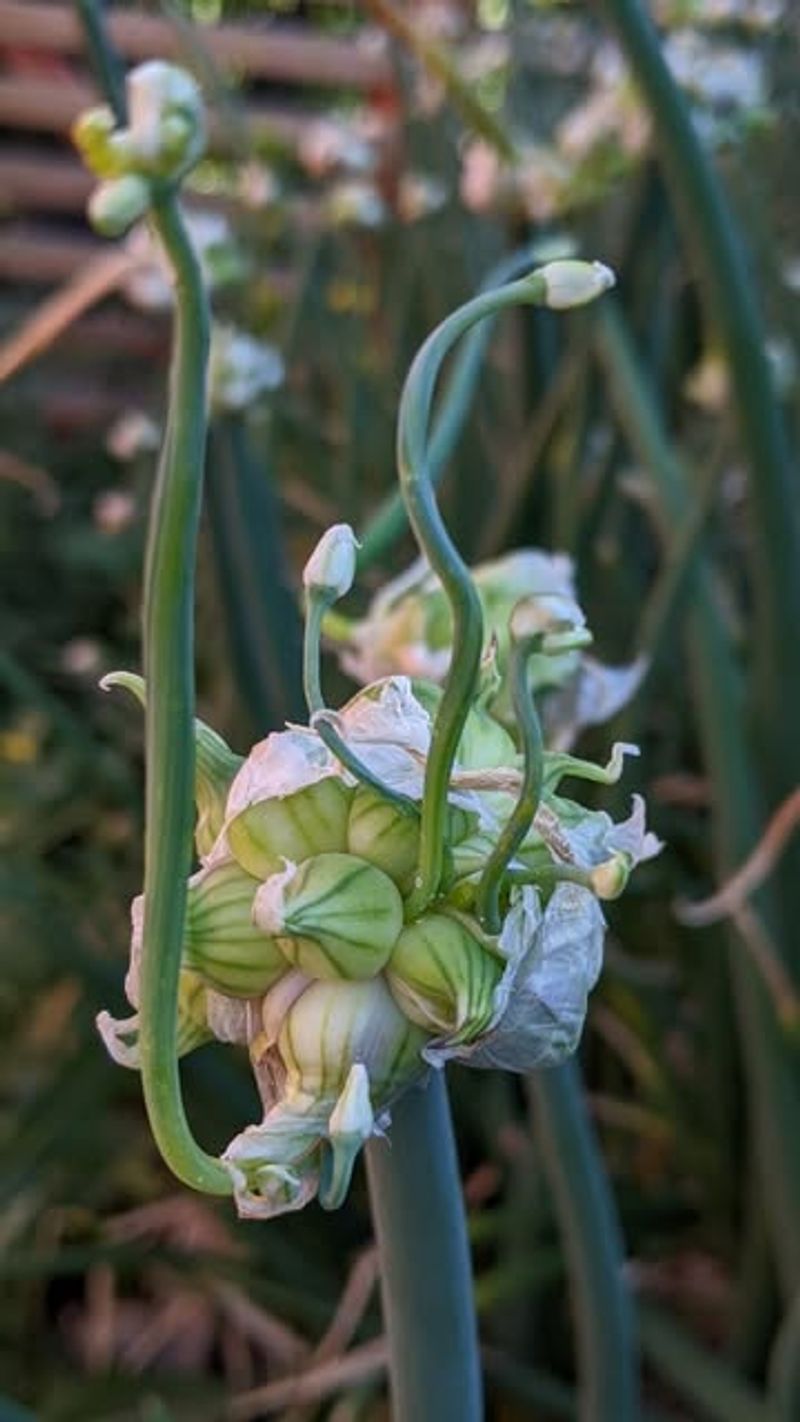
Instead of producing flowers, these unusual alliums develop clusters of small bulbils at the tops of their hollow stalks.
As these top-set bulbs grow heavier, the stalks bend toward the ground, planting the bulbils naturally and “walking” across your garden bed over time.
You can harvest both the underground bulbs and the topset bulbils for cooking, using them like shallots or small onions.
The hollow green leaves provide continuous harvests similar to scallions throughout the growing season.
Simply snip what you need, and new growth continues emerging from the base.
These hardy perennials tolerate North Carolina’s summer heat and winter cold without protection.
They multiply readily, creating expanding clumps that you can divide and share with fellow gardeners.
Plant them once in spring or fall, and they’ll establish quickly in average garden soil.
Walking onions require almost no maintenance beyond occasional watering during extended dry periods.
They resist most pests and diseases while providing three types of harvests: greens, underground bulbs, and aerial bulbils.
Their unusual appearance adds visual interest to edible landscapes, and their reliability makes them perfect for gardeners seeking low-maintenance perennial vegetables that truly take care of themselves.
3. Chives (Allium Schoenoprasum)
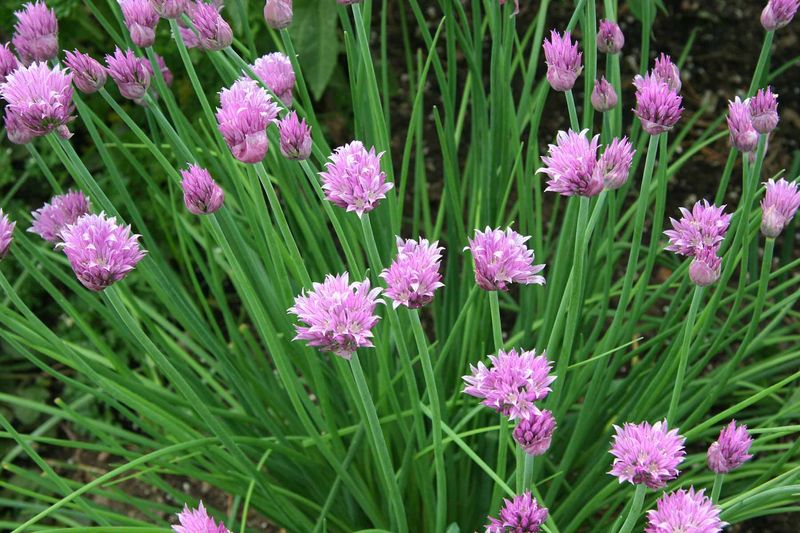
Few perennial herbs prove as dependable and versatile as chives, which thrive throughout North Carolina’s diverse climate zones.
These slender, grass-like plants form attractive clumps that expand gradually, providing fresh mild onion flavor for salads, soups, baked potatoes, and countless other dishes.
Their hollow leaves grow continuously from spring through fall, allowing repeated harvests without harming the plant.
In late spring, chives produce globe-shaped purple flowers that are not only beautiful but also completely edible.
The blooms add color and mild onion taste to salads while attracting beneficial pollinators to your garden.
After flowering, simply cut back the foliage, and fresh new growth emerges quickly.
Chives tolerate partial shade, though they produce most vigorously in full sun.
They adapt to various soil types as long as drainage is adequate.
North Carolina winters cause chives to become dormant, but they reliably return each spring without any protection needed.
Dividing clumps every three to four years rejuvenates plants and provides extras for expanding your herb garden or sharing.
Chives also grow successfully in containers, making them ideal for patios and small spaces.
They resist most pests naturally and rarely require fertilization beyond occasional compost.
Whether you’re an experienced gardener or just beginning, chives offer foolproof success and years of flavorful harvests from a single planting.
4. Garlic Chives (Allium Tuberosum)
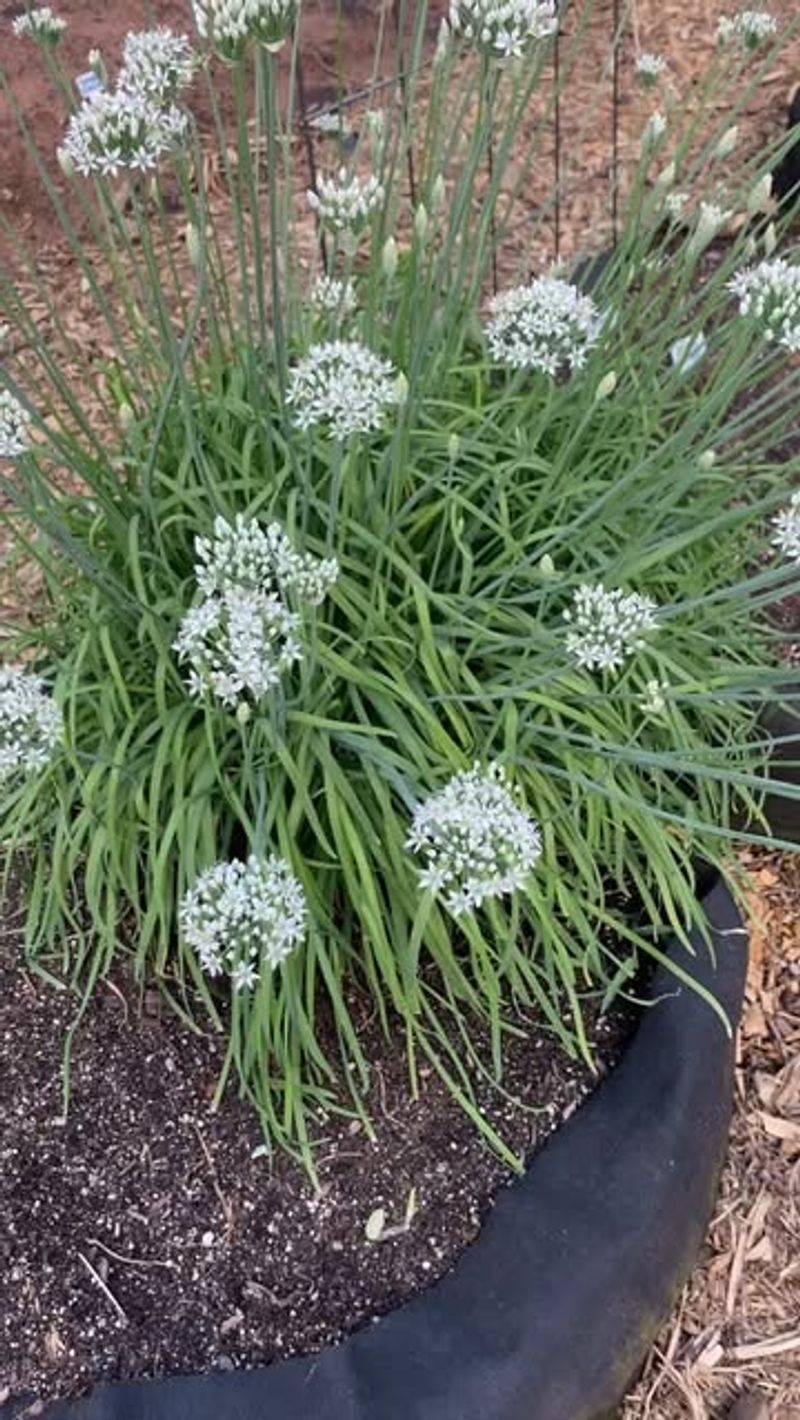
Garlic chives bring a delightful twist to the traditional chive, offering flat leaves with a distinctive garlic flavor rather than onion taste.
These tough perennials handle North Carolina’s summer heat better than common chives, making them especially valuable for Piedmont and coastal gardeners.
The flat, broader leaves grow in dense clumps that expand reliably year after year.
Late summer brings clusters of white star-shaped flowers on tall stems, creating an elegant display while attracting butterflies and beneficial insects.
Both leaves and flowers are edible, adding garlicky punch to stir-fries, dumplings, salads, and Asian-inspired dishes.
Harvest by cutting leaves about an inch above the soil, and new growth appears within days.
Garlic chives tolerate more shade than many perennial vegetables, though they produce most abundantly with at least four hours of direct sun.
They adapt to various soil conditions and require minimal watering once established.
Unlike garlic bulbs, these plants don’t need replanting each season and actually improve with age.
One consideration: garlic chives self-seed enthusiastically if you allow flowers to mature completely.
Removing spent blooms before seeds develop keeps them from spreading too aggressively.
Dividing clumps every few years maintains vigor and provides plants for other garden areas.
Their reliable nature, heat tolerance, and distinctive flavor make garlic chives an excellent addition to any North Carolina perennial vegetable garden.
5. Rhubarb (Rheum Rhabarbarum)
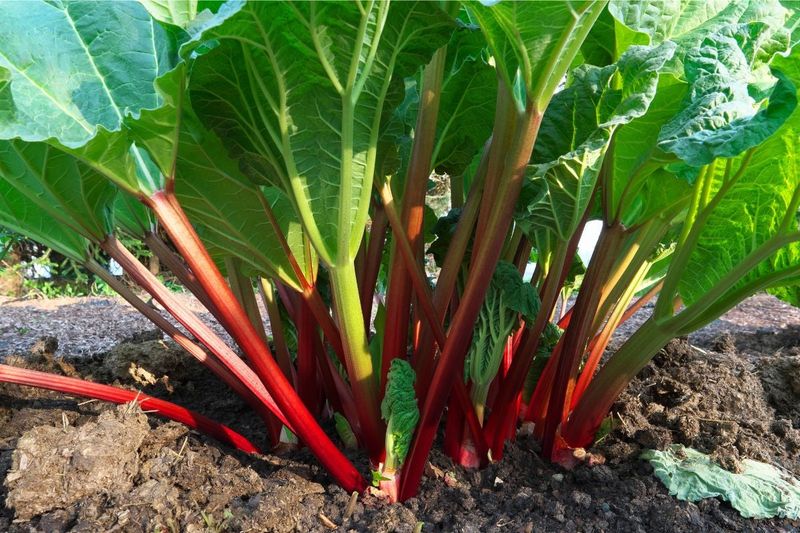
Rhubarb’s dramatic leaves and tart stalks have graced gardens for generations, though North Carolina gardeners need to choose their location carefully.
This cold-loving perennial performs best in the mountain regions and cooler areas of the Piedmont where winter temperatures drop sufficiently.
Rhubarb requires a period of cold dormancy to thrive, making it challenging in the warmest coastal areas.
When sited properly, rhubarb plants can produce for twenty years or more, sending up thick stalks each spring that are perfect for pies, jams, and sauces.
Only the stalks are edible; the large leaves contain oxalic acid and should never be consumed.
Harvest by grasping stalks near the base and pulling with a twisting motion rather than cutting.
Plant rhubarb crowns in early spring in deeply prepared soil enriched with plenty of compost or aged manure.
Choose a location with full sun to partial shade and excellent drainage.
Allow plants to establish for two full seasons before harvesting, letting them build strong root systems.
During harvest season, take only one-third of the stalks at a time, leaving the rest to feed the plant.
Stop harvesting by early summer, allowing plants to store energy for next year’s production.
Annual applications of compost and occasional division of crowded clumps maintain productivity.
For mountain and upper Piedmont gardeners, rhubarb offers decades of tangy harvests and impressive garden presence from a single planting.
6. Perennial Kale / Tree Collards (Brassica Oleracea Varieties)
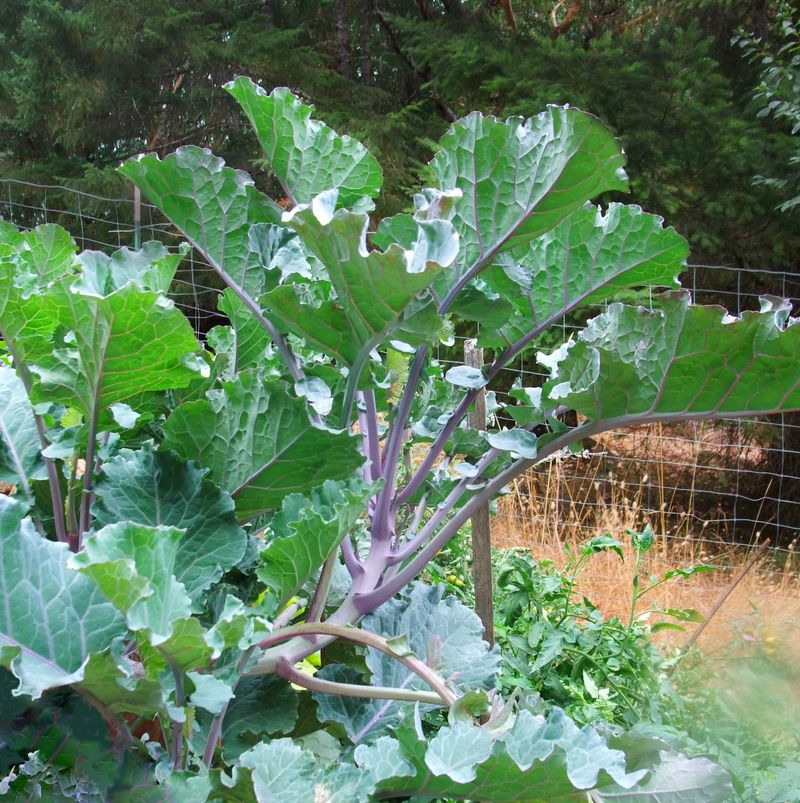
Tree collards and perennial kale varieties challenge the notion that brassicas must be replanted annually.
These remarkable plants can grow six feet tall or more, developing woody stems and producing edible leaves for multiple years in North Carolina’s milder regions.
Coastal and lower Piedmont gardeners often enjoy the greatest success, while mountain gardeners may need to provide winter protection.
Unlike annual kale and collards, these perennial forms don’t typically produce seed, instead propagating from cuttings.
Simply snip six-inch stem sections, remove lower leaves, and root them in water or moist soil.
This vegetative reproduction means you can share plants easily with friends and expand your own plantings.
Harvest individual leaves as needed, working from the bottom up and leaving the growing tip intact.
The plants continue producing new leaves at the top while you harvest older ones below.
Their flavor remains mild even during warm weather when annual brassicas become bitter.
Tree collards and perennial kale appreciate rich soil, consistent moisture, and protection from harsh winter winds.
Mulching around the base helps insulate roots during cold snaps.
Some gardeners grow them in large containers that can be moved to sheltered locations during extreme weather.
While not as widely known as other perennial vegetables, these towering brassicas offer unique beauty and continuous harvests.
Their dramatic height and productive nature make them conversation pieces that also feed your family year-round.
7. Sorrel (Rumex Acetosa)
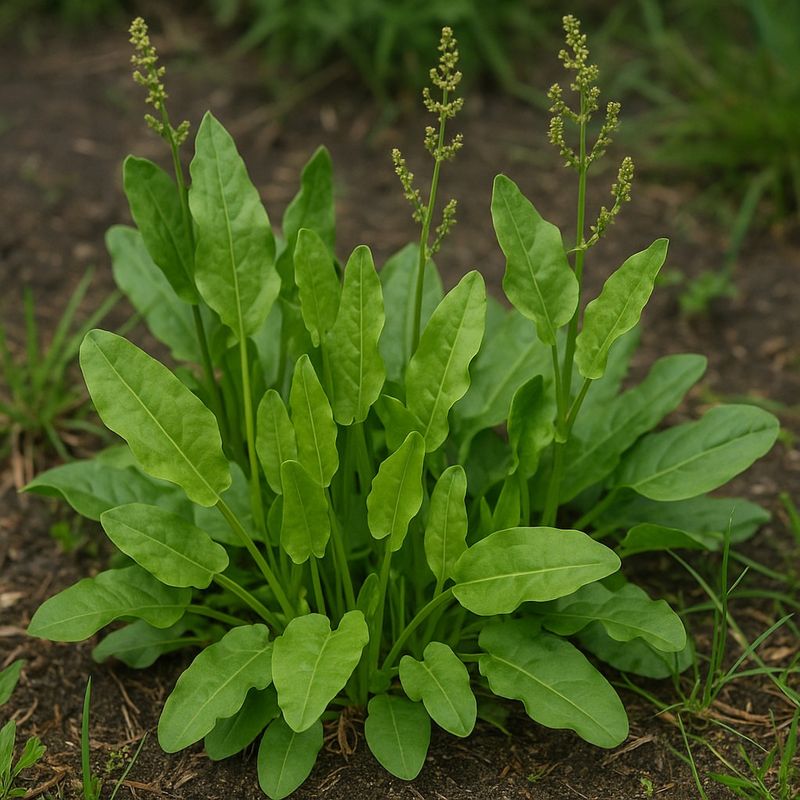
Sorrel’s bright, lemony flavor wakes up salads and soups with a refreshing tang that comes from natural oxalic acid in the leaves.
This underappreciated perennial green thrives throughout North Carolina, tolerating both partial shade and the state’s summer heat better than many leafy vegetables.
French sorrel varieties offer the best flavor, while broader-leaved types produce heavier yields.
Plant sorrel in spring or fall, and it quickly establishes deep taproots that allow it to survive drought and return reliably each year.
The leaves emerge very early in spring, often providing the first fresh greens of the season.
Young, tender leaves offer the mildest flavor, while older leaves become more intensely tart.
Harvest by cutting outer leaves and allowing the center to continue growing.
Sorrel produces abundantly, and regular harvesting encourages fresh, tender growth.
The plant sends up flower stalks in late spring; removing these redirects energy into leaf production.
Sorrel adapts to various soil types but produces most luxuriantly in rich, moisture-retentive soil.
It tolerates more shade than most vegetables, making it valuable for woodland gardens or areas beneath fruit trees.
Plants may become semi-dormant during the hottest summer weeks but revive with cooler fall temperatures.
Dividing clumps every few years maintains vigor and provides plants for other garden areas.
With minimal care, sorrel delivers decades of zesty leaves that add brightness to your cooking throughout most of the year.
8. Jerusalem Artichoke / Sunchoke (Helianthus Tuberosus)
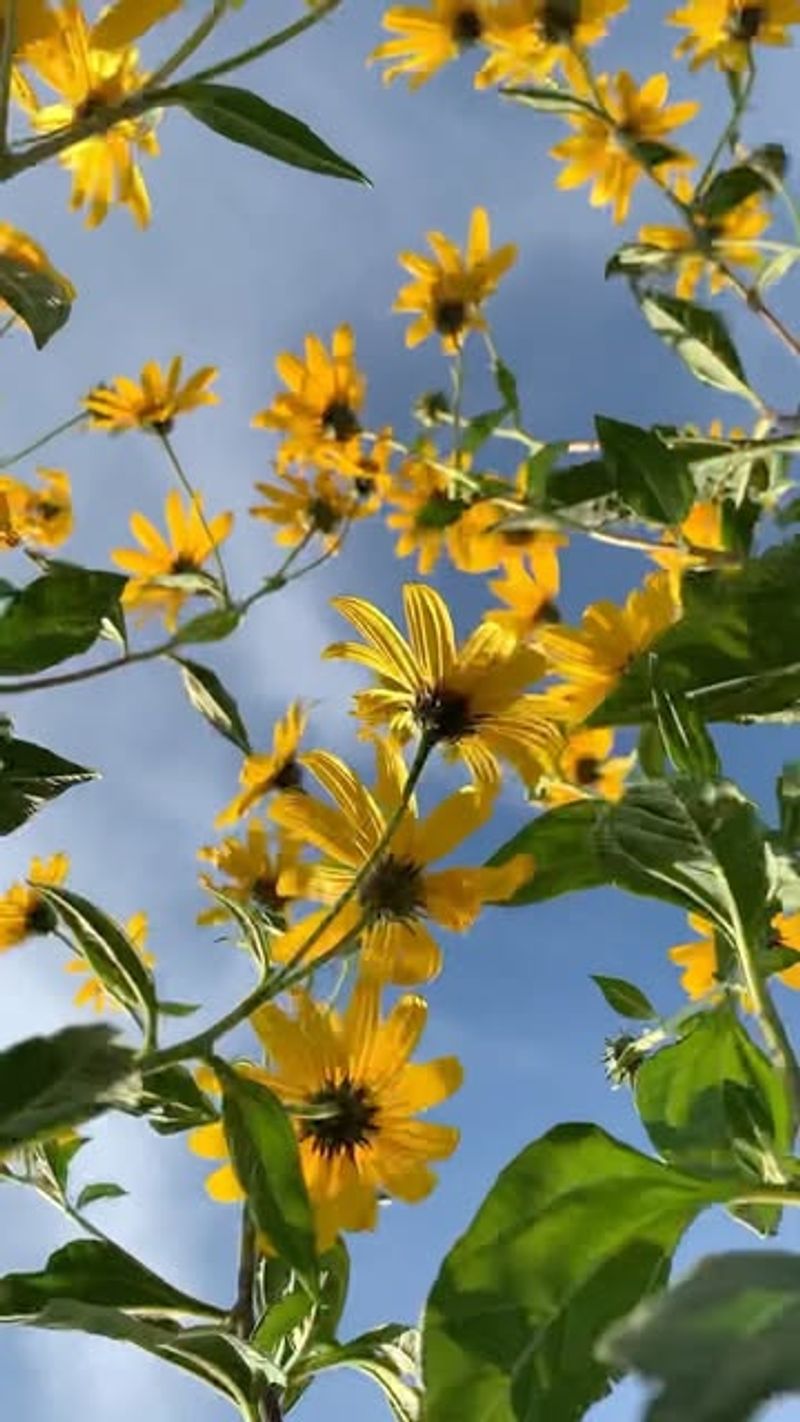
Don’t let the name confuse you—Jerusalem artichokes have nothing to do with Jerusalem or artichokes.
These native North American perennials produce knobby, nutritious tubers underground while sending up tall stalks topped with cheerful yellow flowers that resemble small sunflowers.
In fact, sunchokes are sunflower relatives that can reach ten feet tall in North Carolina’s fertile soil.
Plant tubers in spring, and they’ll multiply enthusiastically, sometimes too enthusiastically for small gardens.
Each tuber piece left in the ground regenerates, so sunchokes can become invasive if not managed carefully.
Consider planting them in a dedicated bed or using barriers to contain their spread.
Harvest tubers after frost when their inulin content converts to sweeter flavors.
Simply loosen soil and gather the knobby tubers, which taste nutty and slightly sweet when roasted or sautéed.
Leave some tubers in the ground, and they’ll regrow the following spring without any effort on your part.
Sunchokes tolerate poor soil, drought, and neglect while still producing abundant crops.
They’re perfect for challenging garden spots where other vegetables struggle.
The tall plants also create effective windbreaks or privacy screens during the growing season.
One caution: sunchokes contain inulin, which some people find difficult to digest initially.
Start with small servings to see how your body responds.
Despite this consideration, sunchokes offer decades of virtually maintenance-free harvests and impressive garden presence.
9. Horseradish (Armoracia Rusticana)
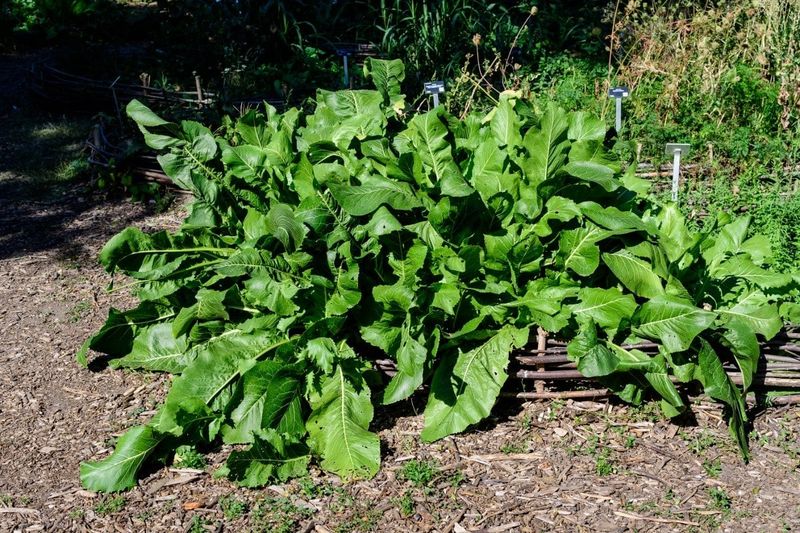
Horseradish’s fiery roots have spiced up roast beef and cocktail sauce for centuries, and once you plant this vigorous perennial, you’ll have fresh horseradish forever.
The large, dock-like leaves emerge early each spring from thick taproots that penetrate deeply into North Carolina soil.
Even small root pieces left behind after harvest will regenerate, making horseradish nearly impossible to eliminate once established.
Plant root cuttings in early spring, setting them at a forty-five-degree angle about two inches deep.
Choose the planting location carefully, since horseradish tends to spread and persist.
Many gardeners plant it in a dedicated area or in large containers sunk into the ground to control its enthusiastic growth.
Harvest roots in fall after frost or in early spring before new growth begins.
Carefully excavate around the main plant, removing side roots while leaving the central crown to regenerate.
The roots are ready to grate fresh or preserve in vinegar for that classic sharp, sinus-clearing flavor.
Horseradish tolerates poor soil and neglect but produces the largest, highest-quality roots in loose, fertile soil with consistent moisture.
It grows in full sun or partial shade throughout North Carolina’s climate zones.
The leaves aren’t typically eaten, but the roots provide decades of pungent harvests.
With virtually no pest or disease problems and minimal care requirements, horseradish rewards gardeners who appreciate its powerful flavor and permanent presence.
10. Globe Artichoke (Cynara Cardunculus)
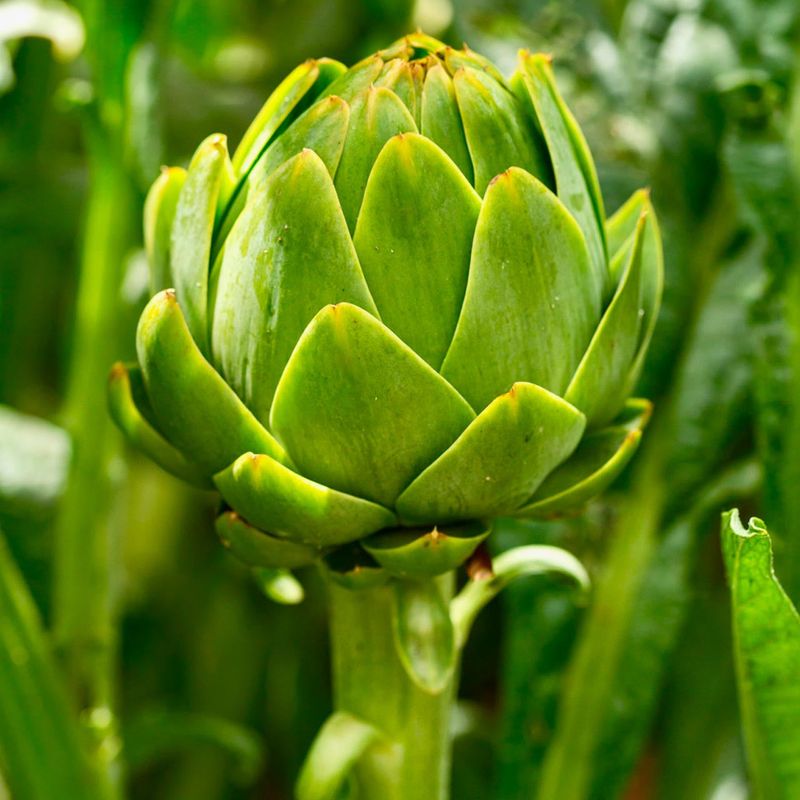
Globe artichokes bring Mediterranean elegance to North Carolina gardens, though they require warmer microclimates to truly behave as perennials.
Coastal gardeners and those in the warmest parts of the Piedmont often succeed in overwintering these dramatic plants, while mountain gardeners typically grow them as annuals.
The silvery-gray foliage and architectural form make artichokes stunning ornamentals even when not producing edible buds.
In favorable locations, established artichoke plants return each spring, sending up thick stalks topped with the familiar scaled buds we harvest and steam.
Each plant can produce a dozen or more artichokes during peak season.
Harvest buds when they’re still tight and firm, before the scales begin opening to reveal purple flowers.
Artichokes demand excellent drainage and full sun, performing best in raised beds enriched with compost.
Mulch heavily around the base before winter to insulate the crown from freezing temperatures.
In marginal areas, covering plants with straw or burlap provides additional protection.
These perennials typically produce best for three to five years before declining and requiring replacement.
Starting new plants from offshoots that emerge around the base ensures continuous production.
While more temperamental than other perennial vegetables on this list, artichokes reward coastal and warm-climate North Carolina gardeners with gourmet harvests and stunning garden presence.
Their exotic appearance and delicious buds make them worth the extra effort in suitable locations.
11. Bunching Onions / Perennial Scallions (Allium Fistulosum)
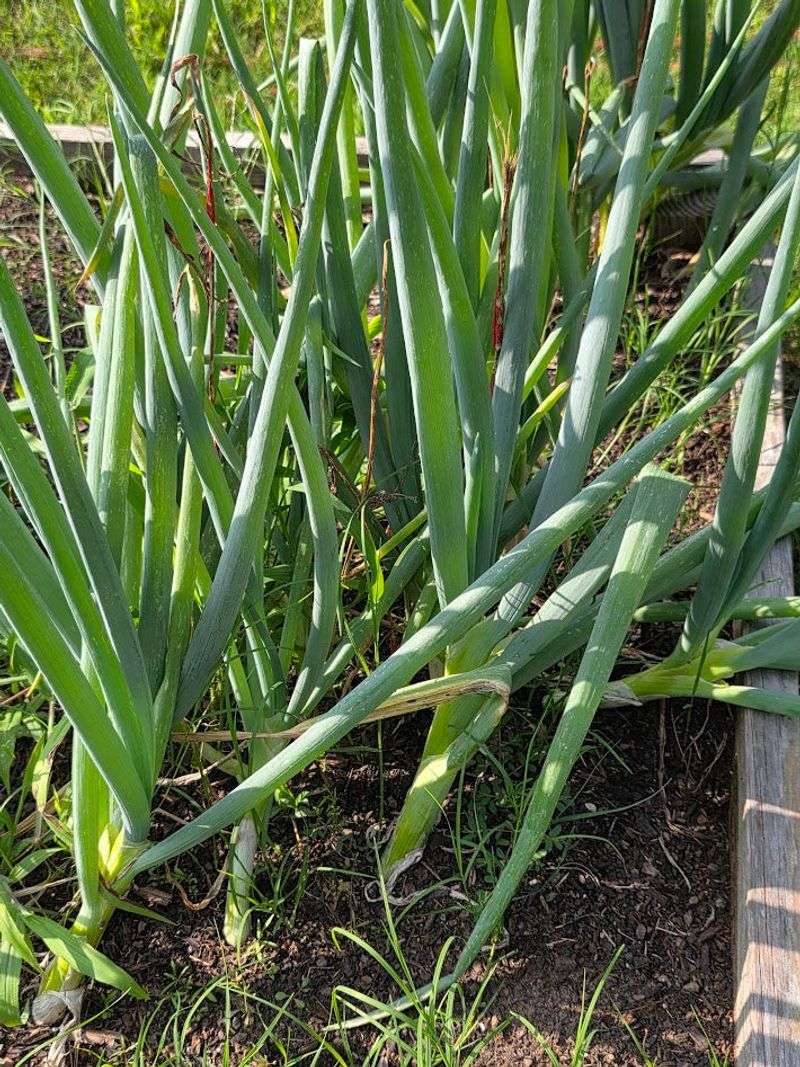
Bunching onions solve the problem of replanting scallions every season by returning faithfully year after year throughout North Carolina.
These hardy perennials form expanding clumps of slender, hollow leaves that taste just like the green onions you buy at the grocery store.
Unlike bulbing onions that focus energy on forming storage bulbs, bunching onions put their effort into producing tender, flavorful leaves.
Plant bunching onions in spring or fall, spacing small plants or divisions about six inches apart.
They establish quickly and begin producing harvestable leaves within weeks.
Cut leaves about an inch above the soil level, and new growth emerges continuously throughout the growing season.
These perennials overwinter successfully across all of North Carolina, becoming dormant during the coldest weeks but reviving quickly as temperatures warm.
In milder coastal areas, they may provide harvests year-round with minimal winter slowdown.
The clumps expand gradually, and you can divide them every few years to create new plantings.
Bunching onions tolerate partial shade and adapt to various soil types, though they produce most abundantly in fertile, well-drained soil with consistent moisture.
They resist most pests and diseases while requiring minimal fertilization.
For gardeners who use green onions frequently in cooking, bunching onions eliminate the need for constant replanting.
A few established clumps provide continuous harvests for years, making them one of the most practical perennial vegetables for North Carolina gardens.
12. Sea Kale (Crambe Maritima)

Sea kale brings a touch of the exotic to North Carolina gardens, though it remains relatively unknown compared to other perennial vegetables.
This striking plant produces thick, blue-gray leaves with ruffled edges and sends up tall stems of white flowers in late spring.
Native to European coastlines, sea kale adapts surprisingly well to North Carolina’s climate, particularly in coastal areas with sandy, well-drained soil.
Multiple parts of sea kale are edible at different times of year.
Young spring shoots can be blanched by covering plants with buckets or mulch, creating tender, mild-flavored stems similar to asparagus.
The young leaves are edible when cooked, offering a cabbage-like flavor.
Even the flower buds can be harvested and prepared like broccoli.
Sea kale requires patience, taking two to three years to establish sufficiently for regular harvesting.
Once mature, plants can produce for a decade or more with proper care.
They prefer full sun and sandy or gravelly soil with excellent drainage, making them ideal for challenging sites where other vegetables struggle.
These perennials tolerate salt spray and coastal conditions exceptionally well, though they also grow successfully inland with appropriate soil preparation.
They require minimal fertilization but appreciate occasional deep watering during extended dry periods.
For adventurous North Carolina gardeners seeking unusual perennial vegetables, sea kale offers unique flavors, striking appearance, and long-term productivity.
Its rarity makes it a conversation piece that few neighbors will recognize.