Warm-Season Flowers You Can Plant In Georgia Right After Frost Ends
Warm-season flowers in Georgia do not need a long wait after frost ends. Once cold risk passes, soil warmth and longer daylight open a short but important window.
Early spring gives flowers time to settle before heat pressure begins. Roots adjust more easily, growth stays balanced, and plants face fewer setbacks once temperatures rise.
This timing often makes the rest of the season easier rather than rushed.
Georgia gardens benefit from this moment because conditions stay forgiving. Stress remains lower, soil still holds moisture, and plants respond well to early care.
That advantage fades fast once late spring heat arrives.
Not every flower belongs in the ground this early. Some types need warmer nights before they perform well.
Others handle this transition without trouble and move forward with steady growth.
These warm-season flowers are the ones Georgia gardeners often choose right after frost ends, when conditions finally allow confident planting.
1. Zinnias
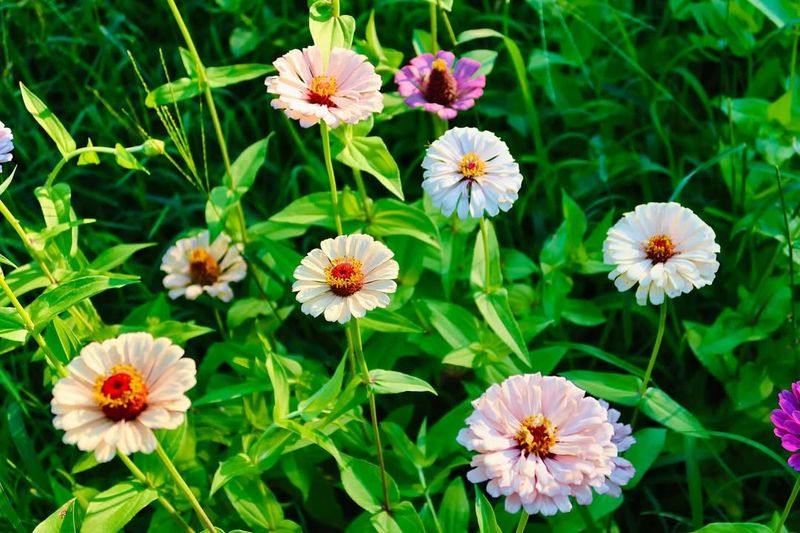
Bursting with color and personality, zinnias are like the fireworks of the flower world. These cheerful blooms come in nearly every color you can imagine, from hot pink to deep purple to sunny yellow.
Gardeners across Georgia love them because they’re practically foolproof and keep producing flowers from late spring until the first frost arrives.
Growing zinnias couldn’t be easier, even if you’ve never planted anything before. Simply scatter seeds directly into your garden soil after the last frost has passed, and you’ll see sprouts within a week.
They prefer full sun and well-drained soil, but they’re not picky about much else. Water them at the base rather than overhead to prevent mildew on the leaves.
The best part about zinnias is how quickly they grow. Within six to eight weeks, you’ll have gorgeous blooms perfect for cutting and bringing indoors.
Butterflies and hummingbirds absolutely adore these flowers, so you’ll enjoy plenty of wildlife visitors too. Deadheading spent blooms encourages even more flowers to appear throughout the summer.
Different varieties offer different heights, from compact six-inch plants to towering four-foot giants. This versatility makes zinnias perfect for borders, containers, or as stunning focal points in your Georgia landscape.
They handle the heat and humidity like champions, never complaining about those sweltering afternoon temperatures.
2. Vinca (Annual Periwinkle)
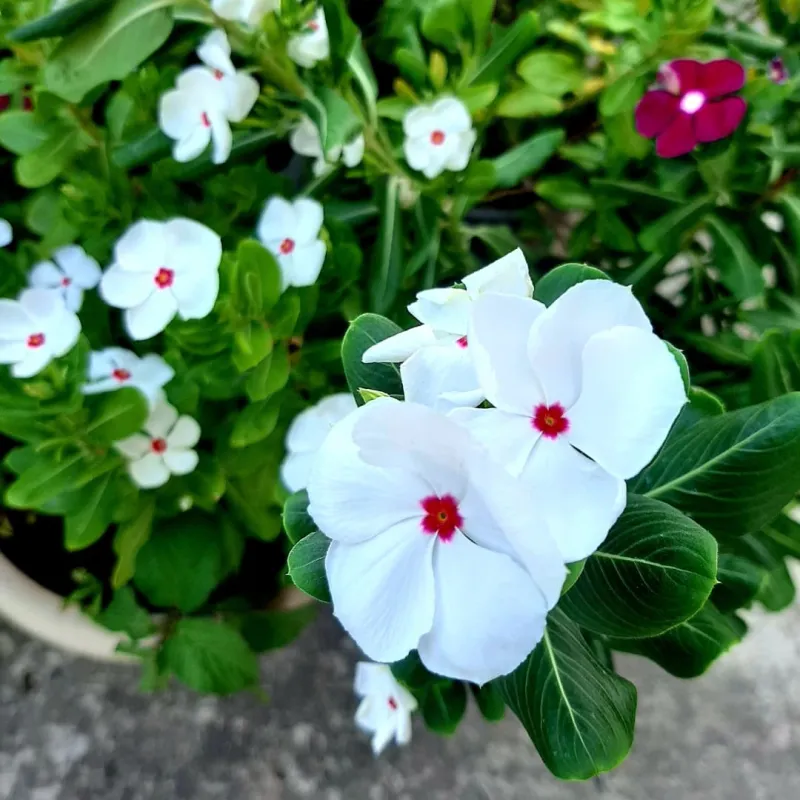
Tough as nails yet delicate in appearance, vinca flowers laugh in the face of Georgia’s brutal summer heat. These little powerhouses produce endless blooms in shades of pink, white, red, and purple, all while other plants are begging for mercy.
The glossy green foliage stays attractive even during the hottest days, creating a lush carpet of color in your yard.
Vinca plants are incredibly low-maintenance once established in your garden. They tolerate drought conditions better than most annuals, making them ideal for busy homeowners who sometimes forget to water.
Plant them in full sun or partial shade, spacing them about eight to ten inches apart. They’ll quickly fill in the gaps and create a stunning ground cover.
One remarkable feature of vincas is their self-cleaning nature. Unlike many flowers that require regular deadheading, vincas drop their spent blooms on their own and immediately produce new ones.
This means less work for you and continuous color all season long. They’re perfect for edging walkways, filling containers, or brightening up those tricky hot spots in your Georgia landscape.
These flowers rarely suffer from pest problems and can handle both humidity and occasional dry spells. They bloom from late spring through fall, providing reliable color for months.
Their compact growth habit makes them excellent choices for small spaces or mixed plantings with taller flowers.
3. Angelonia
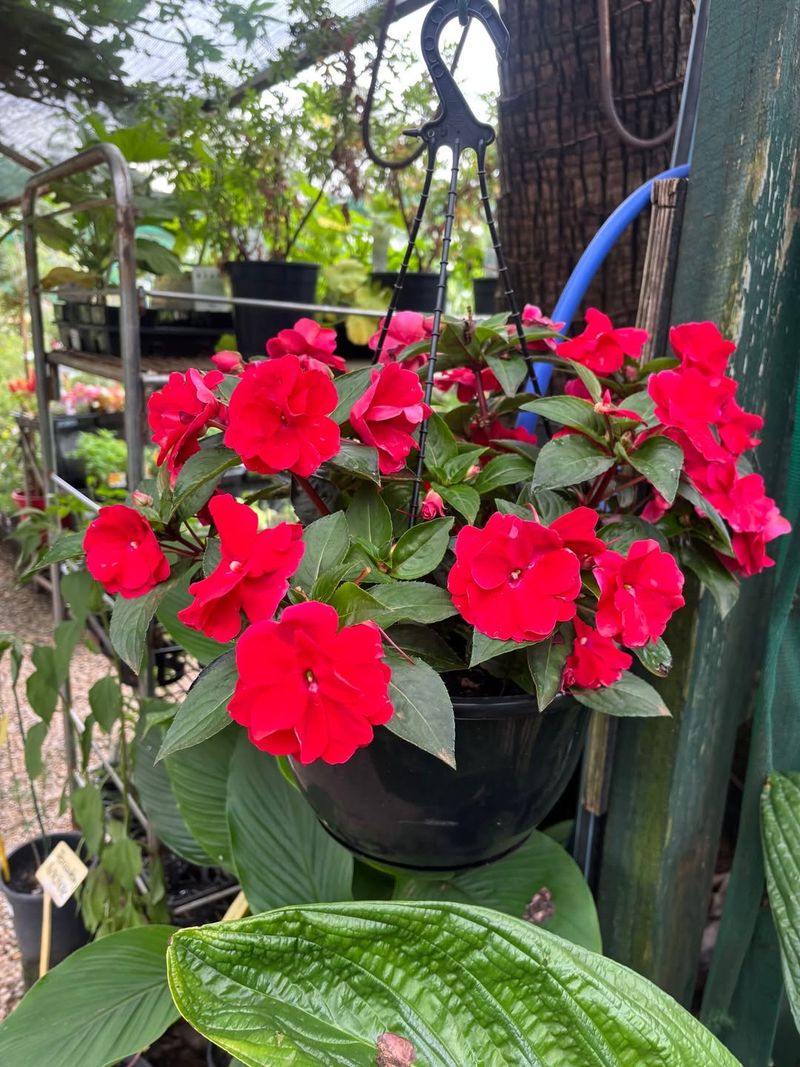
Often called summer snapdragons, angelonia plants bring elegant vertical interest to Georgia gardens when many other flowers are struggling. Their spiky flower stalks rise above the foliage like tiny orchids, creating a sophisticated look that belies how easy they are to grow.
Colors range from deep purple and blue to soft pink and crisp white, offering options for any color scheme.
What makes angelonia special is its incredible heat tolerance combined with its refined appearance. While the blooms look delicate, these plants are built for Southern summers and actually perform better as temperatures rise.
They require minimal care once planted and will bloom continuously without deadheading. Full sun is ideal, though they’ll tolerate a bit of afternoon shade in the hottest parts of Georgia.
The fragrance is another delightful surprise. On warm evenings, angelonia releases a subtle apple-like scent that adds another dimension to your garden experience.
Deer tend to avoid these plants, which is a bonus if you live in areas where wildlife browsing is common. They also resist most common garden pests and diseases.
Angelonia works beautifully in containers, raised beds, or traditional garden borders. Their upright growth habit reaches about 18 to 24 inches tall, making them perfect middle-ground plants.
They pair wonderfully with trailing plants or shorter ground covers, creating layered displays that look professionally designed.
4. Cosmos
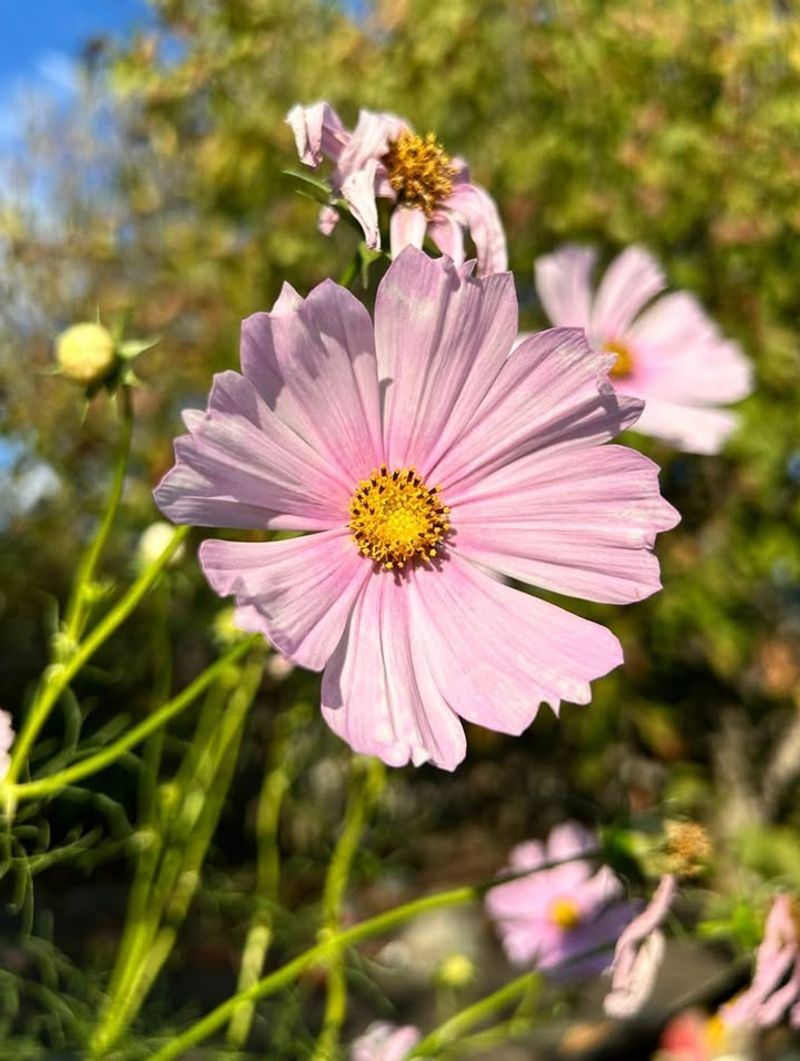
Graceful and airy, cosmos flowers bring a cottage-garden charm to Georgia landscapes without any fuss. Their daisy-like blooms dance on tall, slender stems above feathery foliage, creating movement and lightness in the garden.
These carefree beauties self-sow readily, meaning you might find happy volunteers popping up year after year in unexpected places.
Starting cosmos from seed is incredibly rewarding because they germinate quickly and grow fast. You can direct-sow seeds into your garden bed after the danger of frost has passed, and within weeks you’ll see substantial growth.
They actually prefer lean soil and don’t need fertilizer, which makes them perfect for those challenging spots where other plants struggle. Too much rich soil makes them produce more leaves than flowers.
Cosmos handle Georgia’s summer heat beautifully, especially the taller varieties that can reach four to six feet. They create excellent backgrounds for shorter plants and make outstanding cut flowers that last well in vases.
Butterflies, bees, and other beneficial insects flock to cosmos, making your garden a haven for pollinators.
Available in shades of pink, white, burgundy, and orange, cosmos offer plenty of variety. The chocolate cosmos variety even has a subtle chocolate scent.
These flowers bloom from midsummer through fall, providing color when many spring bloomers have faded. Their delicate appearance hides a tough constitution that thrives in heat and humidity.
5. Gomphrena
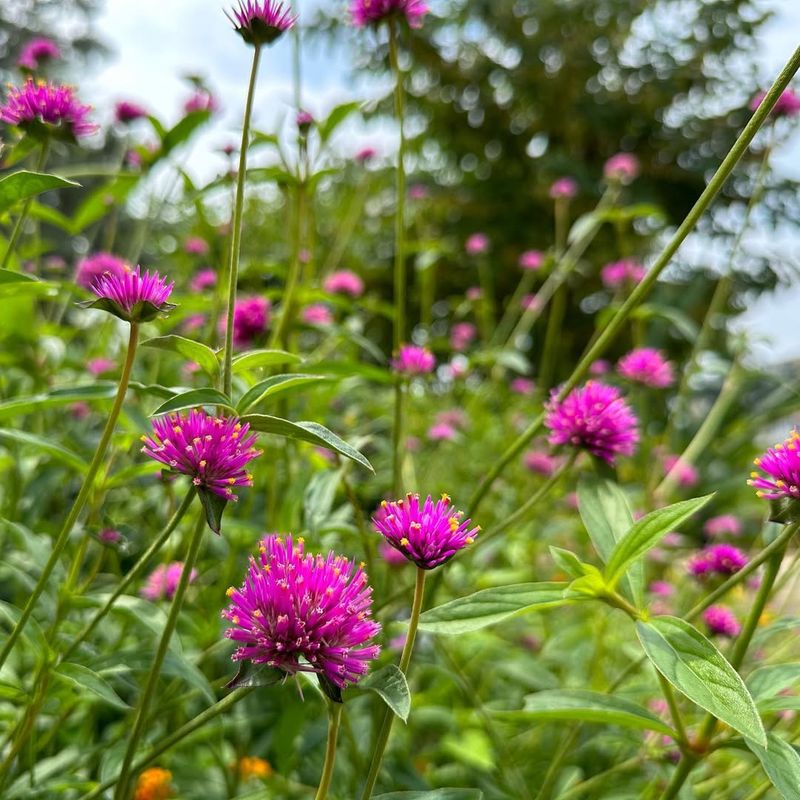
Looking like tiny colorful clover blooms, gomphrena flowers are the unsung heroes of Georgia summer gardens. These globe-shaped beauties stand up to heat, humidity, and drought like few other flowers can.
Their unique texture and form add visual interest that flat-faced flowers simply can’t provide, making them favorites among gardeners who want something different.
Gomphrena plants are remarkably versatile in the landscape. They work equally well in formal borders, wildflower meadows, or contemporary container designs.
The flowers come in vibrant purples, hot pinks, whites, and even strawberry red shades. Each bloom lasts for weeks, and the plants produce new flowers constantly throughout the growing season without any deadheading required.
Perhaps the best feature of gomphrena is its use as a dried flower. The blooms retain their color and shape perfectly when dried, making them ideal for everlasting arrangements and crafts.
Simply cut the stems when flowers are at their peak, bundle them, and hang them upside down in a dry location. Within a couple of weeks, you’ll have beautiful dried flowers that last for months.
These plants attract butterflies and bees while resisting deer and rabbits. They grow well in Georgia’s clay soils as long as drainage is adequate.
Reaching heights of 12 to 24 inches depending on variety, gomphrena fits into various garden designs. Their long bloom period from late spring through fall makes them exceptional value plants.
6. Celosia
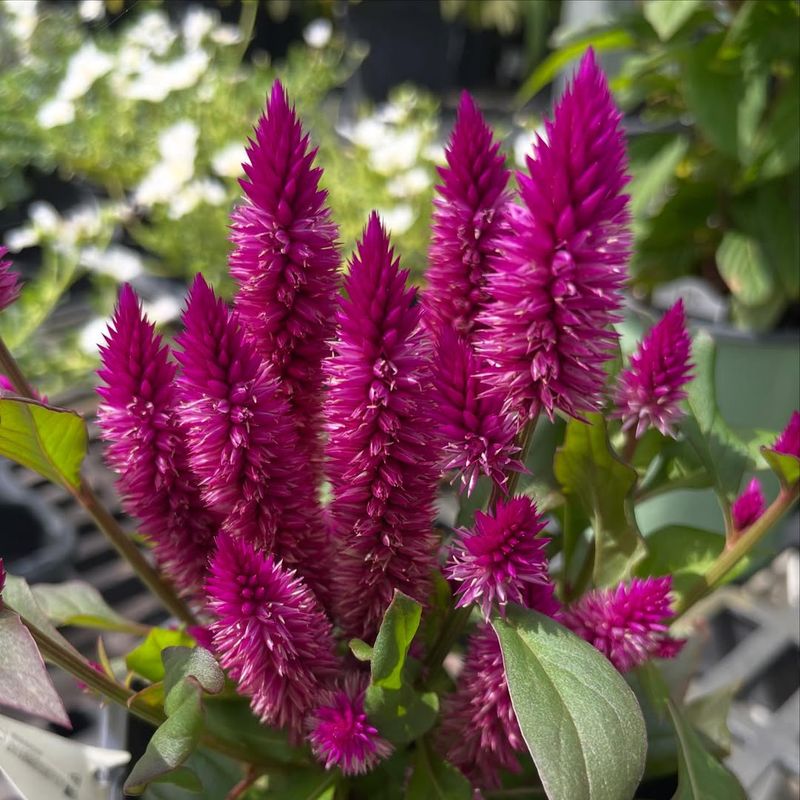
Bold and architectural, celosia commands attention with flower heads that look like flames or coral formations. These dramatic plants come in two main types: plumed varieties with feathery plumes and crested types that resemble colorful brain coral.
Both forms thrive in Georgia’s summer heat and add exotic flair to any planting scheme.
The color range of celosia is nothing short of spectacular. Fiery reds, oranges, and yellows dominate, but you’ll also find softer pinks, purples, and even lime green varieties.
The blooms hold their color for months without fading, even under intense Georgia sunshine. Many gardeners use celosia as focal points in their designs because the flowers are simply impossible to ignore.
Growing celosia successfully means providing full sun and well-drained soil. These plants originated in tropical regions, so they genuinely love hot weather and high humidity.
They’re perfect for Georgia’s climate and actually perform better here than in cooler regions. Water them regularly during establishment, but once they’re growing strong, they tolerate dry conditions surprisingly well.
Celosia makes excellent cut flowers and dries beautifully for arrangements. The velvety texture of the blooms is unique among common garden flowers.
Plants typically reach 12 to 36 inches tall depending on variety, making them suitable for both front and middle positions in garden beds. They bloom from early summer until frost, providing months of vibrant color.
7. Portulaca (Moss Rose)
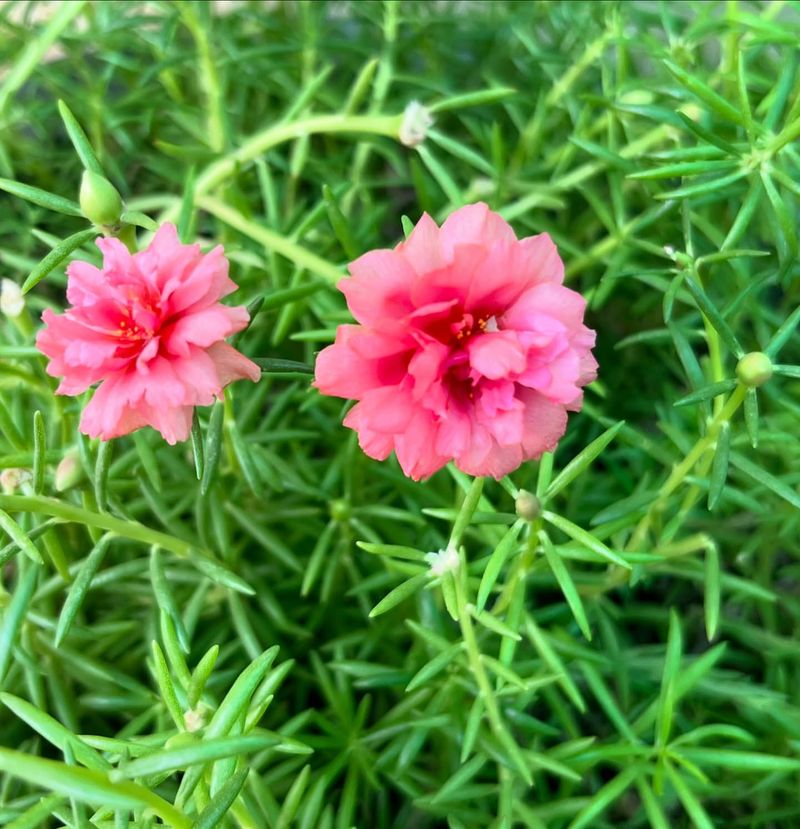
Carpeting the ground with jewel-toned blooms, portulaca is the ultimate flower for hot, dry spots in Georgia gardens. These succulent-leaved plants produce flowers that look like miniature roses in dazzling shades of pink, yellow, orange, red, and white.
They open in the morning sun and close at night, creating a daily show that never gets old.
Portulaca is practically indestructible once established in your garden. It thrives in poor, sandy soil where other plants would struggle, making it perfect for those problem areas every gardener has.
The fleshy leaves store water, allowing portulaca to survive extended dry periods without wilting. This makes it ideal for Georgia’s occasional summer droughts or for gardeners who travel frequently.
Plant portulaca in the hottest, sunniest spots you have. It actually performs poorly in shade and needs at least six hours of direct sun to bloom well.
The plants spread quickly, forming a dense mat that suppresses weeds naturally. They’re excellent for rock gardens, between stepping stones, in containers, or cascading over walls and edges.
One wonderful characteristic of portulaca is how it self-sows. After flowering, tiny seeds scatter and often germinate the following year, giving you free plants.
The blooms attract bees and butterflies while deer and rabbits leave them alone. Despite their delicate appearance, these tough little plants handle Georgia’s heat and humidity without breaking a sweat.
8. Gaillardia (Blanket Flower)
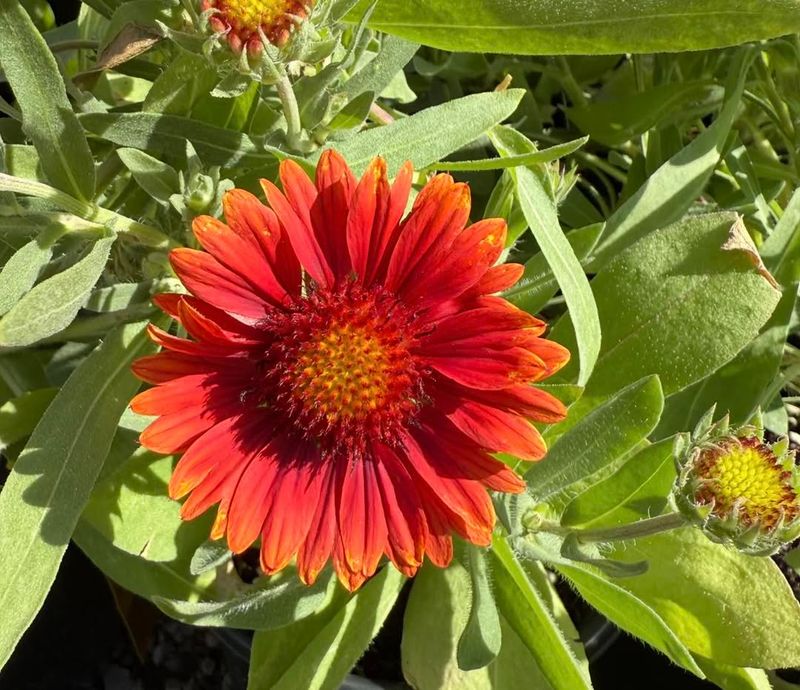
Native to North America and perfectly adapted to Georgia conditions, gaillardia brings warm sunset colors to summer gardens. The flowers feature bold red petals tipped with yellow or gold, resembling the patterns of Native American blankets, which inspired their common name.
These tough, often short-lived or reseeding perennials bloom prolifically with minimal care.
Gaillardia is the definition of a low-maintenance plant. It tolerates heat, humidity, drought, poor soil, and even salt spray if you live near the coast.
Once established, these flowers practically take care of themselves. They bloom from late spring through fall, providing months of continuous color.
Deadheading spent blooms encourages more flowers, but even if you forget, they’ll keep blooming anyway.
The flowers attract butterflies, bees, and other pollinators in impressive numbers. Goldfinches love the seeds that form after blooming, so leaving some spent flowers in place provides food for wildlife.
Deer rarely bother gaillardia, making it excellent for rural Georgia properties. The plants grow 12 to 24 inches tall and spread slowly to form attractive clumps.
Gaillardia works beautifully in wildflower meadows, cottage gardens, or modern perennial borders. The vibrant colors combine well with purple flowers like salvia or blue blooms like Russian sage.
They’re also outstanding cut flowers that last well in arrangements. For Georgia gardeners seeking native plants that support local ecosystems, gaillardia is an essential choice.
9. Coreopsis
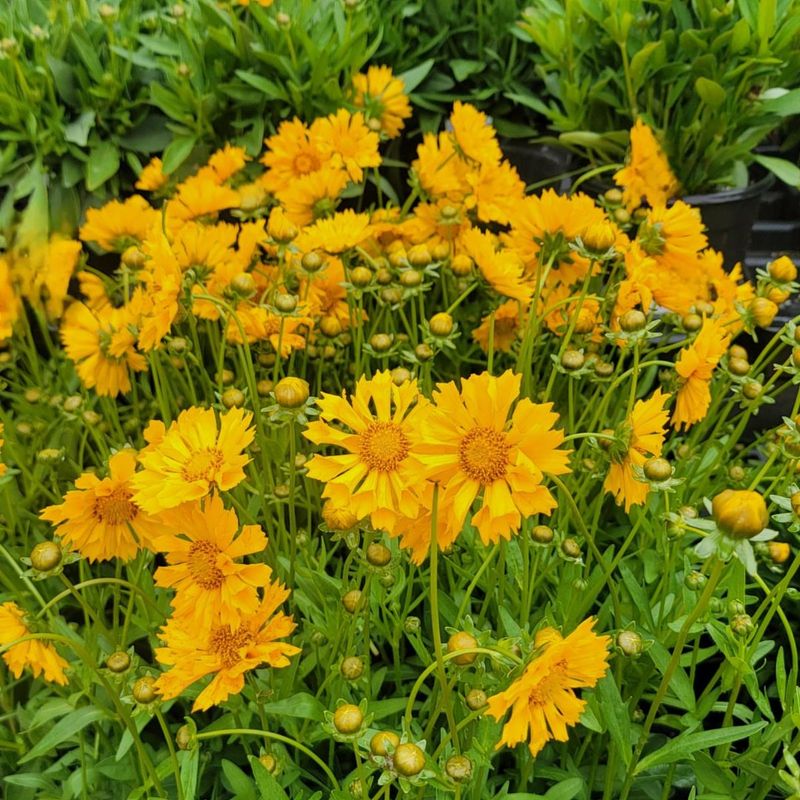
Cheerful and abundant, coreopsis floods Georgia gardens with sunshine-yellow blooms that seem to multiply by the day. Also called tickseed, these native wildflowers are perfectly suited to Southern growing conditions and require virtually no pampering.
Their bright flowers dance on thin, wiry stems above neat foliage, creating a carefree, natural look that fits any garden style.
Several coreopsis species and varieties thrive in Georgia, from the classic yellow ‘Moonbeam’ to newer varieties in pink, red, and bicolor combinations. All share the same easygoing nature and love of hot weather.
They bloom heavily in late spring and early summer, then continue producing flowers sporadically through fall. A light trim after the first flush of blooms encourages a strong second showing.
Coreopsis adapts to various soil types but prefers well-drained conditions. Full sun brings out the best flowering, though they’ll tolerate some afternoon shade in the hottest parts of Georgia.
These plants are exceptionally drought-tolerant once established, making them smart choices for water-wise landscapes. They rarely suffer from pest or disease problems and don’t need fertilizer to perform well.
The flowers attract numerous butterflies and native bees, supporting important pollinator populations. Birds enjoy the seeds in fall and winter, providing year-round wildlife value.
Coreopsis spreads slowly to form attractive patches but never becomes invasive. Their long bloom period and minimal care requirements make them favorites among both beginning and experienced Georgia gardeners.