8 Ways To Stop White-Tailed Deer From Destroying Your Georgia Garden
Few things are more frustrating than walking outside to find chewed leaves, snapped stems, and half-eaten blooms where a healthy garden stood the night before.
White-tailed deer move quietly through Georgia neighborhoods, and once they discover an easy food source, they rarely stop at just one visit.
Tender new growth, vegetable beds, and even young shrubs can quickly become targets. Fencing an entire property is not always realistic, and hoping they will simply move on usually leads to more damage.
Deer are persistent, adaptable, and surprisingly bold when food is within reach. The good news is that protecting a garden does not require extreme measures.
With the right strategies in place, it is possible to discourage repeat visits and keep plants growing without turning the yard into a battleground.
1. Install Tall Fencing That Deer Cannot Easily Jump
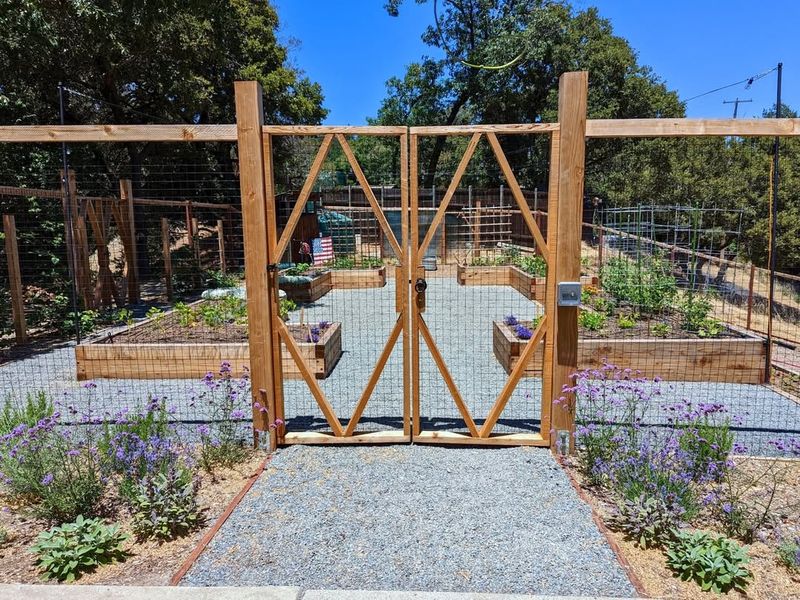
A fence that only reaches five feet is basically an open invitation for a white-tailed deer. In Georgia, where deer populations are dense and food pressure is high, fencing needs to be taken seriously if you want real results.
White-tailed deer are powerful jumpers, capable of clearing obstacles up to eight feet tall with ease. Standard garden fencing simply does not cut it.
For solid protection, your fence needs to stand at least eight feet high, and ideally closer to ten feet in areas where deer pressure is especially heavy.
Wooden privacy fences work well because deer cannot see through them to gauge the landing space on the other side. When a deer cannot judge the distance, it is far less likely to attempt a jump.
Woven wire fencing is another strong option and tends to be more budget-friendly for larger garden areas.
Electric fencing is also worth considering for Georgia homeowners who deal with repeat visitors. A two-strand electric setup, with one strand at about twenty-four inches and another at about forty-eight inches, can be surprisingly effective.
Baiting the lower strand with peanut butter helps train deer to avoid the area entirely.
Installing fencing correctly from the start saves a lot of headaches later. Anchor posts deeply and check for gaps regularly, since deer will find and exploit any weak spot they discover.
2. Use Deer Resistant Plants They Avoid Browsing
Planting smart is one of the most underrated strategies Georgia gardeners have at their disposal. Not every plant is equally appetizing to white-tailed deer, and knowing which ones they naturally avoid can completely change how you design your garden.
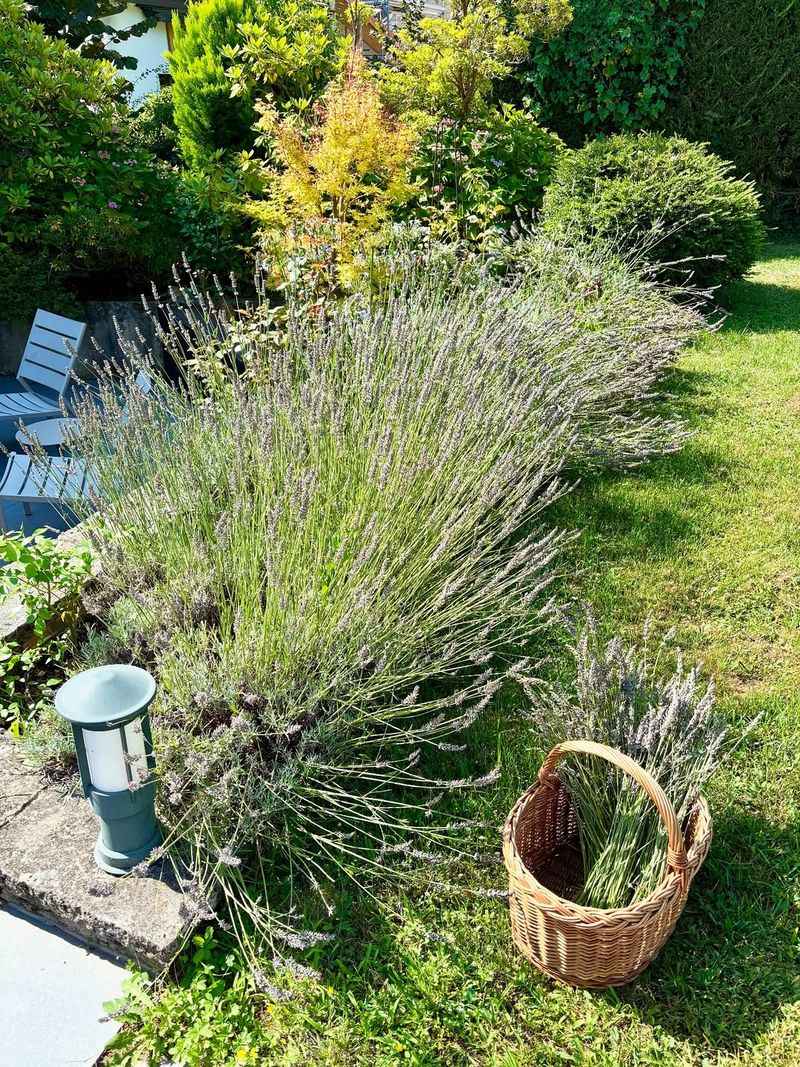
Deer tend to steer clear of plants with strong fragrances, fuzzy or prickly textures, and bitter or toxic tastes. In Georgia, some excellent deer-resistant choices include lavender, rosemary, salvia, Russian sage, catmint, and ornamental grasses.
Yarrow and coneflower are also solid picks that perform beautifully in Georgia’s climate while staying off most deer menus.
Switching to deer-resistant plants does not mean sacrificing beauty or variety. Georgia gardeners have a wide selection of stunning native plants that deer consistently ignore.
Beautyberry, native azaleas in certain varieties, and black-eyed Susans can all add serious color without becoming a deer buffet.
Keep in mind that no plant is completely deer-proof, especially during late summer or early winter when food becomes scarce. Hungry deer in Georgia will sample almost anything if they are desperate enough.
Combining resistant plants with other deterrent methods gives you far better results than relying on plant choice alone.
Grouping resistant plants near the garden edges creates a natural buffer zone. Placing more vulnerable plants toward the center adds a second layer of protection that deer are less likely to push through.
3. Apply Scent Repellents And Reapply After Rain
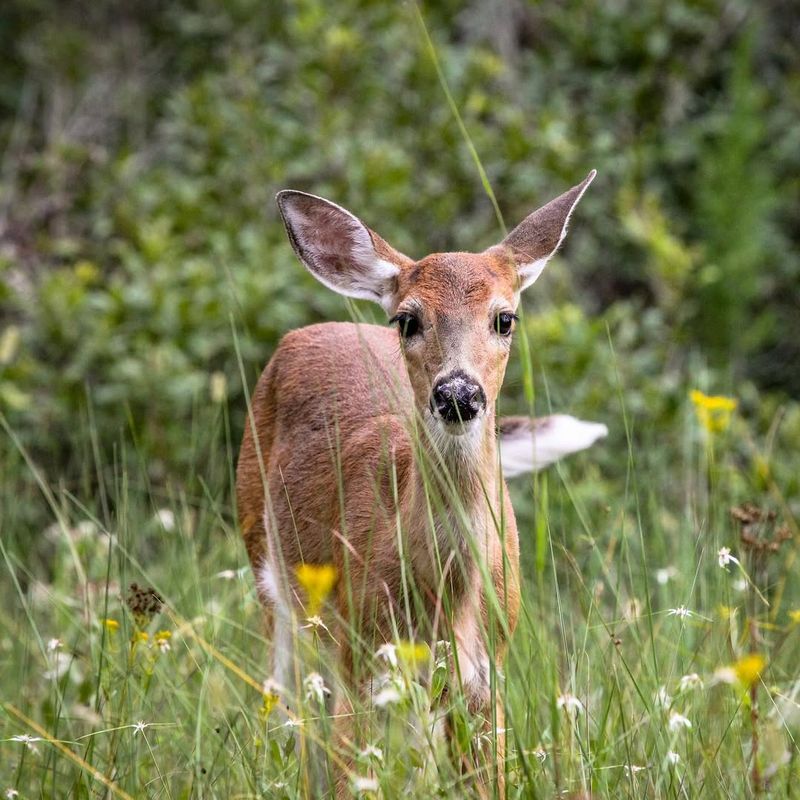
Smell is a white-tailed deer’s most powerful sense, and turning that strength against them is one of the smartest moves a Georgia gardener can make.
Scent-based repellents work by creating an odor barrier that signals danger or simply makes plants taste and smell unpleasant.
Commercial repellents containing putrescent egg solids, garlic, or predator urine are among the most effective options available.
Products like Deer Out, Liquid Fence, and Bobbex have strong track records with Georgia gardeners who deal with regular deer pressure.
Spray directly onto foliage, stems, and around the perimeter of beds for best coverage.
One major mistake gardeners make is applying repellent once and forgetting about it. Rain washes away scent barriers quickly, especially during Georgia’s spring and summer storm season.
Reapplying every seven to fourteen days, or immediately after heavy rain, keeps the barrier strong and consistent.
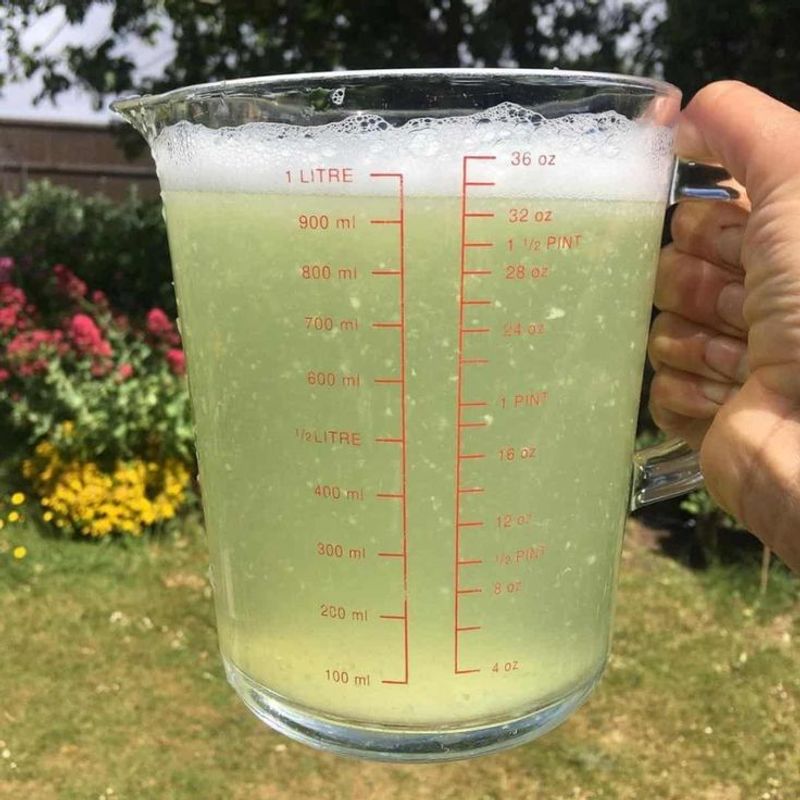
Homemade options also work reasonably well for budget-conscious gardeners. A spray made from water, hot pepper flakes, dish soap, and garlic can be mixed at home and applied regularly.
While not as long-lasting as commercial formulas, it adds a useful extra layer when used alongside other methods.
Rotate between different scent repellents every few weeks to prevent deer from growing accustomed to a single smell. Keeping the scent environment unpredictable is key to maintaining long-term effectiveness across your Georgia garden.
4. Rotate Repellents So Deer Do Not Get Used To Them
White-tailed deer are far smarter than most people give them credit for. In Georgia, where deer encounter gardens regularly, they quickly learn to ignore repellents that stay the same week after week.
Rotation is the secret ingredient that keeps your defenses working over the long haul.
When deer encounter the same scent or taste deterrent repeatedly without any real consequence, they begin to tune it out. Researchers call this process habituation, and it is one of the top reasons repellent programs fail over time.
Switching products every two to three weeks disrupts the pattern before deer settle into a new comfort zone.
Alternate between smell-based repellents and taste-based ones for the best effect. For example, use a garlic and egg spray one cycle, then switch to a hot pepper-based product the next.
Following that with predator scent granules adds a third layer of unpredictability that keeps deer genuinely unsure about your garden.
Changing the application method also helps. One week, spray foliage directly.
Another week, scatter granules along the garden border. Hanging repellent pouches from stakes or fencing adds yet another dimension that deer cannot easily predict or dismiss.
Georgia gardeners who rotate consistently report significantly fewer repeat visits from deer than those using a single product all season.
Treating your repellent program like a rotating schedule rather than a one-time fix makes a noticeable difference in how well your entire garden stays protected.
5. Add Motion Activated Sprinklers To Startle Night Visitors
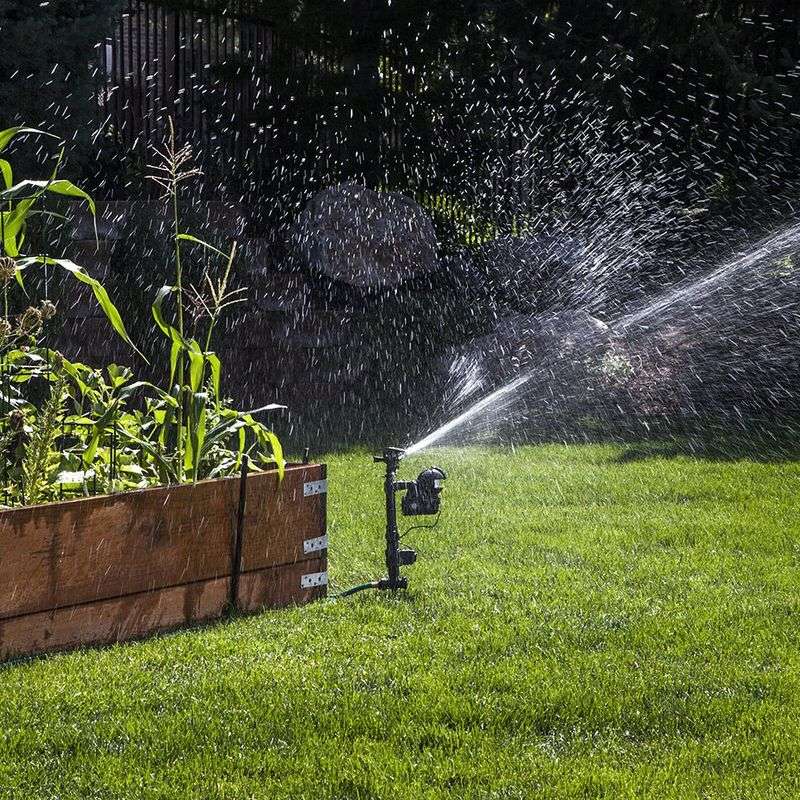
Deer are creatures of habit, and they love visiting gardens under the cover of darkness when they feel safest. Motion-activated sprinklers flip that advantage right back on them by delivering a sudden burst of water exactly when and where they least expect it.
Products like the Orbit Yard Enforcer and the Contech Scarecrow are popular choices among Georgia gardeners. These devices use infrared sensors to detect movement, then release a sharp spray of water that startles deer without causing any harm.
Most units cover a range of about thirty feet, making them ideal for protecting individual beds or entry points along a fence line.
Placement matters a great deal. Position sprinklers at garden entry points, near known deer trails, and along any open borders where deer are most likely to approach.
Overlapping coverage zones ensure there are no blind spots for deer to slip through undetected.
One underrated benefit of motion-activated sprinklers is that they also water your garden in the process. During Georgia’s warm growing season, that extra moisture is never wasted.
Running them on battery power makes installation flexible and keeps them working even during power outages.
Move the sprinklers to slightly different positions every couple of weeks.
Deer that visit your Georgia garden regularly will begin to map out the spray zones if the units never move, so changing locations periodically keeps the deterrent effect strong and unpredictable all season long.
6. Plant Strong Fragrances Around Vulnerable Beds
Fragrance is a powerful tool that works quietly around the clock without any effort on your part after planting. Surrounding vulnerable garden beds with strongly scented plants creates a natural odor wall that white-tailed deer find deeply off-putting.
Rosemary, lavender, mint, catmint, and lemon thyme are all excellent border plants for Georgia gardens.
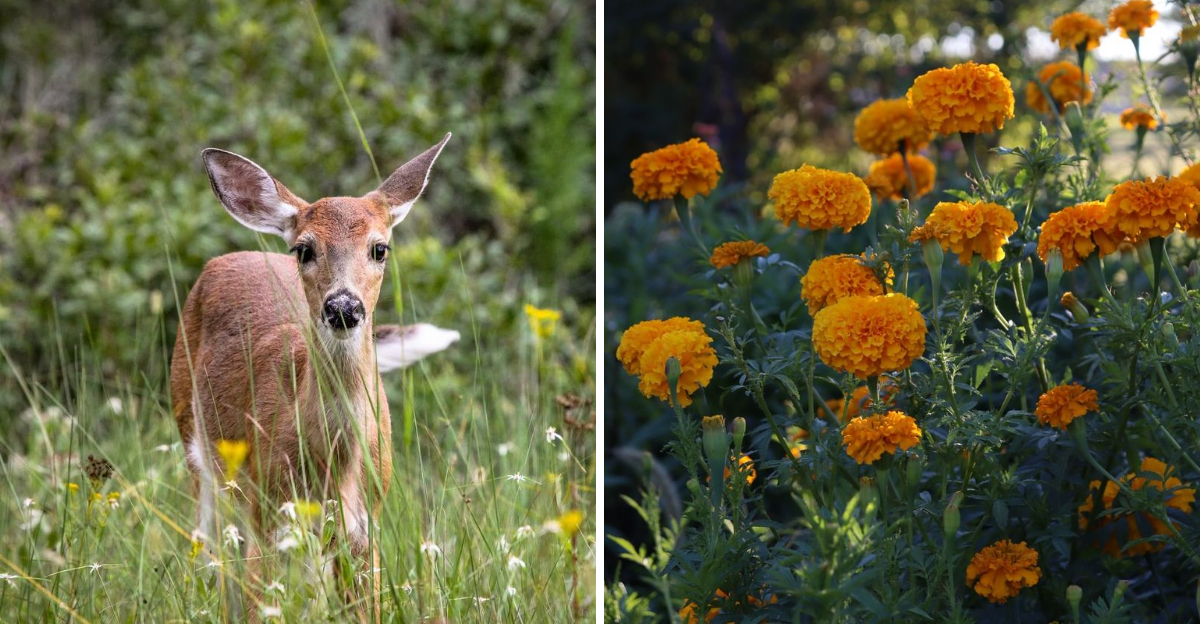
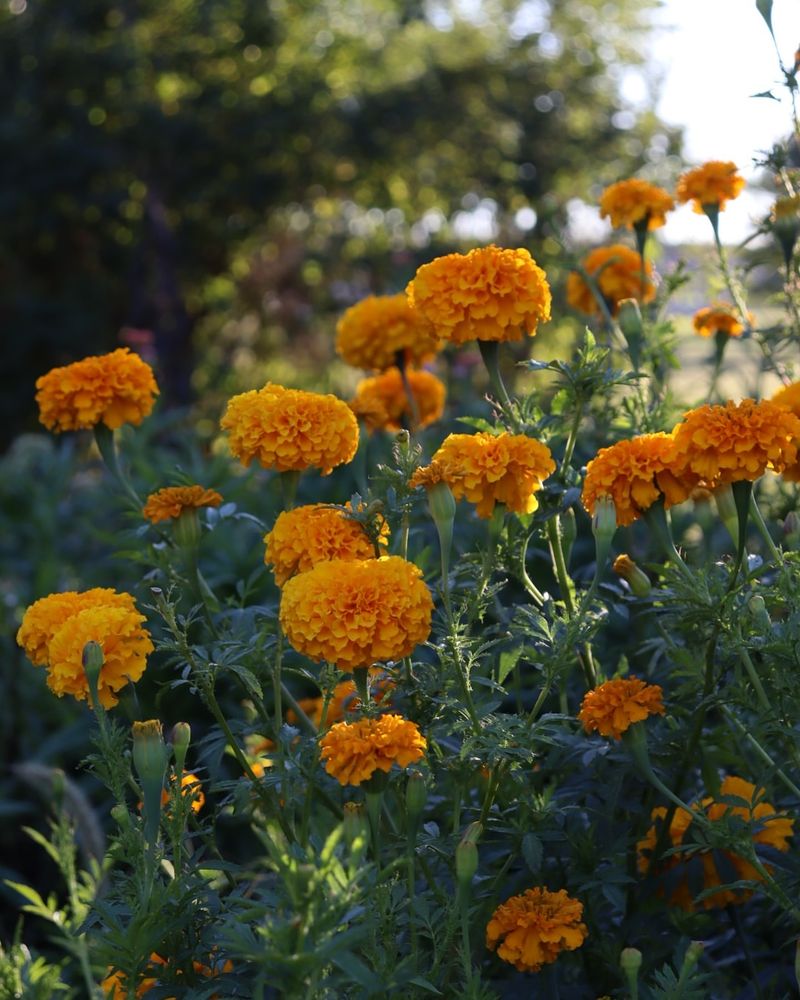
Marigolds are another standout option, widely used by Georgia gardeners not just for their bold color but for the sharp scent that deer consistently avoid.
Planting these in dense rows rather than scattered clumps makes the fragrance barrier much stronger and more consistent.
Herbs like sage, oregano, and chives also pull double duty, keeping deer away while supplying your kitchen with fresh ingredients.
Positioning them in raised beds or along the front edges of garden borders puts their scent right at deer nose level, maximizing the deterrent effect.
One thing to keep in mind is that Georgia’s humidity can sometimes dilute outdoor scents more quickly than in drier climates.
Planting in generous quantities compensates for this and keeps the fragrance layer robust even after rain or heavy morning dew.
Combining fragrant border plants with other repellent methods creates a layered defense that is genuinely hard for deer to push through.
A deer that hits a wall of rosemary and marigold scent after already encountering a spray repellent is far more likely to turn around and look for easier options somewhere else in the neighborhood.
7. Protect Young Trees With Trunk Guards And Netting
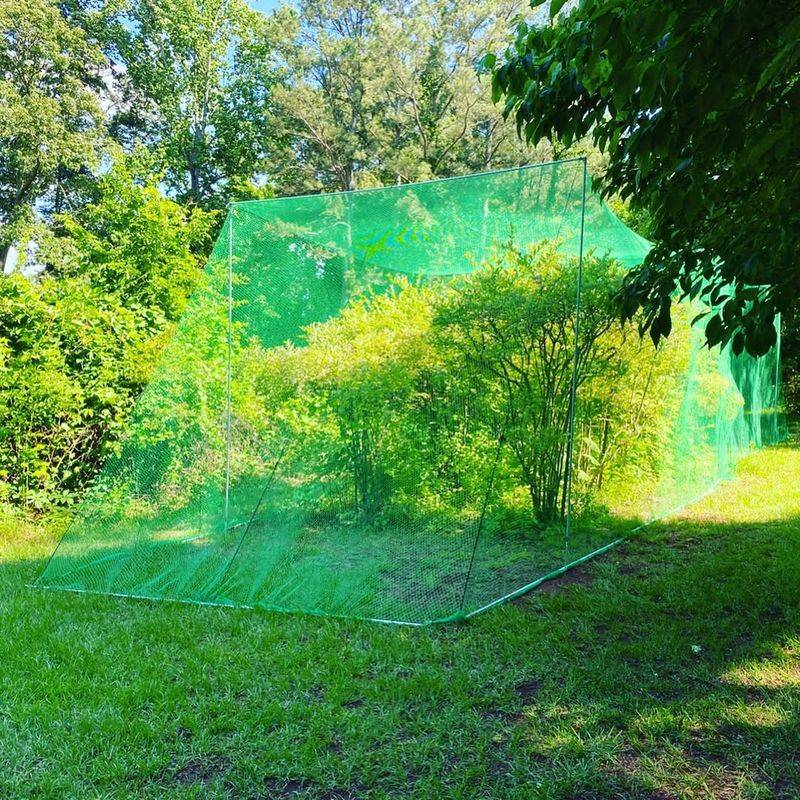
Young trees are some of the most vulnerable plants in any Georgia garden. White-tailed deer cause serious damage to saplings in two distinct ways: browsing on tender new growth and rubbing their antlers against trunks during the fall rutting season.
Trunk guards are one of the easiest and most affordable forms of protection available. White spiral plastic guards wrap around the base of a tree trunk and prevent deer from rubbing the bark raw, which can severely weaken or permanently damage a young tree.
Installing them takes only a few minutes per tree and they last for multiple seasons.
For protecting the canopy and upper branches, lightweight mesh netting works extremely well. Drape it loosely over the entire tree and secure it at the base to prevent deer from pulling it off.
Many Georgia orchardists and home fruit growers rely on this method to get young apple, pear, and peach trees through their first few vulnerable years.
Wire cages are a sturdier alternative for areas with heavy deer pressure. Surrounding a young tree with a cylinder of welded wire fencing at least five feet tall gives it room to grow while keeping deer completely at bay.
Anchor the cage firmly to prevent deer from pushing it over.
Check guards and netting regularly for damage, especially after storms. Georgia’s unpredictable weather can loosen anchors and create gaps that deer are quick to notice and take advantage of during their nightly rounds.
8. Remove Easy Food Sources That Keep Deer Coming Back
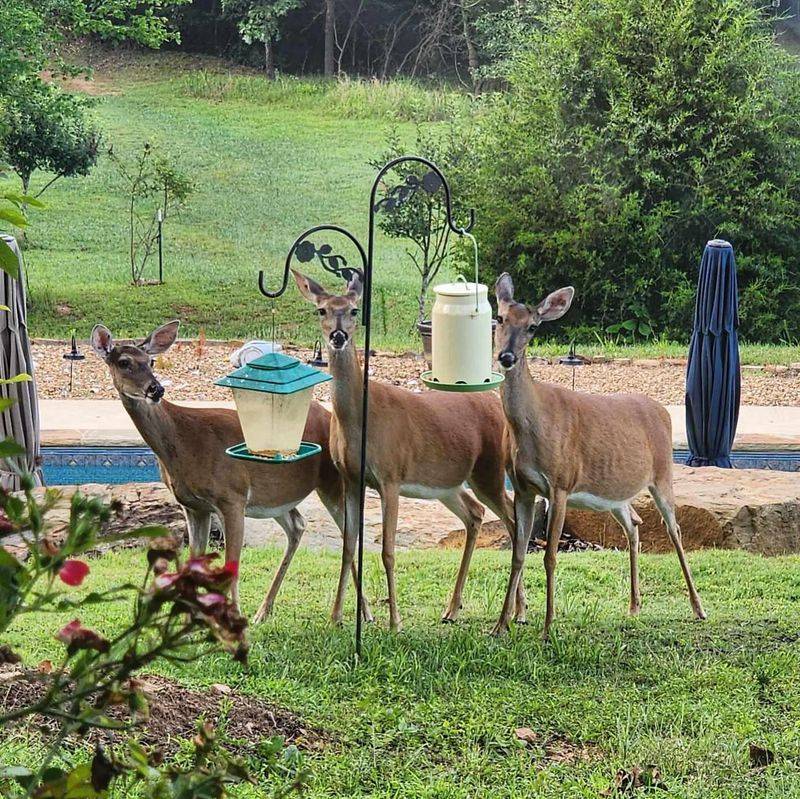
Every time a deer finds an easy meal in your yard, it files that location away in its memory and comes back.
Cutting off the food supply is one of the most direct and permanently effective steps a Georgia gardener can take to reduce deer traffic around their property.
Bird feeders are a surprisingly common culprit. Spilled seed on the ground attracts deer just as reliably as any garden plant, especially in fall and winter when natural food is harder to find across Georgia’s landscape.
Switching to feeders with catch trays, raising them higher off the ground, or switching to safflower seed, which deer tend to ignore, can make a real difference.
Fallen fruit from apple, pear, and persimmon trees is another major draw. Picking up dropped fruit regularly removes one of the most irresistible deer attractants in any Georgia backyard.
Composting it in a sealed bin rather than leaving it in an open pile keeps the smell contained and eliminates a secondary food source.
Vegetable garden scraps left on the ground or in open compost piles also bring deer in close.
Keeping compost bins covered and removing garden waste promptly after harvesting removes the lingering food odors that signal a reliable feeding spot.
Once deer stop finding rewards in your yard, they naturally shift their regular routes elsewhere. Removing food incentives consistently over several weeks is one of the fastest ways to reset deer behavior and reclaim your Georgia garden space.