What Cloudy Spots On Your Ohio Tomatoes Actually Mean
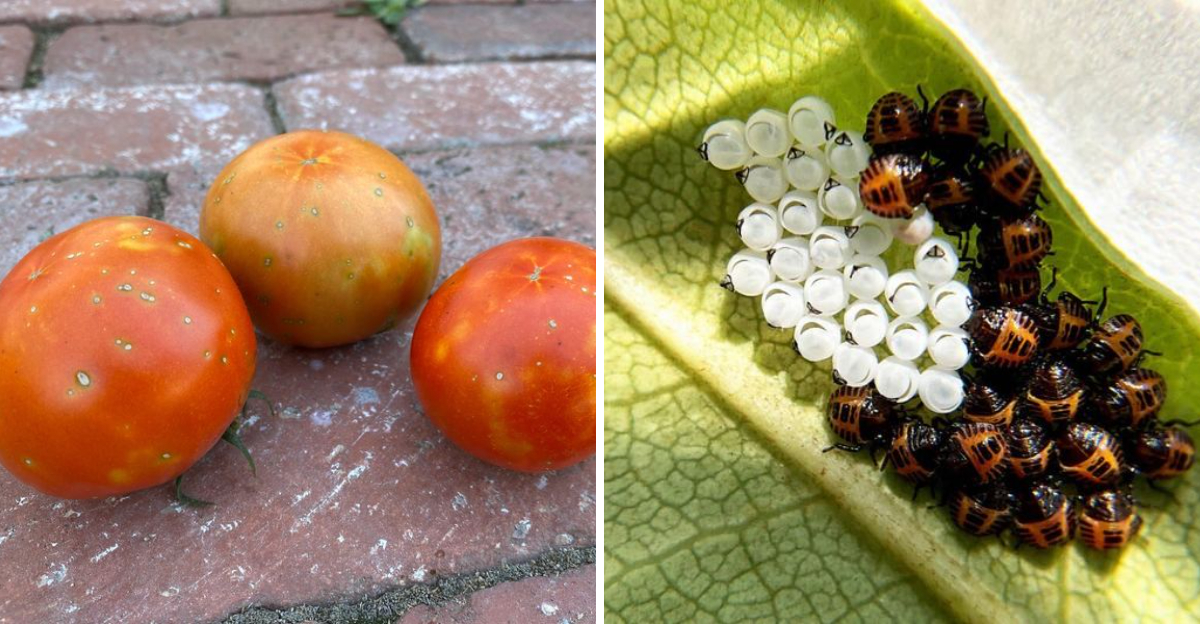
Late summer can make a perfectly good Ohio tomato look suspicious overnight.
Yesterday, the fruit was smooth and almost ready for the kitchen. Today, pale patches cloud the skin like someone pressed a thumb against the color.
The first instinct is usually disease.
That guess may send you in the wrong direction.
One common late-season visitor can leave marks that look cosmetic from the outside while the real clue sits just beneath the skin.
Another problem creates a pale patch for a completely different reason. Even the side of the tomato that faces the sun can help narrow the answer.
So what do those cloudy spots actually really mean?
Do not diagnose the whole plant from one blemish.
Pick up the fruit. Turn it over. Check the flesh, nearby green tomatoes, and the undersides of a few leaves. The pattern matters far more than one pale mark.
Your tomatoes leave useful clues.
A quick garden inspection can reveal who, or what, signed the fruit before harvest arrives this Ohio summer.
1. Read Cloudy Spots As A Stink Bug Clue
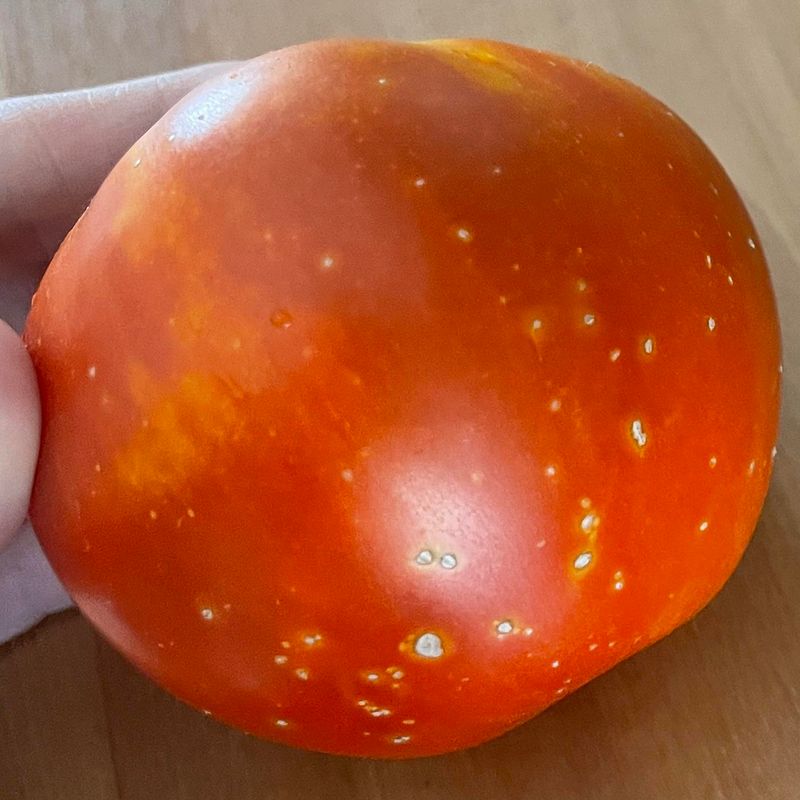
A pale haze across otherwise healthy tomato skin deserves a closer look before you blame a disease.
Brown marmorated stink bugs can create a disorder known as cloudy spot on both green and red fruit. The surface may show white or yellow patches where bug damage disrupted the tissue below.
The insect does not chew a chunk from the tomato.
Instead, it pierces the skin with slender mouthparts and removes plant fluids. That injury can leave the surface waxy, pale, or slightly uneven while the damaged area beneath stays firmer than normal flesh.
Use the spot as your first clue, not your final verdict.
Turn the fruit in your hand. Check several tomatoes from different parts of the plant. Similar cloudy patches across multiple fruits make stink bug damage more suspicious than one isolated blemish.
Then look beyond the tomato itself.
Shield-shaped bugs on stems, leaves, or fruit strengthen the case. Brown marmorated stink bugs also have distinctive pale bands on their antennae and along the edge of the abdomen.
One cloudy tomato can still have another explanation, so resist a quick diagnosis.
Your fruit does not submit formal complaints.
It gives you the first page of the case, and the next clue sits just under the skin.
2. Slice Fruit To Find Corky Tissue
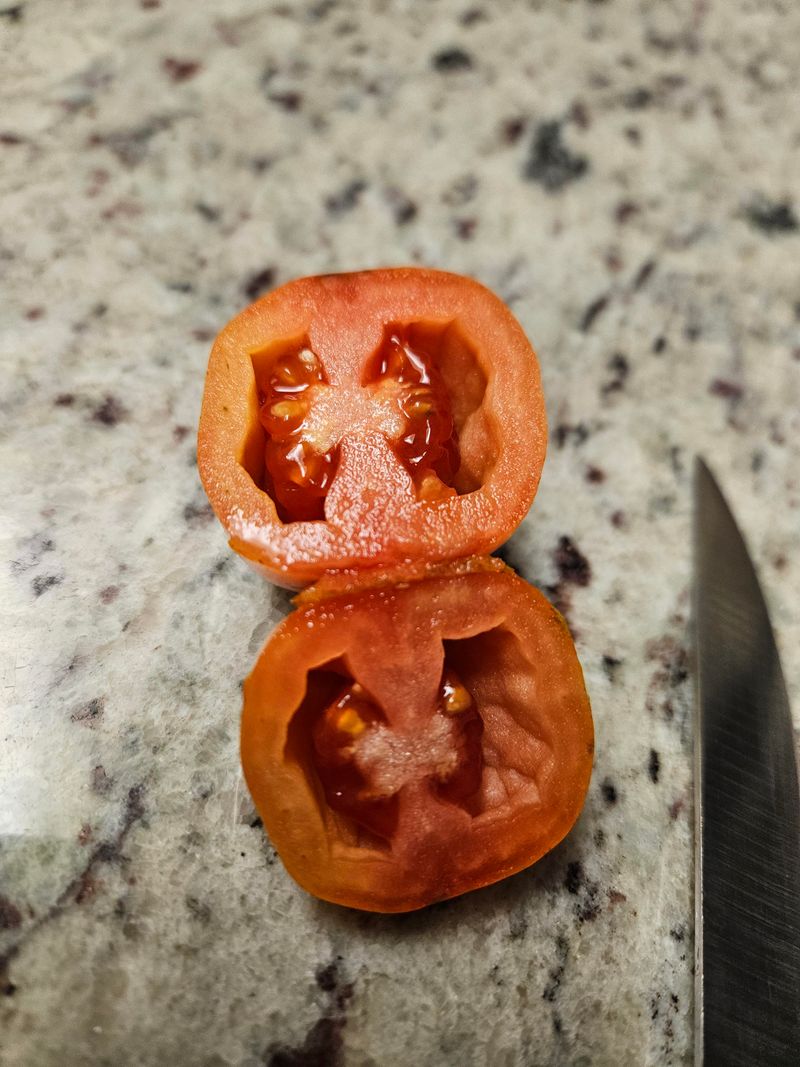
The kitchen knife can tell you more than another five minutes under close light.
Cut through a cloudy patch and compare that section with healthy flesh nearby. Stink bug injury often creates thick, white, corky tissue just beneath the tomato skin. Ohio records describe this internal damage in both green and ripe fruit.
That texture is one of the strongest clues in the whole inspection.
Healthy tomato flesh should stay juicy and fairly uniform. The injured area may feel firmer, drier, or pithier, with a pale color that never fully catches up with the rest of the fruit.
Do not expect every damaged tomato to look terrible outside.
Your Ohio Garden Changes Every Week. Your Plan Should Too.
Gardening in Ohio changes quickly throughout the season. Every Friday you’ll receive a simple weekly plan showing exactly what to plant, prune, fertilize, harvest, and protect so you never miss the right timing.
A modest surface mark can hide a much clearer patch beneath it. That is why a cross-section of one or two suspect fruits can help when the skin alone leaves you uncertain.
Cut away the corky portion when the rest of the fruit looks sound and fresh. Stink bug injury affects quality more than the entire tomato, so a small damaged area does not automatically ruin every usable slice.
Keep track of how often you find the same internal pattern.
One odd tomato earns a shrug. Five fruits with the same pale, corky tissue deserve a serious walk through the plants.
The knife has no entomology degree.
It still makes a surprisingly good detective once cloudy spot hides beneath the peel.
3. Look For Tiny Feeding Punctures
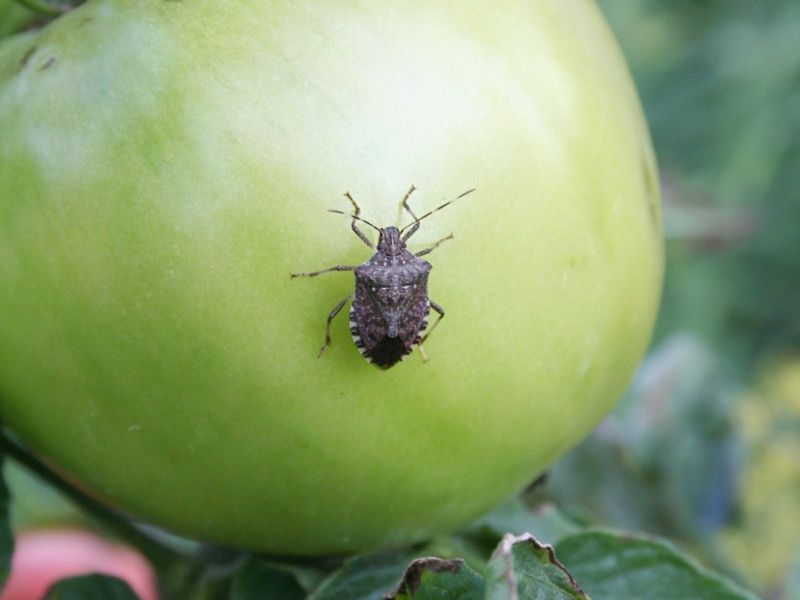
A cloudy patch may lead your eye to one tiny mark that barely looks important.
Stink bugs feed with needlelike mouthparts rather than jaws that remove chunks. The entry point can be much less dramatic than the damage that develops beneath the skin.
Use bright side light and turn the tomato slowly.
A small puncture, shallow dimple, or slightly rough point near a pale patch can support the stink bug diagnosis. Do not expect a neat hole like caterpillar damage. The whole trick is subtle.
Your phone camera can help.
Zoom in on the surface and compare a suspicious tomato with one that has no cloudy areas. That close view may reveal texture changes your eye skips from arm’s length.
Then inspect nearby stems and fruit.
Adult brown marmorated stink bugs have a broad shield shape, mottled brown color, and pale bands on the antennae. Nymphs look different as they mature, so do not rely on one adult silhouette alone.
Do not crush every speck in sight.
Tomato skin can carry harmless scars, dirt marks, and tiny injuries from weather or contact. A puncture becomes useful only when it joins the larger pattern of cloudy skin, corky flesh, and actual bug activity.
This is garden detective work at its smallest scale.
The culprit may be big enough to spot. Its signature can be almost pin-sized.
4. Scout Green Fruit Before It Colors

Green fruit deserves the same inspection as the tomato you planned to pick for lunch.
Stink bugs can attack while a tomato is still green, and Ohio records show cloudy spot injury on both green and red fruit. Early damage may become more obvious as the tomato grows and changes color.
Move a few leaves aside and check the shaded fruit inside the canopy.
Look for pale patches, slight dimples, or areas that seem different from the smooth green skin around them. Then compare those tomatoes with fruit on the outer edge of the plant.
That quick comparison helps you spot a pattern before harvest day.
Do not remove every green tomato with one faint blemish. Mark a few suspect fruits with a loose ribbon on the nearby stem or take a phone photo, then check them again after several days.
The goal is to learn what the injury does over time.
A repeated pattern across young fruit and fruit as it colors makes active stink bug damage more likely. It also tells you that the next tomatoes deserve closer attention now, not after they turn red.
Ohio tomato plants can carry plenty of fruit beneath dense foliage, so a casual glance from the path misses a lot.
Give the green ones a turn in the spotlight.
They may not be ready for the kitchen, but they can be ready to testify long before the ripe fruit does.
5. Check Leaves For Egg Clusters
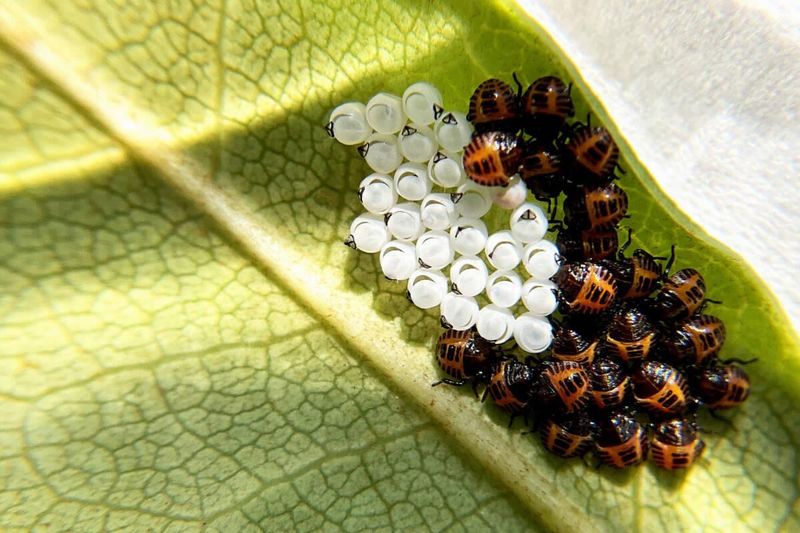
The underside of a leaf can reveal the problem before another tomato develops a pale patch.
Brown marmorated stink bug eggs are pale green, barrel-shaped, and commonly sit in clusters of about 28. That tidy arrangement can look almost decorative until you know what hatches from it.
Flip leaves gently as you move through the plant.
Check several heights and include foliage near fruit clusters. Egg masses deserve attention because they confirm that adult stink bugs have used the area, even when no adult sits in plain view at that moment.
Small gardens give you a simple advantage.
Remove a confirmed egg mass by hand and drop it into soapy water or crush it away from the plant. Keep the leaf when practical rather than remove healthy foliage just to deal with one cluster.
Young nymphs may stay close to the eggs soon after hatch.
That gives you another clue and another chance to reduce local numbers before the insects spread across nearby fruit.
Do not mistake every pale egg cluster for a pest automatically. Many useful insects also place eggs on garden plants, so confirm the shape and arrangement before removal.
A quick photo can help with identification when the cluster looks unfamiliar.
The leaf underside is easy to forget because tomatoes keep your eyes focused on the fruit.
Stink bugs appreciate that oversight.
Turn a few leaves each visit, and their nursery becomes much less private.
6. Separate Bug Damage From Sunscald
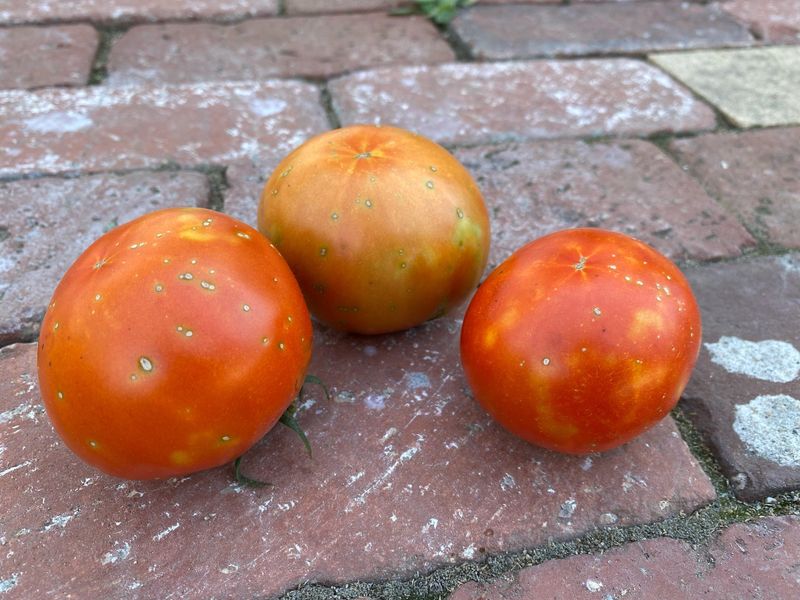
Not every pale tomato patch comes with six legs attached to the explanation.
Sunscald is the easiest lookalike to rule in or out. It tends to form on the side of the fruit exposed to strong sun, where the skin turns pale yellow or white and may become flat, dry, or papery.
Cloudy spot follows a different pattern.
Stink bug injury can occur on green or ripe fruit and often comes with firm, white corky tissue below the surface. That internal clue carries more weight than color alone.
Check the canopy next.
A tomato with heavy leaf loss has less protection from direct sun. Ohio tomato information notes that fuller foliage can reduce sunscald because the fruit stays better covered.
Disease deserves its own set of clues.
Ohio gardens can face anthracnose, early blight, Septoria leaf spot, late blight, and several other tomato diseases. Leaf lesions, stem symptoms, widespread plant decline, or fruit spots with a different texture can point away from stink bugs.
Do not force every pale mark into one diagnosis.
Location, texture, internal flesh, foliage condition, and insect evidence should all agree before you settle on an answer.
Your tomato may have a cloudy complexion.
The cause becomes much clearer once you look beyond skin tone alone.
7. Watch Late Summer Bugs Build
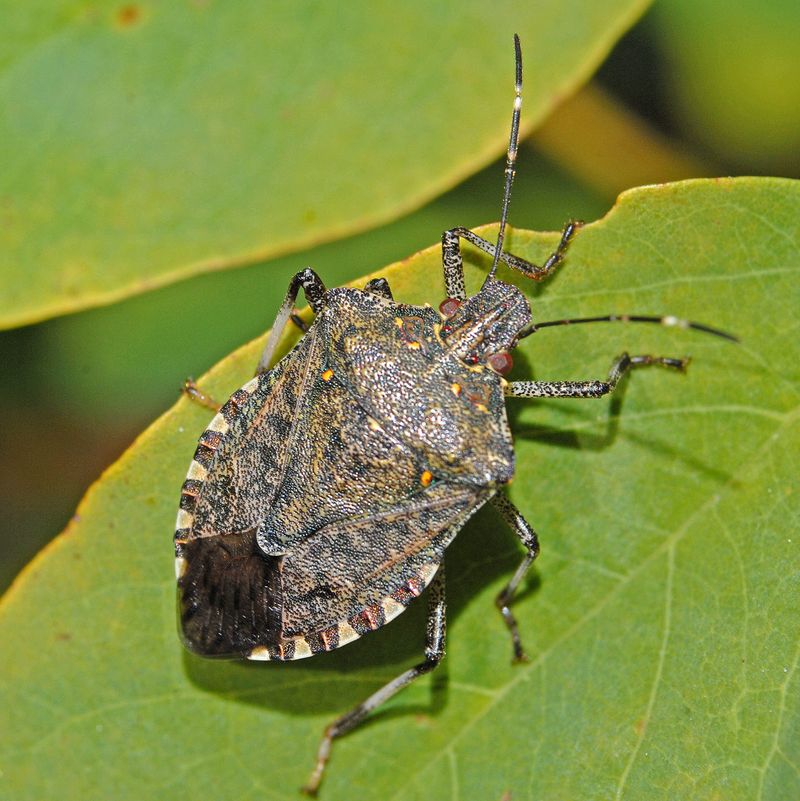
Late summer deserves a little more attention than the casual walk you gave the plants in June.
Brown marmorated stink bugs are established in Ohio and can occur at high densities in crops in some areas. They feed on a wide range of plants, so tomatoes can become one stop among many across a landscape.
Walk the garden every few days while fruit ripens.
Check tomatoes first, then nearby beans, peppers, fruit trees, weeds, and ornamental plants where shield-shaped bugs may pause. A mobile insect does not need to spend the whole day on one tomato plant to leave damage behind.
Early hours can make the search easier because insects often move less in cooler conditions.
Carry a small container of soapy water and remove confirmed stink bugs by hand in a small garden. Keep the inspection calm so you do not knock ripe fruit from heavily loaded stems.
Pay attention to new damage rather than old scars alone.
A cloudy tomato cannot reverse its injury after the bug leaves. Fresh spots on younger fruit tell you much more about current pressure.
As autumn approaches, brown marmorated stink bugs also become notorious for movement toward sheltered winter sites such as buildings.
Your tomato patch may not be their final destination.
For a few late-summer weeks, though, it can still be a very convenient snack stop.
Keep the welcome sign turned off.
8. Protect The Next Fruit Early
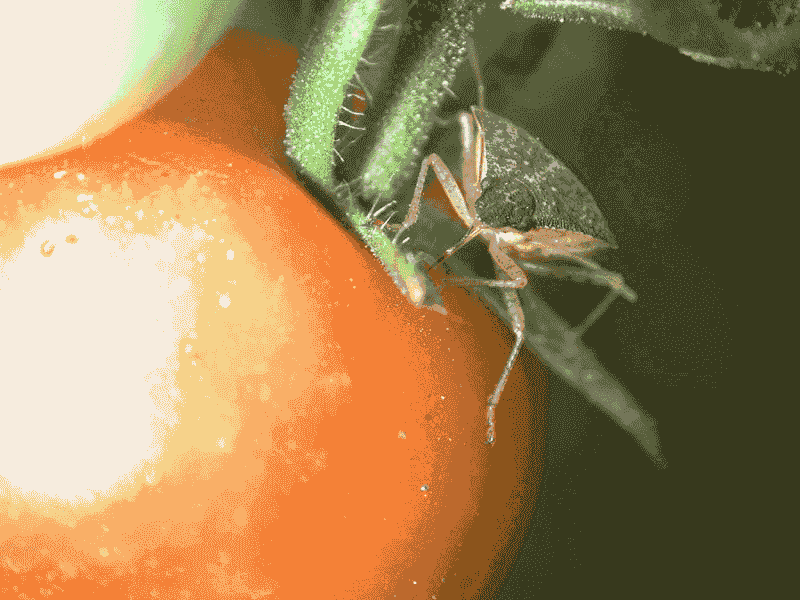
The best time to protect the next tomato is before another cloudy patch appears.
Make a short inspection part of every garden visit. Check ripe fruit, green fruit, leaf undersides, and stems where bugs can rest.
Regular checks help you notice a small problem before damage spreads across the late crop. Ohio home-garden resources emphasize routine insect checks rather than action based on one damaged fruit.
Hand removal works well when numbers stay low.
Drop confirmed stink bugs into soapy water and remove verified egg masses from leaves. Keep healthy foliage in place because a full canopy also helps shield tomatoes from sunscald.
Harvest ripe fruit promptly too.
A tomato already ready for the kitchen gains nothing from extra days outside under active pest pressure. Check the next green cluster at the same time so new injury does not slip past you.
Save insecticide decisions for a real, identified problem.
Choose only a product labeled for the pest and for tomatoes, then follow the rate, application schedule, and harvest interval on that label. Avoid a broad spray simply because one fruit looks cloudy.
Good control starts with the diagnosis.
Cloudy spot tells you where to look. Corky tissue strengthens the case. Eggs, nymphs, or adults make the evidence much harder to argue with.
Protect the next fruit with that full set of clues.
Your tomato patch deserves pest control, not pest-control roulette.