What Desert Rose Leaf Drop Really Means In Arizona Summer
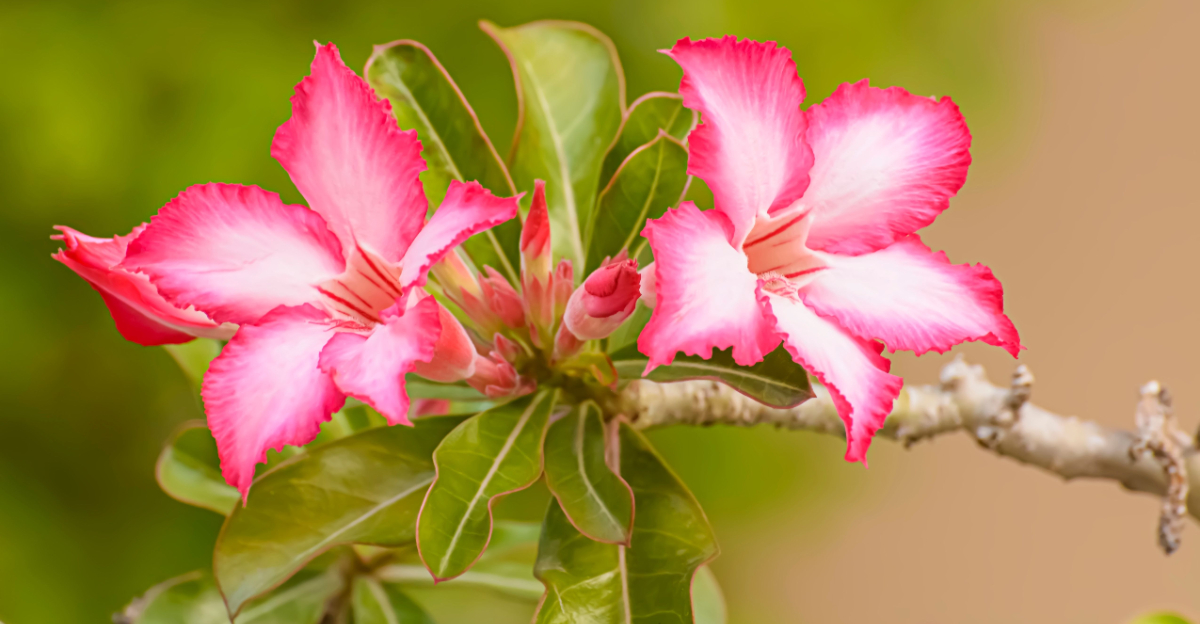
Your desert rose can lose leaves without sending a panic signal. Many people assume the worst as soon as the plant starts looking thinner, and that often leads to changes it never needed.
Reaching for the watering can or moving the pot too quickly can create even more stress. The smartest first step is slowing down and looking at what the plant is telling you before making any decisions.
Leaf drop has more than one cause, and the timing makes a big difference. A healthy trunk, firm branches, and the condition of the soil provide valuable clues about what is really happening.
Arizona summers bring extreme heat, intense sunlight, and changing moisture levels that can all affect desert roses.
Looking at the whole plant instead of focusing only on the missing leaves helps you respond the right way.
A little patience now can prevent mistakes that create bigger problems later.
1. Summer Leaf Drop Is Often A Stress Response
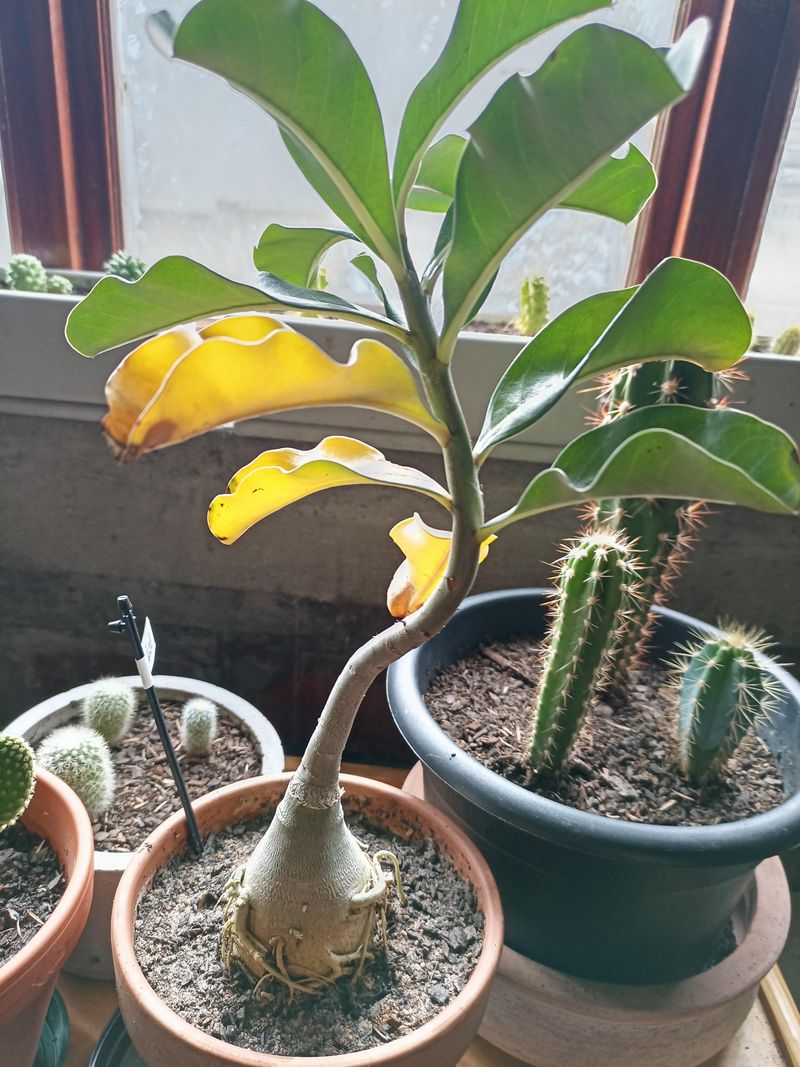
Leaf drop in summer is not a random event. Your desert rose is reacting to something specific, and the heat is usually at the center of it.
Arizona summers regularly push temperatures past 110 degrees Fahrenheit. Desert roses can handle heat, but prolonged exposure at extreme levels triggers a protective response.
Dropping leaves is one way the plant conserves moisture and reduces the surface area losing water to the air.
It is similar to how some trees shed leaves in fall. The plant is not giving up.
It is adjusting to survive conditions that would stress most plants.
Root-bound plants tend to show this response more quickly. A pot that is too small limits water and nutrient uptake, making the plant even more vulnerable when temperatures spike.
Watch for yellowing before the drop. Leaves that turn yellow, then fall, usually point to heat or water stress.
Leaves that drop green and firm often suggest a sudden environmental shift instead.
Do not rush to fertilize when you see leaf drop. Adding nutrients when the plant is stressed can make things worse.
Focus on stable conditions first, then reassess once temperatures ease slightly.
Leaf drop during peak summer is a signal worth paying attention to, but it rarely means permanent damage.
2. Let The Potting Mix Dry Before Watering Again
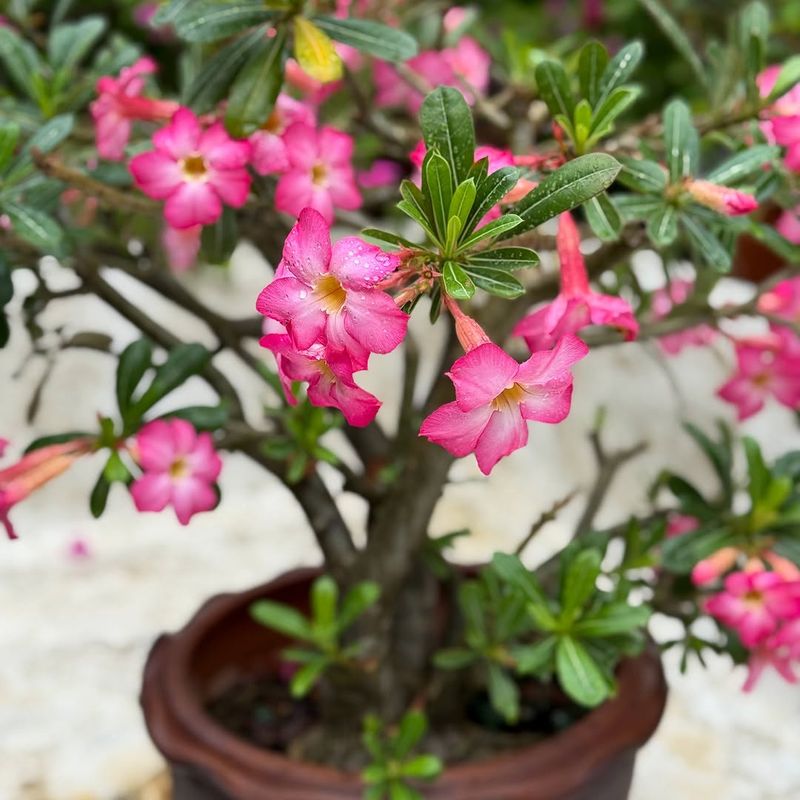
Watering a stressed desert rose too soon is one of the fastest ways to make leaf drop worse. Soggy soil in summer heat creates a dangerous environment around the roots.
Desert roses are succulents at heart. Their thick stems store water, which means they can tolerate short dry periods far better than most flowering plants.
Letting the potting mix dry out between waterings is not neglect. It is good practice.
Stick your finger about two inches into the soil. If it still feels damp, wait.
Only water when that top layer feels dry and slightly warm to the touch.
In Arizona’s summer heat, pots dry out faster than you might expect. Terracotta pots especially lose moisture quickly through their walls.
Check the soil every couple of days rather than watering on a fixed schedule.
Your Arizona Garden Changes Every Week. Your Plan Should Too.
Gardening in Arizona changes quickly throughout the season. Every Friday you’ll receive a simple weekly plan showing exactly what to plant, prune, fertilize, harvest, and protect so you never miss the right timing.
Overwatering during hot weather can cause root problems that look exactly like underwatering. The leaves yellow and drop, the plant looks weak, but the actual issue is too much water sitting around the roots.
Use a well-draining mix if you have not already. A cactus and succulent blend, or a standard potting mix cut with perlite, works well for desert roses.
Good drainage gives the roots room to breathe between waterings.
Getting the watering rhythm right during summer takes some observation.
3. Check The Roots For Early Signs Of Rot
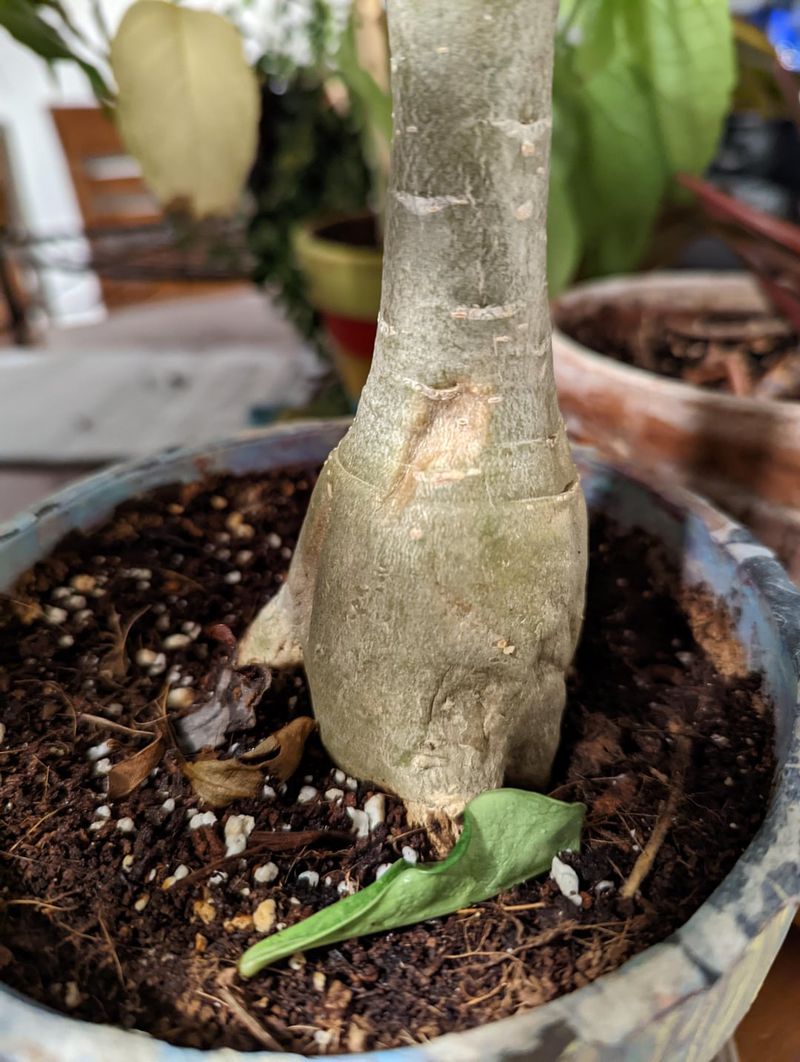
Root rot is sneaky. By the time leaf drop becomes obvious, the roots may already be struggling beneath the surface.
Gently slide the plant out of its pot if you suspect a problem. Healthy roots are firm and usually white or light tan.
Soft, dark, or mushy sections are a clear sign that rot has set in, likely from excess moisture sitting too long around the root zone.
Catching rot early gives the plant a real chance to recover. Trim away any damaged sections using clean scissors or pruning shears.
Let the cuts air dry in a shaded spot for a day or two before repotting into fresh, dry mix.
Do not water immediately after repotting a plant with root damage. Give it about a week to settle before introducing any moisture.
This rest period helps the cut areas callous over and reduces the chance of further problems.
If the rot is limited to a small portion of the roots and the caudex feels firm, recovery is very possible. A soft or hollow caudex is a more serious sign that the damage has moved deeper into the plant.
Prevention is more reliable than treatment. Using a fast-draining mix, choosing pots with drainage holes, and avoiding overwatering during summer all reduce the risk significantly.
4. Afternoon Shade Can Reduce Heat Stress
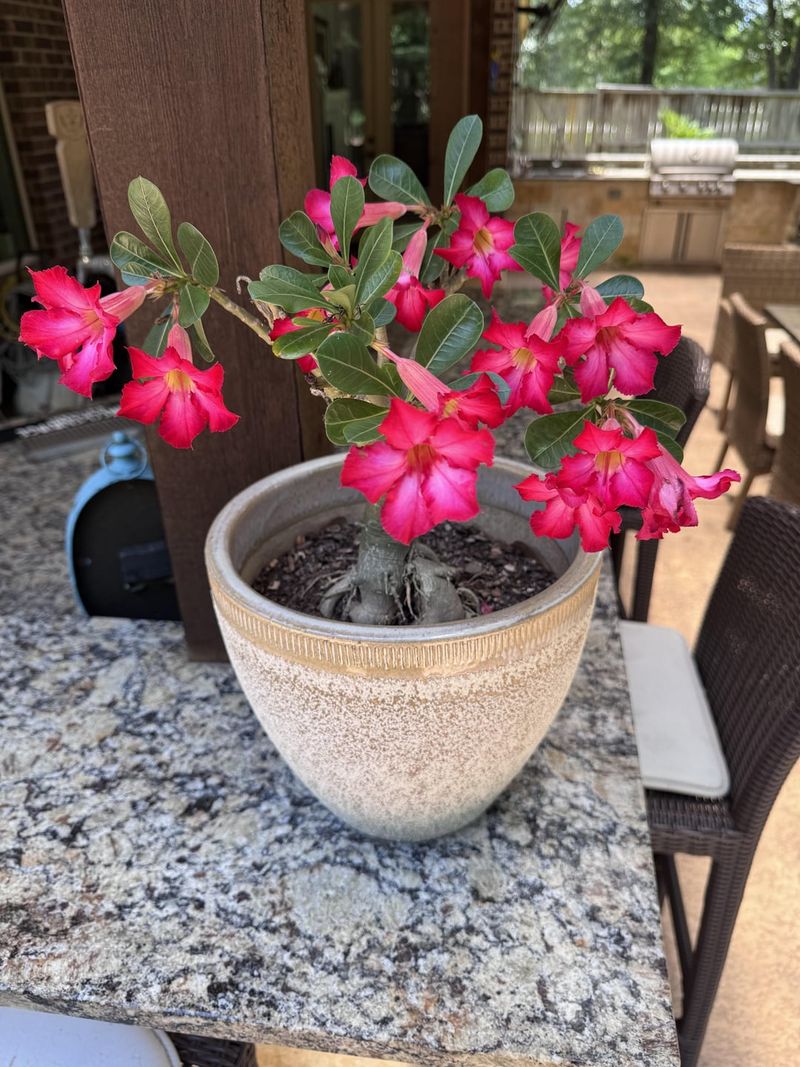
Full sun sounds ideal for a plant called a desert rose, but blazing afternoon sun in the Southwest is a different level of intensity than most plants prefer.
Morning sun is gentler and far more beneficial. Afternoon sun in Arizona during July and August can reach scorching intensity that overwhelms even heat-tolerant plants.
Moving your desert rose to a spot that gets shade after around 1 p.m. can reduce stress noticeably.
A covered patio, a shade cloth, or even the shadow cast by a wall or larger plant can help. You do not need deep shade.
Filtered or partial afternoon shade is usually enough to take the edge off.
Leaf drop sometimes slows on its own once the plant gets a break from the harshest sun hours. It is a simple adjustment that does not require any products or special care.
Watch how the leaves look after a few days in a new spot. If they stop dropping and the remaining foliage stays firm and green, the light change was likely the right move.
Avoid moving the plant from full sun to deep shade all at once. A gradual shift over a few days lets the plant adjust without triggering another round of stress-related leaf drop.
Light management during summer is one of the most underrated parts of desert rose care.
5. Sudden Changes In Light Can Trigger Leaf Loss
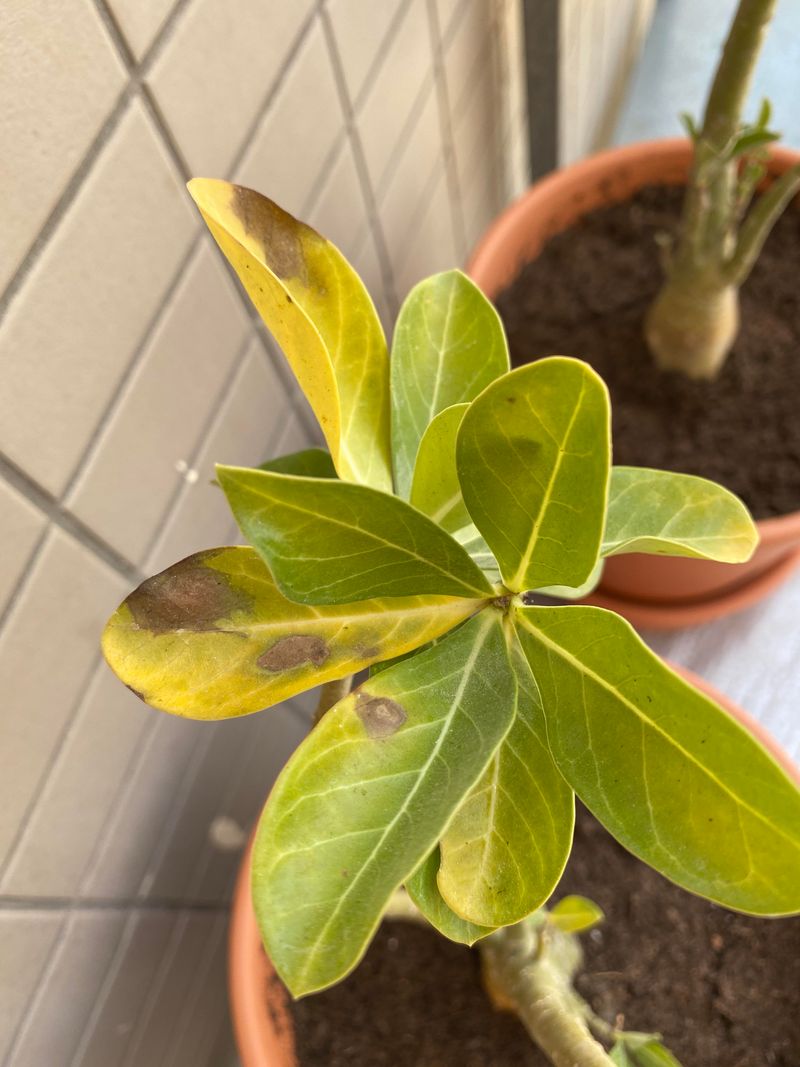
Moving a desert rose from one spot to another sounds harmless, but plants are sensitive to sudden environmental shifts. Light is one of the biggest triggers.
When a plant moves from bright outdoor sun to a dimmer indoor space, or even from one side of a yard to another, it has to adjust its entire internal process. Leaf drop is a common response to that adjustment period.
Growers sometimes move plants indoors to protect them from extreme heat, which makes sense. However, the change in light intensity can cause the plant to shed leaves even if the new spot is comfortable in terms of temperature.
Gradual transitions work much better. Move the plant to a slightly shadier outdoor spot first.
Wait a few days, then shift it again if needed. Slow changes give the plant time to adapt without triggering a stress response.
Seasonal moves also cause this reaction. Bringing a desert rose inside at the end of summer or moving it back out in spring often results in some leaf loss.
Expect it, plan for it, and avoid overreacting by changing the care routine drastically at the same time.
Stable conditions are what desert roses respond to best. Frequent relocations, even with good intentions, can keep the plant in a constant state of adjustment.
6. Reduce Watering As Growth Slows
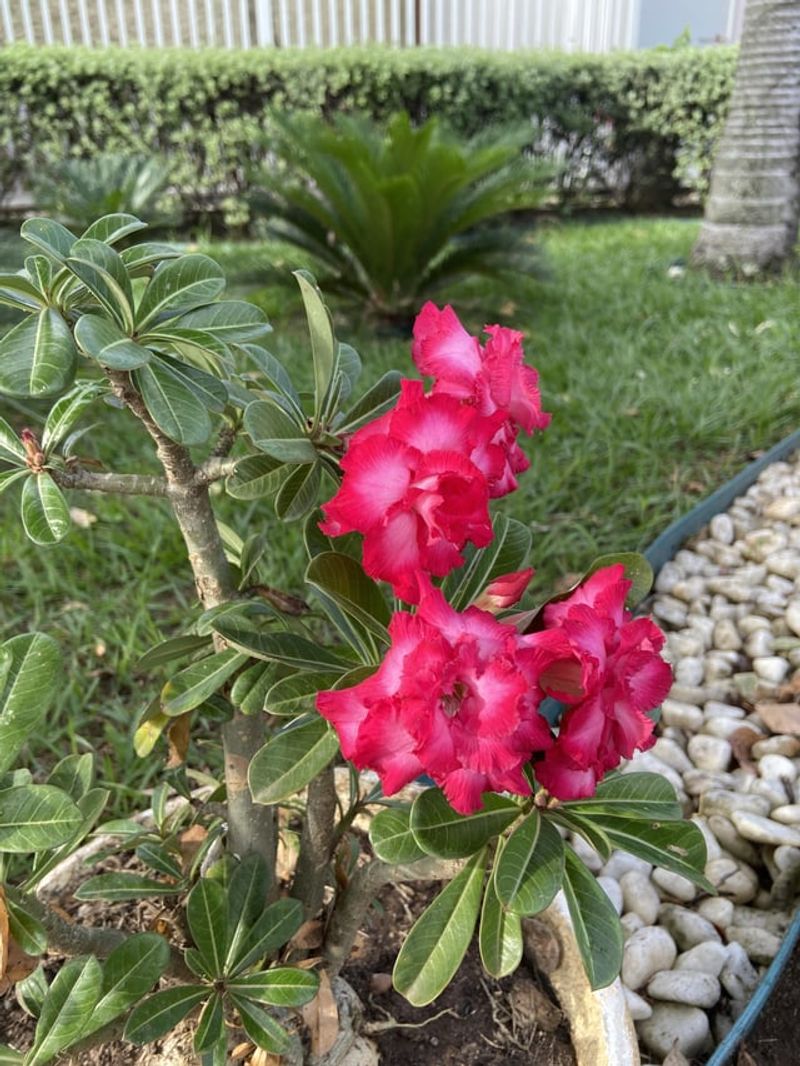
Growth slows during peak summer heat, and watering habits need to slow down with it. Keeping the same watering schedule year-round is a common mistake.
When a desert rose is not actively pushing out new growth, it is not pulling water and nutrients at the same rate. Watering at the same frequency you used during active spring growth can lead to moisture sitting in the soil longer than the plant needs.
Cut back how often you water, but do not stop completely. The goal is to match the plant’s actual demand rather than following a rigid routine.
Observe the plant instead of the calendar. If the soil is still damp two or three days after your last watering, push the next session back.
Let the mix dry out before adding more moisture.
Leaf drop during this slow period does not always mean the plant needs more water. Sometimes it is simply shedding older leaves as part of a natural cycle.
New growth often follows once temperatures begin to ease.
Fertilizing should also be reduced during this time. Feeding a plant that is not actively growing can stress the root system.
Hold off on fertilizer until you see signs of fresh growth returning.
Patience matters here. Desert roses in hot climates often go through a semi-dormant stretch in midsummer.
7. Remove Fallen Leaves To Keep The Plant Healthy
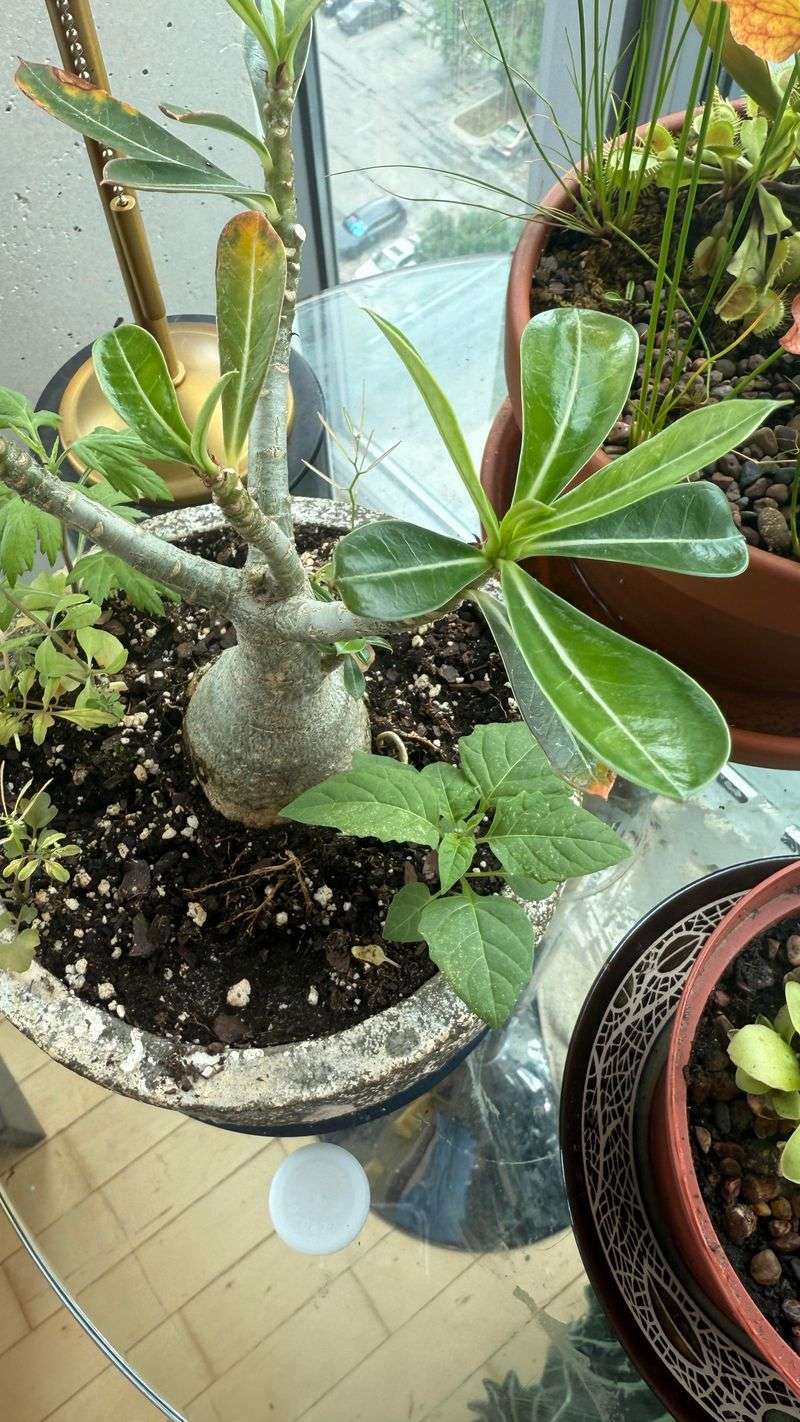
Fallen leaves sitting around the base of your desert rose are more than just a mess. Left in place, they can create conditions that invite pests and fungal issues.
Damp, decaying leaves pressed against the caudex or soil surface hold moisture in a concentrated area. In summer, that combination of heat and trapped moisture can encourage mold or attract insects looking for a sheltered spot.
Clear fallen leaves as soon as you notice them. It only takes a minute, and it keeps the area around the plant clean and dry.
A dry base is much less attractive to common pests like mealybugs and fungus gnats.
Check the undersides of leaves before they fall, too. Pests often show up there first.
Catching an infestation early is far easier than dealing with one that has spread across the whole plant.
If you notice a pattern of leaves dropping from a specific area of the plant, look closely at that section. Clustered drop from one side sometimes points to a localized pest problem or uneven sun exposure.
Cleaning up also gives you a chance to inspect the soil surface. Crusty or water-repellent soil on top can prevent moisture from reaching the roots properly.
Lightly loosening the top layer occasionally helps water move through more evenly.