What Georgia Crape Myrtles Need In March For A Full Bloom Season
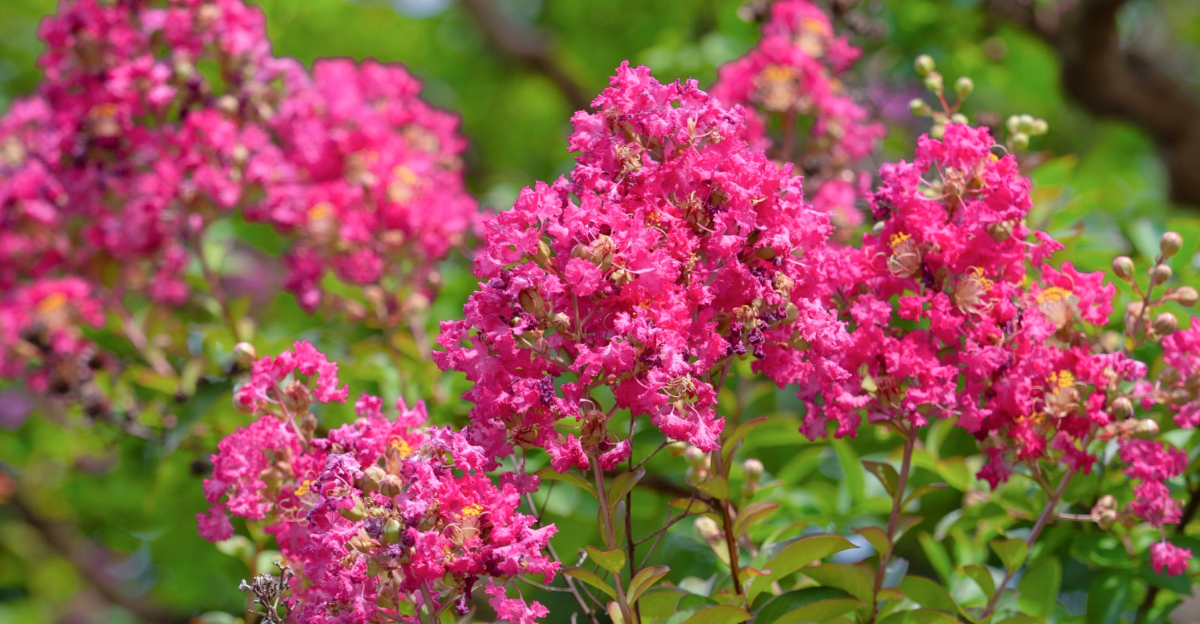
Ever wonder why some Georgia crape myrtles explode with color while others struggle with weak stems? The secret is usually hidden in March.
As buds swell and roots wake from their winter slumber, you have a golden window to set the stage for a spectacular summer. From the red clay of North Georgia to the sandy Coastal Plain, a few smart adjustments right now can transform your trees.
By focusing on a simple March routine like refreshing mulch and proper feeding, you can guarantee stronger stems and more abundant flower clusters.
These timely actions help your crape myrtles thrive in the intense Georgia humidity while attracting hummingbirds and butterflies.
A little effort today turns into a vibrant, healthy display that lasts well into the fall.
1. Give Your Crape Myrtle Morning Sun And Light Afternoon Shade

Sun exposure is critical for strong crape myrtle growth and abundant blooms, and March is the perfect time to evaluate placement.
Georgia gardeners know afternoon sun can be intense, particularly along the Coastal Plain, which may stress plants, scorch foliage, or trigger early bud drop.
Providing bright morning sun ensures the plant has enough energy to develop buds without suffering heat stress later in the day. Ideally, crape myrtles receive at least six hours of direct sunlight, with most exposure before 2 p.m.
Light afternoon shade from taller trees, walls, or structures reduces moisture loss and leaf stress during warm stretches while maintaining photosynthesis for bud development.
In North Georgia, slower-warming spring weather means full-day sun is beneficial, helping trees break dormancy on schedule.
Observe sun patterns across your yard during March mornings to adjust planting or container placement. Correct sun exposure now also reduces humidity around the foliage and helps prevent fungal problems like powdery mildew.
By setting your crape myrtle in the optimal morning-to-afternoon light balance, you provide energy for healthy stem development, dense canopy formation, and fuller blooms when the flowering season peaks later in the summer.
2. Prune Damaged Or Crossing Branches For Stronger Growth
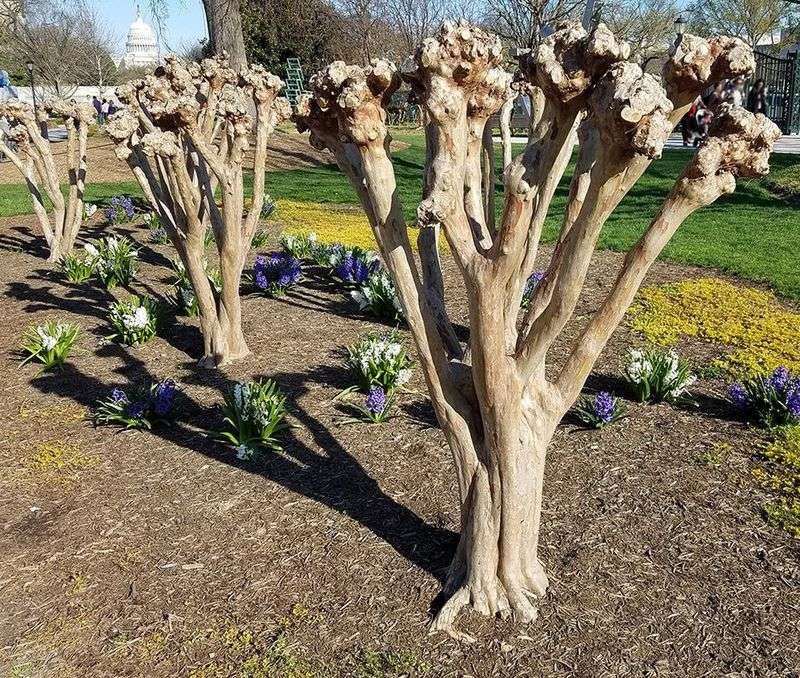
March is the ideal month for selective pruning because buds are just beginning to swell, making it easy to distinguish between healthy, dormant, or damaged wood.
Removing damaged or crossing branches improves airflow, reduces disease risk, and directs the tree’s energy toward productive growth that supports abundant summer blooms.
Use sharp, sanitized tools to make clean cuts just outside the branch collar, which encourages quick healing. Ragged cuts or dull blades can create wounds that increase susceptibility to fungal infections, particularly in Georgia’s humid climate.
Avoid topping the tree, a common but harmful mistake; cutting main trunks back to stubs encourages weak water sprouts and reduces flowering potential.
Focus on opening the canopy while preserving the natural vase-shaped form.
During pruning, remove branches that rub against each other or block light and airflow. For young crape myrtles under five years old, this pruning helps establish strong structural growth that supports future blooms.
Mature trees rarely need aggressive pruning; selective cuts are sufficient. Thoughtful March pruning balances the canopy, reduces stress from overcrowding, and sets the stage for healthy, evenly distributed flowering clusters throughout the season.
3. Thin Out Older Stems To Boost New Blooming Shoots
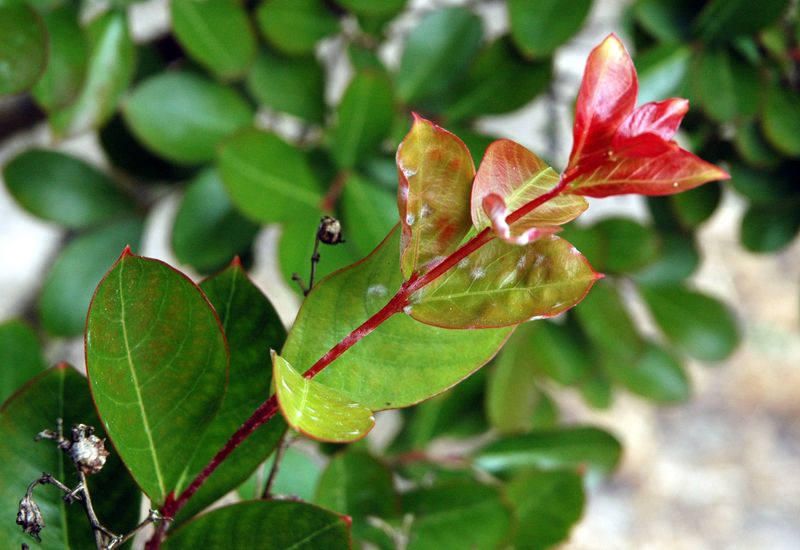
Crape myrtles with excessive old wood can become congested, limiting light and air circulation while crowding younger, more productive stems.
Thinning older stems in March encourages vigorous new shoots that produce larger and more abundant flower clusters later in the season.
Start by assessing the tree’s structure from a distance, identifying primary trunks, and removing secondary stems growing inward.
This prevents competition between old and new growth and reduces powdery mildew and other fungal risks that thrive in dense, humid environments common across Georgia.
Thin shoots that are weak or damaged, and remove suckers emerging from the base, cutting flush to the ground to redirect nutrients toward the main canopy.
For established crape myrtles, rotating removal of one or two older stems every few years maintains a continuous cycle of productive wood.
Young replacement shoots emerging in spring become the backbone of the following season’s blooms.
Proper spacing and selective thinning now also improve sunlight penetration and airflow, which are essential for both bud formation and maintaining plant health in Georgia’s hot, humid summers.
A well-thinned crape myrtle grows taller, healthier, and displays more vivid, long-lasting blooms from early summer into fall.
4. Check Soil Moisture Without Overwatering

March soil in Georgia can be deceptive, with dry-looking surfaces masking moisture deeper down.
Crape myrtles emerging from dormancy need consistent moisture for bud development, but overwatering can be as harmful as drought, leading to root rot and weak growth.
Test the soil by inserting a finger or dowel two inches deep near the drip line; damp soil means wait, dry soil means water slowly and deeply. Deep watering encourages roots to grow downward, increasing drought resilience during Georgia’s summer heat.
Avoid shallow, frequent watering that leaves roots near the surface, where they are vulnerable to temperature swings. Newly planted crape myrtles need more frequent monitoring because their smaller root zones dry faster.
Drip irrigation or soaker hoses are ideal, delivering water directly to roots without wetting leaves, which prevents fungal problems. Container-grown trees require closer attention as they dry quickly in full sun.
Always avoid standing water around the pot or root zone.
By getting soil moisture right in March, you set the stage for robust summer flowering and a strong, healthy root system capable of supporting vigorous blooms through Georgia’s extended growing season.
5. Feed At The Right Time For Vibrant Flowers
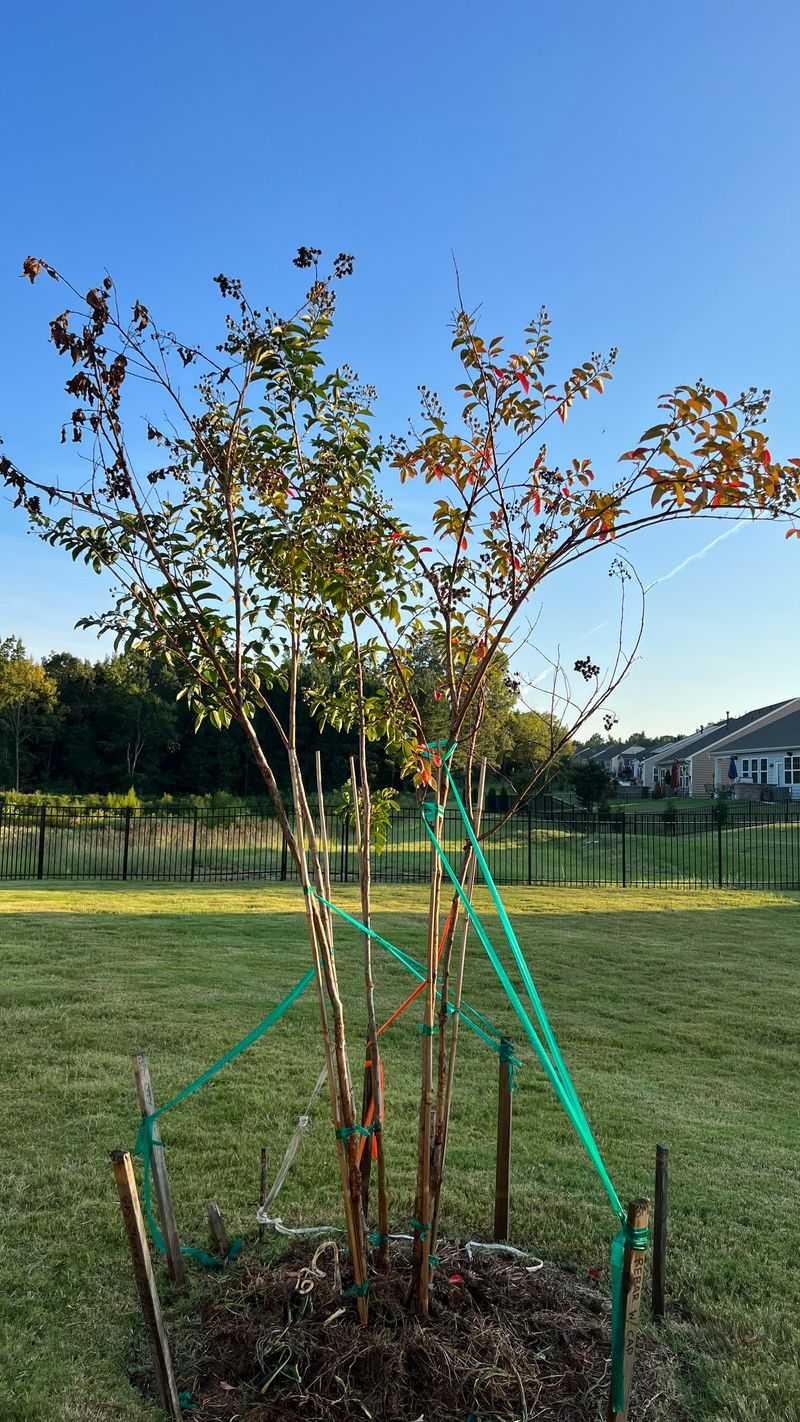
Fertilizing in March requires precision to ensure maximum bloom without promoting excessive leafy growth. Soil temperatures should be at least 55°F in the root zone before applying fertilizer to ensure uptake.
Feed too early, and tender new growth may suffer frost or cold damage; too late, and nutrient absorption slows as buds expand. Balanced slow-release fertilizers, such as 10-10-10 or 8-8-8, provide steady nutrients without overwhelming the plant.
Apply roughly one pound per 100 square feet of root zone, keeping granules away from the trunk and watering thoroughly afterward. Newly planted crape myrtles need much less—about one teaspoon monthly on the outer edge of the planting hole.
Avoid high-nitrogen formulas that push leaf growth at the expense of blooms. Organic alternatives like composted manure or azalea/camellia-specific fertilizers are effective and support soil pH slightly.
Monitoring plant response ensures that fertilization supports bud expansion, leaf growth, and stem development.
In North Georgia, where spring warming is slower, waiting until mid-to-late March may improve nutrient uptake.
Proper timing and moderate feeding in March gives crape myrtles a strong start, creating the structural and nutritional foundation for abundant summer flowers.
6. Mulch To Protect Roots And Retain Moisture

Mulching in March is one of the simplest yet most effective ways to support crape myrtles through Georgia’s unpredictable spring weather.
A fresh 2–3 inch layer of pine bark, shredded hardwood, or pine straw spread in a wide ring from the drip line, keeping an inch or two away from the trunk, protects roots from sudden temperature fluctuations and prevents moisture from pooling against the bark, which can encourage rot or fungal problems.
Mulch acts as a natural sponge, helping the soil retain water during dry spells while slowly breaking down to enrich the soil with organic matter over time.
In sandy Coastal Plain soils, mulch slows drying and reduces stress from heat and sun exposure, whereas in the clay-heavy soils of the Piedmont, it improves drainage, prevents compaction, and enhances root aeration.
Annual refreshment of mulch in March keeps it effective without creating dense mats that block water and oxygen.
Mulching also reduces weed competition, preventing shallow roots from being deprived of nutrients needed for strong stem growth and flower development.
Lightly raking existing mulch before adding fresh material ensures proper air circulation and helps prevent disease buildup from leftover debris.
Consistent, thoughtful mulch management in March sets up crape myrtles for steady, healthy root growth, which directly translates to vigorous new shoots and abundant flowering across Georgia’s long warm season, giving your tree a visually balanced and well-supported canopy for summer blooms.
7. Watch For Early Pests And Take Action Quickly
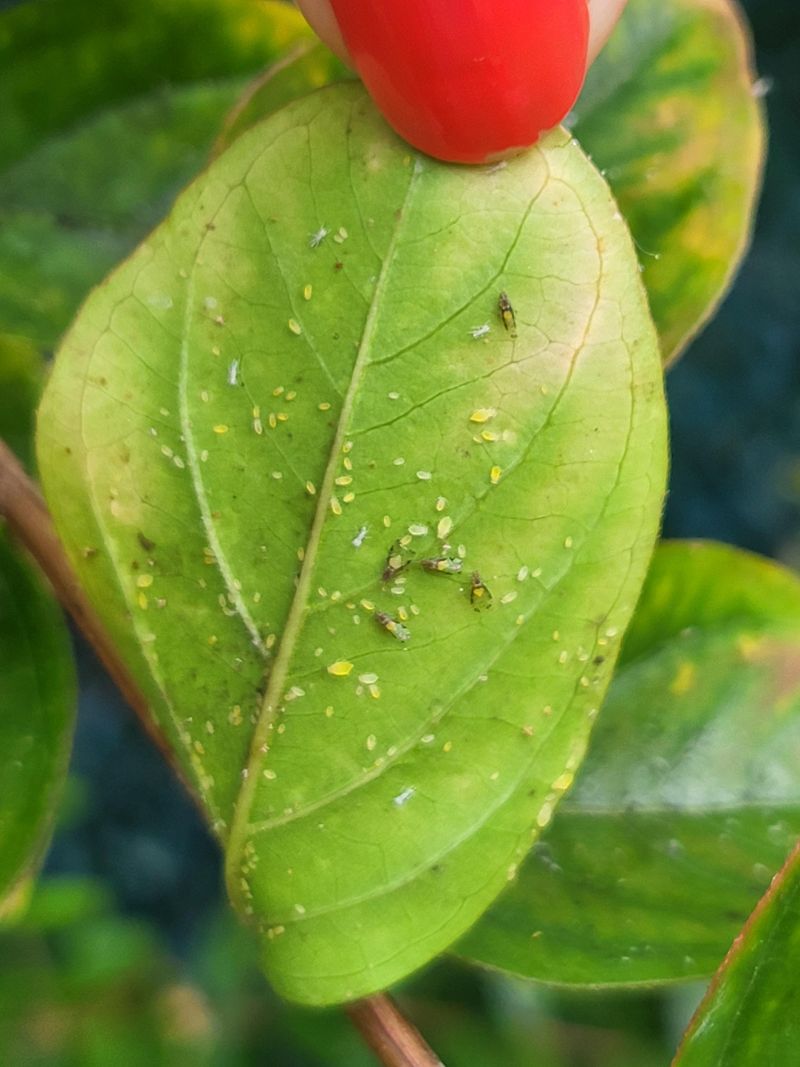
March is a critical time to monitor crape myrtles for early-season pests in Georgia.
Tender new leaves and emerging buds are highly attractive to aphids and scale insects, which can sap energy from the plant, stunt growth, and leave sticky honeydew that encourages sooty mold.
Early detection is essential because once populations explode later in spring, control becomes more difficult and can affect bloom quality.
Inspect the undersides of leaves, branch tips, and new shoots weekly, paying particular attention to young growth, which is more vulnerable.
A strong spray of water from a hose can dislodge aphids without harming the plant, while introducing or encouraging natural predators such as ladybugs, lacewings, and parasitic wasps adds biological control.
Horticultural oils applied during mild March temperatures are effective against soft-bodied pests and scale crawlers, but care should be taken to avoid hot, sunny days, which could stress the tree.
If infestations are severe and treatment impractical, selectively remove heavily infested branches to prevent spread.
Choosing disease-resistant crape myrtle cultivars and ensuring good airflow through careful March pruning further reduces the risk of pest and fungal pressure.
By staying vigilant in March, gardeners give new leaves and buds the best chance to develop fully, ensuring the tree has strong, healthy shoots and maximizing flowering potential for Georgia’s long summer season.
8. Encourage Taller Stems With Strategic Pinching
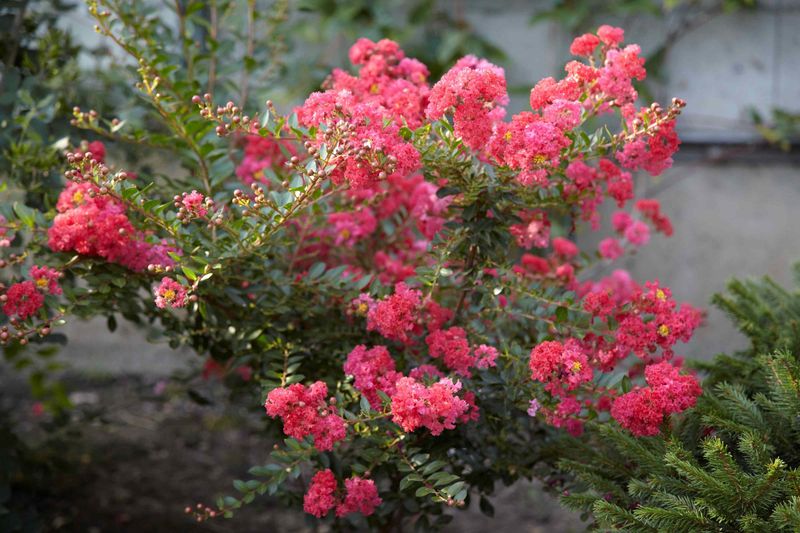
Strategic pinching in March can be a game-changer for young crape myrtles under five years old, helping them develop a stronger, more upright branching structure that supports abundant flower clusters later in summer.
By removing the tips of shoots about six to eight inches long, you redirect the tree’s energy toward lateral branching lower on the stem.
This builds thicker bases on each stem and encourages upright, evenly spaced flowering shoots, which ultimately produces larger, denser clusters. For best results, focus on shoots that are thin, weak, or growing awkwardly compared with the surrounding framework.
Mature crape myrtles typically do not require pinching, since established branching naturally supports heavy blooms, but selectively pinching younger trees sets them up for a structurally sound canopy that requires less corrective pruning in the future.
Doing this early in March also gives the plant a full growing season to adjust and strengthen its new stems before the heat and intense sunlight of Georgia summer arrives.
Combined with proper pruning, mulching, and timely fertilization, pinching promotes a visually balanced, vase-shaped canopy and helps ensure flowers form evenly across the tree.
Spending a few minutes every week during early growth can have a long-term impact on both bloom quality and overall plant architecture, creating a front-yard centerpiece that lasts for years.
9. Protect Buds During Cold Snap Nights

March in Georgia is famously unpredictable, with warm afternoons sometimes followed by nights dipping near or below freezing.
Crape myrtles that have begun forming new buds are particularly vulnerable during these cold snaps, which can slow growth, damage developing buds, and reduce the upcoming bloom display.
Gardeners should monitor local forecasts closely throughout March, especially in North Georgia and the Piedmont where frosts are more likely.
Lightweight frost cloths or breathable garden blankets provide a protective layer for smaller or newly planted trees, while mature trees with established root systems are typically more resilient to brief temperature dips.
Cover the plant loosely, removing coverings during the day when temperatures rise above 40 degrees Fahrenheit to avoid overheating or sunscald.
Mulching around the root zone adds insulation and helps moderate soil temperature fluctuations, further protecting the tree.
In addition, checking buds after cold nights allows gardeners to spot damage early and make adjustments for future protective measures.
Taking these simple precautions in March ensures that buds survive the unpredictable weather and develop into strong, healthy flowers that will bloom fully during the long Georgia summer, maintaining both the aesthetic appeal and structural integrity of the tree.
10. Step Back And Let Natural Form Shine

Crape myrtles naturally develop a vase-shaped, upright form that supports strong flower production when left mostly undisturbed.
After completing essential March tasks like selective pruning, thinning older stems, applying mulch, and feeding, it’s important for gardeners to step back and observe the canopy without over-managing.
Excessive or aggressive cutting can interfere with the natural aging of bark and reduce the number and density of flower clusters.
Trees that are allowed to follow their growth pattern over successive years often produce the most abundant blooms and maintain a balanced, visually appealing canopy.
Minimal intervention also encourages stronger wood development, helping stems support heavier flower clusters later in summer.
By trusting the tree’s natural structure and focusing on targeted maintenance only, gardeners ensure that new shoots have space, light, and resources to flourish.
This approach also reduces the risk of disease, encourages healthy airflow, and enhances overall plant resilience.
Over time, the combination of careful March management and hands-off observation allows crape myrtles to reach their full aesthetic potential, with tall, sturdy stems and evenly distributed flowers that make the tree a striking focal point in any Georgia yard.
Paying attention to growth patterns during March sets the foundation for several seasons of vibrant blooms, strong structure, and low-maintenance beauty.