What Holes In Your North Carolina Pepper Leaves Really Mean And How To Act Before Harvest Is Lost
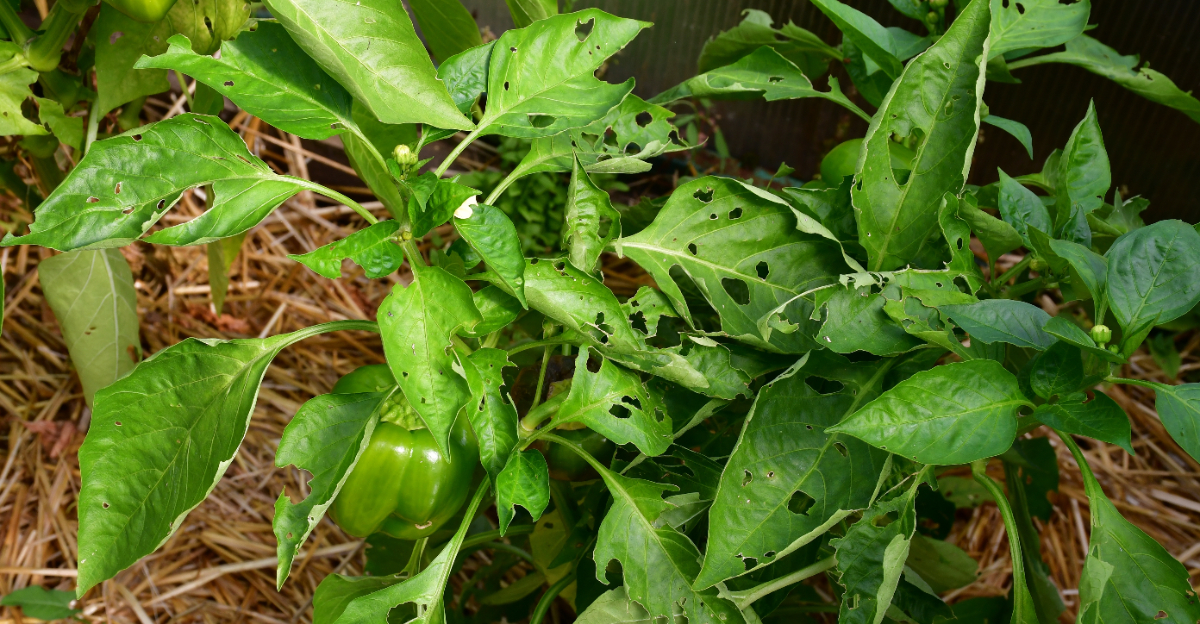
Pepper foliage with holes is easy to dismiss as cosmetic damage, especially when the plants are still flowering and setting fruit. In North Carolina’s midsummer conditions, that dismissal can cost the rest of the harvest.
The insect or environmental cause behind leaf holes on peppers matters enormously because each one follows a different escalation timeline and responds to completely different interventions.
Flea beetle damage looks nothing like caterpillar feeding, and neither looks like the mechanical tears caused by wind and physical contact.
Reading the specific pattern of damage correctly and acting on that information quickly is the difference between a manageable mid-season setback and a pepper patch that stops producing before the season has any reason to be over.
1. Tiny Round Holes Usually Point To Flea Beetles
Those tiny, perfectly round holes scattered all over your pepper leaves are a classic calling card of flea beetles. These small, shiny beetles jump quickly when disturbed, which is how they got their name.
They are especially active during warm, dry spells, which makes North Carolina summers a prime time for them to show up.
Young pepper plants are the most vulnerable because their leaves are soft and tender. Established plants that are growing well can often handle a moderate amount of flea beetle feeding without losing much productivity.
The holes look alarming, but a healthy plant can usually keep pushing out new growth even while a small flea beetle population is present.
Before reaching for any spray, take a close look at your plants during the heat of the day when beetles are most active. You may spot tiny beetles jumping off the leaves as you brush against the plant.
Row covers placed early in the season can help prevent flea beetles from reaching young transplants in the first place. If populations are heavy and new leaves are being hit hard, yellow sticky traps can help you monitor numbers.
Diatomaceous earth around the base of plants is a low-impact option worth trying before anything stronger.
2. Ragged Holes May Point To Caterpillars
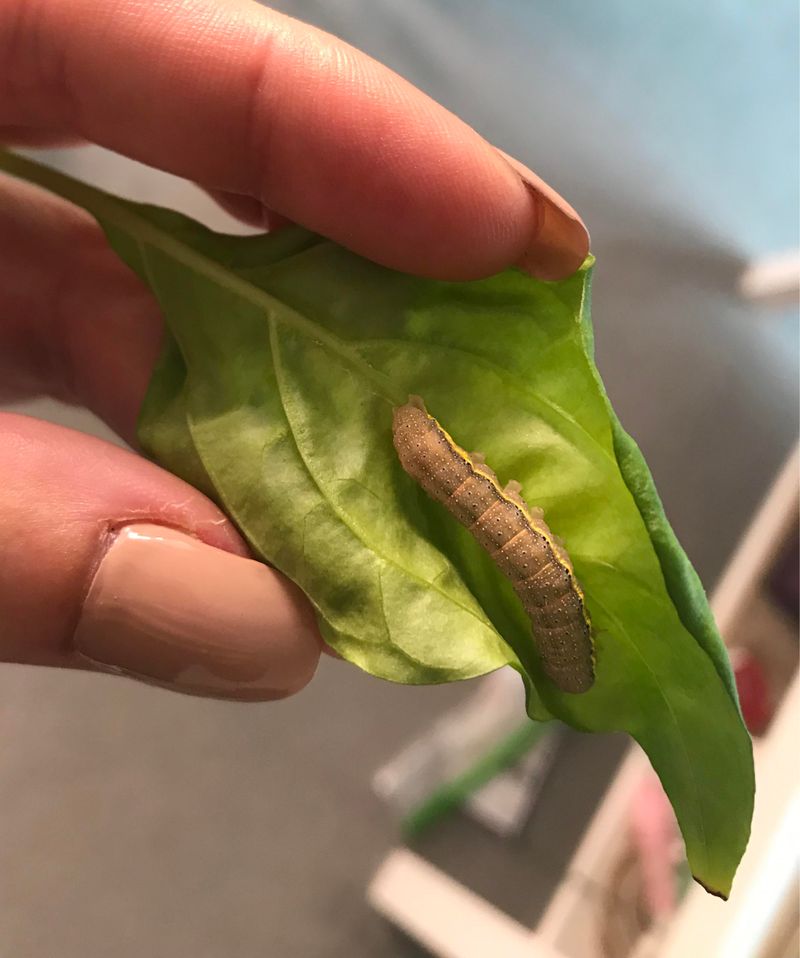
Ragged, uneven holes along leaf edges or through the middle of leaves often mean a caterpillar has been snacking on your pepper plants. Unlike the clean, round holes flea beetles leave behind, caterpillar damage looks torn and messy.
Several species can affect peppers in North Carolina, including beet armyworms, fall armyworms, corn earworms, and tobacco hornworms.
Finding the actual caterpillar takes a little detective work. Check the undersides of leaves carefully because many species rest there during the day.
Also look inside curled leaves, near flower buds, and along the main stem where leaves connect. Small green or brown droppings called frass are a reliable sign that a caterpillar is nearby, even if you cannot spot it right away.
Early morning or just after sunset is the best time to search because some caterpillars feed more actively when temperatures cool.
Beet armyworms are especially tricky since young ones feed in groups and can strip sections of foliage fast before you notice the scale of the problem.
Your North Carolina Garden Changes Every Week. Your Plan Should Too.
Gardening in North Carolina changes quickly throughout the season. Every Friday you’ll receive a simple weekly plan showing exactly what to plant, prune, fertilize, harvest, and protect so you never miss the right timing.
If you find egg clusters on leaf undersides, remove those leaves immediately before they hatch. For small infestations, hand picking works well.
Bacillus thuringiensis, commonly called Bt, is a naturally occurring soil bacteria that targets caterpillars and is safe for pollinators when used correctly.
3. Large Missing Leaf Sections May Mean Hornworms
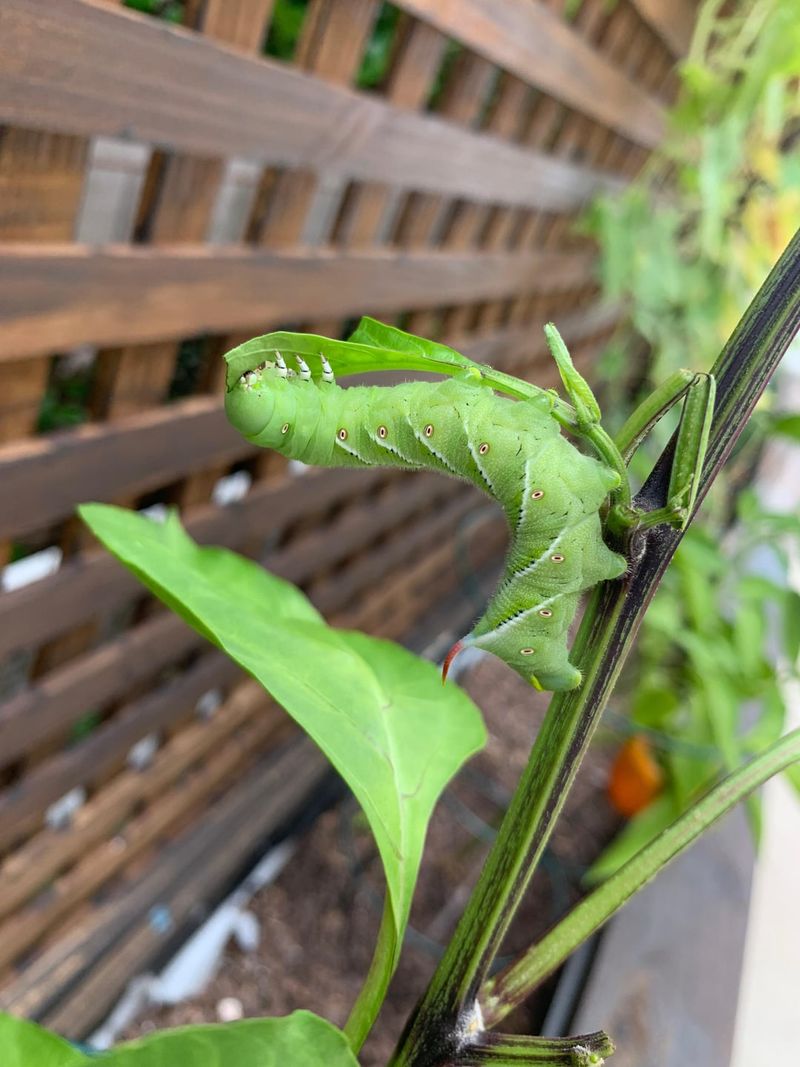
When big chunks of your pepper leaves seem to disappear overnight, tobacco hornworms are one of the first suspects worth checking.
These caterpillars grow impressively large, sometimes reaching four inches long, and their green color blends so well with pepper foliage that they are easy to miss even during a careful inspection.
Hornworms are voracious feeders. A single large caterpillar can strip multiple leaves in just a few days, which is why the damage often feels sudden.
Look carefully along stems and where leaf petioles attach to branches because hornworms often rest in those spots during the day.
Their droppings are large and dark green, almost pellet-shaped, and you will usually find them on leaves below where the caterpillar is hiding.
Early morning and evening inspections give you the best chance of spotting them before they move on. Once you find one, check surrounding plants too because moths often lay eggs across several nearby plants.
Hand picking is the most effective and immediate solution when numbers are low. Drop them into a bucket of soapy water to remove them from the garden.
If you notice hornworms with white oval-shaped cocoons attached to their backs, those are parasitic wasp eggs, and leaving those hornworms alone allows the wasps to emerge and naturally reduce future populations.
4. Holes Near Buds Can Threaten The Harvest
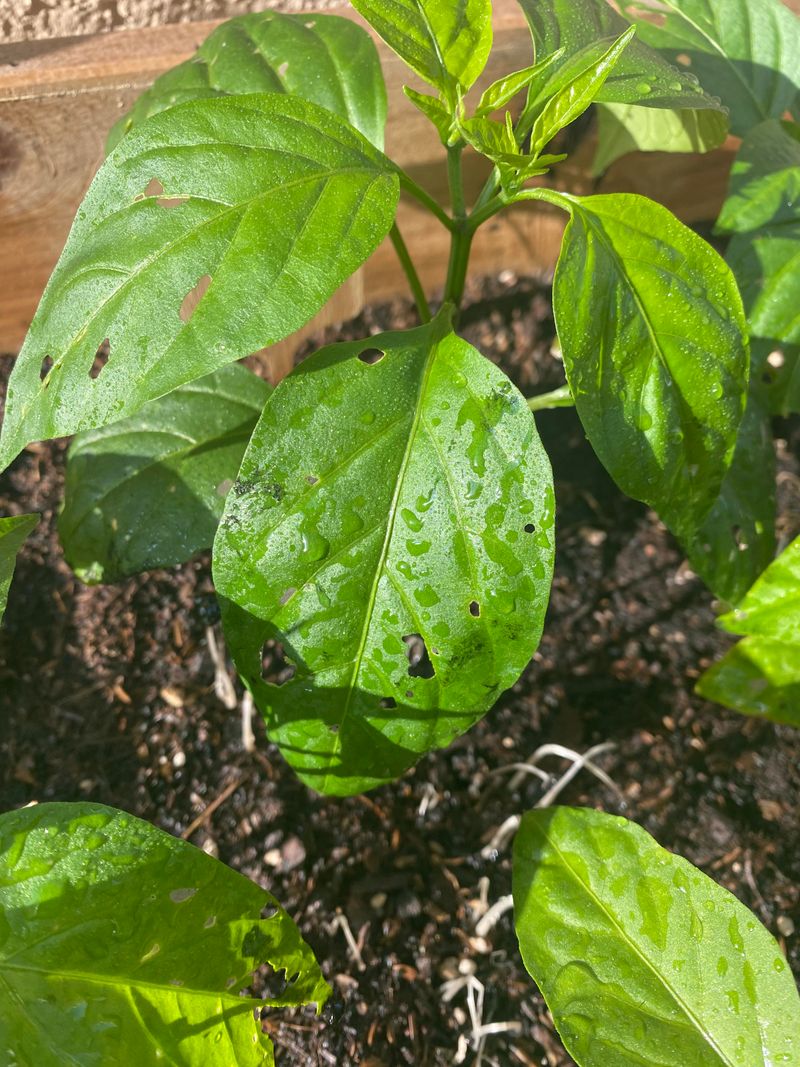
Holes appearing near flower buds or on the newest growth tips of your pepper plants deserve faster attention than holes on older leaves. When pests feed near where flowers are forming, the plant may drop buds or fail to set fruit properly.
That translates directly into fewer peppers at harvest time, which is a much bigger problem than a few cosmetic holes on mature foliage.
Some caterpillar species, as well as pepper weevils and certain thrips, are drawn to tender new growth and developing buds. Pepper weevils, for example, can lay eggs inside young buds, causing them to drop before they ever open.
Checking plant tips every few days during July and August gives you a chance to catch this kind of damage early, before it spreads across the planting.
Look for holes that seem to go all the way through a bud, discolored or wilted tips, or buds that fall off when you gently touch them. These are signs that something is feeding or laying eggs inside the growing tissue.
Removing affected buds and inspecting neighboring plants right away helps contain the problem.
North Carolina Cooperative Extension offices can help identify the specific pest if you bring in a sample or a clear photo, which takes the guesswork out of choosing the right response.
5. Holes In Fruit Need A Different Response
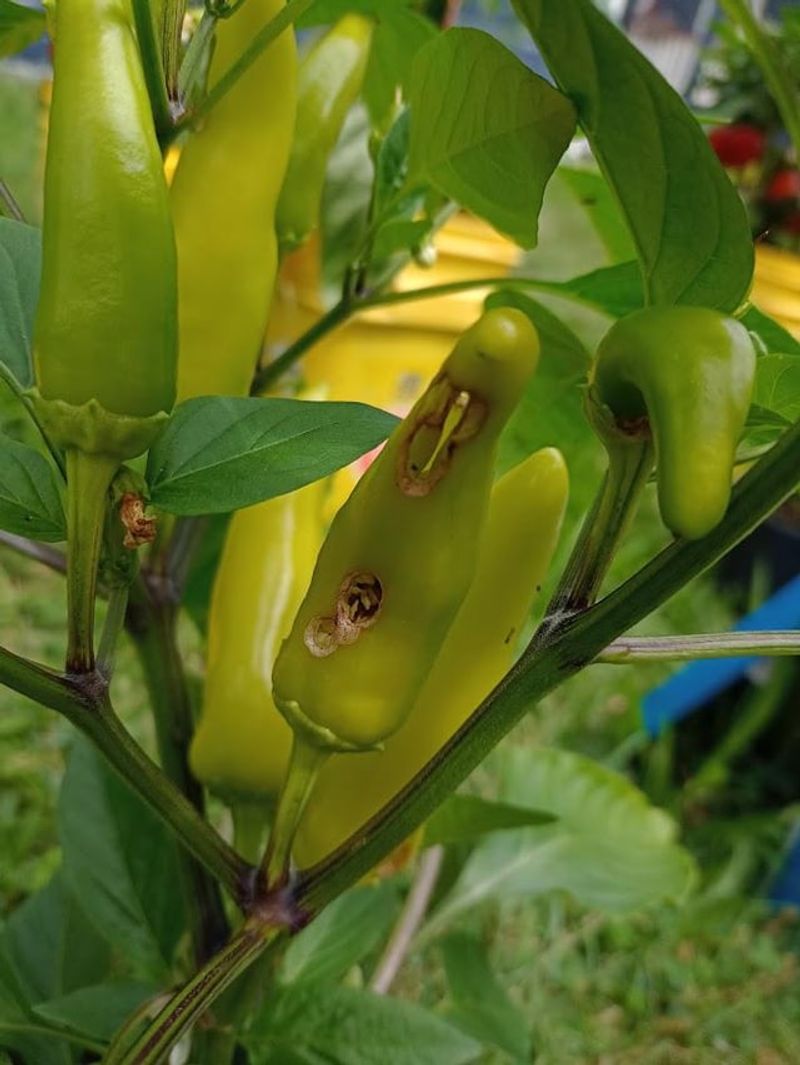
Spotting holes in your actual pepper fruit is a more urgent situation than finding holes in the leaves. Leaf damage is often cosmetic, but fruit damage means the harvest itself is being affected.
Corn earworms, pepper borers, fruit flies, or pepper weevils can all create entry holes in peppers, and once inside, they are much harder to manage.
Holes near the cap or stem end of the fruit are a common sign of weevil or borer activity. Corn earworms tend to enter near the blossom end.
Inside the fruit, you may find frass, tunneling, or even larvae still feeding. Affected peppers should be removed from the plant right away and placed in a sealed bag before disposal to prevent any larvae from completing their development in the garden.
Check surrounding peppers carefully after finding one affected fruit because the same pest is likely moving through the planting. Look for small entry holes that may be easy to miss at first glance, especially near where the cap meets the fruit.
If you cannot identify what is inside the fruit, bring a sample to your local Cooperative Extension office. They can pinpoint the pest and recommend a targeted response specific to North Carolina growing conditions.
Acting quickly keeps the damage from spreading to the rest of your crop before the season ends.
6. Night Damage May Mean Hidden Feeders
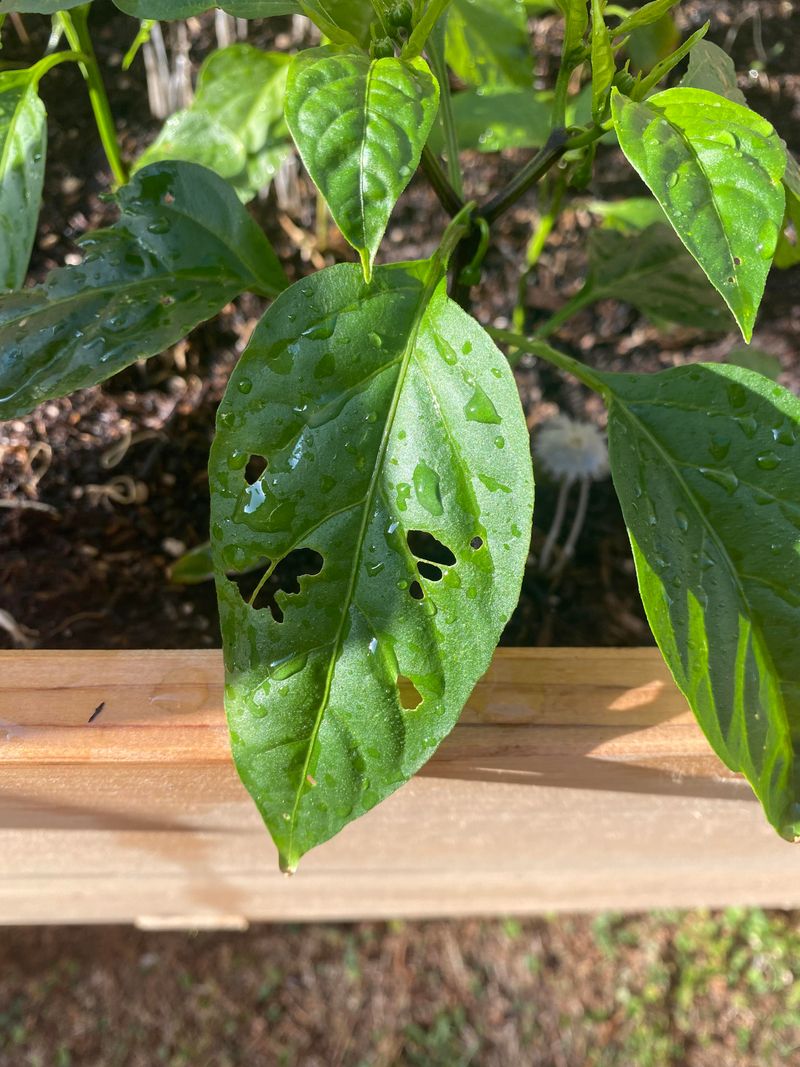
Some mornings you walk out to the garden and the damage on your pepper plants looks noticeably worse than it did the evening before. That pattern is a strong clue that something is feeding after dark.
Several common pepper pests are nocturnal, meaning they stay hidden during the day and come out to feed once the sun goes down and temperatures drop.
Armyworm caterpillars are well-known nighttime feeders. During the day, they often hide in mulch, under soil clumps, or near the base of plants where it is cool and shaded.
Cutworms behave similarly, though they more often affect stems near the soil line. Slugs are another possibility, especially in gardens with heavy mulch, dense planting, or areas that stay moist overnight.
Taking a flashlight out to the garden after sunset is one of the most effective ways to catch hidden feeders in the act. Check under leaves, along stems, near the mulch line, and around the base of each plant.
Bring a container so you can remove anything you find immediately. If you see slime trails on leaves or soil in the morning, that points strongly toward slug activity rather than caterpillars.
Reducing excess moisture and pulling mulch slightly away from plant stems can make the garden less inviting to nighttime pests without any chemical use at all.
7. Sticky Leaves Are Not The Same Problem
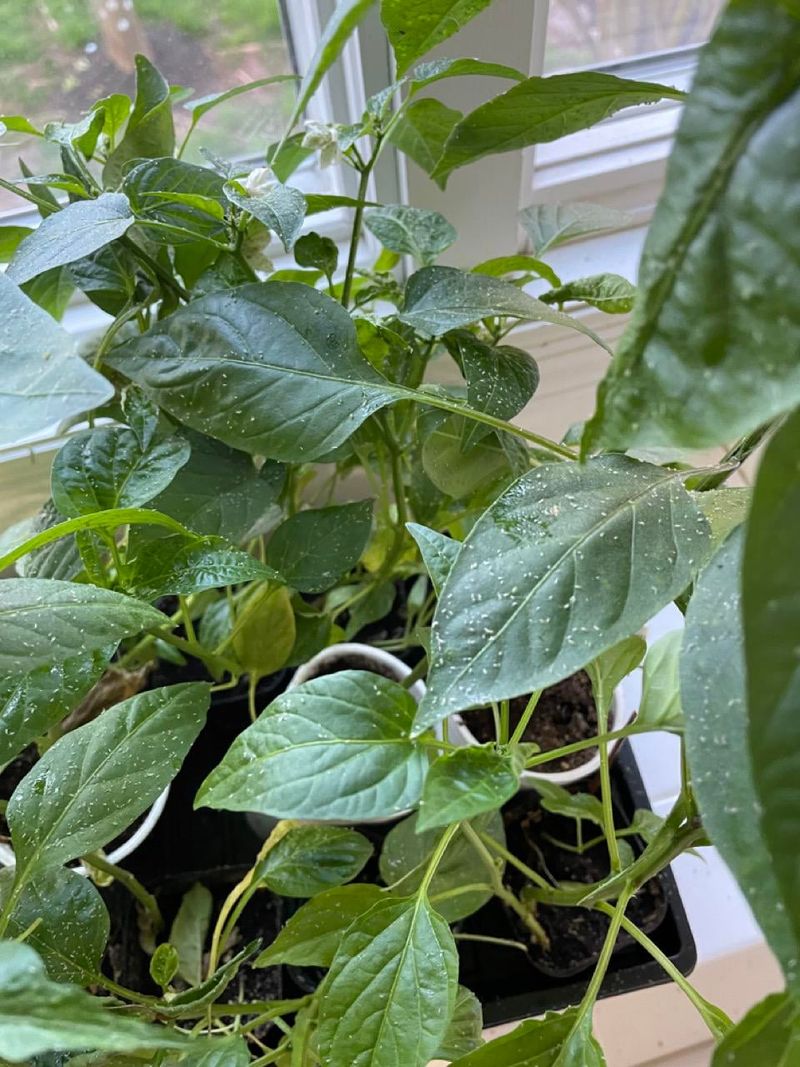
Not all pepper plant problems involve chewing. Sticky leaves paired with yellowing or curling foliage and ants crawling up the stems usually point to sap-feeding pests, not the kind that chew holes.
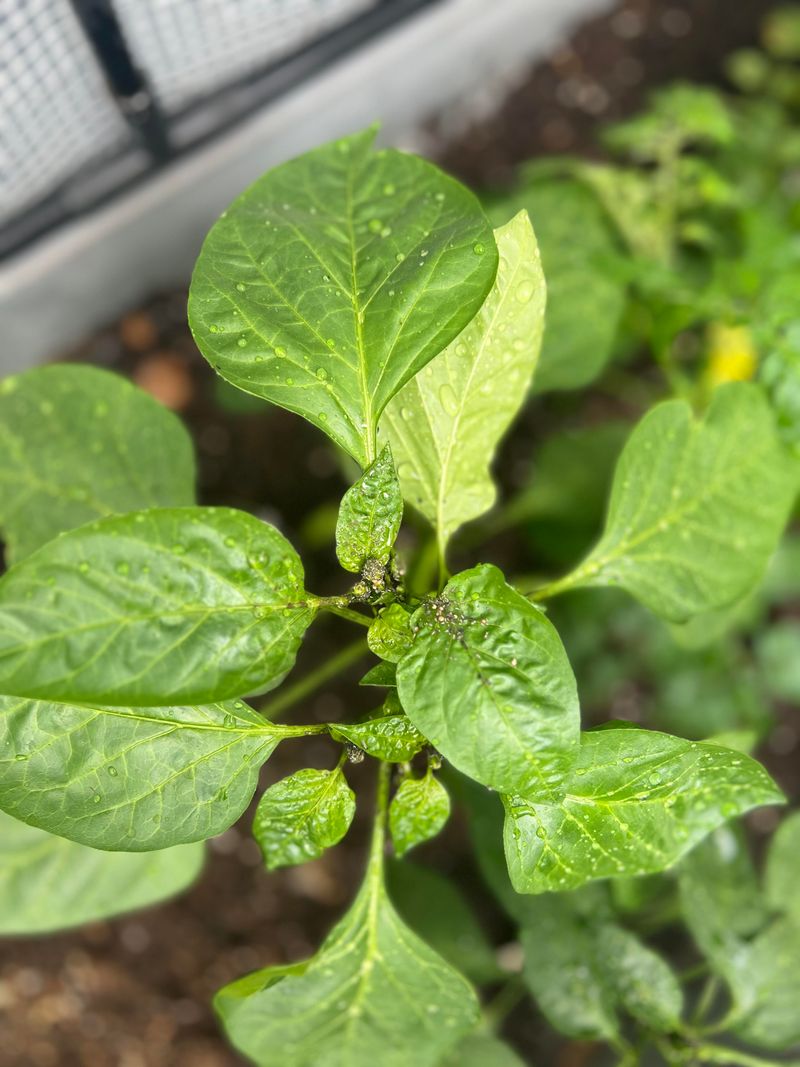
Aphids are the most common culprit, and while they do not create the clean, round holes that flea beetles make, they can cause serious problems for your pepper plants over time.
Aphids cluster on the undersides of leaves and feed by piercing the plant tissue and drawing out sap. As they feed, they excrete a sugary waste called honeydew, which coats the leaf surface and attracts ants.
That sticky coating can also develop a sooty black mold that further weakens the plant by blocking sunlight. Aphid populations can grow very quickly, especially during warm, dry stretches in the North Carolina summer.
Ants are often the first visible sign because they actively protect aphid colonies from predators in exchange for the honeydew.
If you see ants marching up your pepper stems, flip a few leaves over and look for small, soft-bodied insects clustered along the veins.
A strong spray of water from a garden hose can knock aphids off plants effectively. Insecticidal soap is another good option when applied directly to the colonies.
Always identify the pest before treating so you avoid harming beneficial insects like ladybugs that naturally help keep aphid numbers in check.
8. Leaf Spots Can Be Mistaken For Insect Holes
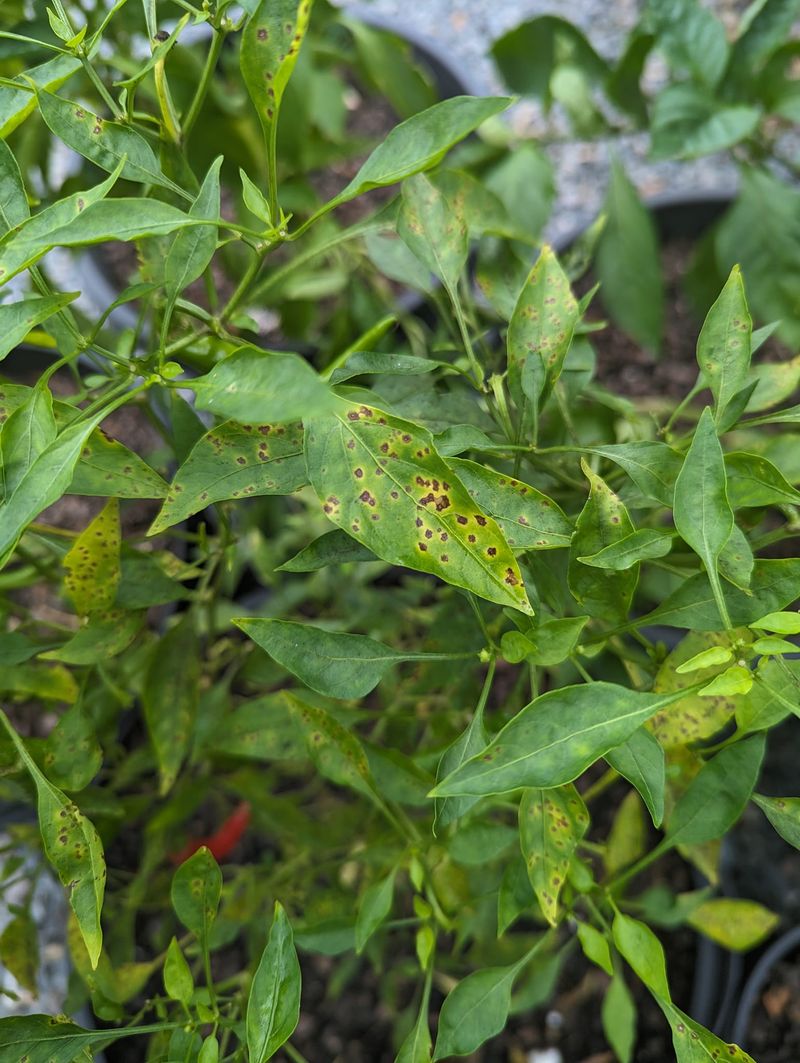
Not every mark on a pepper leaf comes from an insect. Disease lesions, weather damage, and physical tearing can all create marks that look surprisingly similar to pest feeding from a distance.
Bacterial leaf spot, which is common in North Carolina’s humid summers, creates dark water-soaked spots that can eventually dry out and fall away, leaving what looks like a hole in the leaf.
The key difference is in the details. Insect holes tend to have clean or slightly ragged edges depending on the pest, and you can often find frass or the pest itself nearby.
Disease spots usually show a yellow halo around the damaged area, and the pattern spreads outward from one part of the plant rather than appearing randomly across multiple leaves.
Physical tearing from wind or handling leaves frayed edges with no discoloration.
Comparing the damage pattern before taking action can save you a lot of effort and money. Spraying an insecticide on a disease problem will not help at all, and it may harm beneficial insects in the process.
If you see spotted, yellowing leaves with no signs of insect activity underneath, consider whether the plant has been stressed by overwatering, poor drainage, or recent heavy rain.
Bringing a sample to your county Extension office is always a smart move when the cause is not immediately clear.
9. Hand Picking Works When The Problem Is Small
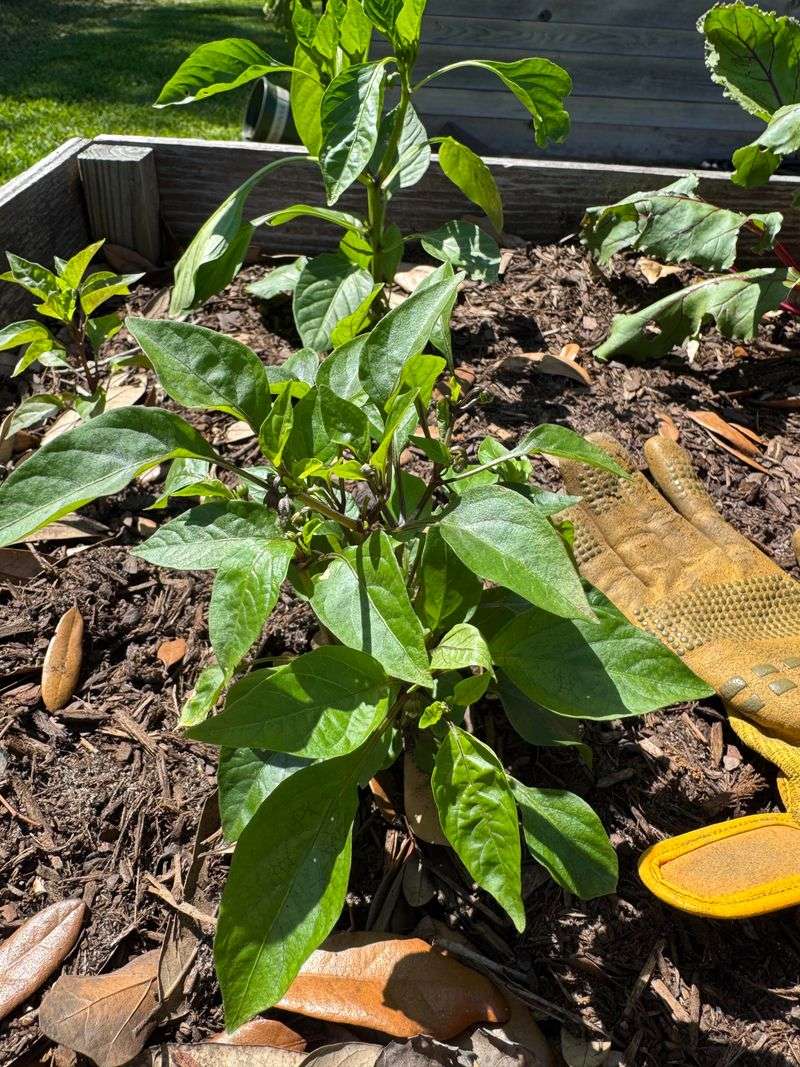
Catching a pest problem early is the single biggest advantage a home gardener has. When you first notice a few holes on your pepper leaves and can find the culprit, hand picking is often all you need.
It is free, it is immediate, and it does not affect any of the beneficial insects, pollinators, or natural predators sharing your garden space.
Walk through your pepper plants every couple of days during peak summer growing season. Look under leaves, along stems, inside curled foliage, and near buds.
Remove any caterpillars, egg clusters, or heavily damaged leaves you find. Dropping caterpillars into a bucket of soapy water is a reliable way to remove them without allowing them to simply crawl back onto the plant.
Some gardeners wear gloves, but hornworms and armyworms are harmless to handle.
Removing a badly damaged leaf also removes any eggs or young larvae that might be hiding on its surface, which reduces the next generation before it even gets started.
Keeping a close eye on your plants means you will also notice other issues early, like disease spots or fruit damage, before they spread.
Hand picking works best when populations are low, so the goal is to start before things get out of control.
A few minutes of inspection every other morning during July and August can genuinely protect your pepper harvest without reaching for any spray at all.
10. Barriers Help Young Pepper Plants Most
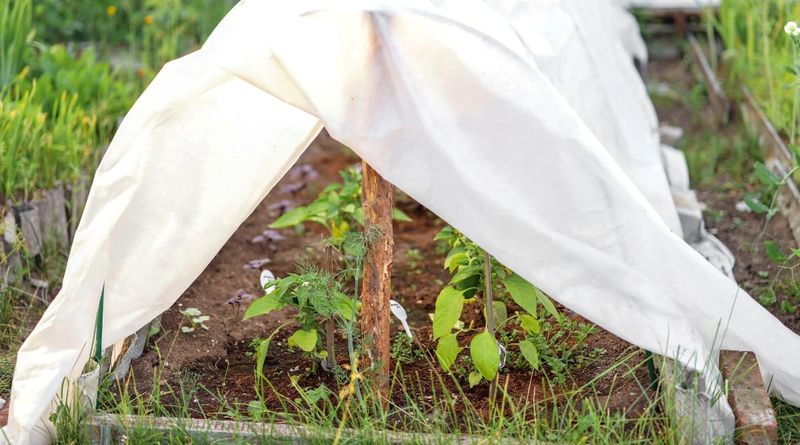
Row covers are one of the most underused tools in the home vegetable garden.
Placing a lightweight floating row cover over young pepper transplants right after planting creates a physical barrier. This barrier keeps flea beetles, aphids, and egg-laying moths away from vulnerable foliage before the plants establish themselves.
The barrier approach works best when it is set up before insects are already present on the plants. If you cover plants that already have a pest population underneath, you are trapping the problem inside along with the plant.
Secure the edges of the cover to the soil with stakes or sandbags so insects cannot crawl underneath. Use wire hoops or a simple frame to keep the fabric from resting directly on the leaves.
One important consideration is heat and airflow. On very warm days, row covers can trap heat and raise temperatures inside to a level that stresses plants rather than protecting them.
Check temperatures under the cover regularly during heat waves, and lift or vent the cover as needed. Once pepper plants start flowering, covers need to come off or be managed carefully so pollinators can reach the blooms.
Peppers are self-pollinating, but airflow still matters for fruit set. Barriers are most valuable in the first four to six weeks after transplanting when plants are small and most at risk from early-season pest pressure.
11. Keep Pepper Plants Strong During July And August
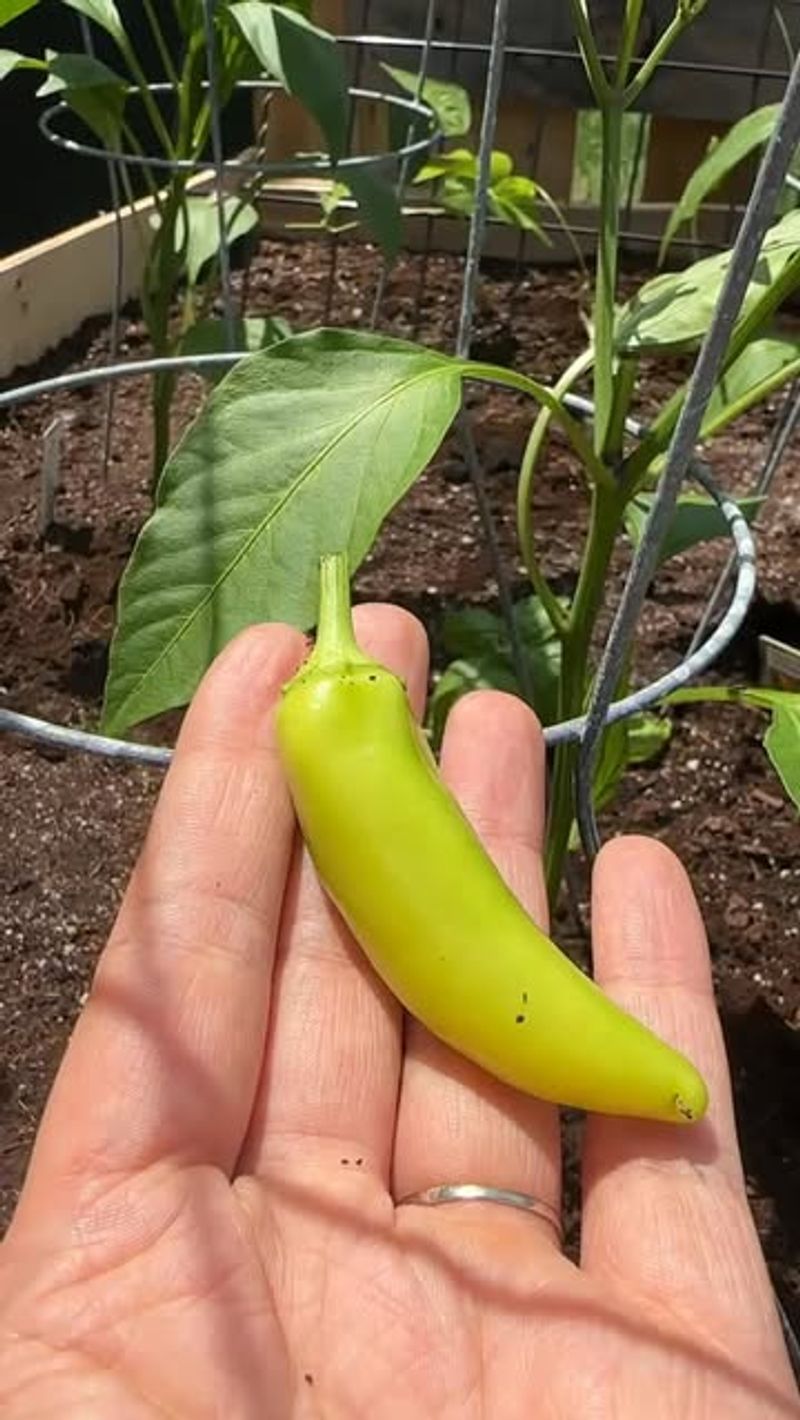
Strong, well-cared-for pepper plants handle pest pressure better than stressed ones. A plant that is getting consistent water, good nutrition, and proper airflow can often continue producing fruit even when a small pest population is present.
Stressed plants, on the other hand, are slower to push out new growth and may drop flowers or fruit when pest damage is added on top of other pressures.
North Carolina summers are hot and often unpredictable with rainfall, which makes active management important. Mulching around the base of pepper plants helps hold soil moisture, keeps roots cooler, and reduces weed competition that can harbor pests.
A two to three inch layer of straw or wood chip mulch makes a noticeable difference during dry stretches in July and August.
Consistent watering at the soil level, rather than overhead, also helps reduce the humidity on foliage that some fungal diseases need to spread.
Spacing plants properly so air can move freely between them is another way to keep foliage healthier through the peak of summer.
Pulling weeds regularly removes hiding places for pests and reduces competition for nutrients. A plant that is thriving has more energy to put into fruit production even if a few leaves show feeding damage.
Building that resilience through steady, consistent care throughout the season is one of the smartest things a North Carolina pepper gardener can do.
12. Identify The Pest Before You Spray
Reaching for a spray bottle the moment you see holes in your pepper leaves is a very common reaction, but it is rarely the most effective one.
Different pests need different approaches, and spraying broadly without knowing what you are dealing with can wipe out beneficial insects, create pesticide resistance, and sometimes make the overall pest situation worse over time.
Some insects you might find on your pepper plants are actually working in your favor. Ladybugs, lacewings, parasitic wasps, and ground beetles all feed on common pepper pests.
Broad-spectrum sprays applied without a clear target can remove those natural controls, leaving the garden more vulnerable to future outbreaks rather than less.
The smartest routine starts with observation. Look at the hole pattern carefully because round holes, ragged edges, and missing chunks all point in different directions.
Flip leaves over and check the undersides. Inspect fruit, buds, and stems.
Look for frass, egg clusters, or the pest itself. If you find caterpillars, hand picking or a targeted Bt product is a reasonable first step.
If you cannot identify the pest after a careful inspection, bring a sample or a clear photo to your local North Carolina Cooperative Extension office.
They provide free identification help and can recommend treatments that are appropriate for your specific situation, your growing area, and the time of season. Acting with information always beats acting out of worry.