What Makes The Blue Jay A Controversial Yard Guest
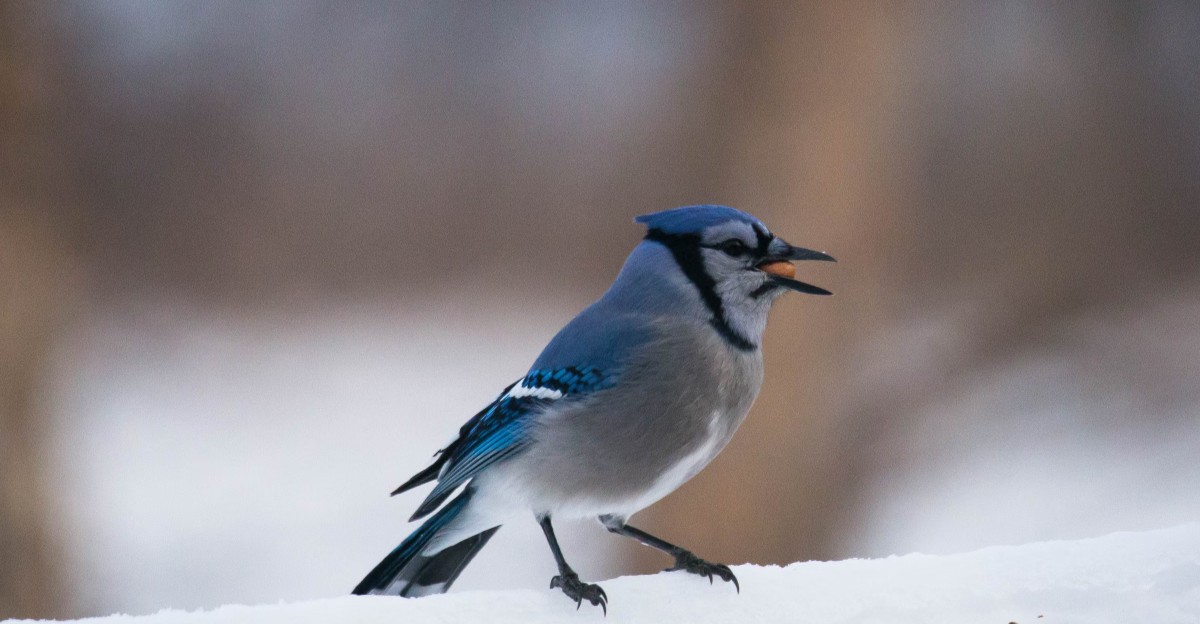
One crested bird can bury thousands of acorns in a single fall and forget many of them. Those forgotten nuts may grow into oak trees decades later.
I first noticed this sharp-eyed visitor stuffing its throat with peanuts at my feeder. It flew off, came back, and did it again until the tray was bare. You might notice the same trick in your own backyard this season.
The same bird can sound like a red-shouldered hawk. It also scolds cats, owls, and anyone carrying a ladder near its tree.
Some neighbors adore that bold personality, while others grumble about it every single morning.
I used to land firmly in the grumbling camp. A little reading, plus many cups of coffee by the window, changed my mind in ways I did not expect. Hear the whole story, and you will never look at that loud little thief the same way again.
That Crested Blue Bird Has Earned A Complicated Reputation
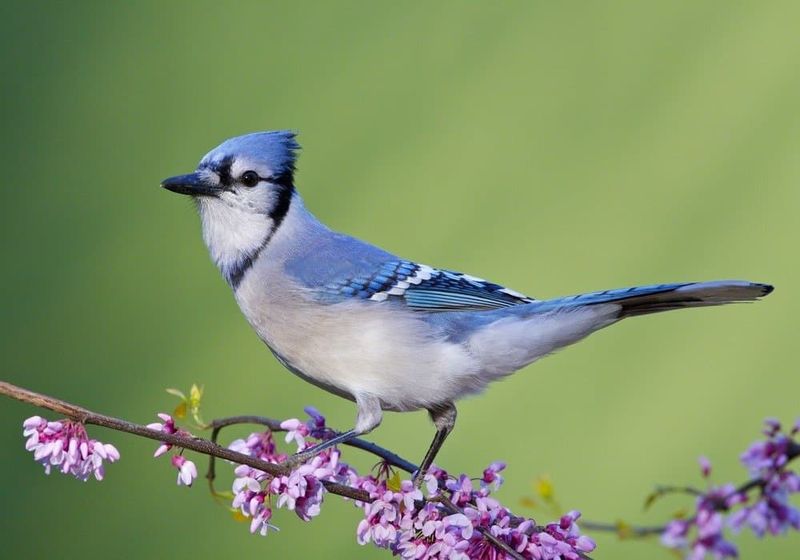
Few backyard birds stir up as many opinions as the Blue Jay. Ask ten bird lovers about it, and you might hear ten very different answers.
Some folks call it a bully, a thief, and a nest raider. Others praise it as a clever, loyal, and beautiful neighbor. Both groups are reacting to real behaviors, which is what makes the debate so lively.
Blue Jays belong to the crow family, called corvids. That family is famous for brains, and jays fit right in.
Researchers have watched captive Blue Jays use strips of paper to pull food closer, which shows impressive problem-solving.
Smart birds tend to be bold birds. Jays notice open feeders fast, arrive in noisy groups, and grab the best food first.
To a person who mostly wants to see chickadees, that can feel rude. Fun fact for your next chat over the fence. Their feathers are not actually blue.
The color comes from the way light bounces off tiny structures inside each feather, so a crushed feather looks brown.
Understanding that the controversy comes from intelligence, size, and volume helps a lot. Once you see why jays act this way, their antics start looking less like villainy and more like strategy.
Blue Jays At The Feeder Can Send Smaller Birds Scattering
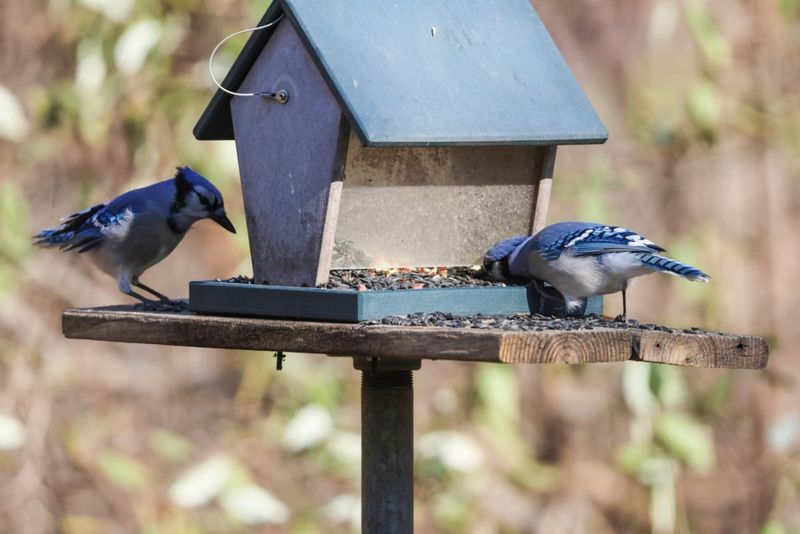
Picture-perfect calm at the feeder lasts about three seconds once a jay swoops in. Finches lift off, titmice dart to the shrubs, and the big blue bird takes center stage.
Size explains most of it. A Blue Jay weighs roughly three ounces, several times more than a chickadee.
Smaller birds simply give way to a larger, louder visitor, much like kids stepping aside at the water fountain for a high schooler.
Jays also travel in family groups, especially in fall and winter. Three or four of them arriving together can make a feeder feel crowded fast. So are they truly bullies? Mostly, the scattering is short-lived.
In my yard, the chickadees return within a minute or two of the jays leaving, and nobody gets hurt.
One habit really raises eyebrows. Blue Jays sometimes mimic the scream of a red-shouldered or red-tailed hawk.
Scientists are not sure why, but one possible reason is to warn others a hawk is near, or perhaps to test how other birds react.
If you notice smaller birds scattering when that hawk-like call rings out, check the branches. A jay may be the one doing the shouting.
Nest Raiding Stories Are Bigger Than The Facts
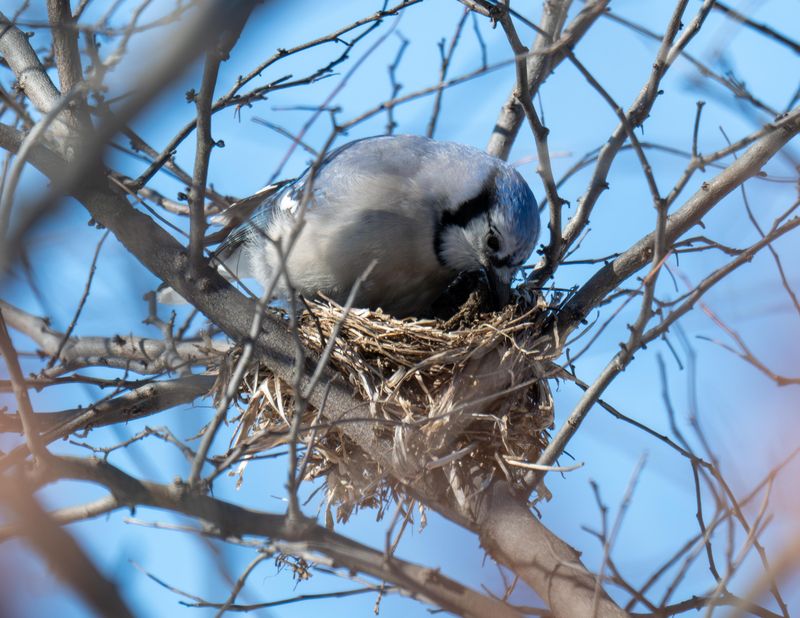
Old bird books loved to paint the Blue Jay as a villain that robs eggs from every nest it finds. That tale stuck around for over a century. The truth is much milder. Jays do sometimes eat eggs and nestlings, and that part is real.
Yet a well-known study of hundreds of Blue Jay stomachs found evidence of eggs or baby birds in only about one percent of them.
Most of their diet comes from plants. Acorns, beechnuts, seeds, berries, and grains make up the bulk, with insects filling much of the rest.
Other animals cause far more nest trouble in a typical yard. Snakes, raccoons, squirrels, chipmunks, and outdoor house cats raid plenty of nests, often quietly at night.
So why does the jay get blamed? It is loud, bright, and active during the day. People see a blue bird near a nest and remember it, while a sneaky raccoon goes unnoticed.
I find that helpful to remember during nesting season. If a robin nest fails in your hedge, the noisy jay may not be the culprit at all. Keeping cats indoors often does more for songbirds than chasing jays away.
Those Bulging Throat Pouches Explain Your Empty Peanut Tray
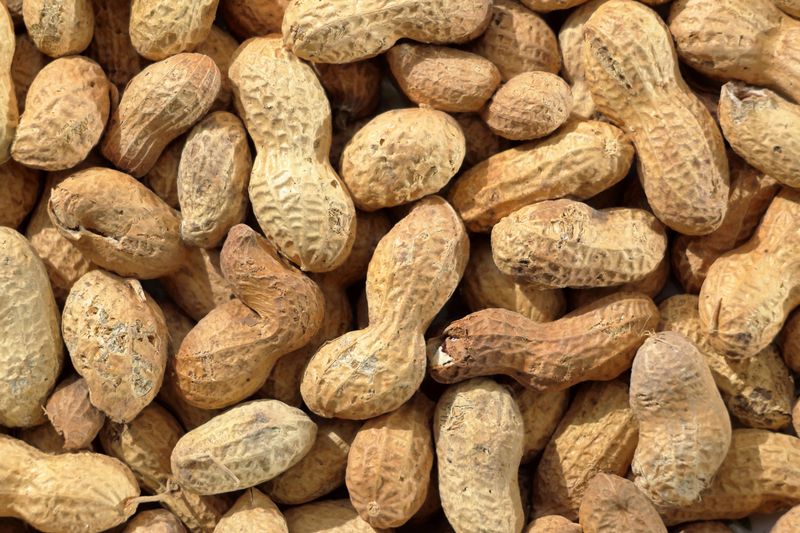
Ever filled the feeder at breakfast and found it empty by lunch? A Blue Jay may have been running a delivery service.
These birds have a stretchy pouch in the throat called a gular pouch. They can pack in several acorns or peanuts, plus one more held in the bill, then fly off to hide the haul.
Jays stash food in the ground, under leaf litter, and in tree bark cracks. They come back for many of these hidden snacks during winter when food runs short.
That habit frustrates some backyard feeders. It feels like the jay is hogging everything. In reality, the bird is planning ahead, and most of what it takes ends up eaten later in colder weather.
There is a bonus for the landscape. Jays forget or skip some of their buried acorns, and those nuts can sprout. Scientists credit Blue Jays with helping oak forests spread after the last ice age.
Want to slow the disappearing act? Offer peanuts in a mesh feeder that forces jays to work for each piece. You will still enjoy the show, and your budget will thank you.
A Screaming Blue Jay Is Often Your Best Hawk Alarm
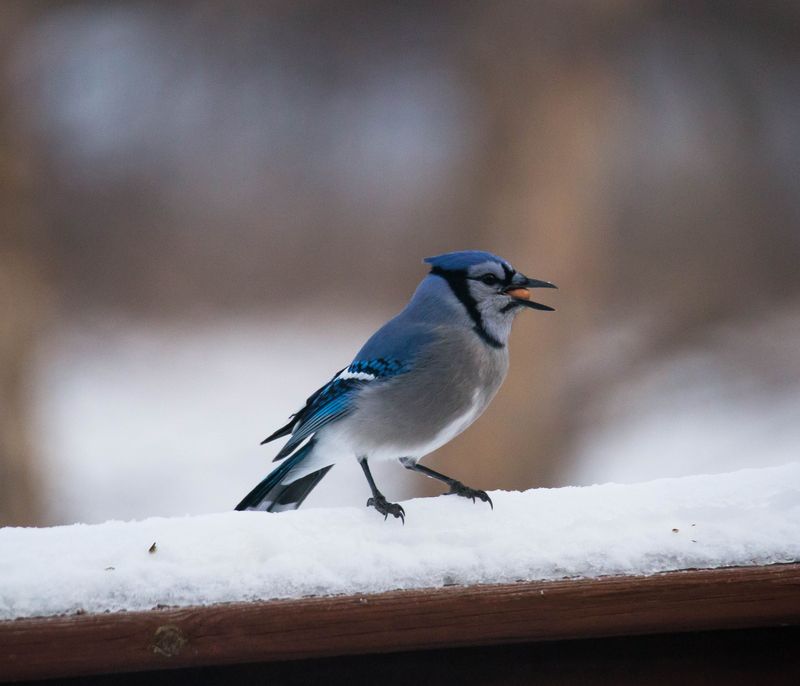
Loud? Absolutely, at least to sleepy ears at dawn. Useful? More than most people realize. Blue Jays act like the neighborhood watch. When they spot a hawk, owl, snake, or prowling cat, they raise a harsh alarm.
Other birds and even squirrels pay attention and take cover. Sometimes jays gather and mob the threat. Several of them dive, scold, and follow an owl until it moves along.
I once tracked a racket in my maples and found a sleepy screech owl wedged against the trunk.
That alarm system benefits the whole yard. Chickadees, sparrows, and cardinals gain a few extra seconds of warning, which can mean everything when a Cooper’s hawk swoops past the feeder.
Jays also help in the garden by eating insects. In spring and summer, they snap up caterpillars, beetles, and grasshoppers, especially while feeding hungry chicks.
Next time the shrieking starts, try a fun experiment. Step outside quietly and look where the jays are looking.
More often than not, you will spot a predator you would have missed. That noisy blue bird just became your favorite tour guide.
Separate Peanut Stations Keep Blue Jays And Songbirds Happy
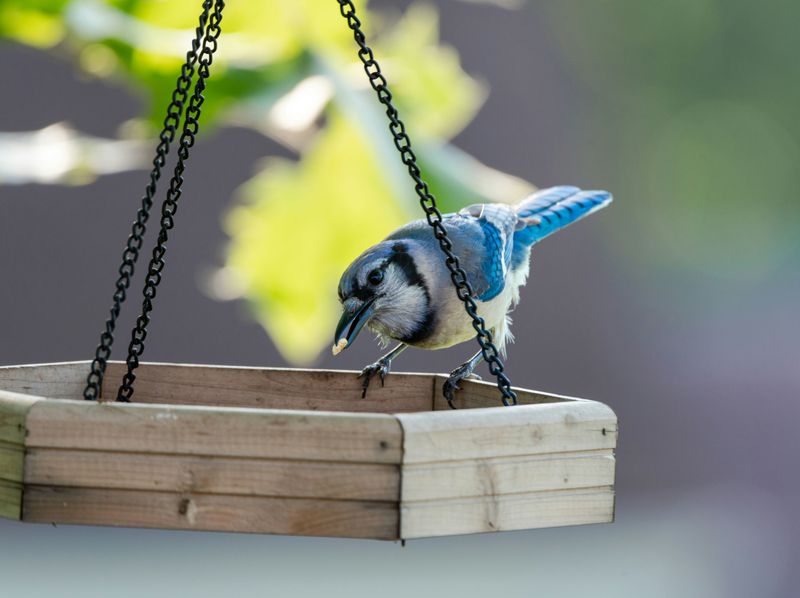
Peace at the feeder takes a little planning, not a fight. A few smart setups let you enjoy jays without frustrating the smaller crowd.
Jays love sturdy platform and hopper feeders with plenty of room to land. Give them their own spot stocked with unsalted peanuts, sunflower seeds, or suet. Many jays will happily stick to that station.
Then set up a second area for little birds. Tube feeders with small perches and short ports suit finches and chickadees but feel awkward for a big jay. Nyjer seed attracts goldfinches and rarely interests jays.
Distance helps too. Place stations at least several yards apart, so one busy group does not crowd out another.
Cover matters as much as food. Native shrubs like serviceberry, winterberry holly, and viburnum give small birds safe places to wait their turn.
Native oaks offer jays acorns and nesting spots over time. One quick tip from experience. Put out peanuts in the morning in small batches.
Jays grab them and leave, then the songbirds move in. Spreading treats through the day keeps the traffic flowing and the squabbling down.
Crushed Eggshells Make A Handy Spring Treat For Nesting Jays
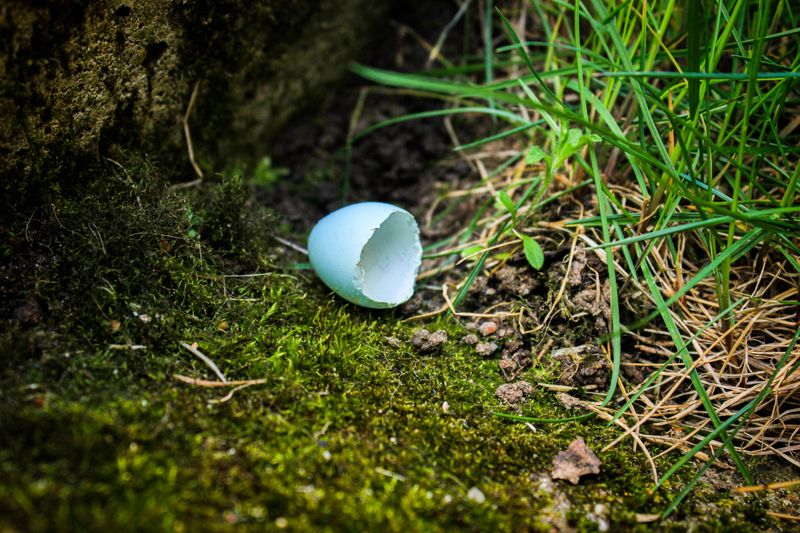
Spring brings a surprising craving. Female birds need extra calcium to form strong eggshells, and Blue Jays seem especially eager to find it.
Bird researchers have long noticed jays eating eggshell bits and even paint chips, likely for minerals. Offering clean eggshells gives them a safer, easy source.
The process takes minutes. Rinse shells from your kitchen, then bake them at about 250 degrees for twenty minutes to remove bacteria.
Crush them into small pieces and scatter them on the ground or a platform feeder. Will this stop nest raiding? Nobody can promise that, and the science is not settled.
Still, it is a cheap, helpful extra that supports nesting birds of many kinds, including swallows and cardinals.
Across Pennsylvania, nesting kicks off roughly from April into June. Start offering shells in early spring and keep going through summer. Here is my takeaway after years of watching. Blue Jays are not heroes or villains.
They are smart, loud, hungry neighbors doing what keeps their families going. Give them a station, plant some natives, and enjoy the drama. Your yard will feel livelier for it.